
Consumer Trust, Digitally Built: Blockchain's Influence on Food Supply Chain Confidence

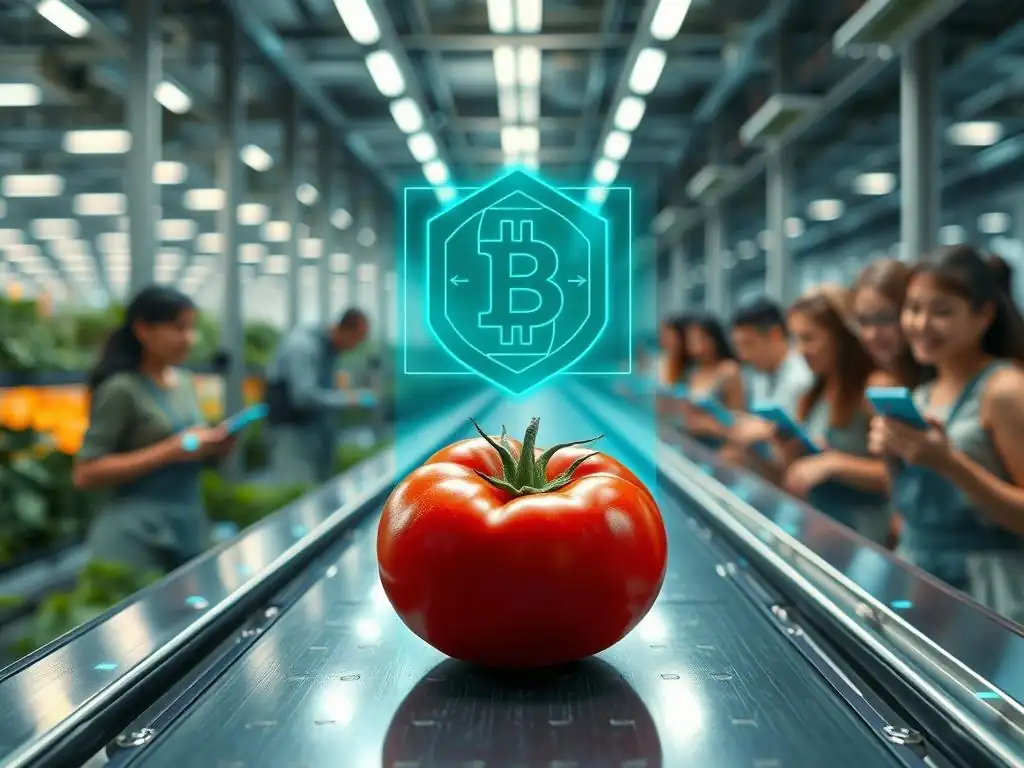
Welcome to Blockchain Trends, your compass in the rapidly evolving world of decentralized technologies! Are you ready to discover how blockchain is revolutionizing industries far beyond cryptocurrency?
Unlock the secrets to enhanced transparency and traceability as we delve into real-world applications, from decentralized finance (DeFi) to enterprise solutions and the ever-changing regulatory landscape. In this issue, we explore a particularly compelling case study: Blockchain food supply chain trust. Can this technology truly rebuild consumer confidence in what they eat? Dive in to find out how blockchain is fostering a new era of transparency and security, creating a future where every ingredient's journey is verifiable. Prepare to be amazed by the power of distributed ledgers to build a more trustworthy world!
- Consumer Trust, Digitally Built: Blockchain's Influence on Food Supply Chain Confidence
- Blockchain Food Supply Chain Trust: A Solution to Consumer Concerns
- Case Study: Walmart's Blockchain Implementation for Food Safety
- How Blockchain Builds Trust in the Food Supply Chain
- Benefits of Blockchain for Food Supply Chain Confidence
- Challenges to Blockchain Adoption in the Food Industry
- Future Trends: Blockchain and the Evolution of Food Supply Chain Trust
- Conclusion: Rebuilding Consumer Trust with Blockchain in Food
-
Frequently Asked Questions
- How does blockchain technology enhance consumer trust in the food supply chain?
- What are some specific examples of how blockchain is used to improve food safety?
- What challenges are associated with implementing blockchain solutions in the food industry?
- How does blockchain contribute to reducing food fraud in the supply chain?
- How is blockchain regulation impacting the adoption of the technology in the food supply chain?
- Final Reflection: Cultivating Trust in Every Bite
- Ignite Your Food Trust Revolution!
Consumer Trust, Digitally Built: Blockchain's Influence on Food Supply Chain Confidence
Introduction: The Crisis of Confidence in Food Supply Chains
Consumers today are more discerning than ever, demanding not only quality and value but also transparency and assurance regarding the origin, safety, and ethical sourcing of their food. Recent years have seen numerous incidents, from large-scale foodborne illness outbreaks linked to contaminated produce to widespread reports of mislabeled or counterfeit products entering the market. These events have significantly eroded consumer trust in traditional, opaque supply chain systems. The lack of visibility into the complex journey food takes from farm to fork leaves consumers feeling vulnerable and uncertain about what they are truly consuming.
This growing skepticism is a major challenge for the food industry, impacting brand loyalty and potentially leading to decreased sales. Rebuilding this trust requires a fundamental shift towards greater openness and verifiable information. The current systems, often reliant on paper records or disparate digital databases, are prone to errors, delays, and even malicious tampering, making it difficult for companies to quickly identify the source of issues or provide consumers with reliable information. This creates a clear need for a more robust, secure, and transparent solution to restore confidence.
The Role of Blockchain in Enhancing Food Transparency
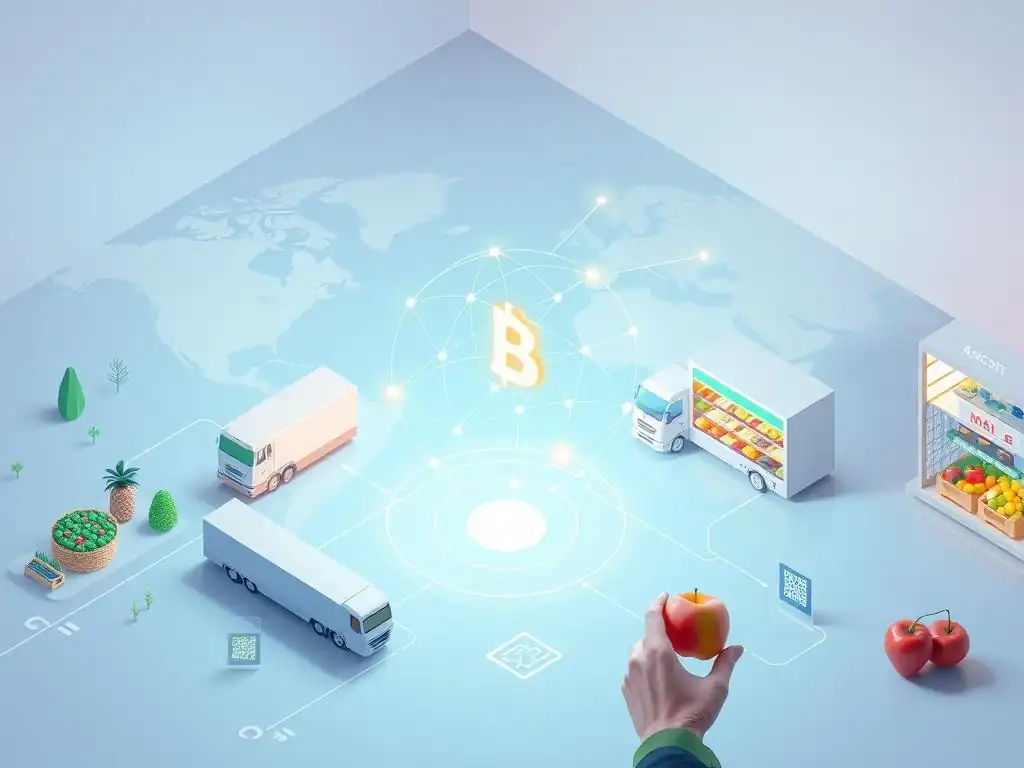
Blockchain technology offers a powerful solution to the challenges of opacity and lack of trust plaguing the food supply chain. By providing a decentralized, immutable ledger that records every transaction or movement of a food product, blockchain creates a single, shared source of truth accessible to authorized parties. This allows for unprecedented visibility across the entire chain, from the initial producer to the final retailer and, potentially, the consumer. Each step, such as planting, harvesting, processing, packaging, shipping, and receiving, can be logged on the blockchain, creating a comprehensive and verifiable history.
Implementing blockchain in the food supply chain enables stakeholders – including farmers, processors, distributors, retailers, and regulators – to track food products in near real-time. This enhanced transparency is crucial for identifying bottlenecks, verifying claims about origin or organic status, and, most importantly, quickly responding to safety incidents. Unlike traditional systems where information might be siloed or easily altered, the tamper-evident nature of blockchain ensures that the data recorded about a food item's journey is reliable and trustworthy, directly addressing key concerns about the authenticity and safety of food products.
Blockchain Food Supply Chain Trust: A Solution to Consumer Concerns
Addressing Food Fraud and Counterfeiting with Blockchain Technology
Food fraud, which includes intentional adulteration, mislabeling, or counterfeiting, is a significant global issue, estimated to cost the industry billions of dollars annually and posing serious health risks to consumers. For instance, olive oil adulteration is a persistent problem, where cheaper oils are mixed and sold as extra virgin. Seafood mislabeling is also rampant, with studies often finding a significant percentage of fish sold under the wrong name, sometimes substituting less desirable or even protected species. These fraudulent activities thrive in complex, opaque supply chains where it's difficult to verify a product's true identity and origin.
Blockchain technology directly combats food fraud by creating an immutable record of a product's journey and characteristics. Each batch or even individual item can be assigned a unique digital identity on the blockchain. As the product moves through the supply chain, relevant data – such as origin, processing dates, ingredients added, inspection results, and transportation details – are added to its digital history.
This secure, verifiable trail makes it significantly harder to introduce counterfeit products or misrepresent a product's attributes without detection. Any attempt to alter the recorded data would be evident to all participants on the network, providing a powerful deterrent against fraudulent activities and building blockchain food supply chain trust.
Improving Traceability and Accountability in the Food Industry
Traditional food traceability systems often rely on fragmented databases or paper records, making tracing a product back to its source a slow and laborious process. In the event of a foodborne illness outbreak or a recall, this lack of efficient traceability can have severe consequences, delaying the identification of contaminated products and potentially allowing more people to become sick. The time it takes to trace a product could be days or even weeks, leading to larger recalls, increased waste, and further erosion of public confidence.
Blockchain dramatically improves traceability by providing a near-instantaneous, end-to-end view of a product's movement. By scanning a QR code on a product, consumers or businesses can potentially access a summary of its journey, from the farm where it was grown to the store shelf.
This granular level of traceability allows for pinpoint accuracy in identifying the source of contamination during a recall, enabling targeted removal of affected products rather than broad, costly recalls. This enhanced accountability, where every participant's actions are recorded on the immutable ledger, fosters greater responsibility throughout the supply chain and strengthens blockchain food supply chain trust.
Case Study: Walmart's Blockchain Implementation for Food Safety
Background: Walmart's Challenge in Ensuring Freshness and Authenticity of Produce
Walmart, one of the world's largest retailers, faced significant challenges in ensuring the freshness and safety of the vast quantities of produce it sells. Like many large companies, its supply chains are incredibly complex, involving numerous suppliers, distributors, and transportation legs across different regions and even countries. Tracing the origin of produce like leafy greens, which have been linked to past outbreaks, was a particularly cumbersome task.
Using their legacy systems, tracing a single package of sliced mangoes back to the farm could take Walmart nearly seven days. This delay was unacceptable in situations requiring rapid recalls to protect public health.
Beyond safety, ensuring the authenticity and quality of produce was also a concern. Verifying claims about sustainable farming practices, organic certification, or specific growing regions relied on manual checks and paper documentation, increasing the risk of errors or misrepresentation. Walmart recognized that improving traceability was essential not only for faster recall response times but also for building greater confidence among consumers about the quality and safety of the food they purchase.
Solution: Implementing IBM Food Trust Blockchain for Traceability
To address its traceability challenges, Walmart partnered with IBM to implement a blockchain-based solution, the IBM Food Trust network. This permissioned blockchain network allows authorized participants – including farmers, suppliers, distributors, and retailers – to securely share and access data about food products as they move through the supply chain. Walmart mandated that its suppliers of leafy greens join the network and upload data about their products, including origin farms, processing facilities, and shipping information.
The system creates a digital trail for each batch of produce on the blockchain. When a supplier harvests a crop, that information is entered. As the crop is processed, packaged, and shipped, each step is recorded on the shared ledger. This creates a comprehensive, immutable history accessible to all participants in the network. This collaborative data-sharing approach, facilitated by the blockchain, provided Walmart and its partners with unprecedented visibility into their fresh produce supply chain.
Results: Faster Recall Times and Increased Consumer Confidence
The implementation of the IBM Food Trust blockchain yielded dramatic results for Walmart. The time required to trace a product, such as the aforementioned sliced mangoes, from the store back to its origin farm was reduced from nearly seven days to just seconds. This exponential improvement in traceability significantly enhances Walmart's ability to respond quickly and effectively to food safety incidents. In the event of a contamination issue, they can now identify the affected products and suppliers with speed and precision, minimizing the scope of recalls and getting potentially harmful products off shelves much faster.
This increased efficiency in managing food safety risks directly contributes to building blockchain food supply chain trust. By demonstrating the capability for rapid tracing and targeted recalls, Walmart signals a commitment to consumer safety that was previously difficult to prove. While the direct impact on consumer confidence is harder to quantify immediately, the underlying system provides a foundation for greater transparency and accountability that can be communicated to consumers, reinforcing their trust in the food products purchased from Walmart.
How Blockchain Builds Trust in the Food Supply Chain
Immutability: Ensuring Data Integrity and Preventing Tampering
One of the foundational pillars upon which blockchain food supply chain trust is built is the principle of immutability. Once data is recorded on a blockchain, it is extremely difficult, if not practically impossible, to alter or delete it without being detected by other participants in the network. This is because each new block of data added to the chain is cryptographically linked to the previous one, forming a secure chain. Any attempt to tamper with a block would break this cryptographic link, alerting the network to the unauthorized change.
In the context of the food supply chain, this means that records related to a product's origin, processing history, inspection results, or temperature during transport are highly reliable. A supplier cannot easily alter the origin of a product to fetch a higher price, nor can a distributor falsify temperature logs to hide improper handling. This inherent data integrity provides a level of assurance that is simply not possible with traditional paper records or centralized databases that can be more easily manipulated. This secure record-keeping is fundamental to establishing blockchain food supply chain trust.
Transparency: Providing Consumers with Access to Supply Chain Information
While not all blockchain implementations expose every detail to the public, the technology inherently supports a high degree of transparency among network participants. Furthermore, solutions are emerging that allow consumers, with a simple scan of a QR code on product packaging, to access specific, verified information about the food item they are holding. This could include details about the farm where it was grown, the date it was harvested, processing information, and even details about its journey to the store.
This level of direct, verifiable information empowers consumers and builds trust by removing the guesswork and reliance on potentially unverifiable labels. For example, a consumer concerned about the origin of their coffee can scan a code and see the specific farm or cooperative it came from, along with certifications. This contrasts sharply with generic "Product of X" labels. By providing this window into the supply chain, companies using blockchain demonstrate a commitment to openness and accountability, fostering a stronger connection with their customers and enhancing blockchain food supply chain trust.
Enhanced Traceability: Tracking Products from Farm to Fork
As discussed earlier, the ability to trace a product's journey from its initial source ("farm") to its final destination ("fork") is dramatically enhanced by blockchain. Every hand the product passes through, every transformation it undergoes, and every location it visits can be meticulously recorded on the distributed ledger. This creates a comprehensive, step-by-step history that is easily queryable by authorized parties.
This end-to-end traceability is invaluable for various reasons. For food safety, it allows for rapid identification of the source of contamination. For quality assurance, it helps verify handling procedures and storage conditions throughout the journey. For sustainability and ethical sourcing, it provides verifiable proof of origin and practices. This granular, accessible history builds trust by allowing stakeholders, including consumers, to verify claims about the product's journey and attributes, ensuring that the product in their hand matches the information provided, thereby strengthening blockchain food supply chain trust.
Benefits of Blockchain for Food Supply Chain Confidence
Reduced Food Waste and Spoilage
Improved traceability and transparency offered by blockchain can significantly contribute to reducing food waste and spoilage throughout the supply chain. With better visibility into inventory levels, product locations, and expiration dates across the network, companies can manage logistics more efficiently. For instance, distributors can better predict supply and demand, reducing overstocking. Furthermore, detailed tracking of conditions like temperature during transit, verifiable via blockchain, helps identify potential spoilage risks early, allowing for intervention or diversion of products before they become unsaleable.
Consider perishable goods like fruits and vegetables. If a shipment experiences a temperature deviation that doesn't immediately spoil the product but reduces its shelf life, this information can be recorded on the blockchain. Retailers receiving this shipment are aware of the reduced shelf life and can prioritize selling it faster, preventing it from expiring on the shelf.
While precise global figures for waste reduction solely attributable to blockchain are still emerging, estimates suggest that better supply chain visibility, which blockchain enables, can reduce waste by a significant percentage across various sectors. For example, the UN estimates roughly one-third of all food produced globally is lost or wasted. Blockchain offers a tool to chip away at this massive problem.
Improved Food Safety and Regulatory Compliance
Blockchain's ability to provide immutable, transparent, and easily accessible records is a game-changer for food safety and regulatory compliance. During a foodborne illness outbreak, the rapid tracing capabilities mentioned earlier allow health authorities and companies to quickly identify the source of contamination, isolate affected batches, and issue targeted recalls. This speed saves lives, minimizes the scope of the outbreak, and protects public health far more effectively than traditional methods.
Furthermore, blockchain simplifies compliance with complex food safety regulations, such as those requiring specific documentation of handling processes, origins, or ingredients. Regulators can potentially gain access to verified data directly from the blockchain, streamlining audits and inspections. Companies can demonstrate compliance with verifiable proof recorded on the ledger, reducing administrative burdens and the risk of non-compliance penalties. This systematic approach to safety and compliance instills greater confidence in the integrity of the food system, fostering blockchain food supply chain trust.
Strengthened Brand Reputation and Consumer Loyalty
In an era where consumers value transparency and authenticity, adopting blockchain technology can significantly enhance a brand's reputation and foster greater consumer loyalty. Companies that can offer verifiable proof of their product's journey, safety standards, and ethical sourcing practices differentiate themselves from competitors who operate with less transparency. Providing consumers with the ability to access this information directly empowers them and builds a sense of trust and partnership.
Brands that proactively embrace blockchain to demonstrate their commitment to quality and safety are likely to be viewed more favorably by consumers. This transparency can translate into increased sales and repeat business. For example, a coffee company using blockchain to show consumers the exact farm their beans came from and verify fair trade practices can command a premium and build a loyal customer base based on shared values and verifiable claims. Ultimately, blockchain provides a powerful tool for brands to build and maintain blockchain food supply chain trust in a crowded marketplace.
Challenges to Blockchain Adoption in the Food Industry
Scalability and Interoperability Issues
Despite its promise, the widespread adoption of blockchain in the food industry faces several technical hurdles, particularly concerning scalability and interoperability. The food supply chain is vast and involves billions of transactions daily, from small farm sales to large retail movements. Public blockchains, while highly decentralized, can sometimes struggle with the volume and speed required for real-time tracking of every single food item. Private or permissioned blockchains, like IBM Food Trust, offer better scalability but require careful management of access and governance.
Another significant challenge is interoperability. The food industry is highly fragmented, with countless different companies using diverse legacy systems and data formats. For a blockchain network to be truly effective, these disparate systems need to be able to communicate and share data seamlessly. Creating standards and protocols that allow different blockchain platforms and traditional databases to interact is a complex undertaking. Without effective interoperability, the vision of a single, transparent, farm-to-fork view remains fragmented.
Data Privacy and Security Concerns
While blockchain is often touted for its security, implementing it in the food supply chain raises specific data privacy and security concerns. A public blockchain would make sensitive business data visible to everyone, which is often unacceptable for competitive reasons. Permissioned blockchains address this by restricting access, but they introduce the challenge of managing permissions and ensuring data security within the network. Deciding who owns the data entered onto the blockchain and who has the right to access different levels of information is a complex governance issue that needs careful consideration.
Furthermore, while the blockchain itself is highly secure against tampering once data is recorded, the security of the data before it is entered onto the ledger is critical. Ensuring the accuracy and integrity of data captured at the source (e.g., on a farm or in a processing plant) is paramount.
If inaccurate or fraudulent data is initially entered, the immutable nature of the blockchain means the incorrect information persists. Protecting the systems and sensors used to capture this initial data from cyber threats is essential to maintaining the integrity of the entire system and the blockchain food supply chain trust it aims to build.
Cost and Complexity of Implementation
Implementing a blockchain solution across a complex food supply chain is a significant undertaking that involves substantial costs and technical complexity. It requires investment in new technology infrastructure, integration with existing legacy systems, and potentially the development of new software applications. Beyond the technology itself, there are costs associated with training personnel across the entire supply chain – from farmers to warehouse workers to retail staff – on how to use the new system and accurately input data.
Getting all participants in the supply chain, from small producers to large corporations, to agree on a common platform and standard of data entry is a major logistical and political challenge. Smaller players may lack the resources or technical expertise to adopt new systems, potentially creating gaps in the traceability chain. The initial investment and ongoing operational costs can be prohibitive for some, slowing down widespread adoption despite the clear long-term benefits for efficiency, safety, and building blockchain food supply chain trust.
Future Trends: Blockchain and the Evolution of Food Supply Chain Trust
Integration with IoT and AI for Enhanced Tracking
The future of blockchain in the food supply chain lies in its seamless integration with other cutting-edge technologies like the Internet of Things (IoT) and Artificial Intelligence (AI). IoT sensors, such as temperature monitors, humidity sensors, and GPS trackers, can automatically collect real-time data about a product's condition and location during transit and storage.
This data can then be automatically fed onto the blockchain, creating an even more accurate, granular, and verifiable record than manual data entry allows. For example, a smart sensor in a shipping container can record temperature fluctuations every minute and upload this data directly to the blockchain, providing undeniable proof of proper (or improper) cold chain management.
AI can then be layered on top of this rich, blockchain-verified data. AI algorithms can analyze the vast datasets collected from IoT sensors and recorded on the blockchain to identify patterns, predict potential spoilage or quality issues before they occur, optimize logistics routes, and even verify the authenticity of products by analyzing characteristics against expected norms. This combination of secure, verifiable data (blockchain), real-time monitoring (IoT), and intelligent analysis (AI) promises to create highly efficient, proactive, and transparent food supply chains, significantly advancing blockchain food supply chain trust.
Decentralized Food Supply Chain Management Systems
While many current blockchain initiatives in the food industry utilize permissioned networks managed by consortiums or large companies, a future trend could involve the development of more decentralized food supply chain management systems. These systems could potentially leverage public or semi-public blockchains and utilize smart contracts to automate processes, such as payments triggered upon successful delivery or quality verification. This could empower smaller producers and reduce reliance on intermediaries.
Decentralized autonomous organizations (DAOs) could potentially govern these networks, allowing participants to collectively make decisions about standards, protocols, and network upgrades. This model could foster greater inclusivity and potentially reduce the power imbalances often seen in traditional supply chains. While fully decentralized food supply chains face significant challenges regarding governance, scalability, and regulation, the potential for increased resilience, fairness, and direct peer-to-peer interactions could further enhance blockchain food supply chain trust by distributing control and increasing transparency.
The Rise of Consumer-Centric Transparency Initiatives
The demand for transparency from consumers is a powerful driver for blockchain adoption. Future trends will likely see an increase in consumer-facing blockchain initiatives. This goes beyond simply providing a QR code for traceability. It could involve platforms where consumers can interact with producers, verify ethical claims through tokenized certification, or even participate in decentralized marketplaces that prioritize transparency and direct sourcing verified by blockchain.
Imagine a system where consumers can scan a product and not only see its journey but also verify the carbon footprint associated with its transportation, or confirm that a percentage of the purchase price goes directly to the farmer. Such initiatives, powered by blockchain, put verifiable information directly into the hands of consumers, allowing them to make informed purchasing decisions based on trust and values. This shift towards empowering consumers with verifiable supply chain data is a key aspect of how blockchain will continue to evolve and build blockchain food supply chain trust.
Conclusion: Rebuilding Consumer Trust with Blockchain in Food
Blockchain: A Catalyst for a More Transparent and Trustworthy Food System
The challenges facing the modern food supply chain – including complexity, lack of transparency, and vulnerability to fraud – have significantly eroded consumer confidence. Traditional systems are often inadequate for providing the level of verifiable information consumers now demand. Blockchain technology emerges as a powerful catalyst for transforming this landscape, offering a secure, immutable, and transparent ledger that can track food products from their origin to the consumer's table. By recording every step of a product's journey on a shared, tamper-evident database, blockchain fundamentally changes how information flows and how trust is established within the food system.
The implementation of blockchain addresses core issues like food fraud through verifiable authenticity, improves traceability for faster and more targeted recalls, and enhances accountability among all participants. Real-world examples, such as Walmart's successful reduction of tracing time from days to seconds using blockchain, demonstrate the tangible benefits in terms of efficiency and safety. While challenges related to scalability, interoperability, and implementation costs remain, the clear advantages in building blockchain food supply chain trust are driving increasing adoption across the industry.
The Future of Food Security and Consumer Confidence
Looking ahead, the integration of blockchain with technologies like IoT and AI promises to create even more sophisticated and resilient food supply chains. Real-time data collection, automated processes via smart contracts, and intelligent analysis will further enhance efficiency, reduce waste, and improve safety. The potential for more decentralized models and increasingly consumer-centric transparency initiatives suggests a future where consumers have unprecedented access to verifiable information about their food, empowering them to make choices based on trust.
Ultimately, blockchain technology is not just about tracking goods; it's about building a foundation of trust in a system that impacts everyone's health and well-being. By providing verifiable proof of origin, safety, and ethical practices, blockchain helps bridge the gap between consumers and the complex global food network. As adoption grows and the technology evolves, blockchain is set to play a critical role in ensuring food security and fostering a new era of blockchain food supply chain trust, where confidence is not just hoped for, but digitally built and verified.
Frequently Asked Questions
How does blockchain technology enhance consumer trust in the food supply chain?
Blockchain creates a transparent and immutable record of the food's journey from origin to consumer. This increased visibility helps build trust by allowing consumers to verify product information and authenticity.
What are some specific examples of how blockchain is used to improve food safety?
Blockchain can track temperature monitoring, origin verification, and handling processes throughout the supply chain. This allows for faster and more accurate recall processes if issues are identified, reducing the risk of contaminated products reaching consumers.
What challenges are associated with implementing blockchain solutions in the food industry?
Data standardization across various participants in the supply chain is a significant hurdle. Also, the cost of implementation and the need for technological expertise can be barriers for smaller businesses.
How does blockchain contribute to reducing food fraud in the supply chain?
By providing a verifiable and tamper-proof record, blockchain makes it much harder to substitute ingredients or mislabel products. This traceability and transparency act as a deterrent to fraudulent activities.
How is blockchain regulation impacting the adoption of the technology in the food supply chain?
Clear and consistent regulations regarding data privacy, security, and interoperability are crucial for widespread adoption. Without these guidelines, businesses may hesitate to invest in blockchain solutions due to legal uncertainties.
Final Reflection: Cultivating Trust in Every Bite
The journey of food from farm to fork is often shrouded in mystery, but the potential of blockchain to illuminate this path is undeniable. The promise of enhanced transparency and traceability in the food supply chain, powered by blockchain, is no longer a futuristic fantasy but a tangible solution to rebuild consumer trust in an era of increasing skepticism. This technology offers a powerful antidote to the anxieties surrounding food safety, authenticity, and ethical sourcing that plague modern consumers.
The impact of blockchain on the food industry extends far beyond mere efficiency gains; it's about fundamentally reshaping our relationship with the food we consume. Knowing the origin and journey of our food empowers us to make informed choices, supporting sustainable practices and holding producers accountable. This shift towards transparency is not just a trend, but a necessary evolution in a world demanding greater responsibility and ethical consumption. Trust is built with consistency.
This simple truth underscores the core value proposition of blockchain in the food supply chain: providing a consistent, verifiable record that fosters confidence and reduces uncertainty.
As we look to the future, let us embrace the potential of blockchain to revolutionize the food industry and rebuild the vital bridge of trust between producers and consumers. Consider the power you hold as an informed consumer. Seek out brands that prioritize transparency and traceability, and demand greater accountability from the food industry. By actively participating in this transformation, you can contribute to a future where every bite is a testament to integrity, sustainability, and unwavering trust.
Ignite Your Food Trust Revolution!
Thank you for exploring how blockchain is transforming trust in our food supply chains. Now that you understand its potential, it’s time to take action and help build a more transparent and reliable food system.
Here are some ways you can get involved:
- Demand Transparency: Support food brands that utilize blockchain technology for traceability. Your choices can drive change.
- Learn More: Explore additional resources and articles on innovative blockchain applications beyond the food industry to deepen your understanding.
- Share the Knowledge: Talk about the benefits of blockchain in the food supply chain with friends and family to raise awareness and encourage informed consumer decisions.
What steps will you take today to champion blockchain-driven food transparency?
Leave a Reply