
How Blockchain is Empowering Indie Game Developers


Welcome to Blockchain Trends, your guide to the revolutionary world of blockchain technology beyond the hype. Ever wondered how this powerful technology is transforming industries? Today, we delve into an exciting corner: gaming. Discover how blockchain is empowering indie game devs, offering them unprecedented control, monetization opportunities, and community engagement. Intrigued? Read on to unlock the potential of decentralized gaming and see how it's reshaping the future of game development!
- Blockchain Revolutionizing Indie Game Development
- Key Benefits of Blockchain for Independent Game Studios
- Blockchain Game Development: Use Cases & Examples
- Overcoming the Challenges of Blockchain Integration for Indies
- The Future of Indie Gaming: Blockchain's Continued Impact
-
Frequently Asked Questions
- How can blockchain technology help indie game developers with funding?
- What role do NFTs play in empowering indie game devs?
- How does blockchain address the issue of piracy in indie games?
- Can blockchain improve the fairness and transparency of in-game economies?
- What are some potential challenges for indie game devs adopting blockchain?
- Final Reflection: The Dawn of Decentralized Creativity
- Unearth Your Indie Game's Potential with Blockchain!
Blockchain Revolutionizing Indie Game Development
The Unique Challenges Faced by Indie Game Developers
Independent game developers, often working with limited resources and smaller teams, face a unique set of challenges in a competitive industry dominated by large studios. One of the most significant hurdles is securing funding. Unlike established studios with access to traditional investment routes, indie developers often rely on personal savings, crowdfunding, or small grants, which can severely limit project scope and longevity. Marketing and discoverability also present formidable obstacles.
The digital marketplaces are saturated, and cutting through the noise to reach potential players requires significant marketing budgets, something often beyond the reach of independent teams. Furthermore, the traditional revenue-sharing models imposed by major platforms can be unfavorable, taking a substantial cut of sales and impacting the financial sustainability of indie studios. This combination of funding scarcity, marketing difficulties, and revenue limitations creates a challenging environment for independent creators to thrive and innovate.
Adding to these financial and visibility pressures, indie game developers grapple with issues of intellectual property protection and fair competition. In a digital landscape where asset theft and game cloning are prevalent, smaller studios are particularly vulnerable. They often lack the legal and financial resources to effectively protect their creations or combat unfair competitive practices from larger entities.
Moreover, building and maintaining a community around their games is crucial for indie developers, yet traditional centralized platforms often restrict direct interaction with players, hindering the formation of strong, loyal fan bases. This lack of control over community engagement and player relationships further marginalizes indie developers in the broader gaming ecosystem.
Blockchain's Solution: A New Paradigm for Indie Games
Blockchain technology offers a compelling alternative and a potential paradigm shift for the indie game development landscape. By its very nature, blockchain provides solutions to many of the core challenges that independent developers face. Firstly, blockchain's capacity for tokenization opens up novel funding mechanisms. Indie studios can issue their own cryptocurrencies or tokens to pre-sell in-game assets or future game access, directly engaging with their community and raising capital outside of traditional venture capital or publishing routes. This direct-to-community funding model, powered by blockchain, can significantly alleviate the initial financial burdens and empower developers to maintain creative control.
Furthermore, blockchain's decentralized and transparent nature addresses issues of intellectual property and fair competition. By registering game assets and ownership on a blockchain, developers can create an immutable record of their creations, making it significantly harder to plagiarize or steal assets. Smart contracts, another key feature of blockchain, can automate revenue sharing and ensure fairer distribution among developers, artists, and even players, bypassing the traditional intermediaries that take substantial cuts.
Moreover, blockchain facilitates the creation of truly community-driven games. Decentralized platforms and DAOs (Decentralized Autonomous Organizations) can empower players to participate in game development decisions, own in-game assets, and contribute to the game's ecosystem, fostering a stronger sense of ownership and loyalty, ultimately benefiting indie developers by building engaged and supportive communities around their games.
Key Benefits of Blockchain for Independent Game Studios
Funding and Tokenization: Securing Investment for Indie Projects
For indie game developers, securing funding is often the first and most daunting hurdle. Traditional funding routes, such as publishers or venture capitalists, can be restrictive, demanding significant equity or creative control in exchange for investment. Blockchain offers a revolutionary alternative through tokenization.
Indie studios can create and issue their own digital tokens, representing in-game assets, future game access, or even a share in the game's ecosystem. These tokens can be offered to the public through Initial Coin Offerings (ICOs) or other token sales, directly engaging with potential players and early supporters. This method allows developers to raise capital while retaining full ownership and creative control of their projects.
A real-world example of this in action is the game Illuvium. While not strictly indie in team size anymore, its initial funding strategy showcases tokenization effectively. Illuvium utilized token sales to raise substantial capital for development, offering early investors governance tokens and staking rewards.
This allowed them to build a passionate community and secure funding without diluting ownership or ceding creative direction to traditional publishers. Estimates suggest Illuvium's token sales generated tens of millions of dollars, demonstrating the potential of blockchain-based funding for even ambitious indie projects. This direct access to capital empowers independent teams to pursue innovative and unconventional game ideas that might be deemed too risky by traditional investors, fostering greater diversity and creativity within the gaming landscape.
Enhanced Ownership and Trading: Empowering Players and Developers
Blockchain technology, particularly through Non-Fungible Tokens (NFTs), introduces a paradigm shift in digital asset ownership within games. Traditionally, in-game items are owned by the game company, and players have limited rights to them. NFTs change this dynamic by representing unique in-game assets – from characters and weapons to virtual land and cosmetic items – on a blockchain.
This means players genuinely own these assets; they are recorded on a public ledger and are transferable and tradeable outside of the game itself. This concept of true digital ownership is particularly empowering for players of indie games, fostering a deeper sense of investment and engagement.
For indie developers, NFT integration opens up new revenue streams and enhances player retention. By selling limited edition or unique NFTs representing in-game items, developers can generate revenue beyond initial game sales. Furthermore, secondary market trading of these NFTs can create a royalty stream for developers, earning a percentage of every transaction even after the initial sale. Games like The Sandbox exemplify this model.
Players can own virtual land as NFTs and create experiences within their land, trading both land and in-game assets on open marketplaces. This creates a player-driven economy and provides indie developers with continuous revenue opportunities, aligning their incentives with the long-term success and player engagement of their games. This shift towards player ownership and tradable assets can significantly boost the appeal and longevity of indie games in a market increasingly valuing digital collectables and player agency.
Fairer Revenue Distribution: Cutting Out the Middleman
Traditional game distribution platforms, such as app stores and console marketplaces, often take a significant cut of game sales revenue, typically around 30%. This can be particularly detrimental to indie developers operating on tight margins, limiting their profitability and reinvestment capacity. Blockchain technology offers the potential to create decentralized game distribution platforms that significantly reduce or eliminate these intermediary fees, leading to fairer revenue distribution for indie studios.
Decentralized marketplaces built on blockchain can connect developers directly with players, bypassing centralized platforms and their associated fees. Smart contracts can automate revenue splits, ensuring that developers receive a larger percentage of each sale, potentially up to 95% or even 100% in some models. While fully decentralized game stores are still evolving, projects like Ultra are exploring this space, aiming to offer lower platform fees and direct developer-player relationships.
If a typical indie game sells for $20 on a traditional platform, the developer might receive only $14 after the platform cut. On a blockchain-based platform with significantly lower fees, the developer could potentially earn $18 or more per sale. This increased revenue per sale directly translates to greater financial sustainability for indie studios, allowing them to reinvest in development, marketing, and community building, fostering a more vibrant and equitable gaming ecosystem.
Increased Transparency and Community Engagement: Building Trust with Players
Transparency and community engagement are crucial for the success of indie games. Blockchain technology inherently promotes transparency through its public and immutable ledger. For indie developers, this can be leveraged to build trust and stronger relationships with their player communities. For example, game developers can transparently track in-game asset supply, proving scarcity and authenticity of NFTs. They can also use blockchain to transparently manage in-game economies and distribute rewards, ensuring fairness and preventing manipulation.
Furthermore, blockchain facilitates more direct and democratic community engagement through DAOs. Indie studios can create DAOs to allow token holders (players and community members) to participate in game governance, voting on game updates, feature requests, or even resource allocation. This community-driven approach fosters a sense of ownership and co-creation, making players feel more invested in the game's success.
For instance, an indie game studio could use a DAO to let players vote on the next character to be developed or the direction of the game's lore. This level of transparency and participatory governance builds trust and loyalty, transforming players from mere consumers into active stakeholders and advocates for the game, which is invaluable for indie developers seeking to build sustainable and thriving game communities.
Blockchain Game Development: Use Cases & Examples
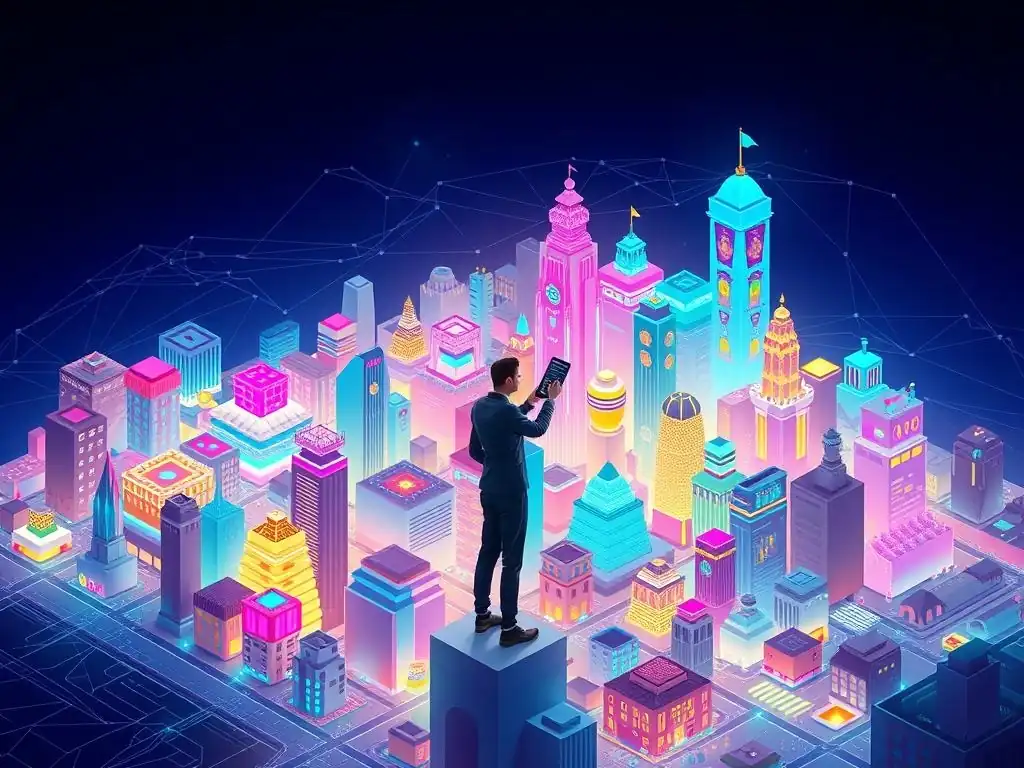
Play-to-Earn (P2E) Models: Rewarding Players for Their Engagement
Play-to-Earn (P2E) is a revolutionary gaming model enabled by blockchain, particularly impactful for indie game developers. Unlike traditional games where players invest time and potentially money without direct financial returns, P2E games reward players with cryptocurrency or NFTs for their in-game activities, skill, and engagement. This can range from completing quests and winning battles to contributing to the game's ecosystem or simply holding valuable in-game assets. P2E fundamentally shifts the player-developer relationship, turning gaming from a purely leisure activity into a potential source of income, especially relevant in regions where economic opportunities are limited.
For indie developers, P2E models can be a powerful tool for attracting and retaining players. By offering tangible financial incentives, indie games can stand out in a crowded market and build a dedicated player base.
Games like Alien Worlds, although having faced criticism for its economy, initially demonstrated the appeal of P2E, attracting a large player base to its simple mining and trading mechanics. While the long-term sustainability of P2E economies is still being explored, the initial success of many P2E games shows the potential for indie developers to leverage this model to create engaging and economically rewarding experiences, attracting players who are not just looking for entertainment but also for opportunities to earn while playing.
NFT Integration: Unique and Tradeable In-Game Assets
NFT integration is a cornerstone of blockchain gaming, offering compelling use cases for indie game developers to enhance player engagement and create novel game mechanics. NFTs, as unique and verifiable digital assets on a blockchain, allow for true ownership of in-game items. This goes beyond cosmetic items; NFTs can represent characters, weapons, virtual land, resources, and even in-game achievements, each with provable scarcity and authenticity. For indie games, NFTs can be used to create limited edition items, special event rewards, or player-created content, adding layers of collectability and value to in-game assets.
Games like Ember Sword, currently in development, are heavily focused on NFT integration, with players owning land parcels as NFTs and building within a persistent world. This allows for player-driven economies and ecosystems to emerge, where the value of in-game assets is determined by player demand and utility. Indie developers can leverage NFTs to create unique gameplay loops centered around collecting, trading, and utilizing these assets.
NFTs also enable interoperability, meaning assets from one blockchain game could potentially be used in other compatible games or metaverse environments in the future, further enhancing their value and utility. This potential for cross-game asset utility and player-owned digital economies makes NFT integration a powerful tool for indie developers to create engaging and long-lasting game experiences.
Decentralized Autonomous Organizations (DAOs) in Game Development: Community-Driven Games
Decentralized Autonomous Organizations (DAOs) represent a cutting-edge approach to game development and governance, particularly relevant to the indie gaming scene. DAOs are community-led entities with rules encoded on a blockchain, enabling decentralized and transparent decision-making. In game development, DAOs can empower players to participate in shaping the game's future, voting on updates, feature requests, economic policies, or even the overall direction of the game. This community-driven model aligns perfectly with the ethos of indie gaming, often valuing player feedback and fostering close-knit communities.
For indie developers, utilizing DAOs can lead to more engaged and loyal player bases. By giving players a voice in game development, DAOs foster a sense of ownership and co-creation. Projects like Yield Guild Games (YGG), while not a game itself, operate as a DAO investing in and supporting P2E games, demonstrating the organizational power of DAOs within the blockchain gaming space.
Imagine an indie game where players, through a DAO, vote on the next expansion pack's theme or the balancing of in-game resources. This level of player participation can create a more dynamic and evolving game experience, driven by the community itself, and can be a significant differentiator for indie games seeking to build strong and lasting player communities.
Case Study: Axie Infinity - Pioneering Play-to-Earn for Indie Developers
Axie Infinity, developed by the Vietnamese studio Sky Mavis (initially a relatively small team), stands as a pioneering example of a successful Play-to-Earn (P2E) game and a case study in how blockchain can empower indie developers. Axie Infinity is a creature-battling game built on blockchain, where players collect, breed, and battle digital creatures called Axies, represented as NFTs. The game's economy is built around two native tokens, AXS and SLP, which players can earn through gameplay and trade on cryptocurrency exchanges.
Axie Infinity's success stemmed from its early adoption of the P2E model and its focus on building a strong community. By rewarding players for their time and skill with cryptocurrency, Axie Infinity attracted millions of players globally, particularly in regions like Southeast Asia and Latin America, where P2E offered significant economic opportunities. At its peak in 2021, Axie Infinity generated billions of dollars in NFT trading volume and revenue, demonstrating the immense potential of blockchain gaming. While Axie Infinity's economy has faced challenges and adjustments, its initial success proved that indie developers could leverage blockchain to create highly engaging and economically viable games. It showcased how blockchain can level the playing field, allowing smaller studios to compete with larger companies by offering innovative gameplay models and direct economic incentives to players. Axie Infinity's journey provides valuable lessons for indie developers looking to explore the transformative potential of blockchain in gaming.
Overcoming the Challenges of Blockchain Integration for Indies
Technical Barriers to Entry: Finding the Right Development Tools
Integrating blockchain technology into game development, while offering numerous benefits, presents technical barriers, especially for indie developers who may lack specialized blockchain expertise. Developing blockchain games often requires familiarity with blockchain protocols, smart contract programming (e.g., Solidity), and web3 development tools, which are different from traditional game development skillsets. This technical complexity can be a significant hurdle for smaller teams with limited resources and expertise.
However, the landscape is rapidly evolving, with increasing availability of user-friendly blockchain development tools and platforms tailored for game developers. Game engines like Unity and Unreal Engine are offering plugins and SDKs (Software Development Kits) that simplify blockchain integration. Platforms like Enjin and Immutable X provide infrastructure and tools specifically designed for NFT and blockchain game development, abstracting away some of the underlying technical complexities.
Moreover, online resources, tutorials, and developer communities are growing, making it easier for indie developers to learn and access the necessary knowledge. While technical challenges remain, the increasing accessibility of blockchain development tools is gradually lowering the barriers to entry, empowering more indie studios to explore and adopt blockchain technology in their games.
Scalability Issues: Ensuring Smooth Gameplay and Transactions
Scalability is a critical challenge for blockchain technology in general, and it directly impacts blockchain gaming, especially for indie games aiming for mass adoption. Many blockchains, particularly early generation ones, have limited transaction processing capacity, leading to slow transaction speeds and high gas fees (transaction costs) when network activity increases. This can negatively impact gameplay, especially in games requiring frequent in-game transactions or real-time interactions. Imagine a fast-paced action game where every in-game item drop or player interaction requires a slow and costly blockchain transaction – the user experience would be severely compromised.
However, significant advancements are being made in blockchain scalability solutions. Layer-2 scaling solutions, such as sidechains, rollups, and state channels, are designed to offload transaction processing from the main blockchain, significantly increasing transaction speeds and reducing fees. Blockchains specifically designed for gaming and NFTs, like Flow and Polygon, are engineered for higher throughput and lower costs.
Furthermore, techniques like off-chain transactions and state channels can be used for certain in-game interactions, minimizing on-chain activity and optimizing performance. While scalability remains a concern, the continuous development and adoption of these scaling solutions are mitigating these issues, making blockchain technology increasingly viable for games requiring smooth gameplay and high transaction volumes, even for indie games aiming for a large player base.
Regulatory uncertainty surrounding blockchain, cryptocurrencies, and NFTs poses a significant challenge for indie game developers venturing into this space. The legal and regulatory landscape is still evolving and varies considerably across different jurisdictions. Issues such as the legal classification of in-game tokens and NFTs, compliance with securities laws, and regulations related to virtual currencies are still being clarified in many regions. This lack of clarity creates uncertainty and potential legal risks for indie studios, who may lack the resources to navigate complex and rapidly changing regulations.
For example, the legal status of P2E mechanics and the potential classification of in-game tokens as securities are still under scrutiny in some jurisdictions. Indie developers need to be mindful of these regulations and seek legal counsel to ensure compliance in their target markets. However, proactive engagement from the blockchain and gaming industry is helping to shape clearer and more favorable regulations.
Industry associations and advocacy groups are working with regulators to educate them about blockchain gaming and advocate for sensible and innovation-friendly frameworks. While regulatory uncertainty remains a challenge, increased dialogue and evolving legal frameworks are gradually providing more clarity and paving the way for greater regulatory certainty for blockchain gaming and indie developers operating in this space.
The Future of Indie Gaming: Blockchain's Continued Impact
Decentralized Gaming Ecosystems: A New Era for Indie Developers
The future of indie gaming is increasingly intertwined with the development of decentralized gaming ecosystems powered by blockchain. These ecosystems envision a more open, interoperable, and player-centric gaming landscape, offering significant advantages for indie developers. Decentralized platforms can provide indie studios with greater control over distribution, revenue sharing, and community engagement, moving away from the constraints of centralized platforms. Imagine a future where indie games are easily discoverable and accessible across various decentralized game launchers and marketplaces, with developers retaining a larger share of revenue and directly connecting with their player communities without platform intermediaries.
Blockchain-based interoperability standards can enable cross-game asset utility, allowing NFTs and in-game items to be used across different games and metaverse environments. This creates a more valuable and interconnected digital gaming world, benefiting both players and developers. Indie studios can collaborate within these decentralized ecosystems, sharing resources, assets, and even player communities, fostering a more collaborative and supportive environment. This shift towards decentralized gaming ecosystems represents a new era for indie developers, empowering them to create more innovative, community-driven, and economically sustainable games, fostering greater diversity and creativity within the gaming industry.
The Metaverse and Indie Games: Creating Immersive and Interoperable Experiences
The metaverse, often envisioned as a persistent, shared virtual world, presents a significant opportunity for indie game developers, particularly in conjunction with blockchain technology. Indie games, with their often innovative and experimental nature, are well-positioned to contribute to the diverse and evolving landscape of the metaverse. Blockchain plays a crucial role in enabling key metaverse characteristics, such as digital ownership, interoperability, and user-generated content, all of which are areas where indie developers can excel.
Indie studios can leverage blockchain to create unique and immersive metaverse experiences, building virtual worlds, in-world economies, and player-driven narratives. NFTs can represent virtual land, avatars, and in-world assets within the metaverse, allowing players to own and control their digital identities and possessions.
Interoperability enabled by blockchain standards can allow assets and avatars to move seamlessly between different metaverse experiences and games, creating a more cohesive and interconnected metaverse. Indie developers can contribute to building the open and decentralized metaverse, creating niche experiences, unique game mechanics, and vibrant virtual communities, enriching the overall metaverse ecosystem and offering players diverse and engaging immersive experiences.
Predictions and Trends: What's Next for Blockchain and Indie Game Development?
Looking ahead, several key trends and predictions point towards the continued growth and impact of blockchain on indie game development. Firstly, we can expect to see further maturation and accessibility of blockchain game development tools and platforms, making it easier and more cost-effective for indie studios to integrate blockchain technology. The rise of layer-2 scaling solutions will address scalability concerns, enabling smoother gameplay and higher transaction volumes for blockchain games, making them more appealing to a wider audience.
Secondly, the Play-to-Earn (P2E) model, while still evolving, is likely to refine and diversify, moving beyond simple reward mechanisms towards more sustainable and engaging game economies. We may see the emergence of "Play-and-Earn" or "Play-to-Own" models that focus on intrinsic gameplay value alongside economic incentives, creating more balanced and enjoyable gaming experiences. NFT integration will become more sophisticated, with NFTs evolving beyond mere digital collectibles to represent dynamic in-game assets with utility and interoperability across different games and metaverse environments.
Finally, the growth of decentralized gaming ecosystems and the metaverse will provide new opportunities for indie developers to reach wider audiences, collaborate with other creators, and build the future of gaming, characterized by player ownership, community governance, and open, interconnected virtual worlds. The convergence of blockchain technology and indie game development promises a dynamic and innovative future for the gaming industry.
Frequently Asked Questions
How can blockchain technology help indie game developers with funding?
Blockchain offers alternative funding models like Initial Game Offerings (IGOs) and tokenized assets. This bypasses traditional publishers, giving devs more financial control and direct access to their community.
What role do NFTs play in empowering indie game devs?
NFTs allow for unique in-game assets and digital ownership, which can be sold, traded, or used within the game. This provides new revenue streams and enhances player engagement.
How does blockchain address the issue of piracy in indie games?
Blockchain-based digital rights management (DRM) can track and verify ownership, reducing piracy. It creates a transparent and immutable record of purchases.
Can blockchain improve the fairness and transparency of in-game economies?
Yes, blockchain ensures verifiable scarcity and fair distribution of in-game items and currencies. It also prevents fraud and manipulation in player-driven economies.
What are some potential challenges for indie game devs adopting blockchain?
Challenges include the complexity of blockchain technology, the regulatory uncertainty, and the environmental concerns related to certain blockchains (although there are now many eco-friendly options).
Final Reflection: The Dawn of Decentralized Creativity
The exploration of how blockchain is revolutionizing indie game development reveals a profound shift in power dynamics. No longer solely reliant on traditional publishers and centralized platforms, independent creators are finding new avenues for funding, distribution, and community engagement, marking a significant step towards a more equitable and innovative gaming landscape.
This movement, fueled by blockchain technology, is not merely a trend; it's a fundamental reshaping of the creative process. It's about giving artists control over their creations and fostering a direct connection with their audience, something I believe is crucial for the future of art. The power of the blockchain is that it allows for a more democratic and transparent system, putting the control back in the hands of the creators and the community.
This shift is fostering a vibrant ecosystem where innovation thrives and unique voices can finally be heard.
As we stand at the cusp of this decentralized future, let us embrace the potential of blockchain to empower indie game developers and, by extension, all independent creators. Consider how you can support these innovative artists, explore the possibilities of decentralized platforms, and contribute to a world where creativity knows no bounds. The future of gaming, and perhaps the future of art itself, is in our hands.
Unearth Your Indie Game's Potential with Blockchain!
Thanks for diving into the world of blockchain and indie game development! We hope this article has sparked your imagination and shown you the immense opportunities blockchain technology offers independent creators. Now it's time to take action and bring your vision to life!
Here's how you can get started:
- Explore blockchain-based game development platforms and start experimenting with tokenized assets for your next project. This is your primary action!
- Share this article with fellow indie developers on social media and discuss how blockchain could revolutionize the indie game scene. Let's start a conversation!
- Attend a blockchain gaming conference or join an online community to connect with other developers and learn from their experiences.
What unique blockchain feature will you integrate into your game to stand out in the indie market?
Leave a Reply