
Soulbound Tokens: Exploring the Untapped Potential Beyond NFTs


Welcome to Blockchain Trends, your compass navigating the ever-evolving landscape of decentralized innovation. Dive into our exploration of blockchain's transformative power, stretching far beyond cryptocurrencies. Are Soulbound Tokens truly the key to unlocking a decentralized future, moving beyond the limitations of NFTs? Discover the possibilities and the challenges in our latest article, and prepare to question everything you thought you knew about the next evolution of digital ownership.
Soulbound Tokens: Exploring the Untapped Potential Beyond NFTs
- Introduction: Soulbound Tokens and the Decentralized Future
- Understanding the Core Concepts of Soulbound Tokens
-
Potential Applications of Soulbound Tokens: Beyond Collectibles
- SBTs for Decentralized Identity and Reputation Systems
- Enhancing Trust and Security in DeFi with Soulbound Credentials
- SBTs in Governance: Enabling More Democratic and Accountable DAOs
- Soulbound Tokens for Verifiable Credentials in Education and Employment
- Use Cases in Healthcare: Secure and Patient-Controlled Medical Records via SBTs
- Addressing the Challenges and Limitations of Soulbound Tokens
-
The Future of SBTs: Innovation and Adoption
- The Rise of Soulbound Token Economies: Exploring Potential Economic Models
- Interoperability and Standardization: Ensuring Seamless SBT Integration Across Platforms
- Regulatory Landscape: Navigating the Legal and Ethical Implications of SBTs
- Soulbound Tokens and the Metaverse: Creating More Immersive and Authentic Experiences
- Conclusion: Soulbound Tokens and the Decentralized Future - A Promising Path Forward
-
Frequently Asked Questions
- What are Soulbound Tokens (SBTs) and how are they different from NFTs?
- How can Soulbound Tokens contribute to a more decentralized future?
- What are some potential real-world applications of Soulbound Tokens beyond just identity?
- What are the potential challenges and concerns associated with the widespread adoption of Soulbound Tokens?
- How are Soulbound Tokens expected to impact the development of Decentralized Finance (DeFi)?
- Final Reflection: Embracing the Soulbound Token Revolution
- Unlock Your Soulbound Journey!
Introduction: Soulbound Tokens and the Decentralized Future
What are Soulbound Tokens (SBTs)? A New Paradigm in Blockchain
Soulbound Tokens, or SBTs, represent a novel class of digital assets on the blockchain, fundamentally different from the widely known Non-Fungible Tokens (NFTs). While NFTs typically represent ownership of unique items, often digital art or collectibles, SBTs are designed to represent identity, reputation, and relationships. They are non-transferable tokens tied to a specific "Soul" – a blockchain address or collection of addresses associated with an individual or entity.
This immutability of ownership is a cornerstone of their design, aiming to build a persistent and verifiable digital identity layer. The concept, popularized by Ethereum co-founder Vitalik Buterin and others, envisions a future where these tokens serve as building blocks for a richer, more trustworthy decentralized society.
The core innovation of SBTs lies in their non-transferability. Unlike NFTs which are bought, sold, and traded, SBTs are issued to a Soul and cannot be moved to another wallet. This characteristic makes them ideal for representing achievements, credentials, memberships, or attestations that are inherently linked to a specific identity.
For instance, a university might issue an SBT representing a degree, or a decentralized autonomous organization (DAO) might issue an SBT signifying membership or contribution level. This creates a public, verifiable history tied to the Soul, paving the way for a more robust and verifiable online identity, crucial for realizing the vision of a Soulbound Tokens decentralized future.
Soulbound Tokens vs. Non-Fungible Tokens (NFTs): Key Differences and Use Cases
The primary distinction between Soulbound Tokens and Non-Fungible Tokens lies in their transferability and intended purpose. NFTs, governed by standards like ERC-721 or ERC-1155 on Ethereum, are designed to prove unique ownership and facilitate trading. The market for NFTs has seen significant volume, with platforms like OpenSea reporting billions of dollars in trading volume quarterly, largely driven by collectibles and art. Their use cases revolve around digital art ownership, gaming assets, virtual real estate, and tokenized collectibles, all dependent on the ability to transfer ownership freely.
In contrast, SBTs are explicitly non-transferable. This technical constraint fundamentally alters their potential applications. Instead of representing assets to be traded, SBTs represent attributes or relationships tied to an identity.
Examples include academic degrees, professional certifications, voting rights in a DAO, credit scores, or even proof of attendance at an event. While an NFT might represent a ticket to an event (which could be resold), an SBT could represent proof of attendance at the event, issued to the attendee's Soul after scanning a QR code upon entry. This difference highlights the shift from representing tradable goods (NFTs) to representing verifiable credentials and identity components (SBTs), essential for building the infrastructure of a Soulbound Tokens decentralized future.
The Vision: How SBTs Can Shape a More Decentralized and Trustworthy Web3
The vision behind Soulbound Tokens is to enrich the emerging Web3 ecosystem by introducing a layer of verifiable identity and reputation that is currently lacking. While blockchain excels at tracking ownership and value transfer, it struggles with representing nuanced social and professional relationships or credentials in a decentralized manner. Current Web3 interactions often rely on pseudonymous addresses with no inherent link to real-world identity or reputation, which can hinder trust and coordination.
SBTs offer a potential solution by allowing individuals and organizations to accrue a portfolio of non-transferable tokens that attest to their skills, history, memberships, and commitments. This collection of SBTs, associated with a Soul, could serve as a public, yet privacy-preserving, digital resume or profile. Imagine a decentralized lending protocol that uses SBTs representing verifiable income or credit history instead of relying on centralized credit bureaus.
Or a DAO that grants voting power based on SBTs earned through contributions, rather than just token holdings. This ability to build reputation and identity on-chain through verifiable credentials is seen as a critical step towards building a more trustworthy, equitable, and truly decentralized future powered by Soulbound Tokens.
Understanding the Core Concepts of Soulbound Tokens
Souls and SBT Issuance: Defining Identity and Reputation on the Blockchain
At the heart of the Soulbound Token concept is the notion of a "Soul." A Soul is typically represented by a wallet address, or potentially a set of linked wallet addresses, associated with an individual or entity. This Soul acts as the recipient and custodian of SBTs. Unlike traditional accounts, a Soul is intended to be a persistent identifier within the decentralized ecosystem, accumulating a history of verifiable credentials and affiliations represented by its received SBTs. The design encourages individuals to curate their Soul as a reflection of their digital and potentially real-world identity and reputation.
The issuance of SBTs is a key process. SBTs are minted and sent to a specific Soul's address by accredited issuers. These issuers could be diverse entities within the decentralized space, such as universities granting diplomas, employers issuing proof of work history, DAOs providing membership tokens, or even other individuals attesting to a skill or relationship. For example, a university might issue an SBT representing a Master's degree to a graduate's Soul address.
This issuance is a one-time event for that specific credential for that specific Soul. The integrity of the system relies heavily on the trustworthiness of the issuers, similar to how real-world credentials depend on the reputation of the issuing institution. The accumulation of SBTs from various reputable issuers builds the reputation of the Soul, forming a foundational layer for a Soulbound Tokens decentralized future.
Transferability and Revocability: The Unique Characteristics of SBTs
The defining technical characteristic of Soulbound Tokens is their non-transferability. While standards like ERC-721 have a transferFrom function allowing tokens to be moved between addresses, SBTs are designed without this function or with mechanisms that prevent unauthorized transfers. Once an SBT is issued to a Soul, it remains tied to that Soul's address permanently, or until potentially revoked by the issuer under specific, predefined conditions. This immutability is crucial for tokens representing identity attributes or credentials; a degree or a membership shouldn't be something you can sell or give away.
Revocability is a debated but potentially necessary feature for certain types of SBTs. While core identity SBTs might be permanent, others, like certifications that expire or memberships that can be rescinded, might require the issuer to have the ability to revoke the token from a Soul's wallet. For instance, a professional license issued as an SBT might need to be revoked if the license holder is disbarred.
Implementing revocability requires careful consideration to balance the need for accuracy against the risk of censorship or malicious revocation. The design of SBT standards is evolving to address these nuances, ensuring that while non-transferable, some SBTs can be updated or removed by trusted parties, contributing to the dynamic nature required for a robust Soulbound Tokens decentralized future.
The Role of Wallets in Managing and Utilizing Soulbound Tokens
Wallets play a critical role in the Soulbound Token ecosystem, serving as the interface through which users interact with their Souls and SBTs. While traditional wallets primarily manage fungible tokens (like ETH) and non-fungible tokens (like NFTs), wallets designed for SBTs need enhanced capabilities. They must not only display the SBTs associated with a Soul's address but also potentially offer features for managing privacy settings related to these tokens, interacting with issuers, or presenting specific sets of SBTs as proof of identity or credentials to decentralized applications (dApps).
A wallet holding a collection of SBTs effectively becomes a digital profile or resume for the Soul. A user might connect their wallet to a decentralized lending platform, which could then read specific SBTs (e.g., an SBT representing a credit score or proof of income history) to assess creditworthiness without needing access to sensitive personal data stored off-chain.
Similarly, a DAO governance platform could read SBTs representing membership tiers or contribution levels to determine voting weight. Wallet interfaces will need to evolve to categorize and present SBTs effectively, potentially allowing users to selectively reveal certain SBTs while keeping others private, thereby empowering individuals in managing their digital identity within the unfolding Soulbound Tokens decentralized future.
Potential Applications of Soulbound Tokens: Beyond Collectibles
SBTs for Decentralized Identity and Reputation Systems
One of the most compelling use cases for Soulbound Tokens is the creation of decentralized identity and reputation systems. In the current digital landscape, identity is fragmented across countless platforms, and reputation is often siloed within specific services (e.g., eBay seller ratings, LinkedIn endorsements). SBTs offer a way to aggregate verifiable credentials and attestations on a public blockchain, tied to a persistent Soul. This allows individuals to build a cumulative, verifiable digital identity that they own and control.
Imagine a system where your academic degrees from multiple universities, professional certifications, work history attestations from employers, and even participation records in decentralized communities are all represented by SBTs issued to your Soul. This collection forms a rich, decentralized identity profile. A potential employer could verify your academic credentials by checking the SBTs issued by accredited universities to your Soul's address.
A decentralized social network could filter spam based on the presence of certain SBTs indicating genuine participation in known communities. This shift from platform-centric identity to user-centric, verifiable identity is fundamental to building a trustworthy Soulbound Tokens decentralized future. For example, a pilot program involving a few hundred users might test issuing SBTs for open-source code contributions, allowing developers to build a verifiable on-chain resume visible to decentralized hiring platforms.
Enhancing Trust and Security in DeFi with Soulbound Credentials
Decentralized Finance (DeFi) protocols currently face challenges related to Sybil attacks, identity verification, and credit assessment, often relying on collateralization or centralized identity checks. Soulbound Tokens offer a path to enhance trust and security by providing verifiable, non-transferable credentials that can inform protocol interactions. For instance, DeFi lending platforms could issue SBTs representing loan repayment history or credit scores derived from on-chain activity or verifiable off-chain data attested by trusted oracles.
Consider a decentralized lending protocol that requires users to possess an SBT issued by a reputable credit oracle or another DeFi protocol indicating a history of successful loan repayments. Users with such SBTs might qualify for under-collateralized loans or better interest rates, lowering the capital inefficiency inherent in over-collateralized systems. Similarly, protocols could issue SBTs for passing KYC/AML checks performed by a decentralized identity provider, allowing compliance without requiring users to re-submit sensitive documents to every single dApp.
This integration of Soulbound Tokens facilitates the development of more sophisticated and secure financial applications, paving the way for a more mature and trustworthy Soulbound Tokens decentralized future. Early explorations might involve small-scale pilots where users earn SBTs for completing educational modules on DeFi security, granting them access to specific, lower-risk pools.
SBTs in Governance: Enabling More Democratic and Accountable DAOs
Decentralized Autonomous Organizations (DAOs) often struggle with governance mechanisms that are susceptible to whale concentration (where large token holders dominate voting) or Sybil attacks (where one entity controls multiple voting identities). Soulbound Tokens can provide alternative or complementary governance models that factor in reputation, participation, and identity, leading to more democratic and accountable decision-making.
Instead of relying solely on the number of governance tokens held, DAOs could issue SBTs to members based on their contributions, expertise, or tenure. For example, an SBT might be issued for attending governance meetings, submitting proposals, or successfully implementing past decisions. Voting power could then be weighted based on a combination of token holdings and the types or number of SBTs held by a Soul.
This approach allows DAOs to recognize and empower active, reputable participants, making governance less susceptible to manipulation by transient token holders. A DAO managing a decentralized protocol might issue "Protocol Contributor" SBTs to developers who have successfully merged code, granting them slightly increased voting power on technical proposals, creating a more meritocratic and engaged Soulbound Tokens decentralized future for governance.
Soulbound Tokens for Verifiable Credentials in Education and Employment
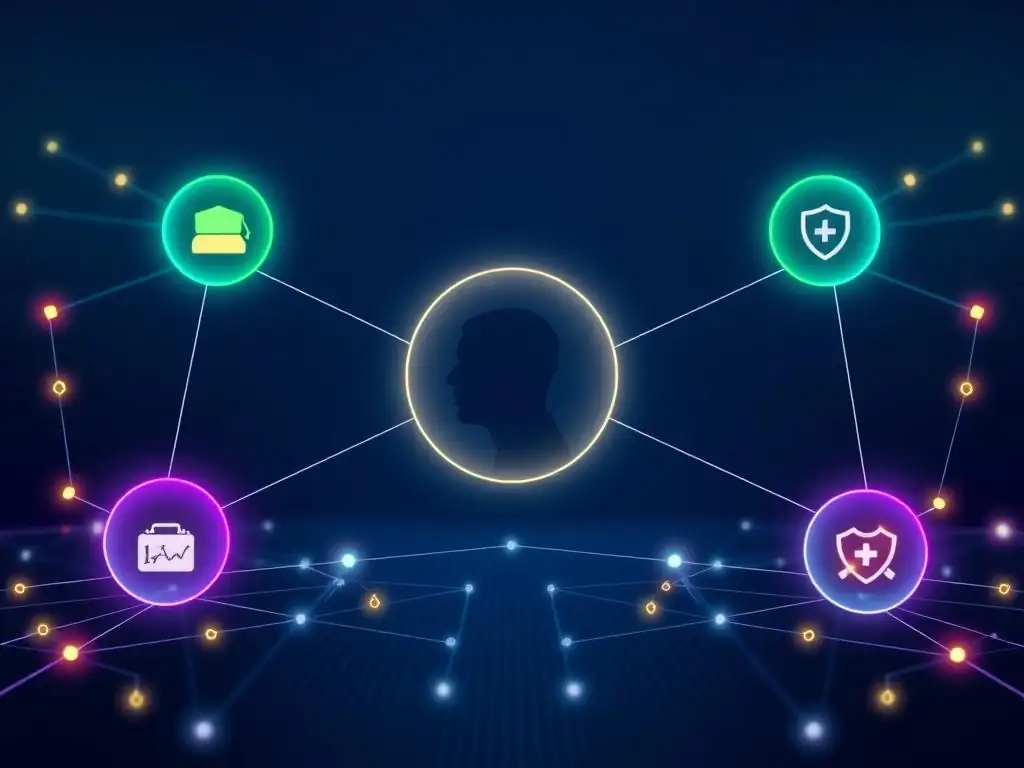
The current system for verifying educational and professional credentials is often cumbersome, slow, and prone to fraud. Soulbound Tokens offer a way to issue tamper-proof, verifiable digital credentials directly to an individual's Soul, streamlining verification processes for educational institutions and employers.
A university could issue an SBT representing a student's degree upon graduation. This SBT, tied to the student's Soul, contains verifiable data about the degree earned. When applying for a job, the graduate can simply share their Soul address with the employer, who can then verify the authenticity of the degree SBT directly on the blockchain using the university's known issuer address.
Similarly, employers could issue SBTs confirming employment history, roles, and even specific skills demonstrated. This creates a portable, user-owned record of achievements that is instantly verifiable globally. Imagine a system where 1,000 graduates from a pilot program receive SBT diplomas, allowing potential employers to verify their credentials in seconds, significantly reducing administrative overhead and fostering trust in a Soulbound Tokens decentralized future for professional life.
Use Cases in Healthcare: Secure and Patient-Controlled Medical Records via SBTs
Healthcare systems face significant challenges regarding data privacy, security, and interoperability. Patient records are often siloed across different providers, making it difficult for patients to access and control their own health information or for healthcare providers to get a complete picture of a patient's medical history. Soulbound Tokens present an opportunity to create secure, patient-controlled medical record systems on the blockchain.
While patient data itself wouldn't be stored directly on the public blockchain due to privacy concerns and storage costs, SBTs could act as verifiable pointers or access keys to encrypted medical records stored off-chain or on private/permissioned blockchains. A hospital or doctor could issue an SBT to a patient's Soul representing a specific medical event (e.g., a surgery, a diagnosis, a vaccination record).
This SBT could contain a hash of the corresponding medical record and potentially permissions allowing specific healthcare providers (identified by their own SBTs or public keys) to access the encrypted data upon the patient's explicit consent via their wallet. This model empowers patients with control over who accesses their health information while providing a verifiable, immutable record of healthcare interactions, a critical step towards a more secure and patient-centric Soulbound Tokens decentralized future in healthcare.
A small-scale trial might involve issuing SBTs for vaccination records to several hundred participants, allowing them to easily prove vaccination status via their Soul address without revealing other medical history.
Addressing the Challenges and Limitations of Soulbound Tokens
Privacy Considerations: Protecting User Data in SBT-Based Systems
While SBTs offer the benefit of public verifiability, they also introduce significant privacy challenges. As a Soul accumulates SBTs representing various aspects of their identity, history, and affiliations, this collection could potentially reveal sensitive personal information. On a public blockchain, anyone can inspect the contents of a wallet address. If a Soul's address becomes linked to an individual's real-world identity, the entire history of their SBTs could be exposed, including potentially sensitive data like educational history, employment, memberships, or even health-related attestations if those use cases develop.
Addressing these privacy concerns is paramount for the widespread adoption of Soulbound Tokens in a decentralized future. Solutions involve leveraging privacy-enhancing technologies such as zero-knowledge proofs (ZKPs). ZKPs allow a user to prove they possess a certain SBT (or a combination of SBTs) without revealing the specific token or issuer.
For example, a user could prove they are over 18 by presenting an SBT issued by a trusted age-verification service using a ZKP, without revealing their exact birth date. Another approach involves using multiple Soul addresses for different aspects of identity or using privacy-focused blockchain networks. Developers are actively researching and implementing these cryptographic techniques to ensure that the verifiability of SBTs does not come at the cost of user privacy, striving for a privacy-preserving Soulbound Tokens decentralized future.
The Risk of Soul Loss: Strategies for Account Recovery and Contingency Planning
A significant challenge for Soulbound Tokens, tied non-transferably to a Soul (wallet address), is the risk of losing access to that Soul. If a user loses the private keys to their wallet, they lose access to all the SBTs accumulated over time – their digital identity, reputation, and credentials.
Unlike fungible tokens or transferable NFTs, which could potentially be sent to a backup address if access is regained or recovered through social recovery mechanisms focusing on asset transfer, SBTs cannot be moved. Losing a Soul means losing the verifiable history it represents, which could have significant consequences for accessing services, proving credentials, or participating in governance in a Soulbound Tokens decentralized future.
To mitigate the risk of Soul loss, robust account recovery mechanisms are essential. One proposed solution is "social recovery" specifically adapted for Souls. This involves designating a set of trusted guardians (friends, family, institutions) who, collectively, can authorize the recovery of a Soul's control to a new address if the original keys are lost.
This differs from typical social recovery for transferable assets, as it focuses on regaining control over the Soul and its non-transferable SBTs, rather than transferring assets out. Implementing secure and user-friendly social recovery for Souls is a complex technical and social challenge, requiring careful design to prevent collusion or malicious recovery attempts while ensuring users can genuinely regain access when needed. Research and development are ongoing to build resilient recovery protocols for the Soulbound Tokens decentralized future.
Scalability and Infrastructure: Challenges in Implementing SBTs at Scale
Implementing Soulbound Tokens at a scale required for widespread adoption across education, employment, healthcare, and various decentralized applications presents significant scalability and infrastructure challenges for blockchain networks. Each SBT issuance is a transaction recorded on the blockchain. If millions or billions of users are to receive multiple SBTs representing various credentials and relationships throughout their lives, the volume of transactions could be immense.
Current major smart contract platforms have limitations on transaction throughput. For example, Ethereum's current mainnet processes roughly 15-30 transactions per second (TPS). While Layer 2 scaling solutions like rollups can significantly increase transaction capacity (potentially reaching thousands of TPS), the sheer volume of SBT issuances and verifications required for a global Soulbound Tokens decentralized future could still strain network capacity and increase transaction costs (gas fees). Furthermore, storing the data associated with potentially billions of SBTs on-chain, even if minimal data is stored directly and pointers are used, requires significant storage capacity and efficient indexing for querying and verification. Developing scalable blockchain architectures and efficient SBT standards that can handle the anticipated volume of issuance and verification is crucial for realizing the potential of Soulbound Tokens. Ongoing work on Layer 2 solutions, sharding, and alternative consensus mechanisms aims to provide the necessary infrastructure for a scalable Soulbound Tokens decentralized future.
The Future of SBTs: Innovation and Adoption
The Rise of Soulbound Token Economies: Exploring Potential Economic Models
The introduction of Soulbound Tokens has the potential to foster entirely new types of decentralized economies, distinct from the purely financial or collectible-driven economies seen with fungible tokens and NFTs. These "Soulbound Token economies" would be built around reputation, trust, and verifiable credentials rather than just tradable assets. This opens up possibilities for novel economic models and incentives.
For instance, imagine a decentralized freelancing platform where your ability to get hired and the rate you can command are directly influenced by the SBTs you hold, attesting to your skills, past project successes (issued by clients or DAOs), and positive peer reviews (issued by other users or reputation protocols). This creates an economy where building verifiable reputation via SBTs has direct economic value. Similarly, decentralized credit protocols could offer lower interest rates to Souls with SBTs indicating financial literacy or a history of responsible borrowing, creating an economy based on trusted financial behavior.
These economies incentivize contributing value, building trust, and earning credentials, shifting focus from speculative asset trading to verifiable participation and reputation within the Soulbound Tokens decentralized future ecosystem. Early models might involve small grants or preferential access within a DAO for members holding specific contribution-based SBTs, demonstrating the nascent stages of these reputation economies.
Interoperability and Standardization: Ensuring Seamless SBT Integration Across Platforms
For Soulbound Tokens to achieve their potential and enable a truly decentralized future, interoperability and standardization are critical. SBTs issued on one blockchain or by one protocol need to be recognizable and usable by applications and protocols on other chains or within different ecosystems. Without common standards, the Soulbound concept risks becoming fragmented, limiting the ability of a Soul to build a comprehensive, portable identity.
While there isn't a single official SBT standard yet, discussions are ongoing within the blockchain community to develop robust specifications. These standards need to define not only the non-transferability characteristic but also mechanisms for issuance, potential revocation (if applicable), association with a Soul (which might involve multiple addresses), and perhaps even privacy features like selective disclosure using ZKPs. Compatibility between different blockchain networks is also essential, potentially leveraging cross-chain communication protocols.
Achieving consensus on these standards will be crucial for developers building dApps that rely on SBTs, ensuring that a Soul's verifiable credentials are broadly recognized and useful across the expanding landscape of the Soulbound Tokens decentralized future. The development process involves input from various teams, building upon lessons learned from existing token standards like ERC-721 and ERC-1155.
As Soulbound Tokens gain traction, they will inevitably interact with existing legal and regulatory frameworks designed for traditional identity, credentials, and data privacy. Navigating this regulatory landscape is a significant challenge and opportunity for the Soulbound Tokens decentralized future. Questions arise regarding data protection regulations (like GDPR or CCPA) when sensitive information is attested via SBTs, even if not stored directly on-chain. Who is responsible if an issuer incorrectly mints an SBT containing false information? How are disputes resolved when an SBT is contested or needs to be revoked?
The legal status of SBTs themselves is also unclear. Are they considered securities, property, or something entirely new? Their non-transferable nature suggests they don't fit neatly into existing categories.
Furthermore, ethical considerations surrounding digital identity, potential for surveillance if privacy measures are insufficient, and the risk of creating a permanent, inescapable digital record of past actions need careful consideration. Proactive engagement with regulators and legal experts, along with the development of robust governance mechanisms for SBT issuance and management protocols, will be necessary to ensure that SBTs develop responsibly and ethically, fostering a Soulbound Tokens decentralized future that benefits individuals and society.
Soulbound Tokens and the Metaverse: Creating More Immersive and Authentic Experiences
The burgeoning concept of the metaverse – persistent, interconnected virtual worlds – presents a natural environment for the application of Soulbound Tokens. In these digital realms, identity and reputation are paramount for fostering trust, enabling complex social interactions, and building vibrant virtual economies. SBTs can provide the foundational layer for verifiable identity within the metaverse, moving beyond simple avatars or pseudonyms.
Imagine entering a metaverse where your in-world reputation is not just based on your behavior within that specific platform, but is partly derived from SBTs earned through real-world achievements or participation in other decentralized communities. An SBT proving your expertise in a specific skill could grant you access to exclusive virtual workshops or communities.
An SBT earned for completing a course in virtual architecture might allow you to participate in designing buildings within the metaverse. This integration of verifiable, non-transferable credentials via SBTs can create richer, more nuanced, and authentic digital identities within virtual worlds, enhancing social interactions, enabling complex collaborations, and fostering a sense of persistent identity across different metaverse experiences, thereby contributing significantly to the Soulbound Tokens decentralized future within virtual spaces.
Conclusion: Soulbound Tokens and the Decentralized Future - A Promising Path Forward
Recap of Key Benefits and Potential of SBTs
Soulbound Tokens represent a significant evolution in blockchain technology, moving beyond financial and collectible use cases to address the crucial need for decentralized identity, reputation, and verifiable credentials. Their core non-transferable characteristic distinguishes them from NFTs, enabling them to serve as building blocks for a more trustworthy and functional Web3. The potential applications are vast and transformative, ranging from decentralized identity systems and enhanced security in DeFi to more equitable DAO governance, verifiable educational and professional credentials, and even secure, patient-controlled healthcare records.
The benefits are clear: SBTs can help build persistent, verifiable digital identities owned and controlled by individuals, reduce reliance on centralized authorities for verification, unlock new models for reputation-based interaction and economies, and enable more sophisticated decentralized applications. By linking verifiable attributes to a Soul, SBTs lay the groundwork for a digital world where trust is earned through verifiable actions and credentials, underpinning the vision of a robust Soulbound Tokens decentralized future.
The Importance of Responsible Development and Deployment of SBTs
Despite their immense potential, the development and deployment of Soulbound Tokens require careful consideration of the inherent challenges and limitations. Privacy concerns are paramount; systems must incorporate robust cryptographic techniques like ZKPs to ensure that verifiable identity doesn't lead to ubiquitous surveillance. The risk of Soul loss necessitates the creation of secure and user-friendly recovery mechanisms. Furthermore, scalability issues must be addressed through ongoing infrastructure development to handle the potentially massive volume of SBT transactions required for widespread adoption.
Responsible development also involves engaging with legal and ethical considerations. The impact of SBTs on data protection, dispute resolution, and the potential for creating inescapable digital histories must be thoroughly examined. The community building the Soulbound Tokens decentralized future must prioritize user privacy, security, and control, ensuring that this powerful technology is used to empower individuals rather than create new forms of control or exclusion.
Soulbound Tokens: A Key Ingredient in Building a More Equitable and Decentralized Future
Ultimately, Soulbound Tokens are more than just a new type of token; they are a fundamental component in the architecture of a truly decentralized and equitable future. By providing a mechanism for verifiable identity and reputation that is owned by the individual rather than controlled by platforms, SBTs can help level the playing field. They can enable access to services, opportunities, and governance based on verifiable merit and contribution, rather than just token holdings or reliance on centralized gatekeepers.
While still an emerging concept with technical and social hurdles to overcome, the promise of Soulbound Tokens to unlock new paradigms for trust, coordination, and identity in the digital age is compelling. Their successful implementation, guided by principles of privacy, security, and user empowerment, is crucial for realizing the full potential of the Soulbound Tokens decentralized future, fostering a Web3 that is not only decentralized in infrastructure but also in opportunity and identity.
Frequently Asked Questions
What are Soulbound Tokens (SBTs) and how are they different from NFTs?
Soulbound Tokens are non-transferable digital tokens representing a person's or entity's identity and affiliations. Unlike NFTs, they are permanently tied to a specific wallet, making them non-tradable and representing verifiable credentials.
How can Soulbound Tokens contribute to a more decentralized future?
SBTs can establish digital reputations and trust networks without relying on centralized authorities. They can power decentralized identity (DID) solutions and enable more transparent and accountable governance systems.
What are some potential real-world applications of Soulbound Tokens beyond just identity?
Besides identity, SBTs can be used for verifiable credentials (degrees, certifications), governance participation (voting rights), and access control to services or platforms based on reputation.
What are the potential challenges and concerns associated with the widespread adoption of Soulbound Tokens?
Challenges include privacy concerns related to data storage and potential misuse of identity information. There are also concerns about loss of access to the wallet holding the SBTs and the potential for social engineering attacks.
How are Soulbound Tokens expected to impact the development of Decentralized Finance (DeFi)?
SBTs can introduce reputation-based lending and collateralization in DeFi, reducing the reliance on over-collateralization. This could lead to more inclusive and accessible financial services for individuals with limited traditional credit history.
Final Reflection: Embracing the Soulbound Token Revolution
The journey through the potential of Soulbound Tokens (SBTs) reveals a profound shift in how we understand digital identity and ownership. The promise of a decentralized future, secured and enhanced by SBTs, is no longer a distant dream, but a tangible possibility rapidly approaching. The limitations of NFTs, particularly their speculative nature and lack of inherent connection to identity, highlight the urgent need for a more nuanced and meaningful approach to digital representation, and SBTs offer precisely that.
The impact of SBTs extends far beyond mere technological innovation; it touches the very core of how we interact, build trust, and establish reputation in the digital age. This exploration has underscored the critical importance of moving beyond transactional value to embrace the intrinsic value of our digital selves. The future of identity is decentralized, self-sovereign, and built on trust, not authority.
This quote encapsulates the transformative potential of SBTs to empower individuals and reshape the digital landscape.
As we stand on the cusp of this decentralized future, let us not simply observe, but actively participate in shaping its trajectory. Consider how you can leverage the principles of SBTs – authenticity, reputation, and community – in your own digital interactions. Embrace the opportunity to build a more trustworthy, equitable, and meaningful digital world, one Soulbound Token at a time.
Unlock Your Soulbound Journey!
Thank you for exploring the fascinating world of Soulbound Tokens and their potential to transform digital identity. Now that you understand the power of this technology, it’s time to take action and become part of this exciting future.
Here are a few steps you can take right now:
- Start brainstorming! Consider how the unique properties of Soulbound Tokens could benefit your life or community. Think beyond digital assets and explore applications like credentials, reputation systems, or membership in decentralized organizations.
- Follow leading projects and experts discussing Soulbound Tokens on social media to stay informed about the latest developments. Sharing relevant articles with your network helps spread awareness and encourages innovation.
- Explore developing a proof-of-concept Soulbound Token for a small community you’re involved in—such as a digital badge for event participation or a verifiable skill certification.
Are you ready to brainstorm your first use case and share it with the community?
Leave a Reply