
Education Transformed: Digital Diplomas and Credentials on the Blockchain


Welcome to Blockchain Trends, your gateway to understanding the revolution happening beyond cryptocurrencies! Are you ready to discover how blockchain is reshaping industries and redefining trust?
In this article, we delve into the transformative power of blockchain digital diplomas credentials, exploring how this technology is not just a buzzword, but a secure and verifiable solution for the future of education and identity. How can blockchain ensure the authenticity and portability of your academic achievements? Read on to unlock the potential of decentralized learning and discover the future of verified credentials!
Education Transformed: Digital Diplomas and Credentials on the Blockchain
- Introduction: Revolutionizing Education with Blockchain Technology
- Understanding Blockchain-Based Digital Diplomas and Credentials
- The Advantages of Blockchain Digital Diplomas and Credentials
- Use Cases: Real-World Applications of Blockchain in Education
- Addressing the Challenges and Concerns
- The Future of Education Credentials: Blockchain and Beyond
- Conclusion: The Transformative Power of Blockchain in Education
-
Frequently Asked Questions
- What are blockchain digital diplomas and credentials?
- How does blockchain technology enhance the security of digital diplomas?
- What are the benefits for students and graduates using blockchain-based credentials?
- How are educational institutions implementing blockchain for diplomas and credentials?
- What is the future of blockchain in education beyond diplomas and credentials?
- Final Reflection: Embracing the Future of Credentials
- Unlock Your Future: Embrace Blockchain Credentials!
Introduction: Revolutionizing Education with Blockchain Technology
The Growing Need for Verifiable and Secure Digital Credentials
In an increasingly digital world, the traditional paper-based system for academic credentials presents significant challenges. Forgeries and fraudulent diplomas are a persistent problem, undermining the integrity of educational institutions and the trust placed in graduates' qualifications. Verifying these paper documents is often a cumbersome, time-consuming, and costly process for employers and other institutions, requiring manual checks, contacting registrars, and navigating bureaucratic hurdles. This inefficiency slows down hiring processes and can delay opportunities for individuals.
The demand for a more secure, efficient, and universally verifiable system for academic records has become critical. As education becomes more globalized and individuals pursue lifelong learning across various institutions, the need for easily accessible and trustworthy digital credentials grows. A robust digital solution is required to combat fraud effectively and streamline the verification process, ensuring that a graduate's achievements can be instantly and reliably confirmed by any authorized party worldwide. This points towards a future where blockchain digital diplomas credentials are the standard.
Blockchain's Potential in Transforming Education Records
Blockchain technology offers a compelling solution to the challenges faced by traditional credentialing systems. Its core attributes of immutability, transparency (of the transaction ledger, not necessarily personal data directly), and decentralization make it ideal for creating records that are tamper-proof and easily verifiable. By issuing academic credentials on a blockchain, educational institutions can create a permanent, secure, and verifiable record of a student's achievements that exists independently of the institution's own databases, which can be vulnerable to hacking or data loss.
The potential for transformation extends beyond just security. Blockchain could fundamentally change how educational records are managed, shared, and owned. It shifts the power of credential management partly from institutions to the students themselves, enabling learners to have greater control over their own data and decide who can access their academic history. This paradigm shift facilitates easier sharing of qualifications with potential employers or other educational bodies, drastically reducing the administrative burden and costs associated with requesting transcripts and verification letters. The implementation of blockchain digital diplomas credentials promises a future of enhanced trust and efficiency in education.
Understanding Blockchain-Based Digital Diplomas and Credentials
What are Blockchain Digital Diplomas? Defining the Concept
Blockchain digital diplomas refer to academic certificates, degrees, transcripts, or skills badges that are issued and recorded using blockchain technology. Instead of receiving a physical paper document or a simple digital file like a PDF that can be easily altered, a student receives a cryptographically signed digital credential linked to a transaction on a blockchain ledger. This digital credential typically contains metadata about the achievement, the issuing institution, the recipient, and a unique identifier or cryptographic hash that corresponds to the entry on the blockchain.
The key differentiator is that the blockchain entry serves as an immutable, verifiable proof of the credential's existence and authenticity at the time it was issued. While the personal data associated with the credential might be stored off-chain for privacy, the cryptographic link on the blockchain provides the anchor of trust.
Anyone with the necessary tools (often a dedicated wallet or verification application) can check this blockchain entry to confirm that the credential was indeed issued by the stated institution to the specific individual and has not been tampered with since its issuance. This makes blockchain digital diplomas credentials inherently more trustworthy than their traditional counterparts.
How Blockchain Ensures the Authenticity of Academic Credentials
Blockchain technology ensures authenticity through its decentralized and immutable nature. When an institution issues a digital credential, a record of this issuance, including a cryptographic hash of the credential's data, is added as a transaction to the blockchain. This transaction is then validated by multiple computers (nodes) on the network and grouped into a block.
Once a block is added to the chain, it is linked to the previous block cryptographically, forming a chain of blocks. Altering any information within a past block would require re-mining that block and all subsequent blocks in the chain, a computationally infeasible task on a sufficiently large and distributed network.
For verification, a third party (like an employer) receives the digital credential and uses a compatible application to check its validity against the blockchain. The application uses the information in the credential to find the corresponding transaction on the blockchain and verifies that the cryptographic hash of the credential data matches the hash recorded in the blockchain transaction. If they match, and the transaction is confirmed on the immutable ledger, the authenticity of the credential is proven. This robust cryptographic process makes forging or tampering with blockchain digital diplomas credentials practically impossible, establishing a high level of trust.
Exploring the Benefits of Blockchain for Educational Institutions and Students
For educational institutions, implementing blockchain technology for credentials offers significant operational advantages. It drastically reduces the administrative burden and costs associated with printing, mailing, and verifying paper documents. Estimates suggest that processing a single verification request can cost an institution anywhere from a few dollars to over twenty dollars, depending on the complexity and manual effort involved. Scaling this across thousands of graduates annually represents substantial potential savings. Furthermore, it enhances the institution's reputation by demonstrating a commitment to security and innovation, providing graduates with cutting-edge, verifiable credentials that are easy to share.
Students also gain considerable benefits from receiving blockchain digital diplomas credentials. They become the owners of a secure, digital copy of their academic record that they can access and share instantly, anytime and anywhere, without needing to contact their alma mater for copies or verification letters. This portability and accessibility are invaluable in today's mobile world.
Moreover, having verifiable credentials on the blockchain empowers students by giving them control over their data, allowing them to grant specific parties access to view their qualifications while maintaining privacy over other details. This shift empowers learners in managing their professional and academic identity.
The Advantages of Blockchain Digital Diplomas and Credentials
Enhanced Security and Tamper-Proof Records: Protecting Academic Integrity
One of the most compelling advantages of using blockchain for academic credentials is the unparalleled level of security and the resulting tamper-proof nature of the records. Traditional systems are vulnerable to fraud, where individuals may alter paper certificates or create convincing fakes. Digital files like PDFs are also easily modifiable. Blockchain's distributed ledger technology, however, makes altering a credential record after it has been issued and anchored to the chain virtually impossible. Each transaction (credential issuance) is cryptographically linked to the previous one, forming an immutable chain.
If someone were to try and alter a blockchain digital diplomas credentials record, the cryptographic hash of the altered data would no longer match the hash recorded on the blockchain. This mismatch would be instantly detected by the verification system, invalidating the credential. This inherent security mechanism significantly reduces the risk of fraud, protecting the academic integrity of both the issuing institution and the value of the student's achievement. It provides a level of trust in a digital credential that was previously only aspirational, fostering confidence among employers and other verifying parties.
Increased Efficiency and Reduced Administrative Costs in Credential Management
Managing academic credentials has historically been an administrative bottleneck for educational institutions. Processing requests for transcripts, issuing replacement diplomas, and responding to verification inquiries from employers or other universities consumes significant staff time and resources. A single verification request can take days or even weeks to process, involving manual checks against databases and secure mailing. The cumulative cost of these activities across a large university can amount to hundreds of thousands, if not millions, of dollars annually.
By transitioning to blockchain digital diplomas credentials, institutions can automate much of this process. Once a credential is issued on the blockchain, the verification process can be handled by the student or a third party directly using a verification tool that interacts with the blockchain, without requiring manual intervention from the institution's registrar office.
This dramatically reduces the administrative workload, freeing up staff to focus on other tasks and leading to substantial cost savings in printing, postage, and labor. The efficiency gains are not just financial; they also expedite processes for students and third parties, creating a smoother experience for everyone involved.
Improved Accessibility and Portability of Educational Records
In today's globalized world, individuals frequently move between cities, countries, and institutions. Carrying and verifying physical academic documents can be cumbersome and risky (due to loss or damage). Traditional digital documents often require specific software or institutional portals for access, limiting their portability and ease of sharing. Blockchain digital diplomas credentials, however, offer unprecedented accessibility and portability. Once issued, the student holds the digital credential, often stored securely in a digital wallet on their mobile device or computer.
This allows students to access and share their verifiable credentials instantly with anyone they choose, anywhere in the world, provided the recipient has a compatible verification tool. There's no need to wait for an institution to open or mail documents across borders. This ease of access and portability is particularly beneficial for international students, job seekers applying to foreign companies, or individuals pursuing further education abroad. It puts the student in control, making their academic history a truly personal and portable asset.
Empowering Learners with Control Over Their Academic Data
A significant shift enabled by blockchain technology in education is the empowerment of learners through increased control over their academic data. In traditional systems, educational institutions are the custodians of student records. While students have rights to access their data, the process is managed and mediated by the institution. With blockchain digital diplomas credentials, the credential itself is held by the student, and they decide who gets to view it.
This model leverages decentralized identity principles, where the individual controls their verifiable claims. The student can securely share their digital diploma or transcript with an employer, for example, granting them temporary or specific access to verify the credential via the blockchain without the employer needing to contact the university directly. This level of granular control over sharing sensitive personal information is a powerful form of data sovereignty, aligning with modern privacy expectations and regulations while simultaneously facilitating trust and verification in a digital environment.
Use Cases: Real-World Applications of Blockchain in Education
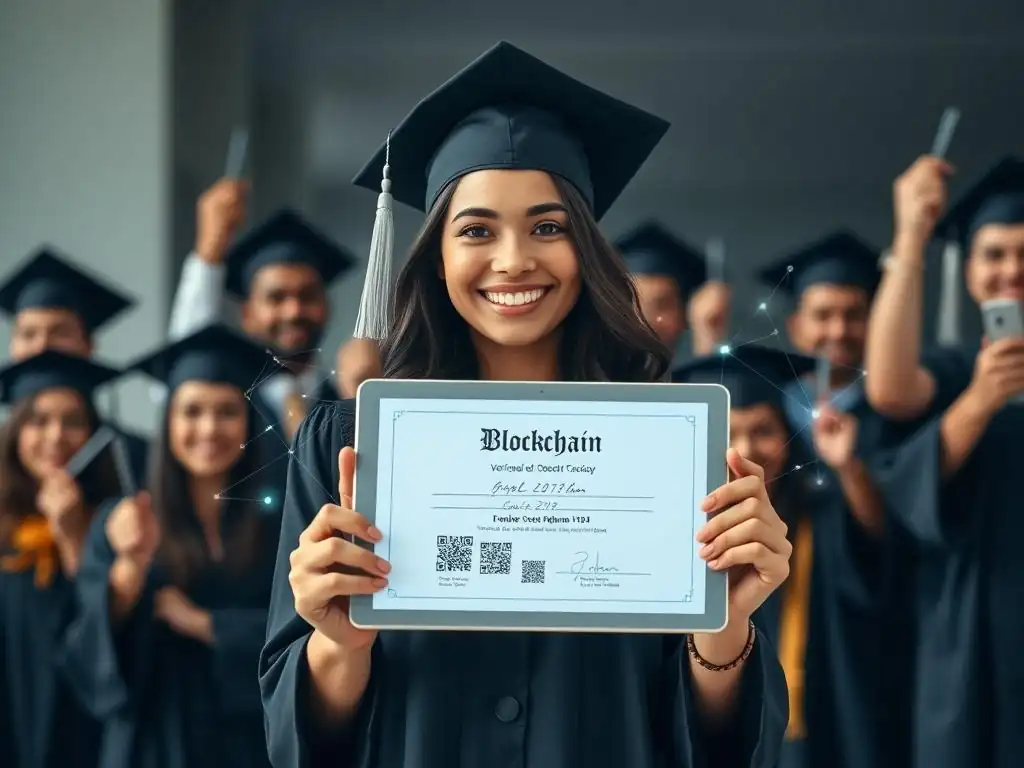
MIT Issues Digital Diplomas on Blockchain
One of the earliest and most prominent examples of blockchain technology being used for academic credentials comes from the Massachusetts Institute of Technology (MIT). In 2017, MIT Media Lab, in collaboration with Learning Machine (later acquired by Hyland), launched a pilot program to issue digital diplomas to graduates using blockchain. This initiative, based on the Blockcerts open standard, aimed to provide students with a secure, verifiable, and student-owned digital version of their diploma alongside the traditional paper copy.
The pilot initially involved a small group of graduates but was later expanded. By issuing these blockchain digital diplomas credentials, MIT demonstrated the feasibility and benefits of the technology for higher education. Graduates received a digital file that could be stored on their mobile devices, and using a Blockcerts wallet application, they could easily view, share, and verify the authenticity of their diploma against the Bitcoin blockchain (or other compatible chains). This project was a significant step in proving the concept of verifiable credentials on a decentralized ledger and inspired many subsequent initiatives globally.
Malta's National Strategy for Blockchain-Based Education Credentials
The government of Malta has been a proactive adopter of blockchain technology across various sectors, including education. Recognizing the potential of blockchain to enhance the security and efficiency of educational record-keeping, Malta announced a national strategy to implement blockchain-based systems for academic credentials across its educational institutions, including schools, colleges, and universities. This ambitious initiative aimed to create a unified, secure, and easily verifiable system for student records nationwide.
This government-led effort sought to provide every student in Malta with secure, digital access to their academic achievements using blockchain. The goal was to streamline the process of applying for jobs or further education, both domestically and internationally, by making credentials instantly verifiable and tamper-proof. While the full-scale implementation across all levels presented significant logistical and technical challenges, Malta's strategic push highlighted the potential for blockchain to be adopted not just by individual institutions but at a national level for managing blockchain digital diplomas credentials and other educational records.
Learning Machine Develops a Platform for Verifiable Skills Badges on Blockchain
Learning Machine, now part of Hyland, has been a key player in developing the infrastructure for issuing and verifying blockchain-based credentials. They developed a platform that allows institutions and organizations to issue official, verifiable credentials, including academic diplomas, transcripts, and skills badges, using the Blockcerts open standard. This platform enabled issuers to create digital credentials anchored to various public or private blockchains, providing a robust system for ensuring authenticity.
Beyond traditional academic degrees, Learning Machine's platform facilitated the issuance of verifiable credentials for skills acquired through professional development, online courses, or vocational training. This is particularly relevant in the context of lifelong learning and the need to verify specific competencies. By enabling organizations to issue verifiable skills badges on the blockchain, the platform helped individuals build a comprehensive, digital portfolio of their achievements that could be easily shared and verified by potential employers, showcasing the versatility of blockchain digital diplomas credentials for various types of learning outcomes.
Addressing the Challenges and Concerns
Scalability Issues in Implementing Blockchain for Large Educational Institutions
Implementing blockchain solutions for credentialing at large educational institutions, especially those with tens or hundreds of thousands of students and decades of historical records, presents significant scalability challenges. Public blockchains like Bitcoin or Ethereum can handle a limited number of transactions per second. While solutions like layer-2 scaling or alternative consensus mechanisms are being developed, processing the issuance of credentials for potentially tens of thousands of graduates annually, plus historical records, could strain network capacity or incur substantial transaction fees (gas fees).
Furthermore, storing the actual credential data directly on a public blockchain is often impractical due to data size limitations and privacy concerns. Solutions typically involve storing a cryptographic hash on-chain while the credential data resides off-chain, perhaps in a decentralized storage system or even a traditional database, with the student holding the key or link.
However, managing the link between on-chain proof and off-chain data, especially at scale, requires careful architectural design to ensure long-term accessibility and verifiability. Private or consortium blockchains might offer better scalability and lower costs for large institutions focused solely on issuing blockchain digital diplomas credentials, but they trade off some degree of decentralization.
Regulatory Landscape and Data Privacy Considerations in Blockchain Education
Navigating the regulatory landscape, particularly concerning data privacy, is a critical challenge for adopting blockchain in education. Regulations like the General Data Protection Regulation (GDPR) in Europe grant individuals extensive rights regarding their personal data, including the right to erasure ("right to be forgotten"). However, a core feature of many blockchains is immutability – once data is recorded, it is extremely difficult or impossible to alter or delete. This creates a potential conflict if personally identifiable information (PII) is inadvertently or intentionally placed directly onto an immutable public ledger.
To comply with privacy regulations while leveraging blockchain's benefits, implementers of blockchain digital diplomas credentials must ensure that sensitive PII is not stored directly on the chain. Instead, they typically store only non-sensitive data like a transaction ID or a cryptographic hash on the blockchain.
The actual credential data, containing names, grades, etc., is stored off-chain in a secure, compliant manner, and the student holds the access rights. While this approach mitigates privacy risks and allows for data deletion off-chain if required, it adds complexity to the system design and requires robust mechanisms to link the on-chain proof to the off-chain data securely.
Interoperability and Standardization of Blockchain Digital Credentials
For blockchain digital diplomas and credentials to achieve widespread adoption and utility, interoperability and standardization are crucial. Currently, various platforms and standards exist for issuing verifiable credentials on the blockchain, such as Blockcerts, OpenBadges (which can be linked to blockchain), and initiatives based on W3C's Verifiable Credentials data model. While standards like W3C VC provide a framework, the specific blockchain platform used (e.g., different versions of Ethereum, Hyperledger, custom chains) and the exact implementation details can vary.
This lack of universal standards can lead to fragmentation, where a digital credential issued by one institution on a specific platform might not be easily verifiable or even recognizable by an employer or another institution using a different system or blockchain. For blockchain digital diplomas credentials to truly empower students with portable records, there needs to be greater collaboration among educational institutions, technology providers, and employers to agree upon common technical standards, data models, and verification protocols. Achieving this level of interoperability is essential for building a seamless global ecosystem for digital academic records.
The Future of Education Credentials: Blockchain and Beyond
The Rise of Decentralized Learning Ecosystems
Blockchain technology is poised to play a foundational role in the emergence of decentralized learning ecosystems. These ecosystems move beyond traditional institutional silos, allowing learners to accumulate credentials, skills badges, and learning histories from a diverse range of sources – universities, online courses, professional training providers, and even informal learning experiences. In such an environment, a decentralized identity system, often built on blockchain, would allow individuals to own and manage their entire learning portfolio.
Within these ecosystems, blockchain digital diplomas credentials serve as the trustworthy, verifiable components that prove specific achievements or skills. Learners could build a comprehensive, dynamic profile of their competencies, verified by the issuing bodies and stored securely under their control. This shift facilitates lifelong learning, enabling individuals to showcase a broader range of skills acquired throughout their careers, rather than relying solely on degrees from a single institution. Decentralized ecosystems promise a more flexible and learner-centric future for education and skill verification.
Integration with Web3 and the Metaverse
Looking further ahead, the integration of blockchain digital diplomas credentials with Web3 and the nascent Metaverse presents exciting possibilities. In a Web3 environment, where users have greater control over their digital identities and assets, verifiable credentials could become essential components of a person's digital profile. Imagine a future where your academic degrees, professional certifications, and verified skills are part of your decentralized identity wallet, easily shareable across different online platforms and virtual worlds.
The Metaverse, as a persistent, interconnected set of virtual spaces, could utilize these blockchain-based credentials in various ways. For instance, verified educational credentials could grant access to exclusive virtual learning environments, networking events, or job fairs within the Metaverse. They could also serve as proof of expertise or qualification for roles within virtual economies. As our digital and physical lives become more intertwined, verifiable credentials on the blockchain will be crucial for establishing trust and identity in these new digital frontiers.
The Role of Blockchain in Lifelong Learning and Skills Verification
The traditional focus on a single degree obtained early in life is becoming outdated in a rapidly changing job market that demands continuous learning and upskilling. Blockchain technology is particularly well-suited to support the paradigm of lifelong learning by providing a robust mechanism for verifying a continuous stream of diverse credentials. Individuals acquire skills and knowledge from various sources throughout their careers – online courses, professional certifications, workshops, and on-the-job training.
Blockchain digital diplomas credentials, including granular skills badges, allow individuals to build a verifiable record of this continuous learning journey. An employer could easily verify a specific skill badge earned through a recent online course, alongside a degree obtained years ago. This granular, verifiable approach to skills verification makes qualifications more transparent and relevant to current job requirements, empowering individuals to better showcase their evolving capabilities and enabling employers to make more informed hiring decisions based on up-to-date, verified skills.
Conclusion: The Transformative Power of Blockchain in Education
Blockchain Digital Diplomas and Credentials: A Paradigm Shift
The adoption of blockchain technology for issuing academic credentials represents a significant paradigm shift in the education sector. Moving from antiquated paper-based systems or vulnerable digital files to secure, verifiable records anchored on an immutable ledger fundamentally changes how qualifications are issued, managed, and trusted. This shift addresses critical long-standing issues such as fraud, administrative inefficiency, and the lack of student control over their own data. The benefits are clear: enhanced security, reduced costs, improved accessibility, and greater student empowerment.
Initiatives by leading institutions like MIT and national strategies like Malta's demonstrate that blockchain digital diplomas credentials are not merely theoretical concepts but are being actively implemented and explored in the real world. While challenges related to scalability, regulation, and standardization remain, ongoing developments in blockchain technology and increasing collaboration across the education ecosystem are paving the way for broader adoption.
Embracing the Future of Education with Decentralized Technologies
The future of education is increasingly digital and decentralized. Blockchain technology, particularly in the form of verifiable credentials, is a cornerstone of this future. It provides the trust layer necessary for digital academic records to be accepted universally. As we move towards decentralized learning ecosystems, Web3 integration, and a greater emphasis on lifelong learning and skills verification, the importance of secure, portable, and student-owned blockchain digital diplomas credentials will only grow.
Embracing these decentralized technologies allows educational institutions to modernize their processes, better serve their students, and uphold the integrity of the credentials they issue. For students, it means gaining control over their academic identity and possessing verifiable proof of their achievements that can open doors to opportunities worldwide. The transformative power of blockchain in education is undeniable, heralding a new era of trust, efficiency, and empowerment in the realm of academic credentials.
Frequently Asked Questions
What are blockchain digital diplomas and credentials?
These are digital representations of academic achievements or professional qualifications that are securely stored and verifiable on a blockchain. This allows for tamper-proof records and easy sharing with employers.
How does blockchain technology enhance the security of digital diplomas?
Blockchain's decentralized nature makes it incredibly difficult to alter or forge diploma information. Every transaction is recorded on a distributed ledger, creating a permanent and auditable trail. This significantly reduces fraud.
What are the benefits for students and graduates using blockchain-based credentials?
Students gain greater control over their credentials, making them easily portable and shareable. They also benefit from increased security and reduced risk of document fraud, enhancing their employability.
How are educational institutions implementing blockchain for diplomas and credentials?
Institutions are partnering with blockchain companies to develop platforms for issuing and verifying digital diplomas. Some are exploring consortium blockchains to create a shared infrastructure for credential management.
What is the future of blockchain in education beyond diplomas and credentials?
Beyond diplomas, blockchain can revolutionize aspects like student record management, academic research sharing, and secure online learning platforms. This includes verifying research and managing intellectual property more effectively.
Final Reflection: Embracing the Future of Credentials
The journey through the landscape of blockchain digital diplomas and credentials reveals a profound shift in how we recognize and validate skills. The promise of secure, verifiable, and universally accessible credentials is no longer a distant dream but a tangible reality reshaping the future of education and employment. This transformation offers unprecedented opportunities for individuals to showcase their achievements and for institutions to build trust and transparency in their offerings.
The impact of this technology extends far beyond mere convenience; it fundamentally alters the power dynamics within the educational ecosystem. The ability for individuals to own and control their credentials empowers them to navigate their career paths with greater autonomy and flexibility. Education is the most powerful weapon which you can use to change the world.
- Nelson Mandela. This quote resonates deeply as blockchain technology democratizes access to verifiable credentials, leveling the playing field and fostering a more equitable and inclusive future for all learners.
As we stand at the cusp of this educational revolution, let us embrace the potential of blockchain digital diplomas and credentials. Consider how you can leverage this technology to enhance your own learning journey, validate your skills, and contribute to a more transparent and trustworthy educational landscape. The future of education is in our hands – let us build it together, one block at a time.
Unlock Your Future: Embrace Blockchain Credentials!
Thank you for exploring how blockchain is transforming education. We hope this article has highlighted the incredible potential of digital diplomas and credentials to empower learners and revolutionize the job market. Now, it's time to take action and become part of this exciting movement.
Here’s how you can get involved:
- Claim your proof of knowledge by obtaining a blockchain-secured digital credential from a recent course. If your institution hasn't adopted this technology yet, consider suggesting it!
- Share this article with educators, institutions, and fellow learners to spark a conversation about the advantages of blockchain-based credentials.
- Explore educational platforms that utilize blockchain technology. Consider enrolling in online courses that offer verifiable credentials secured on the blockchain.
Leave a Reply