
Blockchain and the Circular Economy: Reducing Waste and Energy Consumption


Welcome to Blockchain Trends, your compass in the rapidly evolving world of decentralized technologies. Beyond the hype of cryptocurrencies, lies a revolutionary force poised to reshape industries and redefine efficiency. Intrigued by how blockchain can contribute to a greener future? Explore with us the intersection of technology and sustainability, starting with our in-depth look at how blockchain circular economy waste solutions are paving the way for a more sustainable and resource-conscious world. Discover how distributed ledger technology is transforming waste management and energy consumption, and then dive deeper into the exciting potential of blockchain for the environment...
- Introduction: Blockchain's Role in Fostering a Circular Economy
- Understanding Blockchain's Contribution to Waste Reduction
- Reducing Energy Consumption Through Blockchain Applications
- Case Studies: Blockchain Initiatives in Circular Economy
- Benefits of Combining Blockchain and Circular Economy Principles
- Challenges and Limitations of Blockchain Implementation for Circularity
- The Future of Blockchain and Circular Economy: Towards a Sustainable Ecosystem
- Conclusion: Blockchain as a Catalyst for a Sustainable Future
-
Frequently Asked Questions
- How can blockchain technology specifically help reduce waste in a circular economy?
- What role does blockchain play in improving energy efficiency within a circular economy model?
- Beyond waste reduction and energy efficiency, what other benefits does blockchain offer the circular economy?
- What are some of the challenges to implementing blockchain solutions within the context of a circular economy?
- How are regulations impacting the adoption of blockchain for circular economy initiatives?
- Final Reflection: Empowering Sustainability with Blockchain
Introduction: Blockchain's Role in Fostering a Circular Economy
Defining the Circular Economy and its Challenges
The traditional economic model, often termed linear, follows a 'take-make-dispose' pattern, relying on large quantities of easily accessible materials and energy. This approach inevitably leads to resource depletion, significant waste generation, and environmental degradation. In contrast, the circular economy aims to keep resources in use for as long as possible, extracting maximum value from them while in use, then recovering and regenerating products and materials at the end of each service life. This involves strategies like designing for durability, repair, reuse, remanufacturing, and high-quality recycling.
Implementing a truly circular economy faces substantial challenges. Lack of transparency across complex global supply chains makes it difficult to track materials, components, and products from origin to end-of-life. This opacity hinders effective sorting, recycling, and reuse efforts. Furthermore, there's often insufficient incentive for consumers and businesses to participate in circular practices, and the data needed to optimize resource loops – such as product composition, repair history, and recycling pathways – is fragmented or unavailable. Addressing these systemic issues is crucial for transitioning away from a wasteful linear model.
How Blockchain Technology Can Revolutionize Waste Management
Blockchain technology offers a unique set of properties – decentralization, immutability, and transparency – that are inherently suited to addressing many of the challenges hindering the circular economy, particularly in the realm of waste management. By providing a shared, tamper-proof ledger, blockchain can record every transaction and interaction related to a product or material throughout its lifecycle, from sourcing raw materials to manufacturing, distribution, consumption, and eventual disposal or recycling. This creates an unprecedented level of visibility that was previously impossible with siloed databases and paper trails.
This transparency is key to revolutionizing how we manage waste. For instance, knowing the exact composition and history of a discarded product via a blockchain record makes sorting and high-quality recycling significantly more efficient. Furthermore, blockchain's ability to support tokenization and smart contracts allows for the creation of incentive systems that reward individuals and businesses for participating in circular activities, such as returning products for repair, depositing waste at designated collection points, or using recycled materials. This creates economic drivers for reducing Blockchain circular economy waste.
Understanding Blockchain's Contribution to Waste Reduction
Enhanced Traceability and Transparency in Supply Chains using Blockchain
One of the most significant contributions of blockchain to waste reduction lies in its ability to create end-to-end traceability within supply chains. By recording each step of a product's journey on an immutable ledger, from the source of raw materials to its eventual disposal or recycling, companies and consumers gain unprecedented insight.
This transparency allows stakeholders to verify the origin, composition, and handling of goods, ensuring materials are sourced responsibly and products are designed for durability and recyclability. For example, tracking specific types of plastic or metal alloys ensures they can be properly identified and routed to the correct recycling streams, significantly increasing recovery rates compared to mixed, untraceable waste.
Major corporations are exploring or implementing blockchain for this purpose. A study by the World Economic Forum in 2020 suggested that blockchain could unlock $1 trillion in new value by increasing supply chain transparency and efficiency across various industries.
While specific figures for waste reduction directly attributable to blockchain traceability are still emerging from widespread implementation, pilot projects, particularly in sectors like electronics and fashion, indicate a potential for reducing waste by identifying inefficiencies, verifying sustainable sourcing, and ensuring materials enter appropriate end-of-life pathways rather than landfills. This enhanced visibility is fundamental to a functioning circular economy where materials are kept in loop.
Combating Counterfeiting and Extending Product Lifecycles with Blockchain
Counterfeit goods contribute significantly to waste by often being of poor quality, having short lifespans, and being difficult or impossible to repair or recycle due to unknown components and materials. Blockchain technology can effectively combat counterfeiting by providing a secure, verifiable digital identity for each product. By scanning a QR code or NFC tag linked to a blockchain entry, consumers and businesses can instantly verify a product's authenticity, its manufacturing history, and ownership records. This assurance of authenticity builds trust and helps differentiate genuine, durable products from fakes.
By verifying authenticity and providing access to product information like repair guides or warranty status via blockchain, products can be maintained and repaired more easily, extending their useful lives. This directly reduces the volume of goods prematurely discarded as waste. For instance, in the luxury goods market, where counterfeiting is rampant, blockchain-backed authentication platforms are being adopted.
While precise global figures on waste reduction from anti-counterfeiting efforts are hard to isolate, the global value of counterfeit goods was estimated to reach $2.8 trillion by 2022 by some reports. Reducing this flow, even marginally, through blockchain authentication would prevent substantial amounts of low-quality, non-recyclable waste from entering the system.
Blockchain-Enabled Waste Tracking and Recycling Systems
Blockchain can power sophisticated systems for tracking waste streams and optimizing recycling processes. By assigning unique digital tokens or identities to waste items or batches at the point of collection, their journey can be logged on a blockchain ledger. This includes data points such as type of waste, weight, collection location, time, and subsequent handling steps like transportation to sorting facilities, processing, and transformation into secondary raw materials. This creates a transparent and auditable trail of waste, making it easier to identify bottlenecks, measure performance, and ensure waste is diverted from landfills to appropriate recycling or recovery facilities.
These systems can also incorporate incentives. Smart contracts can automatically reward waste collectors, sorting facilities, or individuals who properly dispose of or recycle specific materials based on verified data recorded on the blockchain. For example, a system could issue digital tokens to households for correctly sorting and depositing recyclables, or to companies for using a certain percentage of recycled content verified on the blockchain.
Pilot projects in cities exploring blockchain for municipal waste management have shown promising results in increasing recycling rates and improving data accuracy regarding waste flows, though widespread deployment is still in early stages. The potential for optimizing Blockchain circular economy waste flows through such tracking is immense.
Reducing Energy Consumption Through Blockchain Applications
Optimizing Energy Grids and Renewable Energy Integration with Blockchain
Blockchain technology holds significant potential for optimizing energy grids and facilitating the integration of renewable energy sources, thereby contributing to reduced overall energy consumption and a lower carbon footprint. Traditional energy grids are often centralized and struggle to efficiently manage the intermittent nature of renewables like solar and wind power or integrate decentralized energy generation from rooftop solar panels. Blockchain enables the creation of decentralized energy marketplaces and microgrids where peer-to-peer energy trading can occur. Producers (like homeowners with solar panels) can sell excess energy directly to consumers within their local network via automated smart contracts.
This peer-to-peer model increases grid efficiency by reducing transmission losses and better balancing local supply and demand. It also incentivizes the adoption of renewable energy sources by providing a direct economic benefit to producers. Projects like LO3 Energy's Brooklyn Microgrid have demonstrated the feasibility of such blockchain-based energy trading, showing potential for increased local energy resilience and greater utilization of distributed renewable assets. While not providing a specific percentage reduction in total energy consumption globally yet, these pilot projects lay the groundwork for a more efficient, decentralized energy future powered increasingly by renewables, indirectly reducing reliance on fossil fuels.
Blockchain for Carbon Credit Tracking and Trading: Promoting Sustainable Practices
Carbon credit markets are a key mechanism for incentivizing emissions reduction, but they have historically faced challenges related to transparency, double-counting, and fraud. Blockchain technology can address these issues by providing a transparent, immutable, and secure ledger for tracking the issuance, ownership, and retirement of carbon credits. Each carbon credit, representing one tonne of CO2 removed or avoided, can be tokenized on a blockchain. This makes it easy to verify the legitimacy of credits, track their transaction history, and ensure they are retired appropriately after use, preventing them from being sold again.
By increasing the integrity and efficiency of carbon markets, blockchain makes it easier and more trustworthy for companies and individuals to offset their emissions or invest in projects that reduce greenhouse gases. This improved system provides a stronger financial incentive for adopting sustainable practices and reducing energy consumption.
Platforms like Toucan Protocol and Flowcarbon are working to bring tokenized carbon credits onto blockchain, aiming to scale the voluntary carbon market, which was estimated to be worth around $2 billion in 2021, significantly increasing the capital flowing into climate action projects. This increased investment directly supports efforts to reduce energy-related environmental impacts.
Smart Contracts for Energy Efficiency in Buildings and Manufacturing
Smart contracts, self-executing contracts with the terms of the agreement directly written into code on a blockchain, can play a crucial role in automating and optimizing energy consumption in buildings and manufacturing facilities. These contracts can be programmed to manage energy flows based on real-time data from sensors, energy prices, or demand signals. For example, a smart contract could automatically adjust HVAC systems in a smart building based on occupancy data and energy costs, or optimize the energy use of machinery in a factory based on production schedules and renewable energy availability.
Furthermore, smart contracts can automate agreements related to energy performance. For instance, an energy service company could enter into a smart contract with a building owner where payment is automatically released based on verified energy savings measured by meters connected to the blockchain. This performance-based approach incentivizes the implementation of energy-efficient upgrades. While specific aggregate data on energy savings from blockchain-enabled smart contracts is still nascent, the potential for granular, automated control and performance-based incentives offers a powerful tool for significantly improving energy efficiency across industrial and commercial sectors.
Case Studies: Blockchain Initiatives in Circular Economy
Plastic Bank: Incentivizing Plastic Waste Collection with Blockchain
Plastic Bank is a compelling example of how blockchain can incentivize the collection of plastic waste, a major component of Blockchain circular economy waste. The organization establishes collection centers in coastal communities, primarily in developing countries, where individuals can exchange collected plastic waste for digital tokens. These tokens, recorded on a blockchain, can then be redeemed for essential goods, services, or even cash, providing economic opportunities while preventing plastic from entering the ocean.
By using blockchain, Plastic Bank ensures transparency and accountability in the collection process. Every transaction – from the weight of plastic collected to the tokens disbursed – is immutably recorded. As of early 2023, Plastic Bank reported preventing over 60 million kilograms of ocean-bound plastic, engaging hundreds of collection points and thousands of collectors across multiple countries like Haiti, the Philippines, and Indonesia. This demonstrates the power of blockchain-based incentives to mobilize communities for environmental action and create a traceable, ethical supply chain for recycled plastic.
Provenance: Tracking Seafood Supply Chains for Sustainability with Blockchain
Provenance utilizes blockchain technology to bring transparency to complex supply chains, with notable applications in the food industry, particularly seafood. The platform allows businesses to track products from their origin to the consumer, recording key data points on the blockchain such as catch location, fishing vessel, processing facility, and certifications (e.g., sustainable fishing practices). This creates a 'digital passport' for each batch of seafood, accessible to consumers via a QR code.
This transparency helps combat illegal, unreported, and unregulated (IUU) fishing, which contributes to overfishing and significant waste of non-target species. By verifying the legitimacy and sustainable sourcing of seafood, Provenance empowers consumers to make informed choices and incentivizes suppliers to adopt responsible practices. While not directly measuring waste reduction in tonnes, verifying sustainable sourcing via blockchain reduces the environmental impact associated with wasteful and destructive fishing methods. Provenance has partnered with various fishing companies and retailers, tracking millions of products to date and demonstrating the feasibility of blockchain for verifying sustainability claims and reducing practices leading to waste.
Circularise: Enabling Material Transparency and Recycling with Blockchain
Circularise is a platform focused on bringing transparency to material supply chains, particularly for plastics, textiles, and metals, which are key components of Blockchain circular economy waste. They use blockchain to create a digital twin or 'digital passport' for materials and components. This passport contains detailed information about the material's composition, origin, certifications, and end-of-life instructions. This data is shared securely and selectively among supply chain partners, from raw material producers to manufacturers, brands, and recyclers.
By providing this granular information, Circularise facilitates high-quality sorting and recycling. Recyclers can access precise data about the composition of waste materials, enabling them to recover valuable resources more effectively and avoid contamination. This increases the yield and quality of recycled materials, making them more attractive for reuse in new products and closing the loop. Circularise has worked with major companies in the chemical and plastics industries, demonstrating how blockchain can unlock value by making material information accessible and verifiable, thereby boosting the potential for circularity and reducing the need for virgin resources.
Benefits of Combining Blockchain and Circular Economy Principles
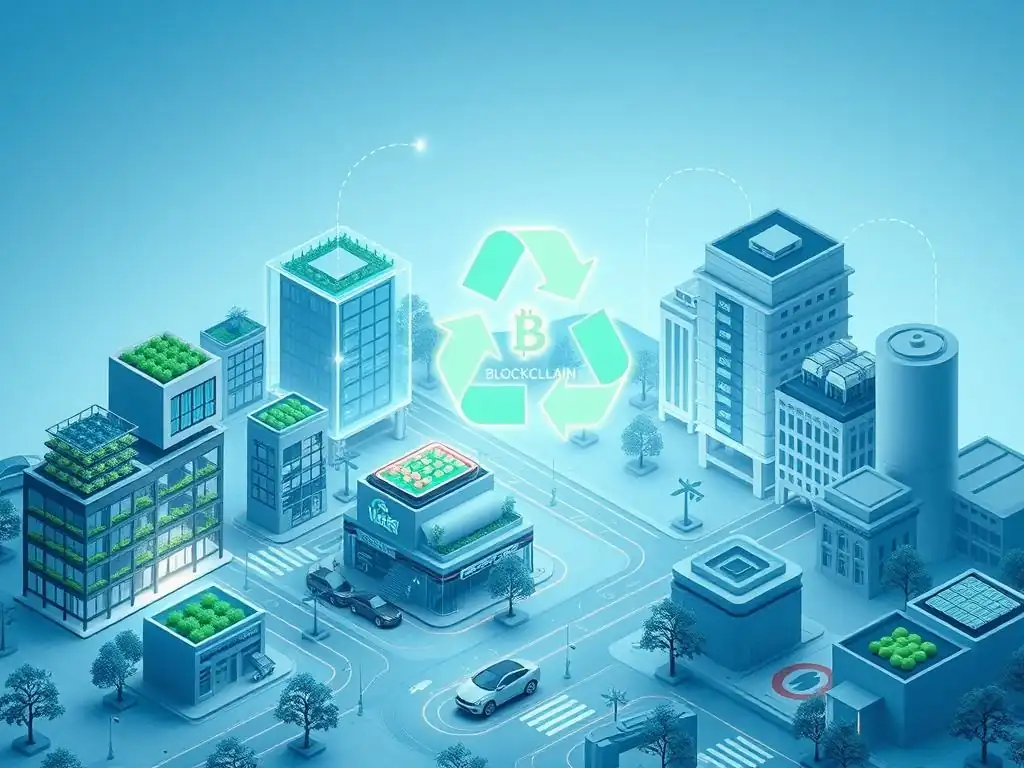
Increased Efficiency and Reduced Costs in Waste Management
Integrating blockchain into waste management systems offers significant potential for increasing operational efficiency and reducing costs. The transparency and immutability of blockchain records streamline processes such as waste collection verification, sorting, and tracking materials to recycling facilities. Automated smart contracts can manage payments between parties based on verified data, reducing administrative overhead and potential for errors or fraud. Furthermore, precise tracking of waste streams allows for better optimization of logistics, reducing transportation costs and associated emissions.
By creating a clear, verifiable history for materials, blockchain also increases the value of secondary resources. Knowing the exact composition and source of recycled plastic or metal, for example, makes it a more reliable input for manufacturers, potentially commanding a higher price than materials with unknown origins. This economic incentive encourages more material recovery and reduces the cost of acquiring virgin resources. While specific global figures are still being compiled, pilot projects have indicated potential cost savings in the range of 10-20% in specific waste management operations through improved data management and process automation enabled by blockchain.
Improved Transparency and Accountability in Environmental Impact
A core benefit of using blockchain in the circular economy is the dramatic improvement in transparency and accountability regarding environmental impact, particularly concerning Blockchain circular economy waste and resource use. Every step in a product's lifecycle, from resource extraction to manufacturing, distribution, consumption, and end-of-life, can be recorded on an immutable blockchain ledger. This creates a comprehensive, auditable history that can be accessed by stakeholders, including consumers, regulators, and investors.
This level of transparency makes it far easier to track environmental footprints, verify sustainability claims (e.g., recycled content, ethical sourcing), and identify areas where resource use or waste generation is excessive. Companies become more accountable for their environmental performance as their actions are recorded on a public or permissioned ledger. This increased accountability can drive behavioral change, encouraging businesses to adopt more sustainable practices to maintain a positive reputation and comply with emerging regulations, ultimately leading to a reduction in waste and a more responsible use of resources.
Fostering Collaboration and Innovation in Sustainable Solutions
Blockchain technology acts as a neutral, shared infrastructure that can foster greater collaboration and innovation among diverse stakeholders in the circular economy. Supply chain partners, including raw material providers, manufacturers, logistics companies, retailers, consumers, waste managers, and recyclers, can share relevant data securely and transparently on a blockchain platform. This shared source of truth breaks down data silos that often hinder collaboration and makes it easier for different entities to work together towards common circular goals.
Furthermore, the transparent data available on a blockchain can fuel innovation. Researchers, startups, and established companies can leverage this data (often anonymized or aggregated) to develop new circular business models, optimize recycling technologies, or create innovative waste-to-value solutions. For example, data on specific waste streams tracked via blockchain could inform the development of new sorting robots or chemical recycling processes tailored to those materials. The open yet secure nature of blockchain encourages the development of a collaborative ecosystem focused on building a more sustainable and waste-free future.
Challenges and Limitations of Blockchain Implementation for Circularity
Scalability and Interoperability of Blockchain Networks
Despite its promise, the widespread implementation of blockchain for managing the complexities of global circular economies faces challenges related to scalability and interoperability. Public blockchains, known for their transparency and decentralization, can sometimes struggle with the sheer volume of transactions required to track millions or billions of individual products and material flows across global supply chains. While newer blockchains and Layer 2 scaling solutions are improving transaction speed and capacity, handling the data intensity of a fully transparent circular economy remains a significant technical hurdle for some platforms.
Interoperability is another key challenge. Different companies or industries may adopt different blockchain platforms (e.g., Ethereum, Hyperledger Fabric, supply chain-specific blockchains). For a truly circular economy, where materials and products flow across various companies and sectors, these disparate blockchain networks need to be able to communicate and exchange data seamlessly. Developing standards and protocols for cross-chain communication and data exchange is crucial but still an ongoing process, hindering the creation of a unified system for tracking Blockchain circular economy waste and resources globally.
Data Privacy and Security Concerns in Circular Economy Applications
While transparency is a core benefit of blockchain, implementing it in sensitive supply chain and waste management contexts raises important data privacy and security concerns. Companies may be reluctant to share commercially sensitive information, such as proprietary product compositions, manufacturing processes, or customer data, on a blockchain, especially a public one. Ensuring that sensitive data is protected while still providing necessary transparency for circularity (e.g., for recyclers) requires careful design of the blockchain solution, potentially utilizing permissioned ledgers, zero-knowledge proofs, or data encryption off-chain with verifiable hashes on-chain.
Furthermore, the security of the data entered onto the blockchain is paramount. While the ledger itself is immutable, the integrity of the system relies on the accuracy of the data input at the source. Ensuring reliable data capture, potentially through IoT devices or trusted third-party verification, is critical. Addressing these privacy and security concerns is essential for building trust and encouraging broad participation from businesses across supply chains, which is necessary for effective Blockchain circular economy waste management systems.
Regulatory and Legal Frameworks for Blockchain-Based Waste Management
The lack of clear and consistent regulatory and legal frameworks for blockchain technology poses significant challenges for its widespread adoption in waste management and the circular economy. Existing regulations around waste management, data ownership, and supply chain responsibility were developed long before blockchain existed. It is often unclear how current laws apply to decentralized blockchain networks, smart contracts, or tokenized incentives for waste collection. For instance, questions arise about the legal enforceability of smart contracts across different jurisdictions or the legal status of digital tokens used as rewards for recycling.
Developing appropriate regulatory frameworks requires collaboration between technologists, businesses, environmental agencies, and legal experts. Clear guidelines are needed on data governance, liability in case of errors or fraud on the blockchain, and standards for verifying data inputs related to waste and materials. Without a supportive and clear legal environment, businesses may be hesitant to invest heavily in blockchain solutions for circularity due to legal uncertainty and potential compliance risks, slowing down the transition to more sustainable Blockchain circular economy waste practices.
The Future of Blockchain and Circular Economy: Towards a Sustainable Ecosystem
Emerging Trends and Innovations in Blockchain for Sustainability
The field of blockchain for sustainability is rapidly evolving, with several emerging trends and innovations poised to accelerate the adoption of blockchain in the circular economy. Specialized sustainability-focused blockchains are being developed that are designed to be more energy-efficient than early proof-of-work networks and offer features tailored for environmental applications, such as built-in registries for environmental assets. Layer 2 scaling solutions are maturing, promising to significantly increase the transaction capacity of networks like Ethereum, making them more viable for tracking high volumes of materials and products.
Another key trend is the tokenization of a broader range of environmental assets beyond carbon credits. This includes tokenized credits for plastic collection (as seen with Plastic Bank), water conservation, biodiversity protection, and even verifiable recycled content.
These tokens can create new markets and financial incentives for sustainable actions. Furthermore, the integration of blockchain with other technologies like IoT (for automated data capture from waste bins or machinery) and AI (for optimizing sorting or material recovery based on blockchain data) is creating powerful new tools for building a truly efficient and intelligent circular economy, addressing Blockchain circular economy waste on multiple fronts.
The Potential of Blockchain for a Global Circular Economy
The inherent global nature of blockchain technology positions it uniquely to facilitate the development of a truly global circular economy. Supply chains are international, and waste often crosses borders, either legally for recycling or illegally. A decentralized, shared ledger can provide a common platform for tracking materials and products regardless of geographical location or national jurisdiction. This enables cross-border collaboration on waste management strategies, facilitates the global trade of secondary raw materials, and allows for international verification of sustainability claims.
Imagine a future where a product manufactured in Asia, used in Europe, and recycled in Africa has its entire lifecycle tracked on a global blockchain network, with relevant data accessible to stakeholders worldwide. This level of transparency and connectivity could unlock massive efficiencies in resource utilization and waste reduction on a global scale. By providing the infrastructure for trusted data sharing and value exchange across borders, blockchain can help dismantle the geographical barriers that currently hinder the flow of resources in a circular system, moving towards a world where Blockchain circular economy waste is minimized everywhere.
Overcoming Barriers to Widespread Adoption of Blockchain in Waste Reduction
Overcoming the existing barriers is crucial for the widespread adoption of blockchain in waste reduction and the broader circular economy. Addressing scalability and interoperability requires continued technological development and industry-wide collaboration on standards. Efforts are needed to build user-friendly interfaces and platforms that abstract away the technical complexities of blockchain for end-users and businesses. Data privacy and security concerns can be mitigated through careful system design, including the use of permissioned networks for sensitive data and robust data governance policies.
Perhaps most importantly, fostering widespread adoption requires collaboration between technology developers, businesses, governments, and non-profit organizations. Governments can play a key role by developing supportive regulatory frameworks, providing incentives for blockchain adoption in circular economy initiatives, and investing in pilot projects. Educating stakeholders about the benefits and practical applications of blockchain for waste management and circularity is also essential to build trust and encourage participation. By addressing these technical, regulatory, and social challenges collaboratively, the potential of blockchain to transform Blockchain circular economy waste practices can be fully realized.
Conclusion: Blockchain as a Catalyst for a Sustainable Future
The Synergistic Relationship Between Blockchain and Circular Economy
The relationship between blockchain technology and the circular economy is deeply synergistic. The core principles of the circular economy – keeping resources in use, designing out waste, and regenerating natural systems – are inherently supported by blockchain's fundamental characteristics of transparency, immutability, and decentralized trust. Blockchain provides the critical infrastructure needed to track materials and products throughout complex lifecycles, verify sustainable practices, incentivize participation in circular models, and build the collaborative ecosystems necessary for a transition away from the linear 'take-make-dispose' model.
By enabling granular traceability, combating counterfeiting to extend product life, powering efficient waste tracking systems, optimizing energy use, and enhancing carbon markets, blockchain directly addresses key challenges in waste management and resource depletion. It offers a powerful digital layer that can make the invisible visible, turning abstract environmental goals into tangible, verifiable actions recorded on a shared ledger. This makes it a potent catalyst for driving the systemic change required for a sustainable future and effectively tackling Blockchain circular economy waste.
The Importance of Continued Innovation and Collaboration
While the potential of blockchain for the circular economy is clear, its full realization depends on continued innovation and robust collaboration across sectors. Technological advancements are needed to improve scalability, interoperability, and energy efficiency of blockchain networks. New applications and business models leveraging blockchain for specific circular economy challenges, from textile recycling to construction waste management, need to be developed and piloted.
Crucially, collaboration between technology providers, industries (such as manufacturing, retail, logistics, and waste management), governments, regulators, and environmental organizations is essential. Building the necessary infrastructure, establishing common standards for data sharing, creating supportive legal frameworks, and fostering widespread adoption requires a concerted, multi-stakeholder effort. Sharing knowledge, resources, and best practices will accelerate the development and deployment of effective blockchain-based circular solutions.
Call to Action: Embracing Blockchain for a Waste-Free World
The transition to a circular economy is not merely an environmental necessity but also an economic opportunity. Blockchain technology provides a powerful set of tools to unlock this opportunity by creating transparency, efficiency, and incentives within resource loops. Businesses, policymakers, and individuals should actively explore and embrace the potential of blockchain to transform how we design, use, and manage products and materials.
Investing in pilot projects, supporting research and development in blockchain for sustainability, advocating for supportive regulations, and educating stakeholders are all vital steps. By leveraging the unique capabilities of blockchain technology, we can move closer to a world where waste is minimized, resources are used efficiently, and economic activity operates in harmony with the environment, paving the way for a truly sustainable and waste-free future powered, in part, by innovative Blockchain circular economy waste solutions.
Frequently Asked Questions
How can blockchain technology specifically help reduce waste in a circular economy?
Blockchain provides transparent traceability for materials, allowing for better tracking and accountability throughout the supply chain. This helps identify inefficiencies, reduce waste generation, and facilitate recycling or reuse.
What role does blockchain play in improving energy efficiency within a circular economy model?
Blockchain can optimize energy consumption by tracking energy usage across various processes in the supply chain. This data allows for identifying areas for improvement and promoting the adoption of energy-efficient practices.
Beyond waste reduction and energy efficiency, what other benefits does blockchain offer the circular economy?
Blockchain fosters greater trust and transparency among stakeholders, promoting collaboration and data sharing. It also enables new business models like tokenized material flows and incentivized recycling programs.
What are some of the challenges to implementing blockchain solutions within the context of a circular economy?
Scalability and interoperability are key challenges, as blockchain networks must handle large volumes of data and connect with existing systems. Furthermore, data privacy and security concerns need to be addressed.
How are regulations impacting the adoption of blockchain for circular economy initiatives?
Regulations are still evolving, but there's increasing interest in how blockchain can support compliance with environmental standards and reporting requirements. Clarity in regulation will be crucial for widespread adoption.
Final Reflection: Empowering Sustainability with Blockchain
The journey through the intersection of blockchain and the circular economy reveals a powerful synergy, and its relevance today is undeniable. The potential of blockchain to revolutionize waste management and energy consumption is no longer a theoretical concept, but a tangible solution ripe for implementation. As we grapple with escalating environmental challenges, the transparent and traceable nature of blockchain offers a beacon of hope for a more sustainable future.
This exploration has underscored the profound impact of technology on shaping a more responsible world. Witnessing the potential for blockchain to drive accountability and transparency in supply chains, reduce fraud in recycling processes, and optimize energy distribution has been truly inspiring. We are at an inflection point where technology can either exacerbate or alleviate the environmental crisis. Blockchain, when applied thoughtfully, can be a powerful force for good.
This quote encapsulates the critical role we play in harnessing technology for the benefit of our planet.
Now, as you reflect on the possibilities presented by blockchain and the circular economy, consider your own role in this transformative journey. How can you champion transparency and sustainability in your own sphere of influence? Let us all strive to embrace innovative solutions and contribute to a future where technology empowers us to reduce waste, conserve energy, and build a truly circular economy for generations to come.
I'm ready. Please share the article content so I can craft a tailored call to action focused on blockchain and the circular economy for readers of blockchaintrends.org. Having the full text will help me create a relevant and engaging message.
Leave a Reply