
The Importance of UX Research in DApp Architecture: Designing for User Needs and Behaviors


Welcome to Blockchain Trends, your compass in the ever-evolving landscape of decentralized technology. Beyond the buzzwords, lies a profound transformation shaping industries and redefining trust.
Ever wondered how blockchain's revolutionary potential translates into real-world applications that actually resonate with users?
Dive into our latest exploration of Usercentered DApp UX research and uncover the secrets to crafting intuitive, engaging, and ultimately successful decentralized experiences. The key to unlocking mass adoption might just be simpler than you think... Read on to discover why understanding user needs is paramount in DApp architecture.
The Importance of UX Research in DApp Architecture: Designing for User Needs and Behaviors
- Understanding User-Centered UX Research in Decentralized Finance (DeFi)
- Why User Research is Essential for DeFi Protocol Architecture
-
Key Benefits of User-Centered DeFi UX Research
- Improved User Adoption and Engagement with DeFi Protocols
- Enhanced User Trust and Confidence in Decentralized Finance
- Increased DeFi Usability and Accessibility for a Wider Audience
- Optimized Protocol Functionality and Feature Prioritization Based on User Understanding
- Competitive Advantage: Building User-Friendly and Secure DeFi Solutions
-
Methods for Conducting Effective DeFi UX Research
- User Interviews: Gathering Qualitative Insights on User Needs and Financial Literacy
- Usability Testing: Evaluating DeFi Interfaces and Identifying Gas Fee Comprehension Issues
- Surveys and Questionnaires: Collecting Quantitative Data on User Risk Tolerance and Investment Strategies
- Analytics Tracking: Monitoring User Interactions and Identifying Liquidity Pool Navigation Challenges
- Security Audits: Expert Review of Protocol Security Based on Potential User Errors
- Integrating UX Research into the DeFi Protocol Development Lifecycle
- Examples of Successful User-Centered DeFi Design
-
Best Practices for User-Centered DeFi UX Research
- Focus on Understanding the Target Audience and Their Specific Financial Needs
- Prioritize Simplicity and Clarity in DeFi Design
- Emphasize Transparency and Security in Decentralized Finance
- Continuously Iterate and Improve DeFi Designs Based on User Feedback and Security Audits
- Leverage Blockchain Technology to Enhance User Experience and Security
- The Future of User-Centered DeFi Design and Research
- Conclusion: Investing in User-Centered DeFi UX Research for Long-Term Success
-
Frequently Asked Questions
- How does User-Centered DApp UX Research differ from traditional UX research?
- Why is User-Centered DApp UX Research crucial for DApp success?
- What are some key methods used in User-Centered DApp UX Research?
- How can User-Centered DApp UX Research help address security concerns in DApps?
- What role does User-Centered DApp UX Research play in shaping the future of decentralized systems?
- Final Reflection: Embracing User-Centricity in the Decentralized Future
- Unleash the Power of User-Centric DApps!
Understanding User-Centered UX Research in Decentralized Finance (DeFi)
Defining User Experience (UX) in the Context of Decentralized Finance (DeFi)
User Experience (UX) in Decentralized Finance (DeFi) encompasses the totality of a user's interaction with a DeFi protocol, from initial discovery to complex yield farming strategies. It's not just about a clean interface; it includes understanding the underlying blockchain mechanics, managing private keys, comprehending transaction costs (gas fees), assessing smart contract risks, and navigating the inherent volatility and complexity of decentralized markets.
Unlike traditional finance applications where intermediaries handle much of the complexity, DeFi places significant responsibility directly on the user. This shift fundamentally alters the UX landscape, demanding interfaces that are not only intuitive but also highly informative and error-resistant.
A poor UX in DeFi can lead to significant consequences, including irreversible financial losses due due to misunderstandings of transaction details or smart contract interactions. Early DeFi interfaces, often built by developers prioritizing functionality over user-friendliness, presented steep learning curves. Reports from 2020-2021 indicated that a substantial percentage of potential users were deterred by the perceived difficulty and risk, with estimates suggesting that over 50% of individuals attempting to engage with DeFi platforms encountered significant friction points or abandoned the process entirely before completing a transaction. This highlights the critical need for a user-centered approach to DeFi design.
The Critical Role of User Research in DeFi Protocol Development
User research is the systematic investigation into the needs, behaviors, motivations, and pain points of potential and existing users of a DeFi protocol. It's the foundational element of Usercentered DApp UX research. By conducting thorough research, development teams can move beyond assumptions about how users will interact with their protocol and gain empirical insights into real-world usage patterns and challenges. This process involves employing various methods to gather both qualitative and quantitative data directly from the target audience, informing design decisions from the earliest conceptual stages through to post-launch iterations.
Integrating user research early in the DeFi development lifecycle can significantly impact a protocol's eventual adoption and success. Identifying critical usability issues or points of confusion before significant development resources are committed is far more cost-effective than addressing them later.
For instance, discovering through user interviews that potential users are highly anxious about confirming transactions without clear explanations of gas costs or potential slippage allows designers to build robust confirmation screens and educational tooltips from the outset. Failing to do this research can result in protocols with elegant code but low engagement, as users simply find them too difficult or risky to use effectively.
Why User Research is Essential for DeFi Protocol Architecture
Addressing the Unique UX Challenges in DeFi Design
DeFi introduces a unique set of UX challenges that are largely absent in traditional financial applications. These include the management of non-custodial wallets, the irreversibility of blockchain transactions, fluctuating and often high gas fees, the need to understand complex concepts like impermanent loss in liquidity pools, and the constant threat of smart contract vulnerabilities. Each of these elements presents a potential point of failure or confusion for the user. Traditional UX patterns often fall short when applied directly to this decentralized context, necessitating novel design solutions informed by specific DeFi user needs.
For example, the concept of gas fees is foreign to users accustomed to fee-free or fixed-fee transactions. User research, including usability testing, frequently reveals that users are confused by the volatility of gas costs, struggle to estimate them, and are often unsure whether to accept or reject a transaction based on the fee displayed.
Research might show that providing clear visual indicators for high/medium/low gas conditions, or offering estimates based on recent network activity (e.g., "estimated fee: ~$5-$10"), significantly improves user confidence and transaction completion rates compared to just displaying a raw Gwei value. This level of specific insight can only be gained through dedicated Usercentered DApp UX research.
Bridging the Gap: Understanding User Needs and Blockchain Complexity
A significant challenge in DeFi UX is the vast gap in technical understanding between blockchain developers and the average user. While developers are intimately familiar with concepts like smart contracts, private/public keys, nodes, and consensus mechanisms, most potential DeFi users are primarily interested in achieving financial goals, such as earning yield, swapping tokens, or borrowing assets, without needing to understand the underlying technical architecture. User research helps bridge this gap by identifying the level of technical detail users actually need or want to see, and how complex information can be presented in an understandable, non-intimidating way.
Through methods like user interviews and contextual inquiries, researchers can uncover how users currently manage their digital assets, what their existing mental models are for financial interactions, and where blockchain-specific terminology creates barriers. For instance, research might discover that while developers see transaction hash as a crucial identifier, users primarily need to know if their transaction succeeded or failed and how long it took. Designing interfaces that abstract away unnecessary complexity while providing access to detailed information for power users, often through progressive disclosure, is a direct outcome of effective User-centered DeFi UX research.
Mitigating Risks: Avoiding Security Vulnerabilities Through User Behavior Analysis
User errors are a significant vector for financial loss in DeFi. Misunderstanding interface elements, approving malicious contracts, sending funds to incorrect addresses, or mishandling private keys are common pitfalls. User research, particularly through usability testing and observing user behavior, can identify interaction patterns or design flaws that make users prone to these errors. By testing with real users, designers can see exactly where confusion arises and redesign interfaces to make safe actions obvious and risky actions difficult or require explicit confirmation.
Consider the common scenario of users needing to approve token spending limits for a smart contract. Usability testing might reveal that users instinctively approve the default "unlimited" spending without understanding the security implications, simply because it's the pre-selected or easiest option. Observing this behavior allows the team to redesign the approval flow, perhaps defaulting to a smaller, specific amount, requiring manual input for "unlimited," or providing clearer warnings about the risks involved. This proactive identification of potential user-induced security vulnerabilities is a critical benefit of Usercentered DApp UX research.
Key Benefits of User-Centered DeFi UX Research
Improved User Adoption and Engagement with DeFi Protocols
Protocols that prioritize Usercentered DApp UX research tend to see higher adoption rates and more sustained user engagement. When users find a platform easy to understand, navigate, and use to achieve their financial goals, they are more likely to integrate it into their financial activities and recommend it to others. Research helps identify and remove the friction points that typically deter new users, such as complex onboarding processes or confusing transaction flows.
Data from successful DeFi protocols often shows a correlation between simplified user interfaces (backed by research) and growth metrics. For example, platforms known for their relatively straightforward swapping mechanisms often attract a larger volume of casual users compared to those requiring intricate order book management or deep technical knowledge. This increased ease of use, directly informed by user research, expands the potential user base beyond early blockchain adopters to a wider audience interested in decentralized finance but lacking technical expertise.
Enhanced User Trust and Confidence in Decentralized Finance
Trust is paramount in finance, and especially so in a decentralized system where intermediaries are removed. Users need to trust not only the underlying technology and smart contracts but also the interface they interact with, believing it accurately reflects the protocol's state and their own assets. User-centered DeFi UX research builds this trust by ensuring transparency, clarity, and predictability in the user experience. When users understand what is happening at each step, particularly during sensitive actions like approving transactions or managing collateral, their confidence in the platform and DeFi in general increases.
Research helps designers understand what information users need to feel secure and confident. This might involve clearly displaying potential outcomes of an action (e.g., estimated yield, liquidation price), providing real-time feedback on transaction status, or offering accessible explanations of risks. A protocol that anticipates user questions and provides clear answers through its interface fosters a sense of reliability. Conversely, confusing interfaces or unexpected behaviors erode trust, potentially leading users to withdraw funds and abandon the platform. Effective DApp UX research is key to building this essential trust layer.
Increased DeFi Usability and Accessibility for a Wider Audience
Decentralized finance has the potential to be more inclusive than traditional finance, but only if it is made accessible. Usercentered DApp UX research plays a vital role in identifying barriers to entry for different user groups, including those with varying levels of technical literacy, financial sophistication, or even those using assistive technologies. By researching diverse user segments, protocols can design interfaces that accommodate a broader range of needs and capabilities.
Accessibility in DeFi UX research considers factors beyond just technical understanding, such as language barriers, mobile-first design needs (given significant mobile usage in many regions), and clear visual hierarchies for users with cognitive or visual impairments. Research might reveal, for instance, that simplifying language used in transaction confirmations or providing clear visual cues for network status makes a protocol usable for a demographic previously excluded by overly technical jargon. This focus on broad usability, driven by dedicated DeFi UX research, is essential for achieving the vision of truly decentralized and accessible finance.
Optimized Protocol Functionality and Feature Prioritization Based on User Understanding
User research provides invaluable insights into which features users actually need, how they attempt to use existing features, and where the most significant pain points lie. This data allows development teams to prioritize features and allocate resources effectively, focusing on building functionalities that provide real value and address demonstrated user needs rather than pursuing technically interesting but ultimately unused features. Understanding user workflows helps optimize existing functionality for efficiency and ease of use.
For example, Usercentered DApp UX research might reveal that users frequently struggle with calculating potential profits or losses from liquidity provision due to the complexity of impermanent loss. This insight could lead the team to prioritize building a clear, interactive calculator tool within the interface. Similarly, if research shows users are abandoning the borrowing process because they don't understand collateral requirements or liquidation risks, the team can focus on redesigning that specific flow with clearer explanations and visual aids. This data-driven approach, guided by User-centered DeFi UX research, ensures development efforts are aligned with actual user requirements.
Competitive Advantage: Building User-Friendly and Secure DeFi Solutions
In a rapidly evolving and competitive DeFi landscape, a superior user experience can be a significant differentiator. Protocols that are easier to use, inspire greater trust, and feel more secure from a user interaction perspective are more likely to attract and retain users compared to competitors with similar underlying technical capabilities but poor UX. Investing in Usercentered DApp UX research provides a clear competitive advantage by enabling teams to build solutions that truly resonate with their target market.
Protocols that actively conduct User-centered DeFi UX research and iterate based on findings demonstrate a commitment to their users. This not only results in a better product but also builds a positive reputation within the community. In a space where network effects and community trust are crucial, being known for a user-friendly and secure platform can lead to organic growth and solidify market position. This proactive approach to understanding and meeting user needs through dedicated DApp UX research is becoming increasingly essential for long-term success.
Methods for Conducting Effective DeFi UX Research
User Interviews: Gathering Qualitative Insights on User Needs and Financial Literacy
User interviews are a cornerstone of qualitative Usercentered DApp UX research, providing deep insights into users' motivations, goals, fears, and experiences with decentralized finance. These one-on-one conversations allow researchers to explore complex topics like users' understanding of financial concepts, their risk tolerance, their methods for managing digital assets, and their perceptions of security and trust within the DeFi ecosystem. Unlike surveys, interviews allow for probing questions and exploration of unexpected themes that emerge during the conversation.
Conducting interviews with a diverse group of participants – ranging from crypto novices to experienced DeFi participants – is crucial. A novice might reveal fundamental misunderstandings about gas fees or wallet recovery, while an experienced user might articulate frustrations with the lack of advanced tooling or inefficient transaction flows. For example, interviews might uncover that while many users are attracted to high yield percentages, a significant portion doesn't understand the concept of impermanent loss or the risks associated with specific liquidity pools, highlighting a critical need for clearer educational content and risk disclosures within the protocol interface.
Usability Testing: Evaluating DeFi Interfaces and Identifying Gas Fee Comprehension Issues
Usability testing involves observing users as they attempt to complete specific tasks using a DeFi protocol interface, such as swapping tokens, adding liquidity, or staking assets. This method is invaluable for identifying points of friction, confusion, or error within the user flow. Researchers can see exactly where users get stuck, what information they struggle to find or understand, and how they react to interface elements like transaction confirmation screens or error messages.
A common finding in DeFi usability testing relates to gas fees. Users are often observed hesitating at the confirmation step, unsure if the displayed gas fee is acceptable, how to adjust it, or what happens if the transaction fails due to insufficient gas. Testing might reveal that providing a simple toggle for "fast," "medium," or "slow" confirmations (with estimated costs) is far more understandable than asking users to manually input Gwei values. Observing users navigate these challenges provides concrete evidence for design improvements aimed at making complex processes like gas management more comprehensible and less intimidating.
Surveys and Questionnaires: Collecting Quantitative Data on User Risk Tolerance and Investment Strategies
Surveys and questionnaires are effective tools for gathering quantitative data from a larger sample size. While they lack the depth of interviews, they can provide valuable statistical insights into user demographics, preferred investment strategies, levels of risk tolerance, familiarity with specific DeFi concepts, and overall satisfaction with existing platforms. This data can help segment the user base and prioritize features based on the needs of the majority or specific target segments.
A survey distributed to potential DeFi users, for example, might reveal that 70% are primarily interested in passive income generation (like staking or yield farming), while only 10% are interested in complex trading strategies. It might also indicate that 60% are highly risk-averse regarding smart contract security, regardless of potential yield. Such data points are critical for prioritizing development efforts (e.g., focusing on robust, user-friendly staking features) and informing communication strategies (e.g., emphasizing security audits and risk management features). This quantitative data complements the qualitative insights gained from interviews in Usercentered DApp UX research.
Analytics tracking involves collecting and analyzing data on how users interact with the live DeFi protocol or its website. This includes metrics such as page views, time spent on specific pages, click-through rates on various buttons, conversion rates for key actions (like completing a swap or depositing assets), and drop-off points within user flows. On-chain analytics can also track contract interactions, transaction success/failure rates, and asset movements.
Analyzing analytics data can reveal patterns of behavior that indicate usability issues. For instance, a high drop-off rate on the 'add liquidity' page might suggest that users are finding the process too complex or are confused by the information presented about impermanent loss or pool shares. Similarly, tracking user navigation through liquidity pools might show that users struggle to find specific pools or understand the metrics displayed, pointing to issues with information architecture or data visualization.
While analytics shows what is happening, combining it with qualitative research helps understand why. This data-driven approach is a key component of effective User-centered DeFi UX research.
Security Audits: Expert Review of Protocol Security Based on Potential User Errors
While primarily focused on code vulnerabilities, security audits can and should incorporate a UX perspective, considering how users might interact with the protocol in ways that expose them to risk. This involves experts reviewing the interface and smart contract interactions not just for technical exploits, but for potential user errors that could lead to loss of funds or unauthorized access. This is a specialized form of Usercentered DApp UX research focusing on the critical intersection of security and usability.
An audit might identify that a function allowing users to revoke token allowances is technically sound but is buried deep within the interface or uses confusing terminology, making it unlikely users will find and use it to mitigate risk after interacting with a potentially risky contract. Another example might be identifying that the interface doesn't clearly warn users about the implications of interacting with unverified or low-liquidity token pairs. By combining security expertise with an understanding of common user behaviors and misconceptions, auditors can flag design flaws that represent "human vulnerabilities," complementing traditional code audits.
Integrating UX Research into the DeFi Protocol Development Lifecycle
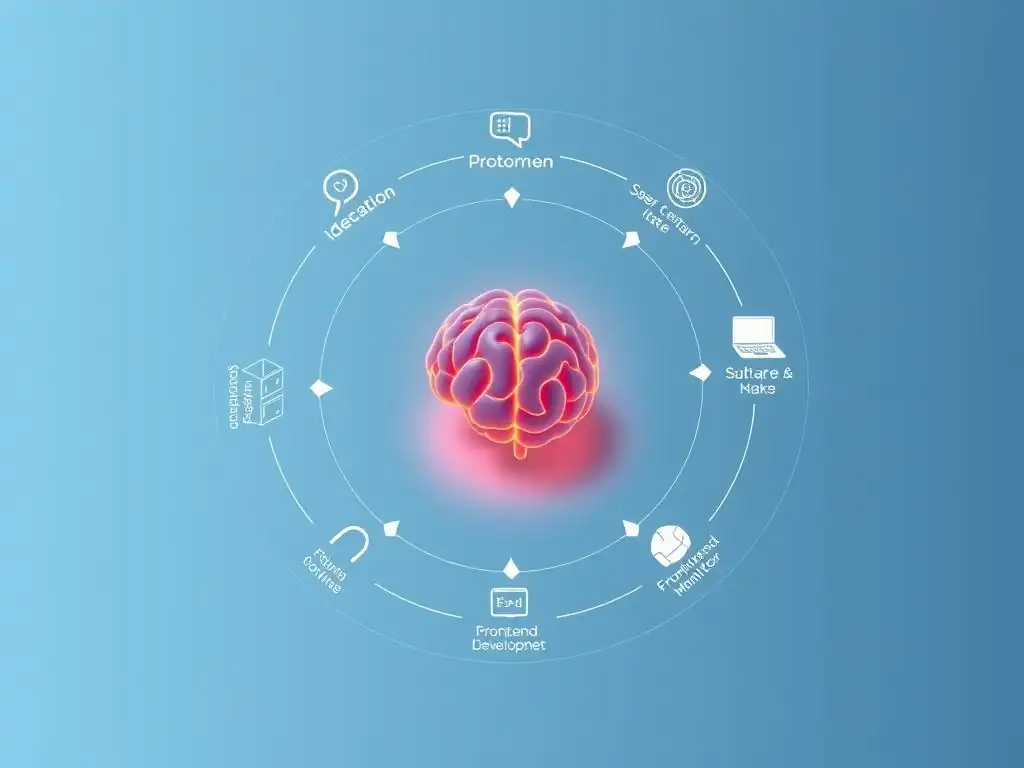
Early Stage Research: Defining User Personas and Identifying Core Financial Goals
Integrating Usercentered DApp UX research from the very beginning of the DeFi protocol development lifecycle is crucial. In the early stages, before significant coding begins, research should focus on understanding the target audience at a high level. This involves defining user personas – archetypes representing different user groups with distinct needs, motivations, technical skills, and financial goals (e.g., the "passive yield seeker," the "active trader," the "DeFi newcomer").
Through initial interviews and surveys, the team can identify the core problems the protocol aims to solve from the user's perspective. What are their current financial pain points? What prevents them from using existing DeFi solutions?
What are their primary goals for engaging with decentralized finance? This foundational research ensures the protocol is built with a clear understanding of who it's for and what problems it's solving, guiding the initial architecture and feature set. For example, if research indicates a primary user goal is simply "earning interest easily," the protocol design should prioritize simplicity and automation over complex trading options.
Iterative Design and Testing: Continuously Refining DeFi Designs Based on User Feedback on Security Measures
Once initial concepts and wireframes are developed, Usercentered DApp UX research becomes iterative. This involves a cycle of designing interface elements, building low-fidelity prototypes, testing them with users, gathering feedback, and refining the designs based on the findings. This process is particularly important for complex or security-sensitive interactions common in DeFi, such as approving smart contract interactions, managing collateral, or confirming irreversible transactions.
Testing specific flows related to security measures is paramount. Do users understand the warning messages when connecting a wallet? Are they able to correctly interpret the details of a transaction they are asked to sign? Can they easily find and use features like revoking token allowances?
Usability testing focused on these critical interactions can reveal design flaws that could lead to significant user errors and potential losses. For instance, testing might show that users consistently misinterpret a warning about potential liquidation risk, prompting redesigns to make the consequences clearer and more prominent. This continuous testing loop, informed by User-centered DeFi UX research, is vital for building robust and safe protocols.
Post-Launch Analysis: Monitoring User Behavior and Identifying Opportunities for Optimization and Education
Usercentered DApp UX research doesn't stop at launch. After the protocol is live, continuous monitoring of user behavior through analytics tracking, user feedback channels, and further research studies is essential. This post-launch analysis helps identify how the protocol is being used in the real world, uncovering unforeseen usability issues, discovering new user needs, and identifying areas where users might require additional education or support.
Analyzing on-chain data in conjunction with user interface analytics can reveal patterns that indicate user struggle or confusion. For example, a high rate of failed transactions with specific error codes might point to a usability issue in setting gas limits or understanding network conditions. User feedback submitted through support channels or community forums can also highlight pain points not caught during testing. This ongoing research allows the team to prioritize bug fixes, design improvements, and educational content based on real-world usage data, ensuring the protocol continues to evolve in a user-centric manner.
Examples of Successful User-Centered DeFi Design
Case Study 1: Uniswap - How UX Research Led to Increased Liquidity Provider Participation
Uniswap, as one of the pioneering decentralized exchanges, achieved significant success partly due to its focus on simplifying a complex process: providing liquidity. Before Uniswap, providing liquidity on order-book exchanges was often cumbersome and required active management. While Uniswap's core innovation is the Automated Market Maker (AMM) model, its user interface design made this model accessible. The simple "Swap" and "Pool" tabs, the clear (though sometimes debated) presentation of impermanent loss warnings, and the straightforward process for adding or removing liquidity lowered the barrier to entry for liquidity providers.
Anecdotal evidence and community feedback suggest that the design choices, likely informed by an understanding of user needs (even if not through formal, documented UX research studies in the early days), prioritized ease of use over the complexity of traditional markets. The interface abstracts away order books, bid/ask spreads, and complex order types, presenting a simple interface for swapping and earning fees by providing assets to a pool.
This focus on simplifying the core interaction, a hallmark of Usercentered DApp UX research principles, contributed significantly to Uniswap's rapid adoption and the growth of its liquidity pools, making it a dominant player in the DeFi space.
Case Study 2: Aave - Improving User Confidence Through Transparent Risk Management Communication
Aave, a leading decentralized lending protocol, has been successful in part due to its emphasis on transparent communication regarding risk, a critical concern for users interacting with lending and borrowing protocols. The platform provides users with clear information about their collateralization ratio, liquidation price, and health factor, presenting complex financial concepts in a relatively understandable format. This focus on clear risk communication directly addresses a major user need identified through Usercentered DApp UX research in the lending space: the fear of unexpected liquidation.
Aave's interface clearly displays the user's borrowing power based on their deposited collateral and the volatility of assets. It provides visual cues and numerical data that allow users to monitor their position and understand how close they are to potential liquidation. While the underlying mechanics are complex, the interface strives to make the critical risk parameters easily accessible and understandable. This commitment to transparency and clear risk management communication, informed by an understanding of user anxieties and information needs, has helped build user confidence in Aave and contributed to its status as a trusted platform within the DeFi ecosystem.
Best Practices for User-Centered DeFi UX Research
Focus on Understanding the Target Audience and Their Specific Financial Needs
Effective Usercentered DApp UX research begins with a deep understanding of who the users are. Are they experienced crypto traders, newcomers to blockchain, individuals seeking passive income, or institutions? Each group has different levels of technical proficiency, risk tolerance, and financial goals. Tailoring research methods and questions to specific target segments is crucial for gathering relevant insights. For example, researching institutional users interested in DeFi might require different approaches and focus areas than researching retail users in emerging markets.
Understanding their specific financial needs goes beyond simply knowing they want to earn yield. It involves delving into their current financial behaviors, their pain points with traditional finance, their comfort level with volatility, and their long-term financial aspirations. This detailed understanding forms the bedrock upon which a truly user-centric DeFi protocol can be built.
Prioritize Simplicity and Clarity in DeFi Design
Given the inherent complexity of blockchain technology and decentralized finance, prioritizing simplicity and clarity in the user interface design is paramount. Usercentered DApp UX research consistently shows that users are overwhelmed by jargon, cluttered interfaces, and unclear calls to action. Design should aim to abstract away unnecessary technical details and present information in a clear, concise, and easily digestible manner.
This means using plain language wherever possible, providing tooltips or explanations for technical terms, designing intuitive navigation, and ensuring that critical information (like transaction details, risks, and potential outcomes) is prominent and easily understood. Simplifying complex flows, such as adding liquidity or managing leveraged positions, through step-by-step guidance and clear visual feedback is essential.
Emphasize Transparency and Security in Decentralized Finance
Transparency and security are non-negotiable for building trust in DeFi. User-centered DeFi UX research highlights that users are constantly assessing the trustworthiness and safety of a platform. The interface must clearly communicate the state of the protocol, the details of any interaction, and the associated risks.
This includes providing clear information about smart contract addresses users are interacting with, displaying transaction details (amount, recipient, estimated gas) prominently before confirmation, offering access to audit reports, and clearly explaining the risks associated with specific actions (e.g., impermanent loss, liquidation risk, rug pulls). Designing interfaces that make security best practices (like revoking token allowances) easy to find and execute is also critical. Research helps determine what information users need to feel secure and how best to present it without causing undue alarm or confusion.
Continuously Iterate and Improve DeFi Designs Based on User Feedback and Security Audits
The DeFi landscape is dynamic, and user needs evolve. Effective Usercentered DApp UX research is an ongoing process, not a one-time activity. Protocols should establish mechanisms for continuously gathering user feedback, monitoring user behavior through analytics, conducting regular usability testing, and incorporating findings into iterative design improvements.
Furthermore, integrating insights from security audits into the design process is vital. If an audit identifies a potential vulnerability stemming from a specific user interaction pattern, the interface should be redesigned to mitigate that risk through clearer guidance or constraints. This continuous loop of research, design, testing, and improvement, incorporating both user feedback and security considerations, is essential for maintaining a user-friendly and secure protocol over time.
Leverage Blockchain Technology to Enhance User Experience and Security
While blockchain introduces complexity, it also offers unique opportunities to enhance the user experience and security in ways not possible with traditional systems. Usercentered DApp UX research can explore how features inherent to blockchain, such as transparency (viewing on-chain data), immutability (certainty of past actions), and programmable logic (smart contracts), can be leveraged to benefit the user.
This could involve designing interfaces that allow users to easily verify contract addresses, track their transactions on a block explorer with direct links from the interface, or utilize smart contract logic for automated risk management features visible to the user. Research might uncover that users feel more secure if they can easily verify the history of interactions with a specific smart contract directly within the application, utilizing the inherent transparency of the blockchain to build trust through the interface.
The Future of User-Centered DeFi Design and Research
Emerging Trends in DeFi UX and User Research Methodologies
The field of Usercentered DApp UX research in DeFi is rapidly evolving. Emerging trends include the development of more sophisticated wallet experiences (e.g., account abstraction for easier onboarding and key management), the integration of decentralized identity solutions for personalized experiences without compromising privacy, and the use of AI/ML to personalize information display based on user behavior and sophistication level.
Research methodologies are also adapting. There's a growing need for research techniques that can effectively capture the experiences of users in diverse global markets, accounting for varying levels of internet access, device types, and financial literacy. Furthermore, researching interactions within decentralized autonomous organizations (DAOs) presents unique challenges, requiring methods to understand collective decision-making and governance participation from a user perspective. Research into cross-chain interactions and Layer 2 scaling solutions also presents new UX challenges requiring dedicated study.
The Importance of Accessibility and Financial Inclusion in Decentralized Finance
A core promise of decentralized finance is increased financial inclusion, offering access to financial services for the unbanked or underbanked populations worldwide. However, this promise can only be realized if DeFi protocols are truly accessible. Future Usercentered DApp UX research must place a strong emphasis on understanding the needs and constraints of users in emerging markets, those with disabilities, and individuals with low digital literacy.
This involves researching the usability of DeFi applications on low-end devices with limited connectivity, designing interfaces that are intuitive regardless of educational background, and ensuring compatibility with assistive technologies. It also means researching the cultural and linguistic barriers to adoption and designing interfaces that are easily localizable and culturally appropriate. Making DeFi truly accessible requires dedicated DApp UX research focused on these underserved populations.
Building a User-Friendly, Secure, and Accessible DeFi Ecosystem
The ultimate goal of Usercentered DApp UX research is to contribute to the development of a decentralized finance ecosystem that is not only technologically robust but also user-friendly, secure from a human perspective, and widely accessible. Achieving this requires collaboration across the industry, sharing best practices in UX research and design for decentralized applications.
Future efforts must focus on developing standardized UX patterns for common DeFi interactions (like swapping, staking, lending) that are proven through research to be intuitive and safe. It also involves continued research into how to effectively communicate the risks inherent in DeFi without overwhelming users, building tools and interfaces that empower users to manage their own security, and designing educational resources that are integrated seamlessly into the user experience. A concerted effort in User-centered DeFi UX research across the ecosystem is vital for its long-term health and widespread adoption.
Conclusion: Investing in User-Centered DeFi UX Research for Long-Term Success
The success and widespread adoption of decentralized finance protocols hinge significantly on their ability to provide a user experience that is intuitive, trustworthy, and accessible. Unlike traditional applications, the unique characteristics of blockchain introduce complexities and risks that necessitate a dedicated focus on user needs and behaviors. Usercentered DApp UX research is not merely an optional add-on; it is a critical investment in the long-term viability and growth of any DeFi protocol.
By employing methods like user interviews, usability testing, surveys, and analytics, teams can gain profound insights into how users interact with their protocols, identify pain points, mitigate risks arising from user errors, and prioritize features that truly matter. Protocols like Uniswap and Aave demonstrate that prioritizing user needs, even in the early stages of this technology, leads to greater adoption and trust.
As the DeFi space matures, continuous, iterative User-centered DeFi UX research will be essential for navigating emerging trends, ensuring accessibility, and building an ecosystem that delivers on its promise of decentralized, inclusive, and secure financial services for everyone. Investing in understanding the user is investing in the future of decentralized finance.
Frequently Asked Questions
How does User-Centered DApp UX Research differ from traditional UX research?
Traditional UX research often focuses on centralized systems. User-Centered DApp UX Research must consider the unique aspects of blockchain technology, such as transaction fees and immutability, influencing user behavior and design choices.
Why is User-Centered DApp UX Research crucial for DApp success?
Poor UX can lead to low adoption rates and user frustration in DApps. Thorough User-Centered DApp UX Research ensures that DApps are intuitive, accessible, and meet the specific needs of the target audience, driving engagement.
What are some key methods used in User-Centered DApp UX Research?
Common methods include usability testing, user interviews, and heuristic evaluations, but tailored to the blockchain context. Researchers also explore on-chain data to understand user behavior and identify pain points within the DApp.
How can User-Centered DApp UX Research help address security concerns in DApps?
By understanding user behavior and common mistakes, research can inform the design of interfaces that minimize the risk of errors, like sending funds to the wrong address, and improve security awareness.
What role does User-Centered DApp UX Research play in shaping the future of decentralized systems?
It helps ensure that decentralized systems are accessible and usable for a wider audience, not just tech-savvy users. This broadens participation and contributes to the growth and adoption of decentralized technologies.
Final Reflection: Embracing User-Centricity in the Decentralized Future
The journey through DApp architecture, as we've explored, hinges fundamentally on understanding and prioritizing the user experience. In a landscape often dominated by technical innovation, it's easy to overlook the crucial role of user-centered DApp UX research in shaping the adoption and success of decentralized applications. Ignoring this vital component risks creating platforms that, while technically groundbreaking, remain inaccessible and ultimately underutilized.
The impact of thoughtful UX research extends far beyond mere usability; it shapes the very perception and acceptance of decentralized technologies. Witnessing the evolution of DApps from complex, niche tools to increasingly intuitive and user-friendly platforms underscores the power of empathy-driven design. Design is not just what it looks like and feels like. Design is how it works.
- Steve Jobs. This quote resonates deeply within the context of DApps, where functionality and user experience must seamlessly intertwine to foster trust and engagement.
As you navigate the burgeoning world of decentralized applications, remember the lessons learned here. Embrace the principles of user-centered DApp UX research, champion the voice of the user, and strive to create DApps that are not only innovative but also genuinely empowering. By prioritizing the human element, you contribute to a future where decentralized technologies are accessible, inclusive, and truly transformative for all.
Unleash the Power of User-Centric DApps!
Thank you for exploring the crucial role of UX research in shaping effective decentralized application architecture. Now that you understand the importance of designing for user needs and behaviors, it's time to put these insights into action.
Here are a few ways to get started:
- Prioritize user interviews in your next DApp project. Listen carefully to your users; their pain points reveal valuable opportunities.
- Examine existing decentralized applications critically. Identify areas where user experience could be improved and consider how research might have prevented those issues.
- Share this article with your network of developers and designers. Let’s work together to elevate UX standards in the blockchain space.
How will you leverage UX research to build a more intuitive and user-friendly decentralized application? Share your plans in the comments below!
Leave a Reply