
The Role of Bitcoin in a Modern Investment Portfolio: Expert Opinions


Welcome to Blockchain Trends, your go-to source for understanding the real potential of blockchain technology. Beyond just the hype, we delve into the practical applications and transformative impact of decentralized systems.
Intrigued by the idea of incorporating Bitcoin into your investment strategy? Then you're in the right place! This week, we're exploring Bitcoin portfolio diversification strategies and uncovering expert opinions on its role in a modern investment portfolio. Is Bitcoin the key to unlocking greater returns, or does it present unforeseen risks? Let's dive in and find out!
- Tools and Platforms for Managing Bitcoin Investments
-
Frequently Asked Questions
- How can Bitcoin contribute to a modern investment portfolio, considering its volatility?
- What are some recommended Bitcoin portfolio diversification strategies for beginners?
- How do expert opinions differ on the ideal Bitcoin allocation within a diversified portfolio?
- What are the regulatory considerations when including Bitcoin in an investment portfolio?
- Beyond Bitcoin, what other blockchain-based assets can be considered for portfolio diversification?
- Final Reflection: Navigating the Digital Frontier of Finance
- Unlock Your Bitcoin Potential: Start Building Your Future Today!
Tools and Platforms for Managing Bitcoin Investments
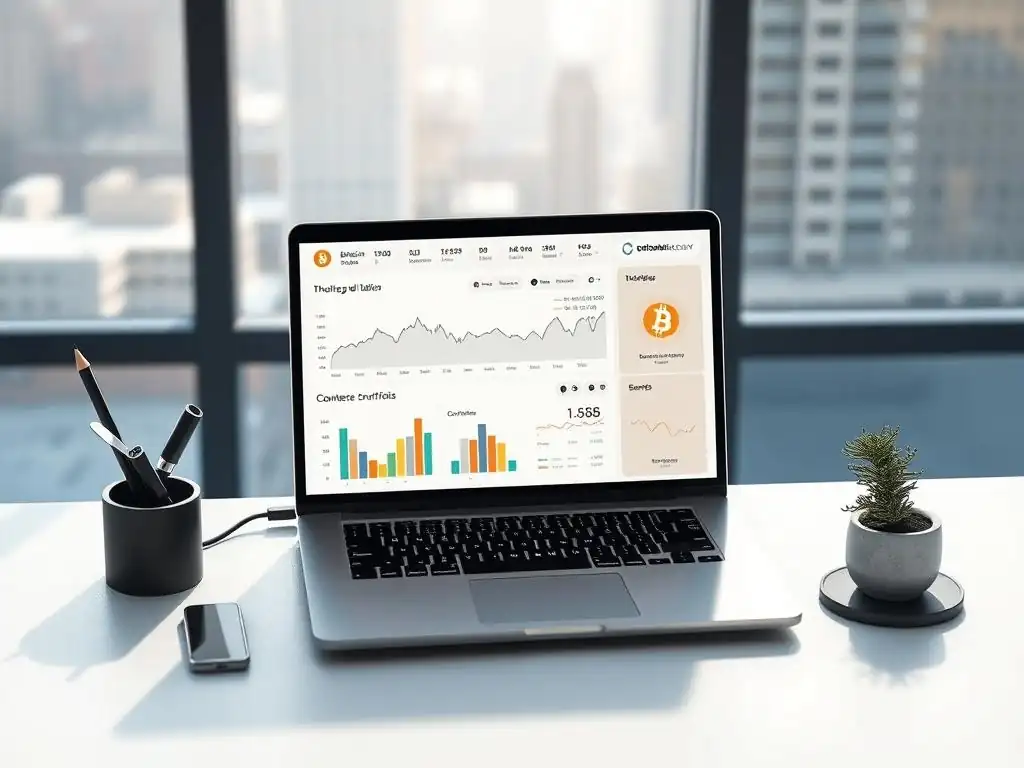
Successfully navigating the world of digital assets, particularly when implementing robust Bitcoin portfolio diversification strategies, requires access to the right tools and platforms. These resources are essential for acquiring Bitcoin, managing holdings across various assets, tracking performance, and staying informed about market dynamics. Utilizing effective tools can significantly enhance an investor's ability to execute their diversification strategy, monitor risk, and optimize returns in a volatile market.
Managing a diversified Bitcoin portfolio goes beyond simply buying and holding. It involves continuous monitoring, rebalancing, and analysis. The platforms and tools discussed in this section provide the necessary infrastructure and insights for investors to make informed decisions, whether they are new to crypto or seasoned participants seeking to refine their Bitcoin portfolio diversification strategies.
Recommended Cryptocurrency Exchanges for Buying Bitcoin
Cryptocurrency exchanges serve as the primary gateway for investors to purchase Bitcoin and other digital assets. The choice of exchange is a critical decision that impacts everything from security and fees to the range of available services and ease of use. Selecting a reputable and suitable exchange is the foundational step in building a diversified Bitcoin portfolio.
When considering exchanges, investors should prioritize platforms with a strong security track record, competitive fee structures, high liquidity, and compliance with relevant regulations. For instance, some of the largest global exchanges process billions of dollars in trading volume daily, offering deep liquidity that minimizes slippage on trades, particularly for large orders.
Fee structures can vary significantly, from flat fees per transaction to tiered systems based on trading volume, which can impact the overall cost of executing a Bitcoin diversification strategy. Furthermore, platforms implementing robust security measures like two-factor authentication (2FA), cold storage of assets (keeping funds offline), and insurance funds are vital for protecting investments against potential hacks or operational failures.
Evaluating Cryptocurrency Exchanges
Evaluating exchanges requires a careful consideration of several key factors. Security is paramount; look for exchanges that have not experienced major security breaches and employ industry-standard protection measures. Liquidity, measured by trading volume, is crucial for ensuring you can buy or sell Bitcoin efficiently at desired prices. A highly liquid exchange allows for faster order execution and tighter spreads.
Fee structures should be transparent and competitive, including deposit, withdrawal, and trading fees. Regulatory compliance, such as Know Your Customer (KYC) and Anti-Money Laundering (AML) procedures, is increasingly important for legitimacy and often required for higher trading limits. Customer support responsiveness and the user interface's intuitiveness also play a significant role in the overall user experience when managing a Bitcoin portfolio.
Choosing an Exchange Based on Investment Needs
The best exchange for an individual investor depends heavily on their specific needs and investment style. Beginners might prefer exchanges with a simple interface and straightforward buying process. More experienced traders looking to implement complex Bitcoin portfolio diversification strategies might require exchanges offering advanced trading features like margin trading, futures, and a wide array of order types (limit, stop-limit, etc.).
Investors planning large volume transactions will prioritize deep liquidity and potentially seek over-the-counter (OTC) services offered by some platforms. Those focused on long-term holding might prioritize security features and withdrawal options. Consider the types of fiat currencies accepted, the range of other cryptocurrencies available (important for diversifying beyond just Bitcoin), and the availability of mobile apps for on-the-go management.
Portfolio Management Tools for Bitcoin Investors
Beyond the exchange where assets are acquired, dedicated portfolio management tools are indispensable for effectively tracking, analyzing, and optimizing a diversified Bitcoin portfolio. These tools provide a consolidated view of holdings across multiple exchanges and wallets, offering crucial insights into performance, asset allocation, and overall investment health. Relying solely on exchange interfaces is often insufficient for managing a comprehensive Bitcoin portfolio diversification strategy that may involve various assets and trading activities.
These tools aggregate data from different sources, presenting a unified dashboard of your digital asset investments. They typically connect via API keys (read-only access for security) to exchanges and allow manual input for hardware wallets or other offline storage. Key functionalities include real-time tracking of asset values, calculation of total portfolio value and performance over time, and visualization of asset allocation.
For an investor implementing Bitcoin portfolio diversification strategies, seeing the percentage breakdown of Bitcoin versus other assets (like altcoins or stablecoins) is vital for rebalancing decisions. Some advanced platforms also offer features for tracking cost basis, calculating realized and unrealized gains/losses, and even assisting with tax reporting by generating necessary forms based on transaction history.
Tools for Tracking Performance
Effective performance tracking is fundamental to evaluating the success of any Bitcoin portfolio diversification strategy. Portfolio management tools provide detailed metrics such as return on investment (ROI) over various periods (daily, weekly, monthly, yearly, or since inception), total profit/loss, and the performance of individual assets within the portfolio. They can display this data through interactive charts and graphs, allowing investors to visualize growth trends and identify underperforming assets.
Features like setting price alerts, tracking historical transactions, and categorizing trades (e.g., buy, sell, transfer) help maintain a clear record of investment activity. For instance, an investor tracking their diversified Bitcoin portfolio might see that while Bitcoin had a 50% gain in a quarter, a specific altcoin only gained 10%, prompting a review of the allocation strategy.
Tools for Market Analysis
Sophisticated portfolio management tools often integrate market analysis features that go beyond simple price tracking. These can include access to real-time market data, advanced charting capabilities with various technical indicators (e.g., moving averages, RSI, MACD), and news feeds aggregated from reputable sources. Some platforms also incorporate social sentiment analysis or on-chain data metrics (like active addresses or transaction volume) to provide deeper market insights.
These analytical tools empower investors to make more informed decisions about adjusting their Bitcoin portfolio diversification strategies based on current market conditions and potential future trends. For example, observing a significant increase in Bitcoin's transaction volume alongside positive news sentiment through a portfolio tool's dashboard might reinforce a decision to maintain a certain Bitcoin allocation within the portfolio.
Frequently Asked Questions
How can Bitcoin contribute to a modern investment portfolio, considering its volatility?
Bitcoin can offer portfolio diversification due to its low correlation with traditional assets like stocks and bonds. Expert opinions suggest it can potentially enhance risk-adjusted returns, despite its inherent volatility. A small allocation may be beneficial.
What are some recommended Bitcoin portfolio diversification strategies for beginners?
Beginners should start with a small allocation (e.g., 1-5% of their portfolio) and consider dollar-cost averaging to mitigate risk. Researching and understanding the underlying technology is also crucial before investing.
How do expert opinions differ on the ideal Bitcoin allocation within a diversified portfolio?
Expert opinions vary, but most agree that Bitcoin should be a relatively small portion of a portfolio. The ideal allocation depends on individual risk tolerance, investment goals, and time horizon.
What are the regulatory considerations when including Bitcoin in an investment portfolio?
Regulatory landscapes are evolving, so investors should stay informed about tax implications and compliance requirements. Consult with a financial advisor to understand the legal and regulatory frameworks in their jurisdiction.
Beyond Bitcoin, what other blockchain-based assets can be considered for portfolio diversification?
Exploring DeFi protocols and other cryptocurrencies can offer further diversification opportunities. However, thorough research and due diligence are essential before investing in any blockchain-based asset.
The insights shared throughout this exploration of Bitcoin's role in modern investment portfolios highlight a crucial point: Bitcoin's integration into diversified strategies is no longer a fringe concept, but a rapidly evolving reality. The expert opinions presented underscore the potential benefits, but also the inherent risks, demanding a nuanced and informed approach from investors seeking to navigate this digital frontier.
The ongoing debate surrounding Bitcoin's volatility and long-term viability underscores the importance of continuous learning and adaptation in the financial landscape. We must acknowledge that the rules of the game are constantly changing, and a static approach to investment will inevitably lead to missed opportunities or, worse, significant losses. The only constant in life is change.
- Heraclitus. This ancient wisdom resonates profoundly in the context of Bitcoin, reminding us to embrace adaptability and critical thinking.
Now, as you consider the potential of Bitcoin within your own investment strategy, I urge you to move beyond the headlines and engage in diligent research. Explore the diversification strategies discussed, consult with financial professionals, and, most importantly, understand your own risk tolerance. The future of finance is being written now, and your informed participation will shape not only your own financial destiny but also the broader narrative of this transformative technology.
Unlock Your Bitcoin Potential: Start Building Your Future Today!
Thank you for exploring the expert opinions on Bitcoin's role in modern investment! We hope you've gained valuable insights into navigating this exciting digital asset. Now, it's time to take the next step toward securing your financial future.
Here are a few ways to get started:
- Research reputable crypto exchanges to make your first small Bitcoin purchase. Understanding the process firsthand is essential.
- Explore educational resources on alternative cryptocurrencies—you might discover other promising digital assets to diversify your portfolio.
- Discuss these expert opinions with your financial advisor and fellow investors. Sharing knowledge can be empowering!
What specific action, inspired by these insights, will you take this week to further explore Bitcoin as an investment? Share your plan in the comments below!
Leave a Reply