
Blockchain Energy Innovation: Startups and Projects Leading the Green Revolution


Welcome to Blockchain Trends, your go-to source for understanding the revolutionary potential of blockchain technology. Are you ready to witness how blockchain is moving beyond cryptocurrencies and forging a path towards a more sustainable future? Dive in to discover how blockchain energy startups are spearheading a green revolution, transforming the energy sector and paving the way for decentralized, eco-friendly systems. The possibilities are just beginning – explore the innovations that are shaping tomorrow, today!
- Introduction: Blockchain's Role in Sustainable Energy
- Blockchain Energy Startups: Pioneering the Green Revolution
- Innovative Blockchain Energy Projects: Driving Sustainability
- Blockchain for Renewable Energy: Use Cases and Applications
- Overcoming Challenges and Scaling Blockchain Energy Solutions
- The Future of Blockchain in the Energy Sector: A Greener Tomorrow
- Conclusion: Blockchain as a Catalyst for a Sustainable Energy Future
-
Frequently Asked Questions
- What role do blockchain energy startups play in the green revolution?
- How does blockchain technology contribute to a more transparent and efficient energy market?
- What are some examples of blockchain-based projects designed to support renewable energy initiatives?
- What are the main challenges facing blockchain energy startups in achieving widespread adoption?
- How can blockchain energy startups help to democratize access to renewable energy?
- Final Reflection: Decentralizing a Sustainable Future
- Power Up Your Green Future with Blockchain!
Introduction: Blockchain's Role in Sustainable Energy
The global energy sector faces a dual challenge: meeting ever-increasing demand while simultaneously transitioning away from fossil fuels to combat climate change. This transition requires not only scaling up renewable energy sources but also developing smarter, more efficient, and transparent energy grids. Traditional energy systems, often centralized and opaque, struggle with the complexities of distributed generation, fluctuating renewable output, and peer-to-peer energy trading. This is where blockchain technology emerges as a potential game-changer, offering innovative solutions to address these challenges and accelerate the blockchain energy startups green revolution.
Blockchain, the distributed ledger technology underlying cryptocurrencies, offers characteristics like immutability, transparency, and decentralization. These features are particularly valuable in the energy domain for applications such as tracking renewable energy certificates, enabling peer-to-peer energy trading, managing microgrids, and financing green projects. By providing a secure and verifiable record of transactions and energy flows, blockchain can build trust and efficiency in a sector traditionally dominated by large, centralized entities. The application of blockchain in energy is moving beyond theoretical discussions, with numerous blockchain energy startups and projects actively developing and deploying real-world solutions aimed at fostering a green revolution.
The Convergence of Blockchain and Renewable Energy
The integration of blockchain technology with renewable energy sources like solar and wind power unlocks new possibilities for energy management and distribution. Renewable energy is inherently distributed and often produced by individuals or small entities (prosumers) rather than large power plants. Blockchain platforms can facilitate direct transactions between these prosumers and consumers, bypassing traditional intermediaries. This peer-to-peer model, often referred to as 'energy trading', empowers individuals and communities, potentially leading to increased investment in distributed renewable generation.
Furthermore, blockchain's transparency can be used to create robust tracking systems for renewable energy credits (RECs) or certificates of origin. This ensures that claims about energy sourcing are verifiable and prevents double-counting, enhancing the integrity of green energy markets. For instance, a company purchasing renewable energy can use a blockchain-based system to track the origin of the electricity and verify that it was indeed generated from a renewable source, often down to the specific facility and time of generation. This level of transparency builds confidence and drives demand for truly green energy, fueling the blockchain energy startups green revolution.
Addressing Energy Consumption Challenges with Blockchain Solutions
While the energy consumption of some blockchain networks (like proof-of-work Bitcoin) has been a significant concern, newer blockchain protocols and specific applications in the energy sector are designed to be highly energy-efficient. Many energy-focused blockchain projects utilize proof-of-stake or other consensus mechanisms that require significantly less computational power. Beyond the consensus mechanism itself, blockchain's primary contribution to addressing energy challenges in the sector lies in optimizing the management and distribution of energy.
Blockchain can facilitate the creation of smart grids that are more responsive and efficient. By using smart contracts, energy flows can be automatically managed based on real-time conditions, pricing, and demand. This can help balance the grid, reduce transmission losses, and optimize the use of intermittent renewable sources. For example, a smart contract could automatically trigger charging electric vehicles when solar or wind generation is high and energy prices are low. This dynamic management helps integrate more renewables into the grid without compromising stability, contributing significantly to the goals of the blockchain energy startups green revolution.
Blockchain Energy Startups: Pioneering the Green Revolution
A wave of innovative blockchain energy startups is at the forefront of applying distributed ledger technology to revolutionize the energy sector. These companies are developing platforms and solutions that address critical challenges in energy trading, grid management, environmental commodity markets, and more. Their work is essential in demonstrating the practical potential of blockchain to create more efficient, transparent, and sustainable energy systems. The success of these blockchain energy startups is a key indicator of progress towards a green revolution powered by decentralized technology.
These startups are not just theoretical concepts; many have deployed pilot projects and commercial platforms. They are attracting investment and forming partnerships with established energy companies, grid operators, and regulatory bodies. Their diverse approaches, from peer-to-peer trading platforms to sophisticated environmental asset registries, showcase the breadth of applications for blockchain in driving sustainability. Understanding the specific contributions of these blockchain energy startups provides concrete examples of how blockchain is actively transforming the energy landscape.
Power Ledger: Revolutionizing Energy Trading with Blockchain
Power Ledger is an Australian technology company that has pioneered blockchain-based peer-to-peer (P2P) energy trading. Founded in 2016, it quickly gained prominence for its innovative approach to allowing individuals and businesses to buy and sell surplus rooftop solar power directly to their neighbors. The company's platform utilizes a dual-token ecosystem ( POWR and SPARK) on a blockchain to facilitate these transactions, providing transparency and automation. Power Ledger's solutions aim to decentralize the energy market, making it more accessible and beneficial for prosumers and consumers alike.
The core idea behind Power Ledger is to unlock the value of distributed energy resources, particularly rooftop solar. By enabling P2P trading, they create local energy markets where energy can be bought and sold at potentially better prices than through traditional utility buyback schemes. This incentivizes further investment in solar panels and other distributed renewables, directly contributing to the blockchain energy startups green revolution. They have deployed projects in various countries, including Australia, Thailand, India, and the United States, demonstrating the global applicability of their technology.
Key Features of Power Ledger's Blockchain Platform
Power Ledger's platform incorporates several key features designed to enable efficient and transparent energy trading. At its heart is a blockchain ledger that records every energy transaction, providing an immutable audit trail. This transparency is crucial for building trust among participants and for regulatory oversight. The platform uses smart contracts to automate the energy trading process, from matching buyers and sellers to settling transactions based on predefined rules and real-time energy meter data.
Another significant feature is the ability to track the origin of energy, verifying that traded energy comes from specific renewable sources. This is vital for renewable energy certificate markets and for consumers who want to ensure they are buying truly green energy. The platform also supports microgrid management and wholesale energy trading applications, extending its use beyond residential P2P. For example, in a project in Fremantle, Western Australia, Power Ledger facilitated the trading of renewable energy within a defined community, showcasing the practicality of their approach.
Impact on Renewable Energy Adoption
Power Ledger's platform has a direct impact on accelerating renewable energy adoption by creating new economic incentives. By allowing prosumers to sell their excess solar energy directly, they can achieve a higher return on their investment in solar panels compared to simply selling back to the grid at lower feed-in tariffs. This improved economic case encourages more households and businesses to install solar PV systems.
Furthermore, the platform empowers consumers by giving them choice over where they source their energy and potentially access to cheaper, locally generated renewable power. This increased demand for local renewables further stimulates the market. While precise global figures are difficult to aggregate across all projects, individual trials have shown significant participation and successful transactions, demonstrating the potential to unlock distributed solar value, a key driver for the blockchain energy startups green revolution.
Electron: Decentralized Energy Grids Powered by Blockchain
Electron is a UK-based energy technology company leveraging blockchain to build a more efficient, resilient, and decarbonized energy system. Founded in 2015, Electron focuses on creating shared digital infrastructure for the energy industry, specifically addressing challenges related to grid flexibility, asset registration, and energy trading. Their work centers on using blockchain to create a trusted, shared view of energy assets and transactions across multiple participants, including utilities, network operators, and consumers.
Electron's platform aims to replace fragmented, proprietary databases and manual processes within the energy sector with a single, secure, and transparent distributed ledger. This shared infrastructure can facilitate complex operations like managing grid flexibility services, where distributed energy resources (like batteries or electric vehicles) can be coordinated to help balance supply and demand. By providing a common, trusted data layer, Electron helps unlock the potential of these distributed assets, which are crucial for integrating higher levels of renewable energy onto the grid.
Building a More Resilient and Efficient Energy Infrastructure
Electron's blockchain-based platform contributes to building a more resilient and efficient energy infrastructure by providing a single source of truth for energy data and assets. In traditional systems, different parties (e.g., network operators, suppliers, meter operators) often hold separate, sometimes conflicting, records of energy assets (like meters or distributed generators) and their status. This fragmentation leads to inefficiencies, delays, and potential errors.
By using a shared blockchain ledger, all authorized parties can access and update the same, verified data in near real-time. This streamlines processes like switching energy suppliers, registering new assets, and managing grid connections. For instance, Electron's work on the UK's energy switching process demonstrated that blockchain could significantly reduce the time and cost involved compared to existing systems. This increased efficiency and data integrity are fundamental to managing a complex, decentralized grid with high renewable penetration, supporting the goals of the blockchain energy startups green revolution.
Blockchain for Peer-to-Peer Energy Trading
While Electron's focus is broader than just residential P2P trading, their platform's underlying capabilities are highly relevant to enabling such markets. By providing a trusted registry of energy meters and generation assets, and the ability to execute complex transactions via smart contracts, their infrastructure can support various trading models, including P2P. The platform can track the flow of energy and associated contractual agreements between different parties on the network.
Electron has explored and demonstrated the potential for P2P trading on its platform. For example, they have partnered with companies to trial local energy markets where participants can trade electricity directly. The blockchain ensures that these trades are recorded accurately and immutably, providing the necessary transparency and auditability. This capability is essential for empowering communities and individuals to participate directly in energy markets, a core aspect of the blockchain energy startups green revolution.
Xpansiv: Tracking and Verifying Environmental Commodities with Blockchain
Xpansiv is a global marketplace for environmental commodities, including carbon offsets, renewable energy certificates, and water rights. While not solely a blockchain company, Xpansiv utilizes blockchain technology as a core component of its infrastructure to enhance the transparency, integrity, and efficiency of these markets. Founded in 2016, Xpansiv's mission is to provide granular, verified data about the production and characteristics of commodities, starting with those that have an environmental attribute.
The platform, known as the Digital Feedstock™ platform, leverages blockchain to create unique digital assets representing environmental commodities. Each digital asset is linked to specific, verified data about the commodity's origin, production methods, and environmental attributes (e.g., the amount of CO2 avoided, the source of renewable energy). This granular data and blockchain's immutability provide a higher level of trust and transparency compared to traditional certificate systems, where data can be fragmented and difficult to verify.
Enhancing Transparency and Trust in Environmental Markets
Transparency and trust are paramount in environmental commodity markets, which have historically faced challenges with issues like double-counting, fraud, and a lack of standardized data. Xpansiv addresses these issues by using blockchain to create a transparent and immutable record of each environmental commodity, from its creation (e.g., electricity generation from a specific solar farm) through its retirement (e.g., used by a company to offset emissions).
By linking verified data directly to the digital asset on the blockchain, Xpansiv ensures that buyers know exactly what they are purchasing and can trust the environmental claims associated with it. For example, a buyer of a renewable energy certificate on Xpansiv can see detailed information about the facility that generated the energy, the date of generation, and verification reports. This level of data integrity is crucial for corporations and governments looking to meet sustainability targets and supports the broader goals of the blockchain energy startups green revolution by making green investments more accountable.
Blockchain-Based Commodity Management Systems
Xpansiv's platform functions as a sophisticated blockchain-based commodity management system. It allows for the creation, registration, tracking, and retirement of digital assets representing environmental commodities. The system integrates with data sources (like smart meters or project registries) to ingest verified information about the commodity. This data is then cryptographically linked to the digital asset on the blockchain.
The use of blockchain ensures that once the data is recorded, it cannot be altered, providing an immutable history of the commodity's lifecycle. This is particularly important for carbon credits and RECs, where tracking ownership and ensuring retirement is critical to prevent double-counting. Xpansiv's platform facilitates trading of these digital assets, providing a liquid and efficient market while maintaining the highest level of data integrity, directly contributing to the infrastructure needed for a blockchain energy startups green revolution.
Innovative Blockchain Energy Projects: Driving Sustainability
Beyond dedicated blockchain energy startups, numerous innovative projects are being developed and deployed by various entities, including utilities, research institutions, and community groups. These projects demonstrate the practical application of blockchain technology in specific energy contexts, from optimizing local energy distribution to facilitating community-owned renewable projects and improving carbon markets. These initiatives are crucial in proving the scalability and effectiveness of blockchain solutions in the real world, further accelerating the blockchain energy startups green revolution.
These projects often focus on specific use cases, testing blockchain's ability to improve efficiency, transparency, and participation within defined energy ecosystems. They provide valuable insights into the technical, regulatory, and social aspects of integrating distributed ledger technology into existing energy infrastructure. The lessons learned from these innovative projects are vital for the wider adoption and scaling of blockchain-based energy solutions globally.
Brooklyn Microgrid: Optimizing Energy Distribution with a Blockchain-Based Smart Grid
The Brooklyn Microgrid project, initiated by LO3 Energy (a blockchain energy startup that partnered with Siemens), is a pioneering example of using blockchain to manage a local energy market. Located in the Gowanus and Park Slope neighborhoods of Brooklyn, New York, the project enables residents with rooftop solar panels to sell their excess energy directly to their neighbors using a blockchain-based platform. This creates a localized, peer-to-peer energy network that operates alongside the traditional grid.
The project utilizes a private, permissioned blockchain to record and settle energy transactions between participants. Smart meters installed at participating homes measure energy generation and consumption in near real-time. This data is then fed into the blockchain platform, where smart contracts facilitate the buying and selling of energy between prosumers and consumers within the microgrid. The goal is to increase the use of local renewable energy, enhance grid resilience, and provide economic benefits to participants.
How Blockchain Improves Grid Efficiency and Reduces Waste
The Brooklyn Microgrid project demonstrates how blockchain can improve grid efficiency, particularly at the local level. By facilitating direct, local energy trades, the project reduces the need to transport energy over long distances through the main grid. This minimizes transmission losses, which can account for a significant portion of energy waste in traditional systems. Estimates suggest that transmission and distribution losses in the U.S. can be around 5%. By keeping energy local, the microgrid helps mitigate some of these losses.
Furthermore, the platform's ability to facilitate dynamic pricing and trading based on local supply and demand can help balance the microgrid more effectively. For instance, if a cluster of homes is generating significant solar power, local prices can drop, incentivizing neighbors to consume that power directly. This local balancing reduces strain on the main grid infrastructure and improves overall energy utilization within the community, contributing to the blockchain energy startups green revolution.
Real-World Applications of the Smart Grid Project
The Brooklyn Microgrid project has moved beyond theoretical demonstration to real-world operation with dozens of participants. It serves as a tangible example of a functional blockchain-based local energy market. Participants can use a mobile app to set their preferences for buying and selling energy, including specifying price limits and whether they prefer to buy from local renewable sources.
The project has processed thousands of energy transactions between neighbors, proving the technical viability of a blockchain-enabled P2P energy market in an urban environment. While the volume of energy traded is still relatively small compared to the overall grid, the project has successfully demonstrated the core concept of decentralized energy trading and management. It provides a blueprint for other communities looking to build similar local energy ecosystems powered by blockchain, showcasing the practical impact of these blockchain energy startups green revolution initiatives.
SonnenCommunity: Facilitating Community Solar Initiatives Through Blockchain
Sonnen, a German clean energy company specializing in residential energy storage, has explored the use of blockchain within its "SonnenCommunity" concept. The SonnenCommunity connects owners of Sonnen batteries and solar panels into a virtual power plant, enabling them to share and trade energy amongst themselves and provide grid services. While not exclusively blockchain-based across all its operations, Sonnen has investigated and implemented blockchain for specific aspects of energy trading and grid services within this community network.
The core idea of the SonnenCommunity is to empower energy consumers to become prosumers and actively participate in the energy market. By aggregating distributed battery storage systems and solar generation, Sonnen creates a network that can act as a single entity, capable of balancing local supply and demand and providing flexibility services back to the grid operator. Blockchain technology has been considered or used to provide a transparent and automated way to track energy flows and settle transactions within this community.
Empowering Local Energy Production and Consumption
The SonnenCommunity model, potentially enhanced by blockchain, significantly empowers local energy production and consumption. By installing solar panels and Sonnen batteries, households generate and store their own clean energy. The community platform allows them to share excess energy with other members or draw energy from the community when their own generation is insufficient. This reduces reliance on energy from the central grid, which may still be heavily reliant on fossil fuels.
Blockchain provides a robust framework for tracking these complex energy exchanges within the community. It ensures that energy credits are accurately allocated and that participants are fairly compensated for the energy they contribute or charged for the energy they consume from the network. This transparency and automation are key to managing a large, distributed network of energy assets, fostering a sense of collective energy independence and driving the blockchain energy startups green revolution at a community level.
Blockchain's Role in Community Solar Financing
While Sonnen's primary focus is on energy trading and grid services, blockchain also holds potential for facilitating the financing of community solar projects. Traditionally, financing large-scale solar farms or even community-owned projects can be complex, involving multiple investors and long-term contracts. Blockchain-based tokenization could potentially allow for fractional ownership of community solar assets, making it easier for individuals to invest smaller amounts and participate in the financial benefits.
Furthermore, smart contracts could automate the distribution of revenue from energy sales or grid services back to investors or community members based on their ownership share. This could lower administrative costs and increase transparency for investors. While Sonnen's direct use of blockchain for financing is less publicized than its energy trading applications, the underlying principles demonstrated in the SonnenCommunity align with how blockchain can facilitate more democratic and transparent funding models for renewable energy infrastructure, supporting the broader ecosystem of blockchain energy startups green revolution initiatives.
Carbonplace: Blockchain-Enabled Carbon Credit Trading Platforms
Carbonplace is a new platform being developed by a consortium of major banks (including BNP Paribas, CIBC, Itaú Unibanco, National Australia Bank, NatWest, Standard Chartered, SMBC, and UBS) to facilitate the trading of voluntary carbon credits. While not a blockchain energy startup in the traditional sense, it is a significant project leveraging distributed ledger technology to address critical issues in the carbon market, which is intrinsically linked to the green revolution in the energy sector and beyond. The platform aims to improve the transparency, efficiency, and integrity of buying and selling carbon credits.
The voluntary carbon market allows companies and individuals to offset their unavoidable emissions by purchasing credits from projects that reduce or remove greenhouse gas emissions (e.g., renewable energy projects, forest conservation). However, this market has been criticized for a lack of transparency, difficulty in verifying the legitimacy and uniqueness of credits, and inefficient trading processes. Carbonplace seeks to overcome these challenges by providing a secure, distributed ledger infrastructure for the market.
Improving the Transparency and Integrity of Carbon Markets
Carbonplace aims to significantly enhance transparency and integrity by providing a single, trusted network for transferring ownership of voluntary carbon credits. By using distributed ledger technology, the platform can ensure that every transaction and transfer of a carbon credit is recorded immutably. This creates a clear audit trail, making it easier to track the lifecycle of a credit from issuance to retirement.
The platform is designed to connect buyers and sellers directly through their banks, reducing the need for multiple intermediaries and potentially lowering transaction costs. More importantly, by providing a standardized and transparent process for trading, Carbonplace helps address issues of double-counting – ensuring that once a credit is used (retired) by one entity, it cannot be resold or claimed by another. This increased integrity is crucial for building confidence in the voluntary carbon market and directing finance towards effective climate action, supporting the blockchain energy startups green revolution by validating green investments.
Blockchain and Carbon Offset Verification
While Carbonplace itself is focused on the trading infrastructure, the integrity of the carbon credits traded relies heavily on robust verification processes. Blockchain technology can play a crucial role in improving this verification. Projects generating carbon credits must typically adhere to rigorous standards (e.g., Verra, Gold Standard) and undergo third-party audits. Blockchain can be used to store the verification reports and data associated with each carbon credit in a secure and transparent manner.
Platforms like Carbonplace can integrate with these verification systems, allowing buyers to easily access the underlying data and reports that prove the legitimacy and impact of the carbon credits they are purchasing. By linking verified data to the digital asset on the ledger, blockchain ensures that the environmental claims are backed by credible evidence. This combination of transparent trading infrastructure and verifiable data is essential for scaling the voluntary carbon market and directing necessary funding towards projects that contribute to the blockchain energy startups green revolution and global decarbonization efforts.
Blockchain for Renewable Energy: Use Cases and Applications
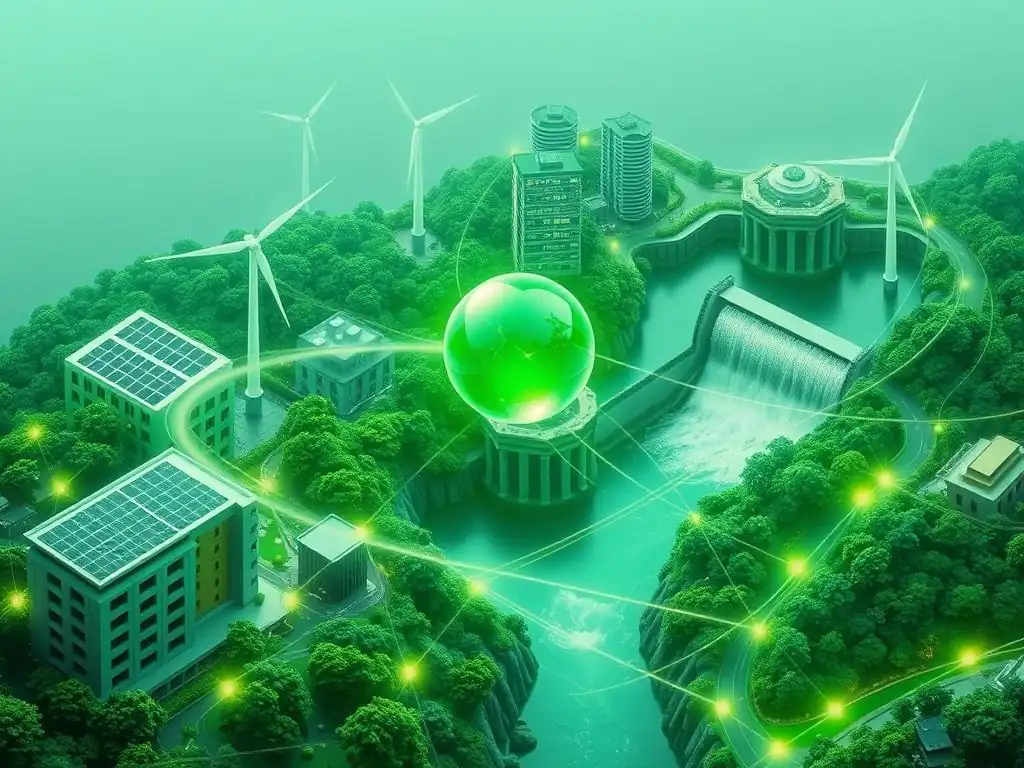
The application of blockchain technology in the renewable energy sector extends beyond the specific startups and projects mentioned above. The core characteristics of blockchain – decentralization, transparency, immutability, and automation via smart contracts – lend themselves to various use cases that can improve the efficiency, reliability, and sustainability of renewable energy systems. These applications are diverse, ranging from tracking the origin of green energy to automating energy agreements and facilitating distributed governance of energy assets. The proliferation of these use cases is a testament to the growing impact of the blockchain energy startups green revolution.
The versatility of blockchain allows it to be applied at different layers of the energy system, from managing individual solar panels and batteries to coordinating large-scale renewable energy power plants and facilitating international carbon trading. As the technology matures and regulatory frameworks adapt, we can expect to see an even wider adoption of blockchain solutions across the renewable energy value chain.
Renewable Energy Tracking and Traceability
One of the most immediate and impactful applications of blockchain in renewable energy is the tracking and traceability of energy origin. Traditional methods for proving that energy comes from renewable sources, such as Renewable Energy Certificates (RECs), often rely on centralized databases that can be prone to errors or lack granular detail. Blockchain provides a superior alternative by creating a secure, transparent, and immutable record of energy generation from specific renewable assets.
Using smart meters and IoT devices, the generation data from a solar panel or wind turbine can be recorded on a blockchain in near real-time. Each unit of energy generated can be tokenized, creating a digital asset linked to specific attributes like location, time of generation, and technology used.
This makes it possible to track the energy unit (or the associated REC) from its point of origin through any subsequent transactions to its final consumption or retirement. This enhanced traceability builds trust in green energy claims for consumers, corporations, and regulators, driving demand for verified renewable energy and supporting the blockchain energy startups green revolution.
Smart Contracts for Energy Agreements
Smart contracts, self-executing contracts with the terms of the agreement directly written into code on a blockchain, offer significant potential for automating and streamlining energy agreements. These can range from simple peer-to-peer energy trades to complex power purchase agreements (PPAs) or grid service contracts. By automating the execution of these agreements based on predefined conditions (e.g., energy meter readings, time of day, grid signals), smart contracts can reduce administrative overhead, minimize disputes, and enable more dynamic pricing and transactions.
For example, a smart contract could automatically pay a solar panel owner for the energy they feed into the microgrid based on real-time meter data and a predetermined price schedule. Another smart contract could manage a PPA between a corporation and a renewable energy developer, automatically releasing payments upon verification of energy delivery via the blockchain ledger. This automation increases efficiency and reliability, making it easier and cheaper to manage distributed energy resources and complex energy transactions, which is vital for the blockchain energy startups green revolution.
Decentralized Autonomous Organizations (DAOs) in Energy Management
Decentralized Autonomous Organizations (DAOs), which are governed by rules encoded as smart contracts on a blockchain, could play a role in future energy management structures. DAOs could potentially be used to manage community-owned renewable energy projects, microgrids, or even decentralized energy funds. In a DAO structure, decisions about the operation, maintenance, or investment in energy assets could be made collectively by token holders (e.g., community members, investors) through a transparent, on-chain voting process.
For instance, a community could form a DAO to collectively own and manage a local solar farm and battery storage system. Token holders could vote on how excess revenue is distributed, when to perform maintenance, or whether to expand the system. This decentralized governance model could increase community engagement, ensure decisions are made transparently, and potentially align incentives more effectively than traditional centralized management structures. While still an emerging area, the application of DAOs in energy represents a frontier for the blockchain energy startups green revolution.
Overcoming Challenges and Scaling Blockchain Energy Solutions
Despite the significant potential demonstrated by blockchain energy startups and innovative projects, the widespread adoption and scaling of blockchain solutions in the energy sector face several challenges. These hurdles are not unique to energy but are particularly pronounced in a highly regulated, infrastructure-heavy industry with established players and complex technical requirements. Addressing these challenges is crucial for moving blockchain energy innovation from pilot projects to mainstream deployment and truly realizing the green revolution potential.
Successfully navigating regulatory landscapes, ensuring interoperability between different platforms and existing systems, and optimizing the scalability and performance of blockchain networks are key areas that require ongoing focus and development. Collaborative efforts between technology providers, energy companies, regulators, and policymakers are essential to overcome these obstacles.
Regulatory Hurdles and Policy Considerations
The energy sector is one of the most heavily regulated industries globally. Introducing decentralized technologies like blockchain into this environment presents significant regulatory challenges. Existing regulations and market structures were designed for centralized, top-down energy systems and often do not easily accommodate peer-to-peer trading, decentralized grid management, or tokenized energy assets. Regulators need to understand the technology and develop frameworks that enable innovation while ensuring grid stability, consumer protection, and fair competition.
Policy support is also crucial. Governments can play a vital role in creating sandboxes for testing blockchain energy solutions, providing grants for pilot projects, and developing clear guidelines for how blockchain applications fit within existing or new regulatory frameworks. For example, defining how blockchain-based energy transactions are taxed or how decentralized market operators are licensed are complex issues that require careful consideration. Progress in regulatory clarity is essential for blockchain energy startups to scale their operations.
Interoperability and Standardization in Blockchain Energy Systems
The emergence of numerous blockchain energy startups and platforms, each potentially using different blockchain protocols or data standards, raises significant interoperability challenges. For blockchain to realize its full potential in the energy sector, different platforms and systems need to be able to communicate and interact seamlessly. An energy asset registered on one blockchain platform should ideally be recognizable and tradable on others, and data from different sources (like smart meters or grid sensors) needs to be standardized for use across various blockchain applications.
Developing common data standards and protocols for energy-related blockchain applications is therefore critical. Industry consortiums and standards bodies are beginning to address this, but it is a complex undertaking given the diversity of energy systems and blockchain technologies. Ensuring interoperability will prevent vendor lock-in and facilitate the creation of a more connected and efficient decentralized energy ecosystem, accelerating the blockchain energy startups green revolution.
Scalability and Performance Optimization for Blockchain Energy Networks
Energy systems operate at a massive scale, involving millions of participants and billions of transactions daily (e.g., meter readings, grid signals, market bids). For blockchain energy solutions to handle this scale, the underlying blockchain networks need to be highly performant and scalable. While newer generation blockchains and layer-2 solutions offer significant improvements over early protocols like Bitcoin in terms of transaction speed and capacity, scaling to the level required by national or regional energy grids remains a challenge.
Optimizing blockchain consensus mechanisms, data storage, and processing capabilities are ongoing areas of research and development for blockchain energy startups and researchers. Solutions might involve using permissioned blockchains for specific enterprise applications, leveraging sidechains for high-volume transactions, or integrating with traditional databases where appropriate. Ensuring that blockchain networks can handle the volume and speed of energy data is essential for their practical deployment in critical grid infrastructure and for truly enabling the blockchain energy startups green revolution at scale.
The Future of Blockchain in the Energy Sector: A Greener Tomorrow
The trajectory for blockchain in the energy sector points towards a future where energy systems are more decentralized, transparent, efficient, and sustainable. The innovations spearheaded by blockchain energy startups and ongoing projects are laying the groundwork for this transformation. As the technology matures, regulatory clarity improves, and scalability solutions are refined, blockchain is poised to play an increasingly significant role in the global transition to clean energy. The potential impact on accelerating the green revolution is substantial, affecting how energy is generated, distributed, traded, and consumed.
The future will likely see blockchain integrated into various layers of the energy value chain, from managing distributed renewable assets and microgrids to facilitating international markets for green attributes and carbon. This integration will not happen overnight, but the progress made by early movers demonstrates the clear path forward. The convergence of digital technologies like blockchain, IoT, and AI with renewable energy is creating powerful new tools for building a sustainable energy future.
Emerging Trends in Blockchain Energy Innovation
Several emerging trends are shaping the future of blockchain energy innovation. One key trend is the increasing focus on integrating blockchain with IoT devices (like smart meters, solar panels, and battery storage) to capture real-time energy data directly onto the ledger. This creates a foundation for highly automated and data-driven energy management systems. Another trend is the exploration of blockchain for managing electric vehicle (EV) charging, enabling smart charging based on grid conditions and potentially facilitating peer-to-peer energy sharing between EVs and the grid (vehicle-to-grid applications).
Furthermore, the development of standardized frameworks and protocols specifically for energy data and assets on the blockchain is gaining momentum. Initiatives are underway to create common taxonomies and APIs to ensure different platforms can interoperate. We also see emerging interest in using blockchain for financing renewable energy projects through tokenization, making green investments more accessible to a wider range of investors. These trends highlight the dynamic nature of the blockchain energy startups green revolution.
The Potential of Blockchain to Decarbonize the Energy Industry
Blockchain has significant potential to accelerate the decarbonization of the energy industry. By enabling more efficient integration of distributed renewable energy sources, facilitating local energy markets, and providing transparent tracking of green energy, blockchain directly supports the shift away from fossil fuels. The ability to granularly track and verify renewable energy generation and consumption incentivizes investment in clean technologies and helps ensure that green claims are credible.
Moreover, blockchain-based platforms for carbon credit trading and environmental commodity markets can improve the effectiveness of carbon pricing mechanisms and direct finance towards projects that reduce emissions. By increasing transparency and reducing fraud in these markets, blockchain helps ensure that investments in carbon offsets and renewable energy certificates are driving real-world environmental impact. The role of blockchain energy startups in building this infrastructure is critical for achieving global decarbonization goals.
Investing in Blockchain Energy Startups and Projects
Investment in blockchain energy startups and projects is growing as the potential of the technology becomes more evident. Venture capital funding is flowing into companies developing solutions for energy trading, grid management, and environmental markets. Established energy companies and utilities are also investing in or partnering with blockchain firms to explore and deploy these new technologies.
Investing in this sector represents an opportunity to support innovative solutions that contribute to both technological advancement and environmental sustainability. Due diligence is, of course, required, as with any investment in emerging technology. However, the long-term trends in energy – decentralization, decarbonization, and digitalization – align strongly with the capabilities of blockchain. As the blockchain energy startups green revolution gains momentum, investment in these pioneering companies and projects will be crucial for scaling their impact and accelerating the transition to a cleaner energy future.
Conclusion: Blockchain as a Catalyst for a Sustainable Energy Future
Blockchain technology is emerging as a powerful catalyst for transforming the energy sector and accelerating the global shift towards sustainability. While challenges remain, the innovative work of blockchain energy startups and various projects is demonstrating the tangible benefits of applying distributed ledger technology to energy systems. From enabling peer-to-peer energy trading and managing decentralized grids to enhancing the integrity of environmental commodity markets, blockchain is providing the tools needed for a more transparent, efficient, and resilient energy future.
The integration of blockchain with renewable energy sources is particularly impactful, unlocking new economic models and empowering individuals and communities to participate more actively in the energy transition. As the technology evolves and regulatory environments adapt, the potential for blockchain to drive decarbonization and create a truly green revolution in energy becomes increasingly clear. Continued innovation, collaboration, and supportive policies will be essential to fully harness blockchain's potential for a sustainable tomorrow.
Key Takeaways: Blockchain's Transformative Impact on Energy
- Blockchain enables transparent and immutable tracking of renewable energy generation and consumption.
- Peer-to-peer energy trading platforms, like those developed by blockchain energy startups such as Power Ledger and potentially supported by infrastructure like Electron's, empower prosumers and consumers.
- Blockchain can improve the efficiency and resilience of energy grids, particularly microgrids, by facilitating local energy balancing and data management, as seen in projects like the Brooklyn Microgrid.
- Blockchain enhances the integrity and transparency of environmental commodity markets, such as carbon credits and RECs, through platforms like Xpansiv and Carbonplace.
- Smart contracts automate complex energy agreements and transactions, reducing costs and increasing efficiency.
- DAOs offer potential for decentralized governance and ownership of community energy projects.
- Addressing regulatory hurdles, ensuring interoperability, and achieving scalability are key challenges for widespread adoption.
- The future of blockchain in energy involves deeper integration with IoT, advancements in financing green projects, and continued focus on decarbonization.
- Blockchain energy startups are at the forefront of this transformation, driving innovation and deployment of real-world solutions for the green revolution.
The Path Forward for Blockchain-Based Energy Solutions
The path forward for blockchain-based energy solutions involves continued technological development, collaborative industry efforts, and supportive policy frameworks. Further research into scalable and energy-efficient blockchain protocols is needed. Developing common standards for data and interoperability will facilitate wider adoption and integration across the energy value chain.
Regulatory bodies need to engage actively with the technology, creating clear guidelines and sandboxes that allow innovation to flourish while maintaining grid stability and consumer protection. Increased collaboration between blockchain energy startups, established energy companies, and policymakers is crucial for piloting, refining, and scaling solutions. As these pieces fall into place, blockchain's role as a foundational technology for a sustainable, decentralized, and green energy future will solidify, leading the charge in the blockchain energy startups green revolution.
Frequently Asked Questions
What role do blockchain energy startups play in the green revolution?
These startups leverage blockchain technology to create innovative solutions for renewable energy tracking, trading, and financing, accelerating the transition to a more sustainable energy system. They are driving innovation in the sector.
How does blockchain technology contribute to a more transparent and efficient energy market?
Blockchain enables peer-to-peer energy trading, creating a more decentralized and transparent system. This improves energy traceability and reduces reliance on traditional intermediaries, leading to greater efficiency.
What are some examples of blockchain-based projects designed to support renewable energy initiatives?
Examples include platforms for carbon credit trading, decentralized energy grids, and systems for tracking the origin of renewable energy. These projects aim to incentivize green energy production and consumption.
What are the main challenges facing blockchain energy startups in achieving widespread adoption?
Challenges include regulatory uncertainty, scalability issues, and the need for greater public awareness and understanding of blockchain technology. Addressing these obstacles is crucial for mass adoption.
How can blockchain energy startups help to democratize access to renewable energy?
By facilitating community-owned energy projects and peer-to-peer energy trading, blockchain can empower individuals and communities to participate in the green energy transition. This leads to a more equitable energy system.
Final Reflection: Decentralizing a Sustainable Future
The exploration of blockchain energy startups reveals a powerful convergence of technology and environmental consciousness. The potential of blockchain to revolutionize energy markets and foster a greener future is no longer theoretical, but actively being realized through innovative projects and dedicated entrepreneurs. This article has highlighted just a few examples, demonstrating the tangible impact of decentralized solutions on renewable energy adoption, grid efficiency, and carbon footprint reduction.
The ongoing influence of blockchain on the energy sector is undeniable, reshaping how we produce, distribute, and consume power. Witnessing this transformation firsthand underscores the importance of embracing technological advancements to address pressing environmental challenges. The promise of transparency, efficiency, and democratization offered by blockchain resonates deeply, paving the way for a more sustainable and equitable energy landscape. We are at the cusp of a new era where technology empowers individuals and communities to take control of their energy future, fostering a more resilient and sustainable world.
As we conclude this exploration of blockchain energy innovation, I invite you to consider your own role in this green revolution. How can you support these pioneering startups and projects? How can you advocate for policies that encourage the adoption of blockchain-based energy solutions? The future of our planet depends on our collective commitment to innovation and sustainability. Let us embrace the power of blockchain to build a brighter, greener future for generations to come.
Power Up Your Green Future with Blockchain!
Thanks for exploring how blockchain is transforming the energy sector! You've seen the incredible potential for a more sustainable and efficient energy future. Are you ready to get involved and be part of this exciting movement? Here's how you can participate:
- Research a startup or project focused on blockchain and renewable energy. Visit their website to learn about their mission and the technology they use.
- Share this article with your network to raise awareness about innovative blockchain applications for sustainable energy.
- Discover additional blockchain-based energy initiatives. Use search terms like "blockchain energy solutions" or "decentralized energy grids" to find more examples.
What small step will you take today to help build a greener future with blockchain? Let us know in the comments!
Leave a Reply