
Smart Contracts for Social Good: Automating Trust and Transparency in DAO Operations


Welcome to Blockchain Trends, your compass in the rapidly evolving world of decentralized technologies. Discover how blockchain is moving beyond cryptocurrency, reshaping industries and redefining trust. In this article, we delve into the fascinating realm of Blockchain social good contracts, exploring how smart contracts can automate transparency and accountability within DAO operations. Curious to see how code can drive positive change? Let's unlock the potential of blockchain for a better future...
Smart Contracts for Social Good: Automating Trust and Transparency in DAO Operations
- Introduction: Blockchain's Potential for Social Impact through Smart Contracts
- What are Blockchain Social Good Contracts? Defining the Key Concepts
- Benefits of Using Smart Contracts for Social Good Initiatives
-
Use Cases: Real-World Examples of Blockchain Social Good Contracts in Action
- Charity and Donations: Proof of Impact (POI) for Trackable Charitable Giving
- Environmental Conservation: KlimaDAO for Carbon Credit Management and Tokenized Offsetting
- Humanitarian Aid: Disberse for Transparent and Efficient Disaster Relief Funding
- Public Health Initiatives: Gitcoin Grants for Funding Open-Source Medical Research
- Implementing Blockchain Social Good Contracts: A Practical Guide
- Challenges and Considerations for Social Good Smart Contracts
- The Future of Blockchain Social Good Contracts and DAOs
- Conclusion: Empowering Social Good with Blockchain Technology and Smart Contracts
-
Frequently Asked Questions
- How can smart contracts improve the operations of Decentralized Autonomous Organizations (DAOs) focused on social good?
- What are "Blockchain social good contracts," and how do they differ from regular smart contracts?
- How does the use of blockchain and smart contracts enhance trust in social good projects?
- What are some potential challenges in implementing smart contracts for social good projects?
- How can smart contracts be used to track the impact and effectiveness of social good initiatives?
- Final Reflection: Embracing Trust in a Decentralized Future
- Ignite Change: Build Your Own Transparent DAO!
Blockchain technology, often associated with cryptocurrencies, holds immense potential to drive positive social change. Beyond its financial applications, blockchain's core principles of decentralization, transparency, and immutability offer powerful tools for addressing complex societal challenges. One of the most significant applications lies in the use of smart contracts, self-executing agreements stored on the blockchain, which can automate processes and enforce terms without intermediaries. This automation is particularly relevant for organizations focused on social good, enabling new models for governance, funding, and impact measurement.
The convergence of blockchain and social impact is giving rise to innovative structures like Social Impact DAOs (Decentralized Autonomous Organizations). These organizations leverage blockchain technology and smart contracts to operate transparently and empower their communities in decision-making. By automating processes and embedding rules directly into code, these DAOs can minimize administrative overhead, reduce the risk of corruption, and ensure that resources are directed efficiently towards their intended purpose. The integration of smart contracts is fundamental to building trust and accountability within these decentralized social initiatives.
Social Impact DAOs represent a new paradigm for collective action and governance in the social sector. Unlike traditional non-profits or foundations with centralized boards and hierarchical structures, DAOs distribute decision-making power among their token holders or members. This decentralized approach aims to increase participation, align incentives, and ensure that the organization's direction reflects the collective will of its community. These DAOs are applying blockchain technology to tackle issues ranging from climate change and poverty alleviation to funding open-source projects and supporting artists.
The operational backbone of most Social Impact DAOs is a set of smart contracts. These contracts define the organization's rules, manage its treasury, handle proposal submissions and voting, and automate the execution of approved actions. For instance, a DAO focused on funding environmental projects might use smart contracts to manage a pool of donated funds, allow members to vote on project proposals, and automatically disburse funds to approved projects once certain milestones, potentially verified through oracles, are met. This reliance on code for governance reduces reliance on human intermediaries, thereby increasing transparency and trust among stakeholders.
Understanding the Role of Smart Contracts in Fostering Trust
Trust is paramount in social good initiatives, where donors, beneficiaries, and stakeholders need assurance that funds are used effectively and ethically. Traditional systems often rely on opaque processes, complex audits, and centralized authorities, which can be slow, costly, and susceptible to error or malfeasance. Smart contracts offer a cryptographic solution to these challenges by embedding trust directly into the technology. Once deployed on a blockchain, the code of a smart contract is immutable and publicly verifiable, meaning anyone can audit its logic and track its execution.
By automating processes like fund distribution, milestone verification, and governance voting, smart contracts eliminate the need for trust in specific individuals or organizations. Instead, trust is placed in the transparent and verifiable code of the smart contract and the underlying blockchain network. For example, a smart contract designed for charitable donations can automatically release funds to a verified recipient upon receiving a donation, with every transaction recorded on the public ledger. This level of transparency builds confidence among donors and ensures accountability for how funds are utilized, fundamentally changing how trust is established and maintained in social good initiatives.
Defining "Blockchain social good contracts" requires understanding the core components: smart contracts and their application beyond typical financial transactions. At its heart, a blockchain social good contract is a self-executing digital agreement, written in code and deployed on a blockchain, specifically designed to facilitate, automate, or verify activities aimed at generating positive social or environmental outcomes. These contracts leverage the inherent properties of blockchain – transparency, immutability, and decentralization – to enhance the effectiveness and trustworthiness of social impact initiatives.
Unlike commercial smart contracts focused on profit or exchange, blockchain social good contracts are tailored to address challenges in areas like philanthropy, aid distribution, environmental management, and community governance. They encode the rules and logic necessary to manage resources, coordinate actions, and track impact within a social context. The goal is often to ensure that resources reach their intended beneficiaries efficiently, that processes are transparent, and that stakeholders can verify impact, thereby increasing accountability and fostering greater participation in social good efforts.
Smart Contracts: The Building Blocks of Automated Agreements
Smart contracts are essentially programs stored on a blockchain that run when predetermined conditions are met. They are immutable once deployed, meaning their code cannot be changed, which ensures reliability and prevents tampering. Written in programming languages like Solidity for Ethereum or Rust for Solana, these contracts can hold funds, execute transactions, manage identities, and interact with other contracts. The execution of a smart contract is automatic and deterministic, triggered by events on or off the blockchain (via oracles).
These digital agreements eliminate the need for intermediaries in many transactions, reducing costs and potential points of failure. For example, a simple smart contract can hold funds in escrow and release them automatically to a seller once a buyer confirms receipt of goods. In the context of blockchain social good contracts, this capability is transformative. A smart contract can manage a pool of donations and automatically disburse funds to a registered non-profit when a specific fundraising goal is reached or a project milestone is verified, all without requiring manual approval from a bank or central authority.
While many early smart contracts focused on decentralized finance (DeFi), the concept extends far beyond financial transactions. Social good contracts apply the power of automated, transparent agreements to non-profit sectors and public services. This can involve automating the distribution of aid, managing voting processes for community projects, tracking the provenance of ethical goods, or creating tokenized systems for environmental credits. The defining characteristic is their purpose: to achieve a positive social or environmental outcome rather than purely financial gain.
Consider a smart contract designed for disaster relief. Donors could send cryptocurrency to the contract's address. The contract could be programmed to automatically release funds in smaller increments to verified aid workers or local organizations upon receiving reports or proofs of delivery, potentially integrating with external data sources (oracles) to verify conditions on the ground. This contrasts sharply with traditional aid distribution, which often involves multiple layers of administration, significant delays, and potential for diversion of funds. Social good contracts prioritize efficiency, transparency, and direct impact.
Effective blockchain social good contracts share several critical characteristics. Firstly, transparency is paramount; the contract's code should be publicly auditable, and its execution traceable on the blockchain. This allows stakeholders to verify how funds are managed and decisions are made. Secondly, immutability ensures that the rules of the contract cannot be altered after deployment, providing a high degree of trust and reliability. Stakeholders know that the contract will execute exactly as programmed.
Thirdly, automation is key; the contract should automate processes like fund distribution, voting, or milestone verification based on predefined conditions, reducing administrative burden and potential human error or bias. Fourthly, security is non-negotiable; contracts must be rigorously tested and audited to prevent vulnerabilities that could lead to loss of funds or manipulation.
Finally, purpose-driven design is crucial; the contract must be specifically designed to address the unique challenges and goals of the social good initiative it supports, ensuring it effectively facilitates positive change. These attributes combine to make blockchain social good contracts powerful tools for creating more trustworthy and efficient social impact systems.
Leveraging smart contracts within social good initiatives and DAOs offers a multitude of advantages over traditional operational models. These benefits stem directly from the core properties of blockchain technology: transparency, automation, and immutability. By automating processes and embedding rules in code, organizations can operate with greater efficiency, accountability, and trust, ultimately maximizing their impact and attracting broader support. The application of blockchain social good contracts is fundamentally reshaping how philanthropic and humanitarian efforts are organized and executed.
One of the most significant benefits is the ability to provide unprecedented levels of transparency to donors, beneficiaries, and the public. Every transaction and action executed by a smart contract is recorded on the blockchain, creating an immutable and publicly accessible ledger. This eliminates the "black box" effect often associated with traditional non-profits, where it can be difficult to track exactly how funds are used. Furthermore, smart contracts streamline complex administrative tasks, freeing up valuable resources that can be redirected towards the core mission.
Enhanced Transparency and Accountability in DAO Operations
Transparency is a cornerstone of trust, particularly in organizations that rely on public support. Blockchain social good contracts provide a level of transparency that is difficult to achieve with traditional systems. Because the contract's code and execution history are on a public ledger, anyone can inspect how funds are managed, how decisions are made through governance mechanisms encoded in the contract, and how resources flow through the system. This open book approach builds confidence among stakeholders and makes the organization's operations auditable by anyone, anytime.
This inherent transparency directly leads to enhanced accountability. If a smart contract is programmed to disburse funds only upon verification of a specific project milestone, stakeholders can verify on the blockchain that these conditions were met before funds were released. Any deviation or failure to execute according to the programmed logic would be immediately apparent on the public ledger.
This makes it significantly harder for funds to be misdirected or for processes to be manipulated, holding the organization and its participants accountable to the community and donors. This shift from relying on periodic reports to real-time, verifiable data is revolutionary for social impact organizations.
Streamlined Processes and Reduced Administrative Overhead
Traditional social good organizations often face significant administrative burdens related to fundraising, fund management, reporting, and compliance. These tasks can be time-consuming and expensive, diverting resources away from programmatic activities. Smart contracts can automate many of these processes, leading to substantial efficiencies and reduced overhead. For instance, managing donor databases, tracking contributions, issuing receipts, and allocating funds can all be partially or fully automated using smart contracts.
Consider a DAO funding open-source development for social good. A smart contract can receive donations, manage a pool of funds, process grant applications submitted on-chain, facilitate token-based voting on proposals, and automatically disburse approved grants. This eliminates the need for extensive manual processing, committee meetings for every decision, and traditional banking transfers. The result is a leaner, more agile operation where a larger percentage of donated funds directly supports the intended cause, estimated by some blockchain foundations to potentially reduce administrative costs by 20-40% compared to traditional models, although precise figures vary greatly depending on the initiative's complexity.
Increased Efficiency and Faster Disbursement of Funds
One of the critical challenges in humanitarian aid and disaster relief is the speed at which funds can reach those in need. Traditional financial systems can be slow, involving multiple banks, intermediaries, and bureaucratic approvals, often taking days or even weeks for funds to arrive. Blockchain social good contracts can significantly accelerate this process. Once funds are received by a smart contract, they can be programmed to be released automatically and near-instantly when predefined conditions are met, such as the verification of a beneficiary's identity or the confirmation of a delivery.
For example, during a disaster, a smart contract could be set up to receive donations and automatically distribute stablecoins to verified wallets of affected individuals or local aid workers as soon as they are identified and registered on a secure system. This bypasses traditional banking bottlenecks and allows aid to flow much faster to where it is needed most. Projects like Disberse have demonstrated the potential to track funds with unprecedented speed and transparency, showing how blockchain can drastically improve the efficiency of aid delivery in time-sensitive situations.
Mitigation of Corruption and Improved Fund Management
Corruption and mismanagement of funds are persistent problems that undermine trust in social good initiatives globally. Traditional systems often lack the inherent transparency and immutability needed to prevent or detect such issues effectively. Smart contracts offer a powerful tool for mitigating these risks by making fund management transparent and automating the rules governing fund flow. Once deployed, the logic of a smart contract cannot be altered, and every transaction is recorded on the public ledger, creating an indelible audit trail.
A blockchain social good contract can be designed to ensure that funds are only released to pre-approved wallets or upon verification of specific outcomes. This removes the possibility of funds being diverted manually by individuals within the organization.
For example, a contract funding school construction could release payments to contractors only upon receiving on-chain verification (perhaps via a trusted oracle or authorized parties) that construction milestones, like the completion of the foundation or walls, have been met. This level of programmatic control and transparency significantly reduces opportunities for corruption and ensures funds are managed according to the explicit rules agreed upon by the community.
The potential of blockchain social good contracts is best illustrated through real-world applications that are already making a tangible impact. These examples span various sectors, demonstrating how automated, transparent agreements can revolutionize traditional approaches to charity, environmental action, humanitarian aid, and public goods funding. While many initiatives are still nascent, they showcase the transformative power of blockchain technology when applied with a focus on social impact and leveraging blockchain social good contracts.
These diverse use cases highlight how smart contracts can automate trust, improve efficiency, and increase accountability across different domains. From tracking charitable donations with unprecedented detail to managing complex environmental assets like carbon credits, blockchain is enabling new models for collective action. These projects are moving beyond theoretical discussions to build working systems that leverage the unique properties of decentralized ledgers and smart contracts to address pressing global challenges.
Charity and Donations: Proof of Impact (POI) for Trackable Charitable Giving
One of the earliest and most intuitive applications of blockchain social good contracts is in improving transparency in charitable giving. Donors often lack visibility into how their contributions are used, leading to hesitancy and mistrust. Projects leveraging blockchain can provide "Proof of Impact" (POI) by tracking donations from the donor's wallet to the final beneficiary or project milestone on a public ledger. Smart contracts facilitate this by automating the flow of funds based on predefined conditions and recording every step immutably.
For example, a charity could create a smart contract for a specific project, like providing clean water filters to a village. Donors send cryptocurrency to the contract.
The contract is programmed to release funds in stages – perhaps 30% upon procurement of filters, 50% upon delivery to a local distribution point (verified by a trusted third party or oracle), and 20% upon confirmation of distribution to households (again, with verifiable proof). Every transaction is recorded on the blockchain, allowing donors to see exactly how their funds progress through the project lifecycle, providing a level of transparency previously impossible and significantly enhancing accountability compared to traditional donation methods.
Environmental Conservation: KlimaDAO for Carbon Credit Management and Tokenized Offsetting
Environmental conservation is another area where blockchain social good contracts are making significant strides. Managing environmental assets like carbon credits is often complex, opaque, and prone to double-counting. DAOs like KlimaDAO are using smart contracts to bring transparency and efficiency to the voluntary carbon market by tokenizing verified carbon credits. They pool these tokenized credits into a treasury managed by smart contracts, allowing users to purchase carbon tokens and effectively "retire" carbon from the atmosphere by removing the underlying credits from circulation.
KlimaDAO's smart contracts govern the treasury, manage bonding mechanisms that incentivize the supply of carbon credits, and handle the tokenization and retirement process. Every transaction, from the deposit of a verified carbon credit (like a Verra BCT or NCT) into the treasury to the purchase and retirement of a KLIMA token, is recorded on the Polygon blockchain.
This provides an immutable and public record of carbon offsetting activities, ensuring that retired carbon is truly accounted for and cannot be double-counted. This application of blockchain social good contracts offers a more transparent and accessible way for individuals and organizations to participate in climate action.
Humanitarian Aid: Disberse for Transparent and Efficient Disaster Relief Funding
Getting funds quickly and transparently to those affected by disasters is a critical challenge. Traditional aid distribution systems often involve multiple intermediaries, resulting in delays, high costs, and potential for funds to be lost or diverted. Disberse, a platform utilizing blockchain, demonstrated how smart contracts can improve the efficiency and transparency of humanitarian aid. While not a DAO itself, its model illustrates the power of blockchain social good contracts in tracking fund flows.
Disberse allowed aid organizations to send funds through a blockchain-based platform, creating a transparent ledger of every transaction. Funds could be tracked from the initial donor organization through various implementing partners down to the final recipient, with each step recorded and verifiable. Although specific smart contract logic varied by use case, the core idea was to use the blockchain as a single source of truth for fund disbursement, reducing reliance on manual reporting and increasing accountability. This approach significantly reduces the time and cost associated with traditional aid transfers and provides unprecedented visibility into the aid supply chain.
Public Health Initiatives: Gitcoin Grants for Funding Open-Source Medical Research
Funding public goods, such as open-source software or medical research, is often challenging due to the difficulty in capturing value and coordinating dispersed communities. Gitcoin Grants uses blockchain social good contracts and a mechanism called "quadratic funding" to support open-source projects, including those focused on public health initiatives. The platform allows anyone to donate to projects, and smart contracts facilitate matching contributions from a central pool, giving more weight to projects with a larger number of unique contributors rather than just large donations.
Gitcoin's smart contracts manage the donation process, calculate the quadratic matching distribution, and handle the disbursement of funds to project teams. Donors send cryptocurrency to the platform's contracts during funding rounds.
The contracts then process these donations and, after the round closes, calculate and distribute matching funds from a pool provided by sponsors. This system, governed by smart contracts, ensures that funding decisions are influenced by the broader community (many small donors) rather than just a few large donors, directing resources towards projects deemed most valuable by the community, including critical open-source tools for medical research and public health response.
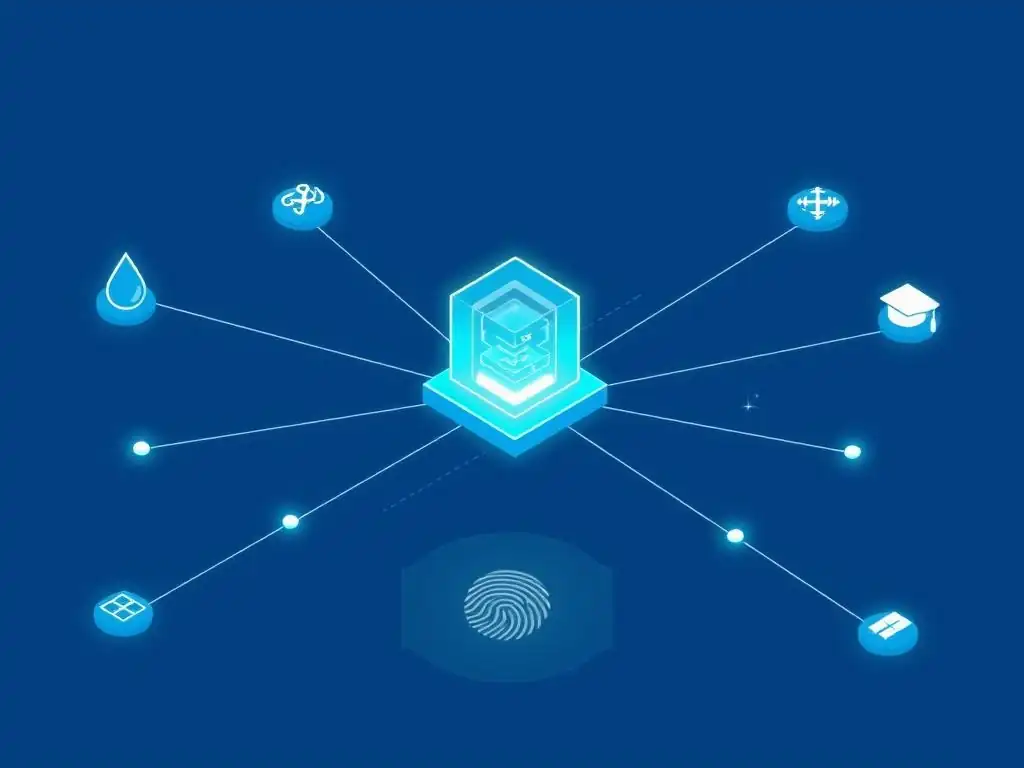
Implementing blockchain social good contracts requires careful planning and execution. It involves more than just writing code; it necessitates choosing the right platform, designing secure and effective contracts, integrating them into the organization's governance model, and navigating the evolving regulatory landscape. For a Social Impact DAO, these steps are foundational to building a robust and trustworthy operation that can effectively achieve its mission and leverage blockchain social good contracts to their full potential.
The process typically begins with a clear definition of the problem the smart contract will solve and the specific processes it will automate or facilitate. This functional specification then guides the technical implementation. Success hinges on making informed decisions at each stage, ensuring the technology serves the social good objectives and remains resilient against potential challenges.
Selecting the appropriate blockchain platform is a critical first step for any Social Impact DAO looking to deploy blockchain social good contracts. Different platforms offer varying trade-offs in terms of cost (gas fees), speed, scalability, security, and ease of development. Public blockchains like Ethereum (especially after the Merge to Proof-of-Stake) and Polygon are popular choices due to their mature development ecosystems, security, and widespread adoption, although gas fees on Ethereum mainnet can still be a consideration for frequent, small transactions.
Other options include platforms like Solana, Cardano, or permissioned blockchains depending on the specific needs of the project. Factors to consider include the transaction volume and cost tolerance (e.g., micro-donations might favor lower-fee chains), the required level of decentralization, the availability of development tools and talent, and the community around the platform.
A DAO focused on high-frequency, low-value transactions might prefer a layer 2 solution or a platform with inherently lower fees, while a DAO managing large endowments might prioritize the security and proven track record of a more established chain. The choice significantly impacts the feasibility and cost-effectiveness of the blockchain social good contracts deployed.
Developing Secure and Auditable Smart Contracts
Developing secure smart contracts is paramount, as vulnerabilities can lead to significant financial losses or compromise the integrity of the social good initiative. Unlike traditional software, smart contracts often manage valuable assets and, once deployed, are immutable, making errors or bugs difficult or impossible to fix. Rigorous security practices are non-negotiable when building blockchain social good contracts.
Development should follow secure coding best practices, using established frameworks and patterns. Crucially, all smart contracts must undergo thorough testing, including unit tests, integration tests, and formal verification where possible. Independent security audits by reputable blockchain security firms are highly recommended before deploying contracts to a mainnet. These audits identify potential vulnerabilities like reentrancy attacks, integer overflows, or access control issues. Making the contract code publicly available and encouraging community review (a form of open audit) also contributes to identifying potential problems and building trust in the blockchain social good contracts.
Integrating Smart Contracts into DAO Governance Structures
For a Social Impact DAO, smart contracts are not just tools for automation; they are the foundation of its governance structure. Integrating smart contracts effectively means designing how token holders or members will interact with the contracts to propose, vote on, and execute decisions. This requires careful consideration of the governance model (e.g., direct voting, delegated voting, quadratic voting) and encoding these rules within the smart contract logic.
Smart contracts can manage the entire proposal lifecycle, from submission and discussion to voting and execution. A governance smart contract might hold the DAO's treasury and only release funds to a project if a proposal meets a certain threshold of votes from token holders, as defined within the contract's code. Designing intuitive interfaces for members to interact with these governance contracts (e.g., through a web dashboard) is also essential for ensuring broad participation. The integration must ensure that the technical implementation of the blockchain social good contracts accurately reflects the desired decentralized governance principles of the DAO.
Ensuring Compliance with Relevant Regulations
The regulatory landscape for blockchain and cryptocurrencies is constantly evolving, and Social Impact DAOs operating with blockchain social good contracts must navigate this uncertainty. Depending on the jurisdiction(s) where the DAO operates and the nature of its activities, various regulations might apply, including those related to fundraising (e.g., securities laws if tokens are involved), financial transactions (e.g., anti-money laundering or AML/Know Your Customer or KYC rules), and potentially non-profit or charitable status.
While DAOs aim for decentralization, the individuals or entities involved in setting up or managing aspects of the DAO could potentially face legal obligations. Projects should seek legal counsel to understand their specific regulatory exposure. This might involve structuring the DAO in a particular way, implementing identity verification measures for certain participants or transactions (even if pseudonymously on-chain), or ensuring that the activities facilitated by the blockchain social good contracts align with existing legal frameworks for non-profits or public benefit organizations. Compliance is a complex but necessary consideration for long-term sustainability.
While blockchain social good contracts offer significant advantages, their implementation is not without challenges. These include technical hurdles related to security and scalability, as well as broader issues concerning accessibility, inclusivity, and the uncertain regulatory environment. Addressing these considerations is crucial for the successful and equitable deployment of blockchain technology for social impact. Ignoring these challenges could lead to failed projects, loss of funds, or exclusion of key stakeholders, undermining the very goals the initiatives seek to achieve.
Navigating these complexities requires careful design, robust development practices, and a commitment to continuous improvement and community engagement. Building trust in blockchain social good contracts involves not only demonstrating their technical capabilities but also ensuring they are resilient, accessible, and operate within ethical and legal boundaries.
Smart Contract Security Vulnerabilities and Mitigation Strategies
Smart contract security remains a primary concern. The immutable nature of deployed contracts means that any bug or vulnerability can be permanently exploited, potentially leading to the loss of all funds managed by the contract. High-profile incidents, such as the DAO hack in 2016 which led to a hard fork of Ethereum, or the exploit of the Parity wallet contract in 2017 which froze hundreds of millions of dollars, highlight the severe consequences of security flaws in smart contracts.
Mitigating these risks requires a multi-layered approach. This includes adhering to secure coding standards, using established development frameworks, and conducting extensive internal testing. Crucially, obtaining independent security audits from experienced blockchain security firms is essential before deploying blockchain social good contracts that manage significant assets. Utilizing formal verification methods can mathematically prove the correctness of critical contract logic. Additionally, incorporating upgradeability mechanisms (implemented carefully to avoid introducing centralisation risks) or bug bounty programs can provide avenues for addressing issues discovered after deployment, although immutability remains the default and preferred state for core functions of blockchain social good contracts.
Scalability Issues and Potential Solutions
Scalability is another significant challenge for blockchain networks, particularly public ones. High transaction volumes can lead to network congestion, slow transaction times, and increased fees (gas costs). For social good initiatives that might involve frequent, small transactions (like micro-donations or aid disbursements), high fees can make the use of blockchain social good contracts prohibitively expensive for both the organization and participants.
Solutions to scalability issues are being developed and implemented across various platforms. Layer 2 scaling solutions, such as rollups (Optimistic and ZK-rollups) on Ethereum, process transactions off-chain and submit proofs to the main chain, dramatically increasing throughput and reducing costs. Other blockchain platforms are designed with different consensus mechanisms or sharding architectures to achieve higher transaction capacities. Choosing a platform or implementing scaling solutions appropriate for the expected transaction volume and cost sensitivity of the social good initiative is vital for ensuring the practical viability of blockchain social good contracts.
Ensuring Accessibility and Inclusivity for All Stakeholders
For blockchain social good contracts to truly serve their purpose, they must be accessible and inclusive for all intended stakeholders, including beneficiaries, donors, and community members who may have limited technical expertise or access to technology. The complexity of managing cryptocurrency wallets, understanding blockchain addresses, and interacting with decentralized applications (dApps) can be significant barriers to participation, particularly for vulnerable populations.
Projects need to invest in user-friendly interfaces (UIs) and user experiences (UX) that abstract away the underlying blockchain complexity. This might involve developing intuitive mobile applications, providing clear educational resources, and offering support channels. Exploring solutions like simplified wallet interfaces, meta-transactions (where a third party pays gas fees on behalf of the user), or integration with familiar platforms can help lower the barrier to entry. Ensuring digital literacy and access to necessary technology in target communities is also a critical, albeit often external, challenge that must be considered when deploying blockchain social good contracts.
Addressing Regulatory Uncertainty in the Blockchain Space
The lack of clear and consistent regulations across different jurisdictions poses a significant challenge for Social Impact DAOs utilizing blockchain social good contracts. The legal status of DAOs themselves is often ambiguous, and activities like issuing tokens, accepting donations in cryptocurrency, or conducting governance votes through smart contracts can fall into regulatory grey areas. This uncertainty creates legal risks and makes it difficult for organizations to operate with full confidence.
Projects must stay informed about regulatory developments in the regions where they operate and seek legal counsel to structure their activities in a compliant manner. This might involve careful consideration of token design (if applicable) to avoid being classified as securities, implementing appropriate AML/KYC procedures where required, and potentially establishing legal wrappers or foundations to provide a legal entity for the DAO. While the decentralized nature of DAOs is a core feature, navigating the existing legal system is a necessary step for long-term sustainability and widespread adoption of blockchain social good contracts.
The field of blockchain social good contracts and Social Impact DAOs is still in its early stages, but the potential for future growth and impact is immense. As the technology matures, regulatory clarity increases, and user interfaces become more intuitive, the adoption of these decentralized models for social good is likely to accelerate. Emerging trends point towards more sophisticated applications and a deeper integration of blockchain into the operational fabric of philanthropic and humanitarian efforts.
The future holds the promise of more efficient, transparent, and community-driven approaches to addressing global challenges. As more real-world use cases demonstrate tangible positive outcomes, confidence in blockchain social good contracts will grow, attracting more participation from traditional organizations, governments, and individuals.
Several emerging trends are shaping the future of decentralized social impact. One key trend is the increasing focus on Decentralized Science (DeSci), using blockchain and smart contracts to fund, publish, and verify scientific research transparently and accessibly. Another is the development of Decentralized Identity (DID) solutions, which can provide individuals, particularly those without traditional identification, with verifiable digital identities, crucial for receiving aid or participating in digital economies facilitated by blockchain social good contracts.
Furthermore, there is growing interest in using blockchain for environmental monitoring and verification, leveraging smart contracts to automate payments for ecological services based on verifiable data from sensors or oracles. The intersection of NFTs (Non-Fungible Tokens) and social good is also emerging, with NFTs being used for fundraising, proving ownership of digital or physical assets tied to social causes, or creating unique digital collectibles where a portion of sales goes directly to charity via smart contracts. These trends indicate a broadening scope for blockchain social good contracts beyond just fund management.
Mass adoption of blockchain social good contracts hinges on several factors: improving user experience, increasing regulatory clarity, and demonstrating tangible, scalable impact. As blockchain technology becomes more integrated into mainstream applications, interacting with smart contracts will become less daunting for the average user. Wallets are becoming simpler, and applications are being built with user-friendliness in mind, abstracting away much of the underlying complexity.
Successful, high-profile examples of blockchain social good contracts achieving significant positive outcomes will also be crucial in driving adoption. When traditional non-profits, governments, and large foundations see proven models for transparent aid distribution, efficient public goods funding, or verifiable environmental action facilitated by blockchain, they are more likely to explore and adopt the technology. Collaborations between traditional organizations and blockchain native projects can accelerate this process, bridging the gap between established systems and decentralized innovation.
Blockchain technology, powered by smart contracts, has the potential to fundamentally revolutionize philanthropy and social change. By automating trust and providing unprecedented transparency, it can rebuild confidence in charitable giving and empower donors with visibility into the impact of their contributions. The efficiency gains offered by smart contracts can ensure that a larger percentage of funds reaches the intended beneficiaries, maximizing the effectiveness of aid and development programs.
Furthermore, DAOs and blockchain social good contracts enable new models of collective action and decentralized governance, allowing communities to directly participate in decision-making and resource allocation for projects that affect them. This shifts power dynamics, fostering greater ownership and engagement. From funding global health initiatives to supporting local community projects, blockchain provides the infrastructure for a more transparent, efficient, and participatory approach to creating positive social change on a global scale.
Blockchain technology, particularly through the implementation of smart contracts, offers a powerful toolkit for enhancing social good initiatives. By automating trust, ensuring transparency, and increasing efficiency, blockchain social good contracts provide a robust foundation for building more effective and accountable organizations, including the burgeoning field of Social Impact DAOs. The potential to mitigate corruption, streamline operations, and empower communities through decentralized governance is immense and already being demonstrated by pioneering projects across various sectors.
While challenges related to security, scalability, accessibility, and regulation persist, ongoing developments in the blockchain space are continuously addressing these issues. The innovative applications emerging today, from transparent charity platforms to decentralized environmental markets, highlight the transformative power of applying blockchain's core principles to address pressing societal needs.
The Transformative Power of Automated Trust and Transparency
The ability of smart contracts to automate trust is perhaps their most significant contribution to social good. By embedding the rules of operation directly into immutable code on a transparent ledger, blockchain social good contracts remove the reliance on trusting intermediaries. This shift empowers donors, beneficiaries, and stakeholders with verifiable proof that processes are followed and funds are managed according to predefined rules. This unprecedented level of transparency and automated accountability is reshaping expectations for how social impact organizations should operate.
This transformation goes beyond simply improving existing processes; it enables entirely new models for collective action. Decentralized Autonomous Organizations, governed by smart contracts, allow communities to pool resources and make collective decisions in a way that is inherently more transparent and resistant to centralized control. This decentralized approach fosters greater engagement and ensures that initiatives remain aligned with the interests of the community they serve, driven by blockchain social good contracts.
For individuals, organizations, and communities passionate about creating positive change, exploring the potential of blockchain social good contracts is a crucial next step. Whether you are a non-profit seeking greater transparency, a philanthropist interested in direct giving, a community group looking for decentralized governance tools, or a developer wanting to contribute to impactful projects, there are growing opportunities to leverage this technology.
Learn about existing Social Impact DAOs and blockchain-based platforms. Consider how the principles of transparency, automation, and decentralization could address challenges within your own area of interest. Engage with the blockchain social good community, contribute to open-source projects building relevant tools, or even consider piloting a small-scale initiative using smart contracts to automate a specific process or manage a community fund transparently. By actively exploring and applying blockchain technology, we can collectively build a more trustworthy, efficient, and equitable future for social good.
Frequently Asked Questions
Smart contracts automate processes, ensuring transparency and accountability within DAOs. This allows for efficient distribution of funds and verifiable impact tracking, crucial for social good initiatives.
"Blockchain social good contracts" are specifically designed smart contracts. They prioritize social impact metrics and incorporate mechanisms for community oversight and feedback, going beyond purely transactional functions.
Blockchain's immutability provides a permanent, verifiable record of all transactions and decisions. Smart contracts ensure that predefined conditions are met automatically, reducing the need for intermediaries and increasing trust.
Challenges include ensuring accessibility for all stakeholders, addressing potential biases in the code, and navigating the evolving regulatory landscape surrounding blockchain technology.
Smart contracts can integrate with data sources and oracles to track key performance indicators (KPIs) related to the social good project. This data can then be used to automatically trigger further actions based on predetermined criteria, ensuring accountability.
Final Reflection: Embracing Trust in a Decentralized Future
The exploration of smart contracts for social good within DAO operations reveals a powerful potential to revolutionize how we approach trust and transparency in collective action. While the technology is still nascent, its capacity to automate agreements and ensure accountability offers a compelling alternative to traditional, often opaque, organizational structures. The promise of blockchain social good contracts lies not just in efficiency, but in fostering a more equitable and participatory world.
The impact of these technologies extends far beyond mere automation; it touches upon the very fabric of our social interactions. Witnessing the potential for DAOs to empower marginalized communities and facilitate transparent resource allocation underscores the profound responsibility we have to develop and deploy these tools ethically. Technology is neither good nor evil; nor is it neutral.
- Melvin Kranzberg. This quote reminds us that the future of blockchain social good contracts hinges on our conscious choices and commitment to building a more just and inclusive society.
As we stand at the cusp of this decentralized future, let us not shy away from the challenges that lie ahead. Let us embrace the opportunity to reimagine governance, empower communities, and build a world where trust is not just a virtue, but a verifiable reality. Consider how you can contribute to this movement, whether through coding, advocacy, or simply by championing the principles of transparency and accountability in your own sphere of influence. The future of social good, powered by blockchain, is in our hands.
Ignite Change: Build Your Own Transparent DAO!
Thank you for exploring how smart contracts can drive social impact through decentralized organizations. We hope this article has shown how these technologies can revolutionize trust and transparency. Now, it’s time to turn these ideas into action.
Here’s how you can contribute to a more equitable future:
- Start by developing a prototype for your own decentralized organization. Experiment with open-source smart contract templates and choose a social issue you are passionate about addressing. This is your opportunity to transform ideas into reality.
- Explore existing decentralized organizations dedicated to social good. Study successful strategies and look for areas where you can collaborate or improve. Learn from the pioneers!
- Share this article with your network! Let’s broaden the conversation and inspire others to harness blockchain technology for positive change.
What social issue are you most excited to tackle with a decentralized organization, and what’s the first step you plan to take? Share your thoughts in the comments below!
Leave a Reply