
The Cybersecurity of Decentralized Cloud Computing: A New Paradigm of Risks and Protections

Welcome to Blockchain Trends, your compass in the rapidly evolving world of decentralized technology. Prepare to delve deeper than just cryptocurrencies – we're charting the course for DeFi, enterprise blockchain solutions, and the regulatory landscape shaping this revolutionary space. In this article, we're tackling a critical, often overlooked aspect: the cybersecurity of decentralized cloud computing. Are you ready to uncover the decentralized cloud security risks that demand a new paradigm of protection? Let's explore the vulnerabilities and innovative solutions that are defining the future of secure, decentralized systems.
- Understanding Decentralized Cloud Computing: A Peer-to-Peer Approach
- Understanding Decentralized Cloud Security Risks: A Deep Dive
- Addressing Decentralized Cloud Security Challenges: Protection Strategies
- Blockchain Technology for Enhanced Decentralized Cloud Security
- Comparing Traditional Cloud Security with Decentralized Cloud Security
- Case Studies: Real-World Examples of Decentralized Cloud Security
- The Future of Decentralized Cloud Security: Trends and Predictions
- Best Practices for Implementing Decentralized Cloud Security
- Conclusion: Embracing Secure Decentralized Cloud Computing
-
Frequently Asked Questions
- What are the primary decentralized cloud security risks that organizations face when adopting blockchain-based cloud solutions?
- How does the immutability of data on a blockchain contribute to new decentralized cloud security risks?
- How does the reliance on smart contracts in decentralized cloud environments create potential decentralized cloud security risks?
- What role does regulation play in mitigating decentralized cloud security risks and fostering trust in blockchain-based cloud services?
- How can organizations effectively address the challenges of decentralized cloud security risks and ensure the safety of their data and applications?
- Final Reflection: Navigating the Decentralized Frontier
- Unleash the Power of Secure Decentralization!
Understanding Decentralized Cloud Computing: A Peer-to-Peer Approach
Decentralized cloud computing represents a paradigm shift from traditional centralized cloud infrastructure. Instead of relying on large, centrally managed data centers owned by corporations like Amazon, Google, or Microsoft, decentralized cloud computing leverages a distributed network of computers, often operating on blockchain or similar distributed ledger technologies. This peer-to-peer (P2P) architecture fundamentally alters how resources like storage, computation, and bandwidth are provisioned and managed.
Imagine a global network where individuals and organizations contribute their spare computing resources, forming a collective cloud. This model aims to eliminate single points of failure, enhance data sovereignty, and potentially reduce costs by disintermediating large cloud providers.
The core concept revolves around distributing data and services across a network of nodes, each contributing a portion of the overall infrastructure. This distribution not only increases resilience but also theoretically enhances privacy and security. For instance, in a decentralized storage network, files are fragmented, encrypted, and distributed across numerous nodes.
No single entity controls the entire dataset, reducing the risk of a catastrophic data breach stemming from a centralized point of failure. Examples of decentralized cloud platforms are projects like Filecoin for storage, Akash Network for compute, and Holochain for applications, each employing unique approaches to distribute cloud services and establish trust in a peer-to-peer environment.
The Growing Importance of Cybersecurity in Decentralized Environments
The decentralized nature of these cloud platforms, while offering numerous advantages, introduces a new and complex cybersecurity landscape. The absence of a central authority, which is a defining feature of decentralized systems, paradoxically complicates security management. In traditional cloud environments, security is often centralized and managed by the cloud provider, offering a single point of control and responsibility.
However, in decentralized clouds, security responsibilities are distributed across the network participants, requiring a different set of security mechanisms and strategies. This shift necessitates a re-evaluation of established cybersecurity principles and the development of novel approaches tailored to the unique characteristics of decentralized architectures.
Furthermore, the open and often permissionless nature of decentralized networks means that participants may be unknown or untrusted, increasing the potential for malicious actors to infiltrate the system. Consider the scenario of a decentralized storage network where anyone can become a storage provider. While this fosters inclusivity and scalability, it also raises concerns about the trustworthiness of these providers and the security of the data they store.
Therefore, robust cybersecurity measures are not just important but absolutely critical for the viability and trustworthiness of decentralized cloud computing. Without effective security protocols, these innovative platforms risk becoming vulnerable to a range of attacks, undermining their potential and hindering their adoption.
Understanding Decentralized Cloud Security Risks: A Deep Dive
Data Security Challenges in Decentralized Cloud Storage
Decentralized cloud storage, while promising enhanced data privacy and resilience, introduces unique data security challenges compared to traditional centralized storage. One primary concern arises from data fragmentation and distribution across numerous nodes. While this distribution is intended to improve resilience, it also means data is no longer under the direct control of a single entity.
This lack of centralized control can complicate data governance, compliance, and incident response. For example, in a traditional cloud, if a data breach occurs, the provider can centrally investigate and remediate the issue. In a decentralized system, identifying the source of a breach and coordinating a response across potentially anonymous nodes becomes significantly more complex.
Another significant challenge is ensuring data integrity and availability across a distributed network. Decentralized storage systems often rely on economic incentives to encourage nodes to maintain data and remain online. However, these incentives may not always be sufficient to guarantee consistent data availability and prevent data loss due to node failures or malicious behavior.
For instance, if a storage node goes offline or becomes compromised, data fragments stored on that node might become inaccessible or vulnerable. Moreover, verifying data integrity across a decentralized network requires robust mechanisms like cryptographic proofs and distributed consensus, which can be complex to implement and manage effectively. The inherent distribution and lack of central oversight in decentralized storage environments fundamentally reshape the data security risk profile.
Identity and Access Management (IAM) Vulnerabilities in Decentralized Systems
Identity and Access Management (IAM) in decentralized cloud systems presents a significant departure from traditional centralized IAM models and introduces novel vulnerabilities. In centralized systems, IAM is typically managed by a central authority, like a cloud provider or an organization's IT department, which controls user identities, authentication, and authorization. Decentralized systems, however, aim to distribute identity management, often leveraging blockchain-based decentralized identifiers (DIDs) and self-sovereign identity (SSI) principles. While these approaches offer users greater control over their identities, they also introduce complexities and potential vulnerabilities.
One key vulnerability stems from the management of private keys, which are essential for controlling decentralized identities and accessing resources in decentralized systems. If a user's private key is compromised, an attacker can impersonate the user and gain unauthorized access to their data and services. Phishing attacks, malware, and insecure key storage practices become critical attack vectors in decentralized IAM.
Furthermore, decentralized IAM systems often rely on cryptographic protocols and smart contracts for authentication and authorization, and vulnerabilities in these underlying technologies can be exploited to bypass security controls. For example, smart contract bugs or weaknesses in cryptographic algorithms could lead to unauthorized access or privilege escalation, highlighting the critical need for robust security audits and secure development practices in decentralized IAM implementations.
Network Security Concerns in Decentralized Cloud Architectures
Decentralized cloud architectures, built upon peer-to-peer networks, face unique network security concerns that differ significantly from traditional client-server or centralized cloud networks. The distributed and often permissionless nature of these networks expands the attack surface and introduces vulnerabilities related to peer discovery, routing, and network congestion. One prominent concern is susceptibility to Distributed Denial of Service (DDoS) attacks. While traditional DDoS mitigation techniques can be applied, the decentralized nature of the network complicates detection and response. Identifying and blocking malicious nodes in a distributed network can be more challenging than in a centralized environment with clearly defined network perimeters.
Another significant concern is Sybil attacks, where a malicious actor creates multiple fake identities or nodes to gain disproportionate influence over the network. In a decentralized cloud platform, a successful Sybil attack could allow an attacker to manipulate consensus mechanisms, disrupt services, or even compromise data integrity. For instance, in a decentralized storage network, a Sybil attacker could create numerous fake storage nodes to gain control over a significant portion of the network's storage capacity and potentially launch further attacks.
Furthermore, routing vulnerabilities in P2P networks can be exploited to intercept or manipulate network traffic. Eavesdropping attacks, man-in-the-middle attacks, and routing manipulation are potential threats that need to be addressed through secure routing protocols and network monitoring mechanisms specifically designed for decentralized environments.
Consensus Mechanism Vulnerabilities in Decentralized Cloud Platforms
Consensus mechanisms are the linchpin of decentralized cloud platforms, ensuring agreement among distributed nodes on the state of the network and the validity of transactions. However, these consensus mechanisms themselves can be vulnerable to various attacks, potentially compromising the security and integrity of the entire platform. One well-known vulnerability is the 51% attack, prevalent in Proof-of-Work (PoW) based systems.
If an attacker gains control of more than 50% of the network's computational power, they can potentially manipulate the blockchain, reverse transactions, or prevent new transactions from being confirmed, effectively disrupting the platform's operation. While the computational cost of a 51% attack can be substantial, it remains a theoretical and, in some cases, practical risk.
Beyond 51% attacks, other consensus mechanisms like Proof-of-Stake (PoS) and variations of Byzantine Fault Tolerance (BFT) also have their own sets of vulnerabilities. PoS systems can be susceptible to "nothing-at-stake" attacks, where validators have little economic disincentive to vote on multiple forks of the blockchain, potentially leading to consensus instability. BFT-based systems, while designed to tolerate a certain number of faulty nodes, can still be compromised if the number of malicious nodes exceeds the fault tolerance threshold or if vulnerabilities are found in the BFT algorithm itself.
Furthermore, the implementation of consensus mechanisms in smart contracts or platform code can introduce vulnerabilities if not meticulously audited and tested. Bugs in consensus logic or cryptographic flaws can be exploited to disrupt consensus, fork the blockchain, or even steal funds, highlighting the critical importance of rigorous security analysis and formal verification of consensus mechanisms in decentralized cloud platforms.
Addressing Decentralized Cloud Security Challenges: Protection Strategies
Data Encryption and Key Management for Decentralized Cloud Security
Addressing data security challenges in decentralized cloud environments necessitates robust data encryption and key management strategies tailored to the distributed nature of these systems. Encryption is paramount for protecting data confidentiality, both in transit and at rest. End-to-end encryption, where data is encrypted on the client-side before being uploaded to the decentralized cloud and remains encrypted until it is decrypted by the authorized recipient, is crucial for ensuring that even storage providers cannot access the plaintext data. This approach minimizes trust assumptions and enhances user privacy.
However, effective encryption is only as strong as the key management system. In decentralized clouds, traditional centralized key management systems are often unsuitable. Decentralized Key Management Systems (DKMS) are emerging as a promising solution. DKMS distributes key management responsibilities across multiple entities, reducing the risk of a single point of failure or compromise.
Techniques like secret sharing, multi-party computation, and blockchain-based key escrow can be employed to create resilient and secure DKMS. Furthermore, user-friendly and secure key storage solutions are essential. Hardware wallets, secure enclaves, and password managers designed for decentralized applications can help users manage their encryption keys securely and prevent unauthorized access. A comprehensive approach combining strong encryption algorithms with robust decentralized key management is fundamental for securing data in decentralized cloud environments.
Implementing Robust Identity and Access Management (IAM) in Decentralized Clouds
Implementing robust Identity and Access Management (IAM) in decentralized clouds requires a paradigm shift from centralized control to distributed and user-centric approaches. Decentralized Identity (DID) solutions, often built on blockchain technology, offer a foundation for self-sovereign identity, empowering users to control their own digital identities and data. DIDs provide verifiable, cryptographically secure identifiers that are not controlled by any central authority. Integrating DID-based authentication and authorization mechanisms into decentralized cloud platforms can enhance security and user privacy.
Furthermore, Zero-Knowledge Proofs (ZKPs) can play a crucial role in enhancing privacy and security in decentralized IAM. ZKPs allow users to prove their identity or possess certain attributes without revealing the underlying information itself. This can be particularly valuable in decentralized environments where minimizing data sharing and trust assumptions is paramount.
Multi-Factor Authentication (MFA) should also be a standard practice in decentralized IAM. Combining knowledge factors (passwords or PINs), possession factors (hardware tokens or mobile devices), and inherence factors (biometrics) can significantly enhance account security and mitigate the risk of unauthorized access due to compromised credentials. A layered approach combining decentralized identity, zero-knowledge proofs, and multi-factor authentication is essential for establishing robust and user-friendly IAM in decentralized cloud platforms.
Network Segmentation and Security Policies for Decentralized Environments
Applying network segmentation and security policies in decentralized environments presents unique challenges due to the distributed and dynamic nature of these networks. Traditional network segmentation techniques, which rely on physical or virtual network boundaries, are not directly applicable. However, the principle of segmentation – isolating different parts of the network to limit the impact of security breaches – remains crucial. In decentralized clouds, logical segmentation can be achieved through access control lists, cryptographic compartmentalization, and application-level firewalls. For example, different types of data or services can be isolated within separate logical segments with distinct access policies.
Security policies must be adapted to the decentralized context. Instead of relying on centralized enforcement, security policies in decentralized clouds often need to be encoded in smart contracts or distributed consensus mechanisms. These policies can define rules for data access, resource usage, and network behavior, and be automatically enforced by the platform itself.
Furthermore, continuous network monitoring and anomaly detection are essential for identifying and responding to security threats in decentralized networks. Distributed Intrusion Detection Systems (DIDS) can be deployed across the network to monitor node behavior and network traffic for suspicious activities. Combining logical segmentation, policy-based enforcement, and distributed monitoring can help establish a secure network environment within decentralized cloud architectures.
Formal Verification and Auditing of Consensus Mechanisms
Ensuring the security of consensus mechanisms in decentralized cloud platforms requires rigorous formal verification and auditing processes. Formal verification techniques use mathematical proofs to demonstrate the correctness and security properties of algorithms and protocols. Applying formal verification to consensus mechanisms can help identify potential vulnerabilities and weaknesses in their design before deployment. This is particularly important for complex consensus algorithms where subtle flaws can have significant security implications. Formal verification can provide a high degree of assurance that the consensus mechanism operates as intended and is resistant to known attacks.
In addition to formal verification, regular security audits by independent experts are crucial for identifying implementation vulnerabilities and best practice gaps in consensus mechanism implementations. Security audits should cover the code, cryptographic primitives, and overall architecture of the consensus mechanism. Penetration testing, simulating real-world attacks, can further validate the security robustness of the consensus mechanism in a practical setting.
Furthermore, ongoing monitoring of the consensus mechanism's performance and behavior in a live network is essential for detecting anomalies or unexpected behavior that could indicate security issues. A combination of formal verification, security audits, and continuous monitoring provides a comprehensive approach to ensuring the security and reliability of consensus mechanisms in decentralized cloud platforms.
Blockchain Technology for Enhanced Decentralized Cloud Security
Leveraging Blockchain for Data Integrity and Auditability
Blockchain technology, the foundational technology behind many cryptocurrencies, offers unique capabilities that can significantly enhance data integrity and auditability in decentralized cloud environments. The inherent immutability of blockchain, where once data is recorded it cannot be altered or deleted, provides a powerful mechanism for ensuring data integrity. By storing data or cryptographic hashes of data on a blockchain, decentralized cloud platforms can create tamper-proof records that can be independently verified by any participant in the network. This immutability is particularly valuable for sensitive data or critical audit trails.
Furthermore, blockchain's transparency and distributed ledger nature enhance auditability. All transactions and data modifications recorded on a public or permissioned blockchain are visible to authorized participants, creating a transparent and auditable history of data operations. This transparency can improve accountability and facilitate compliance with regulatory requirements.
For instance, in a decentralized storage network, blockchain can be used to record file uploads, downloads, and modifications, creating an auditable log of data access and ensuring that data integrity is maintained over time. By leveraging blockchain's inherent properties, decentralized cloud platforms can build trust and transparency into their data management processes, addressing key security concerns related to data integrity and auditability.
Decentralized Identity Solutions for Secure Access Control
Decentralized Identity (DID) solutions, often built upon blockchain technology, offer a transformative approach to secure access control in decentralized cloud environments. Traditional access control models often rely on centralized identity providers and databases, creating single points of failure and control. DID-based access control empowers users with self-sovereign identity, giving them control over their digital identities and how they are used to access resources. Users can create and manage their own DIDs, and selectively share verifiable credentials – digitally signed attestations about their attributes or permissions – to gain access to decentralized cloud services.
Blockchain provides the underlying infrastructure for managing and verifying DIDs and verifiable credentials in a secure and decentralized manner. DIDs are typically registered on a blockchain, providing a publicly verifiable record of their existence and ownership. Verifiable credentials can be issued and verified using cryptographic proofs anchored to the blockchain, ensuring their authenticity and integrity. This decentralized approach to identity and access control eliminates reliance on central authorities, reduces the risk of identity theft and data breaches, and enhances user privacy. By integrating DID solutions, decentralized cloud platforms can establish a more secure and user-centric access control framework.
Blockchain-Based Security Monitoring and Threat Detection
Blockchain technology can also be leveraged to enhance security monitoring and threat detection in decentralized cloud environments. Traditional security monitoring systems often rely on centralized logging and analysis, which can be vulnerable to tampering or single points of failure. Blockchain's immutability and distributed ledger capabilities can be used to create tamper-proof and transparent security logs, enhancing the integrity and trustworthiness of security monitoring data. Security events and alerts generated by decentralized cloud nodes can be recorded on a blockchain, creating a verifiable audit trail of security incidents.
Furthermore, blockchain can facilitate decentralized threat intelligence sharing. Security information and threat indicators can be shared among decentralized cloud participants through a blockchain-based platform, enabling collaborative threat detection and response. Smart contracts can be used to automate security responses based on blockchain-recorded security events or threat intelligence feeds.
For instance, if a node is detected as compromised based on blockchain-recorded security logs, smart contracts can automatically isolate the node or trigger remediation actions. By leveraging blockchain for security logging, threat intelligence sharing, and automated response, decentralized cloud platforms can build more resilient and proactive security monitoring and threat detection capabilities.
Comparing Traditional Cloud Security with Decentralized Cloud Security
Key Differences in Security Models
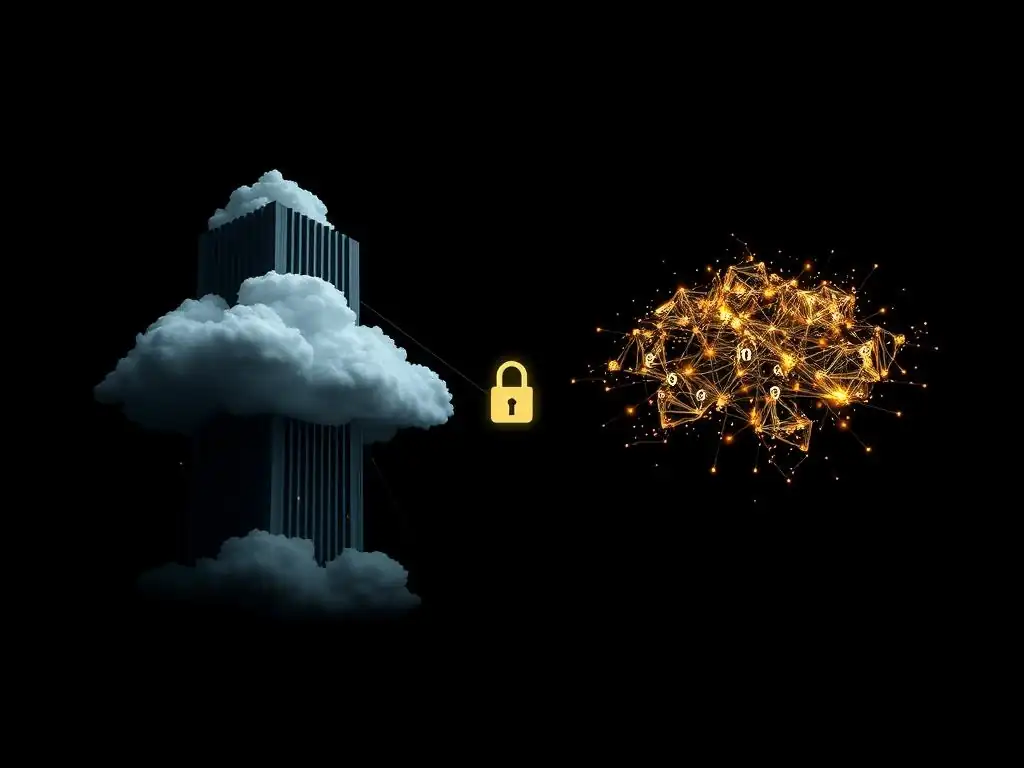
Traditional cloud security and decentralized cloud security operate under fundamentally different security models, reflecting their contrasting architectures and governance structures. Traditional cloud security, in centralized environments like AWS or Azure, relies on a centralized security model where the cloud provider assumes primary responsibility for securing the infrastructure and services. This model offers economies of scale in security management and expertise, but also creates a dependency on the provider's security posture and trust in their security practices. Users of traditional cloud services benefit from the provider's security investments but have limited visibility and control over the underlying security mechanisms.
Decentralized cloud security, in contrast, operates under a distributed security model where security responsibilities are shared among network participants. There is no single central authority responsible for security; instead, security is achieved through distributed consensus, cryptographic protocols, and economic incentives. This model emphasizes trust minimization and data sovereignty, but also requires users and platform developers to take on greater responsibility for security.
Decentralized cloud security models aim to reduce reliance on trusted third parties and enhance resilience against single points of failure, but introduce complexities related to distributed key management, identity management, and threat detection in a peer-to-peer environment. The key difference lies in the shift from centralized trust and control to distributed trust and shared responsibility.
Strengths and Weaknesses of Each Approach
Both traditional and decentralized cloud security approaches have their inherent strengths and weaknesses. Traditional cloud security strengths include centralized expertise, economies of scale in security investments, and well-established security frameworks and certifications. Centralized security management can simplify security operations and incident response, and large cloud providers often possess extensive security resources and expertise.
However, weaknesses of traditional cloud security include reliance on a single point of trust (the provider), potential for large-scale data breaches due to centralized data storage, and limited user control over security mechanisms. Vendor lock-in and concerns about data privacy and sovereignty are also often cited as weaknesses.
Decentralized cloud security strengths include enhanced resilience against single points of failure, improved data sovereignty and user control, and potential for greater transparency and auditability. The distributed nature of decentralized clouds makes them inherently more resilient to DDoS attacks and infrastructure failures. However, weaknesses of decentralized cloud security include increased complexity in security management, challenges in establishing robust IAM and key management in distributed environments, and potential for vulnerabilities in consensus mechanisms and smart contracts.
The nascent stage of decentralized cloud technologies and the lack of mature security tools and best practices also represent weaknesses compared to the more established traditional cloud security landscape. Choosing between these approaches involves a trade-off between centralized control and economies of scale versus distributed resilience and data sovereignty, depending on the specific security requirements and risk tolerance.
Case Studies: Real-World Examples of Decentralized Cloud Security
File Storage Security in IPFS
InterPlanetary File System (IPFS) is a prominent example of a decentralized file storage system, offering a content-addressed, peer-to-peer network for storing and sharing data. IPFS employs several security mechanisms to protect data integrity and confidentiality. Content addressing, a core feature of IPFS, inherently enhances data integrity.
Files are identified by their cryptographic hash (content ID or CID), ensuring that any modification to the file will result in a different CID. This makes it easy to verify data integrity and detect tampering. If a user requests a file using its CID, IPFS ensures that the retrieved data matches the expected hash, guaranteeing content integrity.
For data confidentiality, IPFS supports encryption. Users can encrypt files before uploading them to the IPFS network, ensuring that only authorized parties with the decryption keys can access the plaintext content. While IPFS itself does not enforce encryption by default, it provides the mechanisms for users to implement end-to-end encryption. Furthermore, IPFS benefits from the inherent resilience of a decentralized network.
Data is distributed across multiple nodes, reducing the risk of data loss due to node failures. However, IPFS security also relies on the security practices of individual node operators. Vulnerabilities in node software or insecure node configurations could potentially expose data. Ongoing development efforts in IPFS focus on enhancing security features, including improved access control mechanisms and robust peer-to-peer security protocols, to further strengthen its security posture for decentralized file storage.
Securing Data Computation in Enigma
Enigma, now part of Secret Network, is a blockchain-based platform focused on enabling secure and private computation on decentralized data. Enigma addresses the challenge of data privacy in decentralized cloud computing by utilizing Secure Multi-Party Computation (MPC) and trusted execution environments (TEEs). MPC allows multiple parties to jointly compute a function over their private inputs without revealing their individual data to each other.
In Enigma, MPC is used to enable secure computation on encrypted data, ensuring that sensitive information remains confidential even during processing. This is particularly valuable for applications that require data analysis or computation without compromising data privacy.
TEEs, such as Intel SGX enclaves, provide hardware-based secure environments for executing code and processing data in isolation from the rest of the system. Enigma leverages TEEs to further enhance the security and privacy of computations. Sensitive computations can be executed within TEEs, protecting data from unauthorized access even from the node operators running the computation.
Enigma's approach combines MPC and TEEs to create a multi-layered security model for private and secure computation in decentralized environments. However, Enigma's security model also relies on the security of the underlying MPC protocols, TEE implementations, and smart contract code. Ongoing research and development in privacy-preserving computation and secure hardware are crucial for further enhancing the security and scalability of platforms like Enigma for decentralized data computation.
The Future of Decentralized Cloud Security: Trends and Predictions
Emerging Technologies and Security Innovations
The future of decentralized cloud security is being shaped by several emerging technologies and security innovations. Confidential Computing is gaining significant traction, with technologies like TEEs and secure enclaves becoming increasingly prevalent. Confidential computing aims to protect data in use, ensuring that data is encrypted not only at rest and in transit but also during computation.
This is crucial for enhancing security in decentralized cloud environments where data processing often occurs across untrusted nodes. Homomorphic Encryption (HE) is another promising technology that allows computations to be performed directly on encrypted data without decryption, offering even stronger privacy guarantees. While HE is still computationally intensive for many practical applications, advancements in HE algorithms and hardware acceleration are making it more viable for real-world use cases.
Zero-Knowledge Proofs (ZKPs) are also expected to play an increasingly important role in decentralized cloud security, particularly in enhancing privacy and security in decentralized identity and access management. ZKPs enable users to prove their identity or possess certain attributes without revealing sensitive information, minimizing data exposure and enhancing user privacy. Furthermore, advancements in formal verification techniques and automated security analysis tools are improving the ability to identify and mitigate vulnerabilities in complex decentralized systems, including consensus mechanisms and smart contracts. These emerging technologies and security innovations are paving the way for more secure and privacy-preserving decentralized cloud platforms.
The Role of AI and Machine Learning in Decentralized Cloud Security
Artificial Intelligence (AI) and Machine Learning (ML) are poised to play a significant role in enhancing decentralized cloud security in the future. AI and ML can be applied to various aspects of decentralized cloud security, including threat detection, anomaly detection, and automated security response.
ML algorithms can be trained to detect anomalous network behavior or suspicious activity patterns in decentralized networks, improving the ability to identify and respond to security threats in real-time. AI-powered security monitoring systems can analyze large volumes of security logs and network traffic data generated in decentralized clouds, identifying subtle indicators of compromise that might be missed by traditional security tools.
Furthermore, AI can be used to automate security response actions in decentralized environments. For example, AI-driven systems can automatically isolate compromised nodes or trigger remediation workflows based on detected security threats. AI can also assist in vulnerability analysis and security auditing of decentralized cloud platforms, helping to identify potential weaknesses and prioritize security improvements.
However, it is important to address potential security risks associated with AI itself, such as adversarial attacks on ML models and bias in AI-driven security systems. Responsible and ethical development and deployment of AI in decentralized cloud security are crucial to ensure that AI enhances security without introducing new vulnerabilities or biases.
Regulatory Considerations for Decentralized Cloud Environments
Regulatory considerations are becoming increasingly relevant for decentralized cloud environments as these technologies mature and gain wider adoption. Data privacy regulations, such as GDPR in Europe and CCPA in California, have significant implications for decentralized cloud platforms, particularly those handling personal data. Decentralized cloud providers and users need to ensure compliance with data privacy regulations, including requirements for data minimization, purpose limitation, and data subject rights. Data sovereignty regulations, which aim to ensure that data is stored and processed within specific geographic boundaries, also pose challenges for decentralized clouds that operate across borders.
Regulatory frameworks for cybersecurity are also evolving, and decentralized cloud platforms will need to comply with relevant security standards and regulations. Defining clear legal and regulatory frameworks for decentralized cloud computing is an ongoing process, and collaboration between regulators, industry stakeholders, and technology developers is essential to create a regulatory environment that fosters innovation while ensuring adequate security and privacy protections. Addressing regulatory uncertainty and ensuring compliance will be crucial for the long-term success and mainstream adoption of decentralized cloud technologies.
Best Practices for Implementing Decentralized Cloud Security
Developing a Comprehensive Security Strategy
Implementing robust decentralized cloud security starts with developing a comprehensive security strategy tailored to the specific characteristics of the platform and its use cases. This strategy should begin with a thorough risk assessment, identifying potential threats and vulnerabilities specific to decentralized cloud architectures. Understanding the unique attack vectors and security challenges associated with decentralized systems is crucial for prioritizing security measures.
The security strategy should define clear security goals and objectives, aligned with business requirements and regulatory compliance obligations. It should encompass all aspects of security, including data security, identity and access management, network security, application security, and incident response.
A comprehensive security strategy for decentralized clouds should also address key management, ensuring secure generation, storage, and distribution of cryptographic keys across the distributed network. It should define security policies and procedures for all participants in the decentralized cloud ecosystem, including users, developers, and node operators. Furthermore, the security strategy should be adaptable and evolve over time to address emerging threats and technological advancements in decentralized cloud security. Regularly reviewing and updating the security strategy is essential to maintain its effectiveness and relevance in a dynamic security landscape.
Conducting Regular Security Audits and Penetration Testing
Regular security audits and penetration testing are essential best practices for maintaining and improving the security posture of decentralized cloud platforms. Security audits, conducted by independent experts, provide an objective assessment of the platform's security controls and identify potential weaknesses or vulnerabilities. Audits should cover all aspects of the platform, including code, architecture, infrastructure, and security policies. Smart contract audits are particularly crucial for decentralized applications and platforms built on blockchain, as vulnerabilities in smart contracts can have significant financial and security implications.
Penetration testing simulates real-world attacks to identify exploitable vulnerabilities in the platform's defenses. Penetration testing should be conducted regularly, both during development and in production environments, to validate the effectiveness of security controls and identify areas for improvement. "Bug bounty" programs can also be valuable for incentivizing ethical hackers to identify and report vulnerabilities in decentralized cloud platforms. The findings from security audits and penetration testing should be used to prioritize remediation efforts and continuously improve the platform's security posture. Regular and rigorous security assessments are crucial for building trust and confidence in decentralized cloud platforms.
Educating Users and Developers on Security Best Practices
Educating users and developers on security best practices is a critical, often overlooked, aspect of decentralized cloud security. Users of decentralized cloud platforms need to be aware of their security responsibilities and understand how to use the platform securely. This includes educating users on best practices for password management, private key security, and phishing awareness. User education should be tailored to the specific decentralized cloud platform and its security model, highlighting the unique security considerations and user responsibilities.
Developers building decentralized cloud applications and platforms also require specialized security training. They need to be educated on secure coding practices for decentralized environments, including secure smart contract development, cryptographic best practices, and common vulnerabilities in decentralized systems. Developer education should emphasize the importance of security by design, incorporating security considerations throughout the software development lifecycle.
Providing developers with access to security tools, libraries, and best practice guides can facilitate the development of more secure decentralized applications. Investing in user and developer education is essential for fostering a security-conscious culture within the decentralized cloud ecosystem and mitigating security risks stemming from human error or lack of security awareness.
Conclusion: Embracing Secure Decentralized Cloud Computing
The Potential of Decentralized Cloud and the Importance of Cybersecurity
Decentralized cloud computing holds immense potential to transform the way we store, compute, and access data, offering benefits such as increased resilience, enhanced data sovereignty, and greater user control. However, realizing this potential hinges critically on addressing the unique cybersecurity challenges inherent in decentralized architectures. As we have explored, decentralized cloud platforms introduce a new threat landscape, requiring a shift from centralized security models to distributed and user-centric approaches. Understanding the specific decentralized cloud security risks, from data security challenges to consensus mechanism vulnerabilities, is paramount for building secure and trustworthy platforms.
The protection strategies outlined, including robust encryption and key management, decentralized IAM, network segmentation, and formal verification, provide a roadmap for mitigating these risks. Leveraging blockchain technology for data integrity, secure access control, and security monitoring offers powerful tools for enhancing decentralized cloud security. Comparing traditional and decentralized cloud security models highlights the trade-offs and necessitates a tailored security approach for each paradigm.
Real-world case studies, like IPFS and Enigma, demonstrate practical examples of security implementations in decentralized cloud systems. The future of decentralized cloud security is being shaped by emerging technologies like confidential computing and AI, while regulatory considerations are becoming increasingly important. Ultimately, embracing secure decentralized cloud computing requires a proactive and comprehensive approach, prioritizing security at every stage of development and deployment.
Moving Forward: Building a More Secure and Resilient Decentralized Future
Moving forward, building a more secure and resilient decentralized future requires ongoing collaboration and innovation across the decentralized cloud ecosystem. Continued research and development in emerging security technologies, such as homomorphic encryption and zero-knowledge proofs, are crucial for enhancing privacy and security in decentralized environments. Standardization efforts are needed to establish common security protocols and best practices for decentralized cloud platforms, fostering interoperability and improving overall security posture. Increased security awareness and education for users and developers are essential for mitigating human-related security risks and fostering a security-conscious culture.
Collaboration between academia, industry, and regulatory bodies is vital for addressing the evolving regulatory landscape and creating a supportive environment for secure decentralized cloud innovation. Open-source security tools and frameworks can democratize access to security expertise and facilitate the development of more secure decentralized platforms. By embracing a proactive, collaborative, and security-focused approach, we can unlock the transformative potential of decentralized cloud computing and build a more secure, resilient, and user-centric digital future.
Frequently Asked Questions
What are the primary decentralized cloud security risks that organizations face when adopting blockchain-based cloud solutions?
The main risks include data immutability vulnerabilities, smart contract exploits, and challenges in key management and access control. These issues require novel security approaches.
How does the immutability of data on a blockchain contribute to new decentralized cloud security risks?
While immutability ensures data integrity, it also means that incorrect or malicious data once recorded cannot be easily altered or removed, posing a persistent security risk.
How does the reliance on smart contracts in decentralized cloud environments create potential decentralized cloud security risks?
Smart contracts are vulnerable to bugs and exploits, potentially leading to unauthorized access, data breaches, or the loss of funds stored within the contract.
What role does regulation play in mitigating decentralized cloud security risks and fostering trust in blockchain-based cloud services?
Clear regulations can provide guidance on security standards, data privacy, and liability, ultimately reducing uncertainty and promoting the responsible adoption of decentralized cloud technologies.
How can organizations effectively address the challenges of decentralized cloud security risks and ensure the safety of their data and applications?
Organizations should implement robust key management systems, conduct thorough smart contract audits, and embrace layered security approaches designed for decentralized environments.
The exploration of decentralized cloud security risks reveals a landscape both promising and perilous, highlighting the urgent need for robust protection strategies. The shift towards decentralized cloud computing represents a fundamental change in how we manage and secure data, demanding a proactive and adaptive approach to mitigate emerging threats. This paradigm shift is not merely a technological evolution; it's a societal one, impacting everything from individual privacy to the integrity of global systems.
The ongoing influence of decentralized technologies is undeniable, shaping our digital interactions and challenging traditional security models. Understanding these risks is not just a technical imperative, but a moral one, as we strive to build a more equitable and secure digital future. Security is always seen as too expensive until you don't have it.
- Irwin Lazar. This quote encapsulates the critical importance of investing in decentralized cloud security now, before the consequences of neglect become irreversible.
As we stand at the cusp of this decentralized revolution, let us not be passive observers. Consider how you can contribute to a more secure and resilient digital world. Reflect on the vulnerabilities we've explored and ask yourself: What steps can I take, both personally and professionally, to champion best practices in decentralized cloud security and ensure a future where innovation and security go hand in hand?
Unleash the Power of Secure Decentralization!
Thank you for exploring the rapidly evolving landscape of cybersecurity in decentralized cloud computing. We hope this article has provided valuable insights into the risks involved and the innovative strategies emerging to protect these systems. Now, it’s time to take action!
Here are some ways you can contribute to building a more secure decentralized future:
- Become an Advocate for Decentralized Security: Share your knowledge about the security challenges and solutions in decentralized cloud computing with your network. Educate colleagues and peers on best practices for maintaining security.
- Explore new decentralized security solutions: Investigate advancements in cryptographic techniques, secure multi-party computation, and other innovative methods that can strengthen decentralized systems. Consider trying out open-source tools or contributing to related projects.
- Join the Conversation: Engage with blockchain and cybersecurity communities on platforms like Reddit or Discord. Share your insights, challenges, and ideas on how we can work together to enhance security in decentralized environments.
What steps will you take to promote better security in the expanding world of decentralized cloud computing? Share your thoughts in the comments below!
Leave a Reply