
Layer2 Tokenomics: How Scaling Solutions Design Their Economic Models


Welcome to Blockchain Trends, your gateway to understanding the revolutionary impact of blockchain beyond the hype. Are you ready to delve into the intricate world of scaling solutions? Our latest analysis explores the fascinating realm of Layer 2 tokenomics design, uncovering how these innovative economic models are shaping the future of decentralized applications. Discover how these tokens incentivize participation, secure the network, and drive adoption – and what it all means for investors in the blockchain space. Dive in and unlock the secrets behind successful Layer 2 economies!
- Layer 2 Tokenomics Design: Scaling Solutions and Economic Models
- Understanding Layer 2 Scaling Solutions
- Key Principles of Layer 2 Tokenomics Design
- Layer 2 Tokenomics Models: A Comparative Analysis
- Factors Influencing Layer 2 Tokenomics
- Case Studies: Examples of Layer 2 Tokenomics in Practice
- Challenges and Considerations in Layer 2 Tokenomics Design
- The Future of Layer 2 Tokenomics
- Layer 2 Tokenomics: A Summary of Key Design Elements
-
Frequently Asked Questions
- What is the primary purpose of Layer 2 tokenomics design?
- How does Layer 2 tokenomics differ from Layer 1 tokenomics?
- What are some common mechanisms used in Layer 2 tokenomics design?
- What are the key considerations when designing Layer 2 tokenomics?
- How does regulation impact Layer 2 tokenomics design?
- Final Reflection: The Architectonics of Scalable Value
- Unveil the Future: Shape the Layer2 Economy!
Layer 2 Tokenomics Design: Scaling Solutions and Economic Models
Blockchains, particularly those like Ethereum, face significant challenges with scalability, leading to high transaction costs and slow processing times during peak demand. Layer 2 scaling solutions emerged to address these limitations by processing transactions off the main blockchain (Layer 1) while inheriting its security properties. The effectiveness and adoption of these solutions are heavily influenced by their economic models, commonly referred to as Layer 2 tokenomics. A well-crafted Layer 2 tokenomics design is crucial for aligning incentives, ensuring network security, facilitating governance, and fostering a vibrant ecosystem.
Understanding the intricacies of Layer 2 tokenomics design is paramount for developers, investors, and users alike. It involves analyzing how tokens are created, distributed, and utilized within the Layer 2 framework. These economic models differ significantly based on the underlying Layer 2 technology (rollups, sidechains, etc.) and the specific goals of the network, whether it's optimizing for throughput, reducing costs, enhancing privacy, or promoting decentralized governance.
Understanding Layer 2 Scaling Solutions
Layer 2 scaling solutions operate on top of a Layer 1 blockchain, processing transactions separately and then relaying compressed or summarized data back to the Layer 1. This off-chain processing significantly increases transaction throughput and reduces costs compared to executing all operations directly on the main chain. Examples include Optimistic Rollups, ZK-Rollups, Validiums, and Sidechains, each employing different mechanisms for transaction validity and data availability.
These solutions are not merely technical overlays; they often involve complex economic systems. The design of these economic models, or Layer 2 tokenomics, is critical because it dictates how users, operators (like sequencers or validators), and developers interact with the network. Effective Layer 2 tokenomics design ensures the network remains secure, efficient, and decentralized, providing clear incentives for participants to act honestly and contribute to the network's health.
What are Layer 2 Solutions in Blockchain?
Layer 2 solutions are protocols built on top of existing Layer 1 blockchains to improve their performance, primarily in terms of transaction speed and cost. They work by handling a large volume of transactions off-chain and then submitting a condensed summary or proof of these transactions back to the Layer 1 blockchain. This approach offloads computational work from the main chain, allowing it to handle more transactions per second and significantly lowering gas fees for individual users.
Common types of Layer 2 solutions include rollups (Optimistic and Zero-Knowledge), which execute transactions off-chain but post transaction data or validity proofs back to Layer 1, inheriting its security. Other types, like Sidechains, are independent blockchains linked to Layer 1 via a two-way peg, processing transactions off-chain but relying on their own consensus mechanisms for security, which can differ from the underlying Layer 1. The choice of Layer 2 technology profoundly impacts the potential Layer 2 tokenomics design.
The Need for Layer 2 Tokenomics
The necessity for Layer 2 tokenomics arises directly from the challenges Layer 1 blockchains face, specifically high transaction fees and limited throughput. While Layer 2 technologies provide the technical framework for scaling, they require economic incentives to function securely and efficiently. Operators who process transactions off-chain need to be compensated, and mechanisms are needed to ensure they behave honestly and submit valid data back to Layer 1.
Furthermore, Layer 2 networks often introduce their own tokens to facilitate these economic interactions. These tokens can be used for paying transaction fees within the Layer 2 network (potentially lower than L1 fees), staking to become a validator or sequencer, participating in governance decisions, or accessing specific features. The thoughtful design of these token incentives is fundamental to attracting users and developers, maintaining network security, and achieving the desired level of decentralization, making Layer 2 tokenomics design a core component of their success.
Key Principles of Layer 2 Tokenomics Design
Designing effective Layer 2 tokenomics requires careful consideration of several core principles aimed at creating a sustainable and robust ecosystem. These principles revolve around incentivizing participation, defining token utility, and establishing a framework for decentralized governance. A successful Layer 2 tokenomics design must align the interests of various network participants, including users, operators, and token holders.
At its heart, Layer 2 tokenomics seeks to balance efficiency and scalability with the security and decentralization inherited or built into the Layer 2 solution. This involves designing token flows that reward positive contributions (like processing transactions or securing the network) and potentially penalize malicious behavior. The utility and value accrual mechanisms for the native Layer 2 token are also critical for its long-term viability and the health of the network it supports.
Incentivizing Participation: Rewards and Penalties
Incentivizing participation is a cornerstone of Layer 2 tokenomics design. Operators, such as sequencers in rollups or validators in sidechains, play a critical role in processing transactions and maintaining the network's state off-chain. They are typically incentivized through a combination of transaction fees collected from users and potential token rewards or inflation. For instance, sequencers on Optimistic Rollups might earn fees for bundling transactions and submitting them to Layer 1, while stakers on a Layer 2 Proof-of-Stake chain earn rewards for validating blocks.
Conversely, penalty mechanisms are essential to deter malicious or negligent behavior. Slashing, a common practice in Proof-of-Stake systems, involves confiscating a portion of a participant's staked tokens if they violate network rules, such as double-signing transactions or going offline. In Optimistic Rollups, a challenge period allows others to submit fraud proofs and penalize sequencers who submit invalid state roots. This balance of rewards for good behavior and penalties for bad behavior is fundamental to maintaining the integrity and security of the Layer 2 network and is a key aspect of Layer 2 tokenomics design.
Token Utility and Value Accrual in Layer 2
The utility of a Layer 2 token is central to its economic model and value proposition. Beyond simply serving as a medium for paying transaction fees within the Layer 2 network – often at a fraction of the cost of Layer 1 fees, sometimes as low as \$0.01 per swap compared to \$10+ on L1 Ethereum during congestion – Layer 2 tokens can have multiple functions. They might be required for staking to become a validator or sequencer, providing capital for liquidity pools, or accessing premium features within the ecosystem.
Value accrual mechanisms are designed to ensure that the token's value is linked to the network's growth and activity. This could involve a portion of transaction fees being distributed to token holders (e.g., via staking rewards), token burning mechanisms that reduce supply as the network is used, or the token being essential for participation in the network's governance. A strong Layer 2 tokenomics design ensures that as the Layer 2 network processes more transactions and gains wider adoption, the utility and potential value of its native token increase, creating a positive feedback loop.
Governance and Decentralization in Layer 2 Ecosystems
Decentralized governance is a critical component for many Layer 2 networks, aligning with the broader ethos of blockchain technology. Many Layer 2 protocols issue governance tokens that grant holders the right to vote on proposals related to network upgrades, parameter changes (like transaction fee structures or incentive rates), and treasury management. This allows the community to collectively steer the development and evolution of the Layer 2 solution.
The design of the governance mechanism within the Layer 2 tokenomics is crucial. It must balance broad participation with the need for efficient decision-making and prevent centralization of power. This involves determining factors such as voting power distribution (e.g., one token, one vote), quorum requirements for proposal passage, and the process for submitting and implementing proposals. Effective governance design, powered by the Layer 2 token, ensures that the network remains censorship-resistant and responsive to the needs of its user base, reinforcing the decentralized nature inherited from the underlying Layer 1.
Layer 2 Tokenomics Models: A Comparative Analysis
The specific Layer 2 tokenomics design varies significantly depending on the underlying technological architecture of the scaling solution. Different Layer 2 types, such as Optimistic Rollups, ZK-Rollups, Validiums, and Sidechains, have distinct operational characteristics that necessitate tailored economic models. Understanding these differences is key to evaluating the sustainability and potential of various Layer 2 projects.
This section provides a comparative look at how tokenomics principles are applied across different Layer 2 categories. We will explore how the security assumptions, data availability requirements, and transaction validation processes of each type influence their respective Layer 2 tokenomics design choices, particularly concerning incentives for operators, token utility, and governance structures.
Optimistic Rollups: Tokenomics Considerations
Optimistic Rollups operate on the assumption that transactions are valid by default, only requiring computation and proof on Layer 1 if a transaction is challenged as fraudulent during a specific time window (the "challenge period"). This design simplifies the off-chain computation but introduces a delay for withdrawals from Layer 2 to Layer 1, typically around 7 days, to allow time for fraud proofs. The Layer 2 tokenomics design in Optimistic Rollups often focuses on incentivizing sequencers to process transactions efficiently and ensuring there are participants willing to monitor the network and submit fraud proofs.
Tokens in Optimistic Rollups might be used to pay transaction fees to sequencers, stake by sequencers or validators to participate in transaction ordering, or stake by "challengers" who monitor the network for invalid state transitions and are rewarded (or avoid being penalized) for successfully submitting fraud proofs. The governance token often plays a significant role in managing the protocol's parameters, including the challenge period length, fee structures, and the list of authorized sequencers or validators, highlighting the importance of governance in their Layer 2 tokenomics design.
ZK-Rollups: Designing Token Economies for Privacy and Scalability
ZK-Rollups execute transactions off-chain and generate a cryptographic validity proof (a Zero-Knowledge proof) that is posted back to Layer 1. This proof cryptographically guarantees the correctness of the off-chain state transition without revealing the underlying data, offering both security and potential privacy benefits. Unlike Optimistic Rollups, withdrawals from ZK-Rollups to Layer 1 are typically faster as the validity is proven mathematically before the state update on L1. The complexity lies in generating these proofs, which requires significant computational resources.
The Layer 2 tokenomics design for ZK-Rollups often includes incentives for "provers" who generate the validity proofs. These provers consume substantial computing power and are compensated, typically through a portion of transaction fees or native tokens. The native token might also be used for staking by provers, governance over protocol parameters, or paying transaction fees. Some ZK-Rollups might also explore token models that integrate privacy-preserving features or reward users for contributing to the proving process, making their Layer 2 tokenomics design particularly complex yet powerful.
Validium: Tokenomics for Data Availability
Validium is similar to ZK-Rollups in that it uses Zero-Knowledge proofs for transaction validity, but it differs significantly in how it handles data availability. Transaction data in Validium is not posted on Layer 1; instead, it is held off-chain by a data availability committee or a similar structure. This further reduces Layer 1 costs and increases throughput compared to ZK-Rollups, but it introduces a different trust assumption regarding the availability of data. If the data is not available, users might not be able to exit the Layer 2 state.
The Layer 2 tokenomics design for Validium solutions must therefore strongly incentivize the data availability providers. Tokens might be staked by members of the data availability committee who are responsible for storing transaction data and making it available upon request. Penalties (slashing) would be applied if data is not provided when needed. The native token might also be used for paying transaction fees or participating in governance, but the core economic mechanism is often centered around ensuring the integrity and availability of the off-chain data, which is a unique challenge addressed by its Layer 2 tokenomics design.
Sidechains: Balancing Security and Token Utility
Sidechains are independent blockchains with their own consensus mechanisms (e.g., Proof-of-Stake or Proof-of-Authority) that are connected to a Layer 1 blockchain via a two-way peg. Users can move assets between the Layer 1 and the Sidechain. Transactions occur entirely on the Sidechain and are secured by its own validators, not directly by the Layer 1's security. This offers high throughput and low fees but means their security is independent of, and often less robust than, the underlying Layer 1.
The Layer 2 tokenomics design for Sidechains is typically based on the tokenomics of their native token, which functions similarly to a Layer 1 token. This token is used for paying transaction fees, staking by validators to secure the network (in PoS sidechains), and participating in governance.
For example, Polygon's MATIC token is used for staking in its Proof-of-Stake consensus and for paying gas fees on the Polygon PoS chain. The challenge in Sidechain tokenomics is to create sufficient economic security through staking or other mechanisms to prevent attacks on the network, balancing this with token distribution and utility to drive adoption.
Factors Influencing Layer 2 Tokenomics
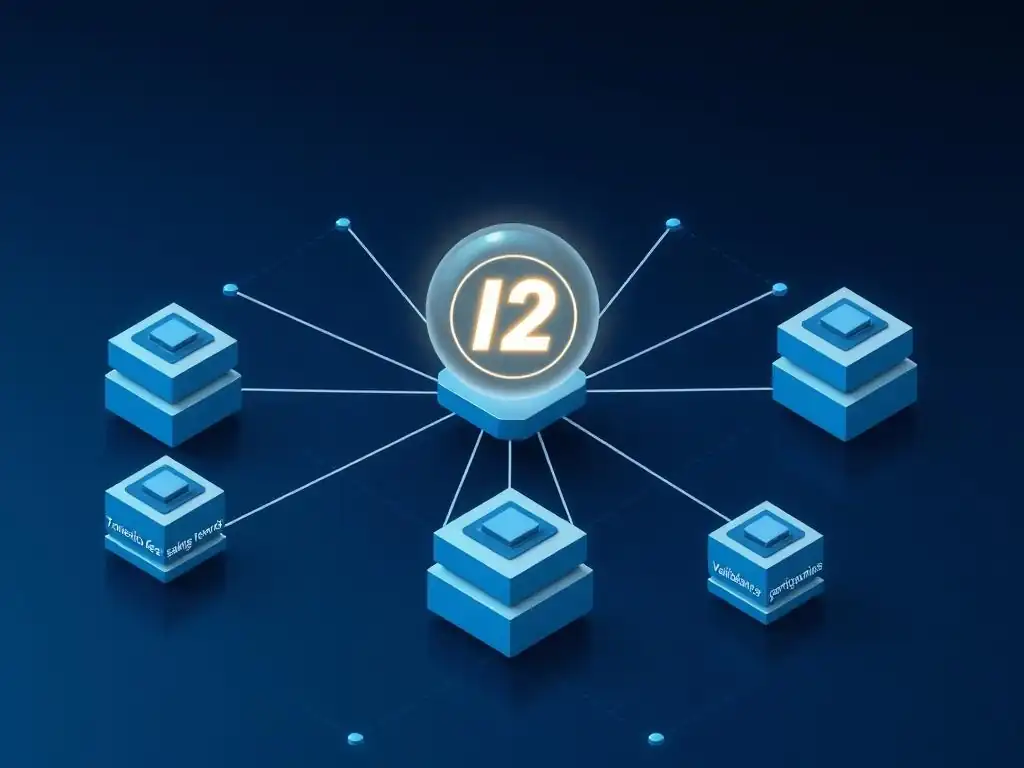
Several factors significantly influence the design and effectiveness of Layer 2 tokenomics. These elements are often intertwined and must be considered holistically to create a sustainable and functional economic model for a scaling solution. The technical architecture, operational costs, and community dynamics all play a crucial role in shaping how tokens are used and valued within the Layer 2 ecosystem.
Understanding these influencing factors is essential for anyone evaluating a Layer 2 project's potential. The specific choices made in Layer 2 tokenomics design regarding transaction handling, security mechanisms, and governance structures directly impact the network's performance, cost-efficiency, and decentralization properties.
Transaction Throughput and Gas Fees
The primary goal of Layer 2 solutions is to increase transaction throughput and reduce gas fees compared to Layer 1. The Layer 2 tokenomics design must reflect this goal by creating fee structures that are significantly lower than Layer 1, making the network attractive for users and decentralized applications (dApps). For instance, typical transaction costs on Layer 2 rollups can be pennies or even fractions of a penny, starkly contrasting with Layer 1 Ethereum fees that can range from a few dollars to hundreds of dollars during network congestion.
The volume of transactions processed on Layer 2 directly impacts the revenue generated by operators (sequencers, provers, validators) from transaction fees. This revenue stream is a key component of the Layer 2 tokenomics, providing a fundamental incentive for operators to contribute computing resources and maintain the network. As throughput increases, the total fee revenue potentially grows, which can then be distributed according to the tokenomics model, whether through direct payment to operators, buy-and-burn mechanisms for the native token, or distribution to stakers.
Security Mechanisms and Consensus Protocols
The security model of a Layer 2 solution is intrinsically linked to its tokenomics. Rollups inherit security from Layer 1 by posting data or proofs there, but they still require economic incentives to ensure the integrity of off-chain operations. Optimistic Rollups rely on economic incentives for fraud proofs (staked tokens that can be slashed), while ZK-Rollups rely on incentives for generating computationally intensive validity proofs. Sidechains, having their own consensus, require significant staking (in PoS) or other mechanisms to achieve economic security against attacks.
The specific consensus protocol used within the Layer 2 (if applicable, like in Sidechains or some Layer 2 designs with their own validators) dictates how tokens are used for staking, validation, and security. The Layer 2 tokenomics design must ensure that the cost of attacking the network (e.g., by acquiring enough tokens to compromise consensus or submit fraudulent transactions) is prohibitively high compared to the potential gains. This often involves requiring substantial token stakes and implementing robust slashing conditions, making the security mechanism a foundational element of the Layer 2 tokenomics design.
Community Governance and Token Holder Influence
The level of community governance and the influence of token holders are significant factors shaping Layer 2 tokenomics. Many Layer 2 protocols are moving towards decentralized governance models where holders of the native token can propose and vote on key decisions. This includes voting on how treasury funds are spent, adjusting protocol parameters like fee distribution or inflation rates, and even initiating protocol upgrades.
The distribution of governance tokens and the structure of the voting mechanism determine how decentralized and representative the governance system is. A wide distribution among active users and contributors can foster a healthy ecosystem, while concentration in a few hands could lead to centralization risks. The Layer 2 tokenomics design must carefully consider how governance power is allocated and exercised to ensure the network evolves in a way that benefits its users while maintaining security and decentralization.
Case Studies: Examples of Layer 2 Tokenomics in Practice
Examining real-world examples provides valuable insights into how Layer 2 tokenomics principles are applied and the outcomes of different design choices. Studying established Layer 2 networks like Arbitrum and Polygon reveals practical approaches to incentivizing participation, defining token utility, and implementing governance mechanisms within their respective architectures.
These case studies highlight successful strategies and potential challenges in Layer 2 tokenomics design. They demonstrate how the specific needs and technical implementations of a Layer 2 solution directly influence the structure and function of its native token's economic model, offering lessons for future Layer 2 developments.
Arbitrum: A Deep Dive into ARB Tokenomics
Arbitrum is a prominent Optimistic Rollup solution for Ethereum, known for its developer-friendly environment. Its native token, ARB, was launched primarily as a governance token. Unlike some Layer 2 tokens that are used for paying transaction fees (fees on Arbitrum are paid in ETH), the primary utility of ARB is participation in the decentralized governance of the Arbitrum One and Arbitrum Nova networks.
The ARB tokenomics design gives token holders the power to vote on Arbitrum DAO proposals. These proposals can relate to funding ecosystem projects, allocating treasury resources, and making changes to the protocol's core parameters. A significant portion of the initial token supply was allocated to the community through an airdrop, aiming to distribute governance power widely. This focus on governance as the core utility distinguishes ARB's Layer 2 tokenomics design, emphasizing community control over protocol evolution rather than direct transactional utility.
Polygon: Analyzing the Tokenomics of MATIC
Polygon initially gained prominence with its Proof-of-Stake sidechain, and its tokenomics centers around the MATIC token. MATIC has multiple utilities within the Polygon ecosystem, serving as the token used for paying transaction fees on the Polygon PoS chain, for staking to become a validator or delegator in the network's consensus mechanism, and for participating in the network's governance.
The MATIC tokenomics design provides strong incentives for validators and delegators to secure the network through staking rewards, which come from a combination of inflationary emissions and a portion of transaction fees. The staking mechanism is critical for the security of the Polygon PoS sidechain, which relies on its own set of validators. Furthermore, MATIC holders can vote on proposals related to the Polygon network's development, including upgrades and parameter changes. This multi-utility design makes MATIC integral to the operation, security, and governance of the Polygon ecosystem, illustrating a comprehensive approach to Layer 2 tokenomics design for a sidechain.
Lessons Learned from Existing Layer 2 Tokenomics Models
The experiences of networks like Arbitrum and Polygon offer valuable lessons in Layer 2 tokenomics design. Arbitrum's focus on governance highlights the importance of decentralizing control, even if the token isn't used for transaction fees. The success of its airdrop in distributing tokens widely demonstrated a viable strategy for bootstrapping decentralized governance. However, it also raises questions about token value capture when utility is limited primarily to governance.
Polygon's MATIC tokenomics, with its multiple utilities spanning fees, staking, and governance, shows how a token can be deeply integrated into the operational and security layers of a Layer 2 (or sidechain) network. The staking mechanism provides clear economic security, while fee utility ensures continuous demand tied to network usage. These examples underscore that there is no single "best" Layer 2 tokenomics design; the optimal model depends on the specific technology, goals, and desired level of decentralization for the Layer 2 solution.
Challenges and Considerations in Layer 2 Tokenomics Design
Designing effective Layer 2 tokenomics is not without its challenges. Creating an economic model that simultaneously promotes growth, ensures security, maintains decentralization, and sustains token value requires navigating complex trade-offs. Issues such as inflation, potential manipulation, and long-term viability must be carefully addressed in the design process.
These challenges highlight the ongoing evolution of Layer 2 tokenomics. As these scaling solutions mature and face real-world usage and stress, their economic models must adapt to address unforeseen issues and ensure the network's resilience and sustainability over time.
Avoiding Inflation and Token Value Depreciation
One significant challenge in Layer 2 tokenomics design, particularly for networks that use inflationary token emissions to reward participants (like validators or provers), is managing inflation. Excessive token issuance can lead to token value depreciation, which can undermine incentives for holding the token and participating in the network's security or governance. Balancing the need to reward contributors with the need to maintain token scarcity is crucial.
Mechanisms to counteract inflation include implementing token burning, where a portion of transaction fees or other network revenue is permanently removed from circulation. For example, EIP-1559-like fee burning has been explored or implemented in some Layer 2 contexts. Alternatively, Layer 2 networks might rely solely on transaction fees as rewards, reducing or eliminating inflationary emissions. The Layer 2 tokenomics design must carefully model the long-term supply schedule and demand drivers for the token to mitigate inflationary pressures and support value accrual.
Mitigating Sybil Attacks and Governance Manipulation
Decentralized governance is a goal for many Layer 2s, but it introduces the risk of Sybil attacks or governance manipulation, where a single entity or coordinated group acquires enough tokens to dominate voting power and act against the network's interests. The Layer 2 tokenomics design must include safeguards to prevent such scenarios.
Strategies to mitigate these risks include requiring significant token lock-ups for governance participation, implementing quadratic voting (where voting power increases sub-linearly with the number of tokens held), or designing multi-sig or time-locked mechanisms for critical protocol changes. Distributing tokens broadly among a diverse set of users and stakeholders, as seen in some airdrops, is another approach to decentralize governance power from the outset. Robust governance design is a critical layer of security within the overall Layer 2 tokenomics.
Ensuring Long-Term Sustainability of Layer 2 Networks
The long-term sustainability of a Layer 2 network depends heavily on its economic model. The Layer 2 tokenomics design must ensure that the network can generate sufficient revenue (primarily through transaction fees) to cover operational costs, fund ongoing development, and continue incentivizing participants even as initial token emissions potentially decrease over time.
Relying solely on inflationary rewards is not a sustainable model in the long run. Therefore, Layer 2 tokenomics must focus on building a robust economy driven by actual network usage and value creation. This involves fostering a thriving ecosystem of dApps and users that generate consistent transaction volume and fees. Designing fee structures that are competitive yet sufficient to reward operators, alongside exploring alternative revenue streams or value capture mechanisms for the native token, are key considerations for ensuring the Layer 2 network's enduring viability.
The Future of Layer 2 Tokenomics
The field of Layer 2 tokenomics is continuously evolving as the technology matures and new scaling solutions emerge. Future developments will likely focus on refining existing models, exploring novel incentive structures, and integrating Layer 2 tokens more deeply into the broader decentralized finance (DeFi) and blockchain ecosystem. The goal remains to optimize Layer 2 tokenomics design for maximum scalability, security, and adoption.
Emerging trends suggest a move towards more sophisticated economic models that address the nuances of different Layer 2 architectures and user needs. The role of Layer 2 tokens is expected to expand beyond simple utility or governance to become integral components of a multi-chain or cross-layer decentralized economy.
Emerging Trends in Layer 2 Economic Models
Emerging trends in Layer 2 tokenomics include more dynamic fee markets that adjust based on network congestion, potentially incorporating mechanisms similar to EIP-1559 on Ethereum to burn a base fee and distribute tips to operators. We may also see more sophisticated staking models that tie rewards more directly to performance and reliability, not just capital at stake.
Another trend is the increasing focus on shared security and interoperability, which could influence Layer 2 tokenomics design. For instance, Layer 3 solutions building on top of Layer 2s might introduce their own economic models that interact with the Layer 2 tokenomics. Furthermore, as cross-rollup communication becomes more seamless, token designs might need to account for value transfer and interaction across different Layer 2 ecosystems, potentially leading to novel inter-Layer 2 tokenomics concepts.
The Role of Layer 2 Tokens in the Broader Blockchain Ecosystem
Layer 2 tokens are poised to play an increasingly important role in the broader blockchain ecosystem. As more user activity and value migrate to Layer 2 networks due to their scalability and lower costs, their native tokens will become more significant assets within the decentralized landscape. They will not only facilitate transactions and governance within their specific networks but also become integrated into DeFi protocols, lending platforms, and trading venues across different layers and chains.
The Layer 2 tokenomics design will influence how easily and effectively these tokens can be used in cross-chain or cross-layer applications. For example, tokens with strong liquidity and clear utility will be more attractive for use in Layer 1 or other Layer 2 DeFi protocols. The increasing importance of Layer 2 tokens signifies a shift in the blockchain economy, where Layer 2s are becoming major economic hubs rather than just simple extensions of Layer 1.
Optimizing Layer 2 Tokenomics for Mass Adoption
Ultimately, the future of Layer 2 tokenomics is about optimizing these economic models for mass adoption. For blockchain technology to reach mainstream users, Layer 2 solutions must be not only fast and cheap but also economically stable and predictable. This requires Layer 2 tokenomics design that minimizes volatility stemming from the token model itself, provides clear and sustainable incentives for all participants, and ensures that the network can reliably serve a large user base.
Achieving this involves continuous iteration and refinement of Layer 2 tokenomics based on real-world performance data and community feedback. Future designs may incorporate mechanisms to smooth out revenue volatility for operators, improve capital efficiency for stakers, and make token utility more intuitive for everyday users. Successful Layer 2 tokenomics will be those that effectively balance the complex interplay between technology, incentives, and community, paving the way for widespread decentralized application usage.
Layer 2 Tokenomics: A Summary of Key Design Elements
Layer 2 tokenomics design is a multifaceted discipline essential for the success of blockchain scaling solutions. It encompasses the principles, mechanisms, and structures that govern the creation, distribution, and utilization of native tokens within Layer 2 networks. Key elements include incentivizing network operators and users, defining clear token utility that drives demand, and establishing robust decentralized governance frameworks.
The specific choices in Layer 2 tokenomics design are heavily influenced by the underlying Layer 2 technology (Optimistic Rollups, ZK-Rollups, etc. ), which dictates the security model, data handling, and operational requirements. Successful designs effectively align economic incentives with the network's technical goals, ensuring security, efficiency, and decentralization.
Evaluating Layer 2 Projects based on their Tokenomics
When evaluating Layer 2 projects, their tokenomics design is a critical factor. Investors and users should analyze:
- Token Utility: What functions does the token perform within the network (fees, staking, governance)? Is the utility substantial and likely to increase with network adoption?
- Incentive Structure: Are operators (sequencers, provers, validators) adequately incentivized to perform their roles honestly and efficiently? Are there effective mechanisms to penalize malicious behavior?
- Governance Model: How decentralized is the governance? What power do token holders have, and are there safeguards against manipulation?
- Supply Dynamics: What is the total supply, emission schedule, and any burning mechanisms? How does this affect long-term token value?
- Value Accrual: How does the token capture value from network activity? Is it primarily through fee distribution, buy-and-burn, or increased demand for utility?
A strong Layer 2 tokenomics design demonstrates a clear understanding of the network's operational needs and a thoughtful approach to creating a sustainable, secure, and decentralized ecosystem.
Resources for Further Learning about Layer 2 Tokenomics
For those interested in delving deeper into Layer 2 tokenomics design, numerous resources are available. Whitepapers and documentation published by Layer 2 projects (like Arbitrum, Optimism, zkSync, StarkNet, Polygon) provide detailed explanations of their specific economic models and token utility.
Additionally, research papers on blockchain scaling, token engineering frameworks, and decentralized governance offer theoretical foundations. Community forums, developer blogs, and educational platforms focused on blockchain and DeFi also frequently discuss and analyze Layer 2 tokenomics, providing insights into current trends and best practices in the field. Studying these resources is essential for a comprehensive understanding of how economic models shape the future of scalable blockchain infrastructure.
Frequently Asked Questions
What is the primary purpose of Layer 2 tokenomics design?
The primary purpose is to incentivize participation in the Layer 2 scaling solution and ensure its long-term sustainability. It aims to align the interests of various stakeholders.
How does Layer 2 tokenomics differ from Layer 1 tokenomics?
Layer 2 tokenomics focuses on scaling-specific incentives, such as transaction validation and data availability. Layer 1 generally deals with network security and consensus mechanisms.
What are some common mechanisms used in Layer 2 tokenomics design?
Common mechanisms include staking rewards for validators, transaction fees to incentivize node operators, and token burning to manage supply and demand.
What are the key considerations when designing Layer 2 tokenomics?
Key considerations include the economic incentives for users, the security of the Layer 2 network, and the long-term viability of the scaling solution.
How does regulation impact Layer 2 tokenomics design?
Regulation can significantly impact Layer 2 tokenomics by influencing token utility, security requirements, and the overall compliance of the Layer 2 solution.
Final Reflection: The Architectonics of Scalable Value
The intricate world of Layer 2 tokenomics, as explored in this article, is not merely an academic exercise; it's a crucial determinant of the future viability and adoption of blockchain technology. The design choices made today in structuring these economic models will directly impact the security, efficiency, and ultimately, the success of decentralized applications for years to come. Understanding these mechanisms is no longer optional, but essential for anyone seeking to navigate the evolving landscape of Web3.
The ongoing influence of Layer 2 tokenomics on the broader crypto ecosystem is undeniable. It's shaping the very foundation upon which decentralized applications are built, influencing user behavior, incentivizing participation, and ultimately, determining the long-term sustainability of these networks. The careful balance between incentives, security, and scalability is a delicate dance, and the consequences of missteps can be significant. As Vitalik Buterin famously stated: The goal of Ethereum is to be a platform for building decentralized applications, and scalability is a key ingredient in achieving that goal.
This sentiment underscores the importance of well-designed Layer 2 solutions and their underlying economic models.
Now, as you delve deeper into the world of blockchain and decentralized finance, consider the principles discussed here. Reflect on how these tokenomic models impact your own interactions with Layer 2 solutions. Are the incentives aligned? Is the system secure? And most importantly, are these designs contributing to a more equitable and sustainable future for the decentralized web? The power to shape this future lies, in part, with your understanding and engagement. Let us all strive to build a more robust and accessible blockchain ecosystem, one carefully crafted Layer 2 at a time.
Unveil the Future: Shape the Layer2 Economy!
Thank you for exploring the world of Layer2 tokenomics with us! We hope you now have a clearer understanding of how these scaling solutions are developing their economic models. Now, it's time to put that knowledge into action.
Here are a few ways you can get involved and help shape the future of Layer2:
- Learn more: Research and analyze the tokenomics of your favorite Layer2 solutions. Understanding their incentives and potential challenges is essential for making informed decisions.
- Share your insights! Contribute to the conversation by discussing Layer2 tokenomics on social media or in relevant online communities. Your perspective is valuable.
- Explore innovative tokenomic models: Brainstorm and share creative ideas for Layer2 tokenomics that could improve security, scalability, and user adoption.
What innovative Layer2 tokenomic model do you believe has the greatest potential to revolutionize blockchain scalability? Share your thoughts in the comments below!
Leave a Reply