
The Metaverse Gaming Landscape: Key Players, Projects, and Future Trends


Welcome to Blockchain Trends, your compass in the rapidly evolving world of decentralized innovation. Dive deep with us as we explore the transformative power of blockchain, moving beyond the hype to uncover its real-world applications. Intrigued by the convergence of virtual worlds and decentralized technology? Then you won't want to miss our in-depth analysis of Metaverse gaming blockchain trends. Discover the key players, groundbreaking projects, and the future of gaming in the metaverse, and prepare to be amazed by the possibilities. Let's begin!
- Understanding Metaverse Gaming and Blockchain Integration
- Key Players Shaping the Metaverse Gaming Blockchain Trends
- Notable Metaverse Gaming Projects Built on Blockchain
- Current Trends in Metaverse Gaming and Blockchain
- Future Trends and Predictions for Metaverse Gaming Blockchain
- Challenges and Opportunities in the Metaverse Gaming Space
- Investing in Metaverse Gaming: A Look at the Opportunities and Risks
- Conclusion: The Future of Metaverse Gaming Driven by Blockchain Innovation
-
Frequently Asked Questions
- What are some of the key trends driving the growth of Metaverse gaming blockchain?
- Who are some of the key players in the Metaverse gaming blockchain space?
- How is blockchain technology transforming the Metaverse gaming experience?
- What are some of the challenges facing the adoption of Metaverse gaming blockchain?
- What does the future hold for Metaverse gaming blockchain?
- Final Reflection: Embracing the Evolving Metaverse Gaming Frontier
- Ignite Your Metaverse Gaming Journey!
Understanding Metaverse Gaming and Blockchain Integration
What is Metaverse Gaming? Exploring Immersive Digital Worlds
Metaverse gaming represents a significant evolution in the gaming industry, moving beyond traditional, isolated game experiences to create persistent, shared, and immersive digital worlds. At its core, metaverse gaming leverages the concept of a metaverse – a collective virtual shared space, created by the convergence of virtually enhanced physical reality and persistent virtual space. In the context of gaming, this translates to interactive, 3D virtual environments where players can not only play games but also socialize, participate in virtual economies, and even create content.
Think of it as stepping into the game itself, rather than just playing it on a screen. These worlds are designed to be expansive and evolving, often blurring the lines between game and social platform, offering a sense of presence and immersion that traditional gaming often lacks.
These digital worlds are characterized by several key features. Persistence is crucial; the metaverse gaming world continues to exist and evolve even when players are offline, meaning actions and changes within the game world have lasting effects. Social interaction is also paramount, with robust systems for communication, collaboration, and community building integrated directly into the game environment.
Furthermore, many metaverse games aim for a degree of user-generated content and economic activity, allowing players to contribute to the world's development and even earn real-world value through their in-game efforts. This shift towards player agency and persistent digital identities is what truly distinguishes metaverse gaming from its predecessors.
The Role of Blockchain Technology in Metaverse Games: A Deep Dive
Blockchain technology is emerging as a foundational pillar for the development and sustainability of metaverse games. Its decentralized, transparent, and secure nature addresses several critical limitations of traditional gaming models, paving the way for a more player-centric and economically robust metaverse gaming ecosystem. Unlike conventional games where in-game assets and economies are centrally controlled by game developers, blockchain enables the creation of decentralized game economies where digital assets can be truly owned and controlled by players themselves. This paradigm shift is crucial for building trust and fostering a more equitable and engaging gaming environment within the metaverse.
The integration of blockchain achieves this through several mechanisms. Firstly, blockchain facilitates the tokenization of in-game assets, transforming items like characters, weapons, land, and virtual real estate into Non-Fungible Tokens (NFTs). These NFTs are unique, verifiable, and tradable digital assets recorded on a blockchain, providing players with demonstrable ownership and scarcity.
Secondly, blockchain enables the creation of secure and transparent in-game economies, often powered by cryptocurrencies. These cryptocurrencies can be used for in-game transactions, rewards, and governance, fostering a more robust and player-driven economic ecosystem within the metaverse game. The underlying blockchain infrastructure ensures the integrity and security of these transactions and asset ownership, building a foundation of trust that is essential for the long-term viability of metaverse gaming blockchain trends.
Benefits of Blockchain in Gaming: Ownership, Interoperability, and Security
The incorporation of blockchain technology into metaverse gaming unlocks a range of significant benefits that enhance the player experience and reshape the gaming landscape. One of the most transformative advantages is true digital ownership. In traditional gaming, players purchase in-game items, but technically, they only acquire a license to use them within the game, controlled by the game company.
Blockchain, through NFTs, grants players verifiable and immutable ownership of their digital assets. This means players can freely trade, sell, or even utilize their in-game assets across different platforms or games (where interoperability is supported), effectively transforming them into tangible digital property. This fundamentally changes the player-game relationship, empowering gamers with greater control and value from their in-game investments.
Interoperability is another key benefit. While still in its early stages of development, the vision of a truly interconnected metaverse relies heavily on blockchain's potential to enable cross-game asset compatibility. Imagine owning a rare sword earned in one metaverse game and being able to use it in another, completely different game world.
Blockchain standards and protocols are being developed to facilitate this interoperability, allowing for the creation of a more fluid and interconnected metaverse gaming experience. Finally, enhanced security is a crucial advantage. Blockchain's inherent security features, such as cryptography and decentralization, make it significantly more resistant to hacking and fraud compared to centralized game servers.
This is particularly important in metaverse environments where valuable digital assets and economies are at stake. Blockchain's secure and transparent nature helps build trust and ensures the integrity of the metaverse gaming ecosystem, fostering a safer and more reliable experience for players engaging with metaverse gaming blockchain trends.
Key Players Shaping the Metaverse Gaming Blockchain Trends
Established Gaming Giants Entering the Metaverse: Epic Games, Ubisoft
The established giants of the traditional gaming industry are increasingly recognizing the transformative potential of the metaverse and blockchain, making strategic moves to integrate these technologies into their future offerings. Epic Games, the creator of the Unreal Engine and Fortnite, is a prominent example. While not directly integrating blockchain into Fortnite itself yet, Epic Games has made significant steps towards embracing the metaverse and Web3 principles.
They have been vocal about supporting blockchain games on the Epic Games Store, contrasting with platforms like Steam's initial stance against blockchain-based games. This openness signals a significant shift in the industry, acknowledging the growing demand and potential of metaverse gaming blockchain trends. Epic's investment in metaverse technologies and its willingness to host blockchain games on its platform position it as a key player in shaping the future landscape.
Ubisoft, another major player, has been actively exploring blockchain technology for several years. They were among the first AAA game developers to experiment with NFTs in their games, launching Ubisoft Quartz, a platform for in-game NFTs, initially integrated with Tom Clancy's Ghost Recon Breakpoint. While the initial reception to Quartz was mixed, Ubisoft's continued commitment to blockchain and metaverse initiatives demonstrates their long-term vision.
They are researching and developing various blockchain applications within gaming, focusing on player empowerment and new forms of engagement. Ubisoft’s size and influence within the traditional gaming sector mean their forays into metaverse gaming blockchain trends are closely watched and can significantly impact the industry's direction, potentially paving the way for wider adoption among other established game developers.
Emerging Blockchain Gaming Studios: Animoca Brands, Sky Mavis
Alongside established giants, a new wave of game studios specifically focused on blockchain and metaverse gaming is emerging, driving innovation and shaping the future of the space. Animoca Brands stands out as a leading force in this sector. This Hong Kong-based company has built a vast portfolio of blockchain games and metaverse projects, including The Sandbox, REVV Racing, and Phantom Galaxies.
Animoca Brands is known for its aggressive acquisition strategy, investing in and partnering with numerous blockchain gaming startups. Their focus on building open metaverses, empowering digital ownership, and fostering play-to-earn economies has made them a central figure in the metaverse gaming blockchain trends. They are actively building an ecosystem that promotes interoperability and player agency across their various metaverse projects.
Sky Mavis, the developer of Axie Infinity, is another pivotal player that demonstrated the immense potential of blockchain gaming. Axie Infinity's explosive growth in 2021 showcased the viability of play-to-earn models and the appeal of blockchain-based economies in gaming.
Despite facing challenges, including a significant security breach, Sky Mavis continues to develop and expand the Axie Infinity universe, working on new games and features within their Ronin blockchain ecosystem. They have been instrumental in popularizing the concept of NFT-based gaming and demonstrating the economic opportunities within metaverse gaming blockchain trends, inspiring a new generation of blockchain game developers and attracting significant attention to the sector.
Decentralized Autonomous Organizations (DAOs) and Their Impact on Metaverse Game Development
Decentralized Autonomous Organizations (DAOs) are increasingly playing a significant role in the development and governance of metaverse games, representing a fundamental shift towards community-driven game creation and management. DAOs are essentially online communities with shared bank accounts and decision-making processes governed by code and blockchain technology, rather than traditional hierarchical structures. In the context of metaverse gaming blockchain trends, DAOs empower players to have a direct say in the development, direction, and even economics of the games they participate in. This contrasts sharply with traditional game development where decisions are primarily made by game studios and publishers.
The impact of DAOs can be seen in various aspects of metaverse game development. Firstly, DAOs can be involved in funding game development. Instead of relying solely on venture capital or publisher funding, metaverse game projects can raise capital through DAO token sales, allowing the community to invest directly in the game's future.
Secondly, DAOs can participate in game governance. Token holders within a DAO can vote on key decisions related to game mechanics, new features, resource allocation, and even the game's roadmap. This decentralized governance model gives players a sense of ownership and agency, fostering a stronger community and aligning incentives between developers and players.
Furthermore, DAOs can manage in-game economies and assets. Some metaverse game DAOs control treasury funds used to reward players, manage in-game resources, and fund community initiatives, creating a more transparent and community-controlled economic system within the game world, further driving the evolution of metaverse gaming blockchain trends.
Notable Metaverse Gaming Projects Built on Blockchain
Exploring Popular Metaverse Games: Axie Infinity - Gameplay and Tokenomics
Axie Infinity stands as a landmark example of a popular metaverse game built on blockchain, demonstrating the potential of play-to-earn mechanics and NFT-based gaming. Developed by Sky Mavis, Axie Infinity is a Pokémon-inspired game where players collect, breed, battle, and trade digital creatures called Axies, represented as NFTs on the Ethereum blockchain (and later migrated to their own Ronin sidechain).
The gameplay revolves around battling these Axies against other players or computer-controlled opponents to earn in-game rewards, primarily Smooth Love Potion (SLP) tokens, which are also cryptocurrencies that can be traded on exchanges. This play-to-earn model was a significant driver of Axie Infinity's popularity, particularly in regions like Southeast Asia, where players could earn a meaningful income by playing the game.
The tokenomics of Axie Infinity are central to its metaverse gaming blockchain trends success and player engagement. Beyond SLP, Axie Infinity also features AXS, its governance token. AXS holders can participate in the governance of the Axie universe, voting on proposals and shaping the game's future.
AXS can also be staked to earn rewards and is required for breeding new Axies. The dual-token system, with SLP as the in-game reward token and AXS as the governance and value-accrual token, created a complex and dynamic in-game economy. While Axie Infinity has faced economic challenges and adjustments to its tokenomics, its initial success demonstrated the viability of blockchain-based game economies and paved the way for numerous other play-to-earn metaverse games, significantly impacting metaverse gaming blockchain trends.
Analyzing Promising New Metaverse Games: Illuvium - Innovation and Potential
Illuvium is an eagerly anticipated metaverse game that exemplifies the innovation and potential within the blockchain gaming space. Developed by Illuvium DAO, this open-world, exploration, and NFT creature collector game is built on the Ethereum blockchain and aims to deliver a AAA-quality gaming experience within a decentralized framework. Illuvium distinguishes itself through its high-fidelity graphics, complex gameplay mechanics, and ambitious vision for a persistent and evolving metaverse world.
Players will explore a diverse alien planet, collect and battle powerful creatures called Illuvials, and participate in a player-driven economy powered by blockchain technology. The game is designed to be visually stunning and deeply engaging, pushing the boundaries of what's possible in metaverse gaming blockchain trends.
Innovation is a core aspect of Illuvium. The game utilizes a sophisticated layer-2 scaling solution to address Ethereum's transaction costs and speed limitations, aiming to provide a seamless and cost-effective gaming experience. Illuvium also emphasizes decentralized governance, with the Illuvium DAO playing a crucial role in the game's development and future direction.
The game features a dual-token system with ILV as the governance token and sILV as an in-game reward token, designed to create a balanced and sustainable in-game economy. Illuvium’s potential lies in its ambition to bridge the gap between traditional AAA gaming quality and the benefits of blockchain, potentially attracting a wider audience to metaverse gaming blockchain trends and setting a new standard for future blockchain games.
Examining the Use of NFTs in Metaverse Gaming: Digital Asset Ownership and Utility
Non-Fungible Tokens (NFTs) are a cornerstone of metaverse gaming, revolutionizing the concept of digital asset ownership and utility within virtual worlds. In traditional gaming, in-game assets are typically confined to a specific game and controlled by the game developer. NFTs, however, transform these assets into unique, verifiable, and tradable digital properties recorded on a blockchain. This shift to NFT-based assets grants players true digital ownership, allowing them to own, control, and trade their in-game items outside of the game's centralized ecosystem. This fundamental change empowers players and unlocks new possibilities for player-driven economies and metaverse gaming blockchain trends.
The utility of NFTs in metaverse gaming extends beyond simple ownership. NFTs can represent a wide range of in-game assets, including characters, weapons, virtual land, clothing, and collectibles. Their utility can be multifaceted. NFTs can grant access to exclusive game content, features, or events. They can provide in-game benefits, such as stat boosts or unique abilities.
NFTs can also serve as governance tokens, granting holders voting rights in the game's DAO. Furthermore, the interoperability potential of NFTs, while still developing, promises to further enhance their utility. Imagine owning an NFT sword earned in one metaverse game and being able to use it in another, compatible game world. This cross-game utility is a key aspect of the future vision for metaverse gaming blockchain trends, making NFTs not just digital collectibles, but functional and valuable digital assets within a broader metaverse ecosystem.
Current Trends in Metaverse Gaming and Blockchain
Play-to-Earn (P2E) Evolution: From Earning to Engaging
The Play-to-Earn (P2E) model initially propelled blockchain gaming into the spotlight, but it is currently undergoing a significant evolution, shifting from a primary focus on earning to a more balanced emphasis on engagement and sustainable economies. Early P2E games, like Axie Infinity, demonstrated the potential for players to earn income through gameplay, attracting a large player base, particularly in developing countries.
However, many of these early models faced challenges related to tokenomics sustainability, hyperinflation of in-game rewards, and a player base primarily motivated by financial gain rather than genuine gameplay enjoyment. This led to concerns about the long-term viability of purely P2E focused metaverse gaming blockchain trends.
The evolution of P2E is now trending towards "Play-and-Earn" or "Engage-to-Earn" models. These newer approaches prioritize fun, engaging gameplay as the core driver, with earning opportunities integrated as a secondary or supplementary element. The focus is shifting towards creating games that are enjoyable to play even without the earning aspect, aiming to attract a wider audience beyond just crypto enthusiasts and those seeking income.
Sustainable tokenomics are also becoming crucial, with developers designing more robust and balanced in-game economies to prevent hyperinflation and ensure long-term value for in-game assets and rewards within metaverse gaming blockchain trends. This evolution aims to create a more sustainable and engaging future for blockchain gaming, where players are rewarded for their time and skill, but primarily motivated by the fun and immersive experience of the game itself.
The Rise of Metaverse Land Ownership: Virtual Real Estate and its Value
The concept of virtual land ownership is rapidly gaining traction within metaverse gaming, becoming a significant trend with implications for digital asset investment and the development of virtual economies. In various metaverse platforms, including The Sandbox, Decentraland, and others, virtual land is represented as NFTs, allowing users to purchase, own, and develop plots of digital land within these virtual worlds.
This virtual real estate functions similarly to physical real estate, with owners able to build virtual structures, host experiences, rent out their land, or simply hold it as a speculative investment, reflecting the growing interest in metaverse gaming blockchain trends.
The value of metaverse land is driven by several factors. Location within the metaverse world is crucial, with land in high-traffic areas or near popular virtual venues often commanding premium prices. Scarcity also plays a role, as the supply of virtual land is typically limited. Furthermore, the utility of the land within the game or metaverse platform influences its value.
Land that can be used to host engaging experiences, generate income, or provide access to exclusive content is generally more valuable. The rise of metaverse land ownership represents a significant investment opportunity within metaverse gaming blockchain trends, with virtual real estate becoming a valuable asset class within these emerging digital economies. However, it also carries risks, including volatility and the speculative nature of these nascent virtual markets.
Interoperability and Cross-Game Assets: Connecting Different Metaverse Worlds
Interoperability and the concept of cross-game assets are emerging as crucial trends in metaverse gaming, driven by the desire to create a more interconnected and open metaverse experience. Currently, most metaverse games operate in silos, with in-game assets and identities locked within their specific platforms. Interoperability aims to break down these walls, allowing players to move their avatars, assets, and progress between different metaverse worlds and games seamlessly. This vision of a truly interconnected metaverse relies heavily on blockchain technology and the development of open standards and protocols for metaverse gaming blockchain trends.
The potential benefits of interoperability are significant. For players, it means greater freedom and control over their digital identities and assets. They could potentially use the same avatar across multiple metaverse platforms, carrying their reputation and achievements with them.
Cross-game assets would allow players to utilize NFTs earned or purchased in one game within other compatible games, increasing the utility and value of these digital assets. For developers, interoperability could foster a more collaborative and interconnected metaverse ecosystem, potentially attracting a larger user base and creating new opportunities for cross-game collaborations and experiences. While true interoperability is still in its early stages of development, it is a key trend that is expected to shape the future of metaverse gaming blockchain trends, moving towards a more unified and user-centric metaverse.
Future Trends and Predictions for Metaverse Gaming Blockchain
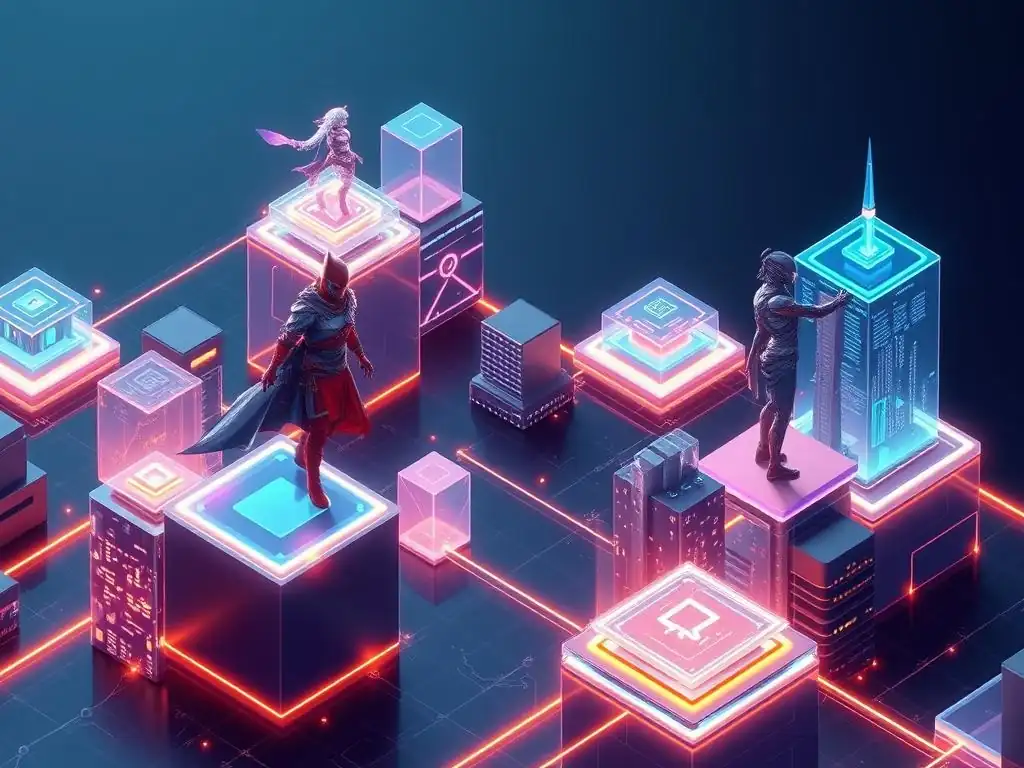
The Convergence of AR/VR and Metaverse Gaming Experiences
The future of metaverse gaming blockchain trends is inextricably linked to the advancements and integration of Augmented Reality (AR) and Virtual Reality (VR) technologies. While current metaverse experiences are primarily accessed through traditional screens, the immersive potential of AR and VR headsets promises to revolutionize how users interact with and experience metaverse games.
VR, in particular, offers the potential for deeply immersive and presence-driven gaming experiences, allowing players to fully step into virtual worlds and interact with them in a more natural and intuitive way. AR, on the other hand, can blend metaverse gaming elements with the real world, overlaying digital content and interactive experiences onto the user's physical surroundings.
The convergence of AR/VR with metaverse gaming is expected to unlock new levels of immersion, engagement, and social interaction. Imagine playing a metaverse game where you physically move around your living room, interacting with virtual characters and objects overlaid onto your real-world environment via AR glasses.
Or picture entering a fully immersive VR metaverse game world with friends from around the globe, feeling a stronger sense of presence and shared experience than currently possible with screen-based metaverse platforms. As AR and VR technology becomes more affordable, accessible, and user-friendly, their integration with metaverse gaming blockchain trends will likely become increasingly prevalent, transforming the gaming landscape and pushing the boundaries of immersive entertainment.
The Impact of AI on Metaverse Game Development and User Experience
Artificial Intelligence (AI) is poised to play a transformative role in the development and user experience of metaverse games, further shaping metaverse gaming blockchain trends. AI can be applied across various aspects of metaverse game creation, from content generation and character behavior to personalized gameplay and dynamic world environments. For game developers, AI can accelerate content creation, automate repetitive tasks, and enable the creation of more complex and dynamic game worlds. AI-powered tools can assist in generating landscapes, designing NPCs (Non-Player Characters), and creating adaptive game environments that respond to player actions and preferences.
For players, AI can enhance the user experience in numerous ways. AI-driven NPCs can exhibit more realistic and engaging behavior, creating more immersive and believable game worlds. AI can personalize gameplay experiences, adapting difficulty levels, content, and storylines to individual player preferences and skill levels. AI can also facilitate more sophisticated social interactions within metaverse games, powering more intelligent virtual assistants and enhancing communication between players. As AI technology advances and becomes more integrated into game development pipelines, its impact on metaverse gaming blockchain trends will be substantial, leading to more dynamic, personalized, and engaging metaverse experiences for players.
Scalability Solutions for Blockchain-Based Metaverse Games: Addressing Transaction Costs and Speed
Scalability remains a critical challenge for blockchain-based metaverse games, particularly as these games aim to accommodate a growing number of players and complex in-game economies. Traditional blockchains like Ethereum, while secure and decentralized, can suffer from slow transaction speeds and high gas fees, which can hinder the seamless and cost-effective operation of metaverse games. Imagine paying high transaction fees for every in-game action or experiencing significant delays when trading NFTs within a metaverse game. Addressing these scalability limitations is crucial for the widespread adoption and mass-market appeal of metaverse gaming blockchain trends.
Scalability solutions are actively being developed and implemented to overcome these challenges. Layer-2 scaling solutions, such as sidechains, rollups, and state channels, are designed to process transactions off the main Ethereum chain, reducing congestion and lowering transaction costs. Examples include Polygon, Arbitrum, and Optimism, which are increasingly being adopted by blockchain games.
Furthermore, the development of more scalable Layer-1 blockchains, designed from the ground up for high throughput and low fees, is also progressing. Projects like Solana, Avalanche, and Flow offer alternative blockchain infrastructures that can potentially support the demands of large-scale metaverse games. The ongoing advancements in scalability solutions are essential for enabling the growth and mainstream adoption of metaverse gaming blockchain trends, making blockchain games more accessible and user-friendly for a wider audience.
Challenges and Opportunities in the Metaverse Gaming Space
Regulatory Landscape and Legal Considerations for Blockchain Gaming
The regulatory landscape surrounding blockchain gaming and metaverse projects is still nascent and evolving, presenting both challenges and opportunities for the sector. Governments and regulatory bodies worldwide are grappling with how to classify and regulate cryptocurrencies, NFTs, and metaverse activities, creating uncertainty and potential compliance hurdles for metaverse gaming blockchain trends.
Issues such as the legal status of in-game assets, the regulation of play-to-earn economies, and the taxation of virtual transactions are still being debated and addressed in different jurisdictions. This regulatory uncertainty can create challenges for game developers and metaverse projects, requiring them to navigate complex and potentially conflicting legal frameworks.
However, a clear and well-defined regulatory framework also presents opportunities. Clear regulations can provide legal certainty and legitimacy to the blockchain gaming space, attracting more mainstream adoption and investment. Regulations that address consumer protection, data privacy, and responsible innovation can foster a more trustworthy and sustainable metaverse gaming ecosystem.
Industry stakeholders are actively engaging with regulators to advocate for sensible and balanced regulations that promote innovation while mitigating risks. As the regulatory landscape for metaverse gaming blockchain trends matures, it will be crucial for developers and projects to stay informed and adapt to evolving legal requirements to ensure compliance and foster a healthy and sustainable industry growth.
Security Risks and Mitigation Strategies in Metaverse Environments
Security risks are a significant concern in metaverse environments, particularly given the increasing value of digital assets and the potential for large-scale virtual economies within metaverse gaming blockchain trends. Metaverse platforms and blockchain games are vulnerable to various security threats, including hacking, phishing scams, smart contract vulnerabilities, and rug pulls. The decentralized and often pseudonymous nature of blockchain and metaverse environments can also make it challenging to track down and prosecute perpetrators of cybercrime. Therefore, robust security measures and mitigation strategies are essential to protect players and ensure the integrity of metaverse gaming ecosystems.
Mitigation strategies include implementing strong cybersecurity protocols, conducting regular security audits of smart contracts and game platforms, and educating players about security best practices. Two-factor authentication, secure wallet management, and awareness of phishing scams are crucial for individual player security. Metaverse platforms and game developers are also investing in advanced security technologies, such as blockchain analytics and on-chain security tools, to detect and prevent malicious activity.
Furthermore, fostering a culture of security awareness within the metaverse gaming community and promoting responsible security practices are essential for mitigating risks and building trust in metaverse gaming blockchain trends. Addressing security concerns proactively is critical for the long-term success and sustainability of the metaverse gaming space.
The Future of Ownership and Governance in Decentralized Gaming Ecosystems
The future of metaverse gaming blockchain trends is deeply intertwined with the evolving concepts of ownership and governance within decentralized gaming ecosystems. Blockchain technology enables a shift from centralized game control to more decentralized and player-centric models, where players have greater ownership of their digital assets and a voice in the game's governance.
NFTs are at the forefront of this shift in ownership, granting players verifiable and tradable ownership of in-game items. Decentralized Autonomous Organizations (DAOs) are also playing an increasingly important role in shaping governance, empowering communities to participate in decision-making processes related to game development, economics, and future direction.
The future of ownership and governance in metaverse gaming is likely to see further experimentation and innovation. We may see more sophisticated DAO structures, with diverse mechanisms for player participation and decision-making. The concept of "progressive decentralization," where game governance gradually transitions from developer control to community control over time, could become more prevalent.
Furthermore, interoperability standards and cross-game asset portability could further enhance player ownership and agency within a broader metaverse ecosystem. The move towards decentralized ownership and governance represents a fundamental shift in the power dynamics of gaming, potentially leading to more equitable, transparent, and player-driven metaverse gaming blockchain trends.
Investing in Metaverse Gaming: A Look at the Opportunities and Risks
Evaluating the Potential of Metaverse Gaming Tokens and NFTs
Metaverse gaming tokens and NFTs represent a new asset class with significant investment potential, but also inherent risks that investors need to carefully consider. The potential upside is driven by the growth of the metaverse gaming market, the increasing adoption of blockchain technology, and the potential for digital assets to accrue value within thriving virtual economies.
Metaverse gaming tokens can represent governance rights, in-game utility, or revenue sharing within a metaverse project, while NFTs can represent ownership of valuable in-game assets, virtual land, or unique collectibles within metaverse gaming blockchain trends. The potential for value appreciation is linked to the success and adoption of the underlying metaverse game or platform.
However, evaluating the potential of these assets requires careful due diligence. The metaverse gaming space is still nascent and highly volatile. Many projects are early-stage and carry significant execution risk. Tokenomics models can be complex and unsustainable if not designed properly. NFT values can be speculative and subject to market hype and fluctuations. Investors need to assess the fundamentals of each project, including the team, technology, gameplay, community, tokenomics, and market positioning. Understanding the specific utility and demand drivers for each token or NFT is crucial for informed investment decisions within metaverse gaming blockchain trends.
Long-Term Prospects for Blockchain Gaming and the Metaverse
The long-term prospects for blockchain gaming and the metaverse are generally considered to be very promising, driven by several converging trends. The gaming industry is a massive and rapidly growing market, with a continuous demand for innovation and new forms of entertainment. The metaverse represents the next evolution of online interaction and digital experiences, offering immersive, social, and economically engaging virtual worlds.
Blockchain technology provides the foundational infrastructure for decentralized ownership, secure economies, and interoperability within the metaverse. The combination of these factors positions blockchain gaming and the metaverse for significant long-term growth and impact on metaverse gaming blockchain trends.
Long-term growth will likely be fueled by increasing adoption of AR/VR technologies, advancements in blockchain scalability, and the continued development of more engaging and sophisticated metaverse gaming experiences. As metaverse platforms mature and attract larger user bases, the value of in-game assets and virtual economies is expected to grow.
Blockchain gaming has the potential to disrupt traditional gaming models, empowering players with greater ownership and control, and creating new economic opportunities within virtual worlds. While the metaverse gaming space is still evolving, its long-term trajectory points towards a significant transformation of the gaming industry and the emergence of new forms of digital entertainment and social interaction, driven by metaverse gaming blockchain trends.
Understanding the Risks Associated with Investing in Early-Stage Metaverse Projects
Investing in early-stage metaverse projects carries significant risks that potential investors must carefully understand and consider. The metaverse gaming space is highly speculative and many projects are in their very early stages of development, with unproven business models and uncertain long-term viability. Technology risk is a major factor, as metaverse technologies and blockchain infrastructure are still evolving, and projects may face technical challenges or fail to deliver on their promises.
Market risk is also substantial, as the metaverse market is still nascent and subject to rapid shifts in trends and user preferences. Competition is intense, and many projects may fail to gain traction or achieve sustainable user growth.
Financial risks are also inherent in early-stage investments. Many metaverse projects are funded through token sales or NFT drops, which can be highly volatile and subject to market speculation. Liquidity risk can be a concern, as tokens and NFTs associated with early-stage projects may have limited trading volume and price volatility.
Regulatory risk adds another layer of uncertainty, as the regulatory landscape for blockchain and metaverse projects is still evolving. Investors in early-stage metaverse projects must be prepared for the possibility of losing their entire investment. Thorough due diligence, risk management, and a long-term investment horizon are crucial for navigating the risks associated with investing in metaverse gaming blockchain trends.
Conclusion: The Future of Metaverse Gaming Driven by Blockchain Innovation
The metaverse gaming landscape is rapidly evolving, driven by the transformative power of blockchain innovation. From enabling true digital ownership through NFTs to fostering decentralized economies and governance through DAOs, blockchain technology is fundamentally reshaping the gaming experience. The trends of play-to-earn evolution, virtual land ownership, and interoperability are paving the way for a more interconnected and player-centric metaverse gaming ecosystem.
While challenges related to regulation, security, and scalability remain, the future of metaverse gaming blockchain trends is bright, with the convergence of AR/VR, the integration of AI, and the ongoing development of scalability solutions promising to unlock even greater levels of immersion, engagement, and economic opportunity within these virtual worlds. As blockchain innovation continues to advance, it will undoubtedly remain the driving force behind the evolution of metaverse gaming, shaping the future of entertainment and digital interaction for years to come.
Frequently Asked Questions
What are some of the key trends driving the growth of Metaverse gaming blockchain?
The key trends include the integration of NFTs for in-game assets, the rise of play-to-earn models, and the increasing adoption of decentralized autonomous organizations (DAOs) for game governance.
Who are some of the key players in the Metaverse gaming blockchain space?
Prominent players include game developers like Animoca Brands, blockchain platforms like Enjin, and established gaming companies exploring blockchain integration.
How is blockchain technology transforming the Metaverse gaming experience?
Blockchain enables true ownership of digital assets, creating new revenue streams for players and fostering more immersive and decentralized gaming experiences.
What are some of the challenges facing the adoption of Metaverse gaming blockchain?
Challenges include scalability issues on blockchain networks, regulatory uncertainty surrounding digital assets, and the need for user-friendly interfaces for mainstream adoption.
What does the future hold for Metaverse gaming blockchain?
The future likely involves greater interoperability between metaverses, the development of more sophisticated gaming experiences, and increased mainstream adoption driven by user-friendly platforms.
Final Reflection: Embracing the Evolving Metaverse Gaming Frontier
The exploration of the metaverse gaming landscape, its key players, groundbreaking projects, and future trends, reveals a sector brimming with potential and transformative power. The convergence of blockchain technology and immersive gaming experiences is not just a fleeting trend, but a fundamental shift in how we interact with digital worlds and each other. The metaverse is rapidly evolving from a futuristic concept to a tangible reality, reshaping entertainment, social interaction, and even economic models.
This burgeoning ecosystem has profoundly influenced the cultural and social landscape, blurring the lines between the physical and digital realms. Witnessing the rise of decentralized gaming platforms and player-owned economies underscores the importance of empowering individuals within these virtual spaces. As the metaverse continues to develop, its impact on our lives will only deepen. The metaverse is not just about gaming; it's about creating a new layer of reality where people can connect, collaborate, and create value in unprecedented ways.
Now, as you navigate the ever-expanding metaverse gaming frontier, consider the possibilities that lie ahead. Reflect on how you can contribute to shaping a more inclusive, innovative, and rewarding digital future. Embrace the potential of blockchain technology to empower players, foster creativity, and build vibrant communities within these virtual worlds. The future of gaming, and indeed the future of interaction, is being written now – be a part of its evolution.
Ignite Your Metaverse Gaming Journey!
Thank you for exploring the exciting world of metaverse gaming with us! We hope you've gained valuable insights into the key players, promising projects, and future trends shaping this revolutionary landscape. Now, let's turn that knowledge into action!
Here's how you can dive deeper:
- Experience it firsthand: Choose a popular metaverse gaming platform and create your avatar today. This hands-on approach is the best way to understand its potential and possibilities.
- Discover emerging projects: Many smaller initiatives are driving innovative gameplay and virtual economies. Research these to uncover hidden gems.
- Share your insights: Discuss this article with fellow gamers or crypto enthusiasts. Sharing knowledge strengthens the community and opens doors to new opportunities.
What is the first metaverse gaming world you're exploring, and what excites you most about it? Share your thoughts in the comments below!
Leave a Reply