
NFT Showcase FrontEnds: Building Engaging NFT Marketplaces and Galleries

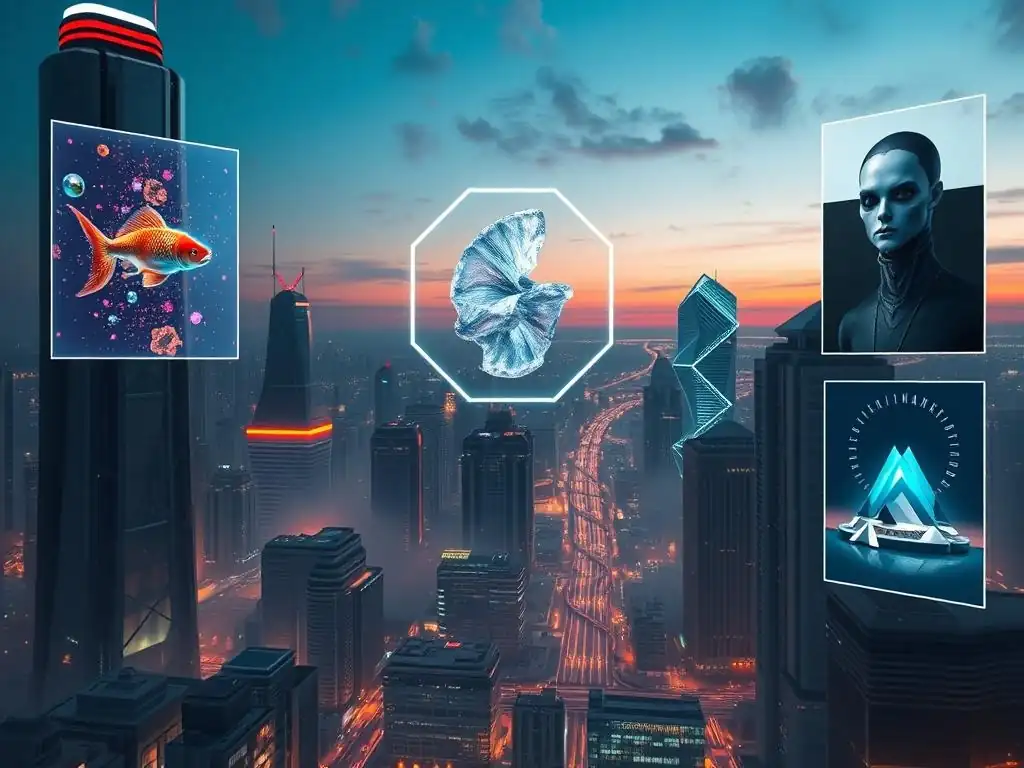
Welcome to Blockchain Trends, your go-to source for unraveling the disruptive power of blockchain beyond the buzz. Ever wondered how to build a captivating storefront for the next generation of digital assets? Dive in as we explore the burgeoning world of NFT marketplace frontend development, providing you with invaluable tutorials to craft engaging NFT marketplaces and galleries. Discover the secrets to building truly immersive and decentralized experiences. Let's unlock the potential together...
NFT Showcase FrontEnds: Building Engaging NFT Marketplaces and Galleries
- Introduction to NFT Marketplace Frontend Development
- Essential Technologies for NFT Marketplace Frontends
- NFT Marketplace Frontend Development Tutorials: A Step-by-Step Guide
- Building Key Features for Your NFT Showcase
- Designing an Engaging User Interface (UI) and User Experience (UX) for NFT Galleries
- Showcasing NFTs: Gallery Design Principles
- Advanced Frontend Techniques for NFT Platforms
- Security Considerations for NFT Marketplace Frontends
- Optimizing Your NFT Marketplace Frontend for Search Engines (SEO)
- The Future of NFT Marketplace Frontend Development
- Conclusion: Mastering NFT Frontend Development
-
Frequently Asked Questions
- How can I learn NFT marketplace frontend development using tutorials?
- What are the key technologies used in NFT marketplace frontend development?
- What are some common UI/UX challenges when designing an NFT marketplace frontend?
- How can I ensure security when developing an NFT marketplace frontend?
- What are some examples of engaging features I can include in my NFT gallery frontend?
- Final Reflection: The Enduring Canvas of Digital Ownership
- Ignite Your NFT Vision: Build Your Dream Showcase!
Introduction to NFT Marketplace Frontend Development
The Growing Importance of User Experience in NFT Platforms
The decentralized nature of NFTs brings unique challenges and opportunities, but ultimately, user adoption hinges significantly on the quality of the frontend experience. As the NFT market matures, the initial novelty factor is giving way to user expectations shaped by conventional web platforms.
A clunky, slow, or confusing interface can deter potential buyers and sellers, regardless of the underlying blockchain technology or the value of the digital assets being showcased. Data suggests that even a one-second delay in mobile page load can impact conversion rates by up to 20%, a critical factor for any platform aiming for high transaction volume.
Furthermore, the complexity often associated with blockchain interactions – such as connecting wallets, approving transactions, and paying gas fees – necessitates a frontend that abstracts away as much of this complexity as possible. Users expect intuitive navigation, clear information display, and seamless transaction flows.
Platforms like Foundation or SuperRare gained early traction partly due to their curated collections, but their clean, focused user interfaces also played a significant role in attracting specific user segments. Investing heavily in the user experience (UX) and user interface (UI) during NFT marketplace frontend development is no longer a luxury but a necessity for competition and growth.
Understanding the Role of the Frontend in NFT Adoption
The frontend is the only part of an NFT platform that users directly interact with. It serves as the gateway to the decentralized world of digital collectibles, enabling users to browse, discover, purchase, sell, and manage their NFTs. A well-designed frontend translates complex blockchain data – like ownership history, provenance, and smart contract details – into easily digestible visual information. This is crucial for building trust and transparency, which are fundamental to the value proposition of NFTs.
Moreover, the frontend is responsible for integrating essential Web3 functionalities, connecting the user's browser or application to their blockchain wallet (like MetaMask or WalletConnect) and facilitating secure interactions with smart contracts deployed on networks such as Ethereum, Polygon, or Solana. Effective integration here minimizes user errors and provides clear feedback on transaction status, significantly improving the overall user journey. Successful platforms demonstrate that a smooth frontend significantly lowers the barrier to entry for users who may not be deeply familiar with blockchain technology, accelerating mainstream adoption of NFTs.
Key Considerations for NFT Marketplace Frontend Design
Designing an effective frontend for an NFT marketplace or gallery requires balancing aesthetic appeal with functional requirements and technical constraints. A primary consideration is the presentation of the digital artwork itself; high-resolution images, videos, or 3D models need to load quickly and display correctly across various devices and screen sizes. This involves careful asset optimization and utilizing responsive design principles.
Another critical aspect is the clear and prominent display of key NFT information, including title, creator, owner, price history, rarity traits, and links to blockchain explorers for verification. Integrating features like search, filtering by category or attributes, and sorting by price or recency are essential for discoverability, especially as the number of listed NFTs grows. These foundational elements are vital steps in any comprehensive NFT marketplace frontend development tutorials aimed at building a user-friendly platform.
Essential Technologies for NFT Marketplace Frontends
Choosing the Right Framework: React, Vue, or Angular for NFT Platforms
Selecting a robust JavaScript framework is a foundational decision in NFT marketplace frontend development. React, developed by Facebook (now Meta), remains a highly popular choice due to its component-based architecture, large community, and extensive ecosystem of libraries. Many existing Web3 libraries and tools offer strong support for React, making integration with blockchain functionalities relatively straightforward. Its virtual DOM enhances performance by minimizing direct manipulation of the browser's DOM.
Vue.js, known for its approachability and flexibility, offers a more gradual learning curve compared to React or Angular. Its reactive data binding system simplifies state management, and its single-file components make organizing code intuitive. While its ecosystem might be slightly smaller than React's, it is rapidly growing, and many core Web3 libraries provide Vue bindings or documentation.
Angular, a comprehensive framework maintained by Google, is often preferred for large-scale enterprise applications due to its opinionated structure, strong typing with TypeScript, and built-in features like routing and state management. Although it has a steeper learning curve, its robustness can be advantageous for complex NFT platforms requiring long-term maintainability and scalability. The choice often depends on team familiarity, project scale, and specific performance requirements.
Integrating Web3 Libraries: Connecting Your Frontend to the Blockchain
To enable your frontend to interact with blockchain networks, you need to integrate Web3 libraries. The most common library for interacting with the Ethereum ecosystem (and many compatible chains) is web3.js or ethers.js. Ethers.js is often preferred for its cleaner API, better documentation, and focus on security. These libraries allow your frontend code to connect to a user's wallet provider (like MetaMask), query blockchain data (e.g., check token balances, read smart contract state), sign transactions, and send them to the network.
Integrating these libraries involves setting up a provider (usually injected by the user's wallet) and creating instances of contracts using their Application Binary Interface (ABI) and address. For example, to display an NFT's metadata on OpenSea, your frontend would use ethers.js to connect to the network via the user's wallet, instantiate the ERC-721 or ERC-1155 contract, and call functions like tokenURI(tokenId) to retrieve the metadata URL. This process of integrating blockchain connectivity is a core module in most NFT marketplace frontend development tutorials, demonstrating how to bridge the gap between the user interface and the decentralized ledger.
Utilizing NFT APIs for Data Retrieval and Management
While direct blockchain queries are essential for real-time interactions like initiating transactions, fetching and managing large amounts of NFT data efficiently often requires utilizing dedicated NFT APIs. Services like OpenSea API, Alchemy NFT API, or Moralis provide indexed and aggregated data about NFTs across various marketplaces and blockchain networks. These APIs allow developers to quickly retrieve lists of NFTs owned by a user, collections, floor prices, sales history, and metadata without having to manually index the entire blockchain themselves, which would be prohibitively slow and resource-intensive for a frontend application.
Using an NFT API significantly speeds up data loading times, improves application responsiveness, and offloads complex data processing. For instance, instead of iterating through thousands of transfer events on-chain to find all NFTs owned by an address, a single API call can return a paginated list almost instantly. Many of these APIs also handle caching and provide convenient endpoints for filtering and sorting data, making it easier to build features like personalized galleries, activity feeds, and marketplace listings. Incorporating API usage is a practical skill covered in advanced NFT marketplace frontend development tutorials focusing on performance and scalability.
NFT Marketplace Frontend Development Tutorials: A Step-by-Step Guide
Setting Up Your Development Environment for NFT Projects
Embarking on NFT marketplace frontend development requires setting up a suitable development environment. This typically involves installing Node.js, which includes npm (Node Package Manager) or yarn, essential for managing project dependencies. You'll need a code editor like VS Code, which offers excellent support for JavaScript, TypeScript, and various frontend frameworks. For blockchain interaction, you'll also need a browser extension wallet like MetaMask installed in your browser to connect to development networks and later, live networks.
A standard setup involves creating a new project using a framework's command-line interface (CLI), such as create-react-app, @vue/cli, or @angular/cli. Once the project is initialized, you'll install necessary libraries like ethers.js or web3.js, potentially a UI library (like Material UI, Ant Design, or Chakra UI), and any specific NFT API client libraries you plan to use. Configuring environment variables for API keys or network endpoints is also a crucial step to manage sensitive information and easily switch between development, staging, and production environments.
Connecting to a Blockchain Network: MetaMask and Other Wallets
Connecting your frontend to a blockchain network is usually initiated by the user through their browser wallet. Libraries like ethers.js or web3.js can detect if a wallet provider (like MetaMask, which injects an ethereum object into the browser's window) is available. The standard process involves prompting the user to connect their wallet using an asynchronous function call, typically triggered by a "Connect Wallet" button. Upon user approval, the frontend gains access to the user's selected account address and a provider object that allows sending transactions and reading blockchain data.
Support for multiple wallet providers is often implemented using libraries like Web3Modal or WalletConnect. WalletConnect, in particular, enables users to connect mobile wallets by scanning a QR code, broadening accessibility beyond browser extensions. Handling different network IDs (e.g., Ethereum Mainnet, Goerli, Polygon, Mumbai) is also critical, allowing the application to interact with the correct blockchain network based on user selection or application configuration. Implementing robust wallet connection logic is a fundamental part of any practical NFT marketplace frontend development tutorials.
Displaying NFT Metadata: Images, Descriptions, and Attributes
Once a wallet is connected and you have identified the NFTs owned by the user or listed on the marketplace, the next step is to fetch and display their metadata. The ERC-721 and ERC-1155 standards specify a tokenURI function that returns a URL pointing to a JSON file containing the NFT's metadata. This JSON file typically includes the NFT's name, description, image URL, and a list of attributes or properties. The image URL often points to an image file hosted on decentralized storage like IPFS or Arweave, or sometimes on centralized servers.
Your frontend application fetches this JSON metadata from the tokenURI and then displays the relevant information. This involves rendering the image (or video/3D model), showing the title and description, and presenting the attributes in a structured format (e.g., a table or list of key-value pairs). Handling potential errors, such as broken tokenURI links or invalid JSON, is also important. For performance, especially when displaying many NFTs in a gallery, implementing techniques like lazy loading for images is highly recommended, a topic often covered in advanced NFT marketplace frontend development tutorials.
Building Key Features for Your NFT Showcase
Implementing NFT Search and Filtering Functionality
As the number of NFTs on a platform grows, effective search and filtering become indispensable for user experience. Users need to be able to find specific NFTs or collections quickly based on keywords (like artist name, collection name, or specific traits) or filter results based on criteria such as price range, sale status (buy now, on auction), category, blockchain network, or specific attributes (e.g., 'hat: none', 'background: blue').
Implementing this functionality often involves integrating with a backend service or NFT API that provides indexed and searchable data. The frontend sends user queries and filter selections to the API, which returns a subset of relevant NFTs. On the frontend side, this requires building interactive UI elements like search bars, dropdown menus, checkboxes, and sliders.
The UI must update dynamically to display the filtered results, often with loading indicators for larger queries. Efficiently managing the state of filters and search terms is a key aspect of building a responsive and user-friendly interface, skills often honed through practical NFT marketplace frontend development tutorials.
Creating User Profiles and NFT Ownership Management
User profiles are central to any marketplace, allowing users to view their own collections, list items for sale, manage bids, and track activity. For an NFT platform, a user profile typically displays all NFTs owned by a specific wallet address. This requires the frontend to query the blockchain or an NFT API to retrieve a list of tokens associated with the connected address. The profile page should showcase these NFTs, often in a gallery format, displaying their key information like image, title, and current value or listing price.
Ownership management includes the ability to list an NFT for sale (requiring interaction with a marketplace smart contract to approve the token and set a price), delist an item, or transfer an NFT to another address. These actions involve signing and sending blockchain transactions via the user's wallet. The frontend must guide the user through these processes, providing clear confirmations and status updates. Implementing a robust user profile section is a complex but essential part of NFT marketplace frontend development tutorials, covering data fetching, transaction handling, and UI design for personal collections.
Developing Bidding and Auction Systems for NFT Sales
Beyond fixed-price sales, many NFT marketplaces incorporate auction systems (English auctions, Dutch auctions) or bidding mechanisms. Developing the frontend for these features involves displaying auction details such as the current highest bid, bid history, auction end time, and the minimum bid increment. Users need input fields to place bids and buttons to confirm their actions, which trigger smart contract interactions.
Implementing real-time updates for bids and remaining time is crucial for an engaging auction experience. This can be achieved using WebSockets or by frequently polling the smart contract or API for the latest data. The frontend must also handle the logic for outbid notifications, auction completion, and the process for the winner to claim the NFT or the seller to claim the funds. Building these dynamic, time-sensitive features is a more advanced topic in NFT marketplace frontend development tutorials, requiring careful state management and error handling for blockchain transactions.
Designing an Engaging User Interface (UI) and User Experience (UX) for NFT Galleries
Best Practices for NFT Visual Presentation
Since NFTs are primarily visual assets (digital art, collectibles, videos), their presentation is paramount. The user interface should prioritize displaying high-quality visuals prominently. This means using appropriate image formats (e.g., WebP for better compression and quality), serving appropriately sized images based on the user's device, and implementing techniques like lazy loading to ensure fast initial page loads, especially in galleries with many items.
Consistency in layout and styling across different NFT types and collections improves navigability. Providing clear visual cues for rarity traits, verification status (e.g., a checkmark for verified collections), and sale status (e.g., a banner indicating "On Sale" or "Auction") helps users quickly understand key information. Implementing hover effects or animations can add a layer of polish, but they should be used judiciously to avoid overwhelming the user or negatively impacting performance. A focus on clean design and intuitive visual hierarchy is a cornerstone of effective NFT marketplace frontend development tutorials emphasizing design principles.
Optimizing for Mobile Responsiveness and Accessibility
Given the prevalence of mobile browsing, ensuring that your NFT marketplace frontend is fully responsive is non-negotiable. The layout, navigation, and interactive elements must adapt gracefully to various screen sizes, from large desktop monitors to small smartphone screens. This involves using flexible grid systems, fluid images, and media queries in CSS. Testing on real devices is crucial to identify and fix layout issues and ensure touch interactions work correctly.
Accessibility is another critical aspect often overlooked. Designing for accessibility means ensuring that your platform can be used by people with disabilities. This includes providing alternative text for images (important for screen readers), ensuring sufficient color contrast, making sure interactive elements are keyboard-navigable, and following WAI-ARIA guidelines. Adhering to accessibility standards not only broadens your potential user base but also often improves the overall code quality and usability for everyone. Building accessible interfaces is a valuable component of comprehensive NFT marketplace frontend development tutorials.
NFTs thrive on community and social interaction. Integrating social sharing features allows users to easily share NFTs they own, like, or are selling on platforms like Twitter, Instagram, or Discord. This can be implemented using standard web sharing APIs or by generating shareable images or links. Providing clear, attractive previews when shared (using Open Graph tags and Twitter Cards) is important for driving traffic back to the platform.
Beyond simple sharing, integrating community features like comments, likes, or even forums directly into the platform can enhance user engagement. Displaying the number of views or likes an NFT has received provides social proof. Some platforms integrate with Discord for community chat or enable direct messaging between users. These features build a sense of community around the marketplace and its collections, fostering loyalty and encouraging repeat visits. Incorporating social elements is a design consideration often discussed in NFT marketplace frontend development tutorials focusing on user engagement.
Showcasing NFTs: Gallery Design Principles

Layout and Composition for NFT Display
The primary goal of an NFT gallery is to showcase digital assets effectively. The layout and composition play a crucial role in this. A common approach is a grid layout, similar to art galleries or e-commerce sites, allowing users to browse multiple items simultaneously. The size and aspect ratio of the grid items should be carefully considered to accommodate various media types (square images, vertical videos, etc.) while maintaining visual consistency.
Providing options for users to switch between different view modes (e.g., large thumbnails, list view with more details) can cater to different browsing preferences. Highlighting featured NFTs or popular collections through carousels or dedicated sections can guide user attention. The spacing between items and the overall visual hierarchy should be clean and uncluttered, ensuring that the focus remains on the artwork itself. Effective layout design is a fundamental skill covered in NFT marketplace frontend development tutorials focusing on presentation layers.
Implementing Interactive Elements: Zoom, Rotate, and Virtual Reality
To allow users to appreciate the details of an NFT, implementing interactive viewing options is beneficial. For static images, a zoom functionality that allows users to inspect high-resolution versions is standard. For 3D models, integrating a viewer that supports rotation and panning is essential. Some platforms are exploring immersive experiences by integrating virtual reality (VR) or augmented reality (AR) viewers, allowing users to experience NFTs in simulated 3D spaces or overlayed onto the real world via their device's camera.
Implementing these features requires integrating appropriate libraries or APIs, such as Three.js or Babylon.js for 3D rendering, or ARKit/ARCore via web frameworks for AR experiences. These features enhance engagement and allow the unique characteristics of certain NFTs (like intricate details or interactive elements) to be fully appreciated, elevating the user experience beyond simple static images. While more advanced, these interactive elements are becoming increasingly relevant topics in comprehensive NFT marketplace frontend development tutorials.
Highlighting NFT Rarity and Unique Attributes
Many NFTs, especially those part of large generative collections (like CryptoPunks or Bored Apes), have specific traits or attributes associated with them, each having a certain rarity within the collection. Displaying this rarity information prominently can significantly impact an NFT's perceived value and appeal. The frontend should fetch these attributes from the metadata and present them clearly, often listing the specific traits and their rarity percentage within the collection.
Visual indicators, such as color-coded rarity levels or badges for particularly rare traits, can help users quickly identify desirable characteristics. Some platforms display a numerical rarity score based on the combination of attributes. Clearly presenting these unique attributes and their rarity helps potential buyers understand why one NFT from a collection might be priced significantly higher than another, adding transparency and depth to the listing information. Incorporating rarity display is a specific design pattern often detailed in NFT marketplace frontend development tutorials focused on collectible markets.
Advanced Frontend Techniques for NFT Platforms
Implementing Lazy Loading for Improved Performance
Lazy loading is a critical optimization technique for NFT galleries and marketplaces that display numerous images or media files. Instead of loading all assets when the page initially loads, lazy loading defers the loading of images or components until they are about to enter the user's viewport. This significantly reduces the initial load time, decreases bandwidth consumption, and improves perceived performance, especially on pages with long lists or grids of NFTs.
Implementing lazy loading can be done natively using the loading="lazy" attribute on image tags or through JavaScript libraries that observe elements entering the viewport using the Intersection Observer API. For single-page applications built with React, Vue, or Angular, component-level lazy loading (code splitting) can also be applied to load different parts of the application only when needed, further optimizing initial load times. Performance optimization techniques like lazy loading are essential topics in advanced NFT marketplace frontend development tutorials.
Utilizing Caching Strategies for Faster Data Retrieval
Fetching data from the blockchain or APIs can sometimes be slow or rate-limited. Implementing effective caching strategies on the frontend can drastically improve the speed and responsiveness of your application. Data that doesn't change frequently, such as collection details, past sales data, or even NFT metadata (once fetched), can be stored temporarily in the browser's memory, local storage, or using service workers.
When the user navigates back to a page or view that requires this data, the frontend can first check the cache. If the data is available and considered fresh (within a defined time limit), it can be served instantly from the cache, avoiding a network request. For data that changes frequently, like current bids in an auction, caching might not be appropriate, or a short cache expiry time might be used alongside real-time updates. Implementing a smart caching layer is a performance optimization technique often covered in depth in advanced NFT marketplace frontend development tutorials.
Integrating Real-Time Updates for Live Auctions and Bids
For dynamic features like live auctions, real-time updates are essential to provide users with the most current information. Users need to see new bids appear instantly and the remaining time tick down accurately without manually refreshing the page. This can be achieved by establishing a persistent connection between the frontend and a backend service or directly subscribing to blockchain events (though the latter is less common for frontend UI updates due to complexity and cost).
WebSockets are a standard technology for enabling real-time, two-way communication between the client and server. A backend service can listen for relevant smart contract events (like BidPlaced, AuctionSettled) and push updates to connected frontend clients via WebSockets. Alternatively, some NFT APIs offer WebSocket or GraphQL subscriptions for real-time data streams. Implementing the frontend logic to handle these real-time data streams and update the UI smoothly without flickering is a complex but crucial aspect of building engaging, dynamic NFT platforms, often detailed in specialized NFT marketplace frontend development tutorials.
Security Considerations for NFT Marketplace Frontends
Preventing Cross-Site Scripting (XSS) Attacks
Cross-Site Scripting (XSS) is a common web vulnerability where attackers inject malicious scripts into web pages viewed by other users. In the context of an NFT marketplace, an attacker might try to inject scripts through user-submitted content like profile descriptions, NFT names, or comments. A successful XSS attack could potentially steal user data, hijack sessions, or even attempt to trick users into signing malicious blockchain transactions.
Preventing XSS primarily involves properly sanitizing and escaping all user-generated content before rendering it in the browser. This means converting potentially harmful characters (like < and >) into their harmless entity equivalents ( < and >). Using frontend frameworks like React, Vue, or Angular with their built-in protection mechanisms (which often escape content by default when rendering) significantly reduces the risk, but developers must remain vigilant when rendering raw HTML or using libraries that might bypass these protections. Security best practices are a non-negotiable part of any responsible NFT marketplace frontend development tutorials.
While blockchain handles asset ownership and transaction authorization, the frontend often manages user accounts, profiles, and potentially off-chain settings or data. Securing this layer is crucial. User authentication, even if primarily done via wallet connection, should ideally involve a backend session management system to maintain user state and preferences. Authorization ensures that users can only perform actions they are permitted to, such as editing their own profile or listing NFTs they actually own.
Implementing secure authentication involves using standard practices like secure cookie handling, preventing CSRF (Cross-Site Request Forgery) attacks using tokens, and securely storing any off-chain user data. While wallet signatures authorize blockchain transactions, the frontend must ensure that the request to initiate such a transaction originates from the legitimate, authenticated user session. Understanding the distinction between on-chain and off-chain security is vital in NFT marketplace frontend development tutorials.
Validating User Input to Prevent Malicious Code Injection
Beyond XSS, validating user input is essential to prevent various types of malicious code injection and ensure data integrity. This includes validating input fields for listing NFTs (e.g., ensuring prices are valid numbers, descriptions don't exceed length limits), profile information, or search queries. Input validation should ideally happen on both the frontend and backend (or smart contract level for critical parameters).
Frontend validation provides immediate feedback to the user and improves the user experience, but it should never be the sole layer of defense as it can be bypassed. However, preventing obviously malicious input patterns on the frontend can reduce the load on backend systems and smart contracts. This involves checking data types, formats, lengths, and sanitizing strings to remove potentially harmful characters or code snippets before processing or displaying them. Robust input validation is a fundamental security practice taught in comprehensive NFT marketplace frontend development tutorials.
Optimizing Your NFT Marketplace Frontend for Search Engines (SEO)
Implementing Schema Markup for NFTs
Search engine optimization (SEO) is crucial for discoverability. Implementing structured data markup, specifically Schema.org vocabulary, can help search engines better understand the content of your NFT listings and gallery pages. For NFTs, relevant schema types include Product, Offer, ImageObject, and potentially custom blockchain-related schemas if available and supported.
Using Product schema allows you to mark up details like the NFT's name, description, image, and identifier. Offer schema can be nested within Product to provide details about the sale, such as price, currency, and availability. Properly implemented schema markup can lead to rich results in search engine results pages (SERPs), such as displaying the NFT's image and price directly in the search listing, which can significantly increase click-through rates. Including SEO considerations is increasingly important in practical NFT marketplace frontend development tutorials.
Creating SEO-Friendly URLs and Metadata
Clean, human-readable URLs are better for SEO and user experience. Instead of URLs like /item?id=12345&collection=abc, aim for URLs that include relevant keywords, such as /collection/boredapeyachtclub/item/12345 or /artist/beeple/nft/everydays-the-first-5000-days. These URLs provide context to both users and search engines.
Optimizing metadata is also critical. The title tag is one of the most important on-page SEO factors; it should be unique for each NFT page and include the NFT name, collection name, and perhaps the platform name. The meta description tag, while not a direct ranking factor, influences click-through rates from SERPs by providing a concise summary of the page content. Utilizing relevant keywords naturally within titles and descriptions is key. Crafting SEO-friendly URLs and metadata are fundamental steps detailed in NFT marketplace frontend development tutorials focused on discoverability.
Optimizing Website Speed and Performance for Search Engines
Website speed is a significant ranking factor for search engines like Google, especially with initiatives like Core Web Vitals. A fast-loading website provides a better user experience and is favored in search results. For NFT marketplaces, this involves optimizing image loading (using appropriate formats, compression, lazy loading), minimizing JavaScript bundle sizes, leveraging browser caching, and potentially implementing server-side rendering (SSR) or static site generation (SSG) for critical landing pages or NFT detail pages.
Reducing render-blocking resources, optimizing CSS and JavaScript delivery, and ensuring efficient data fetching (potentially using APIs instead of direct on-chain calls for initial loads) are all part of performance optimization. Tools like Google PageSpeed Insights or Lighthouse can help identify performance bottlenecks. Continuously monitoring and improving performance metrics is an ongoing task after completing the core NFT marketplace frontend development tutorials.
The Future of NFT Marketplace Frontend Development
Emerging Trends in NFT User Interfaces
The design patterns for NFT marketplaces are still evolving. Beyond the standard grid view, future interfaces may incorporate more personalized curation, dynamic content based on user interaction, and potentially more gamified elements to encourage engagement. The integration of social feeds directly within the marketplace interface, allowing users to see what NFTs their friends or collectors they follow are buying or selling, is another likely trend.
Furthermore, as NFTs move beyond static images to more complex, interactive, or even fractionalized assets, the frontend will need to adapt to display these new formats and their associated data effectively. This might involve integrating interactive viewers for 3D models, video players with enhanced controls, or specialized components for managing fractional ownership. The focus will increasingly be on creating immersive and data-rich experiences while maintaining performance and usability, topics that will shape future NFT marketplace frontend development tutorials.
The Role of Augmented Reality (AR) and Virtual Reality (VR) in NFT Showcases
AR and VR offer exciting possibilities for showcasing NFTs, particularly digital art and collectibles. Imagine viewing a digital sculpture NFT in your living room via augmented reality on your phone, or exploring a virtual gallery filled with NFTs in a VR headset. Frontend technologies are evolving to support these experiences directly within web browsers (using WebXR) or via dedicated applications.
Integrating AR/VR viewers into an NFT platform allows potential buyers to experience the digital asset in a more immersive context before purchasing. While still nascent, the ability to "place" a digital artwork in a real-world setting or walk around a virtual sculpture can significantly enhance its perceived value and the user's connection to it. As AR/VR hardware becomes more mainstream, incorporating these visualization methods will become a more prominent feature discussed in advanced NFT marketplace frontend development tutorials.
Exploring Decentralized Storage Solutions for NFT Assets
Currently, while the NFT token itself lives on the blockchain, the associated digital asset (the image, video, etc.) is often stored off-chain, sometimes on centralized servers. This introduces a point of centralization and potential failure (e.g., if the server goes down or the link changes). Decentralized storage solutions like IPFS (InterPlanetary File System) and Arweave offer more robust and permanent storage options for NFT assets.
Frontend development will increasingly involve fetching assets directly from these decentralized networks using libraries or gateways. This requires handling content-addressable data (where the URL is based on the file's content hash) and ensuring gateways are reliable. While IPFS links can sometimes be slow, ongoing development in this space aims to improve retrieval speed. Arweave offers permanent storage guarantees. As the ecosystem matures, utilizing and properly displaying assets from decentralized storage will become a standard practice covered in comprehensive NFT marketplace frontend development tutorials focusing on true decentralization.
Conclusion: Mastering NFT Frontend Development
Key Takeaways for Building Successful NFT Marketplaces
Building a successful NFT marketplace frontend is a multifaceted challenge that requires a strong understanding of modern web development practices, blockchain interaction, and user-centric design. Key takeaways include prioritizing user experience through intuitive design and fast performance, choosing the right frontend framework and integrating necessary Web3 and API libraries for data and connectivity, and implementing core features like search, filtering, and user profiles effectively.
Furthermore, paying close attention to visual presentation, ensuring mobile responsiveness and accessibility, and incorporating community features contribute significantly to user engagement. Advanced techniques like lazy loading, caching, and real-time updates are crucial for performance and dynamism. Finally, integrating robust security measures and optimizing for SEO are essential for trust, safety, and discoverability in a competitive market. Mastering these areas, often through hands-on NFT marketplace frontend development tutorials, is key to creating compelling decentralized applications.
Resources for Further Learning and Development
For those looking to deepen their skills in building NFT frontends, a wealth of resources is available. Official documentation for frameworks like React, Vue, and Angular provides foundational knowledge. Libraries like ethers.js and web3.js have extensive documentation and examples for blockchain interaction. Services like Alchemy, Infura, and Moralis offer developer guides for their APIs.
Many online platforms offer dedicated courses or NFT marketplace frontend development tutorials that walk through building example applications, covering everything from setting up the environment to deploying the final product. Open-source NFT marketplace projects on GitHub can serve as valuable learning resources, allowing developers to see how others have tackled specific challenges. Participating in developer communities on platforms like Discord or Stack Overflow also provides opportunities to ask questions and learn from peers.
The Continued Evolution of NFT Frontend Technologies
The landscape of NFT technology and its frontend interfaces is rapidly evolving. New blockchain networks, token standards, and layer-2 scaling solutions are constantly emerging, requiring frontend developers to stay updated. The tools and libraries for Web3 development are also improving, simplifying the process of interacting with decentralized protocols.
As NFTs integrate further into gaming, metaverses, and other applications, the frontend experiences will become more interactive, immersive, and integrated with other digital environments. Staying abreast of these changes, experimenting with new technologies like WebXR for AR/VR, and focusing on building performant, secure, and user-friendly interfaces will be crucial for developers in this dynamic field. The journey of mastering NFT marketplace frontend development is an ongoing process of learning and adaptation.
Frequently Asked Questions
How can I learn NFT marketplace frontend development using tutorials?
There are numerous online resources available, including video tutorials and written guides, specifically focused on building NFT marketplace frontends. Many platforms like YouTube, Udemy, and dedicated NFT development blogs provide step-by-step instructions.
What are the key technologies used in NFT marketplace frontend development?
Typically, frontend development for NFT marketplaces involves using technologies like React, Vue.js, or Angular for building the user interface. You'll also need to understand Web3.js or Ethers.js for interacting with the blockchain.
What are some common UI/UX challenges when designing an NFT marketplace frontend?
Challenges include ensuring a seamless user experience for buying, selling, and displaying NFTs, handling metadata efficiently, and providing clear information about NFT ownership and provenance.
How can I ensure security when developing an NFT marketplace frontend?
Prioritize secure coding practices to prevent vulnerabilities. Implement robust authentication and authorization mechanisms, and carefully handle user data and transaction information. Always validate user inputs.
What are some examples of engaging features I can include in my NFT gallery frontend?
Consider adding features like interactive NFT displays, user profiles with NFT collections, social sharing options, and dynamic filtering and sorting based on NFT attributes.
Final Reflection: The Enduring Canvas of Digital Ownership
The journey through NFT marketplace frontend development reveals more than just lines of code; it unveils a new frontier in digital ownership and artistic expression. What began as a niche interest has rapidly evolved into a powerful force reshaping how we interact with art, collectibles, and even identity in the digital realm. The ability to create engaging and intuitive frontends is no longer just a technical skill, but a crucial element in fostering wider adoption and appreciation of this transformative technology.
The impact of NFTs extends far beyond the financial realm, influencing the cultural landscape by empowering creators and fostering communities. This evolution resonates deeply, reminding us that technology, at its best, should serve as a bridge connecting individuals and ideas. The future of art is not in museums, but in the hands of the people who create it.
This quote, though not directly about NFTs, perfectly encapsulates the spirit of democratization that these platforms embody, allowing artists to connect directly with their audience and build sustainable careers.
As you navigate the ever-evolving world of NFTs, remember that the most compelling marketplaces are not just functional, but also beautiful and intuitive. Let the knowledge gained here inspire you to build frontends that not only showcase digital assets but also tell compelling stories, foster vibrant communities, and ultimately, contribute to a more equitable and accessible digital future. Embrace the challenge, experiment with creativity, and build the future of digital ownership, one pixel at a time.
Ignite Your NFT Vision: Build Your Dream Showcase!
Thank you for exploring the world of NFT frontends with us! We hope you've gained valuable insights into creating engaging marketplaces and galleries. Now, it's time to turn that knowledge into action.
Are you ready to elevate your NFT projects? Here’s how you can get started:
- Launch your own personalized NFT gallery—it's simpler than you might think. Try out different frontend frameworks and begin building your NFT showcase today.
- Browse existing NFT marketplaces to identify design features that catch your eye. Analyze what makes them successful and consider how you can incorporate similar elements into your own project.
- Share this article with a fellow creator or developer who might be inspired to build something extraordinary. Let’s grow the NFT community together.
What innovative feature will you add to make your NFT showcase stand out? Share your ideas in the comments below!
Leave a Reply