
The Role of Solana in the Metaverse: Powering Immersive Decentralized Experiences

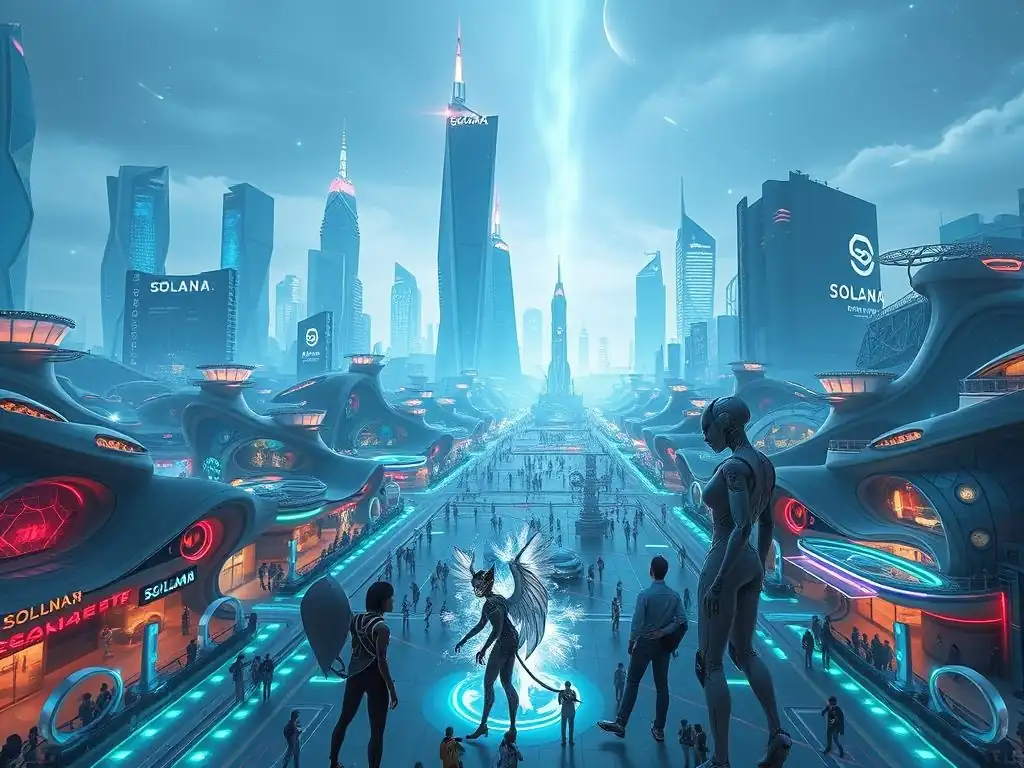
Welcome to Blockchain Trends, your guide to understanding the revolutionary impact of blockchain technology beyond the hype. Curious about how blockchain is reshaping industries? Dive into our exploration of DeFi, enterprise applications, and the ever-evolving regulatory landscape. In this article, we unravel the exciting potential of the Solana metaverse decentralized experiences, examining how this high-performance blockchain is powering immersive digital worlds. Ready to discover the future of decentralized systems? Let's explore the role of Solana and unlock the potential that awaits.
The Role of Solana in the Metaverse: Powering Immersive Decentralized Experiences
- Introduction: Solana's Rise in the Metaverse Landscape
- Solana's Technical Advantages for Metaverse Applications
- Decentralization and Ownership in the Solana Metaverse
- Key Solana Metaverse Projects and Use Cases
- Solana vs. Other Blockchains for Metaverse Development
- The Future of Solana and the Metaverse: Challenges and Opportunities
-
Frequently Asked Questions
- How does Solana's blockchain technology contribute to the development of the metaverse?
- What types of decentralized experiences are being built on the Solana blockchain within the metaverse?
- What are the key benefits of using Solana for metaverse projects compared to other blockchain platforms?
- How is Solana's ecosystem supporting the growth of Solana metaverse decentralized experiences?
- What are some potential future developments or challenges for Solana in the metaverse space?
- Final Reflection: Embracing the Decentralized Metaverse
- Unleash Your Metaverse Potential with Solana!
Introduction: Solana's Rise in the Metaverse Landscape
Understanding the Metaverse and its Need for High-Performance Blockchains
The metaverse, envisioned as a persistent, shared, 3D virtual world, represents the next evolution of the internet. It promises immersive experiences ranging from virtual social interactions and events to decentralized gaming and digital commerce. However, realizing this vision requires a robust underlying infrastructure, particularly high-performance blockchains. Traditional blockchains, often characterized by slow transaction speeds and high costs, struggle to support the real-time, interactive nature of metaverse environments.
Imagine a virtual concert with thousands of participants, each interacting, transacting, and engaging in real-time. Such scenarios demand blockchains capable of processing thousands of transactions per second with minimal latency to ensure seamless and engaging user experiences. Without these capabilities, the metaverse risks becoming fragmented, laggy, and ultimately failing to deliver on its promise of immersive, interconnected virtual worlds.
High-performance blockchains are therefore not just a desirable feature but a fundamental necessity for the metaverse to thrive. They need to handle a massive influx of users, support complex interactions within virtual environments, and facilitate the seamless exchange of digital assets that are core to the metaverse economy. These blockchains must be scalable, fast, and cost-effective to enable the widespread adoption and rich, interactive experiences that define the metaverse vision. The success of decentralized metaverse experiences hinges on the ability of blockchain technology to meet these demanding requirements.
Why Solana is a Key Player in Building Decentralized Metaverse Worlds
Solana has emerged as a prominent blockchain platform specifically designed to address the scalability challenges inherent in building decentralized applications, including those within the metaverse. From its inception, Solana was engineered for high throughput and low latency, distinguishing itself from earlier blockchain generations. Its innovative architecture, incorporating Proof of History (PoH) alongside Proof of Stake (PoS), allows it to achieve significantly faster transaction speeds and lower costs compared to many other blockchains. This technical prowess positions Solana as a compelling infrastructure choice for developers and projects looking to build immersive and interactive metaverse experiences.
The Solana ecosystem has witnessed rapid growth, attracting a vibrant community of developers, creators, and users eager to explore its potential for decentralized applications. This burgeoning ecosystem, coupled with Solana's technical advantages, makes it a key player in the development of decentralized metaverse worlds.
Projects are increasingly choosing Solana to build their metaverse platforms, games, and experiences, drawn by its ability to handle the demanding requirements of these applications. As the metaverse landscape continues to evolve, Solana’s capabilities and growing ecosystem are solidifying its role as a crucial infrastructure provider for powering the next generation of digital interactions and virtual worlds.
Solana's Technical Advantages for Metaverse Applications
High Throughput and Low Latency: Essential for Immersive Experiences
For metaverse experiences to feel truly immersive and engaging, they must operate with minimal lag and high responsiveness. This necessitates blockchains capable of processing a high volume of transactions with extremely low latency. Solana is engineered to deliver precisely this, boasting a theoretical throughput of up to 65,000 transactions per second (TPS) and block times of around 400 milliseconds. In practice, Solana's mainnet regularly achieves thousands of TPS, significantly outperforming many older blockchains. This high throughput ensures that a large number of users can interact within a Solana-based metaverse simultaneously without experiencing performance bottlenecks.
Low latency, the time it takes for a transaction to be processed and confirmed, is equally crucial for real-time metaverse interactions. Solana's rapid block times translate to faster transaction finality, meaning actions taken within the metaverse, such as purchasing a virtual item or participating in a game, are registered and confirmed almost instantaneously. This near-instantaneous feedback loop is vital for creating a seamless and responsive user experience, preventing the delays and frustrations that can disrupt immersion. Compared to blockchains with block times measured in seconds, Solana's sub-second finality provides a significant advantage for building interactive and dynamic metaverse environments.
Scalability Solutions on Solana: Handling Metaverse User Growth
The metaverse, by its nature, is envisioned to be massively scalable, accommodating millions, if not billions, of users. Solana's architecture incorporates several innovative solutions designed to address the scalability challenges of such large-scale adoption. Proof of History (PoH) is a key innovation that allows nodes in the Solana network to agree on transaction order without constantly communicating with each other, significantly speeding up transaction processing. Turbine, another core component, optimizes block propagation, ensuring that transaction data is efficiently disseminated across the network, even as the network grows.
Furthermore, Solana's architecture is designed to scale horizontally, meaning that network capacity can be increased by adding more nodes. This inherent scalability is essential for handling the anticipated surge in user activity within the metaverse as adoption grows. Unlike blockchains that rely on sharding or layer-2 solutions for scaling, Solana's base layer is designed for high performance, offering a more integrated and potentially more efficient approach to handling massive transaction volumes. This focus on base-layer scalability positions Solana well to support the long-term growth and expansion of metaverse environments and their user bases.
Cost-Effective Transactions: Enabling Micro-transactions in Virtual Worlds
Micro-transactions are expected to be a cornerstone of the metaverse economy, enabling users to buy virtual items, access experiences, and participate in digital commerce within virtual worlds. However, high transaction fees can severely hinder the viability of micro-transactions, making them impractical for everyday use. Solana distinguishes itself with its exceptionally low transaction costs, typically averaging fractions of a cent. This cost-effectiveness is a significant advantage for metaverse applications, enabling frequent and small-value transactions without incurring prohibitive fees.
The low transaction fees on Solana unlock a wide range of possibilities for metaverse economies. They facilitate the seamless exchange of digital assets, support play-to-earn gaming models, and enable creators to monetize their virtual creations through micro-sales. Imagine buying a virtual coffee in a metaverse cafe or purchasing a small upgrade for your avatar – on Solana, these transactions can be economically viable even at very low values. This affordability fosters a more vibrant and accessible metaverse economy, encouraging user participation and innovation in decentralized virtual worlds.
Decentralization and Ownership in the Solana Metaverse
Empowering Users with True Ownership of Digital Assets (NFTs)
Decentralization and user ownership are core tenets of the metaverse vision. Blockchains like Solana play a crucial role in realizing this vision by enabling the creation and management of Non-Fungible Tokens (NFTs). NFTs on Solana allow users to verifiably own digital assets within the metaverse, ranging from virtual land and avatars to in-game items and digital art. This true digital ownership contrasts sharply with traditional centralized gaming and virtual platforms where users essentially lease or license digital assets, with platforms retaining ultimate control.
Solana's high throughput and low fees make it particularly well-suited for NFT applications in the metaverse. The minting and trading of NFTs, which are fundamental to establishing digital ownership, are efficient and affordable on Solana. This empowers users to freely buy, sell, and trade their metaverse assets, creating a more open and user-centric digital economy.
Projects building metaverse experiences on Solana are leveraging NFTs to grant users genuine ownership, fostering a sense of investment and participation in these virtual worlds. This emphasis on user ownership is a key differentiator of the decentralized metaverse and a core strength of Solana's role within it.
Building Decentralized Governance Models in Solana-Based Metaverse Projects
Decentralization extends beyond asset ownership to encompass governance within metaverse projects. Solana enables the implementation of decentralized governance models, allowing users to participate in the decision-making processes that shape the evolution of metaverse platforms and experiences. This can involve voting on platform upgrades, community initiatives, or the allocation of resources, giving users a direct voice in the direction of the virtual worlds they inhabit. Decentralized governance fosters a more democratic and community-driven metaverse, moving away from centralized control and towards user empowerment.
Several Solana-based metaverse projects are actively exploring and implementing decentralized governance mechanisms. Utilizing DAOs (Decentralized Autonomous Organizations) and token-based voting systems, these projects aim to distribute power and decision-making authority among their user communities. This approach not only aligns with the ethos of decentralization but also encourages greater user engagement and investment in the long-term success of the metaverse. Solana's infrastructure provides the tools and capabilities necessary to build and operate these decentralized governance models effectively within complex and dynamic metaverse environments.
Security and Transparency: Ensuring a Safe Metaverse Environment on Solana
Security and transparency are paramount for building trust and fostering a safe metaverse environment. Solana, as a public blockchain, inherently offers a high degree of transparency. All transactions and smart contract interactions are recorded on the public ledger, auditable by anyone. This transparency helps to build trust and accountability within metaverse ecosystems, reducing the potential for fraud and manipulation. Furthermore, Solana employs robust security measures to protect the network and user assets.
While no blockchain is entirely immune to vulnerabilities, Solana's architecture and ongoing development prioritize security. The Proof of Stake consensus mechanism, for example, incentivizes network participants to act honestly and penalizes malicious behavior. Smart contracts deployed on Solana, which power many metaverse applications, are also subject to security audits and best practices to minimize risks. As the metaverse evolves and becomes more integral to users' digital lives, the security and transparency offered by blockchains like Solana will be increasingly critical for building a safe and trustworthy virtual world.
Key Solana Metaverse Projects and Use Cases

Gaming in the Solana Metaverse: Star Atlas and Aurory
Gaming is emerging as a leading use case for the metaverse, and Solana is becoming a hub for innovative decentralized gaming projects. Star Atlas, a grand strategy space exploration game built on Solana, exemplifies the potential of blockchain gaming in immersive virtual worlds. It features stunning graphics, a complex economic model based on NFTs and cryptocurrency, and a vast universe for players to explore, trade, and battle within. Star Atlas leverages Solana's high performance to handle the intricate gameplay mechanics and large player base envisioned for its metaverse.
Aurory, another notable Solana-based game, combines play-to-earn mechanics with a visually appealing and engaging world. Players collect and battle creatures called Nefties, which are NFTs, and participate in various in-game activities to earn rewards. Aurory showcases how Solana's low transaction fees and fast speeds enable seamless in-game economies and NFT trading, crucial for play-to-earn models. These examples demonstrate how Solana is empowering developers to create complex, immersive, and economically vibrant metaverse games that are pushing the boundaries of blockchain gaming.
Beyond gaming, Solana is also facilitating the development of social metaverse experiences and virtual event platforms. Portals, a browser-based metaverse platform built on Solana, offers users customizable virtual spaces for social interaction, events, and community building. Portals highlights Solana's ability to handle large numbers of concurrent users and real-time interactions within a social metaverse environment. Users can personalize their virtual apartments, host gatherings, and explore shared spaces, showcasing the potential for Solana to power engaging social experiences.
Platforms like Portals demonstrate how Solana can support a diverse range of social metaverse applications, from virtual workplaces and educational environments to online communities and virtual event venues. The low transaction fees and high throughput make it feasible to host frequent interactions and micro-transactions within these social spaces, fostering a more dynamic and engaging user experience. As the metaverse expands beyond gaming, Solana's capabilities are proving valuable for building immersive and scalable social platforms.
Digital Art and Collectibles: The Role of Solana NFTs in the Metaverse Art Market
The metaverse is becoming a significant venue for digital art and collectibles, and Solana's NFT ecosystem is playing a key role in this burgeoning market. Solana's low fees and fast transaction speeds have made it an attractive platform for artists and collectors alike. Marketplaces like Magic Eden and Solanart have emerged as prominent platforms for trading Solana NFTs, including digital art, collectibles, and metaverse assets. The accessibility and affordability of Solana NFTs are democratizing access to the digital art market and attracting a wider range of creators and collectors.
Within the metaverse, Solana NFTs are used to represent ownership of virtual artworks, digital fashion items, and other collectibles that enhance user identity and expression. Virtual galleries and exhibitions within metaverse platforms are showcasing Solana-based digital art, creating new avenues for artists to display and monetize their work. The integration of Solana NFTs into metaverse environments is fostering a vibrant digital art market and contributing to the richness and diversity of virtual experiences.
Solana vs. Other Blockchains for Metaverse Development
Comparing Solana's Performance with Ethereum for Metaverse Applications
When considering blockchain platforms for metaverse development, Ethereum is often the primary comparison point due to its established ecosystem and large developer community. However, Ethereum's mainnet currently faces limitations in terms of scalability and transaction fees, particularly during periods of high network activity. While Ethereum 2.0 aims to address these issues, it is still in its ongoing rollout phase. In contrast, Solana is designed for high performance from its base layer, offering significantly faster transaction speeds and lower fees than Ethereum's current mainnet.
For metaverse applications requiring high throughput and low latency, such as real-time gaming and social interactions, Solana offers a clear performance advantage over Ethereum's current state. While Ethereum's layer-2 solutions like Polygon are improving scalability, they add complexity and can sometimes compromise decentralization. Solana's integrated approach to scalability provides a more streamlined and potentially more efficient solution for demanding metaverse applications. However, Ethereum's mature ecosystem and vast tooling remain advantages for developers, and Ethereum 2.0's progress will be crucial in the ongoing blockchain platform competition for metaverse dominance.
Analyzing Solana's Advantages over Polygon and Avalanche
Polygon and Avalanche are also popular blockchain platforms for metaverse projects, often chosen for their lower fees and faster transaction speeds compared to Ethereum mainnet. Polygon, as a layer-2 scaling solution for Ethereum, benefits from Ethereum's security and ecosystem while offering improved performance. Avalanche is a layer-1 blockchain that also prioritizes speed and scalability, using a different consensus mechanism than Solana. While both Polygon and Avalanche offer advantages over Ethereum mainnet, Solana distinguishes itself with its even higher throughput and lower latency.
Solana's theoretical TPS and block times are generally superior to both Polygon and Avalanche, making it potentially better suited for the most demanding metaverse applications requiring real-time responsiveness and massive transaction volumes. Furthermore, Solana's transaction fees are typically lower than both Polygon and Avalanche, making it particularly attractive for micro-transaction heavy metaverse economies. However, Polygon and Avalanche also have their strengths.
Polygon benefits from its close ties to Ethereum and a large existing developer base, while Avalanche offers subnet customization and strong enterprise features. The best choice of blockchain ultimately depends on the specific requirements and priorities of each metaverse project.
Evaluating the Trade-offs: Solana's Strengths and Weaknesses in the Metaverse Context
Solana presents a compelling proposition for metaverse development due to its strengths in speed, scalability, and cost-effectiveness. Its high throughput and low latency are ideal for building immersive and responsive metaverse experiences, while its low transaction fees enable vibrant in-world economies based on micro-transactions and NFT trading. Solana's growing ecosystem and increasing adoption by metaverse projects further solidify its position as a leading platform.
However, Solana also has potential weaknesses. While its architecture is designed for decentralization, the network has faced some past concerns regarding validator concentration and occasional network congestion issues. Furthermore, Solana's ecosystem, while rapidly expanding, is still younger and less mature than Ethereum's, meaning there is a smaller pool of experienced developers and fewer readily available tools and infrastructure. Despite these potential trade-offs, Solana's technical capabilities and focus on performance make it a strong contender for powering the future of decentralized metaverse experiences, particularly for projects prioritizing scalability and affordability.
The Future of Solana and the Metaverse: Challenges and Opportunities
Addressing Scalability Concerns for Mass Adoption
While Solana boasts impressive scalability, the metaverse's potential for mass adoption presents ongoing scalability challenges for all blockchain platforms, including Solana. As metaverse user bases grow exponentially and virtual worlds become more complex and interactive, the demands on the underlying blockchain infrastructure will continue to increase. Solana's development roadmap includes ongoing optimizations and upgrades aimed at further enhancing scalability and network capacity to accommodate future growth.
Layer-2 solutions and advancements in blockchain technology, such as sharding and state channels, could also play a role in further scaling Solana for mass metaverse adoption. Continued research and development in blockchain scalability are crucial to ensure that platforms like Solana can handle the immense transaction volumes and data demands of a truly massive and interconnected metaverse. Addressing these scalability concerns proactively will be essential for realizing the full potential of Solana to power widespread metaverse adoption.
Exploring New Use Cases and Innovations in the Solana Metaverse Ecosystem
The Solana metaverse ecosystem is still in its early stages, and there is vast potential for new use cases and innovations to emerge. Beyond gaming, social experiences, and digital art, Solana could power metaverse applications in areas such as virtual commerce, education, remote collaboration, and even decentralized governance of real-world assets within virtual environments. The low transaction fees and high throughput of Solana can unlock innovative business models and user experiences within the metaverse that are not feasible on less performant blockchains.
Innovations in areas like metaverse interoperability, avatar customization, and advanced virtual reality/augmented reality integrations will further enhance the immersive and engaging nature of Solana-based metaverse experiences. As the ecosystem matures and developers explore the full capabilities of Solana, we can expect to see a wave of new and exciting metaverse applications that push the boundaries of what is possible in decentralized virtual worlds.
The Potential of Solana to Shape the Future of Decentralized Immersive Experiences
Solana has the potential to be a transformative force in shaping the future of decentralized immersive experiences. Its technical strengths in speed, scalability, and cost-effectiveness position it as a leading infrastructure provider for the metaverse. By empowering developers to build complex, interactive, and economically vibrant virtual worlds, Solana is contributing to the realization of a truly decentralized and user-owned metaverse.
As the metaverse continues to evolve and gain wider adoption, Solana's role is likely to become even more significant. Its commitment to performance and innovation, coupled with its growing ecosystem, makes it a platform to watch as the metaverse landscape unfolds. Solana's impact could extend beyond just infrastructure, potentially influencing the very design and nature of decentralized immersive experiences, paving the way for a more open, accessible, and user-centric digital future.
Frequently Asked Questions
How does Solana's blockchain technology contribute to the development of the metaverse?
Solana's high transaction speeds and low transaction costs make it ideal for handling the complex interactions and data requirements of metaverse applications, enabling seamless and scalable decentralized experiences.
What types of decentralized experiences are being built on the Solana blockchain within the metaverse?
Solana is facilitating a variety of experiences, including decentralized gaming, virtual real estate ownership, and immersive social platforms, all powered by its efficient blockchain infrastructure.
What are the key benefits of using Solana for metaverse projects compared to other blockchain platforms?
Solana offers superior scalability and reduced fees, crucial for handling the large transaction volumes and user interactions expected within the metaverse, compared to platforms with higher fees or slower speeds.
How is Solana's ecosystem supporting the growth of Solana metaverse decentralized experiences?
The Solana ecosystem provides developer tools, funding opportunities, and a vibrant community that encourages innovation and adoption of blockchain technologies within the metaverse.
What are some potential future developments or challenges for Solana in the metaverse space?
Future developments may include enhanced interoperability with other blockchains and improved tools for creating immersive experiences, while challenges involve scaling to meet growing demand and navigating regulatory complexities.
Final Reflection: Embracing the Decentralized Metaverse
The exploration of Solana's role in powering the metaverse reveals a crucial intersection of technology and human experience. The promise of truly decentralized and immersive experiences hinges on platforms like Solana, which offer the speed and scalability necessary to support complex virtual worlds. This isn't just about gaming or entertainment; it's about building new digital economies and social structures.
The impact of this technology extends far beyond the technical realm. It's about empowering individuals to own their digital identities and assets, fostering creativity, and building communities free from centralized control. The potential for innovation is immense, but it also requires careful consideration of ethical implications and accessibility. The metaverse is coming, and it will affect every product, company, and person that we touch. The question is, will you be ready?
- Matthew Ball. This quote underscores the urgency and importance of understanding and shaping this emerging landscape.
As we stand on the cusp of this new digital frontier, let us not simply be passive observers. Let us actively participate in shaping the Solana metaverse and other decentralized platforms. Consider how you can contribute to building inclusive, equitable, and empowering virtual worlds. The future of the metaverse is not predetermined; it is being built now, and your choices will help define it.
Unleash Your Metaverse Potential with Solana!
Thank you for diving into the world of Solana and its transformative power in the Metaverse. You've now gained valuable insights into how Solana's speed and low costs are revolutionizing decentralized immersive experiences. Ready to take the next step and become a part of this exciting future?
Here's how you can jump in:
- Dive into the Solana ecosystem! Explore existing Metaverse projects built on Solana, like Star Atlas or Aurory, and see firsthand the possibilities it unlocks. This is your chance to witness the future being built!
- Share this article with fellow tech enthusiasts and Metaverse explorers to spread the word about Solana's impact. Let's build a community that understands and supports the evolution of decentralized immersive worlds.
- Try your hand at creating a simple Solana transaction to experience its speed and efficiency firsthand. There are plenty of tutorials available online to guide you through the process.
What Solana-powered Metaverse experience are you most excited to see developed in the future? Share your thoughts in the comments below!
Leave a Reply