
Debunking Hardware Wallet Myths: Separating Fact from Fiction


Welcome to Blockchain Trends, where we delve into the transformative potential of blockchain technology beyond just cryptocurrencies. In our latest article, “ Debunking Hardware Wallet Myths: Separating Fact from Fiction,” we aim to unravel the hardware wallet security misconceptions that often cloud this essential aspect of crypto safety. Are you ready to challenge your assumptions and discover the truth behind these myths? Join us as we explore the intricate world of crypto wallets and empower yourself with knowledge that could safeguard your digital assets. The future of secure decentralized systems starts here!
- Debunking Hardware Wallet Myths: Separating Fact from Fiction for Crypto Security
- Common Hardware Wallet Security Misconceptions Debunked
- Myth 2: Storing My Seed Phrase Digitally is Safe
- Myth 3: Losing My Hardware Wallet Means Losing All My Crypto
- Myth 4: Hardware Wallets Protect Against All Online Scams and Malware
- Myth 5: All Hardware Wallets Offer Identical Security Levels
- Frequently Asked Questions
- Final Reflection: Navigating the Landscape of Digital Trust
- Reclaim Your Crypto Confidence: Next Steps
Debunking Hardware Wallet Myths: Separating Fact from Fiction for Crypto Security
Understanding the Importance of Hardware Wallet Security Beyond Misconceptions
In the rapidly evolving world of digital assets, securing one's investments is paramount. Hardware wallets have emerged as a cornerstone of crypto security, offering a robust method for safeguarding private keys away from the vulnerabilities of internet-connected devices. However, their perceived invincibility has led to several common hardware wallet security misconceptions, which can inadvertently lead users to complacency or incorrect practices.
Understanding the true capabilities and limitations of these devices is crucial for effective asset protection. These misconceptions often revolve around the device being the sole point of security, neglecting the critical role of user behavior and the recovery phrase.
Navigating the landscape of digital asset management requires not just technical tools but also accurate knowledge. Addressing common hardware wallet security misconceptions is essential because a false sense of security can be just as dangerous as having no security at all. For instance, believing a hardware wallet makes you immune to phishing attacks ignores the fact that transaction details displayed on the device's screen must still be verified by the user.
Similarly, misinterpreting how the recovery phrase functions can lead to irreversible loss or theft. By separating fact from fiction regarding hardware wallet security, users can implement best practices that complement the device's technical protections, creating a truly secure environment for their crypto holdings.
Why Cold Storage Security is Paramount in the Crypto Landscape
Cold storage, primarily facilitated by hardware wallets, represents the highest standard of security for cryptocurrencies. The core principle is simple yet effective: keep the private keys offline. In contrast to hot wallets, which are connected to the internet (like exchange wallets or mobile apps), cold storage devices ensure that the sensitive information required to authorize transactions never touches a network that is susceptible to online threats such as malware, viruses, or remote hacking attempts. This physical isolation drastically reduces the attack surface available to malicious actors seeking to steal digital assets.
The necessity of robust cold storage security is underscored by the continuous threat landscape. Annually, hundreds of millions, sometimes billions, of dollars worth of cryptocurrency are lost or stolen due to security breaches affecting online wallets, exchanges, and individual user devices compromised by malware. While exchanges implement security measures, they remain centralized targets.
Personal hot wallets, while convenient, expose private keys to the risks inherent in the operating systems and networks they run on. Hardware wallets mitigate these risks by requiring physical interaction and offline verification for transactions, making them the preferred choice for storing significant amounts of crypto and a vital tool in combating hardware wallet security misconceptions that might lead users to rely solely on less secure methods.
Common Hardware Wallet Security Misconceptions Debunked
Myth 1: Hardware Wallets are Completely Impenetrable
One of the most prevalent hardware wallet security misconceptions is the belief that these devices are absolutely impenetrable fortresses, immune to any form of attack. While hardware wallets provide an extremely high level of security compared to software wallets, they are not impervious to all potential threats.
Their design focuses on protecting the private key, but physical attacks and sophisticated side-channel analyses, though difficult and costly, are theoretical or proven possibilities in controlled environments. Furthermore, the security chain is only as strong as its weakest link, and this often includes the user or the supply chain of the device itself.
Sophisticated attackers, often state-sponsored or highly resourced criminal groups, might employ advanced techniques such as fault injection or side-channel attacks to extract information from the secure element, although these require physical access to the device and significant expertise and equipment, costing potentially tens of thousands of dollars or more per attempt. Another vector is the supply chain; while rare, there have been documented instances of devices being tampered with before reaching the customer.
Reputable manufacturers implement rigorous checks, but users should still purchase directly from the official source and verify the device's integrity upon arrival (e.g., checking for tamper-evident seals, performing initialization checks). These specific, albeit low-probability, attack vectors highlight that while exceptionally secure, 'completely impenetrable' is a misleading term, feeding into common hardware wallet security misconceptions.
Reality: Physical Security and User Error Remain Risks
The reality is that while the cryptographic security of hardware wallets is exceptionally strong, the primary residual risks lie in the physical security of the device itself and, critically, in user error. A hardware wallet left unsecured can be physically stolen, and while the thief cannot immediately access funds without the PIN, repeated incorrect PIN entries will eventually wipe the device, requiring the seed phrase for recovery – which then becomes the target. Furthermore, users can be tricked into compromising their security through social engineering or by making mistakes during setup or transaction signing.
User error accounts for a significant portion of crypto losses, even among hardware wallet owners. Examples include falling for phishing scams that request the seed phrase, entering the seed phrase into a fake website, or approving a malicious transaction displayed on the hardware wallet screen without careful verification. A study or general industry reports often indicate that human factors are involved in a large percentage of successful crypto thefts.
These incidents are not a failure of the hardware wallet's core security mechanism (protecting the private key offline) but rather a failure of the user to follow security protocols or recognize threats that bypass the device's technical protections. Addressing these human elements is vital in combating hardware wallet security misconceptions.
How Hardware Wallets Protect Private Keys Offline
The fundamental security advantage of a hardware wallet stems from its ability to keep private keys isolated from internet-connected devices. When a user wants to send a transaction, they initiate it on their computer or smartphone, which is connected to the internet. However, the crucial step of signing the transaction with the private key does not happen on the online device. Instead, the transaction details are sent to the hardware wallet via USB or Bluetooth.
The hardware wallet then uses the private key, securely stored within its isolated environment (often a secure element chip), to cryptographically sign the transaction. This signing process happens entirely within the hardware wallet, without the private key ever being exposed to the potentially compromised online device. The signed transaction is then sent back to the computer/smartphone, which broadcasts it to the blockchain network.
Because the private key never leaves the hardware wallet, even if the computer or phone is infected with malware, the attacker cannot steal the key needed to control the user's funds. This offline signing process is the core technical defense against remote theft, directly countering many hardware wallet security misconceptions.
The Role of Secure Elements in Hardware Wallets
Many high-quality hardware wallets utilize a Secure Element (SE) chip, a dedicated, tamper-resistant microcontroller designed to securely store sensitive data like cryptographic keys and perform cryptographic operations. These chips are widely used in applications requiring high security, such as credit cards, SIM cards, and passports. An SE provides an extra layer of protection beyond standard microcontroller security, making it significantly harder for attackers to physically extract the private key.
Secure Elements are designed with various countermeasures against physical attacks like side-channel analysis (monitoring power consumption, electromagnetic emissions) or fault injection (inducing errors to bypass security checks). They often have certifications based on international standards, such as Common Criteria (CC) with specific Evaluation Assurance Levels (EAL), although the level of certification varies between devices and manufacturers.
While not all hardware wallets use SEs (some rely on sophisticated firmware and microcontroller security), their inclusion is often seen as a significant security enhancement, providing a dedicated, hardened environment for the private key and reinforcing the device's resilience against advanced physical threats, further solidifying their role in debunking hardware wallet security misconceptions.
Myth 2: Storing My Seed Phrase Digitally is Safe
Reality: Digital Storage Exposes Your Recovery Phrase
A critical hardware wallet security misconception is the belief that storing the recovery phrase (often 12 or 24 words) digitally is a convenient and safe practice. The reality is that storing your seed phrase on any internet-connected device, cloud storage service, or even offline digital medium like a USB drive or encrypted file on a computer, fundamentally undermines the security provided by the hardware wallet itself. The seed phrase is the master key to your crypto assets; it can regenerate your private keys and thus grant full access to your funds on any compatible wallet software or hardware.
Any device connected to the internet is potentially vulnerable to hacking, malware, viruses, or remote access. If your seed phrase is stored as a text file on your computer, a screenshot on your phone, in a note-taking app, or synchronized to cloud storage like Google Drive or Dropbox, it becomes a prime target for attackers. Malware specifically designed to scan devices for patterns resembling seed phrases exists.
A single breach of your online accounts or device security could expose your entire crypto fortune, regardless of how securely your hardware wallet is stored. This vulnerability is a major blind spot for those holding hardware wallet security misconceptions.
Why Offline Seed Phrase Storage is Crucial for Asset Protection
The seed phrase is the backup of your private keys, and its security is paramount. Storing it offline ensures that it is not accessible via the internet, removing the threat of online hacking. Just as the hardware wallet keeps the private key offline for signing transactions, the seed phrase must be kept offline as the ultimate recovery mechanism. This physical separation from the digital world is the intended security model.
Consider the scenario where your hardware wallet is lost, stolen, or damaged. The seed phrase is the only way to recover access to your funds on a new device. If this phrase is compromised because it was stored digitally, losing your hardware wallet means an attacker who found or stole the phrase can now easily access and drain your funds. Secure offline storage methods protect against this catastrophic outcome, emphasizing that the seed phrase's security is just as, if not more, important than the device's physical security in preventing losses stemming from hardware wallet security misconceptions.
Secure Physical Backup Solutions
The recommended method for backing up your seed phrase is to write it down on paper or engrave it onto metal and store it securely in a physical location. Using the paper cards provided with many hardware wallets is a common starting point.
For enhanced durability against fire, water, and other physical damage, users often transfer their seed phrase to metal backups, such as engraved steel plates or stamped metal washers. These physical backups should be stored in a safe place, like a home safe, a safety deposit box at a bank, or another secure location known only to the user.
It's often advised to create multiple physical backups and store them in different secure locations to mitigate the risk of a single point of failure (e.g., one location being destroyed in a fire). When writing down the seed phrase, ensure no one is observing you. Avoid taking photos or making digital copies. The physical backup should be handled with extreme care and treated as the equivalent of holding bearer bonds worth the value of your crypto assets. Implementing these simple physical security steps is a fundamental defense against many hardware wallet security misconceptions related to recovery phrase handling.
Myth 3: Losing My Hardware Wallet Means Losing All My Crypto
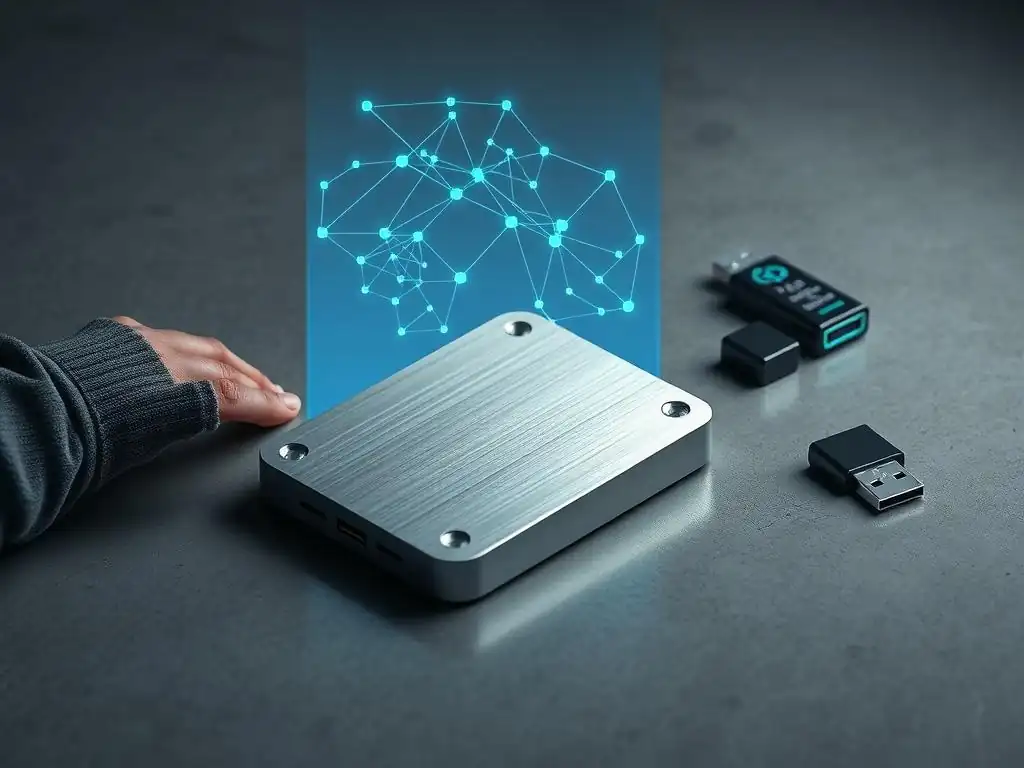
Reality: Funds are Tied to the Seed Phrase, Not the Device
A common hardware wallet security misconception, particularly among newcomers, is the fear that losing or breaking their physical hardware wallet device means their cryptocurrency is gone forever. This is incorrect. Cryptocurrency does not reside "on" the hardware wallet itself. Instead, the hardware wallet securely stores the private keys that control the cryptocurrency addresses on the blockchain. The funds themselves exist on the decentralized ledger (the blockchain), accessible from anywhere in the world if you have the corresponding private keys (or the seed phrase that generates them).
Losing the hardware wallet is akin to losing the key to a safety deposit box. The contents (your crypto) are still safe inside the box (on the blockchain), but you need a way to access them. The recovery phrase, generated during the initial setup of the hardware wallet, serves as a master key.
This phrase is a deterministic backup that can regenerate all the private keys associated with your wallet on any compatible wallet software or hardware device. As long as you have your seed phrase securely backed up, you can replace your lost or damaged hardware wallet, enter the seed phrase into the new device (or compatible software wallet, though less secure for daily use), and regain full access to your funds.
The Hardware Wallet Recovery Process Explained
The recovery process is a standard feature of all reputable hardware wallets, based on industry standards like BIP39 for generating mnemonic seed phrases. When you first set up a new hardware wallet, it generates a unique seed phrase (typically 12 or 24 words) and prompts you to write it down and store it safely offline. This phrase is the mathematical root from which all your wallet's private and public keys are derived.
If your hardware wallet is lost, stolen, or malfunctions, you purchase a new compatible hardware wallet (or use a software wallet that supports BIP39). During the setup of the new device, instead of choosing "Set up as new wallet," you select the "Recover wallet" or similar option. The device will then prompt you to enter your 12 or 24-word seed phrase in the correct order.
Once the phrase is entered accurately, the new device uses it to regenerate the same set of private keys that were on your original wallet. It then syncs with the blockchain network to display your correct balances and allows you to send transactions using the private keys it has regenerated internally. This process effectively clones your old wallet's access onto the new device, directly addressing the hardware wallet security misconceptions about device dependency.
Recovering Funds Using Your Seed Phrase
Recovering funds using your seed phrase is straightforward, provided the phrase is correct and securely stored. After initiating the recovery process on a new hardware wallet or compatible software wallet, you will be guided through entering each word of your seed phrase. Most hardware wallets require you to confirm each word on the device's screen and may offer predictive text to prevent errors. Software wallets will typically have a text field for entry.
Upon successful entry of the entire phrase, the wallet software or hardware will derive your private keys and scan the blockchain to display your balances. This process usually takes only a few minutes, depending on the number of transactions associated with the wallet.
It's crucial to perform this recovery process in a secure, private environment, away from prying eyes or cameras, to prevent exposure of your seed phrase during entry. The ability to recover funds solely from the seed phrase underscores its importance as the ultimate backup and highlights why its security is paramount, debunking the hardware wallet security misconception that device loss equals asset loss.
Myth 4: Hardware Wallets Protect Against All Online Scams and Malware
Reality: User Vigilance is Still Key to Preventing Losses
A dangerous hardware wallet security misconception is the belief that owning one makes you immune to all forms of online threats, including scams and malware. While hardware wallets are highly effective at preventing the theft of private keys through remote hacking of your computer or phone, they cannot protect you if you are tricked into authorizing a malicious transaction or revealing your seed phrase. Social engineering, phishing attacks, and malware designed to alter displayed information before it reaches the hardware wallet screen are threats that still require user vigilance.
For example, a phishing email might direct you to a fake website that looks identical to a legitimate crypto service. If you attempt to log in or connect your wallet, the site might prompt you to enter your seed phrase (which you should never do) or initiate a transaction designed to drain your wallet. Even with a hardware wallet, if the malicious website or malware on your computer manages to present a transaction for signing where the recipient address is that of the scammer, and you don't carefully verify the details on your hardware wallet's trusted screen, you could approve the theft.
The hardware wallet prevents the unauthorized use of your keys but cannot prevent authorized use if the user is deceived. This human element is often overlooked when discussing hardware wallet security misconceptions.
How Phishing and Malicious Transactions Bypass Hardware Security
Phishing attacks often work by deceiving the user into taking an action that compromises their security. This could involve clicking malicious links, downloading malware, or entering sensitive information like their seed phrase on a fake login page. While a hardware wallet protects the private key from being stolen by malware on the computer, it cannot prevent the user from being socially engineered. An attacker might craft a transaction request on the compromised computer that appears legitimate but is actually sending funds to the attacker's address.
Malware can also attempt to manipulate the information displayed on the computer screen before it is sent to the hardware wallet for signing. For instance, if you copy a recipient address, malware could instantly replace it with the attacker's address in your clipboard. When you paste the address into the transaction field on your computer, you might not notice the change. The malicious transaction request with the attacker's address is then sent to your hardware wallet.
Your hardware wallet will display the actual transaction details it received, including the attacker's address. If you don't meticulously check the details displayed on the hardware wallet's small, trusted screen against the intended transaction details, you might inadvertently approve the transfer to the scammer. This highlights a critical blind spot in hardware wallet security misconceptions: the device is secure, but the interaction points and user verification steps are still vulnerable.
Verifying Transaction Details Directly on Your Hardware Wallet Screen
This is perhaps the single most important user action when using a hardware wallet to prevent being scammed. Every reputable hardware wallet is designed with a trusted display screen and physical buttons. When you initiate a transaction on your computer or phone, the hardware wallet receives the transaction data and displays the critical details – the recipient address and the amount – on its own screen. You are then required to physically press buttons on the device to confirm that the details displayed on the hardware wallet's screen match the transaction you intended to make.
This step is the user's last line of defense against malware or phishing attacks that try to alter transaction details presented on the less-trusted computer screen. By training yourself to always verify the recipient address and amount on the hardware wallet's screen before confirming, you ensure that what you are signing is exactly what you intend to broadcast to the blockchain.
This simple, mandatory verification step is the intended security flow and is designed to counteract the very types of attacks that exploit hardware wallet security misconceptions about total immunity to online threats. Neglecting this step renders the device's security features partially moot against sophisticated scams.
Myth 5: All Hardware Wallets Offer Identical Security Levels
Reality: Differences in Architecture and Features Exist
A common hardware wallet security misconception is assuming that all hardware wallets provide the same level of security simply because they perform the function of offline key storage. The reality is that significant differences exist between devices regarding their underlying security architecture, the specific components used (like Secure Elements), the robustness of their firmware, the development process (open vs. closed source), and additional security features they offer. While all aim to protect private keys offline, the methods and resilience against various attack vectors can differ considerably.
These differences can impact a device's resistance to sophisticated physical attacks, the process for firmware updates (a potential vector if not handled securely), and the overall trustworthiness of the device's operation. Some devices might use a general-purpose microcontroller with security features implemented solely in firmware, while others might incorporate dedicated, certified Secure Element chips.
The user interface, the clarity of the screen for transaction verification, and the implementation of PINs and passphrases also vary. Understanding these distinctions is important for users looking to choose a device that meets their specific security needs and helps clarify hardware wallet security misconceptions about product uniformity.
Comparing Security Approaches: Open Source vs. Closed Source
A key differentiator often discussed in hardware wallet security is whether the device's firmware and software are open source or closed source. Open-source projects have their code publicly available for anyone to review. Proponents argue that this transparency allows a large community of developers and security experts to scrutinize the code, identify vulnerabilities, and propose fixes, leading to a more robust and audited security posture over time. Examples of hardware wallets with significant open-source components include Trezor models.
Closed-source projects, like those from Ledger (parts of their firmware are proprietary, though critical components like the operating system might be certified), keep their code private. The argument here is that obscurity can prevent attackers from finding vulnerabilities, and the company employs dedicated security teams to audit the code internally. Both approaches have merits and drawbacks, and the debate continues within the security community. Neither model guarantees absolute security, but the choice reflects differing philosophies on how best to achieve trust and resilience against attacks, influencing the landscape of hardware wallet security and addressing associated misconceptions.
Key Security Features and Design Differences
Beyond the open/closed source debate, several specific features and design choices impact a hardware wallet's security level. The use of a certified Secure Element chip, as discussed earlier, is a significant factor.
The implementation of the PIN and its role in preventing access after theft is standard, but the maximum number of attempts before wiping and the speed of the wipe process can vary. Support for a BIP39 passphrase (a 13th or 25th word that adds an extra layer of security, effectively creating a hidden wallet) is a crucial feature for users needing plausible deniability or an extra layer of protection against sophisticated physical coercion.
Other differences include the USB protocol used (some are more resistant to certain types of data leakage), the process for firmware updates (secure bootloaders, signed firmware), and resistance to specific physical attacks like side-channel analysis or fault injection (often dependent on the underlying chip and board design). Screen size and clarity are also practical security features, as they directly impact the user's ability to verify transaction details accurately. Evaluating these technical specifications and features is essential for users navigating the market and correcting hardware wallet security misconceptions about feature parity across different models.
Frequently Asked Questions
What is a hardware wallet, and why is it considered more secure than software wallets?
A hardware wallet is a physical device that stores your private keys offline. This significantly reduces the risk of online hacking and malware attacks compared to software wallets.
Can a hardware wallet be hacked if connected to a compromised computer?
While connecting to a compromised computer poses a risk, hardware wallets require physical confirmation on the device itself for transactions. This means hackers can't remotely authorize transactions without access to the device.
Are hardware wallets immune to phishing attacks?
No, hardware wallets are not immune to phishing. Users must remain vigilant and carefully verify the receiving address on the hardware wallet screen before confirming any transaction to avoid sending funds to a malicious address.
What happens if I lose my hardware wallet?
Losing your hardware wallet doesn't mean losing your funds. You can recover your wallet using the seed phrase (a set of 12 or 24 words) that you should have securely stored when you initially set up the device. This seed phrase is the key to restoring your access.
Are all hardware wallets equally secure?
No, security levels can vary between different hardware wallet models. It's crucial to research and choose a hardware wallet from a reputable manufacturer with a proven track record of security and transparency.
The proliferation of cryptocurrencies has brought with it a parallel surge in security concerns, making the understanding of hardware wallet security misconceptions more critical than ever. What was once a niche topic for tech enthusiasts has now become a vital consideration for anyone venturing into the world of digital assets, demanding a clear and accurate understanding of the tools designed to protect them.
The ongoing debate surrounding hardware wallets highlights a deeper societal shift – a growing reliance on technology coupled with a persistent vulnerability to misinformation. This article underscores the importance of critical thinking and informed decision-making in a digital age where trust is paramount. The best defense against misinformation is not simply to consume less information, but to consume it more critically.
This quote encapsulates the essence of our exploration, urging us to question, verify, and understand the technologies we entrust with our financial security.
As you navigate the complex world of digital assets, remember that knowledge is your strongest shield. Take the lessons learned here – the debunked myths, the clarified facts – and apply them to your own security practices. Don't be swayed by fear or hype; instead, empower yourself with understanding and make informed choices that protect your digital future.
Reclaim Your Crypto Confidence: Next Steps
Thank you for taking the time to understand the truth about hardware wallets. Now that you’re equipped with accurate information and have dispelled common myths, it’s time to take control of your digital assets.
Here’s how you can continue strengthening your crypto security:
- Secure Your Wallet: Review your current crypto storage methods and consider investing in a reputable hardware wallet if you haven’t already. Protecting your private keys is essential for your security.
- Explore Advanced Security Measures: Learn about multi-signature setups or Shamir Secret Sharing for added protection. Implementing these techniques can further safeguard your digital assets.
- Share Your Knowledge: Help others avoid common mistakes by sharing this article with fellow crypto enthusiasts. Together, we can build a community of informed and secure blockchain users!
What is the first step you’ll take today to improve your crypto security? Let us know in the comments!
Leave a Reply