
The Impact of Ethereum Upgrades on Investment Decisions: Stay Informed

Welcome to Blockchain Trends, your guide to navigating the evolving world beyond cryptocurrency. Are you ready to unlock the potential of blockchain technology?
Dive into our latest analysis and discover how to leverage the impact of Ethereum upgrade investment strategies. But is it the right move for your portfolio? Explore the factors that will shape your investment decisions and stay ahead of the curve in this rapidly changing landscape.
-
The Impact of Ethereum Upgrades on Investment Decisions
- Understanding Ethereum Upgrades and Their Significance
- Ethereum Upgrade Investment Strategies
- Strategic Approaches to Investing in Ethereum Upgrades
- Tools and Resources for Informed Investment Decisions
- Risks and Considerations in Ethereum Upgrade Investments
- Conclusion: The Future of Investment Strategies in Ethereum Upgrades
-
Frequently Asked Questions
- What are the primary Ethereum upgrades investors should be aware of?
- How does the Ethereum upgrade roadmap influence investment strategies?
- What are the potential risks and rewards associated with investing during Ethereum upgrades?
- How can investors stay informed about upcoming Ethereum upgrades and their potential impact?
- What Ethereum upgrade investment strategies should be considered?
- Final Reflection: Navigating the Evolving Ethereum Landscape
- Seize Your Ethereum Investment Future!
The Impact of Ethereum Upgrades on Investment Decisions
Understanding Ethereum Upgrades and Their Significance
Ethereum, as a dynamic blockchain platform, undergoes continuous improvements and protocol changes known as upgrades. These aren't merely software updates; they represent fundamental shifts in the network's architecture, consensus mechanism, and functionality. Past upgrades, such as the Beacon Chain launch or the London hard fork (which introduced EIP-1559), have significantly altered transaction fee mechanisms and prepared the ground for larger transitions.
Understanding the technical scope and intended impact of these upgrades is crucial for anyone developing effective Ethereum upgrade investment strategies. Each upgrade aims to enhance the network's scalability, security, or sustainability, directly influencing its long-term viability and potential value.
Staying informed about Ethereum developments is paramount for investors. The roadmap is public, but the technical details, timelines, and potential implications of proposed changes can be complex. Major upgrades often involve extensive community discussion, testing phases (like testnets such as Goerli or Sepolia), and audits.
For instance, the Merge, which transitioned Ethereum from Proof-of-Work (PoW) to Proof-of-Stake (PoS), was years in the making and involved multiple testnet transitions. Ignoring these developments means missing critical signals that could impact market dynamics, network utility, and ultimately, the performance of Ethereum as an investment asset. Informed investors can better anticipate how changes in transaction throughput, energy consumption, or staking yields might affect demand and price.
Ethereum Upgrade Investment Strategies
Analyzing Historical Performance of Ethereum Upgrades
Historically, Ethereum upgrades have often been preceded by periods of speculation and followed by varying market reactions. A key case study is The Merge transition in September 2022. Leading up to The Merge, there was significant anticipation, with some analysts predicting a "sell the news" event while others foresaw a bullish catalyst due to reduced ETH issuance and the activation of staking yields.
Data shows that while ETH price saw volatility around the exact date, the long-term impact on the network's fundamentals, such as energy consumption dropping by over 99%, was undeniable. This fundamental shift is a critical consideration for long-term Ethereum upgrade investment strategies.
The market response to previous upgrades has been diverse. The London hard fork in August 2021, which implemented EIP-1559, introduced a fee-burning mechanism. Post-upgrade data showed a consistent burning of ETH, reducing net issuance.
While the immediate price reaction was mixed, the deflationary pressure introduced by EIP-1559 became a significant narrative for investors over time. Analyzing the price performance relative to the broader market during and after these events, alongside changes in network activity and investor sentiment, provides valuable insights into how similar future events might play out. These historical patterns inform various Ethereum upgrade investment strategies, from short-term plays to long-term accumulation.
Key Factors Influencing Investment Decisions Post-Upgrade
Technological improvements are perhaps the most direct factor impacting Ethereum's value post-upgrade. Enhancements like increased transaction speed, lower costs (though EIP-1559 primarily affected fee structure, not necessarily cost reduction which awaits Layer 2 scaling and potentially sharding), and improved security make the network more attractive for users and developers.
For example, the transition to PoS unlocked staking, offering investors a yield on their ETH holdings, which fundamentally changed the investment profile of the asset. The potential for future upgrades like Danksharding to dramatically increase transaction throughput (estimates often range into hundreds of thousands per second) could significantly boost the network's utility and demand, a core element in forming Ethereum upgrade investment strategies.
Market sentiment and community reactions play a crucial role, often amplifying or dampening the impact of technical changes. Positive sentiment surrounding a successful upgrade, widespread understanding of its benefits, and strong community support can drive adoption and investment. Conversely, technical glitches, delays, or negative narratives can lead to price corrections. For instance, during the lead-up to The Merge, concerns about potential staker centralization or technical risks caused market jitters. Monitoring social media trends, developer activity, and news coverage provides insight into the prevailing sentiment, which is a vital, albeit subjective, factor in refining Ethereum upgrade investment strategies.
Strategic Approaches to Investing in Ethereum Upgrades
Long-Term Holding vs. Short-Term Trading Strategies
Long-term holding (HODLing) of Ethereum through upgrades is a strategy based on the belief that the cumulative effect of network improvements will increase ETH's value over time. The pros include potentially significant gains if Ethereum achieves its scaling and decentralization goals, benefiting from staking yields post-Merge, and avoiding the complexities and tax implications of frequent trading.
The cons include exposure to market volatility during and after upgrades and the risk that anticipated benefits fail to materialize or are priced in. Data shows that early investors who held ETH through multiple upgrade cycles have seen substantial returns, reflecting the network's growth from a few nodes to a global infrastructure supporting billions in value.
When to consider short-term trading post-upgrade depends heavily on market conditions and the specific upgrade's impact. Some traders attempt to profit from the volatility often seen around upgrade dates, employing strategies like buying the rumor and selling the news, or trading based on technical analysis patterns that emerge post-event. For example, after The Merge, some traders focused on the yield generated by staking.
Short-term trading requires keen market timing, risk management, and a deep understanding of how specific upgrades might affect supply/demand dynamics in the immediate future. This approach is generally higher risk than long-term holding and requires more active management of Ethereum upgrade investment strategies.
Utilizing DeFi Opportunities After Ethereum Upgrades
Ethereum's robust decentralized finance (DeFi) ecosystem is intrinsically linked to the network's capabilities, making DeFi opportunities a key component of Ethereum upgrade investment strategies. Upgrades that enhance scalability or reduce gas costs (like Layer 2 scaling solutions built on Ethereum, whose adoption is influenced by base layer changes) can significantly boost DeFi activity by making transactions cheaper and faster. Top DeFi platforms like Uniswap, Aave, and MakerDAO operate primarily on Ethereum (including Layer 2s), and their usability directly benefits from network improvements.
Maximizing yield farming and staking post-upgrade is a common strategy. Post-Merge, staking ETH directly on the Beacon Chain or through liquid staking protocols (like Lido or Rocket Pool) became a primary way for holders to earn yield, currently offering APY percentages that fluctuate based on network activity (historically ranging from ~3% to ~6%+).
Yield farming on DeFi protocols involves providing liquidity to earn fees and token rewards, and upgrade-driven improvements can make these activities more profitable by reducing transaction costs and increasing participation. Investors can explore various protocols, analyze their yields, and understand the associated smart contract risks as part of their comprehensive Ethereum upgrade investment strategies.
Tools and Resources for Informed Investment Decisions
Analyzing Ethereum Metrics and Trends
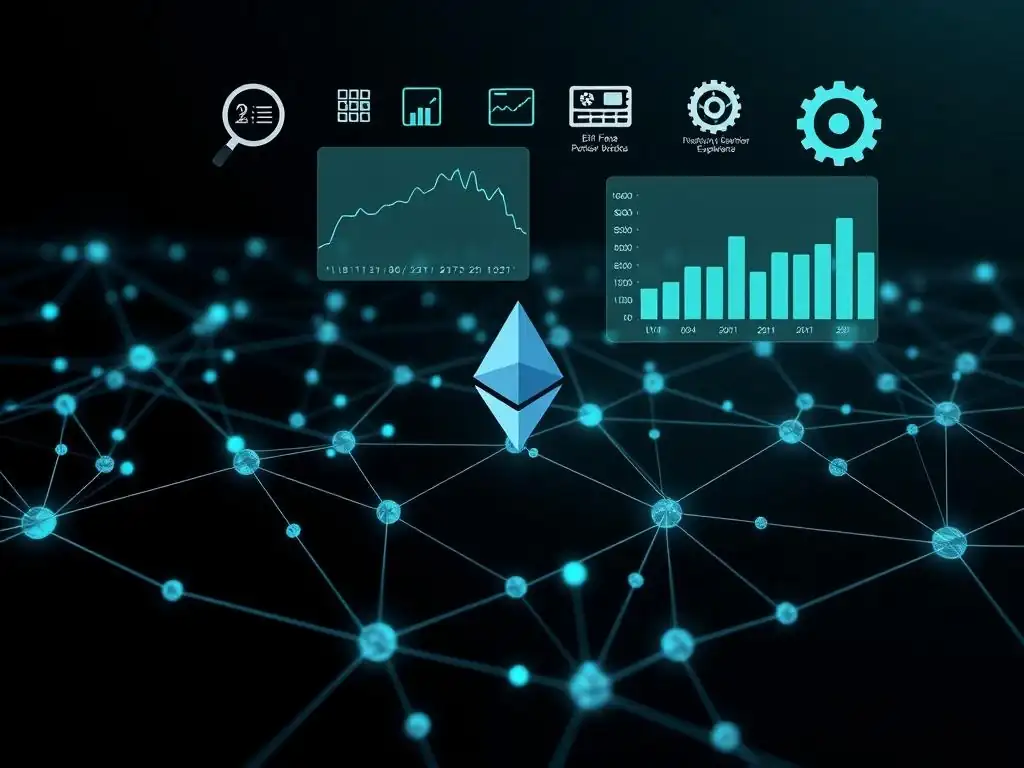
Analyzing Ethereum metrics and trends is fundamental to developing informed Ethereum upgrade investment strategies. Key on-chain data points include transaction count, active addresses, gas prices, total value locked (TVL) in DeFi protocols, and staking participation rate. These metrics provide insights into network health, adoption, and economic activity. Recommended tools for tracking Ethereum performance include blockchain explorers like Etherscan, which provides detailed transaction data and contract information, and data analytics platforms.
Using analytics platforms like Dune Analytics or Nansen allows investors to visualize complex on-chain data through dashboards created by the community or analysts. These platforms can track trends in ETH supply distribution, exchange flows, gas usage by application, and the growth of specific DeFi sectors. For instance, a Dune dashboard might show the daily amount of ETH burned via EIP-1559 or the growth in the number of ETH validators post-Merge. Leveraging these tools provides a data-driven foundation for adjusting Ethereum upgrade investment strategies based on tangible network activity rather than pure speculation.
Staying Updated on Ethereum Developments
Staying updated on Ethereum developments requires active engagement with the ecosystem's information channels. Following key influencers and analysts in the crypto space who specialize in Ethereum can provide timely insights into technical proposals, community discussions, and market interpretations. Prominent figures often share analyses of upcoming EIPs (Ethereum Improvement Proposals) or the progress of testnet deployments.
Engaging with Ethereum communities for real-time insights is equally valuable. Platforms like Twitter, Reddit (e.g., r/ethereum), and Discord servers dedicated to specific protocols or development teams are hubs for discussion and information sharing. Participating in these communities allows investors to gauge sentiment, understand common concerns or excitement surrounding upgrades, and sometimes gain early awareness of potential issues or opportunities. This qualitative data complements quantitative analysis and helps refine Ethereum upgrade investment strategies.
Risks and Considerations in Ethereum Upgrade Investments
Potential Risks Associated with Upgrades
Investing around Ethereum upgrades involves several potential risks. Regulatory changes pose a significant threat; governments worldwide are still developing frameworks for cryptocurrencies, and regulations could impact staking, DeFi, or the overall classification of ETH. Market volatility is inherent in crypto, and upgrades can act as catalysts for large price swings driven by speculation, news events, or macro factors.
Security risks during transition phases are also a concern. While Ethereum's core developers prioritize security, complex protocol changes introduce potential vulnerabilities. For example, during the Merge transition, there were concerns, though ultimately unfounded, about potential issues like validator slashing or network instability. While major exploits directly related to core protocol upgrades are rare due to extensive testing, smart contract risks within the DeFi ecosystem built on Ethereum remain, and these can be indirectly affected by network changes. Investors must be aware of these risks when formulating their Ethereum upgrade investment strategies.
Making Informed Decisions Amidst Uncertainty
Making informed decisions amidst the inherent uncertainty of crypto upgrades requires a structured approach. Developing a risk management strategy for Ethereum investments is crucial. This includes setting stop-loss orders, determining position sizes based on risk tolerance, and never investing more than you can afford to lose. Understanding the potential downside scenarios related to an upgrade can help prepare for volatility.
Diversification is another key strategy: balancing Ethereum with other crypto assets and traditional investments can mitigate the impact of adverse events specific to the Ethereum network or the broader crypto market. While focusing on Ethereum upgrade investment strategies, it's wise not to have all capital concentrated in ETH, regardless of how promising the upgrades seem. A diversified portfolio is generally more resilient to unexpected market movements or technical issues.
Conclusion: The Future of Investment Strategies in Ethereum Upgrades
Embracing Change and Innovation in the Ethereum Ecosystem
The Ethereum ecosystem is characterized by its continuous pursuit of innovation, driven by a vibrant community of researchers and developers. Embracing this ongoing change is essential for investors. Future upgrades, particularly those related to scaling like sharding, hold the potential to fundamentally transform the network's capacity and reduce costs, unlocking new use cases and potentially driving significant value growth. Investment strategies must remain adaptable, anticipating how these future developments could impact network utility, adoption, and ultimately, the price of ETH. Successful investors will view upgrades not just as isolated events, but as steps in a long-term evolution.
Final Thoughts on Crafting Effective Ethereum Upgrade Investment Strategies
Crafting effective Ethereum upgrade investment strategies requires a blend of technical understanding, market analysis, and risk management. It involves staying rigorously informed about the development roadmap, analyzing historical market reactions to past upgrades like The Merge, leveraging data analytics tools, and understanding the opportunities and risks within the DeFi ecosystem. Ultimately, a robust strategy is built on a clear investment thesis regarding Ethereum's long-term potential, adjusted with tactical considerations around specific upgrade events. As Ethereum continues its journey of improvement, informed and adaptive investment strategies will be key to navigating its dynamic landscape.
Frequently Asked Questions
What are the primary Ethereum upgrades investors should be aware of?
Investors should primarily be aware of major upgrades like The Merge, which transitioned Ethereum to Proof-of-Stake, and subsequent upgrades focusing on scalability and security enhancements. These changes impact network efficiency and gas fees.
How does the Ethereum upgrade roadmap influence investment strategies?
The roadmap provides insight into the future direction of Ethereum, influencing decisions on holding ETH, investing in Ethereum-based DeFi projects, or exploring layer-2 solutions. Understanding timelines allows for better risk assessment.
What are the potential risks and rewards associated with investing during Ethereum upgrades?
Risks include market volatility and potential bugs after upgrades. Rewards include increased network efficiency, lower transaction costs, and greater adoption, potentially leading to higher ETH value.
How can investors stay informed about upcoming Ethereum upgrades and their potential impact?
Follow reputable blockchain news sources, subscribe to official Ethereum Foundation updates, and engage with the developer community to understand the technical details and potential consequences of each upgrade.
What Ethereum upgrade investment strategies should be considered?
Consider strategies like dollar-cost averaging to mitigate volatility, staking ETH to earn rewards while supporting the network, and diversifying investments across different Ethereum-based projects to reduce overall risk.
The journey through Ethereum's upgrades and their impact on investment decisions underscores a crucial point: informed adaptability is paramount in the volatile world of cryptocurrency. The strategies we've explored, from understanding EIPs to analyzing staking rewards, are not static blueprints, but rather dynamic tools to be wielded with diligence and foresight in a constantly shifting environment.
The ongoing evolution of Ethereum profoundly shapes the investment landscape, demanding continuous learning and a willingness to adjust our perspectives. This constant state of flux, while challenging, also presents unparalleled opportunities for those who embrace it. The only constant is change.
This ancient adage rings especially true in the context of Ethereum, where innovation and adaptation are not just desirable, but essential for success.
As you navigate the complexities of Ethereum upgrade investment strategies, remember that knowledge is your strongest asset. Stay informed, remain adaptable, and critically evaluate the information available to you. The future of Ethereum, and your investment success within it, depends on your ability to learn, evolve, and ultimately, make informed decisions. Embrace the challenge, and let the insights gleaned here empower you to confidently chart your course in this exciting and ever-changing digital frontier.
Seize Your Ethereum Investment Future!
Thank you for exploring the impact of Ethereum upgrades with Blockchain Trends. We hope this article has provided you with valuable insights to navigate the evolving crypto landscape. Now, it's time to turn knowledge into action!
Here are a few steps you can take right now:
- Dive into the latest Ethereum upgrade documentation to deepen your understanding. Mastering the technical details is essential for making informed decisions.
- Share your investment strategies with fellow crypto enthusiasts. Engage in discussions and learn from others' experiences in the community forum.
- Consider creating a mock portfolio to simulate different investment scenarios based on upcoming Ethereum changes. Practice and learn by doing!
What is the most important Ethereum upgrade to monitor in the coming months, and how do you think it will impact your investment? Share your insights in the comments below!
Leave a Reply