
Comparing Decentralized Metaverse Platforms: Features, Communities, and Visions

Welcome to Blockchain Trends, your compass in the rapidly evolving world of decentralized technologies!
Beyond the hype, blockchain is reshaping industries and redefining how we interact. Intrigued by the potential of virtual worlds built on this groundbreaking technology? Dive into our in-depth Decentralized Metaverse Platform Comparison to explore the features, communities, and visions driving the next generation of digital experiences. What are the key differences, and which platform aligns with your vision of the future? Discover the answers and more as we delve into this fascinating landscape.
Comparing Decentralized Metaverse Platforms: Features, Communities, and Visions
- Decentralized Metaverse Platform Comparison: An Introduction
- Decentraland vs. The Sandbox: A Detailed Comparison
- Other Emerging Decentralized Metaverse Platforms
- Community and User Base Analysis: Decentralized Worlds
- Vision and Roadmap: The Future of Decentralized Metaverses
- Monetization and Economic Models in Decentralized Metaverses
- Conclusion: Choosing the Right Decentralized Metaverse Platform for You
-
Frequently Asked Questions
- What are the key differences between centralized and decentralized metaverse platforms?
- How does blockchain technology contribute to the security and transparency of decentralized metaverse platforms?
- What types of digital assets can users typically own and trade within a decentralized metaverse?
- What are some of the regulatory challenges facing decentralized metaverse platforms?
- How might the future of decentralized metaverse platforms impact traditional social interactions and economic systems?
- Final Reflection: Navigating the Decentralized Metaverse Frontier
- Unveil Your Metaverse Adventure!
Decentralized Metaverse Platform Comparison: An Introduction
What is a Decentralized Metaverse Platform?
A decentralized metaverse platform represents a paradigm shift from traditional, centralized virtual worlds. At its core, a decentralized metaverse leverages blockchain technology to empower users with true ownership and control over their digital assets and experiences. Unlike platforms governed by a single entity, decentralized metaverses are designed to be community-driven, often utilizing Decentralized Autonomous Organizations (DAOs) for governance.
This means that decisions about the platform's future, policies, and development are distributed among token holders, fostering a more democratic and transparent ecosystem. The use of blockchain, particularly NFTs (Non-Fungible Tokens), is fundamental as it establishes verifiable scarcity and ownership of in-world items like land, avatars, and collectibles, directly addressing concerns about digital asset rights prevalent in Web2 metaverses.
Furthermore, the decentralized nature extends beyond governance and asset ownership. Many decentralized metaverse platforms are built on open-source principles, encouraging developers and creators to build upon and expand the platform without centralized gatekeeping. This open architecture fosters innovation and allows for a diverse range of experiences, from virtual concerts and art galleries to immersive games and educational spaces. By distributing control and ownership, decentralized metaverses aim to create virtual worlds that are more resilient, equitable, and ultimately, more aligned with the principles of Web3.
Why Compare Decentralized Metaverses?
The decentralized metaverse space is rapidly evolving, with numerous platforms emerging, each offering unique features, communities, and visions for the future of virtual interaction. For individuals and businesses looking to engage with this burgeoning technology, understanding the nuances between these platforms is crucial. A "Decentralized metaverse platform comparison" helps potential users identify the platforms that best align with their interests, whether they are creators seeking monetization opportunities, gamers looking for immersive experiences, investors exploring digital real estate, or simply individuals seeking social connection in virtual environments.
Moreover, comparing these platforms is essential to grasp the broader trends and innovations shaping the decentralized web. Each platform experiments with different governance models, economic systems, and technological implementations of blockchain within virtual worlds. By analyzing these different approaches, we can gain valuable insights into the strengths and weaknesses of various decentralized metaverse designs. This comparative analysis is not just for users but also for developers, investors, and policymakers seeking to understand the potential and challenges of decentralized virtual worlds and their impact on the wider digital landscape.
Key Criteria for Evaluating Decentralized Metaverse Platforms
When conducting a "Decentralized metaverse platform comparison," several key criteria emerge as crucial for evaluation. Firstly, features and functionality are paramount. This includes assessing the platform's content creation tools, the types of experiences available, the quality of graphics and user interface, and the overall technical capabilities. For instance, some platforms might prioritize voxel-based building tools, while others might focus on high-fidelity virtual reality integration.
Secondly, community and governance are vital aspects. The strength and engagement of the community directly impact the vibrancy and sustainability of a metaverse. Evaluating the governance model, particularly the role and effectiveness of the DAO, is crucial to understand the level of user influence and platform transparency. Metrics such as active users, community events, and developer participation can provide insights into the health and dynamism of the platform's ecosystem.
Thirdly, the vision and roadmap of each platform are critical for long-term prospects. Understanding the platform's stated goals, future development plans, and technological roadmap helps assess its potential for growth and innovation. Factors like interoperability with other platforms, scalability solutions, and planned feature expansions are important indicators of a platform's future trajectory and its ability to adapt to the evolving metaverse landscape.
Finally, economic models and monetization strategies are key considerations, especially for creators and investors. Analyzing the native token's utility, the NFT marketplace dynamics, and the earning opportunities available within the platform provides a comprehensive view of its economic sustainability and potential for user value creation.
Decentraland vs. The Sandbox: A Detailed Comparison
Decentraland: Features and Functionality
Decentraland, launched publicly in February 2020, stands as one of the pioneering decentralized metaverse platforms. It is built on the Ethereum blockchain and defines itself as a virtual world owned by its users. Decentraland offers a browser-based experience where users can explore, interact with others, play games, attend events, and even trade virtual land and digital assets. Its open and decentralized nature has attracted a diverse community of artists, creators, and businesses.
The platform's core functionality revolves around user-created content and experiences. Users can develop and publish their own scenes, games, and applications on their virtual land parcels. This content is rendered in a 3D environment accessible through web browsers, making it relatively accessible without requiring high-end hardware. Decentraland's focus on user-generated content and community governance has established it as a significant player in the decentralized metaverse space, emphasizing freedom and user empowerment.
Exploring Decentraland's Land Ownership System
At the heart of Decentraland's economy is its land ownership system. Virtual land in Decentraland is represented by non-fungible tokens (NFTs) called LAND. These LAND tokens are scarce, with a fixed supply of 90,000 parcels, making them digital real estate within the metaverse. Owning LAND grants users full control over the content and experiences hosted on their parcel. Owners can build anything from virtual stores and casinos to art galleries and interactive games, effectively creating their own corner of the Decentraland world.
The scarcity and ownership model of LAND has led to a vibrant virtual real estate market. LAND parcels are traded on NFT marketplaces like OpenSea and Decentraland's own marketplace, with prices fluctuating based on location, size, and perceived desirability. For example, parcels located in high-traffic districts or near popular venues often command premium prices. This system of digital land ownership mirrors real-world real estate principles, creating a dynamic and potentially lucrative aspect of the Decentraland ecosystem.
Decentraland's Native Token: MANA
MANA is Decentraland's native ERC-20 token and serves as the primary currency within the platform. It has multiple utilities, acting as the medium of exchange for buying LAND, avatars, wearables, and other digital goods and services within Decentraland. Users need MANA to participate in the Decentraland marketplace and engage in transactions.
Beyond in-world transactions, MANA also plays a crucial role in Decentraland's governance. Holding MANA grants users voting power within the Decentraland DAO, allowing them to participate in decisions concerning platform policies, development proposals, and allocation of DAO funds. This dual utility as both a transactional currency and a governance token underscores MANA's central importance to the Decentraland ecosystem, driving economic activity and community participation.
Decentraland's Governance Model: DAO
Decentraland operates under a Decentralized Autonomous Organization (DAO), which governs the platform and its future development. The DAO is structured to give MANA and LAND holders the power to vote on key decisions, ensuring community-driven governance. This includes proposals related to policy updates, LAND auctions, content moderation policies, and the allocation of funds from the DAO's treasury.
The Decentraland DAO utilizes a quadratic voting system, aiming to balance the influence of large and small token holders. This system makes it more expensive for a single entity to dominate voting, promoting a more equitable distribution of governance power. The DAO's structure reflects Decentraland's commitment to decentralization, empowering its community to shape the platform's direction and ensuring its evolution remains aligned with user interests. Real-world examples of DAO decisions include adjustments to LAND distribution policies and funding initiatives for community-led projects within Decentraland.
The Sandbox: Features and Functionality
The Sandbox, developed by Animoca Brands, is another leading decentralized metaverse platform, distinguished by its emphasis on user-generated content, gaming, and blockchain integration. It positions itself as a virtual world where players can create, own, and monetize their gaming experiences using NFTs and SAND, the platform's utility token. The Sandbox utilizes a voxel art style, reminiscent of Minecraft, which contributes to its accessible and creative appeal.
The platform provides users with tools like VoxEdit and Game Maker, empowering them to create 3D assets and interactive games without requiring coding knowledge. These creations can then be tokenized as NFTs and traded within The Sandbox marketplace or integrated into user-owned LAND parcels to build unique metaverse experiences. The Sandbox's focus on gaming and creator empowerment, combined with its brand partnerships and metaverse events, has solidified its position as a major player in the decentralized virtual world landscape.
The Sandbox's VoxEdit and Game Maker Tools
The Sandbox provides two key software tools for content creation: VoxEdit and Game Maker. VoxEdit is a user-friendly 3D voxel modeling and NFT creation software. It allows users to create and animate voxel-based assets, such as avatars, equipment, buildings, and creatures. These assets can then be exported as ASSETS NFTs and used within the Game Maker or traded on The Sandbox marketplace. VoxEdit simplifies the process of creating 3D content, making it accessible to users with varying levels of technical expertise.
Game Maker, on the other hand, is a no-code game creation tool that allows users to build interactive 3D games and experiences within The Sandbox metaverse. Using a visual scripting interface, users can drag and drop ASSETS created in VoxEdit, design game logic, and create engaging gameplay without needing to write code. Game Maker empowers creators to build diverse experiences, from simple exploration games to complex RPGs, fostering a rich ecosystem of user-generated gaming content within The Sandbox. For instance, creators have used Game Maker to build virtual concerts, adventure games, and educational simulations.
The Sandbox's Land NFTs and ASSETS
Similar to Decentraland, The Sandbox utilizes LAND NFTs to represent virtual real estate within its metaverse. LAND parcels in The Sandbox are also limited in supply and are traded as NFTs, granting owners the right to host content and experiences on their digital property. However, The Sandbox LAND system is structured differently, often sold in themed estates and partnerships, creating curated areas within the metaverse.
In addition to LAND, The Sandbox ecosystem relies heavily on ASSETS NFTs. ASSETS are user-created voxel models made with VoxEdit and represent in-game items, avatars, and environment elements. These ASSETS can be used in the Game Maker to populate games and experiences, and they are also traded on The Sandbox marketplace. The combination of LAND and ASSETS NFTs forms the foundation of The Sandbox's user-owned content ecosystem, enabling creators to build, own, and monetize their virtual creations. Examples of ASSETS include characters inspired by popular brands and game items used in user-created games.
The Sandbox's SAND Token and its Utility
SAND is The Sandbox's native ERC-20 utility token, serving as the lifeblood of its ecosystem. SAND has multiple use cases, including being the primary currency for transactions within The Sandbox marketplace, used to buy LAND, ASSETS, and participate in in-game activities. Creators can earn SAND by selling ASSETS and experiences they create, while players can earn SAND by participating in games and contests.
Furthermore, SAND is used for governance within The Sandbox DAO, allowing token holders to vote on platform decisions. Staking SAND also provides benefits, including earning rewards and GEMs and CATALYSTs, which are used to enhance ASSETS. This multi-faceted utility of SAND, encompassing transactions, governance, and staking, makes it a central component of The Sandbox economy and a driving force for user engagement and participation. For example, users need SAND to purchase LAND in LAND sales and to boost the rarity and power of their ASSETS.
Decentraland vs. The Sandbox: Feature-by-Feature Analysis
Land Ownership and Customization Options
Both Decentraland and The Sandbox utilize LAND NFTs to represent virtual real estate, but their approaches differ slightly. Decentraland offers a fixed supply of 90,000 LAND parcels, each 16x16 meters in size, arranged in a contiguous world. LAND ownership in Decentraland grants broad freedom in customization, allowing owners to build virtually anything within the technical limits of the platform. Customization is primarily achieved through coding using Decentraland's SDK (Software Development Kit).
The Sandbox, while also using LAND NFTs, has a larger total supply of 166,464 LAND parcels of varying sizes. The Sandbox often sells LAND in themed estates and partnerships, creating curated zones within the metaverse. Customization in The Sandbox is more visually driven, leveraging the Game Maker tool's drag-and-drop interface, making it easier for non-coders to create experiences. While Decentraland offers more open-ended and code-driven customization, The Sandbox provides a more accessible and visually oriented approach, particularly geared towards game creation.
Content Creation Tools and Opportunities
Decentraland primarily relies on its SDK for content creation, which requires programming knowledge to build interactive scenes and experiences. While this offers greater flexibility and control for experienced developers, it can be a barrier for non-coders. Content creation opportunities in Decentraland are diverse, ranging from virtual businesses and social hubs to art installations and mini-games, but often require technical skills.
The Sandbox, with its VoxEdit and Game Maker tools, provides a more user-friendly entry point to content creation. VoxEdit simplifies 3D asset creation, and Game Maker enables game development without coding. This lowers the barrier to entry and opens up content creation to a wider audience, particularly those interested in game design. The Sandbox's content creation ecosystem is heavily focused on gaming experiences and interactive entertainment, attracting creators interested in building and monetizing games within the metaverse.
Governance and Community Involvement
Both Decentraland and The Sandbox are governed by DAOs, aiming for community-driven decision-making. Decentraland's DAO, as mentioned earlier, uses MANA and LAND for voting power, employing quadratic voting to balance influence. Decentraland's governance has been actively involved in policy decisions and platform development, demonstrating a functional DAO model.
The Sandbox also utilizes a DAO, with SAND holders having voting rights. While The Sandbox's DAO is evolving, its governance has been increasingly involved in shaping platform features and resource allocation. Both platforms prioritize community involvement in governance, but Decentraland's DAO has a longer track record and a more established history of community-led decision-making. The effectiveness and impact of DAOs in both platforms are continuously evolving as decentralized governance matures.
Monetization Strategies for Creators and Users
Decentraland offers various monetization strategies for creators and landowners. LAND owners can rent out their parcels, host events and charge admission, create and sell in-world items, and offer services within their virtual spaces. Creators can sell ASSETS and wearables on marketplaces and earn MANA through their creations and activities. The open nature of Decentraland allows for diverse monetization models, from virtual businesses to creator-driven economies.
The Sandbox focuses heavily on creator monetization through gaming experiences and ASSET sales. Creators can sell ASSETS they create in VoxEdit, monetize games built with Game Maker, and earn SAND through player engagement in their experiences. The Sandbox marketplace facilitates the trading of LAND and ASSETS, providing revenue streams for creators and landowners. The Sandbox's emphasis on gaming and creator tools makes it particularly attractive for those looking to monetize interactive entertainment within the metaverse.
Other Emerging Decentralized Metaverse Platforms
Somnium Space: Virtual Reality Focus
Somnium Space is a decentralized metaverse platform that distinguishes itself with a strong emphasis on virtual reality (VR) integration and land ownership. Built on the Ethereum and Solana blockchains, Somnium Space prioritizes immersive experiences accessible through VR headsets, alongside desktop and mobile access. It aims to create a persistent and interconnected virtual world where users can own, build, and explore digital land and assets.
Somnium Space stands out for its high-fidelity graphics and focus on creating a visually rich and immersive environment, especially for VR users. The platform offers a range of experiences, from social gatherings and virtual events to business meetings and educational spaces, all designed to be deeply engaging in VR. Its commitment to VR and open, blockchain-based ownership positions Somnium Space as a platform catering to users seeking a more immersive and visually advanced decentralized metaverse experience.
Somnium Space's Land Ownership and VR Integration
Land ownership is central to Somnium Space, with parcels represented as NFTs and traded on marketplaces like OpenSea. Somnium Space LAND is scarce and comes in various sizes and elevations, impacting building possibilities and views within the metaverse. Owners have full control over their LAND, able to build homes, businesses, and experiences. The platform emphasizes permanent land ownership, with parcels meant to be owned indefinitely, contributing to a sense of digital permanence.
VR integration is a defining feature of Somnium Space. The platform is designed to be best experienced through VR headsets, offering a deeply immersive and presence-driven virtual environment. VR interaction is prioritized in design, with intuitive controls and spatial audio to enhance realism. While accessible on desktop and mobile, Somnium Space’s core experience is optimized for VR, appealing to users who prioritize immersive presence and virtual reality interaction in the metaverse. For example, users can attend live concerts in VR within Somnium Space, experiencing a heightened sense of presence compared to desktop-based platforms.
Cryptovoxels: A Pixelated Metaverse
Cryptovoxels is a browser-based, decentralized metaverse platform known for its simple, pixelated aesthetic and accessibility. Built on the Ethereum blockchain, Cryptovoxels offers a straightforward and user-friendly experience, focusing on land ownership, virtual galleries, and social interaction. Its retro, voxel-style graphics contribute to its unique charm and lower hardware requirements, making it accessible to a wider range of users.
Cryptovoxels emphasizes ease of use and quick entry. Users can easily create accounts, explore the world, and purchase LAND without complex onboarding processes. The platform is popular for hosting virtual art galleries, showcasing NFT art, and creating simple social spaces. Cryptovoxels' accessibility and focus on art display and social interaction differentiate it from more complex and graphically intensive metaverse platforms.
Cryptovoxels' Simple Interface and Accessibility
Cryptovoxels' user interface is deliberately kept simple and intuitive. Navigation is straightforward, and building tools are easy to grasp, allowing users to quickly customize their LAND parcels. The platform's browser-based nature eliminates the need for downloads or specialized software, making it readily accessible on most computers and devices. This accessibility is a key advantage, attracting users who prefer a less technically demanding metaverse experience.
The pixelated graphics contribute to Cryptovoxels' low hardware requirements. It runs smoothly on older computers and basic internet connections, broadening its reach to users who may not have access to high-end gaming PCs or VR equipment. This accessibility has fostered a diverse and inclusive community, particularly among artists and NFT enthusiasts who appreciate the platform's ease of use and focus on showcasing digital art. For instance, artists can quickly set up virtual galleries in Cryptovoxels to display and sell their NFT artwork to a global audience.
Otherspace: AI and Immersive Experiences
Otherspace is an emerging decentralized metaverse platform that is exploring the integration of artificial intelligence (AI) to enhance immersive experiences. Details are still developing, but Otherspace aims to create a dynamic and evolving virtual world where AI plays a role in content generation, user interaction, and personalized experiences. This platform is positioned to be at the forefront of metaverse innovation by experimenting with AI-driven features.
While specifics are still emerging, Otherspace's vision suggests a metaverse that goes beyond static, user-created content. The potential integration of AI could lead to procedurally generated environments, AI-powered NPCs (Non-Player Characters) that adapt to user behavior, and personalized storylines and experiences. Otherspace’s focus on AI and immersive technologies indicates a platform aiming for a more dynamic, responsive, and potentially more personalized metaverse experience compared to purely user-generated content platforms. The integration of AI could potentially lead to more unpredictable and emergent gameplay and social interactions within the metaverse.
Community and User Base Analysis: Decentralized Worlds
Decentraland Community: Events and Activities
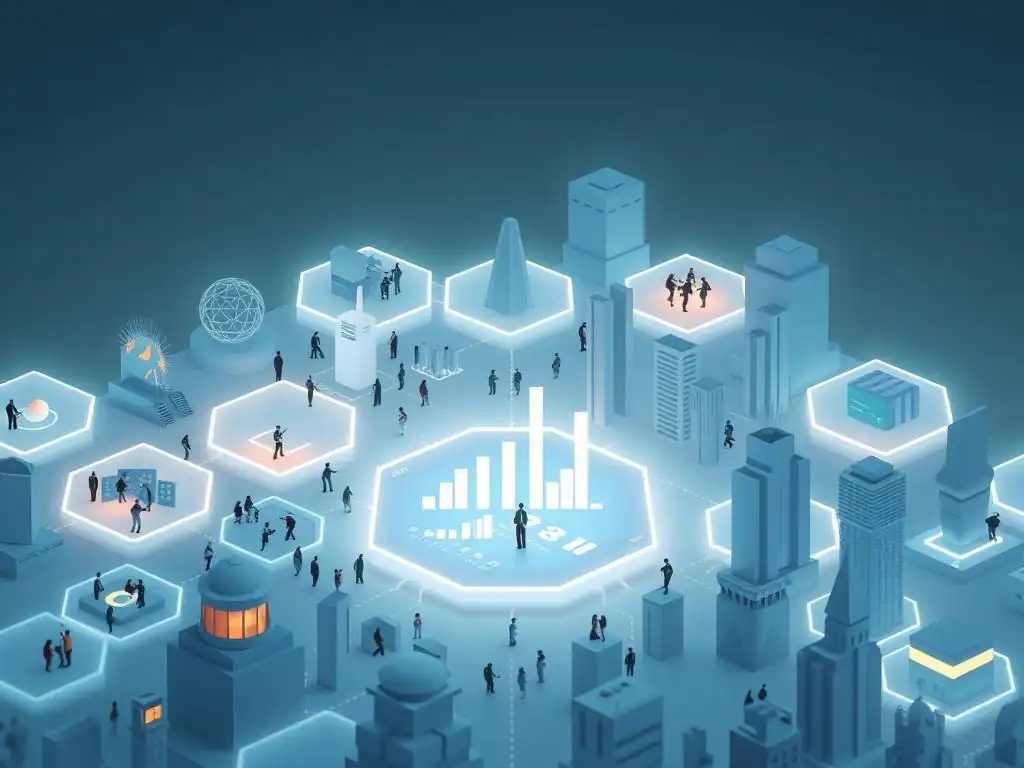
The Decentraland community is diverse and active, characterized by a strong emphasis on user-generated content and community-led events. Regular events within Decentraland include virtual concerts, art exhibitions, game tournaments, educational workshops, and social gatherings. These events are often organized by community members, LAND owners, and DAOs, showcasing the platform's decentralized and community-driven nature.
Community participation in Decentraland is fostered through various channels, including in-world interactions, Discord servers, and DAO governance forums. The community is known for its welcoming atmosphere and collaborative spirit, with users often supporting each other's projects and initiatives. Data from Decentraland's event calendar and social media channels indicates a consistent stream of community-organized activities, demonstrating the platform's vibrant and engaged user base. For example, music festivals, NFT art drops, and community-led game nights are common occurrences, drawing users together within the virtual world.
The Sandbox Community: Creators and Gamers
The Sandbox community is primarily composed of creators, gamers, and NFT enthusiasts, reflecting the platform's focus on user-generated gaming and content creation. The community is particularly strong among voxel artists, game developers, and players interested in play-to-earn mechanics. The Sandbox fosters a creator-centric environment, with tools and resources designed to empower users to build and monetize their creations.
Community engagement in The Sandbox is driven by content creation contests, game jams, LAND sales, and brand partnerships. The platform actively encourages user-generated content through its Creator Fund and community events. Social media channels, Discord, and The Sandbox forums are active hubs for community interaction and collaboration. The community's focus on gaming and creator empowerment is reflected in the types of events and activities organized, such as game design workshops, ASSET creation tutorials, and play-to-earn gaming tournaments. Brand partnerships with established IPs have also drawn in fan communities and expanded The Sandbox's user base.
Community Governance and Development Initiatives
Community governance is a cornerstone of both Decentraland and The Sandbox, although the maturity and implementation differ. Decentraland's DAO has a longer history of active community governance, with MANA and LAND holders regularly voting on proposals related to platform policies, feature updates, and treasury allocation. Community-led development initiatives in Decentraland have included funding for content creation projects and infrastructure improvements.
The Sandbox's DAO is evolving, with increasing community involvement in governance decisions. SAND holders have voting rights, and the DAO is gradually taking on more responsibilities in platform direction. Community development initiatives in The Sandbox are also growing, with proposals for creator grants and community-led events gaining traction. Both platforms demonstrate a commitment to community governance, although Decentraland's DAO model is currently more established and actively engaged in platform decision-making. The success of these DAOs in effectively guiding platform development is a key factor in the long-term sustainability of these decentralized metaverses.
User Demographics and Engagement Metrics
User demographics for decentralized metaverse platforms are still evolving, but some trends are emerging. Early adopters tend to be tech-savvy individuals, cryptocurrency enthusiasts, NFT collectors, and gamers interested in blockchain technology and virtual worlds. Geographically, user bases are global, with significant participation from North America, Europe, and Asia. Age demographics are generally skewed towards younger adults, but are broadening as metaverse adoption grows.
Engagement metrics vary across platforms, but active users are generally measured by daily or monthly active wallets interacting with the platform's smart contracts, LAND owners, and participants in in-world events. Decentraland and The Sandbox both report hundreds of thousands of registered users and tens of thousands of daily active users, although these figures fluctuate.
Engagement is often concentrated around specific events, LAND sales, and new feature releases. While precise demographic data is often proprietary, industry reports and platform analytics suggest a growing and increasingly diverse user base for decentralized metaverse platforms, albeit still in the early stages of mainstream adoption.
Vision and Roadmap: The Future of Decentralized Metaverses
Decentraland's Future Vision: Interoperability and Scalability
Decentraland's future vision emphasizes interoperability and scalability as key drivers for the platform's growth and broader metaverse adoption. Interoperability aims to connect Decentraland with other metaverse platforms and blockchain ecosystems, allowing for seamless asset transfer and user experiences across virtual worlds. Scalability is crucial to accommodate a growing user base and increasingly complex experiences without compromising performance.
Decentraland's roadmap includes ongoing development of its SDK to enhance creator capabilities and improve the quality and complexity of user-generated content. Efforts are also focused on improving the user experience, streamlining onboarding, and enhancing accessibility across different devices. Long-term goals include exploring layer-2 scaling solutions for Ethereum to reduce transaction fees and improve speed, as well as investigating interoperability protocols to connect Decentraland with other virtual environments. These initiatives reflect Decentraland's commitment to becoming a more open, scalable, and interconnected metaverse platform.
The Sandbox's Future Vision: Gaming and Entertainment Focus
The Sandbox's future vision is strongly oriented towards gaming and entertainment, aiming to become a leading platform for user-generated gaming experiences in the metaverse. The platform's roadmap includes continuous development of its VoxEdit and Game Maker tools, adding new features and functionalities to empower creators to build more sophisticated and engaging games. Brand partnerships and collaborations with entertainment IPs remain a key strategy for attracting users and content.
Scalability and performance improvements are also priorities for The Sandbox, particularly to support larger-scale gaming experiences and higher player concurrency. Future developments may include exploring more advanced gaming mechanics, social features, and play-to-earn models to enhance user engagement and creator monetization. The Sandbox's vision is to build a metaverse ecosystem where gaming and entertainment are central, driven by user-generated content and blockchain-based ownership. They are actively pursuing partnerships within the gaming industry to bring established franchises and gaming communities into The Sandbox metaverse.
The Long-Term Potential of Decentralized Virtual Worlds
The long-term potential of decentralized virtual worlds is immense, extending far beyond entertainment and gaming. Decentralized metaverses have the potential to revolutionize various sectors, including education, commerce, social interaction, and even governance. They offer new avenues for digital ownership, creator economies, and community-driven innovation. As technology evolves and metaverse adoption grows, decentralized platforms could become integral parts of our digital lives.
The promise of true digital ownership through NFTs, combined with community governance via DAOs, offers a compelling alternative to centralized platforms. Decentralized metaverses can empower creators, foster new forms of digital economies, and create more equitable and user-centric virtual experiences. However, realizing this potential requires addressing challenges related to scalability, interoperability, user experience, and mainstream adoption. The ongoing development and evolution of decentralized metaverse platforms are crucial steps towards unlocking their transformative possibilities across various aspects of society and the digital economy.
Scalability and Interoperability Challenges
Despite their potential, decentralized metaverse platforms face significant scalability and interoperability challenges. Scalability issues arise from the underlying blockchain technology, which can struggle to handle the high transaction volume and data processing demands of large, interactive virtual worlds. Ethereum, the most common blockchain for these platforms, has faced gas fee and transaction speed limitations, impacting user experience and platform efficiency.
Interoperability remains a major hurdle, as different decentralized metaverses are currently siloed ecosystems. Lack of standards and protocols for cross-platform asset transfer and user identity prevents seamless movement and interaction between virtual worlds. Achieving interoperability is crucial for realizing the vision of a truly interconnected metaverse, but requires collaboration and standardization across different platforms and blockchain technologies. Addressing these scalability and interoperability challenges is essential for the long-term growth and mainstream adoption of decentralized metaverse platforms and for realizing the full potential of a connected and open metaverse.
Monetization and Economic Models in Decentralized Metaverses
Earning Opportunities for Creators and Landowners
Decentralized metaverses are creating new earning opportunities for creators and landowners, leveraging blockchain technology and NFT-based economies. Creators can monetize their skills and creativity by building and selling virtual assets (ASSETS), designing and deploying interactive experiences, and offering services within the metaverse. Landowners can generate revenue by renting out their virtual land, hosting events, and developing commercial spaces.
Play-to-earn models are emerging, where users can earn cryptocurrency or NFTs by participating in games and activities within the metaverse. The decentralized nature of these platforms ensures that creators and landowners retain greater control over their earnings and intellectual property compared to traditional centralized platforms. Examples of earning opportunities include selling virtual art in galleries, creating and selling in-game items, hosting virtual concerts and charging admission, and developing play-to-earn games on LAND parcels. These diverse monetization models are fostering new digital economies and empowering creators to build sustainable livelihoods within decentralized virtual worlds.
The Role of NFTs in the Metaverse Economy
NFTs (Non-Fungible Tokens) are fundamental to the economy of decentralized metaverses, providing verifiable ownership and scarcity for digital assets. NFTs represent ownership of virtual land, avatars, wearables, in-game items, and digital art within these platforms. This verifiable ownership enables users to truly own their digital assets, trade them on open marketplaces, and transfer them across compatible platforms (where interoperability exists).
NFTs facilitate creator economies by allowing creators to tokenize their digital creations and sell them directly to users, bypassing traditional intermediaries. The scarcity and uniqueness of NFTs can drive value and create digital collectibles, fostering a vibrant marketplace for virtual goods. The use of NFTs in decentralized metaverses is transforming digital ownership paradigms, moving away from platform-controlled assets towards user-owned and tradable digital property. The success of NFT marketplaces within these platforms is a testament to the growing demand for digital ownership and verifiable scarcity in the metaverse.
The Evolution of Metaverse Commerce
Metaverse commerce is evolving rapidly, moving beyond simple transactions of virtual goods to encompass new forms of digital business and economic activity. Decentralized metaverses are becoming platforms for virtual storefronts, digital advertising, virtual real estate markets, and even decentralized financial (DeFi) services. Businesses are exploring metaverse presence for marketing, customer engagement, and even virtual product sales.
The integration of blockchain and cryptocurrency facilitates peer-to-peer commerce within the metaverse, removing intermediaries and reducing transaction costs. The metaverse economy is becoming increasingly intertwined with the broader cryptocurrency and NFT ecosystem, creating new opportunities for digital entrepreneurship and economic innovation. Future trends in metaverse commerce may include more sophisticated virtual experiences, personalized shopping, and the integration of augmented reality (AR) to bridge the gap between the physical and virtual worlds. The evolution of metaverse commerce is poised to reshape how we interact with brands, transact digitally, and experience online economies.
Conclusion: Choosing the Right Decentralized Metaverse Platform for You
Key Takeaways from the Decentralized Metaverse Comparison
This "Decentralized metaverse platform comparison" highlights the diverse landscape of decentralized virtual worlds, each offering unique features, communities, and visions. Decentraland stands out for its open-ended, community-governed nature and established DAO. The Sandbox excels in user-generated gaming and creator empowerment, with user-friendly content creation tools. Somnium Space prioritizes VR immersion and high-fidelity graphics, while Cryptovoxels emphasizes accessibility and simplicity. Emerging platforms like Otherspace are exploring AI-driven experiences, pushing the boundaries of metaverse innovation.
Choosing the "right decentralized metaverse platform" depends on individual priorities. Creators seeking robust monetization tools and a gaming focus might gravitate towards The Sandbox. Users prioritizing community governance and open-world exploration might prefer Decentraland. VR enthusiasts seeking immersive experiences could find Somnium Space appealing. Those valuing simplicity and accessibility might opt for Cryptovoxels. Understanding these platform differences based on features, community, vision, and economic models is crucial for making informed decisions about metaverse engagement.
The Future of Decentralized Virtual Environments
The future of decentralized virtual environments is promising, with ongoing development and growing adoption poised to unlock their transformative potential. Decentralization offers a compelling alternative to centralized platforms, empowering users with digital ownership and community governance. The metaverse is evolving beyond entertainment, with applications expanding into education, commerce, social interaction, and various other sectors.
Addressing scalability and interoperability challenges remains crucial for realizing the vision of a truly interconnected and open metaverse. Continued innovation in blockchain technology, user experience design, and content creation tools will drive the growth and maturation of decentralized virtual worlds. The future likely involves a more interconnected metaverse ecosystem, with different platforms offering specialized experiences and interoperable assets, creating a rich and diverse landscape of decentralized virtual environments.
Predictions and Final Thoughts
Predicting the precise trajectory of decentralized metaverses is challenging, but several trends are likely to shape their future. Interoperability will become increasingly important, driving efforts towards cross-platform standards and protocols. Scalability solutions will be crucial for handling larger user bases and more complex experiences. User experience will be a key differentiator, with platforms focusing on ease of use and accessibility to attract mainstream users.
Decentralized governance will continue to evolve, with DAOs playing a more prominent role in platform development and policy decisions. The metaverse economy will expand, with new monetization models and business opportunities emerging. While challenges remain, the long-term outlook for decentralized virtual environments is positive, with the potential to fundamentally change how we interact, create, and transact in the digital age. The decentralized metaverse is not just a technological trend, but a paradigm shift towards a more open, user-centric, and community-driven digital future.
Frequently Asked Questions
What are the key differences between centralized and decentralized metaverse platforms?
Centralized platforms are controlled by a single entity, while decentralized platforms leverage blockchain technology for community governance and user ownership of assets. This difference impacts data privacy and control.
How does blockchain technology contribute to the security and transparency of decentralized metaverse platforms?
Blockchain provides a transparent and immutable ledger, ensuring secure transactions and verified ownership of digital assets within the metaverse. This builds trust among users.
What types of digital assets can users typically own and trade within a decentralized metaverse?
Users can own and trade various assets, including virtual land, avatars, in-game items, and digital art, often represented as Non-Fungible Tokens (NFTs).
What are some of the regulatory challenges facing decentralized metaverse platforms?
Regulatory challenges include defining legal frameworks for digital asset ownership, addressing security concerns, and navigating jurisdictional complexities across different countries.
Decentralized metaverses could foster new forms of social interaction, decentralized economies, and innovative business models, potentially disrupting traditional industries.
The exploration of decentralized metaverse platforms, as highlighted in this comparison, reveals more than just technological differences; it underscores a fundamental shift in how we perceive and interact with digital realities. The promise of user ownership and community governance, central to these platforms, is increasingly relevant in a world grappling with centralized power and data privacy concerns. This movement towards decentralized metaverses represents a potent counter-narrative, offering a glimpse into a future where digital experiences are truly shaped by their participants.
The rise of these platforms has profoundly influenced the cultural landscape, fostering a sense of digital autonomy and creative empowerment. Witnessing the organic growth of communities within these spaces, each with its unique ethos and artistic expression, is truly inspiring. It reminds us that the metaverse isn't just about technology; it's about people and their capacity to build meaningful connections and shared experiences. The metaverse is not a place, it's a moment in time when our digital lives become more meaningful than our physical lives.
- Kevin Kelly
As we stand on the cusp of this decentralized future, let us not merely be passive observers. Embrace the opportunity to explore these platforms, contribute to their communities, and actively shape the metaverse into a space that reflects our values of freedom, creativity, and collaboration. The future of the metaverse is not predetermined; it is being built, brick by digital brick, by each and every one of us. Consider how you can contribute to this exciting evolution, and let your voice be heard in the creation of a truly decentralized and empowering digital world.
Unveil Your Metaverse Adventure!
Thank you for exploring the evolving world of decentralized metaverse platforms with us! We hope you found valuable insights into their unique features, communities, and visions. Now, it's time to step beyond reading and begin your own metaverse journey!
Here are some exciting next steps you can take:
- Dive in and create your avatar on the platform that resonates most with your vision of the metaverse. Experience firsthand the community dynamics and available activities.
- Share this article with a friend who's also curious about the metaverse and spark a conversation about which platform best suits their interests.
- Join the Discord server or community forum of your chosen platform and introduce yourself! You might be surprised by the connections you'll make.
Which decentralized metaverse platform are you most excited to explore first, and what kind of experiences are you hoping to create there? Let us know in the comments below!
Leave a Reply