
The Environmental Impact of Decentralized Real Estate: Exploring Sustainable Solutions


Welcome to Blockchain Trends, your guide to understanding the revolutionary impact of blockchain technology! Are you ready to discover how blockchain is moving beyond cryptocurrency to reshape industries? This month, we delve into the exciting intersection of blockchain and property ownership, focusing on Sustainable Blockchain Real Estate Solutions.
But can a technology often associated with energy consumption actually contribute to a greener future for the real estate sector? Uncover the answers and explore the innovative approaches being developed to minimize environmental impact – and perhaps even create a more sustainable world. Start reading and unlock the potential of decentralized real estate!
The Environmental Impact of Real Estate Tokenization: Exploring Sustainable Solutions
- Introduction: Real Estate Tokenization and the Need for Sustainability
- The Environmental Footprint of Traditional Real Estate vs. Tokenized Systems
- Analyzing the Environmental Impact of Real Estate Tokenization
-
Sustainable Tokenized Real Estate Solutions: Mitigating Environmental Impact
- Utilizing Energy-Efficient Consensus Mechanisms (e.g., Proof-of-Stake)
- Implementing Renewable Energy Sources for Blockchain Infrastructure Supporting Tokenization
- Promoting Green Building Practices in Tokenized Real Estate Developments
- Carbon Offset Programs and Initiatives within the Tokenized Real Estate Sector
- Case Studies: Examples of Eco-Friendly Tokenized Real Estate Projects
- The Role of Regulation and Standards in Promoting Sustainable Tokenized Real Estate
- The Future of Sustainable Tokenized Real Estate: Trends and Innovations
- Overcoming Challenges and Scaling Sustainable Tokenized Real Estate Solutions
- Conclusion: Embracing Sustainable Solutions for a Greener Tokenized Real Estate Market
-
Frequently Asked Questions
- How does blockchain technology contribute to making real estate transactions more sustainable?
- What are some current examples of "sustainable blockchain real estate solutions" being implemented?
- What are the primary environmental concerns associated with traditional real estate transactions that blockchain aims to address?
- What role does DeFi (Decentralized Finance) play in promoting sustainable real estate projects?
- What challenges remain in the widespread adoption of blockchain-based sustainable real estate solutions?
- Final Reflection: Building a Greener Future, Block by Block
- Embrace Green Innovation: Build a Sustainable Future Today!
Introduction: Real Estate Tokenization and the Need for Sustainability
Understanding Real Estate Tokenization Platforms
Real estate tokenization platforms leverage blockchain technology to represent ownership shares of physical properties as digital tokens. This process fractionates property ownership, making real estate investment more accessible and potentially liquid. These platforms facilitate the buying, selling, and managing of these digital tokens, which are recorded on a distributed ledger, ensuring transparency and immutability of ownership records. The underlying blockchain network provides the infrastructure for transactions, smart contract execution, and the overall management of the tokenized asset.
These platforms vary in their approach, some focusing on single large commercial properties, while others aggregate residential units or even portfolios of diverse real estate assets. The core principle remains the same: converting illiquid real estate assets into more manageable, tradable digital units. This innovation opens doors for a wider range of investors, potentially democratizing access to an asset class traditionally reserved for high-net-worth individuals. However, the integration of real estate into the digital realm via blockchain introduces new considerations, particularly regarding the environmental implications of the technology underpinning these platforms.
The Growing Concerns About Environmental Impact in Real Estate Investment
The traditional real estate sector has long faced scrutiny for its significant environmental footprint. Construction activities consume vast amounts of raw materials and energy, contributing substantially to global carbon emissions. The operational phase of buildings—heating, cooling, lighting—accounts for a significant portion of energy consumption worldwide. Furthermore, land development practices can lead to habitat destruction, increased impervious surfaces, and altered local ecosystems. Investors and developers are increasingly being held accountable for these impacts, driven by rising awareness, regulatory pressures, and the growing demand for sustainable practices from tenants and stakeholders.
This heightened awareness extends to the entire lifecycle of real estate projects, from initial planning and financing through construction, operation, and eventual decommissioning. There is a clear trend towards valuing properties based not just on financial returns but also on their environmental performance and resilience to climate change impacts. This shift is prompting a re-evaluation of investment criteria and driving interest in sustainable blockchain real estate solutions that can potentially align financial goals with environmental responsibility.
Why Sustainability Matters in Tokenized Real Estate
As real estate tokenization gains traction, it is crucial to address its environmental dimensions from the outset. While tokenization itself is a digital process, it relies on energy-intensive blockchain networks and can influence physical real estate development. Ignoring the environmental impact risks undermining the potential benefits of tokenization and could lead to negative perceptions or future regulatory challenges. Integrating sustainability into the core design and implementation of tokenized real estate platforms is not just an ethical imperative but also a strategic necessity for long-term viability.
Promoting sustainable blockchain real estate solutions ensures that this emerging market contributes positively to environmental goals rather than exacerbating existing problems. It involves evaluating the energy consumption of the blockchain infrastructure, encouraging investment in eco-friendly properties, and potentially using tokenization to incentivize green behaviors. By proactively addressing sustainability, the tokenized real estate market can attract environmentally conscious investors and differentiate itself as a forward-thinking and responsible asset class, paving the way for truly sustainable blockchain real estate solutions.
The Environmental Footprint of Traditional Real Estate vs. Tokenized Systems
Energy Consumption in Traditional Real Estate Transactions
Traditional real estate transactions, while not directly linked to blockchain energy use, involve a chain of processes that consume energy and resources. This includes extensive paperwork requiring printing, physical transportation of documents, and numerous in-person meetings involving travel. Legal and administrative processes often involve physical record-keeping and storage. Furthermore, the infrastructure supporting these transactions—offices, data centers for traditional databases, communication networks—all contribute to energy demand.
While quantifying the exact energy footprint of a single traditional real estate transaction is complex, estimates suggest that the cumulative impact of paper production, transportation, and maintaining extensive physical and legacy digital infrastructure is significant. For example, the paper industry is a major consumer of energy and water, and global transportation emissions contribute substantially to climate change. Comparing this diffused energy use to the concentrated energy use of certain blockchain networks requires a holistic view of the entire process chain.
Assessing the Carbon Footprint of Blockchain Technology Used in Tokenization
The environmental impact of blockchain technology, particularly its energy consumption, has been a major point of discussion. Early and large blockchain networks, like Bitcoin and Ethereum (prior to its transition), relied on Proof-of-Work (PoW) consensus mechanisms, which require significant computational power and thus consume substantial amounts of electricity.
For instance, at its peak, the Bitcoin network's annual energy consumption was estimated to be comparable to that of entire countries, such as Argentina or Sweden, according to various analyses like those from the Cambridge Centre for Alternative Finance (CCAF). Ethereum's PoW consumption was also considerable before its "Merge" transition to Proof-of-Stake.
Tokenization platforms built on these energy-intensive PoW blockchains inherit this significant carbon footprint. Every transaction, every smart contract execution, and every block validation on such networks contributes to the overall energy demand. Therefore, the choice of the underlying blockchain is paramount when considering the environmental impact of tokenized real estate. Platforms built on or migrating to more energy-efficient alternatives present a much lower environmental burden.
Comparing Energy Usage: Traditional vs. Tokenized Real Estate Platforms
Directly comparing the energy usage of traditional real estate processes and tokenized systems is challenging due to differing methodologies and scopes. Traditional processes involve diffuse energy consumption across various sectors (paper, transport, legacy IT), while tokenization's energy footprint is primarily concentrated in the blockchain network infrastructure. However, it's clear that the energy profile changes significantly. A single blockchain transaction, depending on the network, could potentially consume more energy than the sum of energy used for printing a document or a short car trip in a traditional process, especially on older PoW chains.
Conversely, tokenization has the potential to streamline processes, reduce the need for physical travel for due diligence or meetings, and minimize paper waste. Platforms utilizing energy-efficient blockchains (like Proof-of-Stake) drastically reduce the per-transaction energy cost compared to PoW. For example, after migrating to Proof-of-Stake, Ethereum's energy consumption dropped by over 99.9%, according to the Ethereum Foundation.
This makes sustainable blockchain real estate solutions built on such networks significantly more energy-efficient in terms of transaction processing than those on PoW chains, and potentially more efficient overall than the cumulative energy use of traditional, paper-heavy processes. The key lies in the choice of blockchain technology.
Analyzing the Environmental Impact of Real Estate Tokenization
The Energy Consumption of Blockchain Networks Used in Tokenization
As highlighted, the primary environmental concern for real estate tokenization stems from the energy demands of the underlying blockchain network. Networks employing Proof-of-Work (PoW), like Bitcoin, require computational races that consume vast amounts of electricity. While tokenization platforms might not run their own PoW chains, they rely on the infrastructure provided by public or private blockchains. If a platform uses a popular PoW chain for issuing and managing tokens, every transaction related to buying, selling, or transferring these tokens contributes to that network's significant energy usage.
However, the landscape is rapidly shifting towards more energy-efficient alternatives. Proof-of-Stake (PoS) networks, where validators are chosen based on the amount of cryptocurrency they "stake" rather than computational power, consume dramatically less energy. For instance, validating a transaction on a PoS network can be thousands or even millions of times more energy-efficient than on a PoW network. The adoption of PoS by major platforms and the rise of new, inherently energy-efficient blockchains are crucial for developing sustainable blockchain real estate solutions.
E-Waste Generation from Hardware Supporting Tokenization Platforms
Another environmental consideration is the generation of electronic waste (e-waste). Blockchain networks, particularly PoW ones, rely on specialized hardware (like ASICs for Bitcoin mining) that has a limited lifespan and contributes to e-waste when discarded. While tokenization platforms themselves might not require specialized mining hardware, they rely on the broader blockchain infrastructure. The widespread adoption of PoW blockchains necessitates the production, use, and eventual disposal of vast quantities of electronic equipment.
PoS networks significantly reduce this issue as they do not rely on energy-intensive mining hardware. Validation can often be done using standard computing equipment. However, any digital infrastructure, including servers and user devices interacting with tokenization platforms, contributes to e-waste over time.
The scale of e-waste generated globally is already immense, with estimates from the UN suggesting tens of millions of metric tons generated annually. While tokenization's direct contribution via user devices is marginal compared to the overall digital economy, its reliance on blockchain infrastructure means that the e-waste footprint of the chosen network is a relevant factor. Sustainable blockchain real estate solutions should ideally leverage networks that minimize reliance on specialized, short-lifecycle hardware.
Land Use and Development Patterns Influenced by Tokenized Real Estate Projects
While tokenization itself is a digital process and doesn't directly consume land, it can indirectly influence land use and development patterns by altering investment flows. By fractionalizing ownership, tokenization can make previously inaccessible or large-scale projects investable by a broader audience. This could potentially direct capital towards specific types of developments. If platforms and investors prioritize properties developed with sustainable practices or located in areas promoting efficient land use (e.g., urban infill over sprawl), tokenization could incentivize green development.
Conversely, if the focus is solely on rapid returns without considering environmental factors, tokenization could potentially accelerate investment in projects that are less sustainable or contribute to negative land use changes. The potential for fractional ownership could also impact how land is managed and potentially conserved or developed. For example, tokenizing shares in a conservation area could provide funding for its preservation, while tokenizing agricultural land might influence farming practices.
The influence on land use is less about the technology itself and more about the types of real estate assets being tokenized and the criteria used by platforms and investors. Promoting sustainable blockchain real estate solutions involves actively steering investment towards environmentally responsible projects.
Sustainable Tokenized Real Estate Solutions: Mitigating Environmental Impact
Utilizing Energy-Efficient Consensus Mechanisms (e.g., Proof-of-Stake)
The most significant step towards creating sustainable blockchain real estate solutions is the adoption of energy-efficient consensus mechanisms. Proof-of-Stake (PoS) is the leading alternative to Proof-of-Work (PoW) in this regard. As mentioned, networks like Ethereum have demonstrated a dramatic reduction in energy consumption—over 99.9%—by transitioning from PoW to PoS. Other blockchains, such as Solana, Cardano, and Polkadot, were built using PoS or variations thereof, resulting in inherently lower energy footprints per transaction compared to legacy PoW systems.
Tokenization platforms must prioritize building on or migrating to these energy-efficient networks. This choice directly addresses the largest component of tokenization's potential environmental impact. By selecting a blockchain with minimal energy consumption, platforms can offer sustainable blockchain real estate solutions that align with global efforts to reduce carbon emissions. This is not just a technical decision but a fundamental aspect of building an environmentally responsible tokenized real estate market.
Implementing Renewable Energy Sources for Blockchain Infrastructure Supporting Tokenization
Even with energy-efficient PoS networks, the infrastructure still requires electricity. A further step towards sustainable blockchain real estate solutions involves ensuring that the energy consumed by the nodes and data centers supporting the blockchain network comes from renewable sources. This includes solar, wind, hydroelectric, or geothermal energy. Initiatives are emerging within the blockchain space to track and certify the use of renewable energy by validators and infrastructure providers.
While tracking the energy mix for a large, distributed public blockchain can be complex, platforms operating their own private or consortium chains for real estate tokenization have more direct control over their infrastructure's energy sources. They can choose data centers powered entirely by renewables or invest in their own on-site renewable generation. For public chains, advocating for validators to switch to renewable energy and supporting green mining initiatives (for remaining PoW or specific applications) are important steps. Ensuring the energy powering the digital rails of tokenized real estate is green is vital for truly sustainable blockchain real estate solutions.
Promoting Green Building Practices in Tokenized Real Estate Developments
Sustainable blockchain real estate solutions should also focus on the physical assets being tokenized. Tokenization platforms can play a role in incentivizing and prioritizing properties that adhere to green building standards such as LEED, BREEAM, Energy Star, or local green building certifications. By featuring or giving preference to properties with high energy efficiency ratings, sustainable materials, water conservation systems, and healthy indoor environments, platforms can direct investor capital towards environmentally responsible developments.
This promotion can involve highlighting the green features of properties on the platform, providing data on energy performance and sustainability certifications, and potentially offering incentives like reduced platform fees for tokenizing green buildings. Furthermore, tokenization could potentially facilitate investment in new green developments that might struggle to secure traditional financing. By making investment accessible, sustainable blockchain real estate solutions can unlock capital for projects focused on minimizing environmental impact during construction and operation.
Carbon Offset Programs and Initiatives within the Tokenized Real Estate Sector
While reducing direct environmental impact is paramount, carbon offset programs can complement these efforts as part of comprehensive sustainable blockchain real estate solutions. These programs allow individuals or organizations to compensate for their emissions by funding projects that reduce greenhouse gas emissions elsewhere, such as reforestation, renewable energy installations, or energy efficiency improvements. Tokenization platforms or associated investment funds could implement carbon offsetting strategies for the residual emissions associated with their operations or the underlying blockchain usage.
Moreover, tokenization could be used to create carbon credits or tokens representing verified carbon reductions from real estate-related activities, such as energy efficiency upgrades or the use of sustainable materials. These tokens could then be traded or used for offsetting within or outside the real estate sector, creating a financial incentive for emission reduction. Integrating carbon offset initiatives, potentially tokenized themselves, adds another layer to developing sustainable blockchain real estate solutions.
Case Studies: Examples of Eco-Friendly Tokenized Real Estate Projects
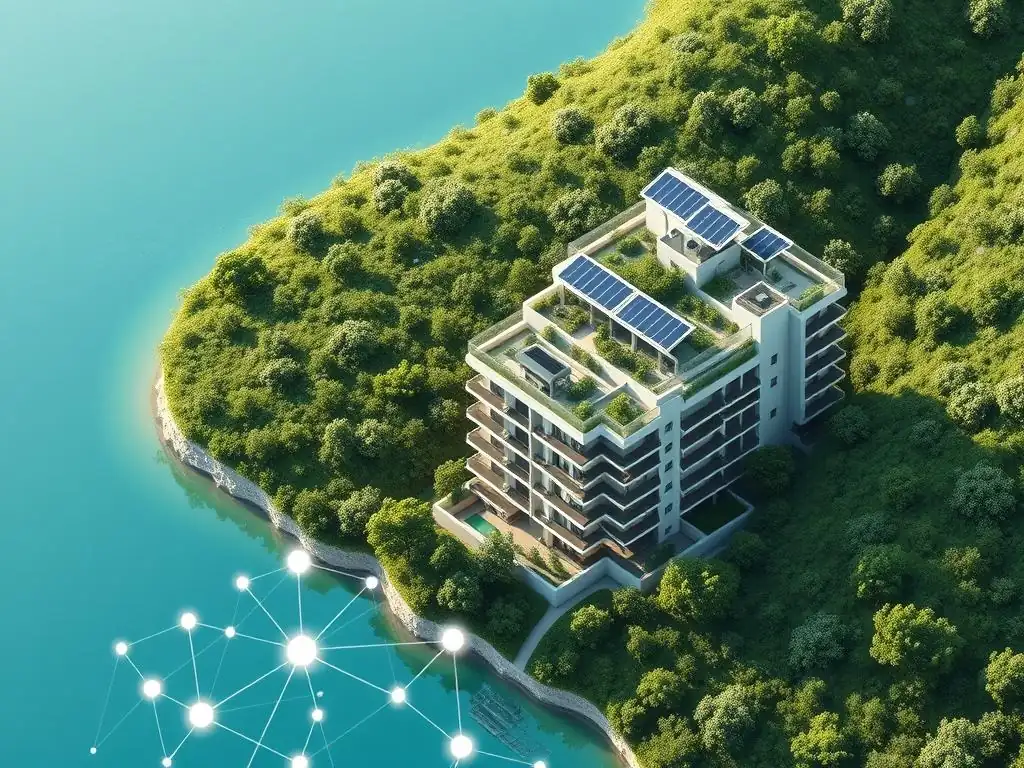
Habitat for Humanity's Blockchain-Based Affordable Housing Initiatives
While not a direct example of commercial real estate tokenization for investment, Habitat for Humanity explored blockchain technology for managing aspects of affordable housing programs, particularly focusing on transparency and efficiency in aid distribution and property management in certain pilot projects. For instance, exploring the use of blockchain for secure record-keeping of land titles or managing community land trusts can improve transparency and reduce administrative overhead, potentially leading to more efficient use of resources.
Although specific energy or carbon footprint data for these particular initiatives using blockchain is not widely publicized, the lesson is the potential for blockchain to improve efficiency and transparency in the housing sector. Applied to sustainable blockchain real estate solutions, this suggests blockchain's potential to transparently track sustainability metrics, manage green leases, or verify the use of sustainable materials in affordable housing projects, ensuring that environmental goals are met alongside social objectives. The exploration by non-profits highlights the potential for blockchain beyond pure profit motives, pointing towards its use for social and environmental good in real estate.
SolarCoin Integration in Tokenized Green Energy Projects
SolarCoin (SLR) is a cryptocurrency designed to incentivize solar power generation. One SolarCoin is issued for every MWh of solar electricity produced. While not directly tokenizing real estate, projects integrating SolarCoin or similar energy-based tokens illustrate how tokenization can be used to verify and reward the generation of renewable energy, which is a critical component of green buildings and sustainable real estate.
Imagine a tokenized real estate project featuring solar panels. The energy generated could potentially be verified and used to claim SolarCoins or similar tokens, providing an additional revenue stream or offset for the property. This model demonstrates how sustainable blockchain real estate solutions can incorporate mechanisms to directly link property performance (energy generation) with token rewards, creating a tangible financial incentive for environmental sustainability. It shows the potential for tokenization to not just represent ownership, but also to track and reward sustainable actions related to the asset.
Lessons Learned from Successful Sustainable Tokenized Real Estate Initiatives
Analyzing early initiatives, even those not purely focused on investment tokenization, provides valuable insights for developing sustainable blockchain real estate solutions. One key lesson is the importance of choosing the right blockchain technology; the energy impact of the underlying network is paramount. Projects built on PoS chains or those committed to using renewable energy for infrastructure demonstrate a clearer path to environmental sustainability.
Another lesson is the potential for tokenization to enhance transparency regarding a property's environmental performance. By recording data about energy consumption, water usage, or sustainability certifications on a blockchain, platforms can provide immutable and verifiable information to investors, increasing confidence in green claims. Furthermore, the ability to fractionalize ownership can potentially aggregate capital for large-scale sustainable developments like green high-rises or eco-districts that might be difficult to finance through traditional means alone. These lessons emphasize that sustainable blockchain real estate solutions require deliberate design choices regarding technology, transparency, and the types of assets being promoted.
The Role of Regulation and Standards in Promoting Sustainable Tokenized Real Estate
Current Regulatory Landscape Regarding Environmental Impact of Blockchain
The regulatory landscape concerning the environmental impact of blockchain is still evolving. While some jurisdictions have expressed concerns about the energy consumption of cryptocurrencies, particularly PoW mining, direct regulations specifically targeting the environmental footprint of blockchain used for tokenization are less common. However, broader environmental regulations, such as those related to energy efficiency, carbon emissions reporting, and e-waste disposal, indirectly apply to the infrastructure supporting tokenization platforms and the physical properties being tokenized.
Some regions are beginning to consider policies that might incentivize or mandate the use of energy-efficient blockchain technologies or require reporting on the energy sources used by blockchain operations. For instance, proposals in certain areas have discussed potential taxes on energy-intensive blockchain activities or requirements for disclosure of energy consumption. While not yet widespread for tokenization specifically, this indicates a growing regulatory awareness that could impact the design and operation of sustainable blockchain real estate solutions in the future.
The Need for Industry Standards for Sustainable Tokenized Real Estate
Given the nascent stage of the market, there is a significant need for industry-wide standards specifically addressing sustainable blockchain real estate solutions. These standards could cover various aspects, including the minimum energy efficiency requirements for the underlying blockchain network, guidelines for reporting on the environmental performance of tokenized properties, and criteria for verifying sustainability claims made by projects. Establishing such standards would provide clarity for investors, developers, and platforms, helping to build trust and ensure that "sustainable" tokenized real estate genuinely meets environmental goals.
These standards could be developed by industry consortia, working groups, or in collaboration with existing green building certification bodies. They could define what constitutes a "green" tokenized asset, how its environmental performance should be measured and reported on-chain, and potentially even establish benchmarks for the energy footprint of the tokenization process itself. Clear standards are essential for scaling truly sustainable blockchain real estate solutions and preventing greenwashing.
Incentivizing Eco-Friendly Practices Through Policy and Regulation
Policy and regulation can play a crucial role in incentivizing the development and adoption of sustainable blockchain real estate solutions. Governments could offer tax credits or subsidies for tokenization platforms that utilize energy-efficient blockchains or for tokenized real estate projects that achieve high green building certifications. Regulatory bodies could also mandate transparency regarding the environmental impact of the blockchain infrastructure used, encouraging a shift towards lower-impact technologies.
Furthermore, policies could integrate tokenization into existing green finance frameworks. For example, green bonds could be tokenized, or regulations could facilitate the use of tokenization for financing renewable energy projects or energy efficiency retrofits in buildings. By aligning financial incentives with environmental goals through policy, regulators can accelerate the adoption of sustainable blockchain real estate solutions and ensure that this innovative market contributes positively to climate action.
The Future of Sustainable Tokenized Real Estate: Trends and Innovations
Emerging Technologies for Reducing Environmental Impact
The future of sustainable blockchain real estate solutions will be shaped by ongoing technological advancements. Beyond the widespread adoption of PoS, new consensus mechanisms and Layer 2 scaling solutions are being developed that promise even greater energy efficiency and scalability. Technologies like sharding, rollups (optimistic and zero-knowledge), and other off-chain processing methods can significantly reduce the load and energy consumption on the main blockchain layer.
Furthermore, the integration of Internet of Things (IoT) devices with blockchain can enhance the tracking and verification of a property's environmental performance in real-time. Smart meters recording energy and water usage, sensors monitoring air quality, and systems tracking waste generation can feed data onto the blockchain, providing immutable proof of a building's sustainability metrics. This data can then be linked to the property's tokens, increasing transparency and potentially influencing token value based on environmental performance, driving demand for sustainable blockchain real estate solutions.
The Potential of Smart Contracts for Enforcing Sustainable Practices
Smart contracts, self-executing contracts with the terms of the agreement directly written into code, offer significant potential for enforcing sustainable practices within the tokenized real estate ecosystem. Smart contracts could be programmed to manage leases that include clauses mandating energy efficiency targets, waste reduction efforts, or the use of green cleaning supplies, with automated penalties or incentives based on verified performance data from IoT devices.
For property development financing via tokenization, smart contracts could release funds in stages contingent upon achieving specific sustainability milestones, such as obtaining a certain green building certification or demonstrating a reduction in construction waste. They could also automate the distribution of revenue generated from on-site renewable energy sales or carbon credit issuance. This programmatic enforcement capability of smart contracts can add a layer of accountability and assurance to sustainable blockchain real estate solutions.
The Role of Tokenization in Driving Green Real Estate Investments
Tokenization has the potential to significantly increase investment in green real estate projects. By lowering the barrier to entry through fractional ownership, it makes investments in large-scale sustainable developments (like renewable energy farms powering buildings or high-performance green buildings) accessible to a wider pool of investors. This influx of capital can accelerate the transition to a more sustainable built environment.
Moreover, tokenization can facilitate the creation of new investment products focused specifically on sustainability. Funds tokenizing portfolios of certified green buildings, renewable energy assets, or land conservation easements can attract environmentally conscious investors seeking to align their portfolios with their values. Tokenization provides the infrastructure to package and trade these sustainable assets efficiently, driving capital towards sustainable blockchain real estate solutions and away from less environmentally friendly alternatives.
Overcoming Challenges and Scaling Sustainable Tokenized Real Estate Solutions
Addressing the Scalability Issues of Blockchain Networks
While energy efficiency is improving with PoS and Layer 2 solutions, scalability remains a challenge for many blockchain networks, particularly for handling the potentially high volume of transactions associated with a liquid real estate market. If the underlying blockchain cannot process transactions quickly and cheaply, it hinders the widespread adoption of tokenization, including sustainable blockchain real estate solutions. Slow and expensive transactions can negate the benefits of fractional ownership and accessibility.
Ongoing research and development into scaling technologies are crucial. Layer 2 solutions like rollups process transactions off the main chain before settling them in batches on Layer 1, dramatically increasing throughput and reducing costs and energy consumption per transaction. Sharding, which divides the blockchain into smaller, more manageable segments, also aims to improve parallel processing. Successfully implementing these scaling solutions is vital for enabling sustainable blockchain real estate solutions to operate at a scale comparable to traditional markets while maintaining efficiency and low environmental impact.
Ensuring Transparency and Accountability in Environmental Reporting
A key challenge for sustainable blockchain real estate solutions is ensuring the accuracy and reliability of environmental data reported on-chain. While blockchain provides immutability for data once recorded, the challenge lies in getting accurate data onto the chain in the first place. Relying on manual reporting is prone to errors or deliberate misrepresentation (greenwashing).
Solutions involve utilizing oracles—services that provide external data to smart contracts—that source information from reputable, verifiable sources. This could include integrating with certified IoT devices for real-time energy/water usage data, connecting to official databases for building certifications (LEED, etc. ), or working with accredited third-party auditors to verify sustainability claims before they are recorded on the blockchain. Establishing clear standards and verification protocols, potentially enforced by smart contracts, is necessary to ensure transparency and accountability in the environmental reporting of sustainable blockchain real estate solutions.
Fostering Collaboration Between Stakeholders for a Sustainable Future
Achieving widespread sustainable blockchain real estate solutions requires collaboration across various stakeholders. This includes real estate developers and owners, tokenization platform providers, blockchain developers, investors, regulators, environmental organizations, and technology providers (like IoT companies). Each group has a role to play in building a sustainable ecosystem.
Developers need to build green properties; platform providers need to choose energy-efficient technology and incentivize green listings; investors need to demand sustainable assets; regulators need to provide clear guidelines and incentives; and technology providers need to offer reliable solutions for monitoring and verifying sustainability. Fostering dialogue, shared standards, and partnerships between these groups is essential to overcome challenges, pool resources, and drive the adoption of truly sustainable blockchain real estate solutions that benefit both the market and the planet.
Conclusion: Embracing Sustainable Solutions for a Greener Tokenized Real Estate Market
The Importance of Prioritizing Environmental Responsibility
As the real estate sector embraces innovation through tokenization, it is paramount that environmental responsibility is placed at the forefront. The potential benefits of increased liquidity, accessibility, and transparency offered by real estate tokenization should not come at the expense of environmental sustainability. The significant energy consumption historically associated with certain blockchain technologies, coupled with the inherent environmental footprint of physical real estate, necessitates a deliberate focus on mitigating impact.
Prioritizing sustainable blockchain real estate solutions is not just an optional add-on; it is a fundamental requirement for building a resilient, ethical, and future-proof market. Ignoring these issues risks creating a new digital market that inherits and potentially exacerbates the environmental challenges of the traditional sector.
The Potential of Blockchain to Drive Positive Change in the Real Estate Industry
Despite the environmental concerns related to certain blockchain implementations, the technology itself holds immense potential to drive positive environmental change in the real estate industry. By providing an immutable and transparent ledger, blockchain can enhance the tracking and verification of sustainability metrics, making green claims more trustworthy. Smart contracts can automate the enforcement of sustainable practices and incentivize eco-friendly behaviors.
Tokenization can democratize access to investment in green buildings and renewable energy projects, channeling capital towards sustainable development. When built and utilized consciously, blockchain can be a powerful tool for creating sustainable blockchain real estate solutions that are not only financially viable but also environmentally beneficial.
Call to Action: Promoting Sustainable Practices in Tokenized Real Estate
To realize the vision of a greener tokenized real estate market, action is needed from all participants. Tokenization platforms must commit to using energy-efficient blockchain networks and supporting infrastructure powered by renewables. Real estate developers should prioritize building green properties and seek relevant certifications when considering tokenization.
Investors should actively seek out and demand sustainable blockchain real estate solutions and assets. Regulators should consider policies that incentivize green practices and mandate transparency regarding environmental impact. By collectively embracing sustainable practices and leveraging the potential of blockchain responsibly, we can ensure that the growth of tokenized real estate contributes positively to global sustainability goals, paving the way for a truly sustainable and environmentally conscious digital asset class.
Frequently Asked Questions
How does blockchain technology contribute to making real estate transactions more sustainable?
Blockchain can improve sustainability by creating transparent and immutable records of building materials and energy consumption. This allows for better tracking of environmental impact and facilitates green building certifications. It also streamlines processes, reducing paper waste.
What are some current examples of "sustainable blockchain real estate solutions" being implemented?
Examples include platforms that use blockchain to track carbon credits generated by energy-efficient buildings. There are also solutions for fractional ownership of green properties, making sustainable investments more accessible.
What are the primary environmental concerns associated with traditional real estate transactions that blockchain aims to address?
Traditional real estate transactions often involve significant paperwork and inefficient processes, leading to resource waste. Lack of transparency also makes it difficult to track the environmental footprint of properties.
What role does DeFi (Decentralized Finance) play in promoting sustainable real estate projects?
DeFi can provide alternative funding mechanisms for green building projects, bypassing traditional banks. This can make it easier for developers to secure capital for environmentally conscious initiatives.
What challenges remain in the widespread adoption of blockchain-based sustainable real estate solutions?
Challenges include regulatory uncertainty, lack of public awareness, and the initial high costs of implementing blockchain technology. Overcoming these hurdles is crucial for widespread adoption.
Final Reflection: Building a Greener Future, Block by Block
The exploration of decentralized real estate's environmental impact reveals a crucial intersection of technology and sustainability. The promise of sustainable blockchain real estate solutions is no longer a futuristic ideal, but a pressing necessity in a world grappling with climate change. The potential for transparency, efficiency, and community-driven development offered by blockchain technology can be harnessed to revolutionize how we build, manage, and interact with our built environment, paving the way for a more responsible and eco-conscious real estate industry.
The ongoing influence of blockchain technology on real estate is undeniable, and its potential to drive sustainable practices is profound. Witnessing the evolution of this technology and its application to environmental challenges fills me with hope, knowing that innovation can be a powerful force for good. We do not inherit the earth from our ancestors; we borrow it from our children.
This timeless proverb reminds us of our responsibility to future generations and the urgent need to embrace sustainable solutions in every facet of our lives, including the development and management of real estate.
As we conclude this exploration, I invite you to reflect on your own role in shaping a more sustainable future. Consider how you can support and advocate for sustainable blockchain real estate solutions in your community and beyond. Let us embrace the power of technology to build a world where innovation and environmental stewardship go hand in hand, creating a legacy of responsible development for generations to come.
Embrace Green Innovation: Build a Sustainable Future Today!
Thank you for exploring the environmental impact of decentralized real estate with us. We hope you gained valuable insights into the challenges and opportunities for creating a more sustainable future through blockchain technology. Now, it's time to turn those insights into action.
Here are some ways you can help promote a greener real estate industry:
- Take the initiative to support eco-friendly development within your local decentralized real estate projects. Focus on using sustainable building materials, implementing energy-efficient designs, and reducing waste to lessen environmental impact.
- Investigate platforms that monitor the carbon footprint of blockchain transactions related to real estate. Share your findings and advocate for solutions that aim for carbon neutrality.
- Engage with others in the community about the possibility of tokenizing carbon offsets within decentralized real estate. Could this further incentivize sustainable practices?
How do you plan to use decentralized real estate to foster environmental responsibility? Share your ideas and projects in the comments below!
Leave a Reply