
Designing CrossChain DApps: Architecting for a MultiBlockchain Future


Welcome to Blockchain Trends, your guide to the evolving world of blockchain technology!
Are you ready to unlock the potential of a truly interconnected blockchain ecosystem? Dive into our exploration of Crosschain Decentralized Application Architecture and discover how developers are breaking down silos to build a more fluid and powerful decentralized future. This article will help you begin to understand how these DApps are designed and what the benefits of a multi-chain future can be. What challenges need to be considered when building a crosschain DApp? Read on to find out!
Designing Cross-Chain DApps: Architecting for a Multi-Blockchain Future
- Introduction to Cross-Chain DApp Development
- Core Principles of Cross-Chain DApp Architecture
- Architecting Your Cross-Chain DApp: Key Design Patterns
- Building Blocks for Cross-Chain DApp Development
- Use Cases and Examples of Cross-Chain DApps
- Overcoming Common Challenges in Cross-Chain DApp Development
- The Future of Cross-Chain DApp Architecture
- Conclusion: Embracing the Multi-Chain Future with Robust Cross-Chain DApp Architectures
-
Frequently Asked Questions
- What is a Crosschain Decentralized Application (DApp) and why is it important?
- What are the key architectural considerations when designing a Crosschain DApp?
- How does Crosschain DApp architecture relate to the broader trend of DeFi (Decentralized Finance)?
- What are the main challenges in implementing a robust Crosschain DApp architecture?
- How might regulation impact the development and deployment of Crosschain DApps?
- Final Reflection: Embracing the Interconnected Web3
- Unleash the Cross-Chain Architect Within!
Introduction to Cross-Chain DApp Development
The Rise of Multi-Blockchain Ecosystems and the Need for Cross-Chain DApps
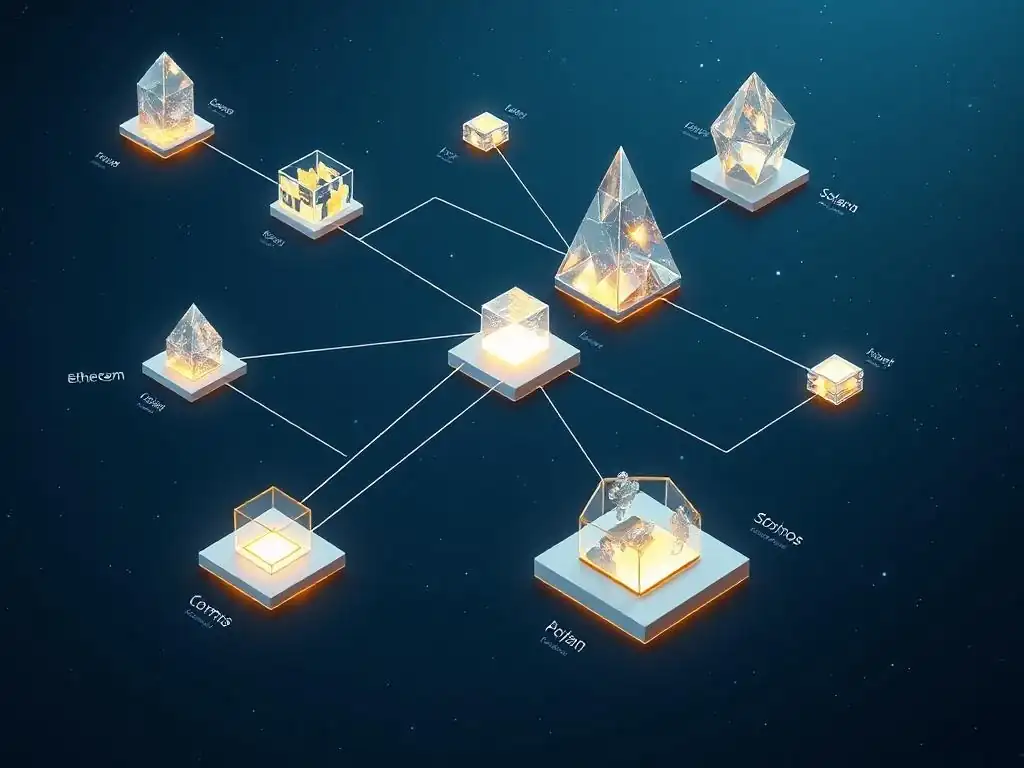
The blockchain landscape has evolved significantly beyond a single dominant chain. We are witnessing the proliferation of numerous specialized blockchains, each optimized for different purposes – from high-throughput layer-1 networks like Solana and Avalanche to application-specific chains built with Cosmos or Polkadot SDKs, and privacy-focused networks such as Zcash. This diversification, while fostering innovation and addressing specific needs like scalability and cost, has inadvertently created fragmented ecosystems.
Users and assets are often siloed within individual chains, hindering seamless interaction and limiting the potential of decentralized applications (DApps). The inherent limitations of single-chain architectures in accessing liquidity, data, and users spread across this fragmented environment underscore the critical need for a robust crosschain decentralized application architecture.
This multi-chain reality necessitates DApps that can operate and interact across different blockchain networks. A decentralized finance (DeFi) protocol, for instance, might benefit from accessing liquidity pools on Ethereum while executing high-frequency trades on a faster chain like Binance Smart Chain (now BNB Chain) or Polygon.
Similarly, a supply chain DApp might store sensitive data on a private enterprise chain but use a public network for verifiable timestamps and audits. The ability to build a crosschain decentralized application architecture unlocks unprecedented possibilities for composability, allowing DApps to leverage the unique strengths of multiple chains, reach a wider user base, and access a deeper pool of liquidity and resources, ultimately driving the next wave of decentralized innovation.
Understanding the Challenges of Traditional DApp Architecture in a Multi-Chain World
Traditional DApps are typically designed to exist and function entirely on a single blockchain. This monolithic architecture simplifies development within that specific ecosystem, leveraging the native consensus mechanism, smart contract language (like Solidity for EVM chains), and tooling. However, this single-chain focus creates significant barriers when attempting to interact with other networks.
Data and assets on one chain are inherently isolated from others. A DApp built on Ethereum cannot directly call a smart contract or access data on Polygon or Polkadot without specific mechanisms to facilitate that interaction. This isolation leads to poor user experience, requiring users to manually bridge assets or switch networks, and limits the overall reach and functionality of the DApp.
Furthermore, relying on a single chain can expose a DApp to the specific limitations of that network, such as high transaction fees during periods of congestion (e.g., Ethereum gas fees peaking over 200 Gwei during high demand) or throughput constraints (e.g., early Bitcoin processing around 7 transactions per second). A traditional DApp architecture cannot dynamically shift operations or access resources from a chain better suited for a particular task (like low-cost payments or high-speed computation).
Overcoming these limitations within a single-chain paradigm often involves complex layer-2 solutions or sidechains, which themselves require careful integration and can add complexity. The fundamental challenge lies in breaking down the native barriers between disparate blockchain protocols, which is precisely what a well-designed crosschain decentralized application architecture aims to address.
What is Cross-Chain Decentralized Application Architecture? Defining Key Concepts
Cross-chain decentralized application architecture refers to the design principles, patterns, and technologies used to build DApps that can operate, communicate, and interact across multiple independent blockchain networks. Unlike traditional DApps confined to a single chain, cross-chain DApps are designed from the ground up to leverage the unique capabilities and resources available on different blockchains, enabling seamless flow of assets, data, and logic between them. This architecture focuses on interoperability mechanisms that allow smart contracts on one chain to trigger actions, verify states, or exchange information with smart contracts or protocols on another chain, all while maintaining decentralization and security.
Key concepts within crosschain decentralized application architecture include:
- Interoperability Protocols: Standardized methods and frameworks (like IBC, LayerZero, Polkadot's XCMP) that define how different blockchains can communicate and exchange messages securely.
- Cross-Chain Bridges: Infrastructure that connects two or more blockchains, allowing assets and data to be transferred or exchanged between them. These can range from simple asset bridges to more complex general message-passing bridges.
- Relayers: Entities or networks responsible for relaying messages and proofs between different blockchains, ensuring that events or states on one chain are communicated to another.
- Atomic Swaps: Methods (like HTLCs) allowing users to exchange cryptocurrencies from different blockchains directly without needing a trusted third party.
- Cross-Chain State Synchronization: Techniques for ensuring that relevant data or application state remains consistent or verifiable across the different chains a DApp operates on.
Developing a robust crosschain decentralized application architecture is crucial for unlocking the full potential of the multi-chain ecosystem, enabling DApps to offer richer functionality, better performance, and greater reach than their single-chain counterparts.
Core Principles of Cross-Chain DApp Architecture
Interoperability: Enabling Communication Between Blockchains
Interoperability is the cornerstone of crosschain decentralized application architecture. It is the ability for different blockchain networks, which might have distinct consensus mechanisms, data structures, and smart contract languages, to exchange information and interact seamlessly. Without effective interoperability, the multi-chain world remains fragmented, limiting the potential for collaboration and composability between decentralized applications residing on different networks.
Achieving true interoperability requires robust protocols and infrastructure that can securely validate and relay messages, transactions, or state changes from one chain to another. This is a non-trivial task, as it involves overcoming fundamental differences in how blockchains operate and ensuring that interactions are trustless and secure.
Various approaches exist to enable this cross-chain communication. Some rely on centralized or federated relayers, while others leverage more decentralized methods like light client verification or zero-knowledge proofs. Protocols like the Inter-Blockchain Communication (IBC) protocol, used within the Cosmos ecosystem, provide a standardized, trust-minimised method for chains to exchange messages based on verifying the consensus states of connected chains.
Polkadot's architecture facilitates interoperability between its parachains via XCM (Cross-Consensus Message Format), allowing them to share logic and assets. Designing a crosschain decentralized application architecture that prioritizes secure and efficient interoperability is paramount for creating DApps that can truly thrive in a connected blockchain environment, allowing users and applications to move freely and interact across boundaries.
Security Considerations for Cross-Chain DApps: Mitigating Risks
Security is arguably the most critical and challenging aspect of crosschain decentralized application architecture. The process of transferring assets or relaying information between distinct blockchain security domains introduces new attack vectors that are not present in single-chain DApps. Cross-chain bridges, while essential for interoperability, have historically been prime targets for attackers, resulting in significant losses.
For instance, the Ronin Network bridge exploit in March 2022 resulted in the theft of over $600 million, and the Wormhole bridge suffered a $325 million hack in February 2022. These incidents highlight the immense financial risks associated with vulnerabilities in cross-chain mechanisms. Ensuring the integrity and security of the communication layer is paramount, as a compromise in the bridge or relaying mechanism can affect assets and data on multiple chains simultaneously.
Mitigating these risks requires a multi-layered security approach in crosschain decentralized application architecture. This includes rigorous auditing of smart contracts involved in cross-chain interactions, employing robust cryptographic methods for verifying cross-chain messages (such as light clients or zero-knowledge proofs), and designing bridge mechanisms that minimize trust assumptions (e.g., favoring trustless designs over trusted ones).
Decentralization of relayers and validators involved in the cross-chain process can also enhance security by removing single points of failure. Developers building cross-chain DApps must carefully evaluate the security model of the underlying interoperability protocols and bridges they utilize and implement additional safeguards within their application logic to handle potential failures or malicious activities in the cross-chain communication layer.
Scalability and Efficiency in Multi-Chain Environments
Scalability and efficiency are key drivers for adopting a crosschain decentralized application architecture. While individual blockchains may face limitations in transaction throughput or latency, a cross-chain DApp can potentially distribute different parts of its functionality across chains best suited for specific tasks. For example, a DApp might handle high-volume, low-value transactions on a fast, low-fee chain while managing high-value asset custody or complex logic on a more secure but potentially slower chain.
This strategic distribution can significantly improve the overall performance and efficiency of the DApp, offering a better user experience by avoiding congestion and high costs associated with a single busy network. The ability to leverage the aggregate capacity of multiple networks is a core advantage.
However, achieving scalability and efficiency in a cross-chain setup is complex. Each cross-chain interaction incurs costs (like gas fees on participating chains) and introduces latency due to the time required for transactions to be confirmed on one chain and then verified and processed on another. A poorly designed crosschain decentralized application architecture can suffer from cumulative fees and delays, negating the benefits of using multiple chains.
Optimizing message passing, minimizing the number of cross-chain calls needed for a user action, and potentially using techniques like batching or optimistic verification are crucial for building efficient cross-chain DApps. The goal is to ensure that the overhead introduced by cross-chain communication is outweighed by the performance and cost benefits gained from leveraging multiple ecosystems.
Data Consistency and Atomicity Across Chains
Maintaining data consistency and achieving atomicity across multiple independent blockchains is a significant challenge in crosschain decentralized application architecture. Atomicity, in the context of cross-chain operations, means that a set of actions across different chains either all succeed or all fail together, preventing partial updates or inconsistent states. For example, in a cross-chain swap, the transfer of asset A on Chain X must be inextricably linked to the transfer of asset B on Chain Y; one cannot happen without the other completing.
Achieving this is difficult because blockchains do not inherently share state or have a global coordinator. A transaction might succeed on one chain but fail on the other due to network congestion, smart contract errors, or other issues, leading to an inconsistent state where, for instance, a user has sent assets on one chain but hasn't received the corresponding assets on the other.
Addressing data consistency and atomicity requires careful design within the crosschain decentralized application architecture. Techniques like Hash Time-Locked Contracts (HTLCs) provide a form of atomicity for simple value transfers by using cryptographic hashes and time locks to ensure that if one leg of a swap doesn't complete, the other can be reversed or timed out. For more complex interactions involving multiple steps or state changes across chains, more sophisticated protocols are needed.
These often involve multi-party computation, cryptographic proofs, or dedicated cross-chain transaction coordination layers that can monitor the state of operations on all involved chains and handle rollbacks or retries in case of failures. Ensuring reliability and preventing users from being stuck in an inconsistent state is paramount for user trust and the successful operation of cross-chain DApps.
Architecting Your Cross-Chain DApp: Key Design Patterns
The Hash Time-Locked Contracts (HTLCs) Pattern for Cross-Chain Swaps
The Hash Time-Locked Contracts (HTLCs) pattern is one of the foundational techniques in crosschain decentralized application architecture, particularly for enabling atomic swaps between different cryptocurrencies on separate blockchains. An HTLC involves creating smart contracts on both participating blockchains that use a cryptographic hash of a secret and a time lock to ensure that either both sides of a swap are completed, or neither is. The process typically works as follows: User A on Chain X wants to swap Asset X for Asset Y from User B on Chain Y.
User A generates a secret (preimage) and its hash. User A then deploys an HTLC on Chain X, locking Asset X, which can only be claimed by User B if they provide the secret within a certain time limit. User A gives the hash to User B.
User B then deploys an HTLC on Chain Y, locking Asset Y, which can only be claimed by User A if they provide the same secret within a potentially shorter time limit. User A, seeing that Asset Y is locked on Chain Y, reveals the secret to claim Asset Y. By revealing the secret on Chain Y, User A makes the secret publicly available.
User B, monitoring Chain Y, can now see the secret and use it to claim Asset X from the HTLC on Chain X before its time lock expires. If User A fails to claim Asset Y on Chain Y before its time lock expires, User B can refund Asset Y.
Similarly, if User B fails to claim Asset X on Chain X before its time lock expires, User A can refund Asset X. This mechanism ensures atomicity without requiring a trusted third party, making it a fundamental building block for peer-to-peer cross-chain value transfer in a crosschain decentralized application architecture.
Relay-Based Cross-Chain Communication
Relay-based communication is a common pattern in crosschain decentralized application architecture where a dedicated entity or network (the "relayer") is responsible for observing events or state changes on one blockchain and submitting proof of those events to a smart contract on another blockchain. The smart contract on the destination chain can then verify the validity of the proof and trigger actions based on the information received. This pattern is essential because blockchains cannot natively read the state of other blockchains.
The relayer acts as an intermediary, bridging this information gap. For instance, a relayer might watch for a specific transaction or smart contract event on Ethereum and, upon detecting it, construct a proof (like a Merkle proof of the transaction's inclusion in a block) and send it to a smart contract on, say, Polygon.
The security and trust assumptions of a relay-based system depend heavily on how the proofs are verified and how decentralized the relayer network is. In a simple model, the destination chain's contract might trust a single relayer, which is highly centralized and insecure. More robust systems, like those used in some cross-chain bridges, require multiple independent relayers to sign off on a message or use cryptographic proofs that can be verified by a light client implementation on the destination chain.
Light clients only download block headers and verify proofs against them, offering a higher degree of trust minimization compared to relying on external attestors. Designing a secure and efficient relay mechanism is a critical component of building a reliable crosschain decentralized application architecture for general message passing or state synchronization.
Cross-Chain Bridges: Types, Security, and Use Cases
Cross-chain bridges are perhaps the most widely used infrastructure component in crosschain decentralized application architecture. They are protocols that connect two or more disparate blockchain networks, enabling the transfer of assets, data, or messages between them. Bridges are essential for scenarios like moving tokens from one chain to another (e.g., wrapping ETH to use on a different chain, or transferring stablecoins) or enabling a DApp on one chain to interact with a smart contract on another.
The architecture of bridges varies significantly, leading to different types with varying security models and trust assumptions. Understanding these differences is crucial when incorporating bridges into a cross-chain DApp.
Common types include:
- Lock and Mint / Burn and Mint Bridges: These are common for transferring native assets. The asset is locked on the source chain, and an equivalent wrapped or synthetic asset is minted on the destination chain (Lock and Mint). To move back, the wrapped asset is burned on the destination chain, and the original asset is unlocked on the source chain (Burn and Mint). Examples include the Polygon Bridge or the Wrapped Bitcoin (wBTC) process.
- Liquidity Networks: These bridges route transfers through liquidity pools on each chain. A user deposits assets into a pool on the source chain and receives equivalent assets from a pool on the destination chain, often relying on network participants to rebalance the pools. Examples include Across Protocol or Synapse.
- General Message Passing Bridges: These are more complex and allow arbitrary data or function calls to be sent between chains, not just asset transfers. They are fundamental for building truly interactive cross-chain DApps where logic and state need to be synchronized or triggered across networks. LayerZero and Wormhole (despite past exploits, they have undergone significant security reviews and redesigns) are examples.
The security of a cross-chain bridge is paramount. Many bridges rely on a set of validators, relayers, or multi-signature schemes to attest to events on the source chain and authorize actions on the destination chain. The trust assumption lies in the honesty and security of this intermediary set. A critical component of designing a secure crosschain decentralized application architecture that uses bridges involves evaluating the bridge's security model, understanding its trust assumptions, and considering the potential impact of a bridge compromise on the DApp's overall security and user funds.
Trusted Bridges vs. Trustless Bridges: A Detailed Comparison
When evaluating cross-chain bridges for inclusion in a crosschain decentralized application architecture, the distinction between trusted and trustless designs is fundamental. Trusted bridges, also known as federated or multi-signature bridges, rely on a predetermined set of validators or guardians to sign off on cross-chain transactions. These validators monitor events on one chain and, upon reaching a consensus (e.g., a 2/3 majority), authorize the corresponding action on the other chain. The security of such a bridge depends entirely on the integrity and security of this validator set.
If a sufficient number of validators collude or are compromised, they can steal funds or approve fraudulent transactions. Examples include early versions of some popular bridges that relied on a small, known set of signers. While simpler to implement initially, their security is a central point of failure.
Trustless bridges, on the other hand, aim to minimize reliance on external validators or trusted third parties. They achieve this by leveraging cryptographic proofs and the security properties of the underlying blockchains themselves. A common approach is using light client verification, where a smart contract on the destination chain acts as a light client for the source chain, verifying block headers and transaction proofs directly from the source chain's consensus.
This allows the destination chain to cryptographically verify that an event occurred on the source chain without trusting an intermediary. While more complex to build, trustless bridges offer a higher level of security as their security is tied to the security of the connected chains, not a separate set of potentially vulnerable validators.
Polkadot's bridges and IBC-based protocols are examples that lean towards more trust-minimized designs. Choosing the appropriate bridge type is a critical decision in designing a secure crosschain decentralized application architecture.
Understanding Bridge Security Audits and Best Practices
Given the significant risks associated with cross-chain bridges, understanding bridge security audits and best practices is essential for anyone designing a crosschain decentralized application architecture that incorporates them. A security audit is a thorough review of the bridge's smart contracts, off-chain components (like relayers and validator software), and overall protocol design by independent security experts.
Audits aim to identify vulnerabilities such as logic flaws, reentrancy issues, access control weaknesses, and potential attack vectors specific to the cross-chain context. While audits are not a guarantee against future exploits, multiple reputable audits are a crucial baseline for any bridge considered for integration into a critical DApp.
Best practices for bridge security extend beyond initial audits. Continuous monitoring of the bridge's activity, including transaction volumes, validator behavior, and network health, is vital. Implementing robust fraud detection systems and anomaly alerts can help identify potential attacks in progress. For DApp developers using bridges, integrating mechanisms to pause or limit interactions with a compromised bridge in case of a security incident is a necessary failsafe.
Furthermore, favoring bridges with decentralized validator sets, transparent governance models, and a strong track record is advisable. The industry is also moving towards standardized security frameworks and bug bounty programs specifically focused on cross-chain infrastructure to improve overall resilience. Incorporating these considerations into the crosschain decentralized application architecture design phase is paramount.
State Channels and Sidechains for Enhanced Scalability
State channels and sidechains are scalability solutions that can also play a role in crosschain decentralized application architecture, although they typically focus on offloading transactions from a main chain rather than direct communication between independent chains.
- State Channels: These allow participants to conduct numerous transactions off-chain, only submitting two transactions to the main chain – one to open the channel and one to close it (or resolve disputes). All intermediate transactions within the channel are instant and virtually free. While primarily a layer-2 solution for a single chain, state channels could potentially be integrated into a cross-chain architecture by opening channels anchored on different chains or by using a bridge to move assets into/out of channels on different networks. The Raiden Network (for Ethereum) is an example of a state channel implementation.
- Sidechains: A sidechain is a separate blockchain that is pegged to a main chain, allowing assets to be moved back and forth. Sidechains typically have their own consensus mechanism and can be designed for higher throughput or lower costs than the main chain. Examples include Polygon (initially a PoS sidechain to Ethereum) or the Liquid Network (a sidechain for Bitcoin). Sidechains can be considered a specific type of bridge-enabled chain. Integrating a sidechain into a crosschain decentralized application architecture allows the DApp to leverage the sidechain's performance benefits while retaining access to the main chain's liquidity and security (to the extent the peg is secure).
Both state channels and sidechains offer ways to scale DApp operations. While they don't inherently solve the problem of arbitrary communication between completely independent chains (like Ethereum and Solana), they provide valuable patterns for managing transaction volume and costs. A complex crosschain decentralized application architecture might utilize sidechains for specific high-throughput operations and then use a general message-passing bridge to synchronize critical state or transfer final settlements back to a more secure main chain or connect to other ecosystems.
Building Blocks for Cross-Chain DApp Development
Choosing the Right Blockchain Platforms for Your DApp
Selecting the appropriate blockchain platforms is a foundational decision in designing a crosschain decentralized application architecture. The choice depends heavily on the DApp's specific requirements, including transaction volume, cost sensitivity, required finality speed, security needs, smart contract complexity, and the target user base.
For instance, a DeFi DApp focused on high-value lending might prioritize the security and established liquidity of Ethereum, while a gaming DApp requiring millions of low-value, fast transactions might opt for a high-throughput chain like Polygon, Solana, or a dedicated gaming sidechain. Enterprise applications might consider permissioned blockchains like Hyperledger Fabric or Corda for privacy and control, while public networks are essential for open, decentralized protocols.
Furthermore, the interoperability solutions natively available or easily integratable with a platform are a significant factor. Chains within the Cosmos or Polkadot ecosystems have built-in frameworks for cross-chain communication (IBC and XCM, respectively), making interactions within those networks relatively straightforward. For DApps spanning multiple independent ecosystems (like connecting Ethereum, BNB Chain, and Avalanche), the availability and reliability of third-party bridges and general message-passing protocols become critical.
Developers must evaluate the trade-offs of each chain regarding performance, cost, security, developer tooling, community support, and existing cross-chain infrastructure when architecting their crosschain decentralized application architecture. A careful selection process ensures the chosen combination of chains effectively supports the DApp's functionality and user experience.
Cross-Chain Communication Protocols: IBC, Polkadot, and More
Various cross-chain communication protocols serve as the backbone for enabling interaction in a crosschain decentralized application architecture. Understanding these protocols is crucial for selecting the right tools for DApp development.
- Inter-Blockchain Communication (IBC): Developed within the Cosmos ecosystem, IBC is an open-source standard for sovereign blockchains to reliably and securely exchange data. It is a trust-minimised protocol that uses light clients to verify the consensus state of connected chains, allowing for secure message passing and asset transfers between IBC-enabled chains. IBC is not limited to Cosmos-based chains; efforts are underway to connect other networks like Ethereum via wrapper chains. As of late 2023, over 100 chains are connected via IBC, facilitating billions in cross-chain transfers.
- Polkadot's Cross-Consensus Message Format (XCM): Polkadot is designed as a network of interconnected blockchains (parachains) anchored to a central Relay Chain. XCM is the language and format used for message passing between these parachains and the Relay Chain. It allows parachains to send arbitrary messages, including asset transfers, smart contract calls, and even logic execution, directly to each other in a trustless manner, secured by the Relay Chain's shared security. XCM is fundamental to building DApps that leverage the specialized functionalities of different parachains within the Polkadot ecosystem.
Beyond these ecosystem-specific protocols, other general message-passing protocols and frameworks are emerging, such as LayerZero, Wormhole, and Chainlink's Cross-Chain Interoperability Protocol (CCIP). These aim to provide generalized cross-chain communication capabilities between a wider range of disparate blockchains. Each protocol has its own architecture, security model, and trade-offs regarding decentralization, cost, and supported features. Developers designing a crosschain decentralized application architecture must carefully evaluate these protocols based on the target chains, security requirements, and the type of cross-chain interactions the DApp needs to support.
Smart Contract Design for Cross-Chain Functionality
Designing smart contracts for cross-chain functionality requires a different mindset than single-chain development. Smart contracts in a crosschain decentralized application architecture must be aware of and interact with cross-chain communication protocols and bridge mechanisms. This involves implementing logic to send messages or transactions to other chains and, crucially, to receive and act upon messages or proofs originating from other chains.
For instance, a smart contract might need to verify a cryptographic proof relayed from another chain before releasing locked assets or updating application state. This requires integrating with the specific verification logic or oracle provided by the chosen cross-chain protocol.
Key considerations include:
- Message Verification: Contracts must securely verify the authenticity and integrity of incoming cross-chain messages or proofs. This often involves complex cryptographic checks or reliance on trusted relayers/oracles, depending on the protocol.
- State Management: How does the DApp's state, which might be spread or affected by actions on multiple chains, remain consistent? Contracts need robust mechanisms to handle potential inconsistencies or failures in cross-chain communication.
- Error Handling and Rollbacks: What happens if a cross-chain operation fails on one chain after succeeding on another? Smart contracts should ideally incorporate mechanisms for handling these scenarios, potentially allowing for retries or rollbacks where possible, although achieving perfect atomicity for complex operations is challenging.
- Security: Cross-chain smart contracts are highly sensitive and potential points of failure. Rigorous auditing and formal verification are even more critical than for single-chain contracts due to the increased attack surface introduced by cross-chain interactions.
Developing smart contracts within a crosschain decentralized application architecture demands careful planning, modular design, and a deep understanding of the underlying cross-chain protocols to ensure security, reliability, and consistency across all participating networks.
Developing User Interfaces for Cross-Chain Applications: UX Considerations
Building a user interface (UI) for a cross-chain DApp presents unique challenges compared to a single-chain application. Users interacting with a cross-chain DApp might need to connect wallets to multiple networks, understand concepts like bridging assets, and potentially wait for transactions to confirm on one chain before seeing the result on another. A poor user experience can be a significant barrier to adoption, even for a technically sophisticated crosschain decentralized application architecture. The UI must abstract away much of the underlying cross-chain complexity and provide clear, intuitive feedback to the user about the status of their cross-chain operations.
Key UX considerations include:
- Multi-Wallet Support: The UI must seamlessly integrate with wallets compatible with all target chains (e.g., MetaMask for EVM chains, Keplr for Cosmos, Polkadot.js for Polkadot). Users should be able to easily switch networks or connect multiple wallets simultaneously.
- Clear Transaction Status: Cross-chain transactions involve multiple steps across different networks. The UI must provide clear visual indicators of the progress of the operation, including confirmations on each chain and the status of the cross-chain message relay. Phrases like "Confirming on Chain X," "Relaying message," and "Processing on Chain Y" are helpful.
- Abstracting Bridging: While users might need to understand the concept of bridging, the UI should make the process as simple as possible, ideally integrating bridge functionality directly within the DApp flow rather than requiring users to visit separate bridge websites.
- Handling Delays and Costs: The UI should manage user expectations regarding potential delays and transaction costs on different networks. Providing estimated fees and completion times can improve the user experience.
Designing a user-friendly interface for a crosschain decentralized application architecture is crucial for driving adoption. It requires careful attention to detail, clear communication, and abstracting the underlying technical complexities to the greatest extent possible.
Use Cases and Examples of Cross-Chain DApps
Decentralized Exchanges (DEXs) with Cross-Chain Trading
Decentralized Exchanges (DEXs) are a prime use case benefiting significantly from crosschain decentralized application architecture. Traditional DEXs operate on a single blockchain (like Uniswap on Ethereum or PancakeSwap on BNB Chain), limiting trading pairs to assets available on that specific network or wrapped versions of assets from other chains. A cross-chain DEX, however, can enable users to trade assets natively across different blockchains without needing centralized intermediaries or complex manual bridging steps. This expands the available trading pairs, accesses deeper liquidity pools spread across multiple networks, and offers users more flexibility.
Examples of cross-chain trading implementations include:
- Atomic Swaps: DEXs leveraging HTLCs (as discussed earlier) allow direct peer-to-peer swaps between users on different chains, like BTC on Bitcoin and LTC on Litecoin, or even certain ERC-20 tokens if HTLCs are supported. While trustless, this method requires active participation from both parties and can be less efficient for frequent trading compared to liquidity pool models.
- Cross-Chain AMMs/Liquidity Networks: Protocols like THORChain enable native asset swaps across multiple Layer 1 blockchains (like Bitcoin, Ethereum, BNB Chain, Litecoin) using a network of liquidity pools and a Tendermint-based chain for coordinating swaps. Users deposit native assets into pools and swap directly for native assets on other chains, managed by the protocol's crosschain decentralized application architecture. Synapse Protocol is another example focusing on stablecoin and asset transfers using a different bridge model. These platforms demonstrate how cross-chain capabilities can unlock global liquidity.
By breaking down the barriers between isolated liquidity pools, cross-chain DEXs enhance capital efficiency and provide users with broader trading opportunities, representing a significant advancement enabled by robust crosschain decentralized application architecture.
Cross-Chain Lending and Borrowing Platforms
Cross-chain lending and borrowing platforms represent another powerful application of crosschain decentralized application architecture within the DeFi space. In traditional single-chain lending protocols (like Aave or Compound on Ethereum), users can only deposit collateral and borrow assets that exist on that specific chain. This limits the types of assets that can be used as collateral and the range of assets that can be borrowed, potentially restricting user access to capital or yield opportunities available on other networks.
A cross-chain lending protocol allows users to deposit collateral on one blockchain and borrow assets on a different blockchain. For example, a user might lock up ETH on Ethereum as collateral and borrow stablecoins on Polygon to take advantage of lower transaction fees for subsequent operations, or use native BTC on the Bitcoin chain as collateral to borrow ETH on Ethereum. This requires a sophisticated crosschain decentralized application architecture that can securely verify the collateral status on the source chain and manage the loan position and borrowed assets on the destination chain.
Protocols like Kava (which leverages Cosmos SDK and connects to other chains via IBC) or integrations built using general message-passing bridges are exploring these capabilities. Such platforms increase capital efficiency across the entire multi-chain ecosystem and provide users with more flexible financial tools.
Identity Management Across Multiple Blockchains
Managing digital identity in a decentralized manner across multiple, independent blockchains is a complex but crucial application area for crosschain decentralized application architecture. Currently, a user's identity or reputation is often tied to a specific address or set of interactions on a single chain. For instance, a user's transaction history, DeFi positions, or NFT ownership are typically recorded on one network.
As users interact with DApps across different chains, maintaining a consistent, verifiable, and privacy-preserving identity becomes challenging. How can a DApp on Chain Y verify a user's credentials or reputation earned from interactions on Chain X without compromising privacy or relying on a centralized identity provider?
Cross-chain identity solutions aim to address this by creating mechanisms for users to port or prove aspects of their identity or credentials across networks. This could involve:
- Verifiable Credentials: Using decentralized identity standards (like DIDs and VCs) with cross-chain protocols to allow users to cryptographically prove ownership of credentials (e.g., proof of KYC from one service, proof of significant transaction volume on a specific DEX) issued or recorded on one chain to a DApp on another chain.
- Reputation Systems: Developing cross-chain reputation systems that aggregate user activity or scores from multiple networks, providing a more holistic view of a user's on-chain history while respecting privacy.
- Soulbound Tokens (SBTs): While primarily single-chain currently, the concept of non-transferable tokens representing achievements or attributes could potentially be extended across chains using a crosschain decentralized application architecture, allowing users to build a portable, decentralized identity profile.
Projects exploring decentralized identity solutions that incorporate cross-chain elements are laying the groundwork for a future where users can control and leverage their digital identity seamlessly across the entire blockchain landscape.
Cross-Chain Governance: Enabling DAO Participation Across Blockchains
Decentralized Autonomous Organizations (DAOs) are increasingly managing protocols and treasuries spread across multiple blockchains. A DAO might have its governance token on one chain, its treasury assets on several chains, and its protocol deployed on various networks to serve different user bases.
In a single-chain governance model, token holders on one chain vote on proposals that might affect operations on other chains, creating coordination challenges and potentially disenfranchising token holders or users primarily active on a different network. Cross-chain governance, facilitated by a robust crosschain decentralized application architecture, seeks to enable more inclusive and effective DAO management in a multi-chain world.
Cross-chain governance mechanisms allow token holders on one chain to securely cast votes or propose actions that are then executed or recognized on other chains where the DAO has presence or assets. This requires a cross-chain communication layer that can reliably and securely relay voting outcomes and execution instructions between the governance chain and the operational chains. For instance, a vote cast on Ethereum could trigger the release of funds from a treasury contract on Polygon or update parameters for a DApp deployed on Arbitrum.
Protocols like Compound's Gateway or Snapshot (which supports off-chain voting with on-chain execution, potentially across chains via relayers) are exploring aspects of this. Implementing cross-chain governance requires careful consideration of security, liveness (ensuring votes are processed in a timely manner), and ensuring that the state of governance is consistent across all relevant chains, all critical components of the crosschain decentralized application architecture.
Cross-Chain NFT Marketplaces: Facilitating Trading Across Ecosystems
Non-Fungible Tokens (NFTs) have exploded in popularity, but they are currently largely confined to specific blockchains (e.g., Ethereum for ERC-721/1155, Solana for SPL tokens). This fragmentation means that an NFT minted on Ethereum cannot be easily traded on a marketplace on Solana, and vice versa, without wrapping or bridging mechanisms. Cross-chain NFT marketplaces, enabled by crosschain decentralized application architecture, aim to break down these silos, allowing users to buy, sell, and showcase NFTs regardless of their native blockchain.
A cross-chain NFT marketplace requires infrastructure that can:
- Bridge or Wrap NFTs: Securely lock an NFT on its source chain and mint a verifiable wrapped version on the destination chain, or use a more sophisticated protocol to represent ownership across chains without moving the underlying asset.
- Aggregate Listings: Display NFTs from multiple chains within a single interface, requiring a cross-chain data indexing and aggregation layer.
- Facilitate Cross-Chain Transactions: Allow users to pay for an NFT on one chain using cryptocurrency from another chain, or receive payment on a different chain than where the NFT was originally held. This often involves integrating cross-chain swap or payment protocols.
Examples of marketplaces or protocols exploring cross-chain NFT capabilities include projects like LayerZero-based marketplaces or protocols building on Polkadot's XCM. By enabling seamless trading and discovery across ecosystems, cross-chain NFT marketplaces expand the market for digital collectibles and improve liquidity for NFT holders, showcasing another valuable application of crosschain decentralized application architecture.
Overcoming Common Challenges in Cross-Chain DApp Development
Gas Fees and Transaction Costs Across Different Chains
One of the primary challenges in designing and operating a crosschain decentralized application architecture is managing transaction costs, commonly known as gas fees, which vary significantly across different blockchains. While some chains boast very low fees (fractions of a cent), others, like Ethereum during peak congestion, can see fees rise to tens or even hundreds of dollars per transaction.
Every interaction involving a cross-chain operation typically requires at least two on-chain transactions – one on the source chain to initiate the action and one on the destination chain to process the relayed message or asset. Depending on the cross-chain protocol used, there might also be fees associated with relaying the message itself.
These cumulative costs can make frequent cross-chain interactions prohibitively expensive for users, particularly for DApps involving many small transactions or requiring rapid state synchronization across networks. A well-designed crosschain decentralized application architecture must consider cost optimization. This might involve strategically choosing chains with lower fees for high-volume operations, batching multiple cross-chain messages into a single transaction where possible, or utilizing layer-2 solutions on individual chains before initiating cross-chain transfers. Developers must carefully analyze the transaction flow and associated costs across all involved chains to ensure the DApp remains economically viable and user-friendly.
Handling Data Synchronization Issues
Ensuring data consistency and handling synchronization issues across distributed, independent blockchains is a complex problem inherent to crosschain decentralized application architecture. Blockchains have different block times, finality guarantees, and potential for reorgs (temporary forks). When a DApp relies on data or events from a remote chain, there's a delay between the event occurring on the source chain and it being verified and acted upon on the destination chain.
During this window, the state can be inconsistent. For example, if an asset is transferred across a bridge, the DApp on the destination chain might show the asset as available before the transaction on the source chain has reached a sufficient level of finality, creating a risk if the source chain transaction is later reverted.
Robust crosschain decentralized application architecture must incorporate mechanisms to handle potential data inconsistencies and delays. This often involves waiting for a sufficient number of confirmations on the source chain before considering an event final, implementing optimistic verification schemes that assume validity unless challenged (requiring a dispute resolution mechanism), or using dedicated cross-chain state synchronization protocols. Developers must carefully consider the acceptable level of risk and latency for different types of cross-chain operations within their DApp and implement appropriate safeguards to prevent users from acting on stale or potentially invalid data, which could lead to financial losses or application errors.
Ensuring Cross-Chain Security and Preventing Exploits
As highlighted by numerous high-profile incidents, ensuring the security of cross-chain interactions is perhaps the most critical challenge in crosschain decentralized application architecture. The attack surface is significantly larger than that of a single-chain DApp, as an attacker can potentially exploit vulnerabilities in any of the connected chains, the cross-chain bridge or protocol, or the smart contracts on any participating chain that handle cross-chain logic.
Bridges, in particular, are attractive targets due to the large amounts of locked value they often control. Exploits can range from compromising the validator set of a trusted bridge to finding vulnerabilities in the smart contracts that handle asset locking, minting, or message verification.
Preventing cross-chain exploits requires a multi-faceted security strategy. This includes:
- Rigorous Audits: Comprehensive security audits of all smart contracts and off-chain components involved in cross-chain interactions are non-negotiable.
- Trust Minimization: Prioritizing trustless or highly decentralized cross-chain protocols over centralized or federated ones reduces reliance on external parties.
- Monitoring and Alerting: Implementing continuous monitoring of cross-chain activity and setting up alerts for unusual patterns or suspicious behavior can help detect attacks early.
- Circuit Breakers: Designing the DApp or bridge with emergency pause or rate-limiting mechanisms that can be activated in case of a detected exploit can help mitigate losses.
- Formal Verification: For critical cross-chain smart contracts, employing formal verification techniques can provide higher assurance of correctness and security.
Security must be a primary consideration throughout the entire design and development lifecycle of a crosschain decentralized application architecture, not an afterthought.
Smart Contract Compatibility and Interoperability Problems
Developing a crosschain decentralized application architecture often involves interacting with smart contracts on different blockchain platforms that may use different virtual machines (like the EVM, WASM), programming languages (Solidity, Rust, Haskell), and address formats. This lack of native compatibility creates significant interoperability problems. A smart contract written in Solidity for Ethereum cannot be directly executed on a chain that uses a different VM, and vice versa. Even between EVM-compatible chains, subtle differences in opcode costs, gas limits, or precompiled contracts can lead to unexpected behavior or security vulnerabilities if contracts are simply copied without adjustment.
Addressing smart contract compatibility requires specific strategies within the crosschain decentralized application architecture. This might involve:
- Developing Separate Contracts Per Chain: Writing and deploying tailored versions of the DApp's smart contracts on each target chain, communicating between them using a cross-chain messaging protocol.
- Using Intermediate Chains or Protocols: Leveraging protocols designed to translate or facilitate interactions between different contract environments.
- Abstracting Chain Logic: Designing the DApp's core logic in a way that separates chain-specific interactions from the core business logic, making it easier to adapt or rewrite chain-specific components.
Furthermore, ensuring that smart contracts can correctly interpret and act upon messages received from other chains, which might arrive in a different format or represent different data structures, requires careful design and standardization within the chosen cross-chain communication protocol. Overcoming these compatibility issues is essential for building a functional and maintainable crosschain decentralized application architecture.
The Future of Cross-Chain DApp Architecture
Emerging Trends in Cross-Chain Technology
The field of cross-chain technology and crosschain decentralized application architecture is rapidly evolving. Several emerging trends are shaping its future. One significant trend is the move towards more generalized and trust-minimized message-passing protocols. Instead of just bridging assets, protocols are focusing on enabling arbitrary data and function calls to be sent securely between chains, laying the groundwork for truly composable cross-chain DApps. Projects like LayerZero, which aims for a light client-like security guarantee without the full overhead of running light clients on-chain, and Chainlink's CCIP, leveraging its oracle network for cross-chain message delivery and verification, represent this trend.
Another trend is the increasing focus on shared security models. Instead of each bridge or cross-chain protocol needing its own security mechanism, some approaches propose leveraging the collective security of a network of validators or even the security of the connected chains themselves to validate cross-chain interactions. This can potentially enhance the security of the overall cross-chain landscape and reduce the risk of single bridge failures.
Furthermore, advancements in zero-knowledge proofs are expected to play a larger role, enabling trustless verification of events on one chain by a smart contract on another with greater efficiency and privacy. These trends indicate a move towards more robust, secure, and versatile cross-chain capabilities that will underpin the next generation of crosschain decentralized application architecture.
The Role of Layer-2 Solutions in Cross-Chain Development
Layer-2 scaling solutions (like rollups – optimistic and zero-knowledge – and state channels) were initially developed to address the scalability limitations of individual Layer-1 blockchains, particularly Ethereum. While distinct from cross-chain protocols that connect different Layer-1s, Layer-2 solutions play an increasingly important role in crosschain decentralized application architecture. Many DApps are deploying on Layer-2 networks to reduce transaction costs and increase throughput. This means that cross-chain interactions often need to involve Layer-2s as endpoints.
The future of cross-chain development will likely involve seamless interoperability between Layer-1s and Layer-2s, as well as potentially between different Layer-2s on the same or different Layer-1s. Cross-chain protocols are evolving to support direct communication with Layer-2 contracts. For instance, a user might want to move assets from a Layer-2 on Ethereum (like Arbitrum) to a different Layer-1 (like Avalanche) or another Layer-2 (like a zk-rollup on Ethereum).
This requires cross-chain architecture that can navigate the complexities of Layer-2 withdrawal periods (for optimistic rollups) or handle proofs originating from Layer-2 validity/fraud proofs. Layer-2s are not just scaling solutions; they are becoming integral components of the multi-chain landscape that future crosschain decentralized application architecture must effectively incorporate.
Standardization and Interoperability Initiatives
The current cross-chain landscape is somewhat fragmented, with multiple competing protocols and bridge implementations. This lack of standardization can hinder developer experience and user adoption. A key aspect of the future of crosschain decentralized application architecture lies in the development and adoption of industry standards for cross-chain communication. Initiatives like the Inter-Blockchain Communication (IBC) protocol, although primarily associated with Cosmos, serve as a model for how chains can agree on a common language and framework for secure interoperability.
Efforts are underway to create more universal standards or bridge aggregators that can provide a unified interface for cross-chain operations across different protocols. This would simplify development, allowing DApps to integrate with multiple cross-chain methods through a single SDK or API, and improve user experience by providing more reliable and potentially cheaper routing options for cross-chain transactions. Collaboration between different blockchain ecosystems and cross-chain protocol teams on security best practices, message formats, and verification methods is crucial. Increased standardization will lower the barrier to entry for developers building cross-chain DApps and foster a more connected and resilient multi-chain ecosystem.
The Impact of Cross-Chain DApps on the Blockchain Ecosystem
The widespread adoption and successful implementation of crosschain decentralized application architecture will have a profound impact on the entire blockchain ecosystem. By enabling seamless interaction and value flow between different networks, cross-chain DApps will break down the current silos, unlocking trapped liquidity and user bases. This will lead to increased capital efficiency, as assets can be easily moved to where they can earn the highest yield or be used most effectively, regardless of their native chain.
Furthermore, cross-chain DApps will foster greater innovation and composability. Developers will be able to build applications that combine the unique strengths of different blockchains – leveraging one for high-speed computation, another for secure data storage, and a third for decentralized governance – creating novel use cases that were previously impossible. This interconnectedness will likely accelerate the overall growth and maturity of the decentralized web, blurring the lines between different blockchain ecosystems and creating a more unified, albeit multi-layered, decentralized future. The success of crosschain decentralized application architecture is key to realizing the full potential of a multi-blockchain world.
Conclusion: Embracing the Multi-Chain Future with Robust Cross-Chain DApp Architectures
The blockchain ecosystem is undeniably moving towards a multi-chain future, characterized by diverse, specialized networks. While this fragmentation introduces challenges, it also presents immense opportunities for innovation. Realizing this potential hinges on the ability to build decentralized applications that can operate seamlessly across these disparate networks. Designing a robust crosschain decentralized application architecture is no longer optional but a necessity for DApps aiming for broad reach, deep liquidity, and enhanced functionality.
This article has explored the core principles, design patterns, building blocks, and challenges involved in architecting cross-chain DApps. From understanding the need for interoperability and the critical importance of security in cross-chain bridges to leveraging patterns like HTLCs and relay networks, developers must navigate a complex technical landscape.
Choosing the right platforms, communication protocols, and smart contract designs, while keeping user experience in mind, are key steps. Despite challenges like managing costs, ensuring data consistency, and mitigating security risks, the potential use cases – from cross-chain DEXs and lending platforms to identity and governance solutions – demonstrate the transformative power of cross-chain capabilities.
As the technology matures with emerging trends, standardization, and the integration of Layer-2 solutions, crosschain decentralized application architecture will be the cornerstone of a truly interconnected and decentralized web. Embracing these architectural principles is essential for developers looking to build the future of DApps in a multi-blockchain world.
Frequently Asked Questions
What is a Crosschain Decentralized Application (DApp) and why is it important?
A Crosschain DApp is a decentralized application that operates across multiple blockchain networks. This is important because it unlocks the potential to leverage the unique strengths of different blockchains, avoiding vendor lock-in and fostering greater interoperability.
What are the key architectural considerations when designing a Crosschain DApp?
Key considerations include choosing the right crosschain communication protocol, designing for atomic transactions across chains, and managing state synchronization to maintain data consistency.
How does Crosschain DApp architecture relate to the broader trend of DeFi (Decentralized Finance)?
Crosschain DApps are crucial for DeFi as they enable the movement of assets and data between different DeFi protocols across various blockchains, creating more complex and efficient financial instruments. This is a core component of creating a more interconnected and robust DeFi ecosystem.
What are the main challenges in implementing a robust Crosschain DApp architecture?
The primary challenges involve managing security risks associated with bridging different blockchains, handling potential transactional inconsistencies, and navigating the complexities of diverse blockchain consensus mechanisms.
How might regulation impact the development and deployment of Crosschain DApps?
Regulatory frameworks are still evolving, but they could significantly influence crosschain DApp development by setting standards for interoperability, data privacy, and security. Clear regulations could foster innovation, while unclear or restrictive rules could hinder growth.
Final Reflection: Embracing the Interconnected Web3
The journey through designing cross-chain DApps illuminates a path toward a truly interconnected Web3, and the need for robust crosschain decentralized application architecture is more critical now than ever. As blockchain technology matures, the limitations of siloed ecosystems become increasingly apparent, hindering innovation and user experience. The ability to seamlessly interact across different chains is no longer a futuristic aspiration, but a present-day necessity for unlocking the full potential of decentralized applications.
The promise of cross-chain interoperability has profoundly shaped, and continues to shape, the cultural and social landscape of the blockchain space. It fosters a collaborative environment where developers can leverage the unique strengths of different blockchains, creating more versatile and powerful applications. This shift towards interconnectedness is not just a technological advancement; it's a philosophical one, promoting decentralization and collaboration across previously isolated communities. The future of blockchain is not about one chain to rule them all, but about a network of chains working together.
This sentiment underscores the importance of building bridges and fostering interoperability to realize the true vision of a decentralized future.
As you navigate the evolving landscape of Web3, consider how you can contribute to building a more interconnected and collaborative ecosystem. Reflect on the principles of cross-chain architecture and how they can be applied to your own projects and endeavors. Embrace the challenge of designing applications that transcend the boundaries of individual blockchains, and help pave the way for a future where decentralized technology empowers individuals and communities across the globe.
Unleash the Cross-Chain Architect Within!
Thank you for exploring the world of cross-chain DApp design with us! We hope this article has illuminated the potential of multi-blockchain applications. Now, it's time to put that knowledge into action and become a pioneer in this exciting new landscape.
Here's how you can start building the future, today:
- Begin prototyping your own simple cross-chain DApp, even if it's just a basic token bridge. Don't wait, start experimenting!
- Dive deeper by researching specific cross-chain communication protocols like LayerZero or Chainlink CCIP.
- Share this article with a developer friend and spark a discussion about potential collaborative cross-chain projects.
What unique cross-chain use case are you most excited to explore and potentially build? Share your ideas in the comments below!
Leave a Reply