
Supply Chain Transparency: Tracing Aid Goods from Origin to Recipient Using Blockchain


Welcome to Blockchain Trends, your compass in the evolving landscape of decentralized technologies. Beyond the hype, blockchain holds immense potential to reshape industries and solve global challenges. Ever wondered how blockchain can ensure aid reaches those who need it most? Dive into our latest article and discover how blockchain supply chain aid tracking is revolutionizing transparency and accountability in humanitarian efforts, revealing a future where every step is verifiable. Uncover the transformative power of verifiable provenance - start reading now!
Supply Chain Transparency: Tracing Pharmaceuticals from Manufacturer to Patient Using Blockchain
- Introduction: The Need for Transparency in Pharmaceutical Supply Chains
- Blockchain Pharmaceutical Tracking: How It Works
- Benefits of Blockchain for Pharmaceutical Transparency and Accountability
- Implementing Blockchain for Pharmaceutical Supply Chain Management: A Step-by-Step Guide
-
Frequently Asked Questions
- How does blockchain enhance supply chain transparency for aid goods?
- What are the key benefits of using blockchain for tracking aid goods?
- How can blockchain address the issue of counterfeit or diverted aid supplies?
- What are the challenges of implementing blockchain solutions for aid supply chains in developing countries?
- What is the potential future impact of blockchain on aid distribution and humanitarian efforts?
- Final Reflection: Empowering Trust Through Transparency
- Empower Change: Trace Aid & Build Trust Today!
Introduction: The Need for Transparency in Pharmaceutical Supply Chains
The pharmaceutical supply chain is one of the most complex and critical global networks. It involves manufacturers, distributors, wholesalers, pharmacies, hospitals, and ultimately, patients. Ensuring the integrity, safety, and authenticity of drugs throughout this journey is paramount. However, traditional paper-based or siloed electronic systems often lack the comprehensive transparency and security needed to prevent issues like counterfeiting, diversion, and inefficient recalls. This lack of visibility poses significant risks to public health and erodes trust in the system.
Enhancing transparency within this intricate network is not just a matter of operational efficiency; it is a vital public health imperative. Patients rely on receiving genuine, safe, and effective medications. A transparent supply chain allows every participant, under appropriate permissions, to verify the provenance and handling of a drug, from the raw materials used in manufacturing to the moment it reaches the patient's hand. This level of verifiable history is crucial for building confidence and safeguarding against potentially life-threatening risks associated with compromised pharmaceuticals.
Challenges in Traditional Pharmaceutical Distribution and the Rise of Counterfeit Drugs
Traditional pharmaceutical supply chains are often characterized by disparate systems, manual processes, and limited information sharing between stakeholders. This fragmentation creates blind spots where illicit activities can thrive. Documents can be forged, products diverted, and counterfeit drugs introduced into legitimate channels. The reliance on trust between intermediaries, without robust, verifiable data trails, makes the system vulnerable to exploitation.
The global trade in counterfeit drugs is a significant and growing problem. The World Health Organization (WHO) estimates that over 10% of medical products in low- and middle-income countries are falsified, potentially causing serious health issues or even death. In higher-income countries with stricter regulations, the rate is estimated to be around 1%, but the sophisticated nature of these counterfeits still poses a substantial threat. These falsified medicines range from inactive placebos to toxic substances, undermining public health efforts and costing the industry billions annually in lost revenue and remediation efforts.
Blockchain Technology: A Solution for Enhanced Transparency and Accountability
Blockchain technology offers a fundamentally different approach to supply chain management by providing a decentralized, immutable, and transparent ledger of transactions. In the context of pharmaceuticals, each movement or significant event (like manufacturing, packaging, shipping, receiving, dispensing) can be recorded as a transaction on the blockchain. Once a transaction is added to the chain, it cannot be altered or deleted without consensus from the network participants, creating a tamper-proof history.
This inherent immutability and transparency address key weaknesses in traditional systems. Instead of relying on individual databases that can be manipulated or are inaccessible to other parties, blockchain enables a shared, single source of truth about a product's journey. This distributed ledger technology allows authorized parties to track the provenance of drugs, verify their authenticity at any point, and quickly identify potential points of failure or compromise in the supply chain. This enhanced accountability, built into the system itself, makes it significantly harder for counterfeit or diverted drugs to infiltrate legitimate channels.
Blockchain Pharmaceutical Tracking: How It Works
Implementing blockchain for pharmaceutical tracking involves creating a digital representation of physical goods and their movements on a distributed ledger. Each batch or even individual package of medication can be assigned a unique digital identifier, often linked to physical identifiers like serial numbers or QR codes. As the product moves through the supply chain – from the manufacturer's production line to the distributor's warehouse, the pharmacy shelf, and finally, the patient – each transfer of ownership or change in location is recorded as a transaction on the blockchain.
This creates a chronological, verifiable, and immutable record of the product's entire lifecycle. Participants in the network, such as manufacturers, wholesalers, and dispensers, run nodes that validate and add these transactions to the shared ledger. Smart contracts, self-executing agreements with the terms of the agreement directly written into code, can automate processes like payments upon delivery verification or trigger alerts if a product's temperature deviates from required ranges during transit, further enhancing the system's integrity and responsiveness.
Understanding Blockchain's Role in Supply Chain Management
Blockchain serves as the foundational layer of trust and data integrity in a supply chain. It doesn't necessarily replace existing logistics or enterprise resource planning (ERP) systems entirely, but rather integrates with them to provide an overarching, verifiable data trail that links all physical movements and digital records. Each participant maintains their own copy of the ledger, which is constantly synchronized across the network, ensuring data consistency and resilience.
In essence, blockchain acts as a secure, shared database that multiple, potentially competing, organizations can trust. For a pharmaceutical supply chain, this means a manufacturer can record a batch leaving their facility, a transporter can record picking it up and dropping it off, a wholesaler can record receiving and storing it, and a pharmacy can record dispensing it. Each step is a verified transaction on the blockchain, providing a level of transparency and accountability that is unattainable with siloed systems, thereby enhancing overall blockchain supply chain tracking capabilities.
Creating an Immutable Record of Pharmaceutical Movement
The immutability of the blockchain is a critical feature for pharmaceutical tracking. When a transaction, such as the transfer of ownership of a drug shipment, is recorded, it is grouped into a block with other transactions. This block is then cryptographically linked to the previous block, forming a chain. The cryptographic hash of the previous block is included in the current block, and the current block's hash is calculated based on its contents, including the previous hash.
This linking mechanism means that altering any transaction in a historical block would change that block's hash, which in turn would invalidate the link to the next block, and so on, effectively breaking the chain. Detecting such tampering is computationally trivial, while executing it across a distributed network is practically impossible without controlling a majority of the network's computing power (a "51% attack"), which is highly improbable in a well-designed, permissioned enterprise blockchain network used for sensitive applications like drug tracking. This ensures the integrity and trustworthiness of the entire history recorded on the ledger.
Key Features of a Blockchain-Based Pharmaceutical Tracking System
A robust blockchain solution for pharmaceutical supply chain tracking incorporates several key features designed to meet the specific demands of the industry. These features work together to provide comprehensive visibility, security, and compliance.
- Serialization and Unique Identification: Assigning a unique serial number or identifier (like a Global Trade Item Number - GTIN) to each saleable unit or aggregation of pharmaceuticals, which is then linked to its digital twin on the blockchain. This allows for granular tracking.
- Immutable Transaction Ledger: Recording every significant event (manufacturing, packaging, shipping, receiving, dispensing) as a transaction on the blockchain, creating a permanent, tamper-proof history of the product's journey.
- Permissioned Network: Unlike public blockchains, pharmaceutical supply chain blockchains are typically permissioned, meaning only authorized and verified participants (manufacturers, distributors, pharmacies, regulators) can join the network and access specific data, ensuring privacy and security.
- Smart Contracts: Automating processes and enforcing business rules based on pre-defined conditions recorded on the blockchain, such as triggering payments upon successful delivery or flagging shipments with temperature excursions.
- Integration Capabilities: Ability to integrate with existing legacy systems (ERP, WMS, TMS) to pull relevant data for recording on the blockchain and push blockchain-verified data back into operational systems.
- Data Security and Privacy: Employing cryptographic techniques, data partitioning, and access controls to protect sensitive business and patient information while still providing necessary traceability data to authorized parties.
These features collectively enable a level of transparency and security far exceeding traditional methods, making it a powerful tool for blockchain supply chain tracking in the pharmaceutical sector and potentially for tracking aid goods.
Benefits of Blockchain for Pharmaceutical Transparency and Accountability
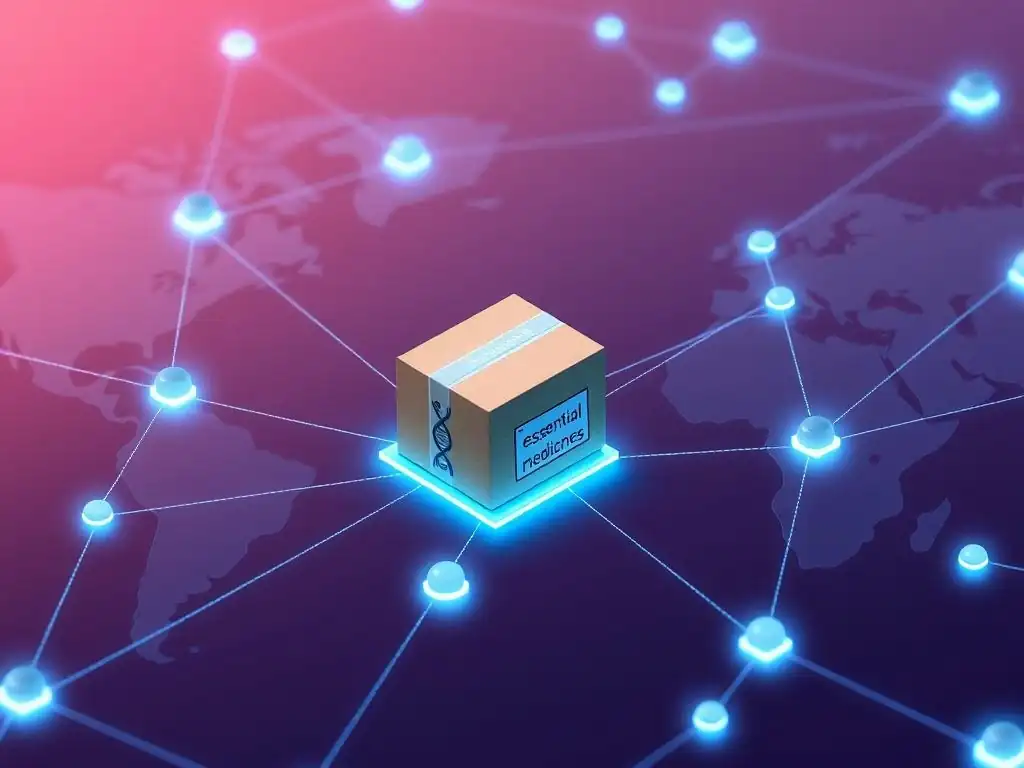
The adoption of blockchain technology in the pharmaceutical supply chain offers a multitude of benefits that contribute to enhanced transparency, accountability, and efficiency across the entire ecosystem. These advantages translate directly into improved patient safety, reduced costs, and increased trust among stakeholders.
Increased Trust and Reduced Counterfeiting in Drug Delivery
One of the most significant benefits of blockchain in pharmaceuticals is its ability to build trust among disparate parties and dramatically reduce the risk of counterfeit drugs entering the supply chain. By providing a shared, verifiable record of a drug's provenance, every participant can independently verify the authenticity of a product by scanning its identifier and checking its history on the blockchain.
This enhanced visibility makes it extremely difficult for counterfeiters to insert fake products. If a product's recorded history on the blockchain doesn't match its physical attributes or expected journey, it can be immediately flagged as suspicious.
For example, a pilot program involving several pharmaceutical companies and distributors in the US demonstrated the ability to verify product identifiers against blockchain records, significantly improving the confidence in the legitimacy of returned goods, which are often targets for counterfeits. Estimates suggest that blockchain implementation could reduce the incidence of counterfeit drugs by a measurable percentage point over time, potentially saving lives and billions in economic losses.
Enhanced Efficiency and Cost Savings in Supply Chain Operations
Beyond security, blockchain can streamline numerous operational processes within the pharmaceutical supply chain, leading to significant efficiency gains and cost reductions. The shared, immutable ledger reduces the need for manual reconciliation of records between different parties. Disputes over shipment details, authenticity, or ownership can be resolved faster and with greater certainty because all parties are referencing the same verified data.
Furthermore, automated processes via smart contracts can reduce administrative overhead. For instance, payments could be automatically released upon blockchain verification of delivery and condition, reducing delays and paperwork. A study by McKinsey estimated that blockchain could potentially reduce supply chain costs by 10-20% in various industries by improving transparency and automation. While specific figures for pharma are still emerging, the potential for reduced administrative costs, faster transactions, and fewer losses due to counterfeits or expired goods is substantial.
Improved Visibility and Traceability of Pharmaceuticals
Blockchain provides an unprecedented level of end-to-end visibility throughout the pharmaceutical supply chain. Unlike traditional systems where information is often siloed within individual companies, a blockchain ledger allows authorized participants to track the journey of a drug from its point of origin (the manufacturer) through every hand it passes through (distributors, wholesalers, pharmacies) until it reaches the patient.
This granular traceability is invaluable for various reasons. In the event of a product recall, for example, authorities and companies can quickly and precisely identify affected batches and their current locations, drastically reducing the time and cost associated with manual track-and-trace efforts. This improved visibility also helps in identifying bottlenecks or inefficiencies in the supply chain, allowing for better inventory management and logistics optimization. This capability is essential for effective blockchain supply chain tracking, ensuring critical goods reach their destinations reliably.
Real-Time Monitoring and Reporting of Drug Distribution
With a blockchain-based system, data about product movements and conditions can be recorded in near real-time as transactions occur. This allows stakeholders to have up-to-the-minute visibility into the location and status of pharmaceutical shipments. Sensors can record temperature, humidity, and tamper events, with this data being written onto the blockchain, providing a verifiable audit trail of handling conditions.
This real-time monitoring capability is crucial for ensuring the quality and safety of temperature-sensitive drugs, like vaccines or biologics. If a temperature excursion occurs, the system can immediately flag the affected batch, preventing it from being dispensed to patients and allowing for prompt investigation. This proactive approach to quality control and logistics management is a significant upgrade from reactive systems that rely on manual checks or delayed data reporting, enhancing overall supply chain resilience and accountability.
Implementing Blockchain for Pharmaceutical Supply Chain Management: A Step-by-Step Guide
Implementing a blockchain solution for pharmaceutical supply chain management is a complex undertaking that requires careful planning, collaboration, and execution. It involves technical integration, regulatory compliance considerations, and stakeholder alignment.
Step 1: Defining the Scope and Objectives of the Blockchain Project
The initial step involves clearly defining what the blockchain project aims to achieve. Is the primary goal to combat counterfeiting, improve recall efficiency, enhance visibility for regulatory compliance (like DSCSA in the US), or optimize logistics? Defining the specific use cases and desired outcomes is crucial for guiding the entire implementation process. This includes identifying the specific products or product lines to be tracked, the geographical scope of the project, and the level of granularity required for tracking (e.g., by batch, by carton, or by individual unit).
Furthermore, it's essential to identify the key performance indicators (KPIs) that will measure the success of the implementation. These might include metrics like reduced time for recalls, decrease in reported counterfeit incidents, improved audit trail completeness, or faster dispute resolution. A clear scope and well-defined objectives ensure that the project remains focused and delivers tangible value to the participating stakeholders in the pharmaceutical blockchain supply chain.
Step 2: Selecting the Appropriate Blockchain Platform [e.g., Hyperledger Fabric, Corda]
Choosing the right blockchain platform is a critical technical decision. For enterprise-level supply chain applications like pharmaceuticals, a permissioned blockchain is generally preferred over public, permissionless blockchains (like Bitcoin or Ethereum) due to requirements for privacy, scalability, and controlled access. Popular enterprise blockchain platforms include Hyperledger Fabric (an open-source project hosted by The Linux Foundation) and R3's Corda (designed specifically for regulated industries).
Hyperledger Fabric is known for its modular architecture, support for pluggable consensus mechanisms, and private channels that allow subsets of participants to transact privately. It's widely used in supply chain and logistics projects. Corda, on the other hand, focuses on point-to-point transactions between parties rather than broadcasting to the entire network, which can be advantageous for privacy and scalability in certain scenarios. The selection depends on factors like transaction volume, privacy requirements, ease of integration, development community support, and licensing costs.
Step 3: Identifying Key Stakeholders and Establishing Data Standards (e.g., GS1)
Successful blockchain implementation in pharmaceuticals requires collaboration among all supply chain participants: manufacturers, repackagers, wholesalers, dispensers (pharmacies, hospitals), and potentially regulators and third-party logistics providers (3PLs). Identifying these key stakeholders and securing their buy-in is paramount. A consortium approach, where representatives from different parts of the chain collaborate, is often necessary to ensure the solution meets everyone's needs.
Establishing common data standards is equally important. The pharmaceutical industry already utilizes standards like GS1 (Global Standards One) for product identification (GTINs), location identification (GLNs), and tracing events. Adopting and enforcing these standards within the blockchain framework ensures interoperability and consistency across the network. The blockchain system should be designed to capture and link data points according to these agreed-upon standards, facilitating seamless information flow and verification across different company systems.
Step 4: Developing and Deploying the Blockchain Application
This step involves the actual technical work of building the blockchain application. This includes designing the data model for recording transactions, developing smart contracts to automate business logic (like verification rules or transfer of ownership), and building the user interface or APIs that allow participants to interact with the network. The development process often involves defining the consensus mechanism (how transactions are validated) and the network governance rules (how participants join, updates are made, and disputes are handled).
Deployment involves setting up the blockchain nodes for each participating organization and connecting them to form the network. This can be on-premises, in the cloud, or a hybrid approach. Rigorous testing is crucial during this phase to ensure the system handles expected transaction volumes, maintains data integrity, and performs reliably under various conditions. Security testing is also critical to protect the network from potential vulnerabilities.
Example of a simplified transaction structure on the ledger:

```json
{
  "transactionId": "Txn12345...",
  "productIdentifier": "GTIN00123456789012",
  "batchNumber": "BATCHXYZ789",
  "serialNumber": "SN987654321",
  "eventType": "Shipped",
  "fromLocation": "GLNManufacturerXYZ",
  "toLocation": "GLNWholesalerABC",
  "timestamp": "2023-10-27T10:00:00Z",
  "shipperDetailsHash": "hashABCD...",
  "conditionsHash": "hashEFGH..." // e.g., temperature sensor data hash
}
This structure, hashed and included in a block, forms an immutable record.
### Step 5: Integrating the Blockchain System with Existing Pharmaceutical Management Systems

For the blockchain solution to be effective, it must seamlessly integrate with the existing IT infrastructure of participating companies. This includes systems like Enterprise Resource Planning (ERP), Warehouse Management Systems (WMS), Transportation Management Systems (TMS), and serialization systems. Data about product movements, inventory levels, and master data (like product descriptions and GTINs) resides in these legacy systems and needs to be accurately and securely transferred to the blockchain.

Integration typically involves developing APIs or middleware that connect the blockchain node to the company's internal systems. This allows operational data to be recorded on the blockchain without requiring users to abandon their familiar tools. Ensuring robust and reliable data synchronization between the legacy systems and the blockchain ledger is crucial for maintaining data consistency and enabling real-time tracking capabilities across the entire blockchain supply chain.

## Case Studies: Real-World Examples of Blockchain in Pharmaceutical Distribution

While still relatively nascent compared to other industries, the pharmaceutical sector has seen several significant initiatives exploring and implementing blockchain for supply chain security and transparency. These early adopters provide valuable insights into the potential and challenges of the technology.

### Case Study 1: MediLedger Network for Drug Supply Chain Security

One of the most prominent examples in the US is the MediLedger Network, a project initiated by Chronicled and involving major pharmaceutical manufacturers, distributors, and other supply chain partners. The network was designed to meet the requirements of the US Drug Supply Chain Security Act (DSCSA), which mandates an electronic, interoperable system for tracing prescription drugs by 2023. MediLedger uses a permissioned blockchain to enable participants to verify the authenticity of drug identifiers (serialization data) and manage product returns.

The core functionality allows a dispenser (like a pharmacy) to verify a product's serial number directly with the manufacturer via the blockchain network, without needing to connect point-to-point with every manufacturer. This process is facilitated by sharing cryptographic proofs on the ledger while keeping sensitive business data private. The network successfully demonstrated the ability to verify millions of product identifiers and process returns efficiently, proving the concept of a shared, trusted network for critical supply chain data exchange in the pharmaceutical sector.

### Case Study 2: IBM Food Trust for Tracking Pharmaceuticals

While primarily known for tracking food items like lettuce and tomatoes, the underlying technology and principles of the IBM Food Trust platform have been explored for application in pharmaceutical supply chains. The platform, built on Hyperledger Fabric, allows participants to upload, access, and share supply chain data in a secure, permissioned environment. The focus is on creating a shared, immutable record of a product's journey, enabling rapid traceability.

Applying this model to pharmaceuticals involves tracking specific drug batches or serialized units from manufacturing through distribution. Participants like manufacturers, wholesalers, and pharmacies would record key events on the platform, such as shipment, receipt, and transfer of ownership. This creates a verifiable history accessible to authorized parties. While not as widely adopted in pharma as MediLedger specifically for DSCSA compliance yet, the Food Trust model demonstrates the potential for large-scale, multi-party blockchain solutions for tracking complex supply chains of sensitive goods, including pharmaceuticals and potentially extending to blockchain supply chain aid tracking for medical supplies or food aid.

### Analyzing the Results and Impact of Blockchain Adoption

Early case studies and pilot programs, like those mentioned, have shown promising results. Participants in networks like MediLedger reported significant improvements in the efficiency and confidence of verifying product authenticity, particularly for product returns, which is a major vulnerability for counterfeit infiltration. The ability to quickly access a shared, verified history of a product reduced the time and effort required for manual verification processes.

Beyond efficiency, the primary impact lies in the enhanced security and trust. By making it significantly harder for illegitimate products to enter the supply chain undetected, these systems contribute directly to patient safety. While comprehensive data on the reduction of counterfeit incidents directly attributable to blockchain is still being collected as these systems scale, the foundational capability for robust, real-time verification and tracing represents a fundamental shift towards a more secure and transparent pharmaceutical supply chain. These pilot results underscore the potential for widespread adoption and the transformative impact on the industry.

## Addressing the Challenges of Blockchain Implementation in Pharmaceuticals

Despite the significant potential, implementing blockchain in the pharmaceutical supply chain is not without its challenges. These hurdles span regulatory, technical, and organizational domains and require careful consideration and strategic planning to overcome.

### Overcoming Regulatory Hurdles and Compliance Requirements (e.g., DSCSA)

The pharmaceutical industry is one of the most heavily regulated sectors globally. Implementing a new technology like blockchain must align with existing regulations and often requires interpretation or even updates to current rules. In the United States, the Drug Supply Chain Security Act (DSCSA) mandates an interoperable electronic system to identify and trace certain prescription drugs. While blockchain can be a powerful tool to achieve DSCSA compliance by providing an immutable ledger and facilitating data exchange, ensuring that a specific blockchain implementation fully meets the complex requirements of the law is a significant challenge.

Compliance involves not just technical capabilities but also defining governance models, access controls, and data standards that satisfy regulatory bodies like the FDA. Different countries also have their own unique regulations for drug traceability, adding another layer of complexity for global pharmaceutical companies. Navigating this intricate regulatory landscape requires close collaboration between technology providers, pharmaceutical companies, and regulatory authorities to ensure that blockchain solutions are not only technically sound but also legally compliant and accepted.

### Ensuring Data Privacy and Security in Blockchain-Based Systems (e.g., HIPAA)

Pharmaceutical supply chain data can be highly sensitive, including information about drug movements, inventory levels, and potentially even patient-level data in dispensing scenarios. While blockchain is inherently secure due to its cryptographic nature, ensuring data privacy within a shared ledger environment is crucial. Enterprise blockchain platforms address this through permissioned networks, where access is restricted, and private channels, which allow specific subsets of participants to conduct transactions visible only to them.

However, challenges remain regarding what data is stored on the chain versus off-chain, and how to comply with privacy regulations like HIPAA (Health Insurance Portability and Accountability Act) in the US, which protects patient health information. Storing personally identifiable information directly on an immutable ledger is generally not advisable. Solutions involve storing hashed or encrypted data on the blockchain while keeping the sensitive details in off-chain databases with strict access controls, linking them via cryptographic pointers on the chain. Designing these systems requires careful architectural decisions to balance transparency for traceability with necessary data privacy and security.

### Addressing Scalability and Interoperability Issues

The pharmaceutical supply chain involves a massive volume of transactions globally, from individual pill bottles to large shipments. A blockchain network must be able to handle this scale efficiently, processing a high throughput of transactions without experiencing delays or excessive costs. While enterprise blockchains are designed to be more scalable than public ones, managing the growth of the network as more participants join and transaction volume increases remains a technical challenge that requires robust infrastructure and optimized smart contract design.

Interoperability is another significant hurdle. The pharmaceutical ecosystem uses a wide variety of legacy systems and different companies may adopt different blockchain platforms or versions. Ensuring that these disparate systems and networks can communicate and exchange data seamlessly is essential for achieving true end-to-end traceability. Developing industry-wide standards for blockchain data exchange and promoting the adoption of interoperable solutions are critical steps toward building a cohesive and efficient pharmaceutical blockchain supply chain ecosystem.

### Promoting Stakeholder Adoption and Training

Perhaps one of the most significant non-technical challenges is gaining widespread adoption across a diverse and often technologically conservative industry. Manufacturers, wholesalers, distributors, and dispensers all need to invest in integrating with and using the new blockchain system. This requires not only financial investment but also changes to existing processes and training for personnel.

Securing buy-in from all levels, from executive leadership to warehouse staff and pharmacists, is vital. Demonstrating the clear value proposition – improved patient safety, reduced costs, regulatory compliance – is key to driving adoption. Providing adequate training and support is necessary to ensure that users are comfortable and proficient with the new technology. A collaborative approach involving industry consortia and pilot programs can help build consensus, share knowledge, and accelerate the adoption curve for blockchain supply chain tracking in pharmaceuticals and beyond.

## The Future of Blockchain in Pharmaceutical Supply Chains and Healthcare

The application of blockchain technology in pharmaceuticals is still evolving, with significant potential for further innovation and broader impact. As pilot programs mature and regulatory frameworks adapt, blockchain is poised to become an integral part of the future pharmaceutical ecosystem and potentially influence other critical supply chains like blockchain supply chain aid tracking.

### Exploring Emerging Technologies and Innovations in Blockchain for Pharmaceuticals

The field of blockchain technology is constantly advancing, with new innovations emerging that could further enhance its application in pharmaceuticals. Zero-Knowledge Proofs (ZKPs), for instance, could allow parties to verify the authenticity of a transaction or data point without revealing the underlying sensitive information, offering a new layer of privacy. Interoperability solutions, such as cross-chain protocols, are being developed to enable communication and data exchange between different blockchain networks, addressing the challenge of fragmented systems.

Furthermore, the integration of Internet of Things (IoT) devices with blockchain is a promising area. Temperature sensors, GPS trackers, and anti-tampering seals can automatically record data onto the blockchain, creating an even more granular and automated audit trail of product conditions and movements. Artificial intelligence (AI) can be applied to analyze the vast datasets generated by blockchain-based tracking systems to identify patterns indicative of fraud, diversion, or supply chain inefficiencies, moving from reactive tracking to proactive prediction and prevention.

### The Potential for Blockchain to Transform Pharmaceutical Distribution Globally

Beyond individual company implementations or national compliance efforts, blockchain has the potential to fundamentally transform global pharmaceutical distribution. A globally interconnected network of permissioned blockchains could provide end-to-end visibility from raw material sourcing to patient dispensing across international borders. This would be particularly impactful in combating the global trade in counterfeit drugs, which often exploits vulnerabilities in cross-border supply chains.

Moreover, blockchain could streamline international trade processes, reducing paperwork and delays associated with customs and regulatory checks by providing instantly verifiable documentation on the ledger. This enhanced global transparency and efficiency could also have significant implications for the distribution of critical medical supplies and aid goods in emergency situations or developing regions, where the need for verifiable provenance and secure delivery is paramount. The principles of blockchain supply chain tracking developed for pharmaceuticals are highly transferable to tracking aid goods from origin to recipient.

### Policy Recommendations for Supporting Blockchain Adoption in the Pharmaceutical Sector

Governments and regulatory bodies play a crucial role in fostering the adoption of blockchain in the pharmaceutical supply chain. Clear policy guidance and supportive regulations can accelerate implementation and ensure that solutions meet necessary safety and security standards. Regulatory bodies should continue to engage with industry stakeholders and technology providers to understand the capabilities and limitations of blockchain and how it can effectively support compliance mandates like DSCSA.

Policy recommendations include promoting the development and adoption of open standards for blockchain data exchange and interoperability within the healthcare and pharmaceutical sectors. Regulatory sandboxes or pilot programs specifically focused on blockchain applications could provide a safe environment for testing and evaluating new solutions. Furthermore, international cooperation is needed to harmonize regulations and facilitate the development of global blockchain networks for drug traceability, ultimately strengthening the integrity of the pharmaceutical supply chain worldwide.

## Conclusion: Blockchain as a Catalyst for Transparency and Accountability in Pharmaceutical Supply Chains

The pharmaceutical industry stands at a critical juncture, facing persistent challenges related to counterfeiting, diversion, and supply chain inefficiencies that directly impact patient safety and public trust. Traditional systems, often fragmented and reliant on paper or siloed databases, are proving insufficient to meet the demands for verifiable transparency and robust security in today's complex global distribution networks.

Blockchain technology offers a compelling solution by providing a decentralized, immutable, and transparent ledger that can record the entire journey of a pharmaceutical product. By creating a shared, single source of truth accessible to authorized parties, blockchain significantly enhances the ability to track and verify drugs from manufacturer to patient. This inherent transparency builds trust among stakeholders and acts as a powerful deterrent against illicit activities, fundamentally strengthening the integrity of the pharmaceutical supply chain.

### Summarizing the Key Benefits of Blockchain for Drug Tracking

The advantages of leveraging blockchain for tracking pharmaceuticals are multifaceted and impactful. Foremost is the dramatic increase in trust and the reduction in the likelihood of counterfeit drugs infiltrating legitimate channels, directly safeguarding patient health. The immutable record provides undeniable proof of provenance and handling.

Beyond security, blockchain drives operational efficiencies and cost savings by streamlining processes, reducing manual reconciliation, and enabling faster dispute resolution. It delivers unprecedented visibility and traceability, allowing for rapid identification of affected products during recalls and optimizing inventory management. The capability for near real-time monitoring of conditions like temperature further ensures product quality and safety throughout the supply chain, making it a powerful tool for comprehensive blockchain supply chain tracking.

### Emphasizing the Importance of Collaboration and Innovation in Blockchain Adoption

Realizing the full potential of blockchain in pharmaceuticals requires significant collaboration across the entire ecosystem. Manufacturers, distributors, pharmacies, regulators, and technology providers must work together to define standards, establish governance models, and build interoperable networks. Industry consortia and shared initiatives are crucial for overcoming individual company silos and creating a cohesive, industry-wide solution.

Continued innovation is also key. As the technology evolves, exploring the integration of blockchain with IoT, AI, and advanced cryptographic techniques will unlock even greater capabilities for security, efficiency, and data analysis. Investing in research and development, fostering a culture of innovation, and sharing knowledge across the industry will accelerate the development and deployment of next-generation pharmaceutical supply chain solutions.

### Call to Action: Promoting the Use of Blockchain for a More Transparent and Accountable Pharmaceutical System

The evidence from pilot programs and the inherent capabilities of the technology underscore the transformative potential of blockchain for pharmaceutical supply chains. While challenges remain, they are surmountable through concerted effort and collaboration. It is imperative for all stakeholders in the pharmaceutical industry to actively explore, pilot, and adopt blockchain technology.

Promoting the use of blockchain is not just about adopting a new technology; it's about building a more secure, efficient, and trustworthy system for distributing life-saving medications. By embracing blockchain supply chain tracking, the industry can enhance transparency, strengthen accountability, and ultimately, better protect the health and safety of patients worldwide. This commitment to innovation is essential for the future integrity of pharmaceutical distribution and can serve as a valuable model for tracking other critical goods, such as those involved in blockchain supply chain aid tracking efforts.
Frequently Asked Questions
How does blockchain enhance supply chain transparency for aid goods?
Blockchain creates an immutable and transparent ledger, ensuring that every transaction and movement of aid goods is recorded and verifiable. This allows for easy tracking from origin to recipient.
What are the key benefits of using blockchain for tracking aid goods?
Benefits include increased accountability, reduced fraud and corruption, and improved efficiency in the delivery of aid. This also fosters greater trust among donors and recipients.
How can blockchain address the issue of counterfeit or diverted aid supplies?
Blockchain's tamper-proof nature makes it difficult to introduce counterfeit goods or divert supplies without detection. Each product can have a unique digital identity verified at each stage.
What are the challenges of implementing blockchain solutions for aid supply chains in developing countries?
Challenges include limited infrastructure, low digital literacy, and lack of regulatory frameworks. Overcoming these obstacles requires collaborative efforts and targeted training programs.
What is the potential future impact of blockchain on aid distribution and humanitarian efforts?
Blockchain has the potential to revolutionize aid delivery, making it more efficient, transparent, and accountable. This could lead to greater impact and increased trust in humanitarian organizations.
Final Reflection: Empowering Trust Through Transparency
The journey of aid from its origin to the hands of those who need it most is often fraught with opacity and uncertainty. Blockchain supply chain aid tracking offers a revolutionary solution, promising to transform this complex process into one of verifiable trust and accountability. This technology is not just a theoretical concept; it represents a tangible step towards ensuring that aid reaches its intended recipients, maximizing its impact and fostering greater confidence in humanitarian efforts.
The potential for blockchain to reshape the aid landscape is profound. Witnessing the evolution of this technology from a nascent idea to a practical tool for good has been incredibly inspiring, highlighting the power of innovation to address critical global challenges. Transparency and accountability are not luxuries; they are essential for building trust and ensuring that aid reaches those who need it most.
This quote encapsulates the core principle driving the adoption of blockchain in aid supply chains, underscoring the importance of verifiable data in fostering a more equitable and effective humanitarian system.
As we conclude this exploration of blockchain supply chain aid tracking, I invite you to consider the implications of this technology in your own sphere of influence. How can you champion transparency and accountability in your own life, whether in your professional endeavors or in your personal interactions? Let us all strive to create a world where trust is not just an aspiration, but a verifiable reality, powered by innovative solutions like blockchain.
Empower Change: Trace Aid & Build Trust Today!
Thank you for exploring how blockchain technology can transform aid distribution and enhance transparency in humanitarian efforts. Now that you understand its potential, let's move from awareness to action and work toward creating a more accountable and efficient system.
Here are some ways you can get involved:
- Learn More: Research initiatives that utilize blockchain for aid delivery and identify organizations actively implementing these solutions. Consider supporting their work or volunteering your skills to make a difference.
- Share the Message: Spread the word by sharing this article and similar content on your social media platforms to raise awareness about the importance of supply chain transparency in aid efforts.
- Engage & Collaborate: Join online communities or forums focused on blockchain for social good. Sharing your insights and connecting with others passionate about this cause can foster innovation and progress.
What specific challenges in aid distribution do you think blockchain can help address, and how might we work together to overcome them?
Leave a Reply