
CrossChain DeFi and Sidechains: Exploring Alternative Scaling Solutions


Welcome to Blockchain Trends, your guide to understanding the revolutionary potential of blockchain technology.
Are you ready to dive beyond the hype and explore the cutting edge of decentralized finance? In this deep dive, we'll unpack the intricacies of CrossChain DeFi scaling solutions, investigating how they are poised to revolutionize the landscape. From sidechains to groundbreaking interoperability protocols, discover how these advancements are unlocking new levels of efficiency and accessibility. Intrigued? Read on to discover the future of scalable DeFi.
Cross-Chain DeFi and Sidechains: Exploring Scaling Solutions
- Understanding the Need for Cross-Chain DeFi Scaling Solutions
- Sidechains as a Scaling Solution for Decentralized Finance
- Comparing Sidechains with Other Cross-Chain DeFi Scaling Solutions
- Popular Sidechain Projects in the Cross-Chain DeFi Ecosystem
- Potential Risks and Challenges of Cross-Chain DeFi and Sidechains
- The Future of Cross-Chain DeFi Scaling with Sidechains
- Implementing Cross-Chain DeFi Strategies with Sidechains: A Practical Guide
-
Frequently Asked Questions
- What are the main benefits of using CrossChain DeFi solutions?
- How do sidechains contribute to scaling DeFi applications?
- What are some potential drawbacks or risks associated with CrossChain DeFi?
- How does CrossChain DeFi differ from Layer-2 scaling solutions?
- What are some examples of CrossChain DeFi scaling solutions currently being developed?
- Final Reflection: Bridging the Future of Finance
- Ignite Your DeFi Journey: Dive Deeper into Cross-Chain Possibilities!
Understanding the Need for Cross-Chain DeFi Scaling Solutions
The Limitations of Layer-1 DeFi and the Rise of Cross-Chain Solutions
Decentralized Finance (DeFi) on Layer-1 blockchains, while revolutionary, faces inherent limitations that hinder its widespread adoption and scalability. Early DeFi ecosystems, primarily built on Ethereum, have encountered significant challenges as the popularity of decentralized applications (dApps) and trading volumes surged. The most prominent bottleneck is transaction throughput. Layer-1 blockchains like Ethereum have a finite capacity to process transactions per second (TPS). For Ethereum, this capacity is approximately 15-30 TPS. During periods of high network activity, such as during popular token launches or market volatility, this limited throughput leads to network congestion.
This congestion manifests as dramatically increased transaction fees, often referred to as "gas fees" on Ethereum. In peak times, simple transactions could cost tens or even hundreds of dollars, making DeFi inaccessible to users with smaller portfolios and hindering the usability of dApps for everyday financial activities. Furthermore, transaction confirmation times can become excessively long during congestion, impacting the user experience and the efficiency of DeFi protocols that rely on timely execution.
These limitations of Layer-1 DeFi ecosystems have spurred the development and exploration of various scaling solutions, with cross-chain approaches emerging as a critical pathway to overcome these bottlenecks and unlock the full potential of decentralized finance. The need for efficient and cost-effective solutions to scale DeFi has paved the way for innovations like cross-chain DeFi and sidechains.
Defining Cross-Chain DeFi: Interoperability and Composability
Cross-Chain DeFi represents a paradigm shift in decentralized finance, moving beyond the constraints of single blockchain ecosystems. At its core, cross-chain DeFi is about enabling interoperability and composability across different blockchain networks. Interoperability refers to the ability of different blockchains to communicate and interact with each other, exchanging information and assets seamlessly. This is crucial for breaking down the silos between isolated blockchain networks and fostering a more interconnected and efficient DeFi landscape.
Composability, a key feature of DeFi within a single blockchain, is extended in the cross-chain context. It means that DeFi protocols and applications built on different blockchains can be combined and integrated to create more complex and sophisticated financial instruments and services. For instance, a user might want to use collateral locked on one blockchain to borrow assets on another, or participate in a yield farming opportunity that spans multiple chains.
Cross-chain DeFi aims to make these kinds of interactions possible, creating a more fluid and interconnected financial system. This interconnectedness enhances capital efficiency, expands the range of DeFi services available to users, and reduces the risks associated with relying on a single blockchain network. Effective CrossChain DeFi scaling solutions are therefore essential to realizing this vision of a unified and scalable decentralized financial ecosystem.
Sidechains as a Scaling Solution for Decentralized Finance
What are Sidechains and How Do They Enhance DeFi Scalability?
Sidechains are independent blockchains that run parallel to a main blockchain, often referred to as the "parent chain" or "mainchain." They are designed to enhance the scalability and functionality of the mainchain by offloading transaction processing and computation. Think of a sidechain as a highway running alongside a congested city road (the mainchain). Traffic can be diverted to the highway, relieving pressure on the main road and allowing for faster and smoother flow. In the context of DeFi, sidechains act as separate environments where decentralized applications and financial activities can operate with increased throughput and reduced costs.
The connection between a sidechain and the mainchain is typically facilitated by a two-way bridge. This bridge allows for the secure transfer of assets, such as tokens, between the mainchain and the sidechain. When users want to utilize DeFi applications on a sidechain, they can bridge their assets from the mainchain to the sidechain.
Once on the sidechain, transactions are processed independently and much faster than they would be on the congested mainchain. After completing their activities on the sidechain, users can bridge their assets back to the mainchain. This mechanism effectively scales DeFi by distributing the load across multiple blockchains, making CrossChain DeFi scaling solutions using sidechains a viable approach.
Sidechain Architecture and Consensus Mechanisms: A Technical Overview
Sidechain architecture generally involves a few key components. Firstly, there's the mainchain, which provides the foundational security and acts as the anchor for the sidechain. Secondly, there's the sidechain itself, which is a separate blockchain with its own consensus mechanism, block validation rules, and infrastructure. Crucially, a bridge mechanism connects the mainchain and the sidechain, enabling the transfer of assets between them. This bridge often employs smart contracts on both chains to manage the locking and unlocking of assets during transfers.
Sidechains have the flexibility to implement different consensus mechanisms than their mainchains. While the main Ethereum chain, for instance, transitioned to Proof-of-Stake (PoS), a sidechain connected to Ethereum could choose to use Proof-of-Authority (PoA), Delegated Proof-of-Stake (DPoS), or even a different variant of PoS. PoA, for example, relies on a set of pre-selected validators known for their reputation, offering faster block times and higher throughput, often at the expense of complete decentralization.
The choice of consensus mechanism on a sidechain is a crucial design decision that impacts its performance, security, and decentralization characteristics. Different CrossChain DeFi scaling solutions leverage various consensus mechanisms in their sidechain implementations to optimize for specific DeFi use cases.
Benefits of Using Sidechains for Cross-Chain DeFi Applications
Sidechains offer a range of compelling benefits for deploying and utilizing cross-chain DeFi applications, making them an attractive scaling solution for decentralized finance. These benefits stem from their independent nature and customizable architecture.
Increased Transaction Throughput on Sidechains
One of the primary advantages of sidechains is their ability to significantly increase transaction throughput compared to congested Layer-1 blockchains. Because sidechains operate as separate blockchains, they are not directly impacted by the transaction load on the mainchain. They can be designed with optimized consensus mechanisms and block parameters to achieve much higher TPS.
For example, while Ethereum's mainnet processes around 15-30 TPS, sidechains like Polygon have demonstrated the capability to handle thousands of transactions per second. This increased throughput translates to faster transaction confirmation times for DeFi users, improving the overall user experience and enabling more complex and high-frequency DeFi activities. This is a critical aspect of effective CrossChain DeFi scaling solutions.
Lower Transaction Fees with Sidechain Implementations
Lower transaction fees are another significant benefit of using sidechains for DeFi applications. The high gas fees on congested mainchains, like Ethereum, can be a major barrier to entry for many users and can make certain DeFi strategies economically unviable. Sidechains, by offloading transaction processing, alleviate congestion on the mainchain and operate with their own, often significantly lower, fee structures.
Transaction fees on sidechains like Polygon or Gnosis Chain are typically a fraction of those on Ethereum mainnet, often costing just cents or even fractions of a cent. This reduction in fees makes DeFi more accessible to a wider range of users, including those with smaller capital, and enables the development of DeFi applications that are economically feasible for everyday use cases. Lower fees are a key driver for the adoption of CrossChain DeFi scaling solutions built on sidechains.
Enhanced Customization and Flexibility in DeFi Protocols
Sidechains provide developers with enhanced customization and flexibility in designing and deploying DeFi protocols. Unlike Layer-2 scaling solutions that are often constrained by the rules and limitations of the mainchain, sidechains are independent blockchains. This independence allows developers to tailor the sidechain environment to the specific needs of their DeFi applications.
For instance, sidechains can implement different virtual machines (VMs), experiment with novel consensus mechanisms, or incorporate specific features like privacy enhancements or specialized smart contract functionalities. This flexibility is particularly valuable for developing innovative DeFi protocols that require unique features or optimizations not readily available on the mainchain. Sidechains can be customized to support specific DeFi use cases, leading to a more diverse and specialized ecosystem of CrossChain DeFi scaling solutions.
Comparing Sidechains with Other Cross-Chain DeFi Scaling Solutions
Sidechains vs. Layer-2 Scaling Solutions (Rollups, Channels)
While both sidechains and Layer-2 scaling solutions aim to improve the scalability of blockchains and DeFi, they employ fundamentally different approaches. Layer-2 solutions, such as rollups and channels, operate "on top" of the main Layer-1 blockchain. Rollups, like Optimistic Rollups and zk-Rollups, bundle multiple transactions off-chain and then submit a summarized proof of these transactions to the mainchain.
Channels, like state channels, enable direct, off-chain transactions between two parties, with only the opening and closing states being recorded on the mainchain. Layer-2 solutions inherit the security of the mainchain, as transaction proofs or state updates are ultimately verified by the Layer-1 consensus mechanism.
Sidechains, in contrast, are independent blockchains with their own security models. While bridges connect them to the mainchain, sidechains do not directly inherit the mainchain's security. Sidechains offer greater flexibility in terms of customization and consensus mechanisms compared to Layer-2 solutions, but this comes with the trade-off of requiring their own security infrastructure.
Layer-2 solutions generally offer stronger security guarantees as they are anchored to the mainchain, but they may have limitations in terms of customization and the types of applications they can support. Choosing between sidechains and Layer-2 solutions for CrossChain DeFi scaling solutions depends on the specific requirements of the DeFi application, prioritizing either flexibility and customization (sidechains) or stronger security inheritance (Layer-2).
Sidechains vs. Interoperability Protocols (Bridges)
Interoperability protocols, often referred to as "bridges," are a crucial component of cross-chain DeFi, and they are also essential for sidechain functionality. However, it's important to distinguish between interoperability protocols as a general category and sidechains as a specific type of scaling solution that utilizes bridges. Interoperability protocols are designed to facilitate communication and asset transfers between different blockchains. Bridges are a specific implementation of interoperability protocols, typically involving smart contracts that lock assets on one chain and mint equivalent representations on another.
Sidechains are more than just bridges; they are complete blockchain ecosystems that are connected to a mainchain via a bridge. While bridges enable cross-chain asset transfers, sidechains provide entire environments for building and deploying DeFi applications with enhanced scalability and lower costs. Bridges are the infrastructure that enables sidechains to participate in the broader cross-chain DeFi landscape, allowing users to move assets to and from the sidechain ecosystem. Therefore, sidechains leverage interoperability protocols (bridges) to function as effective CrossChain DeFi scaling solutions, offering both scalability and cross-chain connectivity.
Evaluating Trade-offs: Security, Decentralization, and Scalability
When evaluating different CrossChain DeFi scaling solutions, including sidechains, it's crucial to consider the trade-offs between security, decentralization, and scalability – often referred to as the "blockchain trilemma." Security refers to the robustness of the system against attacks and vulnerabilities, ensuring the safety of user funds and data. Decentralization relates to the distribution of control and validation responsibilities across a network, reducing reliance on central authorities and enhancing censorship resistance. Scalability, as discussed, is the capacity of the network to handle increasing transaction volumes and user activity without compromising performance or increasing costs.
Sidechains, in their pursuit of scalability and customization, often make trade-offs in terms of decentralization and potentially security compared to the mainchain. Depending on the chosen consensus mechanism and validator set, a sidechain might be less decentralized than its mainchain parent. Similarly, the security of a sidechain is dependent on its own infrastructure and the robustness of its bridge mechanism, which can be a point of vulnerability.
Layer-2 solutions, by inheriting security from the mainchain, often prioritize security and decentralization over maximum customization. Interoperability protocols themselves introduce their own security considerations, as bridges have been targets for exploits. The optimal choice among CrossChain DeFi scaling solutions depends on the specific priorities of the DeFi application – whether it prioritizes maximum security and decentralization or greater scalability and customization.
Popular Sidechain Projects in the Cross-Chain DeFi Ecosystem
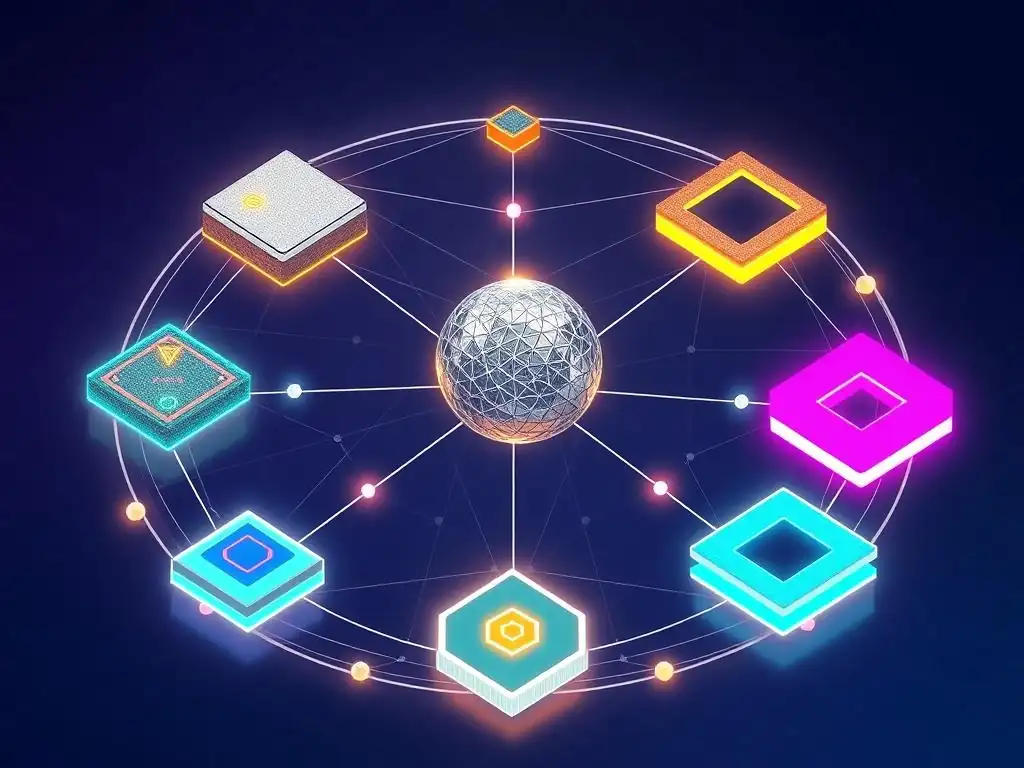
Examining Polygon and its DeFi Applications
Polygon (formerly Matic Network) stands out as one of the most prominent and widely adopted sidechain projects in the cross-chain DeFi ecosystem. Polygon is specifically designed as a Layer-2 scaling solution for Ethereum, but it functions effectively as a sidechain, offering a separate blockchain environment compatible with the Ethereum Virtual Machine (EVM). This EVM compatibility is a key factor in Polygon's popularity, as it allows developers to easily port their existing Ethereum-based DeFi applications to Polygon with minimal code changes.
Polygon utilizes a Proof-of-Stake (PoS) consensus mechanism and a network of validators to secure its blockchain, achieving significantly higher transaction throughput and lower fees compared to Ethereum mainnet. A wide range of popular DeFi protocols have deployed versions of their applications on Polygon, including Aave, Curve, and SushiSwap, attracting substantial liquidity and user activity. Polygon has become a vibrant ecosystem for CrossChain DeFi scaling solutions, offering users access to familiar DeFi services with improved performance and reduced costs. Its success highlights the viability and user demand for sidechain-based scaling in the DeFi space.
Analyzing Avalanche Subnets and its Cross-Chain Functionality
Avalanche is a Layer-1 blockchain platform that incorporates the concept of "Subnets," which are essentially customizable sidechains within the Avalanche ecosystem. Subnets allow developers to create their own blockchains tailored to specific application requirements, with control over consensus mechanisms, virtual machines, and other parameters. Avalanche's architecture is designed for high throughput and fast finality, making it well-suited for DeFi applications. Subnets can be configured to interoperate with the Avalanche main network (the Primary Network), enabling cross-chain asset transfers and composability within the Avalanche ecosystem.
Avalanche Subnets offer significant flexibility for developers seeking to build specialized DeFi applications. For example, a Subnet could be created with specific regulatory compliance features or optimized for particular types of DeFi transactions. The cross-chain functionality of Subnets allows for the creation of interconnected DeFi ecosystems within Avalanche, where different Subnets can interact and share assets. Avalanche Subnets represent a powerful example of how sidechain architectures can be integrated into a Layer-1 platform to provide scalable and customizable CrossChain DeFi scaling solutions.
A Deep Dive into Gnosis Chain and its Unique Features
Gnosis Chain (formerly xDai Chain) is another notable sidechain project focused on providing a stable and low-cost environment for DeFi applications. Gnosis Chain is an EVM-compatible sidechain that utilizes a Proof-of-Authority (PoA) consensus mechanism, known for its efficiency and fast block times. A key feature of Gnosis Chain is its use of the xDai stablecoin as its native currency for transaction fees. This stability eliminates the volatility associated with using other cryptocurrencies for gas, making transactions more predictable and user-friendly, particularly for everyday DeFi activities and payments.
Gnosis Chain has fostered a growing DeFi ecosystem with a focus on stablecoin-centric applications, payments, and microtransactions. Its stability and low fees make it attractive for users seeking a reliable and affordable platform for DeFi. Gnosis Chain's unique focus on stablecoins and its PoA consensus mechanism differentiate it from other sidechain projects, demonstrating the diversity of approaches within the CrossChain DeFi scaling solutions landscape. Its emphasis on stability provides a valuable option for DeFi users and developers seeking predictability and low-cost transactions.
Potential Risks and Challenges of Cross-Chain DeFi and Sidechains
Security Considerations: Bridge Vulnerabilities and Smart Contract Risks
While cross-chain DeFi and sidechains offer significant benefits, they also introduce new security considerations and challenges. Bridge vulnerabilities are a primary concern in cross-chain DeFi. Bridges, which facilitate asset transfers between chains, are complex systems that can become targets for exploits. Several high-profile bridge hacks have occurred, resulting in substantial losses of user funds. The security of a bridge depends on the underlying technology, the smart contract code, and the security practices of the bridge operators. Weaknesses in any of these areas can be exploited by malicious actors.
Smart contract risks are also amplified in cross-chain DeFi environments. DeFi protocols on sidechains, like those on mainchains, are susceptible to smart contract vulnerabilities. The complexity of cross-chain interactions and the potential for composability across multiple chains can increase the attack surface and make it more challenging to audit and secure DeFi applications.
Furthermore, the security of a sidechain is not guaranteed to be as robust as that of a well-established mainchain like Ethereum, potentially increasing the risk of attacks or vulnerabilities in the sidechain itself. Addressing security concerns related to bridges and smart contracts is paramount for the sustainable growth and user adoption of CrossChain DeFi scaling solutions.
Liquidity Fragmentation Across Multiple Chains
Liquidity fragmentation is another challenge inherent in cross-chain DeFi environments. As DeFi activity spreads across multiple blockchains and sidechains, liquidity can become fragmented, meaning it is distributed across different ecosystems rather than being concentrated in a single place. This fragmentation can reduce the efficiency of DeFi markets, leading to lower trading volumes, wider price slippage, and reduced capital efficiency. For example, if a particular token is available on multiple sidechains and the mainchain, liquidity for that token might be spread thinly across these different venues, making it more difficult to execute large trades at favorable prices.
Addressing liquidity fragmentation is crucial for the long-term health of cross-chain DeFi. Solutions being explored include cross-chain aggregators that can route trades across multiple chains to find the best prices and cross-chain liquidity pools that allow users to provide liquidity across different blockchain networks. Overcoming liquidity fragmentation is essential to ensuring that CrossChain DeFi scaling solutions can offer a seamless and efficient user experience, comparable to or exceeding that of traditional centralized financial systems.
Regulatory Uncertainty Surrounding Cross-Chain DeFi
Regulatory uncertainty poses a significant challenge to the development and adoption of cross-chain DeFi. The regulatory landscape for cryptocurrencies and DeFi is still evolving, and the cross-chain aspect adds further complexity. Regulators are grappling with how to classify and regulate cross-chain DeFi activities, particularly concerning issues like cross-border transactions, jurisdictional boundaries, and the potential for regulatory arbitrage. The lack of clear regulatory frameworks creates uncertainty for DeFi projects operating in the cross-chain space, potentially hindering innovation and investment.
Different jurisdictions may adopt varying approaches to regulating cross-chain DeFi, leading to a fragmented and complex regulatory environment. Compliance with evolving regulations will be a critical challenge for cross-chain DeFi projects. Clarity and harmonization in regulatory approaches are needed to foster a compliant and thriving CrossChain DeFi scaling solutions ecosystem. Engaging with regulators and proactively addressing compliance concerns is essential for the long-term sustainability of cross-chain DeFi.
The Future of Cross-Chain DeFi Scaling with Sidechains
Emerging Trends in Sidechain Development
Several emerging trends are shaping the future of sidechain development in the context of cross-chain DeFi. One notable trend is the increasing focus on interoperability between sidechains themselves. Initially, sidechains were primarily designed to connect to a mainchain. However, there is growing recognition of the need for sidechains to communicate and interact with each other, creating a more interconnected and multi-chain ecosystem. Projects are exploring technologies and protocols to enable seamless asset and data transfer between different sidechains, further enhancing cross-chain composability.
Another trend is the development of more specialized and application-specific sidechains. Rather than general-purpose sidechains, we are seeing the emergence of sidechains tailored to specific DeFi use cases or industries. For example, sidechains optimized for gaming, supply chain finance, or specific types of financial instruments. This specialization allows for greater efficiency and optimization for particular applications. Advancements in bridge technology are also crucial, with ongoing research and development focused on creating more secure, efficient, and user-friendly bridge mechanisms. These trends point towards a future where CrossChain DeFi scaling solutions based on sidechains become increasingly sophisticated and interconnected.
The Role of Sidechains in a Multi-Chain DeFi Ecosystem
Sidechains are poised to play a central role in the emerging multi-chain DeFi ecosystem. As the limitations of single-chain DeFi become more apparent, the industry is moving towards a future where DeFi activity is distributed across multiple blockchains and scaling solutions. Sidechains offer a compelling approach to scaling DeFi while providing customization and flexibility. They are well-positioned to become specialized hubs within the multi-chain landscape, catering to specific DeFi niches or user needs.
In a multi-chain future, sidechains are likely to coexist and interact with other scaling solutions, such as Layer-2 rollups and interoperability protocols. Sidechains can complement Layer-2 solutions by providing alternative environments for applications that require greater customization or are not well-suited for Layer-2 architectures. Interoperability protocols will be essential for connecting sidechains to the broader multi-chain ecosystem, enabling seamless asset and data flow. The future of CrossChain DeFi scaling solutions is likely to be a diverse and interconnected landscape, with sidechains playing a vital and prominent part.
Predictions for the Adoption of Cross-Chain DeFi Scaling Solutions
Predictions for the adoption of cross-chain DeFi scaling solutions, particularly sidechains, are generally positive and optimistic. As the DeFi space matures and user demand for scalable and cost-effective solutions grows, the adoption of cross-chain approaches is expected to accelerate. Sidechains offer a proven and practical way to overcome the limitations of Layer-1 blockchains, providing increased throughput, lower fees, and greater flexibility. The success of projects like Polygon demonstrates the market appetite for sidechain-based DeFi solutions.
We can anticipate continued growth in the number and variety of sidechain projects, with increased specialization and interoperability. As bridge technology improves and security concerns are addressed, user confidence in cross-chain DeFi is likely to increase, driving further adoption. The multi-chain future of DeFi is becoming increasingly evident, and CrossChain DeFi scaling solutions, with sidechains at the forefront, are expected to be instrumental in realizing the full potential of decentralized finance and bringing it to a wider audience.
Implementing Cross-Chain DeFi Strategies with Sidechains: A Practical Guide
Evaluating Your DeFi Needs and Choosing the Right Sidechain
Implementing cross-chain DeFi strategies with sidechains begins with a careful evaluation of your specific DeFi needs and objectives. Consider what you aim to achieve with DeFi – are you primarily focused on yield farming, trading, lending, borrowing, or something else? Different sidechains may be better suited for different DeFi activities. For example, if you prioritize very low transaction fees for high-frequency trading, a sidechain like Gnosis Chain with its stablecoin fees might be appealing. If you seek a broad ecosystem with a wide range of established DeFi protocols, Polygon's extensive DeFi landscape could be a better fit.
Security considerations are also paramount. Research the security track record of the sidechain and the bridge mechanism used to connect it to the mainchain. Understand the consensus mechanism and validator set of the sidechain. Decentralization is another factor to consider – assess the level of decentralization offered by the sidechain and whether it aligns with your values. Finally, consider the user experience and developer support available on the sidechain. Choosing the right sidechain for your CrossChain DeFi scaling solutions strategy requires a thorough assessment of your needs and the characteristics of different sidechain options.
Bridging Assets to a Sidechain: A Step-by-Step Guide
Bridging assets to a sidechain typically involves a few straightforward steps using a bridge interface. First, identify a reputable bridge that supports the sidechain you want to use and the assets you want to transfer. Many popular sidechains, like Polygon and Avalanche, have official bridges available through their websites or dedicated bridge platforms. Connect your wallet (e.g., MetaMask) to the bridge interface, ensuring you are connected to the mainchain network (e.g., Ethereum mainnet) from which you want to bridge assets.
Select the asset you want to bridge and the amount. The bridge interface will usually display the estimated fees and transaction time. Initiate the bridge transaction. This typically involves approving the bridge contract to interact with your assets on the mainchain and then confirming the transaction.
Once the transaction is confirmed on the mainchain, the bridge will process the transfer. After a certain confirmation period, the equivalent amount of your bridged asset will be available in your wallet on the sidechain network. You will need to switch your wallet's network setting to the sidechain to view and utilize your bridged assets. Always double-check the bridge address and ensure you are using official and verified bridge interfaces to mitigate security risks when implementing CrossChain DeFi scaling solutions.
Monitoring and Managing Risk in Cross-Chain DeFi Environments
Monitoring and managing risk is crucial when participating in cross-chain DeFi environments. Actively monitor the security of the sidechains and bridges you are using. Stay informed about any reported vulnerabilities or security incidents. Diversify your assets across multiple sidechains and scaling solutions to reduce the risk of concentrated exposure to a single platform. Be aware of the smart contract risks associated with DeFi protocols on sidechains. Thoroughly research and understand the protocols you are using, and consider using reputable and audited DeFi platforms.
Keep track of the liquidity and trading conditions on the sidechains you are using. Liquidity fragmentation can impact trading efficiency, so be mindful of potential slippage. Regularly review your cross-chain DeFi portfolio and adjust your strategies as needed based on market conditions and risk assessments. Utilize risk management tools and techniques, such as setting stop-loss orders and hedging strategies, where appropriate. Responsible risk management is essential for navigating the complexities and potential risks of CrossChain DeFi scaling solutions and ensuring a safe and sustainable DeFi experience.
Frequently Asked Questions
What are the main benefits of using CrossChain DeFi solutions?
CrossChain DeFi allows for asset transfer and interaction between different blockchain networks. This unlocks opportunities for increased liquidity and access to a wider range of DeFi protocols, bypassing limitations of single-chain solutions.
How do sidechains contribute to scaling DeFi applications?
Sidechains are independent blockchains linked to a main chain. They handle transaction processing off-chain, reducing congestion on the main chain and offering faster and cheaper transactions for DeFi users.
What are some potential drawbacks or risks associated with CrossChain DeFi?
Security vulnerabilities during bridge asset transfers are a key concern. Also, the complexity of managing multiple chains and protocols can lead to increased risks of errors or exploits.
How does CrossChain DeFi differ from Layer-2 scaling solutions?
While both aim to improve scalability, CrossChain DeFi focuses on interoperability between chains, whereas Layer-2 solutions build on top of a single chain to increase its throughput.
What are some examples of CrossChain DeFi scaling solutions currently being developed?
Examples include bridges like Polkadot's XCM and Avalanche's Bridge. These platforms allow for the transfer of assets and data between different blockchain ecosystems, boosting CrossChain DeFi activity.
Final Reflection: Bridging the Future of Finance
The exploration of CrossChain DeFi and sidechains, as we've seen, isn't just a technical exercise; it's a vital step towards realizing the full potential of decentralized finance. The fragmentation of liquidity and the limitations of single-chain ecosystems demand innovative solutions, and CrossChain DeFi scaling solutions offer a promising path forward. The current landscape is ripe with opportunity for those willing to build bridges between disparate blockchain networks.
The impact of this technology extends far beyond mere transaction speed or cost reduction. It represents a fundamental shift in how we perceive and interact with financial systems, fostering greater accessibility, composability, and ultimately, financial freedom. The future of finance is not about one chain to rule them all, but rather a vibrant ecosystem of interconnected chains, each contributing its unique strengths.
This interconnectedness promises to unlock unprecedented levels of efficiency and innovation, reshaping the very fabric of the financial world.
As we stand at the cusp of this new era, I invite you to consider the role you can play in shaping its trajectory. Reflect on the possibilities that CrossChain DeFi scaling solutions unlock, and ask yourself: How can you contribute to building a more inclusive, efficient, and decentralized financial future? The bridges are being built; it's time to cross them and explore the uncharted territories that lie beyond.
Ignite Your DeFi Journey: Dive Deeper into Cross-Chain Possibilities!
Thank you for exploring the world of cross-chain decentralized finance and sidechains with us. We hope you've gained valuable insights into how these technologies are shaping the future of blockchain. Now, it's time to take action:
- Choose a DeFi protocol operating on a sidechain that interests you and explore its features. Hands-on experience will deepen your understanding and reveal new possibilities.
- Share this article with fellow blockchain enthusiasts and start a conversation about the potential of cross-chain solutions.
- Compare transaction speeds and fees across different sidechains and the mainnet to see how scaling solutions can improve performance.
What innovative cross-chain DeFi application will you create to unlock the full potential of decentralized finance?
Leave a Reply