
The Future of Supply Chain Audits: Enhanced Transparency and Efficiency with Blockchain


Welcome to Blockchain Trends, your guide to understanding the revolutionary impact of blockchain technology beyond the hype.
Are you ready to uncover how blockchain is reshaping industries? In a world demanding greater accountability, our deep dive into blockchain supply chain transparency audits reveals how this technology is not just a buzzword, but a potent tool for building trust and streamlining operations. Discover how decentralized ledgers are transforming traditional audit processes, offering unprecedented levels of visibility and efficiency. Intrigued? Let's explore the future together...
The Future of Supply Chain Audits: Enhanced Transparency and Efficiency with Blockchain
- Introduction: Revolutionizing Supply Chain Audits with Blockchain Technology
- Understanding Blockchain Supply Chain Transparency Audits
- How Blockchain Enhances Supply Chain Audit Transparency
- Improving Efficiency in Supply Chain Audits with Blockchain
- Use Cases: Blockchain Supply Chain Audit Success Stories
- Addressing Challenges and Concerns in Blockchain Supply Chain Audits
- The Future of Blockchain Supply Chain Transparency Audits
- Conclusion: Embracing Blockchain for a More Transparent and Efficient Supply Chain
-
Frequently Asked Questions
- What is the primary benefit of using blockchain for supply chain audits?
- How does blockchain technology improve the efficiency of supply chain audits?
- What are some key applications of blockchain in supply chain audits beyond just tracking product origin?
- What are the main regulatory challenges associated with implementing blockchain-based supply chain audit systems?
- How can companies ensure data privacy and security when using blockchain for supply chain audits?
- Final Reflection: Embracing Blockchain's Auditable Future
- Embrace the Blockchain Revolution in Your Supply Chain!
Introduction: Revolutionizing Supply Chain Audits with Blockchain Technology
The Current State of Supply Chain Audits: Challenges and Inefficiencies
Traditional supply chain audits are often characterized by manual processes, fragmented data, and significant delays. Companies frequently rely on paper-based records, spreadsheets, and disparate legacy systems to track goods and verify compliance. This results in a lack of real-time visibility across the supply chain, making it difficult to quickly identify the source of issues like contamination, counterfeiting, or ethical sourcing violations.
According to a 2021 report by Transparency International, corruption risks remain high in complex global supply chains, partly due to opaque auditing practices. The complexity only increases with multi-tiered supplier networks, where tracing a product back to its raw materials can take weeks or even months, involving numerous intermediaries and data handoffs, each a potential point of error or manipulation.
Furthermore, the cost and time associated with these traditional audits are substantial. Physical inspections, document verification, and coordination across various stakeholders require significant resources. A typical audit of a medium-sized supplier might involve dozens of hours of labor and thousands of dollars in expenses, without guaranteeing complete accuracy or transparency.
The lack of a single, trusted source of truth means that auditors spend a disproportionate amount of time reconciling conflicting information from different parties, diverting focus from higher-value risk assessment. This inherent inefficiency and lack of robust blockchain supply chain transparency audits capability hinder rapid response to disruptions and erode consumer trust when product integrity or ethical standards are compromised.
Blockchain's Promise: Enhancing Transparency and Security in Supply Chains
Blockchain technology offers a compelling solution to many of the limitations plaguing current supply chain audits. Its core principles of immutability, transparency, and decentralization provide a foundation for building more trustworthy and efficient systems. By creating a shared, tamper-evident ledger of transactions and events, blockchain enables all authorized participants in a supply chain – from raw material suppliers to manufacturers, distributors, and retailers – to access the same validated information regarding a product's journey. This inherent transparency dramatically simplifies the auditing process, allowing auditors to verify data points against a single, reliable source rather than disparate, potentially manipulated records.
The cryptographic security underpinning blockchain ensures that once data is recorded, it cannot be altered or deleted without the consensus of the network, making fraudulent activity significantly harder to conceal. This enhances the security and reliability of audit trails, providing a higher degree of assurance regarding the provenance, handling, and compliance status of goods.
Implementing blockchain supply chain transparency audits allows for continuous monitoring and verification, moving away from periodic, snapshot audits towards a system of ongoing accountability. This shift not only improves the accuracy of audits but also builds greater trust among supply chain partners and, ultimately, with the end consumer, who can potentially access verified information about the products they purchase.
Understanding Blockchain Supply Chain Transparency Audits
Defining Blockchain-Based Audits in Supply Chain Management
Blockchain-based audits in supply chain management refer to the process of verifying and validating the movement, status, and compliance of goods and materials using data recorded on a distributed ledger technology (DLT) like blockchain. Unlike traditional audits that rely on sampling, document review, and physical checks, a blockchain audit leverages the immutable and transparent nature of the ledger to provide a comprehensive, real-time, and verifiable history of each product or batch.
Every significant event – such as creation, ownership transfer, quality control checks, temperature readings, or customs clearance – is recorded as a transaction on the blockchain, creating a digital thread that is accessible to authorized parties.
This approach fundamentally changes the auditor's role from one of reconciling disparate records to one of verifying the integrity of the data recorded on the blockchain and the processes that feed into it. It allows for focused audits on specific risk points identified through the transparent ledger, rather than broad, time-consuming checks.
For instance, an auditor can quickly trace a specific batch of goods from origin to destination, examining all recorded events and associated data points. This level of granular detail and inherent trustworthiness is the hallmark of effective blockchain supply chain transparency audits, offering a level of assurance previously unattainable with conventional methods.
Key Benefits of Blockchain for Supply Chain Audit Processes
The integration of blockchain into supply chain audits offers numerous advantages. Firstly, it significantly enhances data integrity and trust. Because blockchain transactions are cryptographically secured and immutable, the risk of data manipulation or fraud is drastically reduced. Auditors can trust the history recorded on the ledger, leading to more reliable audit findings. A study by IBM and Maersk's TradeLens platform demonstrated that digitizing and sharing shipping data via blockchain could reduce transit time by up to 40%, partly by streamlining audit-related processes and reducing reliance on paper documentation.
Secondly, blockchain provides unparalleled transparency and traceability. Every step in a product's journey is recorded on the shared ledger, making it possible to trace the origin and handling of goods with pinpoint accuracy. This is crucial for verifying ethical sourcing, combating counterfeiting, ensuring food safety, and complying with regulations.
For example, companies using blockchain for traceability have shown the ability to trace a product back to its origin in seconds, compared to days or weeks using traditional methods. This rapid traceability is essential for effective blockchain supply chain transparency audits and allows for quicker responses to recalls or quality issues, minimizing potential damage and liability.
How Blockchain Enhances Supply Chain Audit Transparency
Immutability and Traceability: The Foundation of Trust
The core strength of blockchain in supply chain audits lies in its immutability and traceability. Once a transaction or data point is recorded on the blockchain and validated by the network, it cannot be altered or deleted. This creates an unchangeable audit trail for every product or shipment.
Imagine tracking a pharmaceutical product: each transfer from manufacturer to distributor, pharmacy, and potentially the patient is recorded. If temperature data is also logged via IoT devices and linked to the blockchain transaction, any deviation outside the acceptable range is permanently recorded, providing irrefutable evidence for auditors. This permanent record eliminates disputes about past events and ensures that the data used for audits is trustworthy.
This inherent traceability allows auditors to follow a product's journey backward or forward through the supply chain with complete confidence in the recorded data. For instance, in a food safety audit, tracing a contaminated item back to its source farm becomes a matter of querying the blockchain ledger, which contains verified records of handling, processing, and transportation at each node. This granular, tamper-proof history is precisely what empowers blockchain supply chain transparency audits, enabling auditors to perform root cause analysis quickly and accurately, identify responsible parties, and verify compliance with regulations or internal standards based on verifiable data.
Real-Time Data Visibility: Eliminating Information Silos
Traditional supply chains are notorious for information silos, where different parties hold their own data in separate, incompatible systems. This fragmentation makes it extremely challenging to get a holistic, real-time view of the supply chain, complicating audits and slowing down decision-making. Blockchain, particularly private or consortium blockchains used in enterprise supply chains, provides a shared, single source of truth accessible to authorized participants. As goods move and events occur, the relevant data is recorded on the blockchain, providing near real-time visibility across the network.
This real-time data access transforms the audit process. Instead of requesting reports from various stakeholders and waiting for their submission and reconciliation, auditors can access the relevant data directly from the blockchain ledger as events happen. This allows for continuous monitoring and the ability to trigger audits based on specific events or predefined criteria automatically.
For example, an audit might be triggered if a shipment is delayed beyond a certain threshold or if temperature readings deviate from the norm. This level of dynamic, data-driven auditing, facilitated by blockchain supply chain transparency audits, significantly improves responsiveness and the ability to detect issues proactively rather than reactively.
Smart Contracts: Automating Audit Processes and Compliance
Smart contracts are self-executing contracts with the terms of the agreement directly written into lines of code. Deployed on a blockchain, they can automate various processes based on predefined conditions being met. In the context of supply chain audits, smart contracts can automate compliance checks and trigger audit workflows. For instance, a smart contract could be programmed to automatically release payment to a supplier only after the goods have been verified as received on the blockchain and associated quality control data meets specified parameters.
Smart contracts can also automate the generation of audit reports or flag transactions that deviate from expected norms or regulatory requirements. For example, a smart contract could automatically flag a shipment if its route deviates from the agreed-upon path or if necessary certifications (like organic or fair trade) are not recorded on the blockchain by the required deadline.
This automation reduces the need for manual checks, minimizes human error, and significantly speeds up the audit process. By embedding compliance rules directly into the supply chain workflow via smart contracts, blockchain supply chain transparency audits become more efficient, consistent, and reliable, ensuring adherence to complex regulations and standards without constant manual oversight.
Improving Efficiency in Supply Chain Audits with Blockchain
Reduced Audit Costs and Time
Traditional supply chain audits are labor-intensive and time-consuming, involving extensive documentation review, physical inspections, and coordination across multiple parties. Implementing blockchain can significantly reduce these costs and the time required. By providing a single, shared, and trustworthy ledger of transactions, auditors spend less time reconciling disparate records and verifying data integrity manually. The availability of real-time or near real-time data on the blockchain reduces delays associated with requesting and receiving information from different stakeholders.
A study by the World Economic Forum in 2020 estimated that blockchain could reduce supply chain costs by 15-20%. While not solely attributed to audits, a significant portion of this efficiency gain comes from improved data handling and reduced need for manual verification, which are central to auditing. Companies leveraging blockchain for traceability have reported cutting down the time to trace a product from several days to mere seconds.
This dramatic reduction in tracing time directly translates into faster and less expensive audits, particularly in cases requiring rapid investigation, such as product recalls. The efficiency gains from streamlined data access and verification make blockchain supply chain transparency audits a more cost-effective solution in the long run.
Streamlined Data Collection and Verification
One of the biggest bottlenecks in traditional audits is the process of collecting and verifying data from numerous sources. Information is often scattered across different systems, in various formats, and sometimes even on paper. Blockchain streamlines this by creating a standardized, digital record of events accessible to authorized parties. Data from various sources, such as ERP systems, IoT sensors, and manual inputs, can be securely recorded on the blockchain, creating a unified and verifiable data stream.
Auditors can access this data directly from the blockchain ledger, eliminating the need to chase down documents or reports from individual supply chain partners. The cryptographic links between blocks ensure that the data has not been tampered with since it was recorded.
This streamlined data access and inherent verification mechanism drastically reduces the time and effort required for data collection and validation during an audit. The ability to access clean, verified data on demand is a key factor in improving the efficiency of blockchain supply chain transparency audits, allowing auditors to focus on analysis and risk assessment rather than data gathering logistics.
Automation of Compliance Checks
Compliance with industry standards, regulations, and internal policies is a critical aspect of supply chain audits. Traditionally, verifying compliance involves manually checking documents, certifications, and processes against requirements. Blockchain, coupled with smart contracts, allows for the automation of many of these compliance checks. Compliance rules can be coded into smart contracts that automatically verify whether certain conditions have been met before a transaction is validated or flagged.
For example, a smart contract can automatically verify if a supplier has uploaded a valid certificate of origin or if a temperature log for a sensitive shipment remained within the required range throughout transit, based on data recorded on the blockchain. If the conditions are not met, the smart contract can automatically flag the transaction for review or prevent the next step in the supply chain process from occurring.
This automated verification significantly reduces the manual effort required for compliance audits, ensures consistency in checks, and provides immediate alerts for non-compliance. Automating these checks through blockchain supply chain transparency audits frees up auditors to focus on more complex issues and risk management.
Use Cases: Blockchain Supply Chain Audit Success Stories
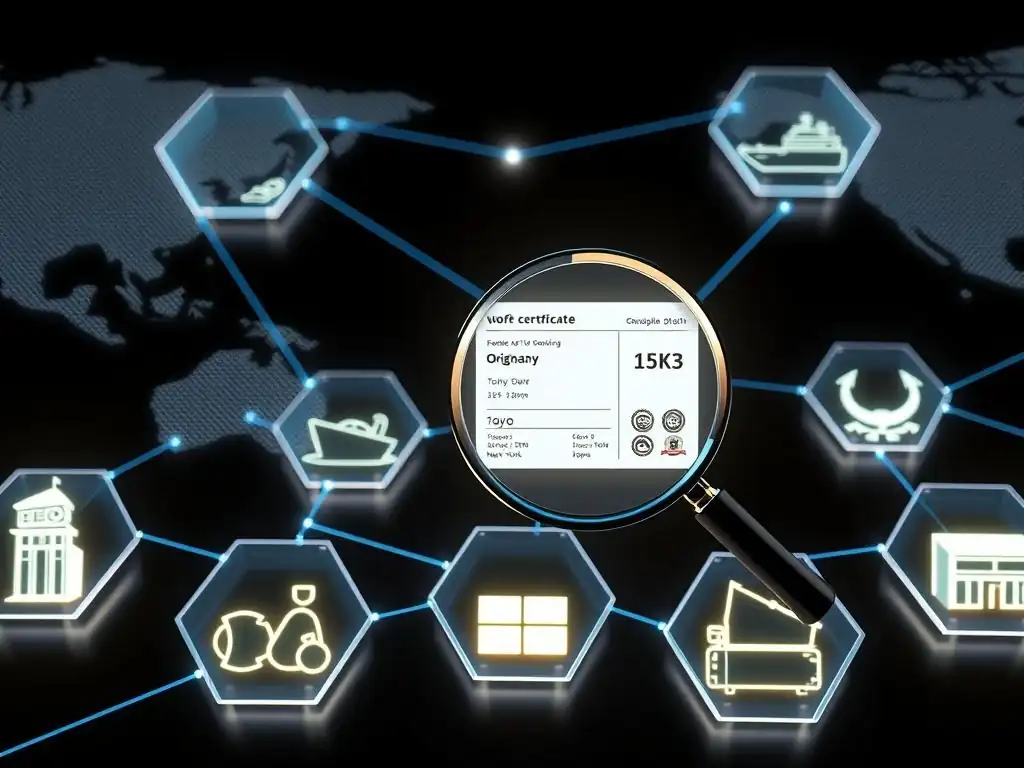
Food and Beverage: Tracking and Verifying Origin of Goods
The food and beverage industry has been an early adopter of blockchain for supply chain traceability, driven by the need to enhance food safety and combat fraud. Companies like Walmart have successfully piloted blockchain solutions to track produce from farm to store. In one instance, tracing a package of sliced mangoes back to its source farm, which previously took seven days, was reduced to just 2.2 seconds using the blockchain system. This rapid traceability is invaluable during foodborne illness outbreaks, allowing companies to quickly identify affected products and farms, minimize the scope of recalls, and protect public health.
Beyond safety, blockchain helps verify claims about product origin, such as "organic," "fair trade," or "locally sourced." By recording certifications and movements on the blockchain, consumers and auditors can verify these claims with a high degree of confidence. For example, a coffee company might use blockchain to track beans from a specific cooperative, recording details about farming practices and fair wages at each step.
This provides verifiable data for ethical sourcing audits and builds trust with consumers interested in the provenance of their food. These examples highlight how blockchain supply chain transparency audits are transforming the food sector by providing unprecedented visibility and trust.
Pharmaceuticals: Ensuring Ethical Sourcing and Labor Practices
Ensuring the integrity and ethical sourcing of ingredients is paramount in the pharmaceutical industry, where counterfeit drugs pose a serious risk. Blockchain can provide an immutable record of drug components from raw material extraction through manufacturing and distribution, helping to prevent counterfeiting and diversion. Furthermore, pharmaceutical companies face increasing pressure to ensure ethical labor practices in their complex global supply chains, particularly concerning raw materials like certain minerals or botanicals.
Blockchain can be used to track materials from their source, recording information about mining or harvesting conditions, labor practices, and compliance with regulations like conflict mineral rules. For instance, a system could track a mineral used in a drug component, with miners or local auditors recording compliance data on the blockchain. This provides a verifiable history that auditors can use to assess adherence to ethical sourcing policies.
While specific global pharmaceutical blockchain audit numbers are still emerging, pilot programs demonstrate the potential for enhanced visibility into multi-tiered supplier networks, offering a more robust approach to auditing ethical and sustainable practices compared to traditional methods. This application shows the potential of blockchain supply chain transparency audits to uphold critical ethical standards in a highly regulated industry.
Luxury Goods: Preventing Counterfeiting and Product Diversion
The luxury goods market is heavily impacted by counterfeiting, estimated by the OECD to be a multi-billion dollar problem annually. Blockchain offers a powerful tool to combat this by creating a unique, verifiable digital identity for each luxury item. By embedding NFC tags or QR codes linked to a blockchain record at the point of manufacture, brands can track the product's journey through the supply chain. This record can include details like materials used, craftsmanship information, and ownership history.
When an item is sold, ownership can be transferred on the blockchain. Consumers can scan the tag to verify the product's authenticity and history, while brands can monitor for suspicious activity, such as a product appearing in an unauthorized location or being reported as stolen. Auditors can use this blockchain record to verify the legitimacy of goods in retail channels, investigate instances of diversion (selling products through unauthorized channels), and trace counterfeit items back to potential points of entry into the legitimate supply chain.
Companies like LVMH, Prada, and Cartier have partnered to launch the Aura blockchain consortium specifically for this purpose. Such initiatives underscore the value of blockchain supply chain transparency audits in protecting brand integrity and consumer trust in the high-value luxury sector.
Addressing Challenges and Concerns in Blockchain Supply Chain Audits
Scalability and Interoperability Issues
While promising, implementing blockchain for large-scale supply chain audits faces challenges, particularly concerning scalability and interoperability. Public blockchains like Bitcoin or Ethereum can face limitations in transaction speed and volume, potentially becoming bottlenecks for high-frequency supply chain data. While private or consortium blockchains offer better performance, scaling these networks to include thousands of suppliers and millions of transactions across a global supply chain requires significant infrastructure and processing power. For example, a major retailer might handle millions of product movements daily, requiring the blockchain solution to process a correspondingly high volume of audit-relevant data points efficiently.
Interoperability is another significant hurdle. Supply chains often involve diverse systems and technologies used by different partners (e.g., ERP, WMS, TMS, IoT platforms). Integrating these disparate systems to feed data accurately and consistently onto the blockchain can be complex. Furthermore, different blockchain platforms exist, and ensuring they can communicate and share data seamlessly is crucial for end-to-end supply chain visibility and comprehensive blockchain supply chain transparency audits. Developing industry standards and middleware solutions is essential to overcome these interoperability challenges and enable true cross-chain data exchange.
Data Privacy and Security Considerations
Although blockchain is often touted for its security, implementing it in supply chains raises specific data privacy and security concerns. While the ledger is immutable, the sensitivity of supply chain data – including pricing, supplier identities, routes, and inventory levels – means that not all information can be made public. Private or consortium blockchains address this by restricting access to authorized participants, but managing permissions and ensuring data is only visible to those with a legitimate need is critical. A data breach on a private blockchain, while harder due to cryptography, could still expose sensitive business intelligence.
Furthermore, the data input onto the blockchain is only as reliable as the source. If inaccurate or fraudulent data is initially recorded, the blockchain's immutability means this incorrect information persists. Therefore, robust data governance frameworks, validation processes, and secure oracles (mechanisms that feed external data onto the blockchain) are essential. Companies must carefully design their blockchain solution to balance the need for transparency with the necessity of protecting commercially sensitive information and ensuring data accuracy at the point of entry. Addressing these privacy and security concerns is vital for the successful implementation of blockchain supply chain transparency audits.
Regulatory Compliance and Legal Frameworks
The legal and regulatory landscape surrounding blockchain technology is still evolving, creating uncertainty for companies implementing blockchain supply chain solutions, particularly concerning audits. Regulations vary significantly across jurisdictions regarding data ownership, privacy (like GDPR in Europe), the legal standing of smart contracts, and the admissibility of blockchain data as evidence in legal proceedings. For a global supply chain operating across multiple countries, navigating this patchwork of regulations is complex.
Auditors and legal professionals need to understand how blockchain data fits within existing audit standards (e.g., ISO standards, GAAP/IFRS) and legal frameworks. Questions arise, such as: Who is responsible if a smart contract fails? How are disputes resolved when terms are embedded in code? Is blockchain data sufficient on its own for regulatory compliance, or must it be supplemented with traditional documentation? As blockchain adoption grows, there is an increasing need for clear legal precedents and regulatory guidance specifically addressing blockchain-based records and automated processes to provide a solid foundation for conducting legally sound blockchain supply chain transparency audits.
The Future of Blockchain Supply Chain Transparency Audits
Emerging Trends and Innovations
The field of blockchain supply chain transparency audits is rapidly evolving with several emerging trends. One significant trend is the development of more sophisticated zero-knowledge proofs (ZKPs). ZKPs allow one party to prove that a statement is true to another party without revealing any information beyond the validity of the statement itself. In supply chain audits, this could allow a supplier to prove they have met a specific compliance requirement (e.g., ethical sourcing certification) without revealing sensitive details about their internal processes or other customers. This enhances privacy while maintaining verifiability, addressing one of the key challenges.
Another trend is the rise of purpose-built supply chain blockchain platforms offering features specifically designed for enterprise use cases, such as enhanced privacy controls, higher transaction throughput, and easier integration capabilities. These platforms are moving beyond basic traceability to incorporate complex workflows, financing mechanisms, and advanced analytics layers. Furthermore, the concept of "auditable credentials" or decentralized identifiers (DIDs) linked to blockchain is gaining traction, allowing entities (suppliers, products, locations) to possess verifiable digital identities and credentials that can be easily audited on the chain, streamlining the verification process significantly.
Integration with IoT and Other Technologies
The true power of future blockchain supply chain transparency audits will come from seamless integration with other cutting-edge technologies, most notably the Internet of Things (IoT). IoT devices, such as temperature sensors, GPS trackers, and quality monitoring equipment, can generate vast amounts of real-time data about the condition, location, and environment of goods in transit or storage. By securely feeding this data directly onto the blockchain via oracles, a verifiable and continuous record of product status is created.
For example, a shipment of perishable goods equipped with IoT sensors can automatically log temperature fluctuations onto the blockchain every hour. If the temperature exceeds a critical threshold, this data is immutably recorded, providing instant, indisputable evidence for an audit regarding potential spoilage or breach of cold chain requirements.
Beyond IoT, integration with Artificial Intelligence (AI) for analyzing the vast datasets on the blockchain to identify anomalies, predict risks, and automate audit triggers will further enhance efficiency and effectiveness. Combining blockchain's trust with real-world data from IoT and analytical power from AI promises a future of highly automated, proactive, and intelligent supply chain auditing.
The Role of AI in Enhancing Blockchain Audit Capabilities
Artificial Intelligence is set to play a transformative role in enhancing the capabilities of blockchain supply chain transparency audits. While blockchain provides the trustworthy and transparent data foundation, AI can provide the intelligence layer needed to analyze this data effectively. With the immense volume of transaction data recorded on a blockchain for a large supply chain, manual analysis becomes impractical. AI algorithms can process this data to identify patterns, detect anomalies indicative of fraud, non-compliance, or inefficiencies, and even predict potential issues before they occur.
For instance, AI could analyze historical blockchain data on shipment routes, delivery times, and associated compliance checks to identify suppliers or routes that consistently pose higher risks. It could flag transactions that deviate statistically from the norm – perhaps a shipment that took an unusually long time, or a product that bypassed a standard quality control checkpoint recorded on the chain.
AI can also help automate the audit process by intelligently prioritizing which transactions or suppliers require human review based on risk scores derived from analyzing blockchain data. This synergistic relationship between AI and blockchain will lead to more targeted, predictive, and efficient audits, moving beyond reactive checks to proactive risk management based on trusted, data-driven insights.
Conclusion: Embracing Blockchain for a More Transparent and Efficient Supply Chain
The Long-Term Impact of Blockchain on Supply Chain Auditing
The long-term impact of blockchain on supply chain auditing is profound, leading to a fundamental shift from periodic, retrospective checks to continuous, proactive monitoring and verification. By providing an immutable, shared, and transparent ledger of supply chain events, blockchain establishes a foundation of trust that was previously difficult to achieve across complex networks. This enhanced transparency drastically reduces the information asymmetry between parties, making it harder to conceal fraudulent activities, non-compliance, or inefficiencies. The ability to trace products from origin to destination in seconds, combined with verifiable data on handling and status, empowers auditors with unprecedented visibility and accuracy.
Ultimately, blockchain supply chain transparency audits will lead to more reliable and trustworthy supply chains. Consumers will have greater confidence in the products they purchase, knowing their provenance and ethical sourcing can be verified. Businesses will benefit from reduced costs associated with audits, faster dispute resolution, and improved risk management. The shift towards automated compliance checks via smart contracts and data-driven insights from AI analyzing blockchain data will make audits significantly more efficient and effective, transforming auditing from a necessary burden into a strategic tool for building resilient and ethical supply chains.
Call to Action: Exploring Blockchain Solutions for Your Supply Chain
The evidence suggests that blockchain technology is not merely an incremental improvement but a revolutionary force for supply chain management, particularly in the realm of audits. The benefits in terms of transparency, efficiency, trust, and risk management are significant and increasingly demonstrable across various industries. For businesses looking to enhance their supply chain integrity, comply with stringent regulations, meet growing consumer demand for ethical and sustainable products, and reduce operational costs, exploring blockchain solutions for auditing is a critical next step.
Consider initiating a pilot program focused on a specific high-value or high-risk segment of your supply chain to understand the practical implementation challenges and benefits. Engage with blockchain technology providers specializing in supply chain solutions and consult with experts who understand both blockchain capabilities and traditional audit requirements. Evaluating your current audit processes and identifying areas where lack of transparency or inefficiency is most costly will help pinpoint where blockchain can deliver the greatest impact. Embracing blockchain supply chain transparency audits today is an investment in building a more resilient, trustworthy, and efficient supply chain for the future.
Frequently Asked Questions
What is the primary benefit of using blockchain for supply chain audits?
The main benefit is enhanced transparency. Blockchain provides an immutable and shared record, making it easier to trace products and verify their origin, ultimately improving trust and reducing fraud.
How does blockchain technology improve the efficiency of supply chain audits?
Blockchain automates many manual processes, such as data reconciliation and document verification. This leads to faster audit cycles, reduced administrative overhead, and improved accuracy.
What are some key applications of blockchain in supply chain audits beyond just tracking product origin?
Besides origin tracking, blockchain can facilitate compliance verification, ensure ethical sourcing, and improve risk management by providing real-time visibility into the entire supply chain.
What are the main regulatory challenges associated with implementing blockchain-based supply chain audit systems?
Challenges include the lack of standardized data formats and interoperability between different blockchain networks, as well as navigating evolving data privacy regulations across various jurisdictions.
How can companies ensure data privacy and security when using blockchain for supply chain audits?
Using permissioned blockchains and implementing robust access controls are crucial. Additionally, data encryption and compliance with GDPR or similar regulations help protect sensitive information.
Okay, here's a final reflection designed to close your article "The Future of Supply Chain Audits: Enhanced Transparency and Efficiency with Blockchain," optimized for the keyword "Blockchain supply chain transparency audits" and following your requested structure:
Final Reflection: Embracing Blockchain's Auditable Future
The journey through the potential of blockchain in supply chain audits reveals a compelling truth: transparency is no longer a luxury, but a necessity. As global supply chains become increasingly complex and consumer demand for ethical sourcing intensifies, the ability to verify product origins and processes with unwavering accuracy is paramount. Blockchain offers a revolutionary solution, transforming audits from reactive investigations into proactive, real-time monitoring systems.
This shift towards blockchain-enabled audits isn't just about efficiency; it's about building trust and fostering a more responsible global economy. The implications for consumer confidence and brand reputation are profound, and the potential to combat fraud and unethical practices is immense. Transparency is the currency of trust,
as Rachel Botsman aptly stated, and blockchain provides the infrastructure to mint that currency within the intricate web of global supply chains.
Ultimately, the future of supply chain audits lies in our collective willingness to embrace innovation and prioritize transparency. Let us not shy away from the transformative power of blockchain, but rather, let us explore its potential to create a more equitable and sustainable world. Consider how you, as a consumer, a business leader, or a policymaker, can champion the adoption of blockchain supply chain transparency audits and contribute to a future where ethical practices are not just aspirational, but verifiable realities.
Embrace the Blockchain Revolution in Your Supply Chain!
Thank you for exploring how blockchain is transforming supply chain audits. You’ve gained valuable insights into creating a more transparent, efficient, and trustworthy system. Now, it’s time to put that knowledge into action and shape the future of supply chain management together.
Ready to take the next step? Here’s how:
- Begin researching blockchain solutions specifically designed for supply chain audits. Identify potential partners and technologies that align with your business needs. This is your primary step toward embracing the future!
- Share this article with your colleagues and network to spark discussions and raise awareness about the transformative potential of blockchain in supply chain management.
- Brainstorm at least three practical applications of blockchain audits within your organization or industry and document them.
What innovative application of blockchain in supply chain audits are you most excited to explore? Share your thoughts in the comments below!
Leave a Reply