
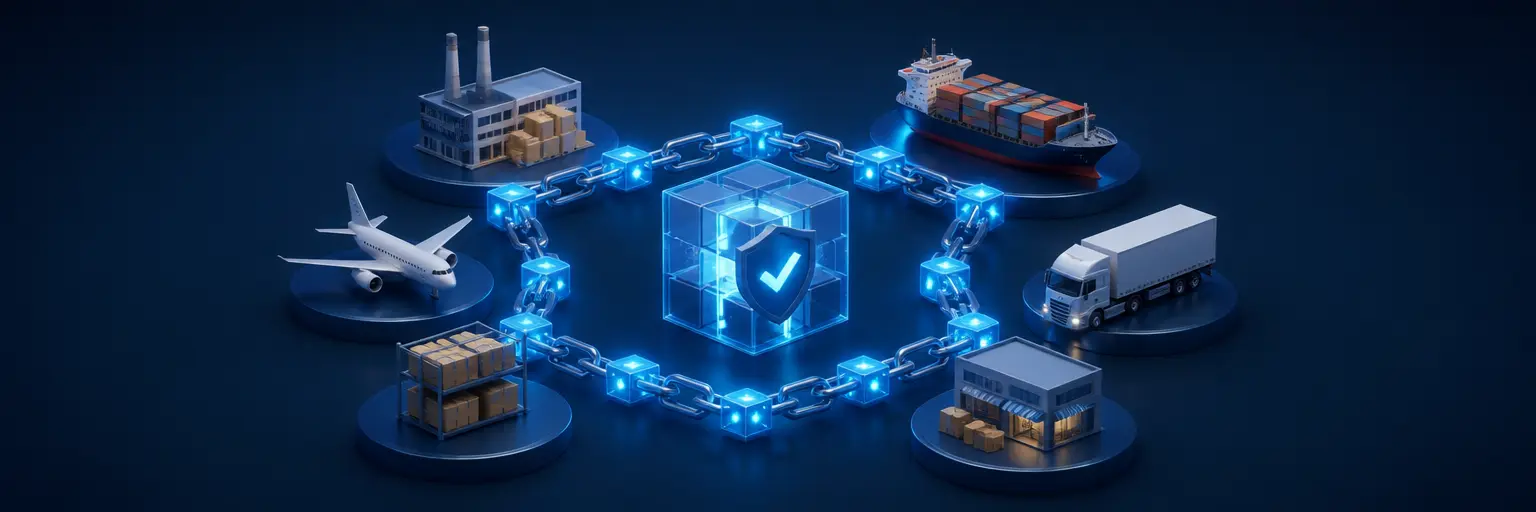
Blockchain and the Last Mile: Optimizing Delivery and Customer Experience in the Future
Discover how blockchain for supply chain management is transforming global commerce with transparent, secure, and tamper-resistant data. Explore how decentralized technology improves supply chain tracking, strengthens logistics efficiency, supports anti-counterfeiting efforts, and enhances trust across suppliers, manufacturers, distributors, and customers. From real-world blockchain supply chain case studies to emerging enterprise applications, uncover the innovations shaping the future of resilient, traceable, and intelligent supply networks.
604 articles
Examples of Blockchain Use Cases in Diverse Supply Chain Industries
Unlocking Circular Economy Potential: Blockchain for Sustainable Supply Chain Cycles
Transparency Triumphs: Blockchain's Open Ledger for AntiCounterfeiting
Enhancing Consumer Confidence: Blockchain's Promise of Product Authenticity
Blockchain for Customs and Border Control: Streamlining International Trade and Logistics
CounterfeitProofing Your Products: A Practical Guide to Blockchain Implementation
Emerging Technologies in Supply Chain Tracking: Blockchain and Beyond the Hype
From Source to Shelf, Securely Tracked: Blockchain's EndtoEnd Visibility
Ethereum and Supply Chain Tracking: Use Cases and Potential for Decentralization
Aerospace Parts Provenance: A Blockchain Case Study in Ensuring Authenticity in Aviation Supply Chains
Data Integrity in Supply Chains: How Blockchain Guarantees Accuracy and Reliability
Smart Contracts, Smarter Logistics: Automating Efficiency with Blockchain
The Role of Layer 2 Solutions in Scaling Blockchain for Global Supply Chains
Blockchain Revolution in Supply Chains: What Will the Next 5 Years Bring?
Beyond Borders, Beyond Doubt: Global Supply Chain Security with Blockchain
From Farm to Fork, Reimagined: Blockchain's Role in Sustainable Food Supply Chains
Building Trust, Block by Block: Blockchain's Contribution to Brand Protection
The Future of Logistics Efficiency: Blockchain's NextGen Innovations
Ethical Shopping, Verified: A Blockchain Case Study in Using Blockchain for Fair Trade Practices in Retail
Beyond Hype: RealWorld Implementation of Blockchain for Logistics Efficiency
Component Clarity: A Blockchain Solution for Supply Chain Visibility in Electronics
Luxury Goods Authentication with Blockchain: Protecting Brands and Consumers from Fakes
Milk's Journey: A Blockchain Case Study in Ensuring Dairy Supply Chain Integrity and Safety
Keeping it Cold: Blockchain for TemperatureSensitive Pharmaceutical Supply Chains A Case Study
Tea Time Transparency: A Blockchain Case Study in Tracing Tea Origins and Ethical Sourcing
Beyond Today's Efficiency: Emerging Blockchain Trends in Logistics
Efficiency Through Automation: BlockchainEnabled Smart Contracts in Logistics
The Future is Now: Blockchain's Efficiency Revolution vs. Traditional Logistics
Shipping Revolutionized: A Blockchain Case Study in Optimizing Global Logistics Networks
Blockchain for Supply Chain Management is transforming how companies track products, verify transactions, and share trusted data across global supply networks. By creating a secure, tamper-resistant, and shared digital ledger, blockchain technology helps manufacturers, suppliers, logistics providers, retailers, and consumers improve supply chain transparency, traceability, accountability, and operational efficiency.
At Blockchain Trends, this category explores how decentralized systems are being applied to procurement, inventory management, shipping, customs, product authentication, and supplier verification. Discover how blockchain supply chain solutions can reduce fraud, strengthen compliance, improve logistics visibility, and support faster decision-making from raw material sourcing to final delivery.
Explore practical applications, emerging innovations, and real-world examples of blockchain in supply chain management. Whether you are researching enterprise blockchain, digital supply chain transformation, smart contracts, or product traceability, these resources explain the opportunities and challenges shaping the future of connected commerce.
🔮 Future of Blockchain in Supply Chain
This subcategory examines how blockchain could reshape global supply chains through decentralized data sharing, smart contracts, tokenized assets, and interoperable business networks. Readers can expect insights into emerging trends such as real-time supply chain visibility, automated compliance, decentralized identity, and integration with artificial intelligence and the Internet of Things.
Articles will also explore the challenges influencing blockchain adoption, including scalability, governance, data privacy, interoperability, and regulatory requirements. Learn how businesses can prepare for a more transparent and digitally connected supply chain while evaluating the practical value of blockchain-based infrastructure.
🚚 Blockchain for Logistics Efficiency
Discover how blockchain can improve logistics operations by connecting carriers, warehouses, freight forwarders, ports, customs authorities, and retailers through a trusted information network. Content in this section focuses on blockchain logistics solutions, shipment documentation, automated workflows, delivery verification, and improved coordination across complex transportation systems.
Readers will learn how smart contracts can trigger payments or approvals when predefined shipping conditions are met. Explore how blockchain may reduce paperwork, minimize disputes, prevent duplicate records, improve freight tracking, and support more efficient global logistics management.
🛡️ Anti-Counterfeiting with Blockchain
This section explores how blockchain helps businesses authenticate products and protect brands from counterfeiting. By recording a product’s origin, ownership, movement, and verification events on a tamper-resistant ledger, blockchain can provide digital product provenance across industries such as pharmaceuticals, luxury goods, electronics, food, and automotive manufacturing.
Expect practical discussions about QR codes, RFID tags, NFC technology, digital twins, and blockchain-based certificates of authenticity. These tools can help companies, regulators, retailers, and consumers verify whether products are genuine while improving brand trust and reducing supply chain fraud.
📦 Supply Chain Tracking with Blockchain
Learn how blockchain enables end-to-end supply chain tracking by creating a shared and verifiable record of product movements. This subcategory covers raw material traceability, batch tracking, inventory visibility, temperature monitoring, shipment milestones, and the use of IoT devices to provide reliable supply chain data.
Readers can explore how blockchain tracking supports food supply chain transparency, pharmaceutical cold-chain monitoring, ethical sourcing, sustainability reporting, and faster recall management. By connecting physical goods with trusted digital records, companies can improve accountability and respond more quickly to disruptions.
📚 Blockchain Supply Chain Case Studies
This subcategory presents real-world blockchain supply chain case studies from manufacturing, retail, food and agriculture, healthcare, shipping, and logistics. Readers can examine how organizations use blockchain to solve specific problems, including limited visibility, counterfeit products, inefficient documentation, supplier risk, and fragmented data systems.
Each case study can highlight implementation goals, technology choices, business outcomes, and lessons learned. Explore the measurable benefits and limitations of enterprise blockchain projects, including cost savings, improved traceability, faster settlements, regulatory compliance, and stronger collaboration between supply chain partners.
❓ Frequently Asked Questions About Blockchain for Supply Chain Management
What is blockchain in supply chain management?
Blockchain in supply chain management is the use of a shared, tamper-resistant digital ledger to record and verify transactions, product movements, ownership changes, and compliance information. It helps authorized participants access a consistent version of supply chain data without relying on a single central database.
How does blockchain improve supply chain transparency?
Blockchain improves transparency by recording supply chain events in a chronological and verifiable format. When combined with sensors, QR codes, RFID, or IoT devices, it can help businesses trace products from raw materials to customers and identify where delays, errors, or unauthorized changes occur.
Can blockchain prevent counterfeit products?
Blockchain can help reduce counterfeiting by linking physical products to digital identities, certificates, or transaction records. While blockchain does not automatically verify whether information entered into the system is true, combining it with reliable authentication technologies can provide stronger product verification and provenance tracking.
What are the benefits of blockchain for logistics?
Key benefits include improved shipment visibility, fewer manual records, faster document processing, automated smart contract payments, reduced disputes, and better collaboration among logistics partners. Blockchain can also support customs documentation, freight verification, and more efficient exception management.
What challenges affect blockchain supply chain adoption?
Common challenges include integration with existing enterprise systems, inconsistent data standards, scalability, privacy concerns, governance disagreements, regulatory uncertainty, and the need for cooperation among multiple supply chain participants. Successful adoption usually requires clear use cases, trusted data inputs, technical interoperability, and agreement on network rules.