
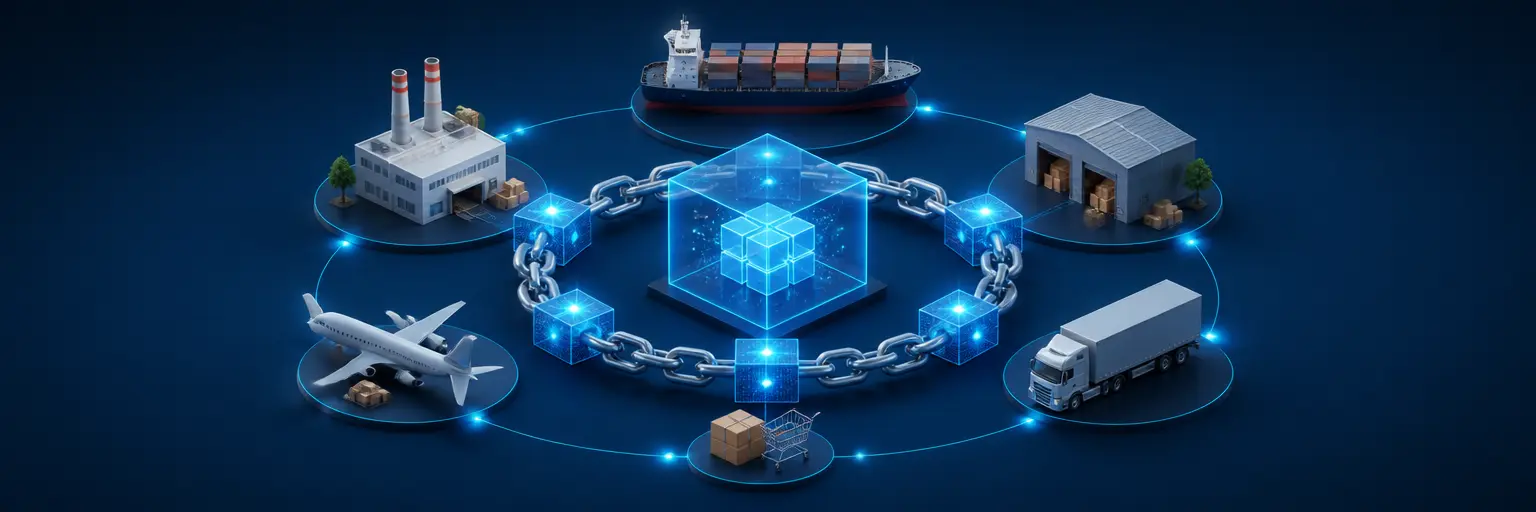
Examples of Blockchain Use Cases in Diverse Supply Chain Industries
Discover how blockchain supply chain tracking delivers transparent, tamper-resistant visibility from sourcing to delivery. Explore trusted product provenance, real-time monitoring, automated verification, and stronger accountability across global logistics—helping businesses reduce fraud, improve compliance, and build resilient, data-driven supply chains. 🔗📦
68 articles
Blockchain for Customs and Border Control: Streamlining International Trade and Logistics
Emerging Technologies in Supply Chain Tracking: Blockchain and Beyond the Hype
Ethereum and Supply Chain Tracking: Use Cases and Potential for Decentralization
Data Integrity in Supply Chains: How Blockchain Guarantees Accuracy and Reliability
Luxury Goods Authentication with Blockchain: Protecting Brands and Consumers from Fakes
Immutable Records, Unbreakable Trust: Blockchain's Promise for Supply Chain Integrity
Blockchain for Supply Chain Risk Management: Identifying and Mitigating Potential Disruptions
Blockchain and Supply Chain Finance: Streamlining Payments and Reducing Risk
Permissioned Blockchains for Supply Chain: Balancing Transparency and Confidentiality
The ROI of Blockchain in Supply Chain: Quantifying the Benefits and Justifying Investment
Beyond Tracking: Exploring the Full Potential of Blockchain in Supply Chain Management
Blockchain's LongTerm Impact on Supply Chain Ecosystems: Transformation and Disruption
Supply Chain Mapping with Blockchain: Visualizing and Understanding Complex Networks
NextGeneration Supply Chains: Blockchain as a Foundational Technology for Innovation
Blockchain for Ethical Sourcing: Ensuring Responsible Supply Chains from Origin to Consumer
Overcoming Supply Chain Complexity with Blockchain: Simplifying Global Networks
Blockchain for Small and MediumSized Enterprises (SMEs) in Supply Chains: Accessibility and Affordability
Blockchain and the Circular Economy: Tracking Materials and Promoting Sustainability
Security Risks and Mitigation in Supply Chain Blockchain Networks: Protecting Sensitive Data
Electronics Supply Chain Traceability: Combating Counterfeiting and Ensuring Compliance with Blockchain
Transforming Retail Supply Chains with Blockchain: Enhancing Customer Trust and Transparency
Blockchain in Manufacturing Supply Chains: Streamlining Processes and Improving Quality
Consortium Blockchains: Collaborative Supply Chain Networks Built on Trust
Blockchain for Agriculture Supply Chains: Improving Food Safety and Farmer Empowerment
Preparing Your Supply Chain for Blockchain: Readiness Assessments and Strategic Planning
From Farm to Fork, Securely Traced: Blockchain's Impact on Food Supply Chains
QR Codes and Blockchain for Supply Chain Authentication: Simple Yet Powerful Solutions
Case Studies: Successful Implementations of Blockchain for Supply Chain Tracking
Blockchain and AI Synergies in Supply Chain: Enhancing Efficiency and Predictive Analytics
📦 Supply Chain Tracking with Blockchain: Transparent, Secure, and Verifiable Logistics
Supply Chain Tracking with Blockchain explores how distributed ledger technology improves visibility across manufacturing, transportation, warehousing, and retail. On Blockchain Trends, discover how blockchain supply chain tracking creates tamper-resistant records, strengthens product traceability, reduces fraud, and helps businesses verify every step from raw materials to the end customer.
🔗 How Blockchain Transforms Supply Chain Visibility
Readers can expect practical insights into how a blockchain-based supply chain records transactions across a shared, synchronized network. Instead of relying on disconnected databases, suppliers, manufacturers, logistics providers, distributors, and retailers can access a consistent history of events, including production dates, shipment updates, custody transfers, and delivery confirmations.
Our coverage explains the value of real-time supply chain visibility, immutable data, decentralized verification, and shared ownership of logistics information. Learn how blockchain can reduce information gaps, improve coordination, and support faster responses to delays, disruptions, recalls, and inventory shortages.
🚚 Blockchain Product Traceability from Origin to Delivery
This subcategory examines how blockchain enables end-to-end product tracking across complex global supply chains. Articles may cover the verification of raw materials, batch numbers, serial numbers, certificates, shipping documents, temperature data, and proof of delivery, helping organizations establish a reliable chain of custody.
Explore how product traceability with blockchain supports industries such as food and agriculture, pharmaceuticals, luxury goods, electronics, automotive manufacturing, and consumer products. Clear provenance records can help companies demonstrate where products came from, how they were handled, and whether they met required standards.
🛡️ Preventing Counterfeiting, Fraud, and Supply Chain Manipulation
Blockchain supply chain solutions can help businesses combat counterfeit goods and unauthorized substitutions by creating verifiable digital records for products and components. Readers will learn how cryptographic signatures, unique identifiers, QR codes, RFID tags, and digital certificates can connect physical items with trusted blockchain data.
Discover why blockchain does not automatically guarantee that every physical-world claim is accurate, and how trusted data providers, Internet of Things devices, audits, and smart contracts improve reliability. The focus is on practical anti-counterfeiting strategies rather than unrealistic promises about blockchain technology.
📊 IoT, Smart Contracts, and Automated Supply Chain Events
Readers can explore how Internet of Things sensors provide shipment information such as location, temperature, humidity, shock, and storage conditions. When connected to blockchain infrastructure, these data points can create an auditable record of logistics performance and product handling.
Smart contracts may automate actions when predefined conditions are met, including shipment approval, payment release, insurance notifications, or compliance alerts. Learn how blockchain smart contracts for supply chain management can reduce manual processing while also considering data quality, integration, privacy, and governance requirements.
🌍 Sustainable and Ethical Supply Chain Verification
This section highlights the role of blockchain in documenting sustainability and ethical sourcing claims. Companies may use traceability systems to track recycled materials, renewable energy usage, carbon-related data, responsible mining practices, fair labor certifications, and environmental compliance across multiple suppliers.
Blockchain can make sustainability information easier to audit and share, but readers will also learn why credible verification remains essential. Reliable sustainability tracking requires accurate measurements, independent assessments, clear standards, and transparent ESG reporting rather than simply storing unverified claims on a ledger.
🏢 Enterprise Blockchain for Supply Chain Management
Explore how enterprises evaluate permissioned blockchain networks, consortium platforms, and private distributed ledgers for supply chain operations. Content covers network governance, participant access, data permissions, interoperability, scalability, transaction costs, and integration with enterprise resource planning and warehouse management systems.
Readers can expect balanced analysis of real-world adoption challenges, including supplier onboarding, legacy technology, regulatory requirements, data confidentiality, and return on investment. Learn how organizations can identify suitable blockchain use cases and build a phased enterprise blockchain supply chain strategy.
❓ Frequently Asked Questions About Supply Chain Tracking with Blockchain
What is supply chain tracking with blockchain?
Supply chain tracking with blockchain uses a shared, tamper-resistant digital ledger to record product movements, transactions, certifications, and custody changes. Authorized participants can verify the history of goods across sourcing, manufacturing, transportation, warehousing, and delivery.
How does blockchain improve supply chain traceability?
Blockchain improves traceability by creating a consistent record that is difficult to alter retroactively. It can connect product identifiers, shipment documentation, sensor data, and supplier information, making it easier to identify the origin and movement of goods.
Can blockchain prevent counterfeit products?
Blockchain can help reduce counterfeiting by linking products to verifiable digital identities and transaction histories. However, effective protection also requires physical security features, trusted inspections, reliable data entry, and authentication tools such as QR codes, NFC tags, or RFID technology.
Is blockchain suitable for every supply chain?
No. Blockchain is most useful when multiple independent organizations need to share records but do not rely on a single central database. Businesses should compare blockchain with conventional databases and consider data volume, privacy, governance, integration, cost, and the need for shared verification.
What are the main challenges of blockchain supply chain tracking?
Common challenges include inaccurate source data, limited interoperability, supplier adoption, privacy concerns, regulatory uncertainty, network scalability, implementation costs, and unclear governance. Successful projects typically begin with a specific traceability problem, trusted participants, measurable goals, and strong data validation.