
Transforming Retail Supply Chains with Blockchain: Enhancing Customer Trust and Transparency


Welcome to Blockchain Trends, your go-to source for understanding the real-world applications of blockchain technology. Beyond the hype, we delve into the innovative ways blockchain is reshaping industries. Are you ready to discover how this revolutionary technology can build trust and efficiency? This week, we unpack the blockchain supply chain transparency benefits that are transforming retail, and how these advancements are directly enhancing the customer experience. Explore the possibilities and see how blockchain is building a more transparent and trustworthy future, one transaction at a time.
- Blockchain Supply Chain Transparency Benefits: A Deep Dive
-
Frequently Asked Questions
- How does blockchain technology improve supply chain transparency in retail?
- What are the key Blockchain Supply Chain Transparency Benefits for retailers?
- What role does DeFi (Decentralized Finance) play in enhancing Blockchain Supply Chain Transparency Benefits?
- How can blockchain help address the issue of counterfeiting in retail supply chains?
- What are some potential challenges in implementing blockchain solutions for supply chain transparency?
- Final Reflection: Embracing Trust Through the Chain
- Unlock Supply Chain Transparency: Start Building Trust Today!
Blockchain Supply Chain Transparency Benefits: A Deep Dive
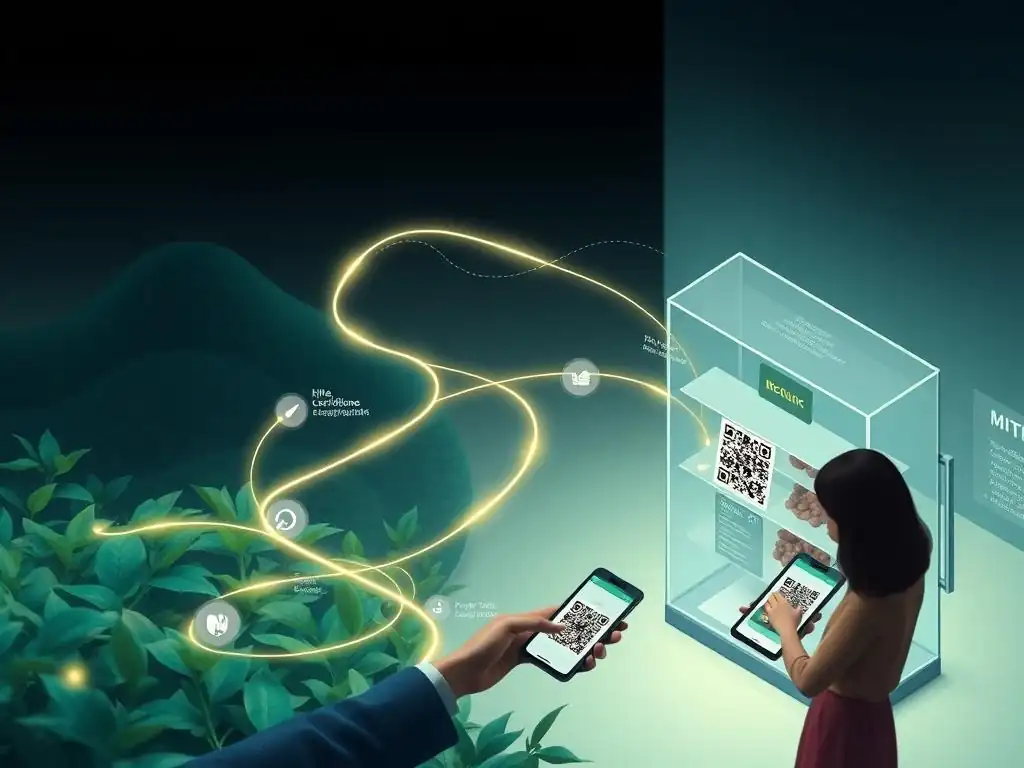
Enhancing Consumer Trust Through Verified Product Information
One of the most significant blockchain supply chain transparency benefits is the ability to build profound consumer trust. In an era where consumers are increasingly concerned about what they eat, knowing the origin, journey, and ethical sourcing of their food is paramount. Blockchain technology provides an immutable and transparent ledger that records every step a product takes, from farm to fork.
This includes details such as the farmer's identity, harvesting dates, transportation routes, storage temperatures, and processing information. By scanning a QR code on a product, consumers can access this verified history, eliminating reliance on potentially misleading labels or intermediaries. This direct line to verifiable data empowers consumers and fosters a sense of confidence in the food they purchase, a direct result of enhanced blockchain supply chain transparency benefits.
This verifiable data is crucial because traditional supply chains often lack the granular detail and security needed to prevent misinformation. For instance, claims of "organic" or "ethically sourced" can be difficult for consumers to verify independently. With blockchain, each claim can be linked to specific, recorded transactions and certifications on the distributed ledger.
This level of detail, coupled with the tamper-proof nature of the technology, provides a higher degree of assurance. Studies and pilot programs have shown that consumers are willing to pay a premium for products offering this level of traceability and transparency. For example, some initiatives have seen consumer engagement rates with traceability information reach over 50% for specific products, indicating a strong desire for this data and highlighting the tangible blockchain supply chain transparency benefits for brands that adopt it.
Improving Supply Chain Efficiency and Reducing Food Waste with Blockchain
Beyond consumer trust, blockchain supply chain transparency benefits extend significantly to improving operational efficiency and tackling the critical issue of food waste. The detailed, real-time visibility provided by a blockchain network allows all participants – from growers and distributors to retailers – to track inventory levels, monitor conditions (like temperature and humidity), and identify potential delays or bottlenecks with unprecedented accuracy.
This shared, single source of truth reduces administrative overhead, minimizes disputes over product status or quality, and streamlines logistics. For example, knowing the exact location and condition of a shipment reduces uncertainty and allows for more efficient routing and inventory management throughout the entire process.
Furthermore, the enhanced traceability offered by blockchain is invaluable during food safety incidents or recalls. Traditionally, identifying the source of contaminated food can take days or even weeks, leading to widespread recalls that affect safe products and result in massive waste. With blockchain, the origin and path of specific batches can often be traced back within seconds or minutes.
This allows for targeted recalls, removing only the affected products from shelves and significantly reducing the volume of safe food that would otherwise be discarded. Estimates suggest that faster, more precise recalls enabled by blockchain could potentially reduce food waste related to safety issues by a significant margin, contributing to both economic savings and environmental sustainability – a clear demonstration of the practical blockchain supply chain transparency benefits.
Minimizing Food Fraud and Counterfeit Products
Food fraud is a pervasive and costly problem, ranging from mislabeling ingredients (like substituting cheaper oils for olive oil) to selling counterfeit products (such as fake high-end seafood or organic produce). The opaque nature of traditional, multi-party supply chains makes it relatively easy for illicit activities to occur undetected. However, the core features of blockchain – immutability and transparency – make it a powerful deterrent against food fraud.
Once data about a product's origin, ingredients, processing, and handling is recorded on the blockchain, it cannot be altered without the consensus of the network, making it incredibly difficult to introduce fraudulent data or products without leaving an indelible, traceable record. This inherent security is a major component of the blockchain supply chain transparency benefits.
By providing a verifiable digital identity for each product batch or even individual item, blockchain makes it much harder for counterfeit goods to enter the legitimate supply chain. Any attempt to introduce a product without the corresponding, authenticated blockchain record would be immediately flagged. For example, tracking high-value items like saffron, honey, or specific types of fish becomes much more robust.
Industry reports estimate that food fraud costs the global economy billions of dollars annually. Implementing blockchain solutions has shown promise in reducing these losses by creating a trusted record that verifies authenticity at multiple points. This enhanced ability to detect and prevent fraud is one of the most compelling blockchain supply chain transparency benefits, protecting both consumers from potentially harmful or mislabeled products and businesses from financial losses and reputational damage.
Frequently Asked Questions
How does blockchain technology improve supply chain transparency in retail?
Blockchain provides an immutable and transparent ledger of all transactions. This allows consumers and businesses to track products from origin to delivery, verifying authenticity and ethical sourcing.
What are the key Blockchain Supply Chain Transparency Benefits for retailers?
The benefits include increased customer trust, reduced counterfeiting, improved efficiency through automation, and enhanced data security. This leads to a stronger brand reputation and better customer loyalty.
What role does DeFi (Decentralized Finance) play in enhancing Blockchain Supply Chain Transparency Benefits?
While not directly related, DeFi can facilitate transparent and efficient financing for suppliers within the supply chain. This creates a more equitable and traceable financial ecosystem supporting the entire process.
How can blockchain help address the issue of counterfeiting in retail supply chains?
By creating a unique and verifiable digital identity for each product, blockchain makes it significantly harder for counterfeiters to introduce fake goods. Consumers can easily verify the authenticity.
What are some potential challenges in implementing blockchain solutions for supply chain transparency?
Challenges include the high initial investment, the need for industry-wide collaboration and standardization, and concerns about data privacy and security within a decentralized system.
Final Reflection: Embracing Trust Through the Chain
The exploration of blockchain's transformative power within retail supply chains underscores a critical truth: transparency is no longer a luxury, but a necessity for building lasting customer trust. In a world increasingly demanding ethical sourcing and product authenticity, the insights shared throughout this article highlight how blockchain offers a tangible solution to meet these evolving expectations and secure a competitive edge.
The journey towards transparent supply chains is not merely a technological upgrade; it's a fundamental shift in how businesses interact with their customers and the world. This shift resonates deeply, as it acknowledges the growing consumer desire to understand the origins and impact of their purchases. Trust is the glue of life. It's the most essential ingredient in effective communication. It's the foundational principle that holds all relationships.
- Stephen Covey. This quote perfectly encapsulates the essence of what blockchain-enabled transparency aims to achieve: building stronger, more reliable relationships with consumers through verifiable truth.
As you consider the potential of blockchain to revolutionize supply chain transparency, I encourage you to reflect on your own role in fostering a more ethical and accountable marketplace. How can you, as a consumer, a business leader, or a technology enthusiast, champion the adoption of these transformative technologies? The future of retail hinges on our collective commitment to building trust, one transparent block at a time.
Unlock Supply Chain Transparency: Start Building Trust Today!
Thank you for exploring the potential of blockchain technology in transforming retail supply chains. We hope you've gained valuable insights into how this innovative approach can enhance customer trust and improve transparency. Now, it's time to turn that knowledge into action.
Here are some practical steps to get started:
- Initiate a proof-of-concept project within your organization: Identify a specific product or process in your retail supply chain that could benefit from greater transparency. Hands-on experience is the best way to understand blockchain's capabilities.
- Deepen your understanding of blockchain technology: Read the whitepapers of leading blockchain platforms to grasp the fundamentals and potential applications.
- Share this article with colleagues or peers in the retail industry: Helping others understand blockchain's benefits can foster broader adoption and collaboration.
What is one immediate step you can take this week to explore the potential of blockchain in your retail supply chain? Share your ideas in the comments below!
Leave a Reply