
Beyond Tracking: Exploring the Full Potential of Blockchain in Supply Chain Management


Welcome to Blockchain Trends, your guide to understanding the revolutionary impact of blockchain technology.
Are you ready to move beyond simple tracking? Discover the untapped potential of blockchain supply chain tracking benefits and how they're reshaping industries. Explore the transformative applications, from enhanced transparency to streamlined efficiency, and unlock the future of decentralized supply chains. Dive in to learn how blockchain is revolutionizing more than just cryptocurrency – it's revolutionizing the world.
- Blockchain Supply Chain Tracking Benefits: A Deep Dive
-
Frequently Asked Questions
- What are the key benefits of using blockchain for supply chain tracking?
- How does blockchain improve supply chain efficiency beyond simple tracking?
- What types of data can be securely stored and tracked using blockchain in a supply chain?
- What are the main challenges to implementing blockchain in supply chain management?
- How does blockchain impact consumers in the context of supply chain management?
- Final Reflection: Embracing Transparency and Trust
- Unleash the Power of Transparency: Your Next Steps
Blockchain Supply Chain Tracking Benefits: A Deep Dive
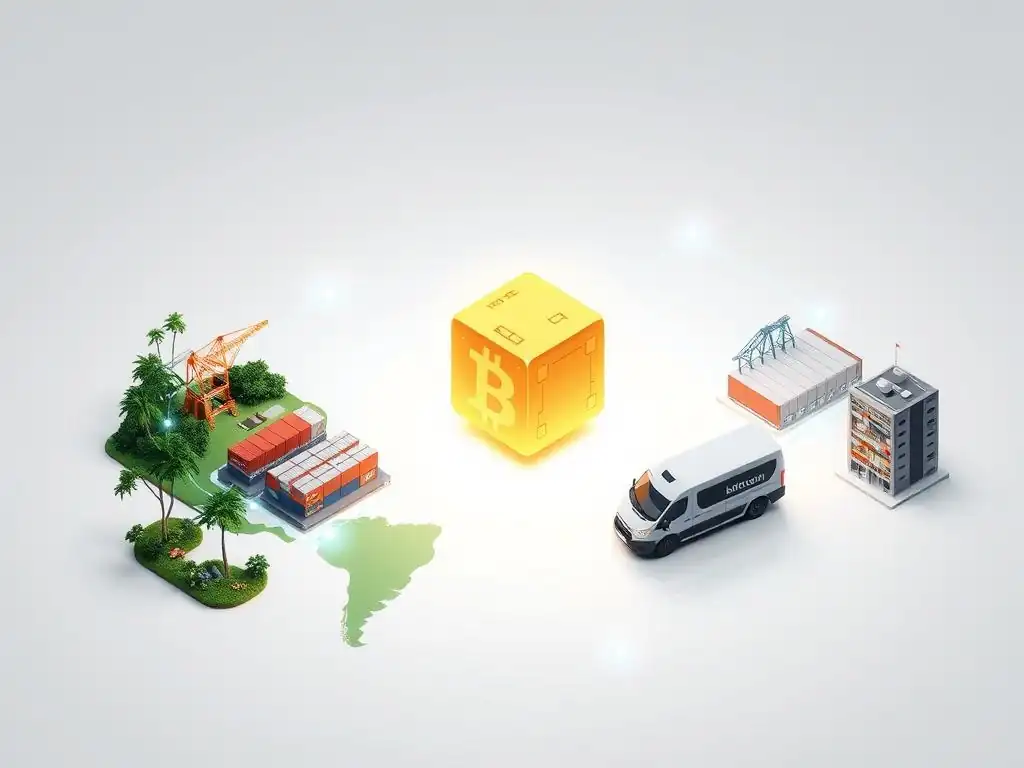
Enhanced Traceability and Provenance of Goods
One of the most immediate and impactful blockchain supply chain tracking benefits is the dramatic improvement in traceability and provenance. Traditional supply chain systems often rely on fragmented databases and manual record-keeping, making it difficult and time-consuming to track a product's journey from origin to destination. Blockchain provides a shared, immutable ledger that records every transaction and movement of goods along the chain.
This means stakeholders can instantly access the history of a product, including its origin, manufacturing details, handling, and transportation milestones. For example, in the food industry, tracing a contaminated product back to its source can take days or even weeks with traditional methods; with a blockchain-based system, this process can be reduced to mere seconds, as demonstrated by pilot programs.
This enhanced traceability is crucial for ensuring product authenticity, verifying ethical sourcing, and responding rapidly to recalls or quality issues. By providing a verifiable history, blockchain significantly reduces the risk of fraudulent claims about product origin or quality. A company dealing with luxury goods, for instance, can use blockchain to create a digital passport for each item, recording its creation, ownership transfers, and maintenance history. This not only assures the consumer of the item's authenticity but also adds value by providing a transparent and secure record of its provenance, a significant benefit of blockchain supply chain tracking.
Improved Efficiency and Reduced Costs Through Automation
The implementation of blockchain technology in supply chain management leads to significant improvements in efficiency and a notable reduction in operational costs. By providing a single source of truth accessible to all authorized participants, blockchain eliminates the need for multiple intermediaries to verify data or reconcile differing records. This streamlines processes such as documentation handling, customs clearance, and payment processing.
Consider international shipping: the sheer volume of paperwork and manual data entry involved often leads to delays and errors. A blockchain solution can automate the exchange and verification of these documents, potentially reducing processing times by up to 40% and associated administrative costs.
Furthermore, the automation capabilities inherent in blockchain, particularly when combined with smart contracts (which will be discussed in more detail later), can drastically cut down on manual tasks and potential human error. Payments, for instance, can be triggered automatically once a specific condition recorded on the blockchain (like the arrival of goods at a port) is met. This reduces administrative overhead and accelerates cash flow. These efficiency gains and cost reductions are direct blockchain supply chain tracking benefits that contribute to a more agile and competitive operation.
Increased Security and Reduced Risk of Counterfeiting
Security is paramount in supply chains, and blockchain offers robust solutions that significantly reduce the risk of data manipulation and product counterfeiting. The decentralized nature of blockchain means that data is not stored in a single, vulnerable location; instead, it's distributed across multiple nodes, making it extremely difficult for malicious actors to tamper with records without being detected by the network's consensus mechanisms. Once data, such as a product's unique identifier or its movement history, is recorded on the blockchain, it is virtually immutable, providing a secure audit trail that cannot be altered.
This inherent security is a powerful deterrent against counterfeiting. By assigning unique digital identities to products and tracking their movement on the blockchain, companies can provide irrefutable proof of authenticity. Consumers or retailers can scan a QR code on a product and verify its legitimacy against the secure blockchain record.
This is particularly valuable in industries plagued by fakes, such as pharmaceuticals or luxury goods. Estimates suggest that global losses due to counterfeiting exceed $1.2 trillion annually; blockchain offers a tangible way to combat this by making the verification process transparent and secure, highlighting a critical security benefit among the many blockchain supply chain tracking benefits.
Building Trust and Transparency with Consumers
In today's market, consumers increasingly demand transparency regarding the products they purchase, including their origin, ethical sourcing, and environmental impact. Blockchain technology enables companies to provide this level of transparency in a verifiable and trustworthy manner. By recording the entire journey of a product on a blockchain, from raw material to finished good on the shelf, companies can share this information selectively with consumers, often through a simple interface like a mobile app scanning a QR code.
This access to verifiable information builds significant trust. Consumers can see where their coffee beans were grown, how their clothing was manufactured, or the journey of their seafood. This transparency not only satisfies consumer curiosity but also empowers them to make informed purchasing decisions aligned with their values. Brands that leverage blockchain to provide this level of insight can differentiate themselves in the market, enhance their reputation, and foster stronger relationships with their customers. Providing this level of verifiable data is a powerful benefit of blockchain supply chain tracking, transforming how businesses interact with their end-users.
Frequently Asked Questions
What are the key benefits of using blockchain for supply chain tracking?
Blockchain offers enhanced transparency and traceability, allowing for improved verification of product origin and movement, leading to reduced fraud and counterfeiting.
How does blockchain improve supply chain efficiency beyond simple tracking?
It enables automation of processes like payments and contract enforcement, reducing delays and minimizing the need for intermediaries, ultimately speeding up the entire supply chain.
What types of data can be securely stored and tracked using blockchain in a supply chain?
Beyond location, blockchain can securely store data related to product quality, temperature, ownership changes, and compliance certifications, providing a comprehensive audit trail.
What are the main challenges to implementing blockchain in supply chain management?
The challenges include scalability issues, the need for industry-wide adoption, and integrating blockchain with existing legacy systems, requiring significant investment and coordination.
How does blockchain impact consumers in the context of supply chain management?
Consumers benefit from increased product authenticity, ethical sourcing, and greater transparency about the origins and journey of the products they purchase, building trust and confidence.
Final Reflection: Embracing Transparency and Trust
The exploration of blockchain's transformative potential in supply chain management reveals more than just enhanced tracking capabilities; it unveils a pathway towards unprecedented transparency and trust. In a world increasingly demanding ethical sourcing and verifiable product journeys, the insights gleaned from this analysis are not merely academic; they are vital for businesses seeking to thrive in the modern landscape.
The impact of blockchain on supply chains extends far beyond simple efficiency gains. It fundamentally reshapes the relationship between producers, distributors, and consumers, fostering a new era of accountability. This shift towards verifiable authenticity resonates deeply with the growing consumer demand for ethical and sustainable practices. Trust is the new currency, and blockchain is the ledger.
This quote encapsulates the essence of the transformation, highlighting how blockchain empowers stakeholders to build stronger, more reliable relationships based on verifiable data.
As we look to the future, let us not limit our understanding of blockchain to a mere technological tool. Instead, let us embrace its potential to revolutionize how we interact with the products we consume and the systems that deliver them. Consider how you can champion transparency and accountability in your own sphere of influence, leveraging the principles of blockchain to build a more ethical and sustainable future for all.
Unleash the Power of Transparency: Your Next Steps
Thank you for exploring the potential of blockchain in supply chain management. We hope you've gained valuable insights into how this technology can enhance traceability, efficiency, and trust. Now, it's time to take action!
Here are some steps to get started:
- Begin by mapping out your current supply chain and identifying areas where blockchain could solve existing challenges. Focus on segments where increased transparency or security would make a significant difference.
- Research blockchain platforms designed for supply chain applications. Compare their features with your specific needs to find the best fit.
- Share this article with colleagues or industry peers interested in the transformative impact of blockchain on supply chains. Start a conversation!
What is one process in your supply chain that blockchain could improve immediately, and what benefits do you anticipate? Share your thoughts below!
Leave a Reply