
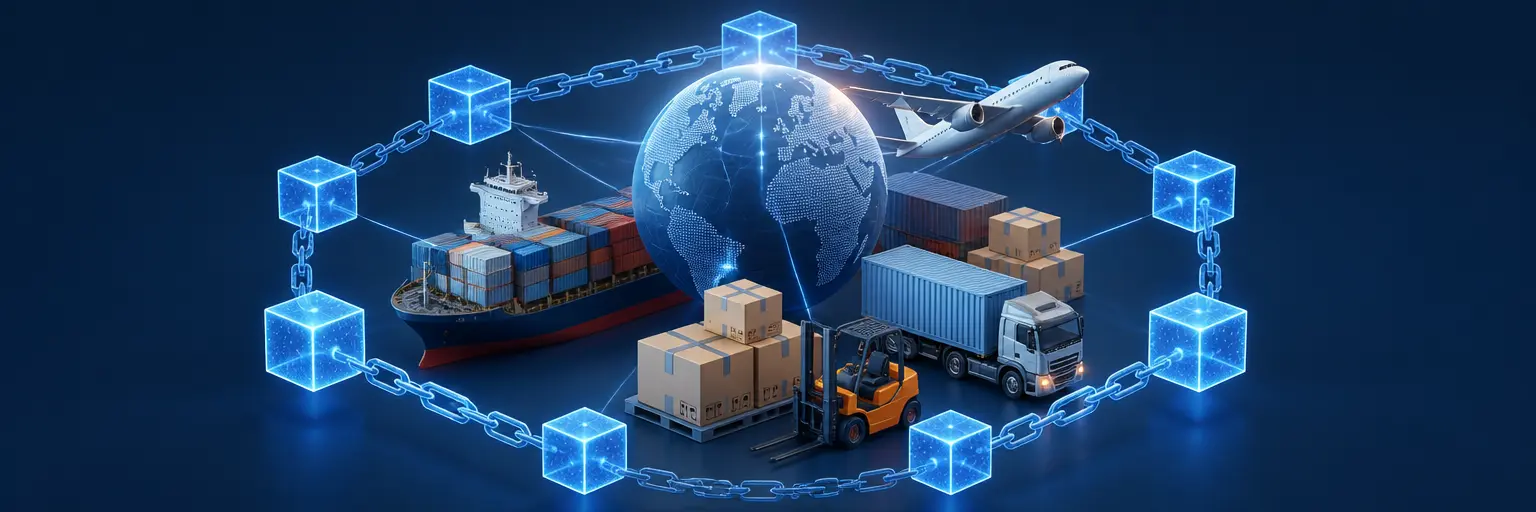
Smart Contracts, Smarter Logistics: Automating Efficiency with Blockchain
Discover how blockchain for logistics efficiency is transforming supply chain management 🚚🔗. Explore real-time shipment tracking, tamper-resistant records, automated smart contracts, and enhanced coordination across suppliers, carriers, warehouses, and customers. Learn how decentralized technology can reduce delays, improve transparency, prevent fraud, and optimize costs—helping businesses build faster, smarter, and more resilient logistics networks.
63 articles
The Future of Logistics Efficiency: Blockchain's NextGen Innovations
Beyond Hype: RealWorld Implementation of Blockchain for Logistics Efficiency
Beyond Today's Efficiency: Emerging Blockchain Trends in Logistics
Efficiency Through Automation: BlockchainEnabled Smart Contracts in Logistics
The Future is Now: Blockchain's Efficiency Revolution vs. Traditional Logistics
SensorDriven Efficiency: Blockchain and IoT for Optimized Logistics Operations
Beyond Location Data: Blockchain and IoT for Comprehensive Logistics Insights
Slash Logistics Costs: Blockchain Strategies for Efficiency and Savings
The Bottom Line Boost: Blockchain's Impact on Logistics Cost Optimization
Logistics on Autopilot: Smart Contracts and Blockchain for Streamlined Operations
Innovation in Motion: Blockchain's Role in Shaping the Future of Logistics Efficiency
EndtoEnd Visibility: Blockchain's Promise of Traceable Logistics Networks
Traceability Revolution: Blockchain's Impact on Logistics Accountability
Efficiency in Motion: Blockchain's Impact on Logistics Speed and Velocity
Unveiling the Journey: BlockchainEnabled Traceability for Logistics Confidence
The Power of Smart Agreements: Blockchain's Role in Automating Logistics Efficiency
Connecting the Dots: Blockchain, IoT, and RealTime Logistics Efficiency
Blockchain's Efficiency Revolution: Reshaping Logistics from Warehouse to Delivery
Blockchain for Food Logistics: Ensuring Freshness and Traceability from Farm to Fork
Cold Chain Logistics Efficiency: Blockchain for TemperatureSensitive Goods
Logistics Overhaul: How Blockchain is Redefining Operational Efficiency
Reevaluating Logistics Efficiency: Why Blockchain Outperforms Traditional Systems
Unlocking Value: Blockchain's Role in Reducing Logistics Overhead
Challenges and Solutions: Deploying Blockchain for Logistics Efficiency
Ecommerce Logistics Efficiency: Blockchain for Streamlined Order Fulfillment and Delivery
Navigating the Blockchain Landscape: Practical Steps for Logistics Efficiency Gains
Speed Up Logistics: How Blockchain Accelerates Supply Chain Processes
Efficiency Pays Off: Quantifying Blockchain's CostSaving Potential in Logistics
The Speed Advantage: Blockchain's Contribution to TimeSensitive Logistics
🚚 Blockchain for Logistics Efficiency: Transforming Supply Chain Operations
Blockchain for Logistics Efficiency explores how distributed ledger technology can improve transportation, warehousing, inventory management, and global supply chain coordination. Within Blockchain Trends, this subcategory focuses on practical enterprise applications that help businesses create more transparent, secure, traceable, and efficient logistics networks without limiting blockchain to cryptocurrencies.
🔗 How Blockchain Improves Logistics Visibility
Readers can discover how blockchain creates a shared, tamper-resistant record of logistics events, including order placement, manufacturing, shipment, customs clearance, delivery, and returns. By connecting suppliers, freight forwarders, carriers, warehouses, retailers, and customers to trusted data, blockchain can reduce information gaps and improve real-time supply chain visibility.
Content in this section examines end-to-end shipment tracking, product provenance, digital documentation, and data synchronization across multiple logistics partners. Topics may also explain how distributed ledgers reduce duplicate records, limit data manipulation, and help organizations respond more quickly to delays, disruptions, and compliance requirements.
📦 Blockchain for Inventory and Warehouse Management
Blockchain can support more accurate inventory management by recording product movements across warehouses, distribution centers, and retail locations. Readers will learn how blockchain-based systems can improve stock reconciliation, batch tracking, serial-number verification, and visibility into inventory ownership as goods move through the supply chain.
This subcategory also covers the relationship between blockchain, warehouse management systems, Internet of Things sensors, and enterprise resource planning platforms. Businesses may use these technologies together to create reliable inventory records, reduce shrinkage, prevent counterfeit products, and make replenishment decisions using trustworthy logistics data.
🚛 Smart Contracts for Shipping and Freight Operations
Smart contracts can automate selected logistics processes when predefined conditions are met. For example, a smart contract may initiate payment after confirmed delivery, release documentation after customs approval, or calculate penalties when a shipment misses an agreed service level. This can reduce manual administration and accelerate freight settlement.
Readers can expect practical discussions about smart contracts in transportation, automated invoicing, digital bills of lading, carrier payments, and freight insurance. The section also considers the need for accurate external data, known as oracle information, because blockchain automation depends on reliable records from sensors, carriers, customs authorities, and other trusted sources.
🌍 Global Trade, Customs, and Shipment Traceability
International logistics involves complex documentation, multiple jurisdictions, and many participants. Blockchain may help coordinate trade documents, shipment identities, certificates of origin, inspection records, and customs information through a secure digital infrastructure that authorized parties can access.
This section explores how blockchain can support cross-border supply chain management, trade compliance, customs efficiency, and paperless logistics. Readers will also find insights into how shared records can reduce document fraud, simplify verification, shorten processing times, and improve confidence between importers, exporters, logistics providers, and regulators.
🛡️ Security, Anti-Counterfeiting, and Product Provenance
Blockchain provides a verifiable history of transactions and product events, making it useful for tracing goods from their origin to their final destination. In industries such as pharmaceuticals, food, luxury goods, electronics, and automotive manufacturing, this traceability can help confirm authenticity and identify the source of defective or contaminated products.
Readers can explore how blockchain-based provenance supports anti-counterfeiting programs, product recalls, ethical sourcing, and supply chain risk management. The technology does not automatically guarantee that every input is accurate, so the content also addresses data integrity at the point of entry, identity management, permissioned networks, and collaboration among supply chain stakeholders.
📡 IoT, Real-Time Data, and Connected Logistics
Internet of Things devices can collect information about location, temperature, humidity, shock, vehicle conditions, and delivery status. When selected sensor data is recorded or referenced through blockchain, logistics companies can create a more trustworthy audit trail for sensitive shipments and time-critical products.
This subcategory explains how blockchain and IoT for logistics can support cold-chain monitoring, predictive maintenance, shipment quality control, and automated exception management. Readers will also learn about practical considerations such as sensor reliability, connectivity limitations, data privacy, scalability, and the cost of integrating connected devices with blockchain platforms.
⚙️ Benefits and Challenges of Blockchain Logistics Solutions
Blockchain can deliver important benefits, including improved transparency, faster reconciliation, stronger fraud prevention, better traceability, and reduced dependence on manual paperwork. These advantages are particularly valuable when a logistics process includes many independent organizations that need to share information without relying on a single central database.
However, successful implementation requires more than selecting a blockchain platform. Readers can expect balanced analysis of blockchain scalability, interoperability, governance, privacy, regulatory compliance, implementation costs, and user adoption. The section emphasizes realistic strategies, such as starting with a focused pilot, defining data standards, establishing participant responsibilities, and measuring operational results.
❓ Frequently Asked Questions About Blockchain for Logistics Efficiency
What is blockchain for logistics efficiency?
Blockchain for logistics efficiency is the use of distributed ledger technology to securely record and share information about shipments, inventory, transportation, warehousing, and delivery. It can improve traceability, data accuracy, transparency, and coordination among authorized supply chain participants.
How does blockchain improve shipment tracking?
Blockchain creates a shared record of important shipment events, such as pickup, transfer, customs clearance, storage, and delivery. Because approved participants can verify the same transaction history, blockchain can reduce conflicting records and provide more reliable end-to-end logistics visibility.
Can blockchain reduce logistics costs?
Blockchain may reduce costs by lowering administrative work, minimizing paperwork, improving invoice reconciliation, reducing fraud, and limiting disputes between logistics partners. The actual savings depend on network participation, system integration, transaction volume, and the quality of the underlying data.
What are smart contracts used for in logistics?
Smart contracts are used to automate actions when predefined conditions are satisfied. Logistics examples include releasing payment after delivery confirmation, updating shipment status, enforcing service-level agreements, and triggering insurance or claims processes based on verified events.
What challenges affect blockchain adoption in supply chain logistics?
Common challenges include integrating blockchain with existing enterprise systems, ensuring partner participation, protecting confidential business data, establishing governance, meeting regulatory requirements, and verifying real-world information. A successful project typically begins with a clearly defined use case, shared data standards, and measurable efficiency goals.