
Ecommerce Logistics Efficiency: Blockchain for Streamlined Order Fulfillment and Delivery


Welcome to Blockchain Trends, your compass in the ever-evolving world of decentralized technologies!
Delve into the transformative power of blockchain, far beyond the realm of digital currencies. Are you ready to discover how this groundbreaking technology is revolutionizing industries? We start with a critical area: ecommerce logistics. Explore how blockchain streamlines ecommerce logistics, promising unprecedented efficiency in order fulfillment and delivery. Intrigued? Read on to uncover the future of supply chain management and its potential to reshape the online shopping experience.
-
Blockchain Streamlines Automotive Supply Chains: Enhancing Traceability and Security
- Introduction: The Automotive Supply Chain Challenge and the Blockchain Solution
- Understanding Automotive Supply Chain Pain Points: Where Blockchain Can Help
- How Blockchain Streamlines Automotive Supply Chains: A Detailed Look
- Key Benefits of Blockchain Integration in Automotive Supply Chains
- Real-World Examples: Blockchain Applications in Automotive Supply Chains
- Overcoming Challenges to Blockchain Adoption in Automotive Supply Chains
- The Future of Blockchain in Automotive Supply Chains: Trends and Predictions
- Conclusion: Blockchain's Transformative Potential for Automotive Supply Chains
-
Frequently Asked Questions
- How can blockchain technology improve ecommerce logistics?
- What are the key benefits of using blockchain to streamline ecommerce logistics?
- How does blockchain address the challenges of tracking goods in a complex ecommerce supply chain?
- What role does regulation play in the adoption of blockchain for ecommerce logistics?
- What is the future outlook for blockchain in ecommerce logistics, and what are some potential applications?
- Final Reflection: Embracing Blockchain for Seamless Commerce
- Unlock the Future of Ecommerce: Start Your Blockchain Journey Today!
Blockchain Streamlines Automotive Supply Chains: Enhancing Traceability and Security
Introduction: The Automotive Supply Chain Challenge and the Blockchain Solution
The automotive industry operates within one of the most complex and globally interconnected supply chain networks imaginable. From sourcing raw materials like lithium and cobalt for batteries to manufacturing intricate electronic components and assembling finished vehicles, the process involves thousands of suppliers across multiple tiers and continents.
This inherent complexity creates significant challenges related to visibility, trust, efficiency, and security, making it difficult to track components, verify origins, ensure quality, and manage risks effectively across the entire value chain. The stakes are particularly high given the safety-critical nature of automotive parts and the vast financial implications of disruptions or quality issues.
In response to these persistent challenges, blockchain technology has emerged as a promising solution capable of introducing unprecedented levels of transparency and security into this intricate network. By providing a decentralized, immutable, and shared ledger, blockchain streamlines automotive supply chains by creating a single, verifiable record of every transaction, movement, and attribute associated with parts and materials. This distributed trust mechanism eliminates the need for intermediaries and reduces reliance on siloed, potentially inconsistent databases, offering a foundational layer for enhancing traceability, automating processes, and bolstering the resilience of automotive logistics and manufacturing operations.
Understanding Automotive Supply Chain Pain Points: Where Blockchain Can Help
Challenges in Component Sourcing and Manufacturing
Sourcing components in the automotive sector is a global endeavor fraught with potential pitfalls. Manufacturers rely on a vast network of suppliers, each with their own sub-suppliers, creating a multi-tiered structure where visibility into the furthest reaches is often opaque.
This lack of transparency can lead to issues with supplier reliability, quality inconsistencies from different sources, and vulnerabilities to geopolitical risks or natural disasters impacting specific regions. Tracking the origin and manufacturing conditions of every part, especially critical ones, becomes an immense logistical and data management challenge using traditional methods, hindering efforts to ensure ethical sourcing and consistent quality standards across the board.
Counterfeit Parts and Quality Control Issues
The automotive industry faces a significant problem with counterfeit parts entering the supply chain, posing serious safety risks and causing substantial financial losses. Estimates suggest the global market for counterfeit auto parts runs into billions of dollars annually. These fake components, ranging from brake pads to airbags, often fail to meet safety specifications, leading to vehicle malfunctions and accidents.
Beyond counterfeiting, maintaining rigorous quality control across diverse manufacturing sites globally is complex. Verifying certifications, tracking inspection results, and ensuring that every batch meets stringent automotive standards requires robust, tamper-proof data management, which is difficult to achieve when data resides in disparate systems vulnerable to errors or malicious alteration.
Lack of Transparency in Multi-Tiered Supply Chains
The sheer depth of automotive supply chains—often extending to Tier 4 or even Tier 5 suppliers for raw materials—means that original equipment manufacturers (OEMs) frequently lack direct visibility beyond their immediate Tier 1 partners. This limited view makes it hard to identify the true source of materials, assess social and environmental compliance deep within the network, or quickly identify the scope of impact during a recall event caused by a sub-component issue.
This opacity increases risk, hinders proactive problem-solving, and complicates compliance with increasingly strict regulations regarding material sourcing and product lifecycle management. Blockchain streamlines automotive supply chains by offering a shared, distributed ledger that can connect these disparate tiers, providing authorized parties with a more complete and transparent view of a part's journey from origin to assembly.
How Blockchain Streamlines Automotive Supply Chains: A Detailed Look
Blockchain for Enhanced Traceability of Parts and Materials
Blockchain technology enables the creation of a secure, verifiable digital thread for every part and material used in vehicle manufacturing. By assigning a unique digital identity (often linked to a physical identifier like a QR code or RFID tag), manufacturers and suppliers can record key events on the blockchain as the part moves through the supply chain.
This includes data points such as the origin of raw materials, manufacturing date and location, quality inspection results, ownership transfers, and logistics milestones. Because each transaction is cryptographically linked and added to an immutable ledger, stakeholders gain an unprecedented level of confidence in the history and provenance of components.
For example, tracking a critical engine component involves recording its journey from the metal foundry, through machining, assembly, quality checks, and shipment to the vehicle assembly plant, all on a distributed ledger accessible to permitted participants, demonstrating how blockchain streamlines automotive supply chains by providing end-to-end visibility.
Smart Contracts Automate Payments and Agreements
Smart contracts, self-executing contracts with the terms of the agreement directly written into code, reside on the blockchain and can automate various processes within the automotive supply chain. These contracts can be programmed to trigger actions automatically when predefined conditions are met and verified by the blockchain data. For instance, a smart contract could automatically release payment to a supplier upon confirmation of a shipment's delivery at the designated location and successful completion of an automated quality check recorded on the ledger.
This automation reduces manual administrative work, minimizes delays in transactions, lowers the risk of payment disputes, and increases overall operational efficiency. It allows for faster settlement times and streamlines the flow of goods and capital across the complex network of suppliers and manufacturers.
Improved Data Security and Integrity Throughout the Supply Chain
One of the core benefits of blockchain is its inherent security architecture, which significantly enhances data integrity compared to traditional centralized databases. The distributed nature of the ledger means that data is not stored in a single, vulnerable location. Cryptographic hashing ensures that once data is added to the blockchain, it cannot be altered or deleted without invalidating subsequent blocks, making the ledger practically immutable.
This tamper-proof record is crucial in a supply chain where the accuracy and reliability of data—on quality, origin, ownership, etc.—are paramount. It protects sensitive information from cyberattacks and ensures that all authorized participants are working from the same, verified set of data, fostering trust and reducing the potential for fraud or error. This robust security is fundamental to how blockchain streamlines automotive supply chains by building confidence in the shared information layer.
Key Benefits of Blockchain Integration in Automotive Supply Chains
Reduced Counterfeiting and Improved Product Safety
Integrating blockchain provides a powerful tool in the fight against counterfeit automotive parts. By creating a verifiable digital identity and history for each component, blockchain makes it significantly harder for fake parts to infiltrate the legitimate supply chain. Manufacturers, suppliers, and even mechanics can potentially scan a part's identifier and verify its authenticity and provenance against the immutable blockchain record.
This not only protects brand reputation but, more importantly, enhances vehicle safety by ensuring that only genuine, quality-assured parts are used in manufacturing and repairs. Reducing the prevalence of counterfeit parts directly contributes to fewer vehicle failures and accidents attributable to substandard components.
Enhanced Efficiency in Recall Management
When a defect is discovered in a specific batch of parts, traditional tracking methods can make identifying all affected vehicles a time-consuming and complex process, often leading to large, costly, and sometimes unnecessary recalls. With blockchain-enhanced traceability, manufacturers can pinpoint exactly which vehicles received components from a specific problematic batch with much greater precision.
The granular, immutable record on the blockchain allows for rapid identification of affected VINs (Vehicle Identification Numbers) linked to the faulty parts. This enables more targeted recalls, significantly reducing the number of vehicles involved, lowering logistical costs, and allowing for faster resolution of safety issues, thereby improving customer trust and safety outcomes.
Streamlined Auditing and Compliance Processes
The automotive industry is subject to rigorous regulations regarding safety, emissions, ethical sourcing, and manufacturing standards. Auditing compliance with these regulations can be labor-intensive, requiring the collection and verification of documentation from numerous parties across the supply chain. A blockchain provides a readily accessible, tamper-proof, and transparent record of transactions, certifications, and quality checks.
This makes auditing processes much more efficient, as auditors can trust the integrity of the data on the ledger. Compliance checks, whether for ISO standards, environmental regulations, or conflict mineral sourcing, are simplified because the necessary documentation and data points are securely recorded and easily verifiable on the distributed ledger.
Improved Collaboration Among Supply Chain Partners
A key challenge in complex multi-tiered supply chains is fostering trust and collaboration among numerous independent entities, often including competitors working with the same OEM. A shared, permissioned blockchain ledger provides a neutral, trusted platform where authorized participants can share relevant data securely and transparently. This shared source of truth improves coordination, enables better demand forecasting, facilitates proactive identification of potential disruptions, and streamlines communication.
When all parties have access to the same verified information regarding inventory levels, shipment statuses, and quality reports, it fosters stronger partnerships and leads to a more resilient and responsive overall supply chain ecosystem. Blockchain streamlines automotive supply chains by building a foundation of shared trust and data integrity among diverse stakeholders.
Real-World Examples: Blockchain Applications in Automotive Supply Chains
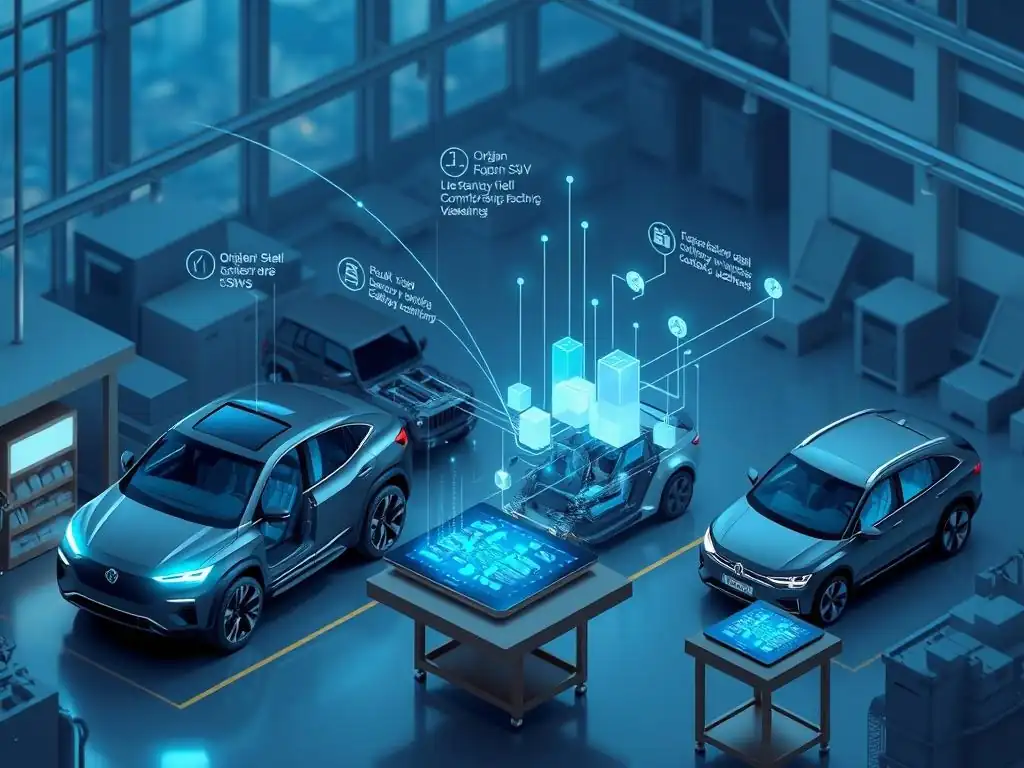
Case Study 1: Tracking Cobalt Sourcing for Electric Vehicle Batteries
Ensuring the ethical sourcing of critical minerals like cobalt, a key component in many electric vehicle batteries, is a major concern for the automotive industry. The supply chain for cobalt is notoriously opaque and has been linked to issues like child labor and unsafe working conditions. Major automotive companies and industry consortia, such as the Mobility Open Blockchain Initiative (MOBI) and the Responsible Sourcing Blockchain Network (RSBN), have launched pilot programs using blockchain to track cobalt from mines in regions like the Democratic Republic of Congo through refineries, component manufacturers, and eventually into finished vehicles.
These initiatives aim to create an immutable record of the mineral's journey, including certifications of origin and ethical practices, providing transparency and assurance to manufacturers and consumers. While specific figures are still emerging from these pilots, the goal is to provide verifiable proof of responsible sourcing for potentially millions of tons of material annually.
Case Study 2: Using Blockchain for Secure Data Sharing in Autonomous Vehicle Development
The development of autonomous vehicles generates enormous volumes of data—from sensor inputs and driving simulations to software updates and testing results. Sharing this sensitive and valuable data securely and verifiably among development partners (OEMs, technology companies, software providers) and with regulatory bodies is crucial but challenging. Some automotive players are exploring blockchain solutions to create secure, auditable platforms for managing access to and sharing of this data.
Blockchain's ability to provide an immutable log of data transactions, usage, and modifications ensures data integrity and provenance. For instance, a platform could use blockchain to record when specific test data sets were accessed, by whom, and for what purpose, ensuring compliance with data usage agreements and regulatory requirements, and protecting intellectual property while facilitating necessary collaboration in this cutting-edge field.
Overcoming Challenges to Blockchain Adoption in Automotive Supply Chains
Data Privacy Concerns and GDPR Compliance
Implementing blockchain in a global automotive supply chain raises significant data privacy challenges, particularly concerning regulations like GDPR in Europe. While blockchain enhances security, the immutable nature of public or even poorly designed permissioned ledgers can conflict with the "right to be forgotten" or the need to keep certain commercially sensitive data confidential.
Automotive companies must carefully design their blockchain solutions, often opting for permissioned networks where access is restricted and data architecture separates highly sensitive information off-chain, using the blockchain only for verified hashes or pointers. Navigating how to record necessary traceability data while remaining compliant with diverse global data privacy laws requires careful legal and technical planning.
Integration with Existing Legacy Systems
The automotive industry relies heavily on a complex ecosystem of legacy IT systems used by OEMs and thousands of suppliers. These systems, often decades old, manage everything from ERP and manufacturing execution to logistics and quality control. Integrating a new blockchain layer with this diverse and often outdated IT landscape is a significant technical hurdle.
It requires developing robust middleware, APIs, and data connectors to ensure seamless data flow between legacy systems and the blockchain network. The cost and complexity of this integration effort can be substantial, requiring significant investment and technical expertise to avoid disrupting existing critical operations while implementing the new blockchain capabilities that blockchain streamlines automotive supply chains.
Establishing Industry-Wide Standards and Governance
For blockchain to realize its full potential in the automotive supply chain, participants need to agree on common standards, protocols, and governance models. Without shared standards for data formats, network rules, and identity management, interoperability between different companies' blockchain implementations will be limited, creating isolated data silos rather than a connected network.
Industry consortia like MOBI are working to develop these standards, but achieving consensus among numerous competing global companies is a slow and complex process. Establishing fair and effective governance structures for managing a shared ledger, including rules for participation, data access, and dispute resolution, is critical for widespread adoption and requires ongoing collaboration and commitment from all stakeholders.
The Future of Blockchain in Automotive Supply Chains: Trends and Predictions
Blockchain-Based Vehicle Identity and Ownership Management
Looking ahead, blockchain is poised to play a significant role in managing the entire lifecycle of a vehicle, starting with a blockchain-based digital identity assigned at manufacturing. This digital identity could securely record ownership history, maintenance logs (creating a tamper-proof digital service book), insurance records, and even accident history.
Transferring vehicle ownership could become a near-instantaneous, secure process recorded on the blockchain. This would not only streamline administrative processes for owners, dealerships, and regulators but also combat vehicle theft and fraud related to mileage tampering or hidden damage, fundamentally changing how vehicle data is managed and trusted throughout its life.
Integration with AI for Predictive Maintenance and Supply Chain Optimization
The combination of blockchain's verifiable, real-time data and the analytical power of Artificial Intelligence (AI) holds immense potential for the automotive supply chain. AI algorithms require large datasets to make accurate predictions. A blockchain can provide AI with access to trusted, immutable data on part performance, maintenance history, logistics conditions, and supplier performance.
This enables AI to power more accurate predictive maintenance schedules for vehicles (based on real-world part usage and condition), optimize inventory levels across the supply chain, anticipate potential disruptions before they occur, and identify inefficiencies in logistics routes. This synergy between blockchain and AI promises to create more intelligent, efficient, and resilient automotive operations.
Expansion into New Areas Such as Vehicle Data Monetization
As vehicles become increasingly connected and generate vast amounts of data (on driving patterns, vehicle performance, location, etc. ), blockchain could facilitate secure and transparent data marketplaces. Vehicle owners could potentially consent to share or monetize certain anonymized data points via a blockchain platform, with clear rules and compensation mechanisms managed by smart contracts.
This could benefit urban planners, insurance companies, or service providers while giving vehicle owners control over their data. Blockchain ensures that data sharing is permissioned, tracked, and immutable, building trust in this emerging area of the automotive ecosystem and creating new revenue streams based on verified data.
Conclusion: Blockchain's Transformative Potential for Automotive Supply Chains
Embracing Blockchain for a More Secure and Efficient Automotive Industry
The automotive supply chain, with its inherent complexity, global reach, and critical need for safety and reliability, stands to gain significantly from the adoption of blockchain technology. As demonstrated, blockchain streamlines automotive supply chains by providing a foundation of trust, transparency, and security that addresses long-standing pain points like counterfeiting, lack of traceability, and inefficient data management. From ensuring the ethical sourcing of raw materials and enhancing the precision of recall management to automating payments and providing an immutable record for compliance, the potential applications are vast and transformative.
While challenges related to integration, standards, and privacy remain, ongoing pilots and industry collaboration indicate a clear path forward. Embracing blockchain is not merely about adopting a new technology; it is about building a more resilient, efficient, and secure future for the automotive industry, ultimately benefiting manufacturers, suppliers, and consumers alike through enhanced product safety and operational integrity.
Frequently Asked Questions
How can blockchain technology improve ecommerce logistics?
Blockchain provides a shared, immutable ledger for tracking goods, ensuring transparency and traceability across the supply chain. This helps reduce fraud and improve efficiency in order fulfillment and delivery.
What are the key benefits of using blockchain to streamline ecommerce logistics?
The primary benefits include enhanced transparency, reduced costs through automation and disintermediation, and increased security against counterfeiting and fraud. This leads to faster and more reliable delivery times.
How does blockchain address the challenges of tracking goods in a complex ecommerce supply chain?
Blockchain creates a single source of truth for tracking products, accessible to all authorized participants. Each transaction is recorded on the blockchain, providing a complete and auditable history of the product's journey.
What role does regulation play in the adoption of blockchain for ecommerce logistics?
Clear regulatory frameworks are essential for widespread adoption. Regulations can provide legal certainty and build trust in blockchain-based systems, addressing concerns about data privacy and security.
What is the future outlook for blockchain in ecommerce logistics, and what are some potential applications?
The future involves greater integration of blockchain with other technologies like IoT and AI. Potential applications include smart contracts for automated payments and delivery, and decentralized marketplaces for greater control over supply chains.
Final Reflection: Embracing Blockchain for Seamless Commerce
The promise of blockchain streamlining ecommerce logistics is no longer a futuristic fantasy, but a tangible solution reshaping how goods move from warehouse to doorstep. The inefficiencies that once plagued order fulfillment and delivery are now being challenged by the transparency, security, and automation that blockchain technology offers. This isn't just about faster shipping; it's about building a more resilient and trustworthy global commerce ecosystem.
The impact of blockchain on ecommerce logistics extends far beyond mere cost reduction; it's fundamentally altering the relationship between businesses and consumers. This shift towards greater transparency and accountability is crucial for fostering trust in an increasingly digital world. The future of supply chain isn't just about efficiency; it's about building trust and resilience.
This quote encapsulates the core value proposition of blockchain in ecommerce: a system where every transaction is verifiable, immutable, and accessible to authorized parties.
As we stand at the cusp of this technological revolution, it's imperative that we embrace the potential of blockchain to create a more efficient, transparent, and ultimately, more human-centered ecommerce experience. Consider how you, as a consumer, a business owner, or a technology enthusiast, can champion the adoption of blockchain solutions to build a future where seamless order fulfillment and delivery are not just a convenience, but a standard. Let's work together to unlock the full potential of blockchain and create a truly connected and trustworthy global marketplace.
Unlock the Future of Ecommerce: Start Your Blockchain Journey Today!
Thank you for exploring how blockchain is transforming ecommerce logistics. Now that you see the potential for greater transparency and efficiency, it's time to take action. Here’s how you can begin:
- Identify a challenge in your supply chain: Find a specific bottleneck in your logistics operations that could benefit from blockchain technology, and start researching possible solutions. This is your first step!
- Explore blockchain platforms designed for supply chain management: Compare different options and review case studies and success stories within the ecommerce industry.
- Share your insights: Discuss the opportunities of blockchain in ecommerce logistics with colleagues and your professional network on social media using a designated hashtag. Let’s start a meaningful conversation!
What is the first step you will take to incorporate blockchain into your ecommerce logistics, and what challenges do you expect? Share your thoughts below!
Leave a Reply