
Efficiency Through Automation: BlockchainEnabled Smart Contracts in Logistics

Welcome to Blockchain Trends, your guide to understanding the revolutionary power of blockchain beyond digital currencies.
Are you ready to unlock unparalleled efficiency in logistics? Dive into our latest article, "Efficiency Through Automation: Blockchain-Enabled Smart Contracts in Logistics," and discover how blockchain smart contracts are streamlining supply chains, slashing costs, and revolutionizing the way goods move around the world. Explore the future of decentralized systems and the transformative potential waiting to be unleashed!
Enhancing Supply Chain Resilience: Blockchain-Enabled Smart Contracts in Food Logistics
- Introduction: Revolutionizing Food Logistics with Blockchain Smart Contracts
- The Current Challenges in Food Logistics and Supply Chain Management
- Blockchain Smart Contracts: A Solution for Food Logistics Inefficiencies
- Use Cases of Blockchain Smart Contracts in Food Logistics
- Benefits of Implementing Blockchain Smart Contracts for Food Logistics Efficiency
- Overcoming the Challenges of Blockchain Smart Contract Adoption in Food Logistics
- The Future of Blockchain Smart Contracts in Food Logistics
- Case Studies: Real-World Examples of Blockchain Smart Contracts Improving Food Logistics Efficiency
- Conclusion: Embracing Blockchain Smart Contracts for a More Efficient and Transparent Food Logistics Ecosystem
-
Frequently Asked Questions
- How do blockchain smart contracts improve logistics efficiency?
- What are some specific examples of how smart contracts can be used in logistics?
- What are the main benefits of using a blockchain for logistics compared to traditional methods?
- What are the regulatory challenges surrounding the use of blockchain and smart contracts in the logistics industry?
- How can businesses get started with implementing blockchain smart contracts for logistics efficiency?
- Final Reflection: Embracing the Future of Logistics
- Unlock the Future of Logistics!
Introduction: Revolutionizing Food Logistics with Blockchain Smart Contracts
The Promise of Blockchain Technology for Food Supply Chain Optimization
Blockchain technology holds significant promise for transforming the intricate and often fragile food supply chain. Its inherent characteristics of immutability, transparency, and decentralization offer solutions to long-standing challenges such as lack of visibility, inefficient processes, and susceptibility to fraud.
By creating a shared, tamper-proof ledger accessible to authorized participants, blockchain can track food products from their source, whether a farm or a fishing vessel, through processing, packaging, distribution, and finally to the consumer's table. This unprecedented level of transparency builds trust among stakeholders and allows for quicker identification and isolation of issues like contamination, potentially saving lives and reducing financial losses.
Furthermore, blockchain can streamline complex transactions and data sharing across disparate systems used by farmers, processors, distributors, retailers, and regulators. Instead of relying on siloed databases and manual data entry prone to errors and delays, all parties can reference the same trusted source of information. This shared reality facilitates better coordination, reduces administrative overhead, and enhances overall operational efficiency. The potential for optimizing food logistics operations by leveraging blockchain's foundational capabilities is vast, paving the way for more resilient, secure, and efficient supply networks.
Understanding Smart Contracts: The Key to Automated Food Logistics
Smart contracts are self-executing contracts with the terms of the agreement directly written into lines of code. This code resides on a blockchain network, and the execution of the contract is automatically triggered when predefined conditions are met. In the context of food logistics, smart contracts act as automated agents that can enforce agreements without the need for intermediaries, significantly enhancing blockchain smart contracts logistics efficiency. For example, a smart contract could be programmed to release payment to a farmer automatically once a shipment of produce is verified as received and meeting quality standards recorded on the blockchain.
The power of smart contracts in food logistics lies in their ability to automate processes that were previously manual, paper-based, and time-consuming. This automation reduces the risk of human error, eliminates potential for disputes over terms, and accelerates transaction flows. By automating key logistical steps—such as quality checks, delivery confirmations, and payments—smart contracts enable a more agile and responsive supply chain. They are a critical component for unlocking the full potential of blockchain in creating a truly optimized and automated food logistics ecosystem, driving significant improvements in speed, accuracy, and cost-effectiveness.
The Current Challenges in Food Logistics and Supply Chain Management
Inefficiencies and Bottlenecks in Traditional Food Logistics Systems
Traditional food logistics systems are plagued by numerous inefficiencies and bottlenecks that hinder timely and cost-effective delivery. These issues often stem from fragmented information systems, manual processes, and a lack of real-time visibility across the supply chain. For instance, tracking shipments often involves disparate spreadsheets, paper manifests, and phone calls, leading to delays in locating goods or verifying their status.
This lack of centralized, accessible data makes it difficult to optimize routes, manage inventory effectively, or respond quickly to disruptions. A study by the Food Marketing Institute and Gartner estimated that food retailers lose approximately 1% of sales due to out-of-stocks, often linked to poor inventory visibility and inefficient logistics.
Another significant challenge is the complex web of intermediaries involved in moving food from farm to plate. Each handover point, from aggregators and processors to distributors and retailers, adds layers of complexity and potential delays. Information silos between these parties mean that critical data, such as batch numbers, expiration dates, or handling instructions, may not be consistently or accurately shared. This fragmentation slows down operations, increases administrative costs, and makes it challenging to pinpoint the source of issues quickly, directly impacting the potential for blockchain smart contracts logistics efficiency in traditional setups.
The Need for Enhanced Transparency and Traceability in Food Supply Chains
Consumer demand for transparency regarding the origin, safety, and ethical sourcing of their food is increasing, yet traditional supply chains often lack the robust traceability systems required to meet this need. When a food safety incident occurs, such as a bacterial outbreak, tracing the contaminated product back to its source through conventional methods can take days or even weeks.
This delay is costly, leading to widespread product recalls, significant financial losses for businesses, and potential harm to public health. For example, a major E. coli outbreak linked to romaine lettuce in 2018 took weeks to trace, causing a nationwide alert and massive economic impact on producers and retailers.
Beyond safety, consumers and regulators are also demanding more information about sustainability practices, labor conditions, and product authenticity. Providing this level of detail requires a system that can reliably capture and share data at every stage of the journey. Current paper-based records and disparate digital systems make it incredibly difficult to provide end-to-end traceability. This opacity not only erodes consumer trust but also complicates compliance with increasingly stringent regulations regarding food labeling and safety standards, highlighting a critical area where blockchain smart contracts logistics efficiency can make a difference.
Food Waste and Spoilage: The Impact on Food Logistics Operations
Food waste and spoilage represent a massive economic and environmental burden on the food logistics sector. Globally, it's estimated that roughly one-third of all food produced for human consumption is lost or wasted, much of this occurring within the supply chain itself. Factors contributing to this include improper handling, inadequate temperature control during transportation and storage, logistical delays, and poor inventory management stemming from a lack of real-time data. Perishable goods, like fresh produce, dairy, and meat, are particularly susceptible to spoilage if not managed with precision throughout their journey.
The financial implications of this waste are staggering, costing the global economy billions of dollars annually. It also represents a significant loss of resources, including water, energy, and land used in food production. From a logistics perspective, wasted food means wasted transportation costs, storage expenses, and labor.
Implementing systems that can monitor conditions like temperature and humidity in real-time and automate responses based on these conditions is crucial for reducing spoilage. The inability of traditional systems to provide this level of granular, verifiable data contributes directly to this pervasive problem, underscoring the need for solutions that enhance blockchain smart contracts logistics efficiency in preventing waste.
Blockchain Smart Contracts: A Solution for Food Logistics Inefficiencies
How Blockchain Smart Contracts Enhance Transparency and Security
Blockchain smart contracts fundamentally enhance transparency and security in food logistics by operating on a distributed, immutable ledger. Every transaction and data point recorded on the blockchain, such as a shipment leaving a warehouse or a temperature reading from a refrigerated truck, is timestamped and cryptographically secured. Once recorded, this information cannot be altered or deleted, creating a permanent and trustworthy record of the food product's journey. This shared, single source of truth is accessible to authorized parties, eliminating information silos and providing unprecedented visibility across the entire supply chain, from farm to retailer.
The transparency provided by blockchain allows stakeholders to verify the authenticity and history of a product at any point. This is particularly valuable for ensuring compliance with food safety regulations and verifying claims about origin or handling. Smart contracts add a layer of automated security by enforcing predefined rules based on this transparent data.
For example, a smart contract could be programmed to only allow a transfer of ownership (recorded on the blockchain) if all required quality checks (also recorded on the blockchain) have been completed and verified. This automation based on verifiable data reduces the risk of fraudulent activities and ensures that agreed-upon processes are followed precisely, significantly boosting blockchain smart contracts logistics efficiency and trust.
Automated Execution: Reducing Manual Intervention in Food Logistics Processes
One of the most significant benefits of blockchain smart contracts in food logistics is their ability to automate key operational processes, dramatically reducing the need for manual intervention. Traditional logistics involves extensive paperwork, manual data entry, and human approval steps for tasks like invoicing, payment processing, and compliance checks. These manual touchpoints are prone to errors, delays, and increased administrative costs. Smart contracts automate these steps by executing code automatically when specific conditions are met, which are recorded and validated on the blockchain.
Consider the process of payment. Traditionally, payment might occur days or weeks after delivery, requiring manual invoice generation, verification against purchase orders and delivery receipts, and bank processing. With a smart contract, payment can be triggered instantly upon confirmation of delivery and condition (e.g., temperature within range) being recorded on the blockchain. This automated execution accelerates transaction cycles, improves cash flow for suppliers, and frees up personnel from tedious administrative tasks. This direct automation is a core driver of blockchain smart contracts logistics efficiency, streamlining operations and minimizing the potential for human-induced delays or errors.
Improved Traceability: Tracking Food Products from Farm to Table with Blockchain
Blockchain technology, powered by smart contracts, offers a level of food product traceability that is orders of magnitude better than traditional systems. By creating a digital trail for every batch or even individual item of food, from its origin point through every handoff and transformation stage, stakeholders can gain complete visibility into its history. Each time the product changes hands, undergoes processing, or is checked for quality, that event can be recorded on the blockchain using a unique identifier. Smart contracts can be used to enforce that these records are made at critical junctures, ensuring data integrity.
In the event of a food safety issue, this granular traceability allows for rapid identification of the affected products and their precise location within the supply chain. Instead of potentially recalling vast quantities of product from numerous locations, companies can pinpoint the specific batches and affected stores, minimizing the scope and cost of recalls.
This capability not only protects public health but also significantly reduces the financial impact on businesses. The ability to quickly and accurately trace a product's journey is a key component of enhanced food safety and a prime example of how blockchain smart contracts logistics efficiency translates into tangible benefits.
Use Cases of Blockchain Smart Contracts in Food Logistics
Streamlining Temperature-Controlled Transportation with Smart Contracts
Maintaining precise temperature control is critical for transporting perishable food items, yet monitoring and verifying temperature logs traditionally involves manual checks and paper records. Blockchain smart contracts can revolutionize this process by integrating with IoT (Internet of Things) sensors placed within refrigerated trucks or containers. These sensors can continuously record temperature and humidity data, which is then securely transmitted and recorded on the blockchain.
A smart contract can be programmed to automatically monitor this temperature data against predefined thresholds for specific products (e.g., dairy must stay below 4°C). If the temperature deviates outside the acceptable range for a specified duration, the smart contract can automatically trigger predefined actions.
These actions could include sending immediate alerts to relevant parties (carrier, receiver, insurer), initiating a penalty clause in the transportation contract, or even triggering an insurance claim based on the verifiable, immutable temperature data recorded on the blockchain. This automated monitoring and response significantly enhances the reliability and safety of temperature-controlled logistics, showcasing practical blockchain smart contracts logistics efficiency.
Automated Payments and Dispute Resolution in Food Logistics
The payment process in food logistics often involves complex terms, credit periods, and potential disputes over quantities or quality. Smart contracts can automate payments based on verifiable events recorded on the blockchain, such as the successful delivery of goods as confirmed by the recipient or the results of a quality inspection. Once the predefined conditions are met (e.g., 'goods received' status updated on blockchain AND 'quality check passed' status updated), the smart contract automatically releases payment from an escrow account or triggers a direct transfer.
This automation drastically reduces payment processing time, potentially from weeks to minutes, improving cash flow for suppliers and reducing administrative overhead for buyers. Furthermore, smart contracts can embed rules for dispute resolution. If a discrepancy arises (e.g., reported quantity doesn't match delivered quantity), the smart contract can hold payment and automatically initiate a predefined dispute resolution process, perhaps involving an agreed-upon third-party oracle or arbitration clause. The objective data on the blockchain serves as the basis for resolving such issues efficiently and transparently, enhancing blockchain smart contracts logistics efficiency in financial transactions.
Enhancing Food Safety and Compliance Using Blockchain
Ensuring food safety and compliance with myriad regulations (like HACCP or FSMA) is paramount in food logistics, but manual processes and scattered records make it challenging. Blockchain smart contracts can enforce and automate compliance checks by requiring specific data points to be recorded on the blockchain at critical control points. For example, a smart contract could mandate that a record of a sanitation check must be added to the blockchain before a processing step can be marked as complete. Similarly, it can ensure that origin data or allergen information is correctly associated with a product batch throughout its journey.
If a regulatory requirement changes, the logic within the smart contract can be updated (depending on the blockchain's capabilities and contract design) to reflect the new rules, ensuring that all future transactions automatically comply. In the event of an audit or recall, the immutable audit trail on the blockchain, enforced by smart contracts, provides regulators and companies with instant access to verifiable data about handling, processing, and transportation conditions.
This proactive and automated approach to compliance significantly reduces the risk of violations and enhances the overall safety posture of the food supply chain, demonstrating tangible blockchain smart contracts logistics efficiency in regulatory adherence.
Origin Verification and Traceability for Consumers with Smart Contracts
Consumers are increasingly interested in knowing where their food comes from and how it was produced. Blockchain smart contracts can facilitate this by creating an accessible, verifiable record of a product's origin and journey. By recording initial production data (farm location, harvest date, certifications) on the blockchain and linking it to subsequent logistics events (transportation, processing, retail), a complete story of the product is built. Smart contracts can ensure that this origin data remains linked to the product identifier throughout the supply chain.
Retailers or food brands can then provide consumers with access to this blockchain data, often via a QR code on the product packaging. Scanning the code could reveal details about the farm, the date of harvest, transportation route, and even temperature logs during transit—all verified by the blockchain.
This level of transparency builds consumer trust and can support premium pricing for products with verified provenance and sustainable practices. Smart contracts ensure the integrity of the data presented to the consumer, acting as a guarantee that the information is consistent with the records shared among supply chain partners, thereby enhancing blockchain smart contracts logistics efficiency in consumer engagement and trust.
Benefits of Implementing Blockchain Smart Contracts for Food Logistics Efficiency
Increased Efficiency and Reduced Operational Costs
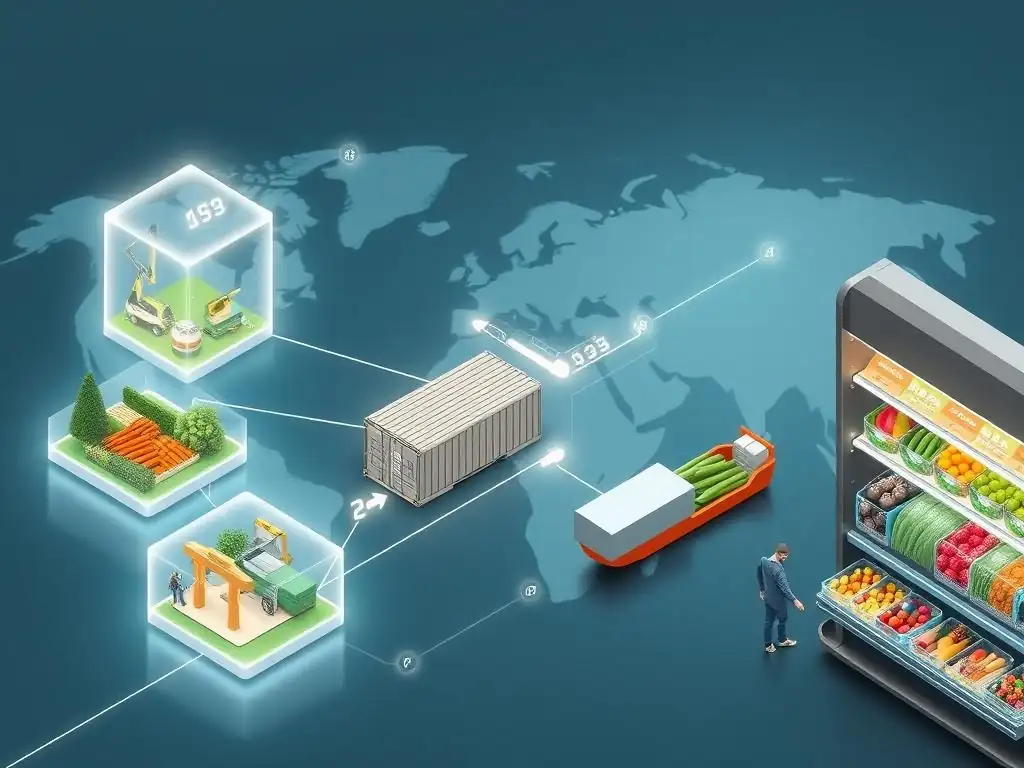
Implementing blockchain smart contracts in food logistics leads to significant increases in operational efficiency and corresponding reductions in costs. By automating manual processes such as data entry, verification, and payment processing, companies can save substantial amounts of time and labor. A study by McKinsey suggested that companies using blockchain for supply chain management could see a 10-15% reduction in logistics costs. The elimination of paper-based workflows and the reduction in administrative overhead associated with managing and reconciling disparate systems contribute directly to these savings.
Furthermore, smart contracts reduce delays inherent in traditional systems. Faster transaction processing, quicker dispute resolution, and automated compliance checks mean that goods move through the supply chain more smoothly and rapidly. This acceleration reduces lead times and allows for better utilization of assets like trucks and warehouses. The cumulative effect of these efficiencies is a leaner, faster, and more cost-effective logistics operation, fundamentally improving blockchain smart contracts logistics efficiency across the board.
Enhanced Transparency and Improved Trust Among Stakeholders
Blockchain smart contracts build a foundation of trust among the various, often disconnected, parties in the food supply chain. The shared, immutable ledger provides a single source of truth for all participants, ensuring that everyone is working with the same, verifiable data. This transparency reduces information asymmetry and minimizes the potential for disagreements or fraudulent activities, as all actions and data points are recorded openly (to authorized parties) and permanently.
Smart contracts enforce the terms of agreements automatically based on this transparent data, ensuring that promises are kept without the need for manual oversight or intervention. This predictability and reliability foster stronger relationships between suppliers, carriers, processors, and retailers. For example, a farmer knows they will be paid automatically once delivery is confirmed on the blockchain, increasing their confidence in the buyer. This enhanced trust facilitates smoother collaboration and strengthens the overall resilience of the food logistics network, highlighting a key benefit for blockchain smart contracts logistics efficiency beyond just speed or cost.
Faster Transaction Processing and Reduced Delays
One of the most immediate and tangible benefits of using blockchain smart contracts in food logistics is the dramatic acceleration of transaction processing. Traditional processes involving invoicing, verification, and payment can take days or even weeks, creating bottlenecks and impacting cash flow. Smart contracts, by automating these steps based on real-time data recorded on the blockchain, can execute payments or trigger subsequent logistics steps within minutes or hours of conditions being met.
This reduction in transaction time is particularly critical for perishable goods, where speed to market directly impacts freshness and reduces spoilage. Faster processing of documentation and payments means goods can move more quickly from one stage to the next. It also reduces the need for extensive credit lines or financing, as payments are settled much faster. The ability to expedite these critical administrative functions is a significant contributor to overall blockchain smart contracts logistics efficiency.
Improved Food Safety and Reduced Food Waste in Logistics Operations
By providing granular, real-time traceability and enabling automated monitoring through integration with IoT, blockchain smart contracts play a crucial role in improving food safety and reducing waste. The ability to track products precisely from origin to destination means that in the event of a contamination scare, affected products can be identified and recalled much faster and with greater precision. This minimizes public health risks and limits the scope and cost of recalls, reducing the amount of safe food unnecessarily discarded.
Furthermore, smart contracts linked to condition monitoring (like temperature) can automatically trigger alerts or corrective actions if conditions deviate from safe parameters. This proactive approach helps prevent spoilage before it occurs. By ensuring proper handling and timely movement of goods through the supply chain based on verifiable data, smart contracts help maintain product quality and extend shelf life. Reducing food waste not only saves money but also aligns with sustainability goals, showcasing the multifaceted impact of blockchain smart contracts logistics efficiency.
Overcoming the Challenges of Blockchain Smart Contract Adoption in Food Logistics
Scalability Issues in Blockchain Networks for Large-Scale Food Logistics
One significant challenge for adopting blockchain smart contracts in large-scale food logistics is the scalability of existing blockchain networks. Public blockchains like Ethereum, while offering strong decentralization, have historically faced limitations in processing a high volume of transactions per second (TPS) compared to centralized systems. A major global food distributor handles potentially millions of shipments and data points daily, which can overwhelm networks with low throughput, leading to high transaction fees and slow confirmation times.
Addressing this requires exploring various solutions. Permissioned blockchains (like Hyperledger Fabric or R3 Corda) designed for enterprise use often offer higher transaction speeds and lower costs, though at the expense of some decentralization. Layer-2 scaling solutions (like optimistic rollups or zero-knowledge rollups) on public blockchains can process transactions off-chain before settling them on the main chain, significantly increasing throughput. As blockchain technology matures, ongoing developments in sharding, consensus mechanisms (like Proof-of-Stake), and inter-chain communication protocols are continuously improving scalability, making blockchain smart contracts logistics efficiency feasible for increasingly large operations.
Interoperability Challenges Between Different Blockchain Platforms
The blockchain landscape is not monolithic; various platforms exist, each with different protocols, consensus mechanisms, and smart contract languages. This presents a significant interoperability challenge when different participants in the food supply chain might adopt different blockchain solutions. For instance, a farmer might use one platform to record origin data, while a large retailer uses another for inventory management and payments. Without seamless communication between these platforms, the goal of end-to-end traceability and automated processes via smart contracts becomes difficult to achieve.
Solutions to interoperability include developing cross-chain communication protocols (like Polkadot or Cosmos) that allow different blockchains to exchange data and assets. Middleware layers and APIs (Application Programming Interfaces) can also be built to translate data between different blockchain platforms and integrate them with existing legacy systems. Industry-wide standards for data formats and communication protocols are also crucial. Overcoming these technical hurdles is essential to unlock the full potential of blockchain smart contracts logistics efficiency across a diverse and fragmented supply chain.
Regulatory and Legal Considerations for Blockchain in the Food Industry
Implementing blockchain smart contracts in the highly regulated food industry involves navigating complex legal and regulatory landscapes. Questions arise regarding the legal status of smart contracts – are they legally binding agreements? How are disputes resolved when the contract is code? Who is liable if a smart contract malfunctions or contains errors leading to financial loss or safety issues? Furthermore, regulations around data privacy (like GDPR) and food safety record-keeping must be considered. While blockchain offers transparency, certain data might need to be restricted or anonymized.
Addressing these challenges requires clear legal frameworks and industry-specific guidelines. Legal professionals are working to define the legal enforceability of smart contracts and develop best practices for their design and implementation to ensure compliance. Solutions for data privacy on blockchain include using permissioned networks where data access is restricted to authorized parties, or employing cryptographic techniques like zero-knowledge proofs to verify data without revealing the underlying information. Collaboration between blockchain developers, legal experts, regulators, and industry stakeholders is necessary to create a clear and compliant path for blockchain smart contracts logistics efficiency in food.
Data Privacy and Security Concerns in Blockchain-Based Food Logistics Systems
While blockchain is inherently secure due to its cryptographic nature and immutability, implementing it in food logistics raises specific data privacy and security concerns. Recording sensitive business data, such as pricing agreements, supplier identities, or proprietary processing techniques, directly onto a public, transparent blockchain is often undesirable. While the data is secure from tampering, its visibility might be too broad. Ensuring the privacy of competitive or sensitive information is crucial for enterprise adoption.
Permissioned blockchains offer a solution by restricting network access and data visibility only to authorized participants, providing a balance between transparency and privacy. Furthermore, techniques like data partitioning (storing sensitive data off-chain and only recording a hash on-chain) or using zero-knowledge proofs allow for verification of data or compliance with rules via smart contracts without exposing the underlying sensitive details. Robust access control mechanisms and secure key management practices are also paramount to protect the system from unauthorized access or malicious activities. Addressing these concerns builds trust and facilitates wider adoption of blockchain smart contracts logistics efficiency solutions.
The Future of Blockchain Smart Contracts in Food Logistics
Integration with IoT Devices for Real-Time Temperature and Condition Monitoring
The future of blockchain smart contracts in food logistics is deeply intertwined with the continued integration of IoT devices. As sensors become cheaper and more ubiquitous, they will provide a continuous stream of real-time data on critical conditions such as temperature, humidity, location, and even shock during transit. This data, fed directly onto the blockchain via secure gateways, creates an irrefutable log of the food product's environment throughout its journey.
Smart contracts will leverage this rich, real-time data to automate decisions and actions with unprecedented precision. For example, a smart contract could dynamically adjust insurance premiums based on real-time temperature compliance, or automatically trigger a rerouting instruction if a shipment is delayed and temperature is rising. This seamless flow of data from the physical world (via IoT) to the digital contract (on the blockchain) will enable highly responsive and proactive logistics management, maximizing blockchain smart contracts logistics efficiency and reducing losses due to spoilage or improper handling.
The Role of AI and Machine Learning in Optimizing Blockchain Smart Contracts for Food Logistics
Artificial Intelligence (AI) and Machine Learning (ML) are poised to play a significant role in optimizing the use of blockchain smart contracts in food logistics. While smart contracts execute predefined rules, AI/ML can analyze vast datasets collected on the blockchain (historical logistics data, sensor readings, market demand, weather patterns) to identify patterns, predict potential issues, and suggest optimal strategies.
AI algorithms could analyze historical temperature data from thousands of shipments recorded on the blockchain to predict the likelihood of spoilage under specific conditions and adjust smart contract parameters accordingly (e.g., setting stricter temperature thresholds for certain routes or seasons). ML can also optimize smart contract logic itself, learning from past performance to refine conditions for automated payments or dispute resolution, making the contracts more intelligent and effective. This synergy between AI/ML's analytical power and blockchain smart contracts' automated execution capabilities will lead to highly optimized, predictive food logistics operations, further enhancing blockchain smart contracts logistics efficiency.
The Potential for Decentralized Autonomous Organizations (DAOs) in Food Logistics Management
Looking further ahead, Decentralized Autonomous Organizations (DAOs) could emerge as a governance model for complex food logistics networks built on blockchain. A DAO is an organization represented by rules encoded as a transparent computer program, controlled by the organization members, and not influenced by a central government or third party. In food logistics, a DAO could potentially manage shared resources, coordinate activities between multiple stakeholders (farmers, transporters, processors, retailers), and enforce network rules via smart contracts.
For instance, a DAO could manage a shared pool of refrigerated trucks, allocating them based on dynamic demand signals and optimizing routes using AI, with all agreements and payments handled automatically by smart contracts governed by the DAO's rules. Decisions about network upgrades, fee structures, or dispute resolution protocols could be made collectively by DAO members through token-based voting. While complex to implement, DAOs offer a vision of a truly decentralized, self-managing food logistics ecosystem where efficiency and fairness are enforced through transparent code and collective governance, representing a potential future frontier for blockchain smart contracts logistics efficiency.
Case Studies: Real-World Examples of Blockchain Smart Contracts Improving Food Logistics Efficiency
Tracking Tuna from Ocean to Plate: Enhanced Traceability and Sustainability
Several initiatives have explored using blockchain to track high-value or ethically sensitive food products like seafood. One notable area is tracking tuna from the point of catch to the consumer. Traditionally, tracing tuna involves complex paper trails susceptible to fraud, making it difficult to verify sustainability claims or combat illegal fishing. Blockchain solutions, often incorporating smart contracts, have been piloted to address this.
In such pilots, data about the catch (species, location, date, vessel ID, fishing method) is recorded on the blockchain at the point of origin. As the tuna moves through processors, distributors, and retailers, each step is recorded, creating a verifiable chain of custody.
Smart contracts can be used to enforce data entry at each handover or trigger actions based on verified data, such as releasing payment to fishers only after their catch data is validated against sustainability certifications recorded on the blockchain. While specific figures on efficiency gains vary by pilot, the core benefit demonstrated is a dramatic improvement in traceability from days or weeks down to seconds, providing consumers and regulators with unprecedented confidence in the product's journey and sustainability credentials, a clear win for blockchain smart contracts logistics efficiency in this niche.
Optimizing Fresh Produce Delivery: Reducing Spoilage and Improving Efficiency
The logistics of fresh produce are particularly challenging due to high perishability and variable quality. Initiatives utilizing blockchain and smart contracts are being explored to optimize this segment. One approach involves recording detailed information about produce batches, including harvest date, location, and initial quality assessments, on the blockchain. As the produce is transported, IoT sensors monitor conditions like temperature and humidity, feeding data into the blockchain.
Smart contracts linked to this data can automate quality checks upon arrival, triggering payments or rejections based on verifiable condition data and predefined quality parameters encoded in the contract. For example, if temperature exceeds a certain threshold for too long, a smart contract might automatically reduce the payment or flag the shipment for rejection. This automated verification reduces manual inspection time and disputes.
Pilot programs have shown potential to reduce spoilage rates by providing better visibility into transit conditions and enabling faster, automated responses to issues, contributing directly to blockchain smart contracts logistics efficiency and reducing waste in the fresh produce supply chain. While precise, publicly available figures on large-scale implementations are still emerging, the principle of automating checks based on immutable data is proving effective.
Conclusion: Embracing Blockchain Smart Contracts for a More Efficient and Transparent Food Logistics Ecosystem
The Transformative Power of Blockchain in Revolutionizing Food Supply Chain Management
Blockchain technology, particularly when combined with the power of smart contracts, is not merely an incremental improvement but a genuinely transformative force capable of revolutionizing food supply chain management. By providing a foundation of trust, transparency, and immutability, it addresses fundamental weaknesses in traditional systems, from fragmented data and manual processes to lack of traceability and vulnerability to fraud. The shift from opaque, siloed operations to a shared, verifiable ledger enables unprecedented collaboration and efficiency among stakeholders.
The implications of this transformation are far-reaching. Enhanced traceability means quicker responses to safety incidents, protecting public health and brand reputation. Automated processes via smart contracts reduce costs, accelerate transactions, and free up resources. Improved transparency builds consumer trust and supports sustainability goals. While challenges remain in adoption, the core capabilities of blockchain lay the groundwork for a future where food logistics is more reliable, safer, and significantly more efficient.
Key Takeaways: Implementing Blockchain Smart Contracts for Food Logistics Success
Implementing blockchain smart contracts for food logistics efficiency requires a strategic approach focusing on several key areas. First, identify specific pain points in the current supply chain where automation and transparency can yield the greatest benefits, such as payment delays, manual temperature monitoring, or traceability gaps. Second, choose a suitable blockchain platform, considering factors like scalability, privacy requirements (permissioned vs. public), and interoperability needs. Third, design smart contracts carefully, ensuring the encoded rules accurately reflect business agreements and regulatory requirements.
Crucially, successful adoption involves collaboration across the supply chain. All key participants—farmers, transporters, processors, retailers—need to be engaged and agree on data standards and network protocols. Integrating blockchain solutions with existing legacy systems and IoT devices is also vital for seamless data flow. Focusing on clear use cases, piloting solutions, and addressing legal and regulatory considerations systematically will pave the way for achieving significant blockchain smart contracts logistics efficiency and building a more resilient food supply chain.
Moving Forward: The Future of Blockchain-Enabled Food Logistics Automation
The journey towards fully automated, blockchain-enabled food logistics is ongoing. The integration of blockchain smart contracts with emerging technologies like AI, Machine Learning, and advanced IoT sensors will unlock even greater levels of optimization and predictive capabilities. Imagine systems where smart contracts dynamically adjust logistics plans based on real-time data and AI-driven forecasts, or where DAOs manage complex global food networks with minimal human intervention.
As the technology matures and regulatory clarity increases, the adoption of blockchain smart contracts in food logistics is expected to accelerate. The proven benefits in terms of efficiency, safety, and transparency are compelling drivers for change. While challenges related to scalability, interoperability, and initial investment exist, the long-term vision of a highly efficient, trustworthy, and automated food supply chain powered by blockchain smart contracts is a powerful motivator for continued innovation and implementation across the industry, promising a future of enhanced blockchain smart contracts logistics efficiency that benefits businesses and consumers alike.
Frequently Asked Questions
How do blockchain smart contracts improve logistics efficiency?
Blockchain smart contracts automate many manual processes in logistics, reducing delays and errors. This automation leads to greater transparency and faster transaction times.
What are some specific examples of how smart contracts can be used in logistics?
Smart contracts can automate payment releases upon delivery confirmation, track shipment conditions via IoT integration, and manage supply chain provenance. These applications improve Blockchain smart contracts logistics efficiency.
What are the main benefits of using a blockchain for logistics compared to traditional methods?
Blockchain provides immutable records, enhanced security, and increased transparency compared to traditional, often fragmented, systems. This leads to greater trust and efficiency.
What are the regulatory challenges surrounding the use of blockchain and smart contracts in the logistics industry?
Regulatory uncertainty regarding data privacy, jurisdictional issues, and the legal enforceability of smart contracts poses significant challenges. Standardized regulations are needed for widespread adoption.
How can businesses get started with implementing blockchain smart contracts for logistics efficiency?
Businesses should begin with pilot projects to test and validate the technology, focusing on specific areas like track and trace or payment automation. They should also engage with blockchain experts for guidance.
Final Reflection: Embracing the Future of Logistics
The journey through the potential of blockchain-enabled smart contracts in logistics reveals a profound truth: efficiency is no longer a luxury, but a necessity in today's interconnected world. The ability to streamline processes, reduce errors, and enhance transparency through automation is not just a technological advancement; it's a fundamental shift in how we approach global trade and supply chain management.
This exploration has underscored the transformative power of blockchain, and its potential to reshape the cultural and social landscape of logistics. The promise of immutable records and automated execution offers a level of trust and accountability previously unattainable, fostering collaboration and reducing friction across complex networks. The future of logistics is not about moving goods faster; it's about moving information more efficiently.
This quote encapsulates the essence of what blockchain smart contracts bring to the table: a revolution in information flow that unlocks unprecedented levels of efficiency.
As we stand on the cusp of this technological revolution, I invite you to reflect on the role you can play in shaping the future of logistics. Consider how you can leverage the principles of transparency, automation, and collaboration to drive innovation within your own sphere of influence. Embrace the potential of blockchain smart contracts, not just as a technological tool, but as a catalyst for a more efficient, resilient, and trustworthy global supply chain.
Unlock the Future of Logistics!
Thank you for exploring how blockchain and smart contracts are transforming the logistics industry. Now that you've seen the potential for increased efficiency and transparency, it's time to take the next step and put these insights into practice. Here's how you can get started:
- Identify a specific area in your supply chain where testing a smart contract prototype could lead to meaningful improvements. Focus on small, manageable projects rather than attempting a complete overhaul.
- Investigate open-source blockchain platforms suitable for supply chain management. Experimenting with these tools can provide valuable hands-on experience.
- Share this article with your colleagues and network to encourage discussions about the possibilities blockchain offers to logistics. Let’s foster a community of innovators!
What is one immediate step you can take today to explore the benefits of smart contracts in your logistics operations? Share your ideas in the comments below!
Leave a Reply