
Blockchain for Customs and Border Control: Streamlining International Trade and Logistics


Welcome to Blockchain Trends, your go-to source for understanding the profound impact of blockchain technology. Beyond the hype, we delve into real-world applications transforming industries. Ever wondered how blockchain can revolutionize international trade? This article explores the innovative use of blockchain customs border control logistics, unveiling how it's poised to streamline processes, enhance security, and ultimately reshape the future of global commerce. Curious to learn how this technology can cut costs and reduce delays? Keep reading to unlock the potential of a truly decentralized future for supply chains.
Blockchain for Customs and Border Control: Streamlining International Trade and Logistics
- Introduction: The Need for Blockchain in Customs and Border Management
- Understanding Blockchain Technology for Global Trade
- Blockchain Applications in Customs and Border Control Logistics
- Use Cases: Blockchain Transforming Border Control Operations
- Benefits of Blockchain Implementation in Customs and Border Control
- Addressing the Challenges of Blockchain Adoption in Customs
- The Future of Blockchain in Global Trade and Customs Logistics
- Conclusion: Blockchain as a Catalyst for Modernizing Customs and Border Control
-
Frequently Asked Questions
- What is the primary benefit of using blockchain for customs and border control in logistics?
- How can blockchain improve international trade logistics through customs border control?
- What are the key challenges in implementing blockchain for customs and border control logistics?
- What role does DeFi (Decentralized Finance) play in blockchain-based customs and border control?
- How will blockchain technology likely shape the future of customs and border control logistics?
- Final Reflection: Embracing Transparency in Global Trade
- Unlock the Future of Global Trade!
Introduction: The Need for Blockchain in Customs and Border Management
Challenges of Traditional Customs and Border Control Processes
Traditional customs and border control processes are notoriously complex, involving numerous parties, disparate systems, and a mountain of paper documentation. This complexity leads to significant delays, increased costs, and a higher risk of errors or fraudulent activity.
For example, a single cross-border shipment can require interactions with dozens of stakeholders, including exporters, importers, freight forwarders, carriers, banks, insurers, and multiple government agencies, each often using their own incompatible systems. This fragmentation results in manual data entry, information silos, and a lack of real-time visibility, causing goods to be held up at borders for days or even weeks, impacting global supply chains and trade efficiency.
Furthermore, the reliance on paper-based processes and fragmented digital systems creates vulnerabilities that can be exploited for illicit activities. Counterfeit goods, smuggling, and customs duty evasion are persistent problems that cost governments and businesses billions of dollars annually. The difficulty in verifying the authenticity of documents and tracking the provenance of goods across multiple jurisdictions makes it challenging to enforce regulations effectively. The lack of a single, trusted source of truth for shipment data exacerbates these issues, hindering efficient risk assessment and targeted inspections, ultimately undermining border security and legitimate international trade.
How Blockchain Can Revolutionize Border Security and Trade Facilitation
Blockchain technology offers a promising solution to many of the inherent challenges in traditional customs and border control. By providing a decentralized, immutable, and transparent ledger, blockchain can create a shared, single source of truth for all parties involved in international trade. This shared ledger can record every step of a shipment's journey, from origin to destination, including all necessary documentation, approvals, and compliance checks. This dramatically improves visibility and reduces the reliance on manual processes and paper documents, directly addressing the issues of delay and inefficiency that plague traditional blockchain customs border control logistics.
The inherent security features of blockchain, particularly its cryptographic hashing and distributed consensus mechanisms, make it highly resistant to tampering and fraud. Once data is recorded on the blockchain, it is extremely difficult to alter without the consensus of the network participants. This immutability ensures the integrity of trade data and documents, making it easier for customs authorities to verify information and identify discrepancies. Implementing blockchain customs border control logistics enhances trust among stakeholders and provides a robust framework for secure data exchange, bolstering efforts to combat illicit trade and improve overall border security.
Understanding Blockchain Technology for Global Trade
What is Blockchain and How Does it Work?
At its core, a blockchain is a distributed digital ledger that records transactions across many computers. These transactions are grouped into "blocks," and each new block is cryptographically linked to the previous one, forming a chain. This structure makes the ledger inherently secure and resistant to modification. In the context of global trade and logistics, a blockchain can record information about shipments, ownership transfers, customs declarations, regulatory approvals, and payment details. All authorized participants on the network have access to the same version of the ledger, fostering transparency and enabling real-time tracking of goods and associated data.
The process typically involves participants submitting transactions (e.g., shipping a container, submitting a customs form). These transactions are broadcast to the network, validated by participants (nodes) according to predefined rules, and then added to a new block.
Once a block is verified and added to the chain, it becomes part of the permanent, immutable record. This decentralized and transparent process ensures that no single entity has complete control over the data, and any attempts to tamper with past records would be immediately detectable by other network participants, making it ideal for complex, multi-party processes like blockchain customs border control logistics.
Key Features of Blockchain: Transparency, Security, and Immutability
Transparency is a cornerstone of blockchain technology. While data access can be permissioned in private or consortium blockchains often used in enterprise settings, the principle of a shared, visible ledger among authorized participants remains. This means all relevant parties – including customs officials, logistics providers, and traders – can view the same, up-to-date information about a shipment simultaneously, reducing information asymmetry and fostering collaboration. This shared view is crucial for speeding up processes and resolving disputes in blockchain customs border control logistics.
Security is embedded in blockchain's design through cryptography. Each block contains a unique hash of the previous block, creating a chain where altering one block would require altering all subsequent blocks, which is computationally infeasible for a distributed network. This makes data on the blockchain highly secure against unauthorized changes.
Immutability means that once data is recorded and validated on the blockchain, it cannot be retrospectively altered or deleted. This provides a trustworthy and verifiable audit trail for all transactions and events related to a shipment, which is invaluable for regulatory compliance and fraud prevention in blockchain customs border control logistics.
Benefits of Blockchain Implementation in International Trade
Implementing blockchain in international trade offers a multitude of benefits, starting with significant improvements in efficiency. By digitizing documents and processes on a shared ledger, delays associated with paper handling, manual data entry, and information reconciliation are drastically reduced. This can shorten transit times and accelerate customs clearance, leading to faster delivery of goods and reduced demurrage costs. Estimates vary, but some reports suggest blockchain could reduce trade documentation processing times from days to hours.
Beyond efficiency, blockchain enhances security and trust. The immutable nature of the ledger provides a reliable record of provenance, making it easier to detect counterfeit goods and track illegal shipments. Increased transparency helps in identifying suspicious activities and improving risk management for customs authorities. Furthermore, blockchain can lower overall transaction costs by eliminating intermediaries and streamlining processes. For instance, trade finance, a complex area often linked to customs procedures, can be made more efficient and less costly through blockchain-based solutions. These benefits collectively pave the way for more secure, efficient, and cost-effective blockchain customs border control logistics.
Blockchain Applications in Customs and Border Control Logistics
Enhancing Supply Chain Visibility with Blockchain for Customs Clearance
One of the most significant applications of blockchain in this domain is its ability to provide end-to-end visibility across the supply chain. By recording every event – from manufacturing and packaging to shipping, transit, and arrival – on a shared ledger, all authorized parties, including customs, gain unprecedented insight into the movement and status of goods. This allows customs agencies to anticipate arrivals, perform risk assessments based on verified historical data, and prepare for clearance procedures well before a shipment reaches the border.
This enhanced visibility, powered by blockchain customs border control logistics, allows for a shift from reactive inspections to proactive risk management. Customs officials can access detailed information about the origin, contents, and journey of a shipment, reducing the need for extensive physical inspections of low-risk cargo. This not only speeds up clearance for legitimate trade but also allows authorities to focus resources on high-risk shipments, improving the effectiveness of border security while simultaneously facilitating legitimate commerce.
Improving Data Integrity and Reducing Fraud in Cross-Border Transactions
The integrity of data is paramount in customs processes, where inaccurate or fraudulent declarations can lead to significant financial losses and security risks. Blockchain's immutable ledger ensures that once shipment data, such as cargo manifests, bills of lading, or customs declarations, is recorded, it cannot be altered retroactively without detection. This provides customs officials with a high degree of confidence in the accuracy and authenticity of the information they receive.
By creating a tamper-proof record of transactions and documents, blockchain significantly reduces opportunities for fraud, such as misdeclaration of goods, under-invoicing, or the use of forged documents. Participants are incentivized to provide accurate data from the outset, knowing that it will be permanently recorded and visible to relevant parties. This improved data integrity is a fundamental benefit of blockchain customs border control logistics, helping to secure revenue, enforce trade regulations, and combat illicit trade activities effectively.
Automated Customs Processes: Smart Contracts and Border Management
Smart contracts, self-executing contracts with the terms of the agreement directly written into code, can automate many routine customs and border control processes. For instance, a smart contract could be programmed to automatically trigger the release of a shipment once all necessary documentation is uploaded to the blockchain and verified, and required duties or taxes are confirmed as paid. This eliminates manual checks and approvals, speeding up clearance times considerably.
Smart contracts can also enforce compliance rules automatically. For example, a contract could verify that a shipment of specific goods meets all import regulations before allowing it to proceed. This automation minimizes human error and ensures consistent application of rules, streamlining border management. The integration of smart contracts into blockchain customs border control logistics transforms bureaucratic hurdles into automated workflows, making trade faster, more predictable, and less susceptible to delays caused by manual processing queues.
Use Cases: Blockchain Transforming Border Control Operations
Case Study 1: Maersk and IBM's TradeLens Platform
One of the most prominent real-world examples is the TradeLens platform, a collaboration between Maersk and IBM. Launched to digitize and streamline global supply chains, TradeLens uses blockchain technology to create a shared, immutable record of transactions and events across the shipping ecosystem. While not exclusively focused on customs, it includes participation from customs authorities in various countries.
The platform allows shippers, carriers, freight forwarders, ports, and customs agencies to share real-time, permissioned data about container shipments. For example, the U.S. Customs and Border Protection (CBP) piloted TradeLens to explore how its secure data sharing could enhance targeting capabilities and improve cargo visibility. The pilot demonstrated the potential for more efficient data exchange, reducing the reliance on manual processes and providing earlier access to reliable shipment information, showcasing the practical application of blockchain customs border control logistics.
Case Study 2: Singapore's TradeTrust for Digitalizing Trade Documents
Singapore has been a leader in leveraging technology for trade facilitation. Its TradeTrust initiative, powered by blockchain, aims to digitalize and enhance the interoperability of trade documents, such as electronic Bills of Lading (eBLs). The framework allows for the secure creation, transfer, and verification of digital trade documents across different platforms and jurisdictions.
By using blockchain to establish the validity and ownership of these digital documents, TradeTrust provides a trusted method for paperless trade. This is particularly relevant for customs, as verifying the authenticity of crucial documents like the Bill of Lading is a critical step in the clearance process. Pilots involving TradeTrust have shown the potential to significantly reduce the time and cost associated with handling paper documents, demonstrating how blockchain customs border control logistics can facilitate a move towards fully digital trade flows.
Case Study 3: World Economic Forum's Redesigning Trust: Blockchain Deployment Toolkit
The World Economic Forum (WEF), in collaboration with various stakeholders, developed the "Redesigning Trust: Blockchain Deployment Toolkit." While not a specific platform, this toolkit provides a comprehensive guide for organizations and governments looking to implement blockchain solutions. It includes frameworks for evaluating use cases, addressing governance challenges, and ensuring interoperability.
The toolkit specifically addresses the potential of blockchain in supply chains and cross-border trade, recognizing the need for harmonized approaches and collaboration among diverse parties, including customs authorities. Its development highlights the global recognition of blockchain's potential to transform traditional systems and underscores the importance of structured planning and multi-stakeholder cooperation for successful blockchain customs border control logistics implementations on a larger scale.
Benefits of Blockchain Implementation in Customs and Border Control
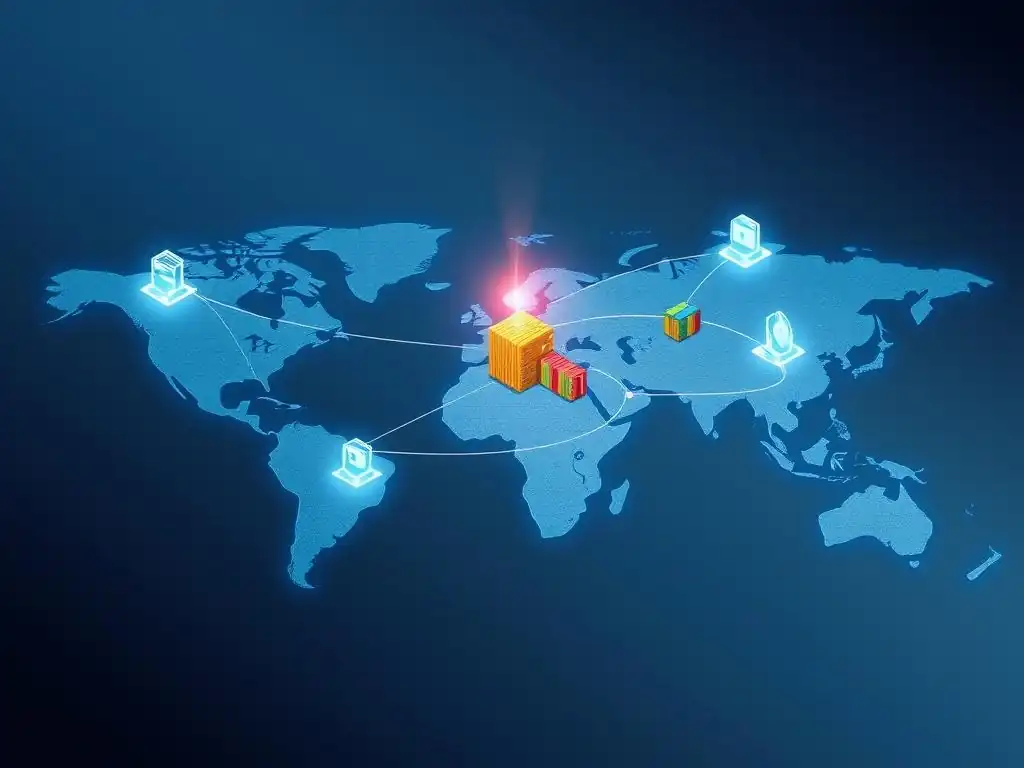
Increased Efficiency and Reduced Delays in Border Crossings
One of the most tangible benefits of adopting blockchain in customs and border control is the dramatic increase in efficiency. By replacing manual, paper-based processes with automated, digital workflows on a shared ledger, the time required for documentation submission, verification, and approval is significantly reduced. This translates directly into faster border crossings for legitimate cargo.
For instance, studies and pilot programs have indicated that blockchain could potentially cut processing times for some shipments from several days to just a few hours. This reduction in delay not only speeds up the delivery of goods but also lowers costs associated with storage, demurrage, and administrative overhead. The streamlined flow of information enabled by blockchain customs border control logistics is a key driver for improving the competitiveness of businesses involved in international trade.
Enhanced Security and Prevention of Smuggling and Counterfeiting
Blockchain's inherent security features provide a robust defense against illicit activities at the border. The immutable ledger creates a permanent and verifiable record of a product's journey from origin to destination. This makes it significantly harder to introduce counterfeit goods or divert legitimate shipments without leaving a traceable digital footprint.
Customs authorities can leverage this secure, transparent record to verify the authenticity of goods and documents, identify suspicious patterns, and improve their risk assessment capabilities. The ability to trace provenance with high confidence makes it easier to identify the source of illegal shipments and hold responsible parties accountable. This enhanced security aspect of blockchain customs border control logistics is crucial for protecting economies and public safety.
Lower Transaction Costs and Improved Transparency in International Trade
The traditional international trade ecosystem involves numerous intermediaries, each adding costs and complexity. By providing a shared, trusted platform, blockchain can reduce the need for some intermediaries and streamline interactions between others. This can lead to lower transaction costs for businesses involved in importing and exporting goods.
Furthermore, blockchain introduces unprecedented transparency into the trade process for authorized participants. All parties involved in a shipment can access the same, verified information in near real-time. This shared visibility reduces disputes, builds trust among stakeholders, and makes the entire process more predictable and reliable. The cost savings and improved transparency offered by blockchain customs border control logistics contribute to a more efficient and equitable global trading system.
Streamlined Regulatory Compliance and Data Sharing
Regulatory compliance in international trade is complex and often involves submitting similar information to multiple agencies across different jurisdictions. Blockchain can streamline this by providing a single platform where required data can be submitted and shared securely with relevant authorities based on predefined permissions. This reduces redundant data entry and ensures consistency across submissions.
Smart contracts can automate compliance checks against regulations, ensuring that shipments meet requirements before reaching the border. This proactive approach helps prevent non-compliant shipments from causing delays or penalties. The secure and permissioned data sharing capabilities of blockchain customs border control logistics facilitate better collaboration between customs agencies, other government bodies, and trade participants, simplifying the complex web of international trade regulations.
Addressing the Challenges of Blockchain Adoption in Customs
Data Privacy Concerns and Regulatory Frameworks
While transparency is a key feature of blockchain, data privacy is a significant concern, especially when dealing with sensitive commercial information or personal data within customs declarations. Public blockchains might expose too much information, while private or consortium blockchains require careful management of access permissions. Establishing appropriate regulatory frameworks that govern data ownership, access, and protection on blockchain networks is crucial but complex, as laws vary significantly across countries.
Integrating blockchain into existing legal structures requires addressing questions about legal validity of blockchain records, jurisdiction over disputes involving decentralized systems, and compliance with data protection regulations like GDPR. Governments and international bodies are actively exploring these issues, but a universally accepted legal and regulatory framework for blockchain customs border control logistics is still under development and poses a significant hurdle to widespread adoption.
Interoperability Issues Between Different Blockchain Systems
The potential benefits of blockchain in global trade are maximized when different systems and platforms can communicate with each other. However, various blockchain networks and platforms use different protocols and standards, leading to interoperability challenges. A shipment might involve participants using different blockchain solutions for different aspects of the supply chain or in different geographical regions.
Ensuring seamless data flow and communication between these disparate systems is essential for creating a truly integrated blockchain customs border control logistics ecosystem. Developing common standards, protocols, and interoperability layers is a critical technical challenge that requires collaboration among technology providers, industry consortia, and government agencies to enable the exchange of data across different blockchain networks and legacy systems.
Scalability Challenges in Handling Large Volumes of Trade Data
International trade involves processing an enormous volume of transactions and data daily. Current blockchain technologies, particularly public blockchains, can face scalability issues, potentially struggling to handle the sheer throughput required for global customs operations. While enterprise-focused private and consortium blockchains generally offer better performance, they still need to demonstrate the capacity to manage the massive data flows of global trade efficiently and cost-effectively.
Ensuring that a blockchain solution for customs can process millions of transactions accurately and quickly without becoming congested is vital for its practical implementation. Ongoing research and development in blockchain technology are focused on improving scalability through various methods, such as sharding, layer-2 solutions, and optimized consensus mechanisms. Overcoming these technical limitations is necessary for blockchain customs border control logistics to handle the scale of global commerce.
The Need for Collaboration Between Governments and Industry Stakeholders
Successful implementation of blockchain in customs requires unprecedented collaboration among a diverse group of stakeholders, including government agencies (customs, regulators, trade ministries), logistics providers, carriers, port authorities, banks, insurers, and technology companies. Each group has its own interests, legacy systems, and operational procedures.
Achieving consensus on common platforms, data standards, governance models, and implementation strategies is a complex undertaking. Governments need to be willing to adapt regulations and processes, while industry players need to invest in new technologies and change established ways of working. Fostering trust and aligning the interests of all these parties is a critical non-technical challenge for realizing the full potential of blockchain customs border control logistics.
The Future of Blockchain in Global Trade and Customs Logistics
Emerging Trends and Innovations in Blockchain-Based Trade Solutions
The field of blockchain customs border control logistics is constantly evolving, with several emerging trends shaping its future. One key area is the development of more sophisticated smart contracts capable of handling complex trade finance instruments and automating intricate regulatory checks. Another trend is the focus on identity management solutions on the blockchain, enabling secure and verifiable digital identities for businesses and individuals involved in trade, which is crucial for Know Your Customer (KYC) and Anti-Money Laundering (AML) compliance in cross-border transactions.
Furthermore, the integration of blockchain with other technologies like the Internet of Things (IoT) is gaining traction. IoT sensors can collect real-time data on shipment conditions (temperature, location, humidity) and automatically record it on the blockchain, providing verifiable proof of condition and handling throughout the journey. This combination enhances transparency and trust significantly, offering customs authorities and businesses granular, trustworthy data about cargo status and integrity.
The Role of Blockchain in Facilitating E-Commerce and Cross-Border Payments
E-commerce has dramatically increased the volume of small, frequent cross-border shipments, posing new challenges for customs clearance and payment processing. Blockchain can play a significant role in streamlining customs procedures for e-commerce by facilitating the automated submission and verification of simplified declarations based on reliable data shared earlier in the supply chain.
Additionally, blockchain-based payment solutions can offer faster, cheaper, and more transparent methods for handling cross-border payments related to e-commerce transactions, including duties and taxes. By linking payment confirmations directly to shipment records on the blockchain, the clearance process can be accelerated. The ability of blockchain customs border control logistics to handle high volumes of transactions efficiently and securely is particularly relevant for the growth of global e-commerce.
Potential for Blockchain to Support Sustainable and Ethical Trade Practices
Beyond efficiency and security, blockchain holds significant potential for promoting sustainable and ethical trade. By creating an immutable record of a product's origin, journey, and components, blockchain can provide verifiable proof of compliance with environmental standards, labor laws, and ethical sourcing guidelines. This transparency helps consumers, businesses, and regulators track the sustainability footprint of goods.
For example, blockchain can be used to track the provenance of goods like conflict minerals, timber, or seafood, ensuring they are sourced responsibly and legally. This verifiable chain of custody assists customs authorities in enforcing regulations related to illegal logging, fishing, or trafficking. By providing a trusted platform for verifying sustainability claims, blockchain customs border control logistics can support global efforts towards more responsible and ethical international trade.
Conclusion: Blockchain as a Catalyst for Modernizing Customs and Border Control
Key Takeaways on Blockchain's Impact on International Trade
Blockchain technology offers a transformative pathway for modernizing traditional customs and border control processes. Its core features of transparency, security, and immutability directly address critical challenges such as inefficiency, lack of trust, data integrity issues, and fraud in international trade. By providing a shared, single source of truth for shipment data and documents, blockchain can significantly reduce delays, lower costs, and enhance the security of cross-border transactions.
Real-world use cases, such as TradeLens and Singapore's TradeTrust, demonstrate the practical feasibility and benefits of implementing blockchain solutions in this domain. While significant challenges remain, including regulatory harmonization, interoperability, and scalability, the potential for blockchain customs border control logistics to create a more efficient, secure, and transparent global trading environment is clear and compelling, promising substantial improvements over current systems.
The Path Forward for Widespread Blockchain Adoption in Customs and Border Management
Achieving widespread adoption of blockchain in customs and border management requires a concerted effort involving technological development, policy reform, and multi-stakeholder collaboration. Governments need to develop clear legal and regulatory frameworks that support the use of blockchain and digital trade documents. Industry stakeholders must invest in implementing compatible blockchain solutions and work together to establish common standards for data exchange and interoperability.
Pilot programs and phased rollouts in specific trade lanes or for particular types of goods can help demonstrate value and build confidence. Education and training for customs officials and trade participants are also essential to ensure effective utilization of the new technology. By addressing the challenges systematically and fostering collaboration, the global trade community can leverage blockchain customs border control logistics to unlock unprecedented levels of efficiency, security, and transparency, paving the way for a truly digitized and streamlined international trade ecosystem.
Frequently Asked Questions
What is the primary benefit of using blockchain for customs and border control in logistics?
The primary benefit is increased transparency and security in the supply chain. This helps to reduce fraud and improve the efficiency of customs processes.
How can blockchain improve international trade logistics through customs border control?
Blockchain can facilitate real-time tracking of goods, automate customs procedures via smart contracts, and create a shared, immutable ledger accessible to all stakeholders, reducing delays.
What are the key challenges in implementing blockchain for customs and border control logistics?
Challenges include lack of standardization, interoperability between different blockchain systems, and the need for regulatory clarity regarding the use of this technology in international trade.
What role does DeFi (Decentralized Finance) play in blockchain-based customs and border control?
DeFi can enable automated payments and escrow services, facilitating secure and transparent financial transactions related to international trade, potentially reducing reliance on traditional banking systems.
How will blockchain technology likely shape the future of customs and border control logistics?
Blockchain is expected to lead to more efficient, secure, and transparent international trade processes. This will likely involve increased automation and reduced reliance on manual paperwork and intermediaries.
Final Reflection: Embracing Transparency in Global Trade
The potential of blockchain technology to revolutionize customs and border control is no longer a futuristic concept, but a tangible reality. The promise of enhanced security, transparency, and efficiency in international trade is within our grasp, offering a pathway to a more seamless and trustworthy global logistics network. The insights shared throughout this exploration highlight the profound impact blockchain can have on streamlining processes and reducing friction in a sector ripe for disruption.
The adoption of blockchain in customs and border control isn't just about technological advancement; it's about fostering trust and collaboration in a complex global ecosystem. This shift towards greater transparency and accountability resonates deeply, reminding us that innovation should serve to build bridges, not walls. The future of trade is digital, and blockchain is the key to unlocking its full potential.
This sentiment underscores the transformative power of this technology to reshape how goods move across borders and how nations interact economically.
As we conclude this exploration, I invite you to consider the role you can play in shaping this future. Reflect on how the principles of transparency, security, and efficiency, embodied by blockchain, can be applied not only in the realm of international trade but also in your own endeavors. Embrace the potential of this technology to foster a more connected, secure, and prosperous world for all.
Unlock the Future of Global Trade!
Thank you for exploring how blockchain technology can transform customs procedures and border management. You've seen how it can enhance efficiency, transparency, and security in international trade. Are you ready to get involved?
Consider taking the following steps:
- Advocate for the adoption of blockchain within your organization or industry to improve supply chain processes. This is the most impactful action you can take right now.
- Learn more about current blockchain pilot projects in customs and border control by researching recent initiatives and case studies.
- Share this article with colleagues and peers to promote discussion. What challenges in global trade could blockchain help address?
What obstacles do you anticipate in implementing blockchain solutions for border management, and how might we work together to overcome them?
Leave a Reply