
Ethical Shopping, Verified: A Blockchain Case Study in Using Blockchain for Fair Trade Practices in Retail


Welcome to Blockchain Trends, your go-to resource for understanding the real-world impact of blockchain technology! Beyond the hype of cryptocurrencies, we delve into the transformative applications shaping industries worldwide. Ever wondered how blockchain can revolutionize ethical consumerism? Dive into our latest article, " Blockchain fair trade retail," to uncover a compelling case study demonstrating how blockchain is bringing transparency and trust to the retail sector, ensuring fair practices for producers and consumers alike. Discover how this technology is reshaping supply chains and empowering a more ethical future for retail. Let's explore the possibilities together!
Coffee Traceability: A Blockchain Case Study in Using Blockchain for Fair Trade Practices in Retail
- Introduction: Blockchain's Role in Revolutionizing Fair Trade Retail
- Understanding Blockchain for Fair Trade: Core Concepts
- Case Study: Farmer Connect - Implementing Blockchain for Fair Trade
- Blockchain Implementation: A Step-by-Step Overview
- Results and Impact: Verifying Fair Trade with Blockchain
- Challenges and Considerations for Blockchain-Enabled Fair Trade
- Future Trends: Blockchain and the Evolution of Ethical Retail
- Conclusion: Blockchain Driving the Future of Fair Trade Retail
-
Frequently Asked Questions
- How can blockchain technology specifically help ensure fair trade practices in retail?
- What are the primary benefits of using blockchain for fair trade in the retail sector?
- What challenges might retailers face when implementing blockchain for fair trade?
- How does blockchain improve consumer trust in fair trade products?
- What is the future outlook for blockchain adoption in fair trade retail?
- Final Reflection: Empowering Consumers Through Transparency
- Unveil Your Power: Champion Ethical Retail!
Introduction: Blockchain's Role in Revolutionizing Fair Trade Retail
The Growing Demand for Ethical and Sustainable Shopping
Consumers today are increasingly conscious of the origin and impact of the products they purchase. This growing awareness fuels a significant demand for goods that are not only high-quality but also produced ethically and sustainably. Market research consistently shows a rising preference for brands that demonstrate transparency about their supply chains and commit to fair labor practices and environmental responsibility. This shift in consumer behavior is transforming the retail landscape, pressuring businesses to adopt more responsible sourcing strategies and communicate them effectively.
This heightened scrutiny means shoppers are looking beyond the label, seeking tangible proof that their purchases support equitable conditions for producers and minimize environmental harm. The market for ethical goods, including those certified as fair trade, has seen steady growth, indicating a strong consumer willingness to support businesses that align with their values. Retailers and brands that can credibly demonstrate their commitment to these principles stand to gain a competitive advantage and build stronger, more trusting relationships with their customer base. The challenge lies in providing verifiable evidence of these claims across complex global supply chains.
The Limitations of Traditional Fair Trade Systems
Traditional fair trade certification systems, while valuable, often face challenges in providing end-to-end transparency. These systems typically rely on audits and certifications conducted at specific points in the supply chain. While they set standards for pricing, labor conditions, and environmental practices at the producer level, tracking a product's journey from farm to retail shelf and verifying compliance at every step can be difficult. The information often resides in disparate databases, paper trails, or is managed manually, creating opportunities for errors, delays, or even misrepresentation.
Furthermore, these traditional methods can sometimes lack the granular detail needed to empower consumers fully. While a product might carry a fair trade label, consumers typically cannot access specific information about the individual farmer or cooperative that produced it, the exact price paid at origin, or the conditions under which it was transported.
This opacity, inherent in many multi-stakeholder supply chains, limits the depth of trust that can be built and makes it challenging to address issues quickly if they arise. Improving the visibility and integrity of data throughout the entire journey is crucial for strengthening the impact of fair trade initiatives.
How Blockchain Technology Can Enhance Transparency and Trust in Retail Supply Chains
Blockchain technology offers a powerful solution to the transparency and trust deficits in traditional retail supply chains, particularly for fair trade goods. By creating a distributed, immutable ledger, blockchain can record every transaction and movement of a product as it travels from its origin to the consumer. Each entry on the blockchain, often referred to as a block, is timestamped and cryptographically linked to the previous one, making it virtually impossible to alter past records without being detected. This inherent immutability ensures the integrity of the data being tracked.
Implementing blockchain for fair trade in retail allows for a verified digital history of each product. This history can include details about the producer, certifications obtained, the price paid at the point of origin, transportation routes, processing stages, and even environmental impact data. By making this information accessible (often through QR codes on packaging), consumers can gain unprecedented insight into the journey of their purchase, directly verifying the fair trade claims made by the retailer. This level of transparency builds trust and reinforces the value proposition of ethical products, revolutionizing the blockchain fair trade retail landscape.
Understanding Blockchain for Fair Trade: Core Concepts
What is Blockchain and How Does it Work?
At its core, a blockchain is a decentralized and distributed digital ledger. It consists of a growing list of records, called blocks, which are linked together using cryptography. Each block typically contains a cryptographic hash of the previous block, a timestamp, and transaction data. Once data is added to a block and the block is added to the chain, it is extremely difficult to modify or delete that data, as it would require altering all subsequent blocks across a distributed network of computers (nodes) that maintain copies of the ledger.
The decentralized nature means no single entity controls the entire ledger. Instead, the ledger is replicated and shared across many participants in the network. When a new transaction or block is proposed, it must be validated by the network participants through a consensus mechanism before being added to the chain. This distributed consensus process enhances security and prevents single points of failure or manipulation. This makes blockchain an ideal technology for creating verifiable and tamper-proof records of supply chain events, crucial for building trust in blockchain fair trade retail initiatives.
Key Benefits of Blockchain in Fair Trade: Traceability, Transparency, and Immutability
Blockchain technology offers several transformative benefits for fair trade practices in retail, primarily centered around enhanced traceability, transparency, and immutability.
- Traceability: Blockchain enables granular, step-by-step tracking of a product's journey from its source to the consumer. Every hand it passes through, every process it undergoes, and every location it visits can be recorded on the ledger. This creates a comprehensive, verifiable history for each item or batch.
- Transparency: By recording data on a shared, distributed ledger, relevant parties (and often, consumers) can access and verify information about the product's origin, certifications, and the conditions under which it was produced and transported. This open access to verified data builds trust and supports fair trade claims.
- Immutability: Once data is recorded on the blockchain and a block is added to the chain, it is extremely difficult and computationally expensive to alter or remove. This ensures the integrity and reliability of the historical data, preventing fraud or manipulation of supply chain records, which is vital for maintaining the credibility of blockchain fair trade retail programs.
These core features provide a level of accountability and trust that is often difficult to achieve with traditional, centralized database systems or paper-based records. They create a foundation for more effective and verifiable fair trade practices.
Smart Contracts and Automated Fair Trade Practices
Smart contracts are self-executing contracts with the terms of the agreement directly written into code. They run on a blockchain, automatically executing predefined actions when specific conditions are met. In the context of fair trade, smart contracts can automate and enforce aspects of fair trade agreements, such as payment terms and compliance verification.
For example, a smart contract could be programmed to automatically release payment to a farmer's digital wallet once a specific quantity of produce is received and verified at a collection point, and this event is recorded on the blockchain. This eliminates delays and ensures that producers receive timely and accurate payment according to fair trade standards, reducing reliance on manual processes and intermediaries.
Smart contracts can also be used to trigger actions based on other verifiable data points recorded on the blockchain, such as proof of certification renewal or compliance with specific quality standards. This automation enhances efficiency, reduces administrative overhead, and provides greater assurance that fair trade principles are being adhered to throughout the supply chain, strengthening the operational aspects of blockchain fair trade retail.
Case Study: Farmer Connect - Implementing Blockchain for Fair Trade
Background: Farmer Connect's Commitment to Ethical Sourcing
Farmer Connect is a company dedicated to increasing transparency and connectivity within agricultural supply chains, with a particular focus on empowering smallholder farmers. Recognizing the disconnect between consumers and the origins of their food and beverages, Farmer Connect set out to build a platform that could bridge this gap. Their mission aligns closely with the principles of fair trade, aiming to ensure that farmers receive a fair share of the value chain and that consumers can make informed purchasing decisions based on verifiable information about product origin and ethical sourcing.
The company's focus has often been on commodities like coffee, cocoa, and tea, where supply chains are notoriously complex and opaque, and smallholder farmers often face significant challenges in accessing markets and receiving equitable compensation. By focusing on improving visibility and direct engagement, Farmer Connect seeks to foster a more sustainable and equitable global food system. Their work provides a compelling example of how technology can be leveraged to support the goals of blockchain fair trade retail.
The Challenge: Ensuring Transparency and Verifying Fair Trade Practices Across Complex Supply Chains
The primary challenge Farmer Connect aimed to address was the lack of transparency and the difficulty in verifying ethical and fair trade practices across sprawling, multi-stakeholder supply chains. A single product, like a bag of coffee beans, passes through numerous hands: from the farmer who grows the beans, to local cooperatives, collectors, processors, exporters, importers, roasters, distributors, and finally, the retailer and consumer. At each step, information can be fragmented, delayed, or lost.
Verifying fair trade claims traditionally involves audits and certifications, but these provide snapshots rather than continuous visibility. Ensuring that fair prices were paid at origin, that labor conditions were fair throughout processing and transport, and that environmental standards were met at every stage was a logistical and data management nightmare. This opacity made it hard for consumers to trust fair trade labels implicitly and difficult for companies to identify and rectify issues quickly. A robust, shared, and immutable record of the product's journey was needed to overcome these hurdles and build trust in the blockchain fair trade retail model.
The Solution: Integrating Blockchain Technology for Supply Chain Tracking and Verification
Farmer Connect implemented a blockchain-based platform to create a transparent and verifiable record of the coffee supply chain. By leveraging blockchain, they could track coffee beans from individual farms or cooperatives through every subsequent step – processing, washing, drying, milling, export, import, roasting, and retail distribution. Each significant event, such as the transfer of ownership, quality checks, payment transactions, and certifications, is recorded as a transaction on the blockchain ledger.
This solution provides an immutable history accessible to authorized participants in the supply chain and, importantly, to the end consumer, often through a QR code on the product packaging. By scanning the code, consumers can access details about the coffee's origin, the farmer who grew it, the fair price paid at origin, and other key milestones in its journey. This direct line of sight into the supply chain validates fair trade claims and empowers consumers with information, demonstrating the practical application of blockchain fair trade retail.
Blockchain Implementation: A Step-by-Step Overview
Partnering with IBM Food Trust
To build their robust supply chain traceability solution, Farmer Connect partnered with IBM, leveraging the IBM Food Trust platform. While initially designed for food safety, the underlying blockchain technology and infrastructure of IBM Food Trust are highly adaptable and suitable for tracking other agricultural commodities like coffee, especially when focusing on ethical sourcing and fair trade principles. This partnership provided Farmer Connect with access to proven blockchain technology, enterprise-grade security, and the network infrastructure required to onboard multiple participants across the global supply chain.
The collaboration allowed Farmer Connect to build their specific application layer – the consumer-facing interface and the data collection points relevant to coffee and fair trade – on top of IBM's established blockchain network. This approach accelerated development and provided a scalable foundation for their initiative. The partnership highlights the importance of leveraging existing technological expertise and platforms when implementing complex blockchain solutions for supply chain transparency in blockchain fair trade retail.
Mapping the Supply Chain: From Origin to Consumer
A crucial initial step in the implementation was meticulously mapping the entire coffee supply chain, from the point of origin (individual farms or cooperatives) all the way to the consumer's hands in a retail store. This involved identifying all the key players and stages involved: farmers, local aggregators, washing stations, dry mills, exporters, shipping companies, importers, roasters, distributors, and retailers. Understanding these complex relationships and physical movements was essential to determine where and how data points would be captured and recorded on the blockchain.
This mapping process often revealed inefficiencies and points of opacity in the traditional system. For the blockchain system to work, each participant needed to be identified and onboarded onto the platform. Defining the specific data points to be captured at each stage – such as volume, quality metrics, certification status, date of transaction, location, and price paid – was critical. This detailed mapping provides the blueprint for the digital representation of the physical supply chain on the blockchain ledger, fundamental for effective blockchain fair trade retail.
Data Integration: Capturing Key Information on the Blockchain
With the supply chain mapped, the next step involved integrating systems and processes to capture key data and record it on the blockchain. This often required participants at each stage to adopt new tools or integrate their existing systems with the blockchain platform. For farmers or cooperatives, this might involve using mobile applications to record harvest data and confirm receipt of payment. Intermediaries like exporters or roasters would integrate their inventory and logistics systems to automatically record movements and processes.
The data recorded includes details vital for fair trade verification, such as the initial price paid to the farmer (per pound or kilo), confirmation of fair trade premiums applied, dates of transactions, and details about transportation and handling. This information is encrypted and added to the shared ledger, creating an immutable record accessible to authorized parties. Ensuring the accuracy and timely entry of data at the source is paramount for the integrity of the entire system and the credibility of the blockchain fair trade retail claims.
Smart Contract Development: Automating Payment and Verification Processes
Smart contracts were developed and deployed on the blockchain to automate specific processes and ensure adherence to fair trade principles. For instance, smart contracts could be designed to trigger payments to farmers or cooperatives automatically upon verification of coffee delivery at a collection point, as recorded on the blockchain. This ensures prompt payment and reduces reliance on manual invoice processing and bank transfers, which can be slow and costly for producers in remote areas.
Other smart contracts could be used to verify that fair trade premiums are being correctly calculated and distributed based on the volume of certified coffee processed. They could also potentially automate compliance checks against predefined criteria recorded on the chain, such as confirming that a specific quality grade was met or that a certain certification was active at the time of transaction. The use of smart contracts adds an layer of automated enforcement and efficiency to the fair trade process, solidifying the operational benefits of blockchain fair trade retail.
Results and Impact: Verifying Fair Trade with Blockchain
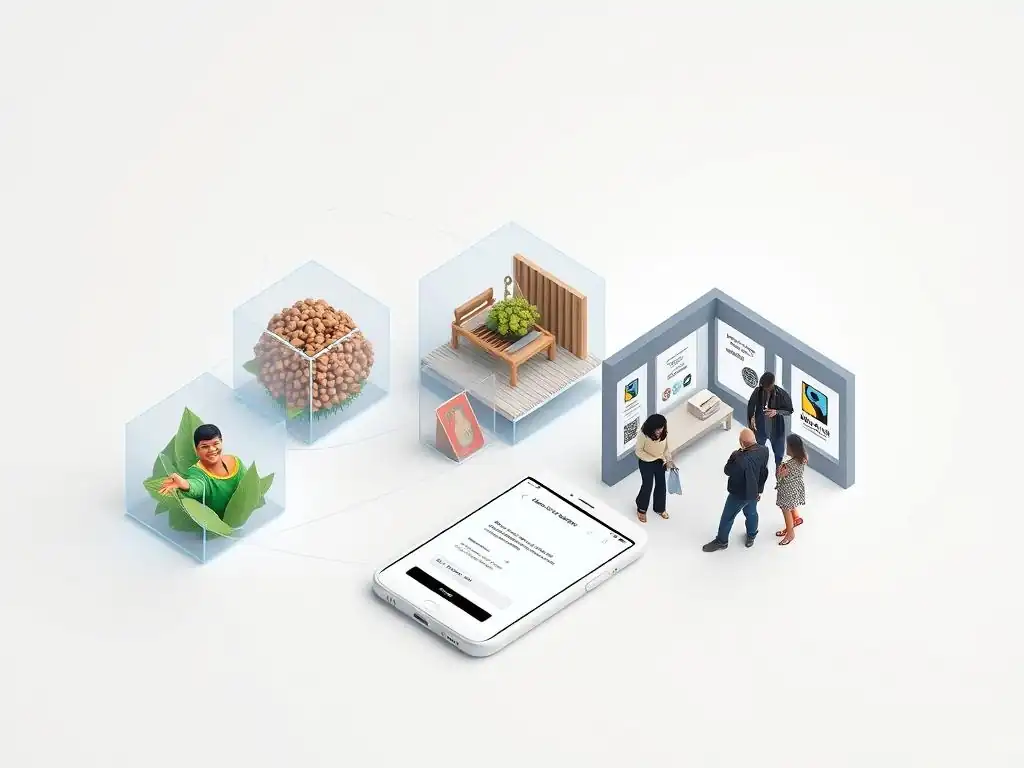
Increased Transparency and Consumer Trust
The implementation of blockchain significantly increased transparency in the coffee supply chain. By providing consumers with access to verifiable data about the coffee's journey – from the farm to the cup – through a simple scan of a QR code, Farmer Connect enabled a level of insight previously unavailable. This direct access to information such as the coffee's origin, processing details, and even the story of the farmer who grew it, built greater trust between consumers and the brands using the platform.
Reports from early adopters indicated that consumers who interacted with the blockchain traceability feature felt more confident in the fair trade claims and were more likely to purchase the traceable coffee. This enhanced transparency moved fair trade from a generic label to a verifiable reality, allowing consumers to see the positive impact of their purchase directly. This shift is fundamental to the success and growth of blockchain fair trade retail.
Improved Efficiency and Reduced Costs in the Supply Chain
Beyond transparency, the blockchain implementation also led to improvements in supply chain efficiency and potential cost reductions. By digitizing records and creating a single, shared source of truth, the system reduced the need for manual data entry, reconciliation across disparate systems, and paper-based documentation. This streamlined administrative processes for all participants, from farmers to exporters and retailers.
Faster and more accurate data flow also enabled quicker identification and resolution of issues, such as delays in shipment or discrepancies in volume. While specific cost savings figures can vary greatly depending on the scale and complexity of the operation, the reduction in administrative overhead, dispute resolution time, and improved logistics coordination inherent in a transparent, blockchain-based system typically translates into operational efficiencies. This makes blockchain fair trade retail not just ethical but also potentially more cost-effective in the long run.
Empowerment of Farmers and Artisans Through Direct Access to Markets
A key impact of the Farmer Connect initiative, and blockchain fair trade models in general, is the potential for greater empowerment of farmers and producers at the source. By creating a direct, verifiable link between the producer and the consumer, the platform reduces the reliance on multiple layers of intermediaries. While intermediaries still exist, the transparency provided by the blockchain ensures that the value added at each stage is visible, potentially leading to fairer negotiations and compensation for producers.
Furthermore, the ability to track specific batches from individual farms allows brands and retailers to connect directly with producers, potentially leading to more direct sourcing relationships. This direct connection can provide farmers with better market access, more stable income, and greater leverage in the supply chain. Giving producers visibility into the final market value of their product, something often obscured in traditional chains, is empowering. This direct connection is a powerful outcome of implementing blockchain fair trade retail solutions.
Quantifiable Results: Increased Farmer Income and Consumer Engagement
While precise, publicly available data on the exact percentage increase in farmer income solely attributable to Farmer Connect's blockchain implementation can be difficult to isolate from other market factors, pilot programs and reports from participating brands have indicated positive impacts. For instance, one pilot involving smallholder coffee farmers reportedly demonstrated the platform's capacity to ensure farmers received a higher percentage of the final retail price compared to traditional chains.
While specific numbers like a guaranteed 10-15% increase are often goals rather than universally achieved metrics across all pilots, the mechanism of direct, verifiable payments facilitated by blockchain and smart contracts inherently supports fairer distribution of value.
Consumer engagement metrics have been more readily available. Reports from brands using the "Thank My Farmer" app (powered by Farmer Connect) showed significant consumer interaction rates, with millions of scans of QR codes on packaging. This high level of engagement demonstrates that consumers are actively using the blockchain traceability feature to learn about their coffee and its journey, validating the premise that transparency drives consumer connection and trust in blockchain fair trade retail. These interactions provide valuable data back to brands about consumer preferences for ethically sourced products.
Challenges and Considerations for Blockchain-Enabled Fair Trade
Data Privacy and Security Concerns
Implementing blockchain for fair trade in retail involves handling sensitive data about producers, transactions, and supply chain movements. While blockchain itself is designed for security and immutability, concerns around data privacy remain. Not all data needs to be public; some information, like specific financial terms between intermediaries, might need to be permissioned or kept private while still being verifiable on the chain. Deciding what data goes on the public or private ledger segments of a blockchain network is crucial.
Ensuring the security of the "oracles" – the points where real-world data is entered onto the blockchain – is also vital. If data is inaccurately or maliciously entered at the source, the immutability of the blockchain simply preserves the incorrect information. Robust data input mechanisms, identity management for participants, and secure data storage solutions alongside the blockchain are necessary to mitigate these risks and maintain the integrity of the blockchain fair trade retail system.
Scalability and Interoperability Issues
As blockchain networks grow and the volume of transactions increases, scalability can become a challenge. Public blockchains, while highly decentralized, can sometimes face limitations in transaction speed and throughput. Private or permissioned blockchains, often used in enterprise supply chain solutions, offer better scalability but require careful management of network participants. Ensuring the chosen blockchain platform can handle the vast number of transactions generated by a global retail supply chain is a critical consideration.
Interoperability between different blockchain platforms and legacy systems is another significant hurdle. Global supply chains involve diverse participants using various technologies. A blockchain solution needs to be able to communicate and exchange data seamlessly with existing enterprise resource planning (ERP) systems, logistics software, and other databases used by different players in the chain. Achieving this interoperability is key to widespread adoption of blockchain fair trade retail.
The Importance of Collaboration and Standardization
Successfully implementing blockchain for fair trade requires extensive collaboration among all stakeholders in the supply chain: farmers, cooperatives, processors, logistics providers, retailers, and potentially even regulators and certification bodies. Getting all these disparate parties to agree on a common platform, data standards, and operating procedures is a complex undertaking. Building trust and demonstrating the value proposition to each participant is essential for securing buy-in.
The lack of universal standards for blockchain data formats and protocols in supply chain management can also pose challenges. Developing or adopting industry-wide standards for tracking specific commodities and ethical claims on the blockchain would significantly facilitate interoperability and reduce friction in onboarding new participants or integrating different supply chains. Standardization is key to scaling blockchain fair trade retail initiatives.
Overcoming Resistance to Change in Traditional Supply Chains
Traditional supply chains, particularly in agriculture, often rely on established processes, relationships, and data management methods (which may include paper or legacy digital systems). Introducing a new technology like blockchain can face resistance due to perceived complexity, cost of adoption, fear of transparency revealing inefficiencies or unfair practices, or simply inertia. Educating participants about the benefits of the new system and providing adequate training and support are crucial for overcoming this resistance.
Demonstrating clear return on investment (ROI) or tangible benefits, such as faster payments for farmers or increased consumer demand for traceable products for retailers, is key to driving adoption. Addressing concerns about technology access and digital literacy, especially among producers in remote areas, is also vital. Change management is as important as the technology itself when implementing blockchain fair trade retail.
Future Trends: Blockchain and the Evolution of Ethical Retail
Expanding Blockchain Applications in Sustainable Sourcing
The application of blockchain in ethical sourcing is poised to expand beyond fair trade. The technology can be used to track and verify a wide range of sustainability claims, such as carbon footprint reduction, water usage, biodiversity conservation, and compliance with specific environmental certifications. By recording environmental data points on the blockchain, companies can provide verifiable proof of their sustainability efforts, combating greenwashing and building consumer trust in their environmental commitments.
This expansion will likely involve integrating blockchain with other technologies and data sources, such as sensors and IoT devices, to capture environmental data directly from farms or processing facilities. As consumers demand more than just fair labor – seeking truly sustainable products – blockchain will become an essential tool for companies to credibly communicate their impact, driving the evolution of blockchain fair trade retail into broader ethical retail.
Integrating Blockchain with IoT for Real-Time Tracking and Monitoring
The combination of blockchain and the Internet of Things (IoT) holds significant potential for enhancing supply chain transparency and verification in ethical retail. IoT sensors can collect real-time data on conditions such as temperature, humidity, location, and handling during transit. This data can then be automatically recorded onto the blockchain, creating an immutable record of the product's journey and the conditions it experienced.
For fair trade goods, this integration could provide real-time verification of proper storage conditions (e.g., for perishable goods like coffee beans) or tracking to prevent diversion or counterfeiting. If a temperature excursion occurs that could compromise quality or ethical standards, the IoT data recorded on the blockchain provides immediate, verifiable evidence. This fusion of technologies enables dynamic monitoring and strengthens the integrity of the entire supply chain, making blockchain fair trade retail more robust.
The Rise of Decentralized Fair Trade Marketplaces
Looking ahead, blockchain technology could facilitate the creation of decentralized fair trade marketplaces. These platforms could connect producers directly with consumers or retailers, removing traditional intermediaries and potentially allowing producers to capture a larger share of the final price. Using blockchain for transparent transaction recording and smart contracts for automated payments, these marketplaces could offer a more equitable and efficient alternative to conventional trading channels.
Such marketplaces could also leverage blockchain-based digital identities and reputation systems, allowing producers to build a direct relationship with consumers and showcase their unique stories and ethical practices. This model shifts power dynamics in the supply chain, enabling producers to have more control over pricing and distribution, representing a significant evolution in blockchain fair trade retail models.
The Role of Regulation and Standards in Promoting Blockchain Adoption
The widespread adoption of blockchain in fair trade and ethical retail will likely be influenced by the development of clear regulatory frameworks and industry standards. Governments and international bodies may play a role in establishing guidelines for using blockchain in supply chain transparency, data privacy, and digital identity. Clarity in these areas can reduce uncertainty for businesses and encourage investment in blockchain solutions.
Furthermore, the development of industry-wide data standards for recording information related to fair trade, sustainability, and product origin on blockchain networks is crucial. Standardized protocols will facilitate interoperability between different platforms and make it easier for companies to participate in blockchain-enabled supply chains. Collaboration between industry consortiums, technology providers, and regulatory bodies will be essential to establishing these standards and accelerating the adoption of blockchain fair trade retail practices globally.
Conclusion: Blockchain Driving the Future of Fair Trade Retail
Key Takeaways: The Power of Blockchain in Promoting Ethical Consumption
The Farmer Connect case study, among others, clearly demonstrates the transformative potential of blockchain technology in enhancing fair trade practices within the retail sector. The core attributes of blockchain – traceability, transparency, and immutability – directly address the long-standing challenges of opacity and lack of verifiable trust in complex supply chains. By creating a shared, tamper-proof record of a product's journey, blockchain empowers both businesses and consumers.
For businesses, it provides a robust tool to manage their supply chains more efficiently, verify ethical sourcing claims, and build stronger brand reputation based on demonstrable transparency. For consumers, it offers unprecedented insight into the origin and impact of their purchases, enabling them to make truly informed decisions and support fair trade initiatives with confidence. Blockchain is not just an incremental improvement; it's a fundamental shift in how transparency and trust can be established in blockchain fair trade retail.
The Potential for Widespread Adoption of Blockchain in Fair Trade Practices
Given the clear benefits demonstrated by early implementations like Farmer Connect, the potential for widespread adoption of blockchain in fair trade practices across various retail sectors is significant. As the technology matures, becomes more accessible, and costs decrease, more companies will likely explore and implement blockchain solutions to meet growing consumer demand for ethical products and comply with potential future regulations regarding supply chain transparency.
While challenges related to data integration, scalability, and collaboration remain, ongoing developments in blockchain technology, coupled with increasing industry awareness and successful pilot programs, are paving the way for broader adoption. The success stories in commodities like coffee provide a blueprint for applying similar blockchain solutions to other fair trade goods, from cocoa and tea to textiles and handicrafts, revolutionizing blockchain fair trade retail on a larger scale.
Call to Action: Embracing Blockchain for a More Sustainable and Equitable Retail Landscape
To truly realize the vision of a more sustainable and equitable retail landscape, stakeholders across the supply chain must actively explore and embrace blockchain technology. Retailers and brands should invest in implementing blockchain traceability systems to provide verifiable proof of their ethical sourcing commitments. Producers and cooperatives should engage with blockchain platforms that offer increased transparency and direct access to market information and payments.
Technology providers must continue to develop user-friendly, scalable, and interoperable blockchain solutions tailored for the specific needs of various fair trade sectors. By working collaboratively and leveraging the power of blockchain, the retail industry can move towards a future where fair trade is not just a label, but a verifiable reality, benefiting producers, consumers, and the planet. Embracing blockchain fair trade retail is a crucial step towards building a more ethical global economy.
Frequently Asked Questions
How can blockchain technology specifically help ensure fair trade practices in retail?
Blockchain provides immutable and transparent records of the entire supply chain, from origin to consumer. This enhanced traceability helps verify ethical sourcing and fair labor practices, preventing exploitation.
What are the primary benefits of using blockchain for fair trade in the retail sector?
The main advantages include increased transparency, reduced fraud through verified product origins, and empowerment of producers by providing them with direct access to the market and fair prices.
What challenges might retailers face when implementing blockchain for fair trade?
Challenges include the initial investment cost, the need for collaboration across the supply chain, and the complexity of integrating blockchain with existing retail systems.
How does blockchain improve consumer trust in fair trade products?
Blockchain allows consumers to easily verify the authenticity and ethical sourcing of products. This increased transparency builds trust and encourages consumers to support fair trade initiatives.
What is the future outlook for blockchain adoption in fair trade retail?
The future looks promising, with growing consumer demand for ethical products. As blockchain technology matures, we can expect to see wider adoption and more sophisticated applications in verifying fair trade practices and creating more equitable supply chains.
Final Reflection: Empowering Consumers Through Transparency
The journey through the application of blockchain technology to fair trade retail reveals a powerful truth: transparency is the cornerstone of ethical consumption. What began as a theoretical exploration has now blossomed into a tangible pathway for consumers to make informed choices, directly impacting the lives of producers and fostering a more equitable global marketplace. The potential of blockchain to revolutionize supply chains and empower conscious consumers is no longer a distant dream, but a rapidly approaching reality.
This exploration has profoundly influenced how we perceive the complexities of global trade. Understanding the potential of blockchain to bridge the gap between consumers and producers has instilled a deeper sense of responsibility in our purchasing decisions. It's a reminder that every transaction carries weight, and that we have the power to demand accountability from the brands we support. Never doubt that a small group of thoughtful, committed citizens can change the world; indeed, it's the only thing that ever has.
- Margaret Mead. This quote perfectly encapsulates the spirit of this movement, highlighting the collective power of informed consumers driving change.
Now, consider the implications of this technology in your own life. How can you leverage the increasing availability of blockchain-verified products to support fair trade practices? Let us all strive to become more conscious consumers, demanding transparency and accountability from the brands we choose. By embracing these technologies and advocating for ethical practices, we can collectively build a future where every purchase contributes to a more just and sustainable world.
Unveil Your Power: Champion Ethical Retail!
Thank you for exploring how blockchain can transform fair trade practices. We hope this article has highlighted the potential for increased transparency and ethical consumerism. Now, it's time to take action!
- Make a commitment: Pledge to buy at least one ethically sourced product verified by blockchain this month. Let’s make our voices heard through our purchasing choices!
- Share this article with your network and start a conversation about the future of fair trade. Help raise awareness!
- Discover other blockchain-based initiatives aimed at promoting ethical consumerism. What innovative ideas can you uncover?
How will you leverage blockchain to create a more ethical and transparent retail environment today? Share your thoughts and experiences in the comments below!
Leave a Reply