
From Farm to Fork, Reimagined: Blockchain's Role in Sustainable Food Supply Chains

Welcome to Blockchain Trends, your guide to understanding the revolutionary impact of blockchain technology.
Ever wondered how blockchain can ensure the food on your plate is ethically sourced and sustainably produced? Dive into our latest article where we explore the fascinating intersection of blockchain and the sustainable food supply chain. Uncover how this technology is transforming agriculture, traceability, and consumer trust, and discover the potential for a more transparent and resilient food system. Read on to learn how blockchain is changing the way we think about getting food From Farm to Fork.
From Farm to Fork, Reimagined: Blockchain's Role in Sustainable Food Supply Chains
- The Urgent Need for Transparency in Food Supply Chains
- Blockchain Technology: A Solution for Food Supply Chain Sustainability
- How Blockchain Enhances Food Traceability and Safety
- Blockchain for Sustainable Agriculture and Ethical Sourcing
- Use Cases: Blockchain Applications in the Food Industry
- Overcoming the Challenges of Blockchain Implementation in Food Supply Chains
- The Future of Food: Blockchain-Enabled Sustainable Food Ecosystems
- Measuring the Impact: Benefits of Blockchain for a Sustainable Food Supply Chain
-
Frequently Asked Questions
- What are the primary benefits of using blockchain in a sustainable food supply chain?
- How can blockchain help ensure ethical sourcing and fair labor practices within the food supply chain?
- What role does decentralization play in enhancing the sustainability of food supply chains through blockchain?
- How does blockchain address the issue of food fraud and counterfeiting in the supply chain?
- What are the current challenges hindering the widespread adoption of blockchain in food supply chains?
- Final Reflection: Cultivating Trust and Transparency
- Unearth the Future of Food Transparency!
The Urgent Need for Transparency in Food Supply Chains
Challenges in Traditional Food Supply Chain Management
Traditional food supply chains are notoriously complex and opaque, involving numerous intermediaries from producers, processors, distributors, and retailers. This multi-layered structure makes it incredibly difficult to track products accurately from their origin to the final consumer. For instance, tracing a single batch of lettuce involved in a foodborne illness outbreak can take weeks, requiring manual record checks across disparate systems that often lack interoperability.
This lack of visibility contributes significantly to inefficiencies, such as overstocking or shortages, and hinders the ability to quickly identify and isolate contaminated products, leading to larger, more costly recalls and substantial food waste. Experts estimate that global food supply chain losses due to inefficiencies and spoilage amount to hundreds of billions of dollars annually.
Furthermore, the opacity in these systems allows for practices like food fraud, where products are mislabeled, diluted, or substituted without detection. The scale of food fraud is substantial, with some studies suggesting it costs the global food industry upwards of $40 billion per year. Counterfeit goods, misrepresentation of origin (e.g., claiming conventional produce is organic or local), and adulteration are common issues.
Consumers and businesses alike struggle to verify claims about product authenticity, quality, and ethical sourcing. This inherent lack of transparency undermines consumer trust and makes it challenging for companies to build a truly sustainable food supply chain. Addressing these deep-seated issues requires a fundamental shift towards more open and verifiable systems.
The Rising Demand for Sustainable Food Practices
Consumer awareness regarding the environmental and social impact of their food choices has surged dramatically in recent years. A significant percentage of consumers, often cited as over 60% in various surveys, express a willingness to pay more for products that are sustainably and ethically sourced. This growing demand is driven by concerns over climate change, resource depletion, animal welfare, and fair labor practices within the agricultural sector.
Consumers want to know how their food was produced, where it came from, and who was involved in getting it to their plate. They seek assurances about reduced carbon footprints, sustainable water usage, biodiversity protection, and fair wages for farmers and workers.
This increasing consumer pressure is forcing food businesses, from large corporations to small producers, to adopt more sustainable practices and, crucially, to prove their claims. Greenwashing, or falsely marketing products as environmentally friendly, is a significant risk in an opaque system. Brands face reputational damage if they cannot credibly demonstrate their commitment to sustainability goals.
Governments and regulatory bodies are also beginning to introduce stricter reporting requirements related to environmental, social, and governance (ESG) factors within supply chains. Building a blockchain sustainable food supply chain is becoming not just an ethical choice, but a business imperative to meet both consumer expectations and regulatory demands.
Blockchain Technology: A Solution for Food Supply Chain Sustainability
What is Blockchain and How does it Work?
Blockchain is a type of distributed ledger technology (DLT) that records transactions across multiple computers. Instead of storing data in a single, centralized database, copies of the ledger are maintained and updated simultaneously on many nodes within a network. Transactions are grouped into "blocks," and once a block is validated by the network's consensus mechanism, it is added to the chain of previous blocks in a chronological order. This creates a tamper-evident and immutable record; altering a block would require altering all subsequent blocks across the majority of the network's nodes, which is computationally infeasible for practical purposes.
Each block contains a cryptographic hash of the previous block, linking them together and ensuring the integrity of the chain. This structure makes the data highly secure and resistant to unauthorized changes.
While often associated with cryptocurrencies like Bitcoin, the underlying technology is applicable to any scenario requiring a secure, transparent, and verifiable record of transactions or events. In the context of a blockchain sustainable food supply chain, each transaction – whether it's a product moving from farm to processor, a quality inspection result, or a temperature reading during transport – can be recorded as a block on the chain, creating an unbroken digital history.
Key Features of Blockchain for Supply Chain Applications: Immutability, Transparency, and Traceability
The core features of blockchain technology are particularly well-suited for addressing the challenges inherent in food supply chains. Immutability ensures that once data is recorded on the blockchain, it cannot be altered or deleted. This means that records of origin, handling, certifications, and inspections are permanent and trustworthy, preventing fraudulent changes to product information. For example, a record of a product being certified organic cannot be retroactively removed or changed without detection.
Transparency, another key feature, means that all participants in the network can potentially view the transactions recorded on the ledger (though the level of visibility can be controlled through permissions in private or permissioned blockchains). This shared view of the truth allows stakeholders, from farmers to consumers (depending on the system design), to access verified information about a product's journey and attributes.
This contrasts sharply with fragmented traditional systems where information is siloed. Finally, traceability is a direct outcome of immutability and transparency.
By recording every step a product takes and every relevant event (like temperature logs, quality checks, or location data) on the blockchain, a comprehensive and verifiable history is created. This 'digital passport' enables rapid tracing of a product back to its source in seconds, drastically reducing the time needed for recalls and providing consumers with detailed provenance information, which is crucial for building a blockchain sustainable food supply chain.
How Blockchain Enhances Food Traceability and Safety
Real-Time Tracking of Food Products: From Origin to Consumer
Blockchain technology allows for the creation of a digital trail for each food product or batch as it moves through the supply chain. By assigning unique identifiers and recording key events on the ledger – such as harvesting, processing, packaging, shipping, and receiving – stakeholders gain unprecedented visibility. This data can be updated in near real-time as products change hands or undergo inspections. For instance, sensors can automatically log temperature data during transit directly onto the blockchain, providing verifiable proof of cold chain integrity.
Major retailers have demonstrated the power of this enhanced traceability. Walmart, for example, famously reduced the time it takes to trace a package of mangoes from a farm to a store from seven days to mere seconds using a blockchain-based system. This capability is transformative for managing inventory, optimizing logistics, and, critically, responding swiftly and precisely during food safety incidents. Instead of recalling large, undifferentiated batches, companies can pinpoint the exact affected products and their location, minimizing waste and protecting public health. This level of granular, real-time tracking is a cornerstone of a robust blockchain sustainable food supply chain.
Reducing Food Fraud and Counterfeiting with Blockchain Verification
The immutable and transparent nature of blockchain makes it a powerful deterrent against food fraud and counterfeiting. Each record on the blockchain, whether it's a certification, an origin claim, or a quality test result, is permanently stored and verifiable by authorized parties. This prevents malicious actors from altering records to misrepresent products. For example, a blockchain can record the unique identifier of a specific farm, the date of harvest, and certifications (like organic or fair trade), linking this data immutably to the product batch.
Consumers, retailers, and regulators can potentially scan a QR code on a product package to access this blockchain data, verifying its authenticity and claimed attributes. This makes it much harder to pass off conventional produce as organic, substitute cheaper ingredients, or sell counterfeit versions of high-value goods like olive oil or seafood. By providing a single, verifiable source of truth for product information, blockchain significantly reduces opportunities for deception, protecting both consumers and legitimate producers, and contributing to a more trustworthy and sustainable food supply chain powered by blockchain.
Improving Food Safety and Quality Control Through Data Integrity
Ensuring food safety and maintaining quality standards relies heavily on accurate and reliable data throughout the supply chain. Traditional paper-based records or disparate digital systems are prone to errors, delays, and tampering. Blockchain provides a secure and centralized (in terms of data visibility, not storage) platform for recording all relevant safety and quality data. This includes information on hygiene practices, pesticide use, allergen handling, inspection results, and temperature logs.
Because this data is immutable once recorded on the blockchain, there is a high degree of trust in its integrity. If a batch of produce fails a quality check at a distribution center, that record is permanently on the chain, visible to upstream and downstream partners (based on permissions). This allows for immediate action and accountability.
Furthermore, by analyzing the verifiable data on the blockchain, companies can identify patterns related to quality issues or potential safety risks, enabling proactive measures. This data-driven approach to quality control, underpinned by blockchain's data integrity, is essential for building consumer confidence and ensuring the safety of the food system, making blockchain a vital tool for a sustainable food supply chain.
Blockchain for Sustainable Agriculture and Ethical Sourcing
Supporting Fair Trade Practices with Transparent Supply Chains
Fair trade aims to ensure that farmers and workers in developing countries receive fair prices and wages, work in safe conditions, and have a voice in their supply chains. Achieving true fair trade requires transparency regarding pricing, payments, and working conditions at the source. Traditional supply chains often have multiple intermediaries, making it difficult to track the portion of the final price that reaches the farmer. Blockchain can create a transparent ledger of transactions and payments throughout the supply chain.
By recording the price paid at each step, from the initial sale by the farmer to the final purchase by the consumer, blockchain can provide verifiable proof of fair compensation reaching the producers. Some initiatives are exploring using blockchain to facilitate direct payments or smart contracts that trigger payments to farmers upon specific conditions being met, like the product reaching a certain checkpoint. This transparency empowers farmers by giving them visibility into the value chain and helps consumers trust that their purchase is genuinely supporting fair labor practices, strengthening the ethical dimension of a blockchain sustainable food supply chain.
Promoting Environmentally Friendly Farming Techniques Through Data Collection
Sustainable agriculture relies on practices that protect the environment, such as reducing pesticide use, conserving water, improving soil health, and minimizing greenhouse gas emissions. Verifying that farmers are adhering to these practices can be challenging. Blockchain can serve as a platform for collecting and verifying data related to sustainable farming methods directly from the farm. This could include records of water usage, types and amounts of fertilizers and pesticides used, energy consumption for irrigation or machinery, and even satellite data or IoT sensor readings related to soil health and carbon sequestration.
This data, once recorded on the immutable ledger, provides verifiable proof of sustainable practices. It allows companies sourcing ingredients to confidently claim the environmental benefits of their products and enables consumers to make informed choices based on credible information. Furthermore, this data can be used to optimize farming practices, identify areas for improvement, and potentially qualify farmers for incentives related to environmental stewardship. Integrating this environmental data into a blockchain sustainable food supply chain provides a robust mechanism for promoting and verifying eco-friendly agriculture.
Empowering Farmers with Direct Access to Markets and Fair Pricing
Farmers often operate at the beginning of a long and complex supply chain, giving them limited visibility and control over the final price of their products. They are frequently subject to volatile market prices and dependency on intermediaries. Blockchain technology has the potential to empower farmers by providing them with more direct access to markets and ensuring fairer pricing. By creating a transparent record of transactions and potentially enabling peer-to-peer marketplaces built on blockchain, farmers can connect directly with buyers, such as restaurants, retailers, or even consumers.
Smart contracts on the blockchain can automate agreements and payments, reducing transaction costs and ensuring timely compensation based on pre-agreed terms. This increased directness can lead to a larger share of the final product price going back to the farmer, improving their livelihoods and enabling them to invest in more sustainable farming practices. Providing farmers with greater control and fairer compensation through a blockchain sustainable food supply chain is crucial for the long-term viability and equity of the entire food system.
Use Cases: Blockchain Applications in the Food Industry
Provenance: Tracking Tuna from Indonesian Waters to Global Markets
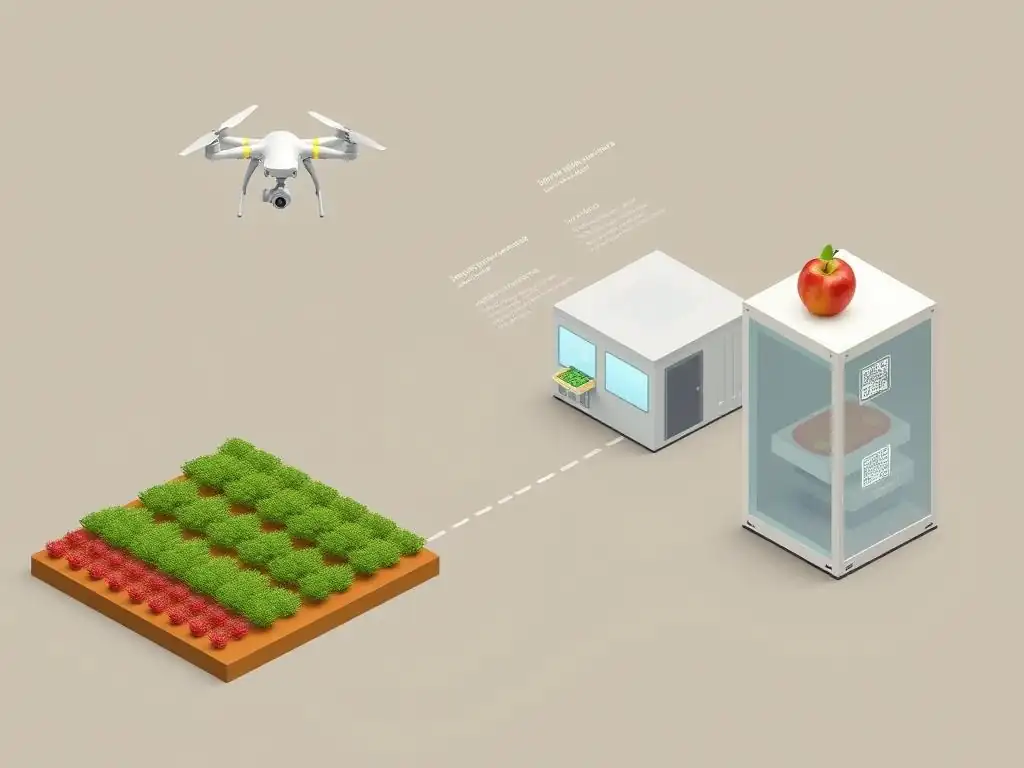
Provenance is a platform that uses blockchain technology to track products, focusing heavily on supply chain transparency and sustainability. One of their notable projects involves tracing tuna from fisheries in Indonesia to consumers in Japan, Europe, and the US. The project aims to combat illegal, unreported, and unregulated (IUU) fishing and ensure ethical sourcing. By tagging fish at the point of catch and recording data such as the vessel, location, time of catch, and fishing method on the blockchain, Provenance creates a verifiable digital history.
As the tuna moves through processing, export, and distribution, each step and relevant certification is added to the blockchain. Consumers can scan a code on the product to access this immutable data, verifying the fish's origin, journey, and sustainability credentials. This level of transparency helps combat seafood fraud, which is a significant issue globally (estimated to affect 1 in 5 fish sold), and assures consumers that they are purchasing sustainably and legally caught seafood, demonstrating a real-world application of blockchain for a sustainable food supply chain.
TE-FOOD: Enhancing Food Safety and Traceability in Livestock and Produce
TE-FOOD is a leading blockchain-based traceability solution specifically designed for the food industry. They operate in several countries, including Vietnam, where they have implemented national-scale traceability systems for pork and other food products. Their system uses a combination of unique identifiers (like QR codes or RFID tags) and a public blockchain ledger to track livestock from farm to slaughterhouse, processing, distribution, and retail. Key data points, including vaccinations, feed records, slaughter dates, and transport details, are recorded.
The system enables consumers to scan a code on the packaging to access detailed information about the product's history, including its origin farm and safety certifications. This enhances consumer trust and allows authorities to quickly trace the source of contamination during outbreaks. TE-FOOD's work in Vietnam, a country with a large and complex food supply chain, demonstrates the scalability and practical application of blockchain technology for improving food safety and traceability, which are fundamental components of a blockchain sustainable food supply chain.
IBM Food Trust: Improving Supply Chain Visibility for Various Food Products
IBM Food Trust is one of the most prominent examples of a permissioned blockchain network for the food industry, built on IBM's Hyperledger Fabric. It connects growers, processors, wholesalers, distributors, manufacturers, retailers, and other parties through a shared, immutable record of food system data. Members contribute data about their part of the supply chain, creating an end-to-end view of a product's journey. Major companies like Walmart, Nestlé, Dole, and Unilever are participants.
The platform has been used to improve traceability for a wide range of products, from leafy greens and poultry to coffee and fresh produce. Participants can trace products in seconds, compared to days or weeks with traditional methods. This speed is critical during recalls. Beyond traceability, the platform facilitates the sharing of documents like certifications and test results, streamlining audits and compliance. IBM Food Trust illustrates how large-scale collaboration on a blockchain network can significantly enhance visibility and trust across complex food supply chains, paving the way for a more efficient and blockchain sustainable food supply chain ecosystem.
Overcoming the Challenges of Blockchain Implementation in Food Supply Chains
Addressing Scalability Issues in Blockchain Networks
One of the significant challenges for blockchain adoption in large-scale food supply chains is scalability. Public blockchains, like Bitcoin or Ethereum (prior to Eth2), can process a relatively limited number of transactions per second compared to the massive volume of transactions generated by a global food system. Recording every single item's journey and every micro-event (like temperature changes) could overwhelm the network.
However, significant advancements are being made in blockchain technology to address scalability. Solutions include using permissioned or private blockchains (like Hyperledger Fabric used by IBM Food Trust) where access is restricted, allowing for faster transaction processing. Other approaches involve "off-chain" transactions where only summaries or proofs are recorded on the main chain, or utilizing layer-2 scaling solutions.
For food supply chains, a hybrid approach, using blockchain for key verification points and traditional databases for bulk data, is often considered. Pilot projects and ongoing development are continuously pushing the boundaries of how blockchain can handle the scale required for a global blockchain sustainable food supply chain.
Ensuring Data Privacy and Security in Food Supply Chain Blockchain
While blockchain offers immutability and transparency, ensuring data privacy and security, particularly in permissioned networks, is crucial. Not all data is meant to be public. For example, proprietary pricing information or sensitive business details shared between specific partners need to remain confidential. Simply putting all data on an open ledger is not feasible or desirable for most businesses.
Permissioned blockchains allow for granular control over data access, ensuring that only authorized parties can view specific types of information. Cryptographic techniques, such as zero-knowledge proofs, are also being explored to allow parties to verify information (like a certification) without revealing the underlying sensitive data. Robust security protocols are needed to protect the nodes in the network and prevent unauthorized access or data breaches before information is even recorded on the chain. Implementing a secure and privacy-conscious blockchain sustainable food supply chain requires careful system design and governance.
Promoting Collaboration and Interoperability Among Stakeholders
A blockchain network is only as powerful as the participants connected to it. Implementing a blockchain sustainable food supply chain requires collaboration among a diverse group of stakeholders – farmers, processors, distributors, retailers, regulators, and technology providers. Getting these entities to agree on a common platform, data standards, and governance rules can be a significant hurdle due to competing interests, lack of technical expertise, and resistance to change.
Furthermore, ensuring interoperability between different blockchain platforms or with legacy systems used by participants is essential for seamless data flow across the entire supply chain. Industry-wide consortia and initiatives are working on developing common standards and frameworks to facilitate this collaboration and interoperability. Building trust and demonstrating the tangible benefits of shared data and collective action are key to encouraging widespread adoption and realizing the full potential of blockchain for creating a truly connected and blockchain sustainable food supply chain.
The Future of Food: Blockchain-Enabled Sustainable Food Ecosystems
The Role of IoT and AI in Enhancing Blockchain Food Supply Chains
The true power of blockchain in food supply chains is unlocked when combined with other emerging technologies like the Internet of Things (IoT) and Artificial Intelligence (AI). IoT devices, such as sensors monitoring temperature, humidity, or location during transport, can automatically feed real-time data directly onto the blockchain, creating an objective and immutable record without manual intervention. This automation enhances data accuracy and frequency, providing a more complete picture of a product's journey and condition.
AI can then analyze the vast amounts of verifiable data collected on the blockchain from IoT devices and other sources. AI algorithms can identify patterns related to spoilage risks, predict potential supply chain disruptions, optimize logistics routes, or even verify the authenticity of products by analyzing characteristics recorded on the chain.
For example, AI could analyze temperature logs to predict the remaining shelf life of a product or identify farms with consistently high sustainability scores based on blockchain-recorded data. The synergy between blockchain's trust layer, IoT's data collection, and AI's analytical power promises to create highly efficient, transparent, and predictive blockchain sustainable food supply chain ecosystems.
Regulatory Considerations and the Future of Food Traceability Standards
As blockchain adoption grows, regulatory frameworks will need to evolve to accommodate this new technology in the food sector. Governments and food safety authorities are increasingly interested in leveraging technology for better traceability and compliance. Regulations regarding data ownership, privacy (like GDPR), and the legal standing of blockchain records will need clarification. The US FDA's New Era of Smarter Food Safety initiative, for instance, emphasizes technology-enabled traceability.
Future food traceability standards may potentially mandate or incentivize the use of blockchain or similar DLTs for certain high-risk products or for making specific sustainability claims. Collaboration between industry stakeholders, technology providers, and regulatory bodies will be crucial in developing pragmatic standards that leverage the benefits of blockchain without stifling innovation. Clear regulatory guidance will help build confidence and accelerate the widespread implementation of a blockchain sustainable food supply chain.
Predictions for the widespread adoption of blockchain in the food industry
While still in relatively early stages compared to other industries, the adoption of blockchain in the food sector is predicted to accelerate significantly in the coming years. Market research reports vary, but many project substantial growth in the blockchain in food and agriculture market, potentially reaching several billion dollars globally within the next five to seven years. This growth will be driven by increasing demands for transparency, food safety, sustainability, and efficiency.
Initial adoption is likely to continue focusing on high-value goods, products with complex supply chains, or those with high risks of fraud or contamination (like seafood, meat, or organic produce). As the technology matures, costs decrease, and interoperability improves, we can expect to see blockchain applications become more common across a wider range of food products. The long-term vision is a globally interconnected network of blockchain sustainable food supply chain systems that provide end-to-end visibility and trust from farm to fork.
Measuring the Impact: Benefits of Blockchain for a Sustainable Food Supply Chain
Quantifiable reductions in food waste and spoilage
One of the most tangible benefits of implementing a blockchain sustainable food supply chain is the potential for significant reductions in food waste and spoilage. Improved traceability allows for faster and more targeted recalls, minimizing the amount of safe food that is discarded. Instead of recalling entire production runs, companies can identify and isolate only the affected batches, potentially reducing recall volumes by 80% or more in some cases, based on pilot program estimations.
Furthermore, real-time monitoring of conditions like temperature and humidity via IoT sensors recorded on the blockchain helps maintain optimal conditions during transport and storage, reducing spoilage. Greater supply chain visibility also enables better inventory management, preventing overstocking of perishable goods. While precise global figures are still emerging, these efficiencies directly translate into less food being wasted, contributing to both economic savings and environmental sustainability.
Increased consumer confidence and brand loyalty
In an era where consumers are increasingly concerned about where their food comes from and how it was produced, transparency builds trust. By providing access to verifiable information about a product's origin, journey, safety checks, and sustainability credentials via a blockchain-powered system, companies can significantly increase consumer confidence. Knowing that claims about organic farming, fair labor, or environmental practices are backed by an immutable record empowers consumers to make informed choices.
This transparency fosters brand loyalty among consumers who value sustainability and ethical sourcing. Companies that can credibly demonstrate their commitment through a blockchain sustainable food supply chain gain a competitive advantage. A study by the Food Marketing Institute and Nielsen found that 75% of consumers would switch to a brand that provides more in-depth product information beyond what is on the label. Blockchain provides the ideal platform to deliver this level of detail reliably.
Contribution to a more resilient and ethical food system
Ultimately, the implementation of blockchain technology contributes to building a more resilient and ethical global food system. Resilience is enhanced by increased visibility, allowing stakeholders to identify and respond quickly to disruptions, whether they are food safety crises, extreme weather events impacting farms, or logistical challenges. The ability to trace and verify information improves the system's ability to recover from shocks.
Ethical considerations, such as fair trade, labor practices, and environmental stewardship, become verifiable facts rather than just marketing claims. By ensuring transparency and accountability throughout the chain, blockchain helps hold participants to higher standards. This leads to a system where farmers are treated more fairly, environmental impacts are better managed, and consumers can trust that their food choices align with their values, making a blockchain sustainable food supply chain a cornerstone for the future of food.
Frequently Asked Questions
What are the primary benefits of using blockchain in a sustainable food supply chain?
Blockchain offers enhanced traceability and transparency, allowing consumers and businesses to track food products from origin to point of sale. This improves food safety and reduces waste.
How can blockchain help ensure ethical sourcing and fair labor practices within the food supply chain?
Blockchain facilitates verifiable records of transactions and certifications, enabling consumers to confirm ethical sourcing. It promotes fair wages and better working conditions by documenting labor practices.
What role does decentralization play in enhancing the sustainability of food supply chains through blockchain?
Decentralization creates a distributed ledger, making data more resilient and resistant to manipulation. This builds trust and accountability among all stakeholders, promoting sustainable practices.
How does blockchain address the issue of food fraud and counterfeiting in the supply chain?
Blockchain provides an immutable record of product information, making it difficult to alter or counterfeit data. This verifies authenticity and combats food fraud, protecting consumers and brands.
What are the current challenges hindering the widespread adoption of blockchain in food supply chains?
Challenges include the lack of standardization, high implementation costs, and the need for greater interoperability between different blockchain systems used by various stakeholders.
Final Reflection: Cultivating Trust and Transparency
The journey of food from farm to fork is often shrouded in mystery, but as we've explored, blockchain technology offers a powerful solution for fostering transparency and sustainability in our food supply chains. This isn't just about tracking produce; it's about building a system where consumers can trust the origins and ethical implications of their food choices, and where producers are incentivized to adopt sustainable practices.
The potential of blockchain to revolutionize the food industry is immense, and its influence is already being felt. Witnessing the growing demand for ethically sourced and sustainably produced food underscores the profound impact this technology can have on shaping a more responsible and equitable food system. The future of food is not just about feeding more people, but about feeding them better, more sustainably, and more equitably.
- José Andrés
As we look ahead, let us all consider our role in shaping this future. Embrace the power of informed choices, support businesses committed to transparency, and demand greater accountability from the food industry. By actively engaging with these principles, we can collectively cultivate a food system that nourishes both our bodies and our planet, ensuring a healthier and more sustainable future for generations to come.
Unearth the Future of Food Transparency!
Thank you for exploring how blockchain is transforming sustainable food supply chains. Now that you've gained this understanding, you can help make a difference.
Here’s how you can contribute to creating a more transparent and sustainable food system:
- Demand traceability: Ask your local grocery store or favorite brands if they are using blockchain technology to track their products. Your voice as a consumer can encourage greater transparency.
- Learn more: Research specific blockchain platforms being utilized in agriculture to identify potential investment or partnership opportunities.
- Share the knowledge: Discuss this information with friends and family to raise awareness about the role of blockchain in promoting food sustainability. Consider starting a local initiative to promote blockchain-verified produce.
What small step will you take today to support a more transparent and sustainable food supply?
Leave a Reply