
Decentralized Identity for IoT Devices: Blockchain's Role in Authentication


Welcome to Blockchain Trends, your go-to source for understanding the revolutionary impact of blockchain technology.
Ever wondered how blockchain can secure the vast network of IoT devices? Dive in as we explore Blockchain IoT device authentication, a critical solution for establishing trust and verifying identity in a world teeming with connected devices. Discover how this innovative approach is not just a concept, but a burgeoning reality shaping the future of secure and decentralized systems. Keep reading to uncover the potential and challenges within this rapidly evolving landscape.
- Introduction: Addressing IoT Security Challenges with Decentralized Solutions
- The Problem: Vulnerabilities in Current IoT Authentication Methods
- Blockchain-Based Decentralized Identity (DID): A Secure Solution
- Key Advantages of Blockchain-Based IoT Device Authentication
- Blockchain Platforms for IoT Identity Management
- Use Cases of Blockchain in IoT Device Authentication
- Implementing Blockchain-Based IoT Device Authentication
- The Future of Decentralized Identity in IoT
- Conclusion: Building a More Secure and Trustworthy IoT Ecosystem
-
Frequently Asked Questions
- How can blockchain enhance the security of IoT device authentication?
- What are the key benefits of using blockchain for IoT device authentication?
- What challenges exist in implementing blockchain-based authentication for IoT devices?
- How does decentralized identity (DID) relate to blockchain-based IoT authentication?
- What is the future outlook for blockchain in IoT device authentication?
- Final Reflection: Securing Tomorrow's Connections
- Unlock the Future: Secure Your IoT with Blockchain!
Introduction: Addressing IoT Security Challenges with Decentralized Solutions
The Expanding Attack Surface of Unsecured IoT Devices
The Internet of Things (IoT) has witnessed explosive growth, with billions of devices permeating every aspect of modern life, from smart homes and wearable devices to industrial sensors and critical infrastructure. This proliferation, however, has dramatically expanded the attack surface for cybercriminals. Each connected device represents a potential entry point into networks, and the sheer volume of these devices makes them attractive targets.
Industry analysts predict that by 2025, there will be over 75 billion connected IoT devices globally, a staggering increase from approximately 30 billion in 2020. This exponential growth, while offering unprecedented convenience and efficiency, simultaneously amplifies the potential for widespread security breaches and data compromises if not properly secured. Many IoT devices are inherently resource-constrained, often lacking robust security features and running outdated software, further exacerbating their vulnerability.
The Benefits of Decentralized Identity for IoT Security
Decentralized Identity (DID) emerges as a promising paradigm shift in addressing the escalating security challenges within the IoT landscape. Traditional, centralized authentication systems rely on a single point of authority, making them susceptible to single points of failure and large-scale data breaches. DID, leveraging blockchain technology, offers a more resilient and secure approach by distributing identity management across a network.
In the context of IoT, decentralized identity can empower devices with self-sovereign identities, reducing reliance on centralized servers and minimizing the risks associated with compromised credentials or single points of attack. This model allows for verifiable credentials and secure device-to-device communication, enhancing trust and security throughout the entire IoT ecosystem. By utilizing blockchain's inherent security features, DID can significantly strengthen IoT device authentication and data protection.
The Problem: Vulnerabilities in Current IoT Authentication Methods
Centralized Systems: Single Points of Failure and Data Breaches
Current IoT authentication methods heavily rely on centralized systems. These systems, while seemingly straightforward to implement initially, present significant vulnerabilities. A centralized server storing authentication credentials becomes a honeypot for cyberattacks.
If this central authority is compromised, attackers gain access to a vast network of connected devices, potentially leading to widespread service disruption, data theft, and even physical harm in critical infrastructure scenarios. Large-scale data breaches, like the Mirai botnet attack in 2016, which exploited vulnerabilities in default credentials of IoT devices to launch DDoS attacks, underscore the inherent risks of centralized authentication. Furthermore, the concentration of sensitive data in a single location raises privacy concerns and increases the potential impact of regulatory non-compliance.
Limited Scalability of Traditional Authentication Protocols
Traditional authentication protocols, such as username/password combinations or API keys, often struggle to scale effectively with the rapid expansion of IoT networks. As the number of devices grows exponentially, managing and securing authentication for each device becomes increasingly complex and resource-intensive for centralized systems. The overhead of managing a massive database of credentials and processing authentication requests can lead to performance bottlenecks and system failures, particularly during peak usage or in large-scale industrial deployments.
Moreover, adding new devices to the network or updating authentication protocols across a vast, heterogeneous IoT ecosystem can be a cumbersome and time-consuming process, hindering agility and responsiveness to evolving security threats. This lack of scalability becomes a critical limitation as IoT networks continue to expand in size and complexity.
Lack of Standardization and Interoperability Across IoT Ecosystems
The IoT landscape is characterized by a fragmented ecosystem with diverse device types, communication protocols, and proprietary platforms. This lack of standardization and interoperability extends to authentication methods, creating significant challenges for secure device management and data exchange across different IoT deployments. Devices from different manufacturers often employ incompatible authentication protocols, hindering seamless integration and secure communication.
This fragmentation also complicates security management, as organizations must grapple with a patchwork of authentication systems, increasing the complexity and cost of securing their IoT infrastructure. The absence of universally accepted standards for IoT device authentication impedes the development of robust and interoperable security solutions, hindering the full potential of interconnected IoT ecosystems and creating vulnerabilities due to inconsistent security implementations.
Blockchain-Based Decentralized Identity (DID): A Secure Solution
Understanding DIDs and Verifiable Credentials for IoT Authentication
Decentralized Identity (DID) offers a paradigm shift in how identity is managed and verified, particularly beneficial for securing IoT devices. DIDs are globally unique identifiers that enable entities (devices, individuals, organizations) to control their own digital identities without reliance on central authorities. These identities are anchored on a decentralized ledger, such as a blockchain, ensuring immutability and transparency.
Verifiable Credentials (VCs) are digital credentials associated with DIDs, cryptographically signed and verifiable, allowing devices to prove their identity and attributes securely. In the context of IoT device authentication, each device can possess a DID and utilize VCs to prove its authenticity and authorized access to network resources or data. This approach shifts the control of identity to the device itself, enhancing security and privacy.
Secure Device Registration and Identity Management on the Blockchain
Blockchain provides a secure and transparent platform for registering and managing IoT device identities. When a new device is onboarded, its DID can be securely registered on the blockchain, creating an immutable record of its identity. This registration process can involve cryptographic key generation and secure storage, ensuring the device's identity is protected from unauthorized access or tampering.
The decentralized nature of blockchain eliminates the single point of failure associated with centralized identity registries. Furthermore, blockchain's consensus mechanisms ensure the integrity and validity of device identities, preventing unauthorized modifications or fraudulent device registrations. Smart contracts on the blockchain can automate device onboarding and identity management processes, streamlining operations and enhancing security.
Leveraging Cryptographic Verification for Enhanced IoT Security
Blockchain-based DID leverages cryptography extensively to enhance IoT security. Cryptographic keys, associated with each device's DID, are used for secure authentication and communication. Digital signatures ensure the integrity and authenticity of messages exchanged between devices and systems. Verifiable Credentials utilize cryptographic proofs to demonstrate device attributes and permissions without revealing underlying sensitive data.
This cryptographic foundation provides strong protection against spoofing, tampering, and unauthorized access. By relying on proven cryptographic principles, blockchain-based DID offers a significantly more secure authentication mechanism for IoT devices compared to traditional methods vulnerable to credential theft and replay attacks. The use of cryptography ensures data confidentiality and integrity throughout the IoT ecosystem.
Key Advantages of Blockchain-Based IoT Device Authentication
Enhanced Security Against Cyberattacks and Counterfeit Devices
Blockchain-based IoT device authentication significantly strengthens security against various cyber threats. The decentralized nature of DID eliminates single points of failure, making it more resilient to distributed denial-of-service (DDoS) attacks and centralized server compromises. Cryptographic verification mechanisms make it extremely difficult for attackers to impersonate legitimate devices or tamper with device identities.
Furthermore, blockchain's immutability provides a tamper-proof audit trail of device activities and identity changes, enhancing accountability and traceability. By securing device identities on a blockchain, organizations can also combat the growing problem of counterfeit IoT devices infiltrating their networks. Blockchain's transparency and cryptographic security make it easier to verify the authenticity of devices and prevent the deployment of malicious or substandard hardware.
Scalable Solutions for Growing IoT Networks
Blockchain offers scalable solutions for managing authentication in rapidly expanding IoT networks. While traditional blockchain scalability can be a concern, various Layer-2 solutions and blockchain architectures, like sidechains and sharding, are being developed to address scalability limitations in IoT applications. Furthermore, the distributed nature of blockchain allows for horizontal scaling, distributing the authentication workload across a network of nodes.
By leveraging efficient consensus mechanisms and optimized blockchain platforms, it is possible to build blockchain-based IoT authentication systems that can handle the massive scale of future IoT deployments. This scalability is crucial for accommodating the projected growth in connected devices and ensuring that authentication infrastructure can keep pace with the expanding IoT landscape.
Improved Interoperability and Data Sharing Across Diverse Devices
Blockchain-based DID can foster improved interoperability and data sharing across diverse IoT devices and platforms. Standardized DID formats and verifiable credential schemas, facilitated by organizations like the Decentralized Identity Foundation (DIF), promote interoperability between different blockchain platforms and IoT ecosystems. By adopting open standards for DID and VCs, device manufacturers and service providers can ensure that devices from different vendors can securely authenticate and exchange data with each other.
This interoperability is essential for realizing the full potential of interconnected IoT systems, enabling seamless data flow and collaboration across different applications and industries. Blockchain can act as a unifying layer for identity management, breaking down silos and facilitating secure data sharing in heterogeneous IoT environments.
Increased Privacy and Control Over Device Data
Decentralized Identity empowers IoT device owners with increased privacy and control over their device data. With DID, devices can control who has access to their identity information and data, reducing reliance on centralized platforms that may collect and monetize user data. Verifiable Credentials allow for selective disclosure of information, enabling devices to prove specific attributes without revealing unnecessary personal data.
Blockchain's transparency and immutability also provide users with greater visibility and control over how their device data is being used and managed. By shifting control of identity and data to the device level, blockchain-based DID enhances user privacy and promotes a more user-centric approach to IoT data management, addressing growing concerns about data security and privacy in the connected world.
Blockchain Platforms for IoT Identity Management
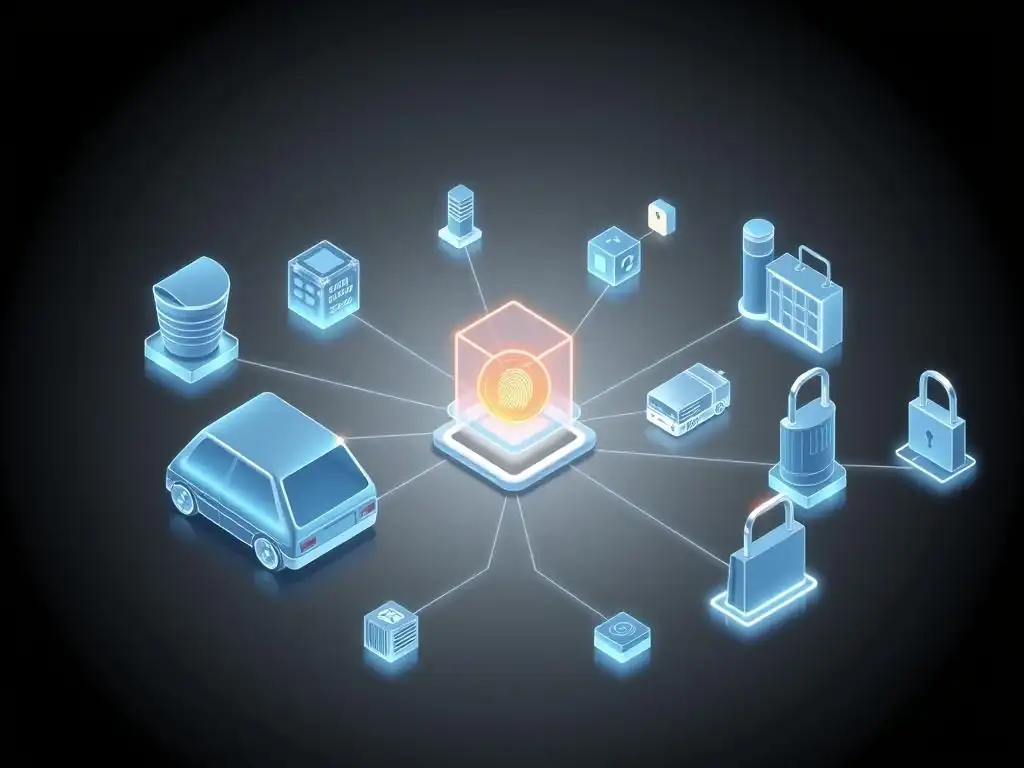
Hyperledger Fabric for Permissioned Enterprise IoT Networks
Hyperledger Fabric is a permissioned blockchain platform well-suited for enterprise IoT networks requiring robust security, scalability, and privacy. Its permissioned nature allows organizations to control network access and participant identities, making it suitable for sensitive industrial and supply chain applications. Fabric's modular architecture and support for private data collections enable organizations to implement granular access control and data privacy policies for IoT devices and data.
Its high throughput and low latency capabilities make it suitable for handling the demands of large-scale enterprise IoT deployments. Companies in manufacturing, logistics, and healthcare are exploring Hyperledger Fabric for building secure and private IoT identity management solutions, leveraging its enterprise-grade features and strong security model.
Ethereum for Decentralized IoT Applications and Smart Contracts
Ethereum, a public blockchain platform, provides a versatile environment for building decentralized IoT applications and leveraging smart contracts for automated identity management. Its extensive developer community and mature smart contract ecosystem make it attractive for developing innovative IoT solutions. Ethereum's smart contract capabilities enable the automation of device onboarding, access control, and data sharing processes, enhancing efficiency and security.
While Ethereum's public nature requires careful consideration of data privacy for sensitive IoT data, Layer-2 scaling solutions and privacy-enhancing technologies are being developed to address these concerns. Ethereum is being explored for decentralized IoT applications in areas such as smart homes, decentralized energy grids, and community-owned IoT networks, where transparency and public verifiability are important.
IOTA for Microtransactions and Data Integrity in Low-Power IoT Devices
IOTA, a distributed ledger technology, offers unique advantages for IoT applications, particularly for microtransactions and data integrity in low-power devices. Unlike traditional blockchains, IOTA uses a directed acyclic graph (DAG) architecture called the Tangle, which offers fee-less transactions and high scalability. This fee-less transaction model is particularly beneficial for IoT devices that generate frequent microtransactions, such as sensors in smart cities or supply chain tracking systems.
IOTA's lightweight protocol and energy efficiency make it suitable for resource-constrained IoT devices. Its focus on data integrity and immutability makes it well-suited for applications requiring secure and verifiable data streams from IoT sensors, such as environmental monitoring and industrial process control. IOTA is being explored for IoT use cases where microtransactions, data integrity, and resource efficiency are critical requirements.
Use Cases of Blockchain in IoT Device Authentication
Supply Chain Transparency: Authenticating Product Provenance and Sensor Data
Blockchain-based IoT device authentication can revolutionize supply chain transparency by securely tracking product provenance and authenticating sensor data throughout the supply chain journey. IoT sensors embedded in products or packaging can record environmental conditions (temperature, humidity, location) and transmit this data securely to a blockchain using authenticated device identities. This immutable record on the blockchain provides verifiable proof of product provenance and handling conditions, enhancing trust and accountability in the supply chain.
Consumers and businesses can verify the authenticity of products and track their journey from origin to destination, combating counterfeiting and improving supply chain visibility. Companies in food and beverage, pharmaceuticals, and luxury goods are exploring blockchain-based IoT solutions to enhance supply chain transparency and build consumer trust.
Smart Buildings: Secure Access Control and Energy Management
In smart buildings, blockchain-based IoT device authentication can enhance secure access control and optimize energy management systems. IoT devices controlling access points, lighting, HVAC systems, and other building functions can be authenticated using blockchain-based DIDs, preventing unauthorized access and system manipulation. Smart contracts can automate access control policies and energy management strategies based on authenticated device identities and sensor data.
Blockchain can also facilitate secure data sharing between different building management systems and stakeholders, improving operational efficiency and security. Commercial buildings, residential complexes, and smart cities are exploring blockchain-based IoT solutions to enhance building security, optimize energy consumption, and improve occupant experience.
Industrial IoT (IIoT): Protecting Critical Infrastructure and Data Integrity
Industrial IoT (IIoT) deployments in critical infrastructure sectors, such as energy grids, transportation systems, and manufacturing plants, require robust security and data integrity. Blockchain-based IoT device authentication can play a crucial role in protecting critical infrastructure from cyberattacks and ensuring the integrity of industrial data. Authenticating industrial sensors, actuators, and control systems using blockchain DIDs can prevent unauthorized access and manipulation of critical infrastructure.
Immutable blockchain records of sensor data and system events provide verifiable audit trails for regulatory compliance and incident response. Industries with stringent security requirements, such as energy, oil and gas, and manufacturing, are exploring blockchain-based IIoT solutions to enhance security, improve operational resilience, and ensure data integrity in critical infrastructure environments.
Healthcare: Ensuring Patient Data Security and Device Authenticity
In healthcare, blockchain-based IoT device authentication can enhance patient data security and ensure the authenticity of medical devices. Wearable devices, medical sensors, and diagnostic equipment collecting patient data can be securely authenticated using blockchain DIDs, protecting patient privacy and data integrity. Blockchain can facilitate secure sharing of patient data between authorized healthcare providers and devices, improving care coordination and data accessibility.
Authenticating medical devices using blockchain can also combat counterfeit medical equipment and ensure the integrity of medical supplies. Hospitals, clinics, and pharmaceutical companies are exploring blockchain-based IoT solutions to enhance patient data security, improve medical device authenticity, and streamline healthcare operations while adhering to stringent regulatory requirements like HIPAA.
Implementing Blockchain-Based IoT Device Authentication
Selecting the Appropriate Blockchain Platform for Specific IoT Applications
Choosing the right blockchain platform is crucial for successful implementation of blockchain-based IoT device authentication. The selection depends on specific IoT application requirements, such as scalability, privacy, security, and cost. Permissioned blockchains like Hyperledger Fabric are suitable for enterprise applications requiring strong access control and data privacy. Public blockchains like Ethereum offer greater transparency and decentralization but may require Layer-2 solutions for scalability and privacy in IoT contexts.
DAG-based technologies like IOTA are well-suited for microtransaction-heavy and resource-constrained IoT deployments. Careful evaluation of platform characteristics and alignment with application needs is essential for selecting the optimal blockchain for IoT device authentication. Factors to consider include transaction throughput, latency, security model, smart contract capabilities, developer ecosystem, and cost of deployment and operation.
Integrating Blockchain with Existing IoT Infrastructure and Protocols
Integrating blockchain-based DID with existing IoT infrastructure and protocols requires careful planning and execution. Retrofitting blockchain authentication into legacy IoT systems may involve bridging solutions and protocol adaptations. Standardized APIs and interoperability protocols are crucial for seamless integration. Consideration must be given to the resource constraints of IoT devices and the potential overhead of blockchain integration.
Lightweight blockchain clients and edge computing architectures can help mitigate resource limitations. Gradual migration strategies and phased implementation approaches can minimize disruption and ensure smooth integration with existing IoT deployments. Collaboration between blockchain developers, IoT device manufacturers, and system integrators is essential for successful blockchain integration in diverse IoT environments.
Optimizing Scalability and Performance for Resource-Constrained IoT Devices
Optimizing scalability and performance is paramount for deploying blockchain-based IoT device authentication, especially for resource-constrained devices. Lightweight blockchain clients, off-chain data storage solutions, and efficient consensus mechanisms are crucial for reducing the computational and communication overhead on IoT devices. Edge computing architectures, where processing and data storage are moved closer to the devices, can offload blockchain-related tasks from resource-constrained devices.
Layer-2 scaling solutions, such as state channels and rollups, can improve transaction throughput and reduce latency in blockchain-based IoT systems. Careful protocol design, optimized code implementation, and efficient resource management are essential for achieving scalability and performance in blockchain-based IoT device authentication solutions.
Addressing Data Privacy and Regulatory Compliance Requirements
Data privacy and regulatory compliance are critical considerations when implementing blockchain-based IoT device authentication. While blockchain offers enhanced security and transparency, careful attention must be paid to data privacy regulations, such as GDPR and CCPA, especially when handling personal data from IoT devices. Privacy-enhancing technologies, such as zero-knowledge proofs and homomorphic encryption, can be employed to protect sensitive data on the blockchain.
Data minimization principles and selective disclosure of information through verifiable credentials can help reduce the privacy risks associated with IoT data. Compliance with relevant industry standards and regulations, such as ISO 27001 and NIST cybersecurity frameworks, is essential for ensuring data privacy and security in blockchain-based IoT deployments. Legal and regulatory expertise should be consulted to navigate the complexities of data privacy and compliance in the context of blockchain and IoT.
The Future of Decentralized Identity in IoT
The Role of Edge Computing in Enhancing Blockchain-Based IoT Security
Edge computing is poised to play a significant role in enhancing blockchain-based IoT security. By processing data and performing authentication closer to the edge devices, edge computing can reduce latency, improve responsiveness, and enhance privacy in IoT systems. Edge devices can pre-process data and filter out irrelevant information before transmitting it to the blockchain, reducing blockchain transaction load and improving efficiency.
Edge computing can also enable local authentication and authorization decisions, reducing reliance on centralized cloud services and improving resilience. Combining edge computing with blockchain-based DID can create a more secure, scalable, and privacy-preserving IoT infrastructure. The synergy between edge computing and blockchain is expected to drive innovation in decentralized IoT security solutions.
Ongoing Standardization Efforts for Blockchain-Based IoT Identity Solutions
Ongoing standardization efforts are crucial for fostering interoperability and wider adoption of blockchain-based IoT identity solutions. Organizations like the Decentralized Identity Foundation (DIF), the World Wide Web Consortium (W3C), and the Internet Engineering Task Force (IETF) are actively working on standardizing DID formats, verifiable credential schemas, and blockchain-based identity protocols. These standardization efforts aim to create open and interoperable frameworks for decentralized identity in IoT, enabling seamless integration and data exchange across different platforms and ecosystems.
Standardization will also drive down development costs and accelerate the adoption of blockchain-based IoT security solutions by providing clear guidelines and best practices for implementation. Continued collaboration and consensus-building among industry stakeholders are essential for successful standardization and widespread adoption of decentralized identity in IoT.
Growing Adoption of Blockchain for IoT Security in Various Industries
The adoption of blockchain for IoT security is steadily growing across various industries. Early adopters are emerging in sectors such as supply chain management, healthcare, manufacturing, and smart cities, recognizing the benefits of blockchain-based DID for enhancing security, transparency, and efficiency in their IoT deployments. Pilot projects and proof-of-concepts are being implemented to validate the feasibility and effectiveness of blockchain-based IoT security solutions in real-world scenarios.
As standardization efforts mature and blockchain technology becomes more accessible and user-friendly, wider adoption is expected across diverse industries. The increasing awareness of IoT security risks and the growing maturity of blockchain technology are driving the adoption of blockchain-based solutions for securing the future of the Internet of Things.
Conclusion: Building a More Secure and Trustworthy IoT Ecosystem
Blockchain as a Foundation for Secure and Scalable IoT Authentication
Blockchain technology offers a robust foundation for building secure and scalable IoT authentication systems. Decentralized Identity, leveraging blockchain's inherent security features, provides a more resilient and privacy-preserving alternative to traditional centralized authentication methods. Blockchain's immutability, transparency, and cryptographic security enhance trust and accountability in IoT ecosystems.
As IoT networks continue to expand in scale and complexity, blockchain-based authentication solutions are becoming increasingly critical for mitigating security risks and ensuring the trustworthiness of connected devices and data. By embracing decentralized identity and blockchain technology, we can pave the way for a more secure and trustworthy future for the Internet of Things.
Explore Blockchain-Based Solutions for Securing Your IoT Deployment
Organizations deploying IoT solutions should actively explore the potential of blockchain-based decentralized identity to enhance their security posture. Adopting blockchain for IoT device authentication can significantly reduce vulnerabilities, improve data integrity, and enhance user privacy. By considering the specific requirements of their IoT deployments and selecting the appropriate blockchain platform and implementation strategy, organizations can leverage the power of blockchain to build more secure, scalable, and trustworthy IoT ecosystems. Embracing innovation and exploring blockchain-based solutions is essential for securing the future of the Internet of Things and realizing its full transformative potential.
Frequently Asked Questions
How can blockchain enhance the security of IoT device authentication?
Blockchain provides a decentralized and immutable ledger for recording device identities and authentication events. This makes it significantly harder for attackers to tamper with device credentials or impersonate legitimate devices, enhancing overall security.
What are the key benefits of using blockchain for IoT device authentication?
The primary benefits include improved security through decentralized identity management, enhanced trust and transparency due to the immutable ledger, and reduced reliance on centralized authorities vulnerable to single points of failure.
What challenges exist in implementing blockchain-based authentication for IoT devices?
Challenges include the limited processing power and storage capacity of many IoT devices, the need for scalable and energy-efficient blockchain solutions, and interoperability concerns between different blockchain platforms and IoT ecosystems.
How does decentralized identity (DID) relate to blockchain-based IoT authentication?
DID leverages blockchain to enable self-sovereign identity management for IoT devices. Each device can own and control its digital identity, stored on the blockchain, allowing for secure and privacy-preserving authentication without relying on intermediaries.
What is the future outlook for blockchain in IoT device authentication?
The future involves wider adoption of blockchain-based DID solutions for IoT, advancements in lightweight blockchain protocols suitable for resource-constrained devices, and greater integration with existing IoT security frameworks to create more robust and secure IoT ecosystems.
Final Reflection: Securing Tomorrow's Connections
The proliferation of IoT devices has created a landscape ripe with opportunity, but also fraught with security vulnerabilities. Decentralized Identity, powered by blockchain, offers a compelling solution to the critical need for secure and scalable authentication in this interconnected world. The concepts explored throughout this article are not merely theoretical; they represent a tangible path towards building a more trustworthy and resilient IoT ecosystem, one where data integrity and user privacy are paramount.
The impact of secure IoT device authentication extends far beyond simple convenience; it touches upon fundamental aspects of our lives, from healthcare and transportation to smart homes and industrial automation. The ability to verify the identity and integrity of these devices is crucial for fostering trust and enabling the full potential of the IoT revolution. As we continue to integrate these technologies into every facet of our existence, the need for robust security measures becomes increasingly urgent. Security is not a product, but a process.
- Bruce Schneier. This quote highlights the ongoing and evolving nature of security, emphasizing the need for continuous adaptation and improvement in the face of emerging threats.
As you consider the implications of blockchain-based authentication for IoT devices, I encourage you to reflect on your own role in shaping this future. How can you advocate for the adoption of secure practices? How can you contribute to the development of more resilient and trustworthy systems? The future of the Internet of Things depends on our collective commitment to building a secure and decentralized foundation. Let us embrace the power of blockchain to create a world where connected devices enhance our lives, rather than compromise our security.
Unlock the Future: Secure Your IoT with Blockchain!
Thanks for exploring the world of decentralized identity and its impact on IoT security! You now have a solid understanding of how blockchain can revolutionize device authentication. Ready to put this knowledge into action?
Here's how you can take the next step:
- Start a Proof-of-Concept: Implement a simple decentralized identity system for a small network of IoT devices. Experiment with different blockchain platforms to see which best fits your needs. This is the key action!
- Research emerging standards: Dive deep into the current efforts to standardize blockchain-based IoT identity, such as those from industry groups and technical organizations, and see how you can contribute.
- Share your insights: Discuss the benefits and challenges of decentralized IoT identity on relevant forums and social media platforms, using the hashtag #BlockchainIoT.
What unexpected challenges or opportunities do you foresee in implementing decentralized identity across diverse IoT ecosystems? Share your thoughts in the comments below!
Leave a Reply