
Decoding Sharding Jargon: Key Terms and Concepts Explained Simply


Welcome to Blockchain Trends, your compass in the rapidly evolving world of decentralized technology. Beyond the hype, blockchain offers transformative potential. Intrigued by how blockchain can scale to meet growing demands? Then dive in! In this article, we're cutting through the noise to bring you Blockchain Sharding Explained Simply. Prepare to unlock the secrets of this critical scalability solution and discover how it's shaping the future of decentralized systems. Let's explore!
- Blockchain Sharding Explained: A Comprehensive Guide to Key Terms and Concepts
- Understanding the Fundamentals of Sharding in Blockchain Technology
-
Key Sharding Terminology: A Glossary
- Shard: The Building Block of a Sharded Blockchain
- Cross-Shard Communication: Enabling Interaction Between Shards
- Shard Chains: Maintaining Consensus Within a Shard
- Beacon Chain: Coordinating and Validating Shards
- Collators: Proposing and Validating Blocks in a Shard
- Validators: Securing the Sharded Network
- Shard State: The Data Contained Within a Shard
- Different Types of Sharding Techniques
- Advantages of Implementing Blockchain Sharding
- Challenges and Considerations in Blockchain Sharding
- Examples of Blockchain Projects Utilizing Sharding
- The Future of Blockchain Sharding: Trends and Developments
- Conclusion: Embracing Sharding for a Scalable Blockchain Future
-
Frequently Asked Questions
- What exactly is blockchain sharding, explained simply?
- How does blockchain sharding improve scalability?
- What are some of the main challenges associated with blockchain sharding?
- How does sharding relate to DeFi and other blockchain applications?
- What future developments can we expect to see in blockchain sharding technology?
- Final Reflection: Embracing the Scalable Future of Blockchain
- Unlock the Power of Sharding: Start Exploring Today!
Blockchain Sharding Explained: A Comprehensive Guide to Key Terms and Concepts
Introduction to Blockchain Sharding: Scaling the Blockchain Landscape
Blockchain technology, since its inception with Bitcoin, has promised a decentralized and secure future. However, as blockchain adoption grows, scalability has emerged as a critical bottleneck. Early blockchain networks, like Bitcoin and Ethereum in their initial forms, faced limitations in the number of transactions they could process per second (TPS). Bitcoin, for instance, can handle approximately 7 TPS, while Ethereum before its major upgrades hovered around 15-30 TPS.
These figures pale in comparison to traditional payment processors like Visa, which can handle thousands of transactions per second. This disparity highlighted the urgent need for solutions to scale blockchain networks to accommodate increasing demand and broader adoption. Blockchain sharding emerges as a leading contender in addressing these scalability challenges, offering a way to significantly boost transaction throughput and overall network capacity.
The quest for blockchain scalability has led to the exploration of various Layer-2 solutions and consensus mechanism improvements. However, sharding, a concept borrowed from database technology, tackles the issue at the Layer-1 level, fundamentally altering the blockchain's architecture to enable parallel processing. This approach aims to distribute the workload across multiple interconnected blockchains, allowing the network to process a significantly larger volume of transactions simultaneously.
Understanding blockchain sharding is crucial for anyone seeking to grasp the future of scalable and efficient decentralized systems. It represents a paradigm shift in how blockchains are structured and operated, paving the way for wider adoption across diverse industries and applications.
Understanding the Fundamentals of Sharding in Blockchain Technology
What is Blockchain Sharding? A Definition
Blockchain sharding, in essence, is the process of dividing a blockchain network into smaller, more manageable pieces, known as "shards." Imagine a large database that is partitioned into several smaller databases, each operating independently but still part of the larger system. Similarly, in a sharded blockchain, the overall network is broken down into multiple shards, each functioning as its own mini-blockchain.
Each shard maintains its own state, processes transactions, and generates blocks, contributing to the overall capacity of the network. This division of labor allows the blockchain to process transactions in parallel, rather than sequentially, as is the case in traditional, non-sharded blockchains.
To put it simply, blockchain sharding is like transforming a single-lane highway into a multi-lane expressway. Instead of all traffic (transactions) having to go through a single bottleneck, multiple lanes (shards) are created, allowing traffic to flow much more freely and efficiently. Each shard operates independently, processing a subset of the network's transactions. This parallel processing mechanism is the core principle behind blockchain sharding and the key to its scalability benefits. By distributing the workload across multiple shards, the network can handle a significantly higher volume of transactions without compromising security or decentralization.
The Need for Sharding: Addressing Blockchain Scalability Challenges
The fundamental challenge hindering the widespread adoption of blockchain technology has been scalability. Traditional blockchains, in their monolithic structure, require every node in the network to process and validate every single transaction. This architecture, while ensuring high security and decentralization, inherently limits the transaction throughput. As mentioned earlier, networks like Bitcoin and early Ethereum struggled to handle transaction volumes comparable to mainstream payment systems. This limitation resulted in network congestion, slower transaction confirmation times, and higher transaction fees, especially during periods of peak demand.
Consider the exponential growth of decentralized applications (dApps) and decentralized finance (DeFi). As more users and applications flock to blockchain platforms, the demand for transaction processing increases dramatically. Without effective scalability solutions like sharding, these networks risk becoming unusable due to exorbitant fees and unacceptable transaction delays.
For blockchain technology to truly become a mainstream infrastructure for global finance, supply chain management, digital identity, and other applications, it must overcome these scalability hurdles. Blockchain sharding offers a promising path forward by enabling networks to scale horizontally, adding more shards as demand grows, much like adding more servers to a web application to handle increased traffic.
How Sharding Works: Dividing the Blockchain for Increased Throughput
The core mechanism of blockchain sharding revolves around dividing the responsibilities of a full blockchain node across multiple specialized nodes operating within different shards. Instead of every node maintaining the entire blockchain history and processing all transactions, in a sharded system, nodes are assigned to specific shards. Each shard is responsible for processing only a fraction of the overall network transactions and maintaining only a portion of the blockchain's state. This division of labor allows for parallel processing of transactions, significantly increasing the overall transaction throughput of the network.
Imagine a large company processing customer orders. In a non-sharded system, a single department would handle all orders sequentially, leading to potential bottlenecks. In a sharded system, the company could divide orders geographically or by product type, assigning each division (shard) to handle a specific subset of orders independently and simultaneously. Similarly, in blockchain sharding, transactions are routed to specific shards based on certain criteria, such as the transaction sender or recipient address.
Within each shard, a smaller group of nodes processes and validates these transactions, reaching consensus independently. The results from each shard are then coordinated to maintain the overall integrity of the entire blockchain network. This parallel processing is the key to achieving significantly higher transaction throughput and addressing the scalability limitations of traditional blockchain architectures.
Key Sharding Terminology: A Glossary
A shard is a fundamental unit of a sharded blockchain. It represents a horizontal partition of the main blockchain, essentially acting as a smaller, independent blockchain within the larger network. Each shard possesses its own dedicated set of nodes, its own ledger (or a portion thereof), and is responsible for processing a subset of the network's transactions. Think of shards as individual departments within a large organization, each responsible for specific tasks and operating relatively autonomously but contributing to the overall goals of the organization.
Within a sharded blockchain, multiple shards operate in parallel, each processing transactions and producing blocks independently. This parallel operation is what enables the network to achieve significantly higher throughput compared to a non-sharded blockchain. The concept of a shard is crucial to understanding blockchain sharding, as it represents the core unit of scalability and parallel processing within this architectural approach. The design and management of shards, including their number, size, and communication mechanisms, are critical factors in determining the overall performance and security of a sharded blockchain system.
Cross-Shard Communication: Enabling Interaction Between Shards
Cross-shard communication refers to the mechanism that allows shards within a sharded blockchain to interact with each other. Since shards operate independently and manage different subsets of the blockchain's state, there's a need for them to communicate and exchange information to enable complex transactions and maintain overall network consistency. For example, if a user wants to transfer assets from an account managed by one shard to an account managed by another shard, cross-shard communication is essential to facilitate this transaction.
Implementing efficient and secure cross-shard communication is a significant technical challenge in blockchain sharding. It needs to be designed in a way that does not introduce new bottlenecks or compromise the security and consistency of the network. Various techniques are employed for cross-shard communication, including atomic cross-shard transactions, where transactions involving multiple shards are treated as a single, indivisible unit, ensuring atomicity, consistency, isolation, and durability (ACID) properties. The efficiency and security of cross-shard communication mechanisms directly impact the usability and performance of sharded blockchains, particularly for applications requiring interactions across different parts of the network's state.
A shard chain is essentially the blockchain operating within a single shard. Each shard within a sharded blockchain functions as a mini-blockchain, maintaining its own transaction history and state. This mini-blockchain is referred to as a shard chain. Like a main blockchain, a shard chain requires a consensus mechanism to ensure agreement among the nodes within that shard on the validity of transactions and the order of blocks. Different consensus mechanisms can be employed within shard chains, ranging from Proof-of-Stake (PoS) to variations of Byzantine Fault Tolerance (BFT) algorithms.
The concept of shard chains highlights the decentralized and independent nature of shards within a sharded blockchain. Each shard chain operates autonomously, processing its assigned transactions and reaching consensus within its own network of nodes. This localized consensus mechanism within each shard chain contributes to the overall scalability of the sharded blockchain, as consensus is achieved in parallel across multiple shards, rather than sequentially for the entire network. The design of shard chains, including the chosen consensus mechanism and block structure, is crucial for ensuring the security and efficiency of individual shards and the overall sharded blockchain system.
Beacon Chain: Coordinating and Validating Shards
The beacon chain acts as the central coordinating and validating chain in some sharded blockchain architectures, most notably in the context of Ethereum's sharding roadmap (though its current implementation is different). The beacon chain doesn't process transactions directly but serves as the backbone for managing and coordinating the activities of all the shards.
Its primary responsibilities include managing validator assignments to shards, finalizing cross-shard transactions, and ensuring the overall security and consistency of the sharded network. Think of the beacon chain as the air traffic control tower for a sharded blockchain, overseeing and directing the operations of all the shards (airplanes).
In architectures employing a beacon chain, it typically utilizes a robust consensus mechanism, often Proof-of-Stake, to provide a high level of security and finality. Validators on the beacon chain are responsible for overseeing the shards, ensuring their proper functioning, and validating the state transitions of the sharded network.
The beacon chain plays a critical role in maintaining the integrity and coherence of the entire sharded blockchain system, acting as a trusted anchor and coordination layer for the independently operating shards. While not all sharded blockchain designs necessarily include a beacon chain, it represents a significant architectural component in certain approaches to sharding.
Collators: Proposing and Validating Blocks in a Shard
Collators are nodes within a shard that are responsible for proposing new blocks to be added to the shard chain. In a sharded blockchain, collators gather transactions within their assigned shard, create new block proposals, and submit them to validators for attestation and inclusion in the shard chain. They play a role similar to block producers or miners in traditional blockchains but operate within the context of a specific shard. Collators are essential for the ongoing operation of each shard, ensuring the continuous creation and extension of the shard chain.
Collators are not necessarily responsible for the final validation of blocks; that role is typically assigned to validators. Instead, collators are more focused on block proposal and propagation within their shard. They need to be efficient in collecting transactions, creating valid block proposals, and communicating with validators to ensure timely block production. The specific responsibilities and roles of collators can vary depending on the design of the sharded blockchain, but their core function remains centered around block proposal and shard chain extension.
Validators: Securing the Sharded Network
Validators are nodes responsible for securing the sharded blockchain network. In a sharded system, validators typically play a crucial role in attesting to the validity of blocks proposed by collators within shards and participating in the consensus process to finalize blocks and maintain the integrity of the network. Unlike collators, which are shard-specific, validators often have a broader role in securing the entire sharded network and may participate in the validation process across multiple shards.
Validators in sharded blockchains often stake cryptocurrency to participate in the validation process, similar to Proof-of-Stake systems. By staking their assets, validators are incentivized to act honestly and are penalized for malicious behavior. The validator set is typically responsible for ensuring the security and liveness of the sharded network, preventing attacks, and maintaining the overall consistency of the blockchain state across all shards. The number of validators, their distribution across shards, and the mechanisms for validator selection and rotation are important design considerations for ensuring the security and decentralization of a sharded blockchain.
Shard state refers to the specific subset of the overall blockchain data that is maintained and managed by a particular shard. In a non-sharded blockchain, every node holds the entire blockchain state, including all accounts, balances, smart contracts, and transaction history. In contrast, in a sharded blockchain, the total blockchain state is partitioned across different shards. Each shard is responsible for storing and managing only a portion of this state, known as its shard state.
The partitioning of state is a core aspect of state sharding, a common type of blockchain sharding. By dividing the state, shards can operate more efficiently, as they only need to process and store a fraction of the total blockchain data.
The shard state typically includes the accounts and smart contracts that are assigned to that specific shard, as well as the transaction history related to those accounts and contracts. The way in which the state is partitioned and assigned to shards is a critical design decision that impacts the efficiency, security, and cross-shard communication requirements of a sharded blockchain.
Different Types of Sharding Techniques
Database Sharding vs. Blockchain Sharding: Key Differences
While blockchain sharding borrows the fundamental concept of partitioning data from database sharding, there are crucial differences driven by the inherent requirements of blockchain technology, particularly decentralization and security. Database sharding, in traditional database systems, is primarily focused on improving query performance and data management within a centralized or distributed database environment. Database shards are typically managed by a central authority or a set of trusted administrators, and security relies on access control and traditional database security measures.
Blockchain sharding, on the other hand, operates in a decentralized and trustless environment. The shards in a blockchain network are not managed by a central authority but are secured by a distributed network of validators. Security in blockchain sharding relies on cryptographic techniques, consensus mechanisms, and economic incentives to ensure that no single shard or group of shards can be compromised or manipulated without detection.
Furthermore, blockchain sharding must address unique challenges like cross-shard communication in a decentralized manner and ensure data availability and consistency across shards, while maintaining the core principles of blockchain technology: decentralization, security, and transparency. The trust assumptions and security models are fundamentally different between database and blockchain sharding.
State Sharding: Dividing the Blockchain's State
State sharding is a type of blockchain sharding that focuses on partitioning the blockchain's state, which includes accounts, balances, smart contracts, and other data stored on the blockchain. In state sharding, each shard is responsible for maintaining only a portion of the overall blockchain state. This means that nodes within a particular shard only need to store and process data related to their assigned state partition, reducing the storage and computational burden on individual nodes. State sharding is often considered a crucial component of achieving significant scalability gains in blockchain networks.
By dividing the state, state sharding allows for parallel processing of transactions that affect different parts of the state. For example, transactions involving accounts within shard A can be processed concurrently with transactions involving accounts within shard B. This parallel processing significantly increases the overall transaction throughput of the network. State sharding is a complex technique to implement, requiring careful design of state partitioning schemes, cross-shard communication mechanisms, and security protocols to ensure data integrity and prevent attacks that could exploit the partitioned state.
Transaction Sharding: Processing Transactions in Parallel
Transaction sharding is a sharding technique that focuses on dividing the stream of incoming transactions and assigning different shards to process different subsets of these transactions concurrently. In transaction sharding, transactions are routed to specific shards based on certain criteria, such as the transaction sender or recipient address, or the type of transaction. Each shard then processes its assigned transactions independently and in parallel with other shards, significantly increasing the overall transaction processing capacity of the network.
Transaction sharding is often implemented in conjunction with state sharding, as processing transactions efficiently also requires partitioning the state that these transactions interact with. The effectiveness of transaction sharding depends on the strategy used to route transactions to shards and the ability to minimize cross-shard transactions, which can introduce complexities and overhead. A well-designed transaction sharding scheme can significantly improve transaction throughput and reduce latency, making the blockchain network more scalable and responsive.
Network Sharding: Segmenting the Network for Efficiency
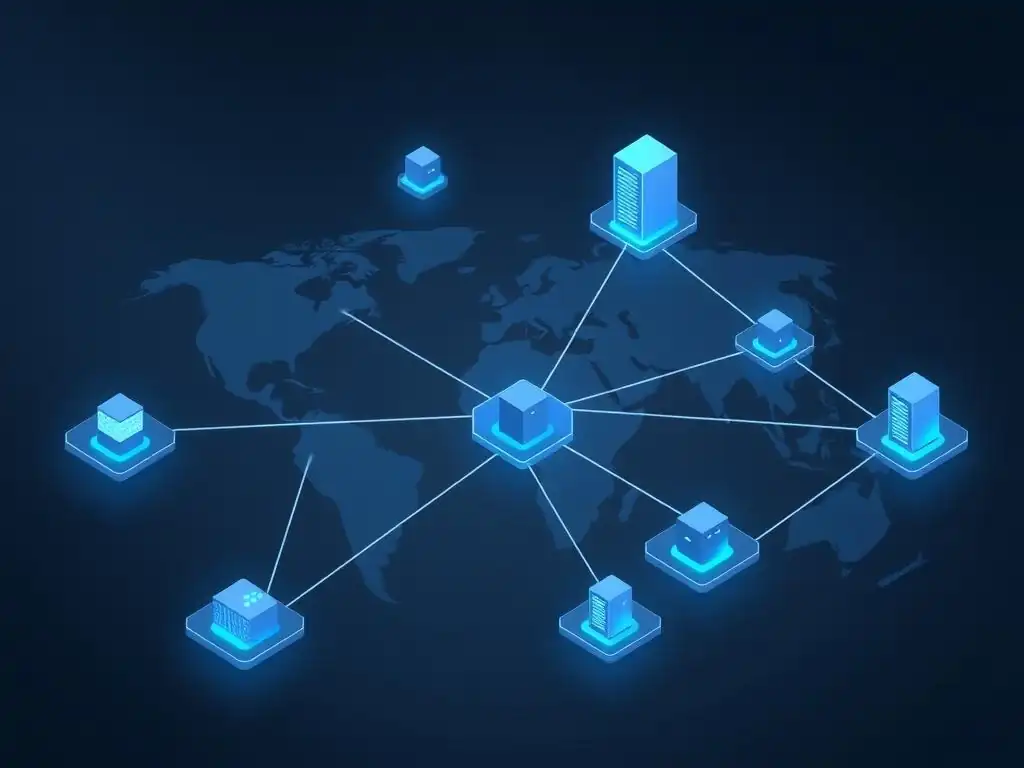
Network sharding focuses on dividing the blockchain network itself into smaller, interconnected subnetworks, or shards. In network sharding, nodes are partitioned into different shards, and nodes within a shard primarily communicate and interact with other nodes in the same shard. This reduces the communication overhead and network congestion that can occur in a non-sharded network where all nodes need to communicate with each other for every transaction. Network sharding aims to improve network efficiency and reduce latency by limiting the scope of communication within the network.
Network sharding can be combined with other sharding techniques, such as state sharding and transaction sharding, to achieve even greater scalability gains. By segmenting the network, network sharding reduces the broadcast overhead and allows for more efficient message propagation within each shard. However, it also introduces challenges related to cross-shard communication and maintaining network connectivity and consistency across shards. Effective network sharding requires careful design of shard assignment and communication protocols to ensure network efficiency without compromising security or decentralization.
Computation Sharding: Distributing Computational Tasks
Computation sharding aims to distribute the computational workload associated with processing smart contracts and executing complex operations across different shards. In computation sharding, the execution of smart contracts or computationally intensive tasks is divided among different shards, allowing for parallel processing of these tasks. This can significantly improve the performance of blockchain networks that support smart contracts and decentralized applications, as computation can become a bottleneck in such systems.
Computation sharding can involve assigning specific smart contracts or types of computations to different shards, or dynamically distributing computational tasks across available shards. This technique is particularly relevant for blockchains that aim to support complex dApps and high volumes of smart contract executions. Implementing computation sharding requires mechanisms for partitioning and distributing computational tasks, managing data dependencies between computations, and ensuring the consistency of results across shards. When effectively implemented, computation sharding can significantly enhance the computational capacity and scalability of blockchain networks.
Advantages of Implementing Blockchain Sharding
Enhanced Scalability: Handling More Transactions Per Second (TPS)
The most significant advantage of blockchain sharding is enhanced scalability, specifically the ability to handle a significantly higher number of transactions per second (TPS). By dividing the blockchain into multiple shards that process transactions in parallel, sharded blockchains can achieve transaction throughput orders of magnitude greater than non-sharded blockchains. For instance, a sharded blockchain could theoretically achieve thousands or even tens of thousands of TPS, bringing blockchain transaction speeds closer to those of traditional payment networks like Visa and Mastercard.
This enhanced scalability is crucial for the widespread adoption of blockchain technology, particularly for applications requiring high transaction volumes, such as decentralized finance (DeFi), high-frequency trading, and global payment systems. Without sharding or similar scalability solutions, blockchain networks risk becoming congested and unusable as demand increases. Blockchain sharding offers a path to overcome this limitation and enable blockchain to scale to meet the needs of a global user base and diverse range of applications. The increase in TPS directly translates to a more responsive and efficient blockchain network.
Improved Throughput: Increasing Overall Network Capacity
Beyond just TPS, blockchain sharding leads to improved throughput, which refers to the overall capacity of the network to process data and transactions over a given period. Sharding not only increases the number of transactions processed per second but also increases the overall amount of data that can be processed and stored by the network. Think of throughput as the width of a pipe – sharding effectively widens the pipe, allowing more data to flow through it at any given time.
This improved throughput is essential for supporting the growing demands of blockchain applications and the increasing volume of data being generated and stored on blockchains. It allows the network to handle larger blocks, process more complex transactions, and accommodate a greater number of users and applications. Increased throughput translates to a more robust and capable blockchain infrastructure that can support a wider range of use cases and scale to meet future demands. Sharding expands the overall network capacity, making it more resilient and performant under heavy load.
Reduced Latency: Faster Transaction Confirmation Times
Blockchain sharding can also lead to reduced latency, meaning faster transaction confirmation times. In non-sharded blockchains, transactions must be processed sequentially, leading to delays in confirmation, especially during periods of network congestion. With sharding, transactions are processed in parallel across multiple shards, significantly reducing the time it takes for a transaction to be included in a block and confirmed on the blockchain.
Faster transaction confirmation times are crucial for improving the user experience of blockchain applications, especially for applications requiring real-time or near real-time transaction processing, such as payments, gaming, and decentralized exchanges. Reduced latency makes blockchain networks more responsive and user-friendly, encouraging wider adoption and usage. Users experience quicker feedback and faster finality when transactions are confirmed rapidly, enhancing the overall usability of blockchain platforms.
Lower Transaction Fees: Making Blockchain More Accessible
Finally, blockchain sharding can contribute to lower transaction fees, making blockchain technology more accessible and affordable for a wider range of users and applications. When transaction throughput is limited in non-sharded blockchains, network congestion can drive up transaction fees, as users compete to have their transactions processed quickly. By increasing throughput and reducing congestion, sharding can help to stabilize and potentially lower transaction fees.
Lower transaction fees are critical for enabling microtransactions, making blockchain economically viable for everyday transactions, and fostering wider adoption in developing countries and among users with limited financial resources. High transaction fees can be a significant barrier to entry for many potential blockchain users and applications. Sharding, by improving network efficiency and reducing congestion, can help to democratize access to blockchain technology by making it more cost-effective to use.
Challenges and Considerations in Blockchain Sharding
Cross-Shard Attacks: Security Risks and Mitigation Strategies
One of the primary security challenges in blockchain sharding is the potential for cross-shard attacks. Since shards operate independently and manage only a portion of the total network validators, individual shards might have a smaller validator set compared to the entire non-sharded network. This could make individual shards more vulnerable to attacks, such as 51% attacks, where a malicious actor gains control of a shard and can manipulate transactions or state within that shard.
Mitigation strategies for cross-shard attacks include techniques like validator randomization and rotation, where validators are frequently shuffled and reassigned to different shards to prevent attackers from concentrating their resources in a single shard. Cryptographic techniques like fraud proofs and validity proofs can also be used to detect and prevent malicious activities within shards and during cross-shard communication. Robust cross-shard communication protocols and security audits are essential to minimize the risk of cross-shard attacks and ensure the overall security of sharded blockchain networks.
Data Availability: Ensuring Data Integrity Across Shards
Data availability is another critical challenge in blockchain sharding. In a sharded system, each shard holds only a portion of the blockchain's data. It's crucial to ensure that data within each shard remains available and accessible, even if some nodes within a shard become unavailable or malicious. If data in a shard becomes unavailable, it can disrupt the operation of the shard and potentially compromise the integrity of the entire blockchain.
Solutions for data availability include techniques like data replication, where data is redundantly stored across multiple nodes within a shard, and erasure coding, where data is encoded in a way that allows for reconstruction even if some data fragments are lost. Data availability sampling techniques can also be used to verify that data within shards is available without requiring every node to download and verify the entire shard data. Ensuring data availability is essential for maintaining the reliability and robustness of sharded blockchain networks.
Shard coordination is a complex technical challenge in blockchain sharding. Since shards operate independently and in parallel, it's crucial to have mechanisms to coordinate their activities and maintain consistency across the entire sharded network. This includes ensuring the correct ordering of cross-shard transactions, preventing double-spending across shards, and maintaining a consistent view of the overall blockchain state across all shards.
Techniques for shard coordination include the use of a beacon chain or a coordinating chain that manages validator assignments, finalizes cross-shard transactions, and ensures overall network consistency. Atomic cross-shard transaction protocols are also essential for ensuring that transactions involving multiple shards are executed atomically and consistently. Effective shard coordination mechanisms are crucial for maintaining the integrity and coherence of sharded blockchain networks and preventing inconsistencies or conflicts between shards.
Complexity of Implementation: Technical Hurdles in Developing Sharded Blockchains
Finally, the complexity of implementation is a significant hurdle in developing and deploying sharded blockchains. Sharding is a complex architectural change that requires significant modifications to the core blockchain protocol. Designing and implementing sharding requires expertise in distributed systems, cryptography, consensus mechanisms, and blockchain technology. Developing secure and efficient cross-shard communication protocols, shard coordination mechanisms, and data availability solutions is a technically challenging undertaking.
The complexity of implementation also means that sharded blockchains are often more difficult to audit and verify, and there is a higher risk of introducing bugs or vulnerabilities during the development process. Thorough testing, security audits, and rigorous development processes are essential for overcoming the technical hurdles in developing sharded blockchains and ensuring their security and reliability. The transition to sharded architectures often requires significant research, development effort, and community collaboration.
Examples of Blockchain Projects Utilizing Sharding
Ethereum 2.0: Sharding Implementation and Roadmap
Ethereum 2.0, now simply referred to as Ethereum after "The Merge," initially had sharding as a central component of its scalability roadmap. The original Ethereum 2.0 vision included a phased rollout of sharding, aiming to divide the Ethereum blockchain into 64 shards. This sharding implementation was intended to significantly increase Ethereum's transaction throughput and address its scalability limitations. The planned sharding approach involved a beacon chain coordinating the shards and validators being assigned to different shards to process transactions in parallel.
However, Ethereum's scaling strategy has evolved, and while sharding remains on the roadmap, its priority has shifted. Ethereum is currently focusing heavily on Layer-2 scaling solutions like rollups, which have proven to be effective in significantly increasing transaction throughput without requiring immediate sharding implementation. Rollups bundle multiple transactions off-chain and submit a summary of these transactions to the main Ethereum chain, reducing congestion and fees on the main chain. While Ethereum's long-term roadmap still includes sharding, the timeline and specific implementation details may continue to evolve as Layer-2 solutions mature and the blockchain landscape changes.
Zilliqa: Sharding Approach and Performance
Zilliqa is one of the earliest blockchain projects to successfully implement sharding on its mainnet. Zilliqa utilizes a technique called network sharding, where the network is divided into multiple shards, each capable of processing transactions independently. Zilliqa's sharding approach allows it to achieve significantly higher transaction throughput compared to non-sharded blockchains. The number of shards in Zilliqa's network dynamically adjusts based on network demand, allowing it to scale its capacity as needed.
Zilliqa has demonstrated impressive performance metrics, showcasing its ability to process thousands of transactions per second in test environments and on its mainnet. By implementing sharding from its inception, Zilliqa has positioned itself as a blockchain platform capable of handling high transaction volumes and supporting applications requiring scalability. Zilliqa's experience provides valuable insights into the practical implementation and performance benefits of blockchain sharding, serving as a real-world example of its potential for scaling blockchain technology.
The Future of Blockchain Sharding: Trends and Developments
Sharding is poised to play a crucial role in the future of Decentralized Finance (DeFi). DeFi applications, with their increasing complexity and transaction volume, are pushing the limits of current blockchain scalability. Sharding offers a potential solution to address the scalability challenges faced by DeFi, enabling faster transaction processing, lower fees, and improved user experience for DeFi platforms and users. As DeFi continues to grow and attract more users and assets, sharding could become essential for supporting the scalability and performance demands of the DeFi ecosystem.
With sharding, DeFi platforms can handle a significantly larger number of transactions, reduce congestion during peak demand, and lower gas fees, making DeFi more accessible to a wider range of users and use cases. Sharding can also enable more complex DeFi applications and strategies that require higher throughput and lower latency. The integration of sharding with DeFi has the potential to unlock the next wave of growth and innovation in the DeFi space.
Sharding is also relevant for the adoption of blockchain technology in enterprise applications. Enterprises often require blockchain solutions that can handle high transaction volumes, meet stringent performance requirements, and integrate seamlessly with existing enterprise systems. Sharding can enable enterprise blockchains to scale to meet the demands of large-scale enterprise deployments, supporting use cases such as supply chain management, financial transactions, and digital identity management.
For enterprise blockchain applications, scalability, throughput, and latency are critical factors for adoption. Sharding offers a way to address these requirements, making blockchain technology more viable for enterprise use cases that demand high performance and scalability. As enterprises increasingly explore and adopt blockchain solutions, sharding could become a key technology for enabling enterprise-grade blockchain platforms and applications.
The Role of Sharding in the Evolution of Blockchain Technology
Sharding is likely to play a significant role in the long-term evolution of blockchain technology. As blockchain adoption continues to grow and new applications emerge, scalability will remain a critical challenge. Sharding, along with other scalability solutions, will be essential for enabling blockchain to become a truly mainstream technology capable of supporting global-scale applications and use cases. Sharding represents a fundamental architectural shift in blockchain design, paving the way for more scalable, efficient, and robust decentralized systems.
The future of blockchain technology will likely involve a combination of Layer-1 scaling solutions like sharding and Layer-2 solutions like rollups and sidechains, working together to achieve the necessary scalability for widespread adoption. Sharding, with its potential to significantly increase transaction throughput and overall network capacity, will continue to be a key area of research and development in the blockchain space, shaping the future of decentralized technology and its applications.
Conclusion: Embracing Sharding for a Scalable Blockchain Future
Blockchain sharding represents a significant advancement in the quest for scalable blockchain technology. By dividing the blockchain into manageable shards that operate in parallel, sharding offers a promising path to overcome the scalability limitations of traditional blockchain architectures. Understanding the key terms and concepts associated with blockchain sharding is crucial for grasping the potential and the challenges of this technology. While challenges remain in areas like cross-shard security and implementation complexity, the benefits of enhanced scalability, improved throughput, reduced latency, and lower transaction fees make sharding a compelling solution for the future of blockchain.
As blockchain technology continues to evolve and adoption expands across diverse industries, sharding is poised to play a vital role in enabling blockchain to reach its full potential. From decentralized finance to enterprise applications, the scalability unlocked by sharding can pave the way for a more efficient, accessible, and robust blockchain ecosystem. Embracing sharding and continuing to innovate in this area is essential for building a scalable blockchain future, capable of supporting the next generation of decentralized applications and transforming industries worldwide.
Frequently Asked Questions
What exactly is blockchain sharding, explained simply?
Sharding is a database partitioning technique applied to blockchains. It divides the blockchain into smaller, more manageable pieces, or shards, to improve scalability. Each shard can process transactions independently.
How does blockchain sharding improve scalability?
By processing transactions in parallel across multiple shards, sharding increases the overall throughput of the blockchain. This avoids the bottleneck of a single, sequential chain and allows for faster transaction speeds and higher capacity.
What are some of the main challenges associated with blockchain sharding?
A significant challenge is ensuring cross-shard communication and data consistency between shards. Also, security vulnerabilities like single-shard takeover need to be mitigated effectively.
How does sharding relate to DeFi and other blockchain applications?
Sharding can enable more scalable and efficient DeFi platforms, allowing for higher transaction volumes and lower fees. This opens the door for broader adoption of DeFi and other decentralized applications.
What future developments can we expect to see in blockchain sharding technology?
Expect to see advancements in cross-shard communication protocols, improved security mechanisms, and the integration of sharding with other scalability solutions like layer-2 scaling solutions. This will lead to more robust and scalable blockchain networks.
Final Reflection: Embracing the Scalable Future of Blockchain
The journey through the core concepts of blockchain sharding reveals more than just technical jargon; it unveils a pathway towards a more efficient and accessible decentralized future. The ability to break down the monolithic blockchain into manageable shards is not just a theoretical improvement, but a practical necessity for widespread adoption. As blockchain technology continues to permeate various industries, the scalability limitations of traditional architectures become increasingly apparent, making sharding a critical solution for handling increased transaction volumes and maintaining network integrity.
The impact of sharding extends far beyond mere technical enhancements; it promises to democratize access to blockchain technology, enabling smaller players and innovative applications to thrive without being constrained by exorbitant transaction fees and slow processing times. This shift towards a more scalable and inclusive blockchain ecosystem is profoundly important, as it unlocks the true potential of decentralized systems to revolutionize industries and empower individuals. The future of blockchain is not about one chain to rule them all, but a constellation of interconnected, specialized chains working in harmony.
This vision, achievable through sharding, underscores the transformative power of distributed ledger technology.
Now, as you navigate the evolving landscape of blockchain technology, consider how the principles of sharding – division, parallel processing, and efficient resource allocation – can be applied to your own endeavors. Embrace the challenge of building a more scalable and accessible future, not just in the realm of blockchain, but in all areas where efficiency and inclusivity are paramount. Let the lessons learned from "Decoding Sharding Jargon" inspire you to explore the possibilities of decentralized solutions and contribute to a world where technology empowers everyone.
Unlock the Power of Sharding: Start Exploring Today!
Thank you for exploring the world of sharding! Now that you've understood the key concepts, it's time to take your blockchain knowledge to the next level. Are you ready to put that understanding into practice?
Here are a few steps you can take right now:
- Research a specific sharding implementation to understand its unique approach. This is where theory becomes practical—see how the concepts work in real-world applications!
- Share this article with a friend or colleague interested in blockchain technology to help reinforce your own understanding.
- Join online blockchain forums or communities to discuss sharding and learn from others' experiences.
What do you see as the most exciting potential use case for sharding in the blockchain industry? Share your thoughts in the comments below!
Leave a Reply