
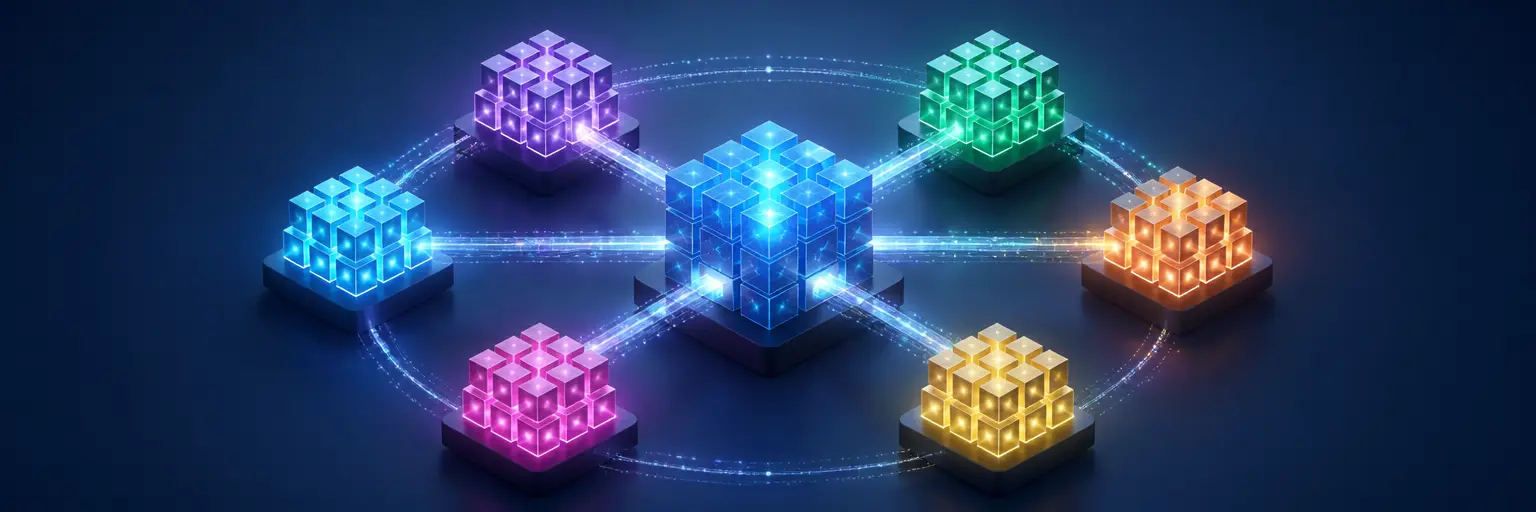
Decentralized CrossChain Bridges: Exploring Trustless Interoperability Solutions
Discover how blockchain scalability and interoperability are shaping the future of decentralized systems 🚀 Explore innovative approaches that help networks process more transactions, reduce costs, and connect seamlessly across ecosystems. Stay informed about emerging solutions, performance breakthroughs, and the technologies driving faster, more efficient, and connected blockchain applications for DeFi, enterprises, and beyond.
596 articles
Layer2 vs. Layer1 Scaling: Understanding the Tradeoffs and Synergies
State Channels Evolved: Will They Play a Bigger Role in Future Scalability?
Will CrossChain Bridges Become Invisible Infrastructure? The Path to Seamless Interoperability
The Mechanics of Interoperability: Understanding Different Types of CrossChain Bridges
Unlocking Blockchain Speed: Demystifying State Channels for Scalability
CrossShard Transactions: Navigating the Complexities of Sharded Networks
Scalability in Emerging Markets: Unlocking Access and Opportunity
Standardization in Scalability: The Key to Interoperable and Efficient Systems
State Channels and Smart Contracts: A Powerful Combination for Scalable dApps
CrossLayer2 Communication: Enabling Interactions Between Scaling Solutions
The Role of AI in Blockchain Scalability: Automation and Optimization
LongTerm Scalability Vision: Designing Blockchains for Generations to Come
CrossChain Bridges and Network Congestion: Finding the Right Balance
CrossChain Communication: A Technical Overview of Bridges and Protocols
The Technical Deep Dive into Optimistic Rollup Architecture
Scalability for Supply Chain Revolution: Tracking Goods at Unprecedented Speed
Beyond Silos: How CrossChain Protocols are Revolutionizing Blockchain Communication
The Scalability Challenge of CrossChain Bridges: Addressing Transaction Throughput
Comparing State Channels to Sidechains: Which Scaling Solution is Right for You?
Network Congestion: Will Future Solutions Finally Solve Blockchain Traffic Jams?
Layer2 and the Metaverse: Scaling Virtual Worlds and Experiences
The Scalability Solution You Need to Know: Exploring State Channels
Blockchain Sharding: The Ultimate Guide to Scaling Decentralized Networks
Exploring Sharding Alternatives: When is Sharding Not the Best Solution?
Emerging Scalability Solutions: Innovations You Haven't Heard of Yet
Blockchain Sharding vs. Layer2: Which Scalability Solution Reigns Supreme?
Sharding for HighThroughput Applications: Powering the Next Generation of dApps
Navigating the CrossChain Landscape: Protocols, Solutions, and Future Trends
The Economics of Blockchain Sharding: Incentives and Resource Allocation
Blockchain Scalability & Interoperability explores the technologies helping decentralized networks become faster, more affordable, and easier to connect. As blockchain adoption expands across DeFi, enterprise applications, gaming, tokenization, and Web3 infrastructure, networks must overcome major challenges involving transaction throughput, latency, gas fees, congestion, and communication between separate ecosystems.
On Blockchain Trends, this category provides clear, practical insights into blockchain scalability solutions and cross-chain interoperability protocols. Discover how sharding, Layer-2 networks, state channels, Plasma frameworks, rollups, and blockchain bridges improve performance while preserving security and decentralization. Our coverage is designed for developers, investors, researchers, businesses, and anyone following the evolution of decentralized systems.
Explore technical explainers, ecosystem comparisons, adoption trends, security considerations, and future-focused analysis. Whether you want to understand how Ethereum scales, how blockchains communicate, or which innovations may support mass adoption, this category offers valuable guidance on the future of scalable and interoperable blockchain infrastructure.
🔀 Blockchain Sharding
Blockchain sharding divides a network’s data and transaction workload into smaller sections known as shards. Instead of requiring every node to process every transaction, sharding enables parallel processing, helping improve transaction throughput and reduce network congestion. Readers can learn how shard execution, validator coordination, data availability, and consensus mechanisms work together.
This section examines the benefits and trade-offs of sharded blockchain architecture, including scalability, decentralization, security, and cross-shard communication. Expect accessible explanations of sharding models, real-world implementations, Ethereum scaling developments, and the technical challenges that must be addressed before sharding can support widespread blockchain adoption.
⚡ Layer-2 Scaling Solutions
Layer-2 scaling solutions process transactions away from a blockchain’s mainnet while using the underlying Layer-1 network for security or settlement. This approach can significantly reduce gas fees, increase transaction speed, and expand the capacity of networks such as Ethereum. Coverage includes rollups, optimistic rollups, zero-knowledge rollups, validiums, and other off-chain scaling technologies.
Readers will discover how Layer-2 networks support DeFi, NFTs, gaming, payments, and enterprise blockchain applications. Articles focus on transaction finality, interoperability, data availability, smart contract compatibility, bridge risks, and the differences between major scaling platforms, helping you evaluate the best Layer-2 blockchain solutions for different use cases.
🌉 Cross-Chain Bridges & Protocols
Cross-chain bridges and interoperability protocols enable assets, messages, and data to move between otherwise separate blockchain networks. This subcategory explains how lock-and-mint bridges, burn-and-mint systems, liquidity networks, light-client bridges, and messaging protocols connect ecosystems such as Ethereum, Bitcoin, Solana, Cosmos, and other chains.
Because bridge security is essential, this section also explores smart contract vulnerabilities, validator assumptions, multisignature controls, liquidity fragmentation, and bridge exploits. Expect practical insights into secure blockchain interoperability, cross-chain DeFi, omnichain applications, and the infrastructure needed for a connected Web3 economy.
🔗 State Channels & Plasma
State channels and Plasma are important blockchain scaling approaches that move selected transactions off-chain while preserving verifiable settlement on the main network. State channels are particularly useful for repeated interactions such as micropayments, gaming, and fast peer-to-peer transactions, while Plasma uses child chains and dispute mechanisms to improve transaction capacity.
This section explains how channel opening, off-chain updates, settlement, exits, fraud proofs, and operator models function. Readers can compare these technologies with modern rollups and other Layer-2 architectures while understanding their strengths, limitations, and potential roles in low-cost blockchain transactions and high-frequency decentralized applications.
🚀 Future of Blockchain Scalability
The future of blockchain scalability will likely involve multiple technologies working together, including modular blockchains, data availability layers, zero-knowledge proofs, recursive proofs, execution environments, shared sequencers, and advanced rollup architectures. This subcategory tracks the innovations shaping the next generation of high-throughput decentralized networks.
Expect forward-looking analysis of blockchain infrastructure, interoperability standards, decentralized sequencing, quantum-resistant systems, sustainable consensus, and enterprise adoption. We also examine how scalability improvements may influence Web3 mass adoption, DeFi growth, digital identity, tokenized assets, and decentralized applications across global markets.
❓ Frequently Asked Questions
What is blockchain scalability?
Blockchain scalability is the ability of a network to process more transactions quickly, affordably, and reliably as usage increases. Scalable systems aim to improve throughput and reduce fees without compromising security or decentralization.
What is blockchain interoperability?
Blockchain interoperability is the ability of different blockchain networks to exchange data, assets, messages, and instructions. Interoperability protocols and cross-chain bridges help separate ecosystems communicate and operate together.
Are Layer-2 solutions more scalable than Layer-1 blockchains?
Layer-2 solutions can process many transactions away from the main blockchain, often delivering lower fees and higher throughput. However, performance depends on the technology used, including rollups, data availability design, security assumptions, and withdrawal or settlement requirements.
Why are cross-chain bridges important?
Cross-chain bridges allow users and applications to move assets and information between blockchain networks. They support cross-chain DeFi, liquidity access, and connected Web3 applications, although users should carefully evaluate bridge security and trust assumptions.
Which blockchain scaling technology will dominate the future?
No single solution is guaranteed to dominate. The blockchain industry is developing a multi-layer ecosystem in which sharding, rollups, modular architectures, state channels, data availability networks, and interoperability protocols may serve different applications and performance requirements.