
Comparing State Channels to Sidechains: Which Scaling Solution is Right for You?

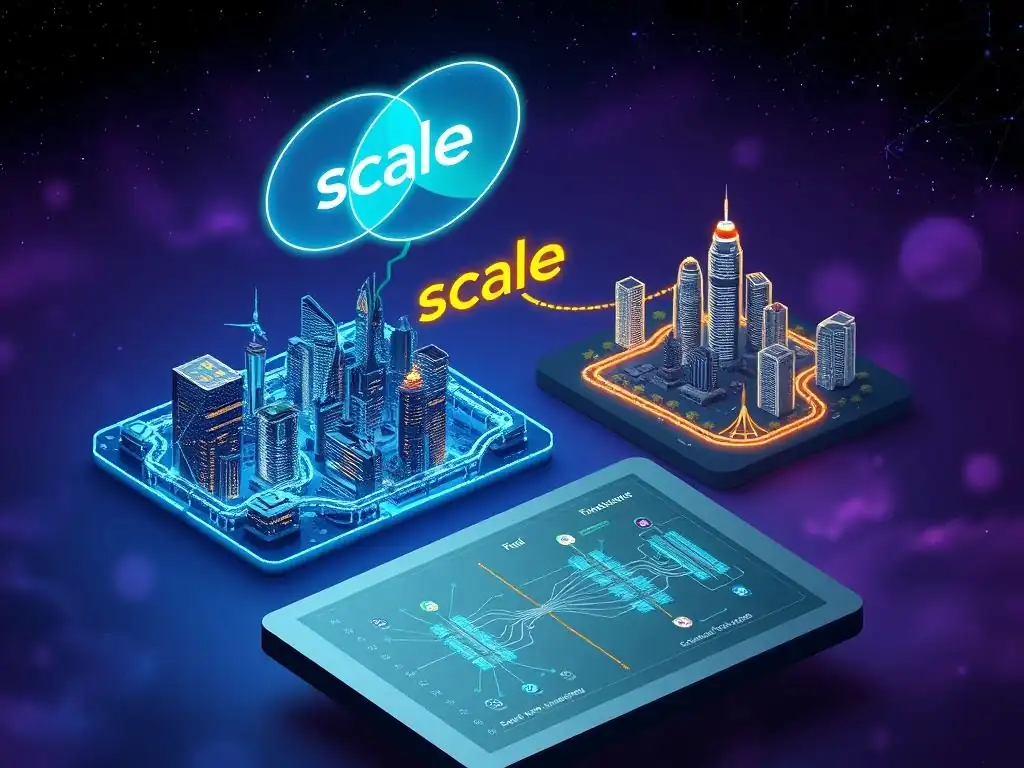
Welcome to Blockchain Trends, your guide to navigating the revolutionary world of blockchain technology, far beyond just cryptocurrencies. Intrigued by how blockchain can reshape industries and redefine trust? Dive in! This week, we're tackling a crucial challenge: scalability. Our main article offers a comprehensive " Blockchain Scaling Solutions Comparison," specifically pitting State Channels against Sidechains. Unsure which is the best fit for your project? Read on to unlock the secrets of efficient and effective blockchain solutions and discover the future of decentralized systems.
Comparing State Channels to Sidechains: Which Scaling Solution is Right for You?
- Understanding Blockchain Scaling Challenges
- Introduction to Layer-2 Scaling Solutions
- State Channels: A Deep Dive
-
Sidechains: An Independent Blockchain for Enhanced Scalability
- What are Sidechains and How do They Connect to the Main Chain?
- Advantages of Sidechains: Scalability, Customization, and Increased Transaction Volume
- Use Cases for Sidechains: EVM Compatibility, Asset Transfers, and Application-Specific Chains
- Limitations of Sidechains: Security Dependencies and Interoperability Hurdles
-
Blockchain Scaling Solutions Comparison: State Channels vs. Sidechains
- Transaction Speed and Throughput: A Performance Showdown
- Security Considerations: Evaluating the Risks of Each Approach
- Cost Efficiency: Comparing Transaction Fees and Operational Expenses
- Development Complexity: Assessing the Ease of Implementation
- Decentralization and Trust: Analyzing the Level of Centralization in Each Solution
- Choosing the Right Scaling Solution: Key Considerations
- Real-World Examples: State Channels and Sidechains in Action
- The Future of Blockchain Scalability: Combining Layer-2 Solutions
- Conclusion: Optimizing Blockchain Scalability with State Channels and Sidechains
-
Frequently Asked Questions
- What is the fundamental difference between state channels and sidechains as blockchain scaling solutions?
- How do state channels and sidechains approach the problem of blockchain scaling?
- Which scaling solution is generally considered more secure, state channels or sidechains?
- What are some typical use cases for blockchain scaling with state channels versus sidechains?
- What factors should be considered in a blockchain scaling solutions comparison between state channels and sidechains?
- Final Reflection: Navigating the Blockchain Scaling Landscape
- Uncover Your Blockchain Scaling Path!
Understanding Blockchain Scaling Challenges
The Blockchain Scalability Problem: A Bottleneck to Adoption
Blockchain technology, since its inception with Bitcoin, has promised to revolutionize various industries by offering decentralized, secure, and transparent systems. However, a significant hurdle to its widespread adoption is the inherent scalability problem. Traditional blockchains, in their fundamental design, process transactions sequentially. This means that the number of transactions a blockchain can handle per second is limited, creating a bottleneck as user demand increases.
For example, Bitcoin's network, designed for security and decentralization, can only process around 7 transactions per second (TPS). Ethereum, while more advanced, still hovers around 15-20 TPS on its main chain. These figures are dwarfed when compared to centralized payment processors like Visa, which can handle thousands of transactions per second, often cited to be around 24,000 TPS.
This limited throughput translates directly into longer transaction confirmation times and higher transaction fees, especially during periods of network congestion. Imagine a scenario where a decentralized application (dApp) gains massive popularity, similar to a viral social media app. If the underlying blockchain cannot handle the surge in transactions, users will experience slow response times and exorbitant gas fees, severely hindering the user experience and potentially driving them away.
This scalability bottleneck effectively prevents blockchains from becoming mainstream infrastructure for applications requiring high transaction volumes and low latency, such as high-frequency trading platforms, social media networks, or large-scale e-commerce platforms. Addressing this problem is crucial for blockchain to move beyond niche applications and become a foundational technology powering the next generation of internet services.
Transaction Throughput: Why Scalability Matters for Blockchain's Future
Transaction throughput, often measured in Transactions Per Second (TPS), is a critical metric that defines a blockchain's capacity to process transactions. It directly impacts the speed and efficiency of the network. A higher transaction throughput means the blockchain can handle more transactions concurrently, leading to faster confirmation times and lower transaction costs.
This is not merely a technical detail; it's a fundamental requirement for blockchain to support real-world applications and compete with existing centralized systems. For instance, consider the potential of blockchain in micro-payments for content consumption or IoT device communication. These use cases demand a network capable of processing a vast number of low-value transactions quickly and affordably.
The future of blockchain hinges significantly on overcoming the limitations in transaction throughput. If blockchain networks remain slow and expensive to use, their adoption will be restricted to applications where decentralization and security are paramount, even at the cost of speed and cost-effectiveness. However, to truly unlock the transformative potential of blockchain across various sectors, including finance, supply chain management, and digital identity, achieving scalability comparable to or exceeding current centralized systems is essential.
This is why the development and implementation of effective blockchain scaling solutions are not just about technical improvements but are about ensuring the long-term viability and widespread applicability of blockchain technology. Increased transaction throughput is not simply about processing more transactions; it's about enabling entirely new classes of applications and use cases that are currently infeasible on base-layer blockchains.
Introduction to Layer-2 Scaling Solutions
What are Layer-2 Solutions and Why are They Important?
Layer-2 solutions represent a paradigm shift in blockchain scalability, offering a pathway to significantly enhance transaction throughput and reduce costs without fundamentally altering the base layer blockchain (Layer-1). These solutions operate "on top" of the main blockchain, acting as secondary frameworks that handle transactions off-chain, thereby relieving the burden on the primary blockchain network.
Layer-2 solutions are crucial because they address the inherent trade-off often encountered in blockchain design – the scalability trilemma – which posits that it's challenging to simultaneously achieve scalability, security, and decentralization on a single layer. Layer-2 solutions aim to circumvent this trilemma by prioritizing scalability while inheriting security and decentralization from the underlying Layer-1 blockchain.
The importance of Layer-2 solutions cannot be overstated in the context of blockchain's future. Without effective scaling solutions, blockchains would remain confined to niche applications due to their limited transaction processing capabilities and high fees. Layer-2 solutions are designed to unlock the full potential of blockchain technology by making it practical for mass adoption.
They achieve this by enabling faster and cheaper transactions, improving user experience, and facilitating the development of more complex and demanding decentralized applications. By offloading transaction processing from the main chain, Layer-2 solutions allow the base layer to focus on its core strengths: security and decentralization. This separation of concerns is a key architectural principle that enables blockchain networks to scale to meet the demands of a growing user base and a diverse range of applications.
State Channels and Sidechains: Two Prominent Layer-2 Approaches
Among the diverse landscape of Layer-2 scaling solutions, state channels and sidechains stand out as two of the most prominent and well-established approaches. While both aim to improve blockchain scalability, they employ fundamentally different mechanisms and offer distinct trade-offs. State channels operate by creating direct communication pathways between participants, allowing them to conduct multiple transactions off-chain and only interact with the main chain for opening and closing the channel and settling the final state. This approach is optimized for scenarios where frequent interactions occur between a known set of participants.
Sidechains, in contrast, are independent blockchains that run parallel to the main chain. They have their own consensus mechanisms and block validation processes but are linked to the main chain through a two-way peg mechanism, allowing assets to be transferred between the main chain and the sidechain. Sidechains offer a more generalized scaling solution, capable of handling a broader range of transactions and potentially supporting entire decentralized applications independently of the main chain.
Understanding the nuances of state channels and sidechains, their respective strengths and weaknesses, and their suitability for different use cases is crucial for developers and businesses seeking to leverage blockchain technology effectively and address the blockchain scalability problem. Choosing the right blockchain scaling solution is a critical decision that can significantly impact the performance, cost-effectiveness, and security of a blockchain-based application.
State Channels: A Deep Dive
How State Channels Work: Off-Chain Transactions with On-Chain Settlement
State channels offer a method to conduct numerous transactions off the main blockchain, finalizing only the opening and closing states on-chain. Imagine two parties wanting to transact frequently; they first establish a "channel" by locking up funds in a multi-signature contract on the main blockchain. This on-chain transaction represents the commitment to the channel.
Once the channel is open, participants can exchange an unlimited number of transactions directly between themselves, off-chain. These off-chain transactions are essentially signed agreements updating the balance distribution within the locked funds. Crucially, these off-chain transactions are faster and cheaper because they bypass the main blockchain's consensus mechanism.
Throughout the duration of the channel's activity, participants continuously update and sign the latest state of their agreement, effectively creating a ledger of off-chain transactions. When the participants are finished transacting, they "close" the channel by submitting the final agreed-upon state to the main blockchain. This closing transaction then triggers the settlement of funds according to the latest state, distributing the locked funds based on the off-chain transaction history.
The beauty of state channels lies in minimizing on-chain interactions, thereby reducing congestion and fees on the main blockchain. Only two on-chain transactions are typically needed – one to open and one to close – regardless of the number of transactions conducted within the channel. This drastically improves transaction speed and reduces costs, making state channels an efficient blockchain scaling solution for specific use cases.
Advantages of State Channels: Speed, Low Cost, and Privacy
State channels offer a compelling set of advantages, primarily centered around speed, cost-effectiveness, and enhanced privacy. The most significant benefit is the dramatic increase in transaction speed. Because transactions within a state channel occur directly between participants off-chain, they are not subject to the block confirmation times of the main blockchain. This translates to near-instantaneous transaction finality, often measured in milliseconds, compared to the seconds or minutes required for on-chain transactions. This speed is particularly crucial for applications requiring real-time interactions, such as fast-paced games or high-frequency micro-payments.
Cost reduction is another major advantage. By minimizing on-chain transactions, state channels significantly lower transaction fees. Users only incur the gas costs associated with opening and closing the channel, regardless of the volume of transactions conducted within. This makes state channels exceptionally cost-effective for scenarios involving frequent, low-value transactions. Furthermore, state channels enhance privacy.
Transactions conducted within a channel are not publicly recorded on the main blockchain. Only the opening and closing transactions are visible, while the details of the transactions within the channel remain private to the participants. This added layer of privacy can be crucial for sensitive applications or users who prefer to keep their transaction history confidential. These combined advantages make state channels a powerful blockchain scaling solution for applications where speed, low cost, and privacy are paramount.
Use Cases for State Channels: Payment Channels, Conditional Payments, and Data Streams
State channels are particularly well-suited for a range of specific use cases that benefit from their inherent speed, low cost, and privacy advantages. Payment channels, exemplified by the Lightning Network on Bitcoin, are a prime example. The Lightning Network utilizes state channels to enable fast and cheap Bitcoin transactions, especially for micro-payments. Users can open channels with each other to conduct numerous Bitcoin transactions off-chain, making Bitcoin viable for everyday purchases and smaller transactions that would be impractical on the main Bitcoin blockchain due to fees and confirmation times.
Conditional payments are another significant use case. State channels can be configured to execute payments only when certain pre-defined conditions are met. This is particularly useful for escrow services, where funds are released only upon fulfillment of agreed-upon terms, or for programmatic payments triggered by specific events. Data streams also benefit from state channels.
Applications that involve continuous data flow, such as pay-per-use data feeds or micro-subscriptions, can leverage state channels for efficient and granular payment processing. Instead of processing numerous small on-chain transactions for each data packet or time interval, state channels allow for aggregated payments settled periodically or at the end of a data streaming session. These use cases highlight the versatility of state channels as a blockchain scaling solution for scenarios requiring frequent interactions, conditional logic, or continuous value exchange between parties.
Limitations of State Channels: Liquidity Requirements and Channel Management
Despite their advantages, state channels also have limitations that must be considered when evaluating them as a blockchain scaling solution. A significant limitation is the liquidity requirement. To participate in a state channel, users must lock up funds upfront. This locked liquidity is necessary to facilitate off-chain transactions.
For example, in a payment channel, both parties need to commit funds to the channel to send and receive payments. If a user wants to make a payment exceeding their locked funds or receive a payment larger than the counterparty's locked funds, the channel capacity might be a limiting factor. This liquidity constraint can be particularly relevant for users who do not have substantial capital to lock up or for applications requiring high transaction volumes with fluctuating liquidity needs.
Channel management complexity is another challenge. As users participate in multiple channels or require routing payments through intermediary channels, managing these channels effectively becomes increasingly complex. Opening, closing, and maintaining channel balances, as well as routing payments across a network of channels, requires sophisticated software and protocols.
Furthermore, state channels are typically best suited for scenarios where there are frequent interactions between a relatively fixed set of participants. They may be less efficient for scenarios involving ad-hoc interactions with a large and dynamic group of users. While advancements like the Lightning Network are addressing routing and liquidity management, these complexities remain important considerations when assessing the suitability of state channels as a blockchain scaling solution for specific applications.
Sidechains: An Independent Blockchain for Enhanced Scalability
What are Sidechains and How do They Connect to the Main Chain?
Sidechains represent a fundamentally different approach to blockchain scaling compared to state channels. Instead of operating off-chain, sidechains are independent blockchains that run parallel to the main chain, often referred to as the "parent chain." The crucial element connecting a sidechain to the main chain is a two-way peg mechanism.
This peg allows for the transfer of assets, typically cryptocurrency, between the main chain and the sidechain in a secure and verifiable manner. Imagine the main chain as a major highway and the sidechain as an adjacent express lane; traffic (transactions) can flow between them, but the express lane operates independently to alleviate congestion on the main highway.
The two-way peg typically involves locking up assets on the main chain and creating a corresponding representation of those assets on the sidechain. When assets are moved from the main chain to the sidechain, they are effectively "locked" in a smart contract on the main chain, and an equivalent amount of pegged assets is released on the sidechain. Conversely, to move assets back to the main chain, the pegged assets on the sidechain are "burned" or destroyed, and the original assets are unlocked on the main chain.
This mechanism ensures that the total supply of assets remains consistent across both chains. Sidechains can have their own consensus mechanisms, block times, and even different functionalities compared to the main chain, providing a high degree of flexibility and customization for blockchain scaling and application-specific needs.
Advantages of Sidechains: Scalability, Customization, and Increased Transaction Volume
Sidechains offer a distinct set of advantages that make them a compelling blockchain scaling solution, particularly in terms of scalability, customization, and handling increased transaction volume. Scalability is a primary benefit; by operating as independent blockchains, sidechains can process transactions in parallel to the main chain. This effectively increases the overall transaction throughput of the entire blockchain ecosystem. A sidechain can be designed with faster block times and higher transaction limits than the main chain, allowing it to handle a significantly larger volume of transactions.
Customization is another key advantage. Sidechains can be tailored to specific application requirements. They can implement different consensus mechanisms, virtual machines (like the Ethereum Virtual Machine - EVM), and feature sets that are optimized for particular use cases. For instance, a sidechain designed for gaming might prioritize faster block times and lower transaction fees, while a sidechain for enterprise applications might focus on privacy features and permissioned access.
Furthermore, sidechains can significantly increase the overall transaction volume that the blockchain ecosystem can support. By offloading a substantial portion of transaction processing to sidechains, the main chain can remain less congested and more focused on security and final settlement. This ability to handle increased transaction volume makes sidechains suitable for scaling decentralized applications and accommodating a growing user base. These advantages position sidechains as a versatile and powerful blockchain scaling solution for diverse applications and scalability challenges.
Use Cases for Sidechains: EVM Compatibility, Asset Transfers, and Application-Specific Chains
Sidechains are versatile and find application in various use cases, particularly where scalability, customization, and specific functionalities are required. EVM compatibility is a significant use case. Many sidechains are designed to be compatible with the Ethereum Virtual Machine (EVM). This allows developers to easily port their Ethereum-based decentralized applications (dApps) to sidechains and benefit from lower transaction fees and faster processing times while maintaining compatibility with the existing Ethereum ecosystem and tooling. Polygon (formerly Matic Network) is a prominent example of an EVM-compatible sidechain that has gained substantial adoption for scaling Ethereum dApps.
Asset transfers and token issuance are also common use cases for sidechains. Sidechains facilitate the efficient transfer of assets between the main chain and the sidechain, enabling users to utilize assets in a faster and cheaper environment. Furthermore, sidechains can be used to issue new tokens or assets that operate primarily within the sidechain ecosystem, potentially with different tokenomics or functionalities compared to the main chain. Application-specific chains are another important category.
Sidechains can be created and optimized for specific applications or industries. For example, a sidechain could be designed specifically for supply chain management, focusing on features like data privacy, permissioned access, and efficient tracking of goods. These diverse use cases demonstrate the flexibility of sidechains as a blockchain scaling solution, catering to a wide range of needs from general-purpose scalability to specialized application requirements.
Limitations of Sidechains: Security Dependencies and Interoperability Hurdles
While sidechains offer significant advantages for blockchain scaling, they also have limitations that need careful consideration. One primary concern is security dependencies. Sidechains are independent blockchains, and their security is not directly inherited from the main chain.
They must establish their own security models, typically relying on their own consensus mechanisms and validator sets. If a sidechain utilizes a less robust consensus mechanism or has a smaller validator set compared to the main chain, it may be more vulnerable to attacks, such as 51% attacks. The security of assets bridged to a sidechain ultimately depends on the security of the sidechain itself.
Interoperability hurdles also present a challenge. While sidechains are designed to connect to the main chain, interoperability between different sidechains and between sidechains and other blockchain ecosystems can be complex. Each sidechain often operates in isolation, and transferring assets or data between different sidechains may require intricate bridging solutions or may not be directly supported.
Furthermore, the two-way peg mechanism itself, while designed to be secure, can introduce potential vulnerabilities if not implemented and maintained correctly. Bridge exploits have occurred in the past, highlighting the risks associated with cross-chain asset transfers. These security dependencies and interoperability challenges are crucial factors to evaluate when considering sidechains as a blockchain scaling solution, particularly for applications that require high levels of security and seamless cross-chain interactions.
Blockchain Scaling Solutions Comparison: State Channels vs. Sidechains
Transaction Speed and Throughput: A Performance Showdown
When comparing state channels and sidechains in terms of transaction speed and throughput, distinct performance characteristics emerge. State channels generally offer superior transaction speed for participants within the channel. Transactions within a state channel are near-instantaneous, often achieving finality in milliseconds, as they occur directly between participants off-chain. However, the overall throughput of a state channel network is limited by the number of active channels and the capacity of individual channels. While individual transactions are incredibly fast, the total number of transactions the entire state channel system can handle might be constrained by channel liquidity and network topology.
Sidechains, on the other hand, prioritize overall throughput. As independent blockchains, sidechains can be designed to process a large volume of transactions concurrently, achieving a significantly higher TPS compared to the main chain. However, transaction finality on a sidechain might be slightly slower than within a state channel, as transactions need to be included in a sidechain block and confirmed by the sidechain's consensus mechanism.
Furthermore, cross-chain transactions between the main chain and a sidechain, or between different sidechains, will inherently have longer finality times due to the bridging process and potential confirmation delays on both chains involved. In essence, state channels excel in individual transaction speed, while sidechains are designed for higher overall transaction throughput across the broader network. The choice between them depends on whether the priority is minimizing latency for individual transactions or maximizing the total number of transactions processed by the scaling solution.
Security Considerations: Evaluating the Risks of Each Approach
Security is a paramount concern when evaluating blockchain scaling solutions, and state channels and sidechains present different security profiles. State channels, in their design, inherit the security of the main chain for settlement. The initial channel opening and final channel closing transactions are anchored on the main blockchain, benefiting from its robust consensus mechanism and security.
Transactions within the channel, while off-chain, are secured through cryptographic signatures and agreed-upon state updates. However, the security of state channels also relies on the responsiveness and honesty of channel participants. In cases of disputes or if a participant becomes unresponsive, on-chain intervention might be necessary to resolve the channel state, potentially introducing delays and complexities.
Sidechains, conversely, have their own independent security models. The security of a sidechain is determined by its own consensus mechanism, validator set, and overall network robustness. If a sidechain employs a weaker consensus mechanism or has a smaller, less decentralized validator set compared to the main chain, it could be more vulnerable to attacks. The security of assets bridged to a sidechain is directly tied to the security of the sidechain itself.
Therefore, when considering sidechains, it's crucial to carefully evaluate the security model of the specific sidechain and its resilience against potential attacks. In general, state channels are often considered to have a stronger security foundation as they ultimately rely on the main chain's security for settlement, while sidechains require careful design and implementation to ensure adequate security independent of the main chain. Blockchain scaling solutions comparison must always include a thorough assessment of security implications.
Cost Efficiency: Comparing Transaction Fees and Operational Expenses
Cost efficiency is a crucial factor in the practical adoption of blockchain scaling solutions, and state channels and sidechains offer different cost structures. State channels are inherently cost-efficient for transactions conducted within the channel. Once a channel is opened, transactions within the channel are virtually free, incurring minimal to no transaction fees beyond the initial and final on-chain transactions for opening and closing.
This makes state channels exceptionally cost-effective for scenarios involving frequent transactions between channel participants. However, the initial cost of opening a channel and the final cost of closing it, which are on-chain transactions, still need to be considered, especially if channel lifespans are short or channel opening/closing is frequent.
Sidechains, while offering lower transaction fees compared to the main chain for transactions processed on the sidechain, typically have their own fee structures. Transactions on a sidechain incur fees to incentivize sidechain validators and maintain the sidechain network. These fees are generally lower than main chain fees but are still present for each transaction on the sidechain.
Furthermore, the operational expenses of running and maintaining a sidechain, including infrastructure costs and validator rewards, are more substantial compared to state channels, which primarily rely on the main chain's infrastructure. In terms of transaction fees, state channels are generally more cost-efficient for individual transactions within a channel, while sidechains offer overall lower fees compared to the main chain for a broader range of transactions. However, the overall operational costs of implementing and maintaining a sidechain solution are typically higher than those associated with deploying state channels.
Development Complexity: Assessing the Ease of Implementation

Development complexity is a significant factor influencing the adoption and practicality of blockchain scaling solutions. State channels, in general, are often considered to be less complex to implement compared to sidechains, particularly for specific use cases like payment channels. Developing state channel applications primarily involves building the logic for channel management, off-chain transaction processing, and on-chain settlement. Existing frameworks and protocols, such as the Lightning Network for Bitcoin, can simplify the development process for certain types of state channel applications.
Sidechains, on the other hand, are significantly more complex to develop and deploy. Creating a sidechain involves building an entire independent blockchain, including its consensus mechanism, networking layer, virtual machine (if applicable), and bridge to the main chain. This requires substantial development effort, expertise in blockchain architecture, and ongoing maintenance. Furthermore, ensuring the security and reliability of the two-way peg mechanism between the main chain and the sidechain adds another layer of complexity.
While sidechain development frameworks and "blockchain-as-a-service" platforms are emerging to simplify sidechain creation, the development complexity of sidechains remains considerably higher than that of state channels. For projects with limited development resources or those focused on specific, channel-based use cases, state channels might offer a more accessible and less complex blockchain scaling solution. Blockchain scaling solutions comparison should consider the development effort required for each approach.
Decentralization and Trust: Analyzing the Level of Centralization in Each Solution
Decentralization and trust assumptions are fundamental aspects to consider when comparing blockchain scaling solutions. State channels, by design, tend to maintain a higher degree of decentralization and trustlessness compared to sidechains. State channels primarily rely on the security and decentralization of the underlying main chain for dispute resolution and final settlement. The off-chain transactions within a channel are peer-to-peer, and the core logic is enforced by cryptographic mechanisms and smart contracts on the main chain. While individual channels might involve trusted counterparties for efficient operation, the overall system maintains a high level of decentralization anchored to the main chain.
Sidechains, however, can introduce varying degrees of centralization depending on their design and implementation. A sidechain's decentralization is determined by its own consensus mechanism, validator set size, and governance model.
If a sidechain utilizes a Proof-of-Authority (PoA) or delegated Proof-of-Stake (dPoS) consensus mechanism with a limited number of validators, it can be more centralized compared to a Proof-of-Work (PoW) main chain like Bitcoin or a large Proof-of-Stake (PoS) chain like Ethereum. Furthermore, the bridge connecting a sidechain to the main chain can also introduce centralization points if its operation relies on a small set of custodians or a centralized bridging mechanism.
Therefore, while sidechains offer scalability and customization, it's crucial to carefully assess their decentralization characteristics and trust assumptions, as they can deviate from the core decentralized ethos of the main chain to varying extents. The level of decentralization is a critical factor in blockchain scaling solutions comparison, particularly for applications where trust minimization and censorship resistance are paramount.
Choosing the Right Scaling Solution: Key Considerations
Project Requirements: Aligning Scaling Solutions with Specific Needs
Selecting the optimal blockchain scaling solution hinges critically on aligning it with the specific requirements of your project. Consider the nature of your application and its transaction patterns. If your application involves frequent, low-value transactions between a relatively stable set of users, state channels might be an ideal fit. For example, micro-payment platforms, gaming applications with frequent in-game transactions, or applications requiring private, direct interactions could greatly benefit from state channels. Assess the required transaction speed and latency. State channels excel in providing near-instantaneous transaction finality, which is crucial for real-time applications.
On the other hand, if your project demands high overall transaction throughput to support a large and dynamic user base or complex decentralized applications, sidechains may be a more suitable choice. Sidechains are better equipped to handle a higher volume of transactions and can support more complex functionalities and smart contracts. Consider the type of transactions your application will process.
Sidechains can handle a wider range of transaction types and complexities, while state channels are often optimized for simpler value transfer or conditional payment scenarios. Thoroughly analyzing your project's specific needs, transaction characteristics, and performance requirements is the first crucial step in choosing between state channels and sidechains as your blockchain scaling solution.
Security Priorities: Balancing Scalability with Security Risks
Security priorities must be a central consideration when deciding between state channels and sidechains. If your project handles high-value assets or requires the highest levels of security and trust minimization, state channels might be preferable due to their stronger security foundation rooted in the main chain. State channels inherit the robust security of the underlying Layer-1 blockchain for settlement, minimizing the reliance on the security of the scaling solution itself. Evaluate the potential risks associated with each approach. State channels, while generally secure, can have complexities in dispute resolution and require active channel management.
Sidechains, while offering scalability and customization, introduce their own security considerations. Assess the security model of the specific sidechain you are considering. Examine its consensus mechanism, validator set, and track record of security incidents. Understand that sidechains operate with their own security assumptions, which might be different from and potentially weaker than the main chain.
If your project prioritizes scalability but can tolerate a slightly different security profile, and you are confident in the security of the chosen sidechain, then sidechains might be a viable option. However, if security is paramount and non-negotiable, especially when dealing with high-value assets or sensitive data, the stronger security guarantees of state channels might make them the more prudent choice. Balancing scalability gains with acceptable security risks is a critical trade-off in blockchain scaling solutions comparison.
Development Resources: Assessing the Available Expertise and Budget
The availability of development resources and budget constraints significantly influence the practicality of implementing different blockchain scaling solutions. If your project has limited development expertise and a tight budget, state channels might be a more accessible starting point. Developing state channel applications, particularly for well-established use cases like payment channels, can leverage existing frameworks and libraries, reducing the development effort and cost. The development complexity of state channels is generally lower compared to sidechains, making them more approachable for smaller teams or projects with limited resources.
Sidechains, on the other hand, demand significantly more development expertise and resources. Building and deploying a sidechain requires specialized knowledge in blockchain architecture, consensus mechanisms, cryptography, and network engineering. The development process is more complex, time-consuming, and expensive compared to state channels. Furthermore, ongoing maintenance, security audits, and upgrades of a sidechain require dedicated resources.
If your project has a larger development team with blockchain expertise and a more substantial budget, sidechains become a more feasible option. However, for projects with constrained resources, starting with state channels or exploring simpler Layer-2 solutions might be a more pragmatic approach. A realistic assessment of your development capabilities and financial constraints is crucial in choosing a blockchain scaling solution that is not only technically suitable but also practically implementable within your project's limitations.
Future Scalability Needs: Planning for Long-Term Growth and Adoption
Considering future scalability needs and planning for long-term growth and adoption is essential when choosing a blockchain scaling solution. If your project anticipates rapid growth and a significant increase in transaction volume over time, sidechains might offer a more scalable and flexible architecture for the long run. Sidechains can be designed to handle a higher throughput and can be further scaled independently of the main chain as needed.
They provide a more adaptable platform for accommodating future growth and evolving application requirements. Think about the potential for your application to scale to millions of users or handle exponentially increasing transaction volumes.
State channels, while effective for improving scalability within their operational parameters, might have inherent limitations in scaling to extremely large networks or handling unbounded transaction growth. The overall capacity of a state channel network can be constrained by channel liquidity and network topology.
While advancements are continuously being made to improve the scalability of state channel networks, sidechains, by their independent and parallel nature, offer a more inherently scalable architecture for long-term growth. If your project's vision involves massive scale and you anticipate needing to handle vast transaction volumes in the future, prioritizing a more scalable architecture like sidechains might be a strategic long-term decision.
However, if your scalability needs are more predictable and within the capacity of state channels, or if you prefer a more incremental scaling approach, state channels could be a suitable starting point with potential for future migration to other solutions as needed. Long-term scalability planning is a crucial aspect of blockchain scaling solutions comparison.
Real-World Examples: State Channels and Sidechains in Action
Case Study: State Channels in Lightning Network
The Lightning Network stands as a prominent real-world example of state channels in action, specifically designed to address Bitcoin's scalability challenges. Bitcoin, while secure and decentralized, has a limited transaction throughput of around 7 TPS, making micro-transactions and everyday payments impractical due to slow confirmation times and high fees. The Lightning Network leverages state channels to enable faster and cheaper Bitcoin transactions.
It allows users to open payment channels with each other, locking up Bitcoin in a multi-signature contract on the main Bitcoin blockchain. Once channels are established, users can conduct numerous Bitcoin transactions directly between themselves off-chain, with near-instantaneous finality and minimal fees.
The Lightning Network has significantly improved Bitcoin's scalability for micro-payments and smaller transactions. It has been adopted by various Bitcoin wallets, exchanges, and merchants, enabling users to conduct faster and more affordable Bitcoin payments. While the Lightning Network is still evolving and faces ongoing development challenges related to routing, liquidity management, and user experience, it has demonstrated the practical viability of state channels as a blockchain scaling solution.
It showcases how state channels can effectively enhance the scalability of a main chain for specific use cases, particularly payment applications, without compromising the security and decentralization of the underlying blockchain. The Lightning Network's continued growth and adoption serve as a testament to the power of state channels as a blockchain scaling solution.
Case Study: Sidechains in Polygon
Polygon (formerly Matic Network) is a widely adopted real-world example of a sidechain, specifically designed to address Ethereum's scalability issues. Ethereum, despite its robust smart contract capabilities, has faced scalability bottlenecks, particularly during periods of high network congestion, leading to high gas fees and slow transaction times. Polygon operates as an EVM-compatible sidechain to Ethereum, providing a Layer-2 scaling solution that offers faster and cheaper transactions while maintaining compatibility with the Ethereum ecosystem. It utilizes a Proof-of-Stake (PoS) consensus mechanism and a network of validators to process transactions independently of the main Ethereum chain.
Polygon has gained significant traction as a scaling solution for Ethereum dApps. Numerous decentralized applications, including DeFi protocols, NFT marketplaces, and blockchain games, have deployed on Polygon to benefit from its lower gas fees and faster transaction speeds. Polygon has also attracted a large user base and has become a prominent platform for accessing and interacting with the Ethereum ecosystem in a more scalable and cost-effective manner.
Its success demonstrates the effectiveness of sidechains as a blockchain scaling solution for general-purpose blockchains like Ethereum. Polygon's adoption highlights the value of sidechains in enabling scalability, customization (through EVM compatibility), and increased transaction volume for a broader range of applications within the Ethereum ecosystem. It serves as a compelling case study for the practical application and impact of sidechains as a blockchain scaling solution.
The Future of Blockchain Scalability: Combining Layer-2 Solutions
Hybrid Architectures: Exploring Synergistic Designs
The future of blockchain scalability is likely to involve hybrid architectures that combine different Layer-2 solutions, leveraging the strengths of each approach to create more robust and versatile scaling frameworks. Rather than viewing state channels and sidechains as mutually exclusive options, the trend is moving towards exploring synergistic designs that integrate them and potentially incorporate other Layer-2 techniques like rollups and Plasma. Imagine a system that utilizes state channels for frequent peer-to-peer micro-transactions and employs sidechains for handling larger volumes of more complex transactions or application-specific functionalities.
Hybrid architectures could offer a more comprehensive and adaptable approach to blockchain scaling. They could allow for optimizing different aspects of scalability, such as transaction speed, throughput, cost efficiency, and security, by strategically deploying different Layer-2 solutions where they are most effective. For example, a hybrid system might use state channels for instant payments, sidechains for dApp scaling, and rollups for batching transactions and further reducing main chain congestion.
Research and development in blockchain scalability are increasingly focusing on these hybrid models, aiming to create more sophisticated and efficient scaling solutions that can meet the diverse demands of a growing blockchain ecosystem. The future of blockchain scalability is likely to be characterized by the intelligent combination and orchestration of multiple Layer-2 techniques within integrated architectures.
The Role of Layer-2 Solutions in the Broader Blockchain Ecosystem
Layer-2 solutions are poised to play a pivotal role in shaping the broader blockchain ecosystem and enabling the widespread adoption of blockchain technology. As base-layer blockchains continue to evolve and improve their core functionalities, Layer-2 solutions will act as crucial catalysts for unlocking their full potential. They are essential for overcoming the inherent scalability limitations of Layer-1 blockchains and making blockchain technology practical for mass-market applications. Layer-2 solutions are not merely temporary fixes; they are becoming integral components of the blockchain architecture, allowing for a layered approach to scalability and functionality.
The continued development and adoption of Layer-2 solutions will be instrumental in driving the growth of decentralized finance (DeFi), non-fungible tokens (NFTs), and other blockchain-based applications. By providing faster, cheaper, and more scalable transaction processing, Layer-2 solutions will lower the barriers to entry for users and developers, fostering innovation and wider participation in the blockchain ecosystem. Furthermore, Layer-2 solutions are enabling the development of more complex and demanding decentralized applications that were previously infeasible on congested base-layer blockchains.
As the blockchain ecosystem matures, Layer-2 solutions will likely become increasingly sophisticated and seamlessly integrated, forming a critical layer of infrastructure that underpins the scalability, efficiency, and usability of the decentralized web. Their role is not just about scaling transactions; it's about enabling the long-term viability and transformative potential of blockchain technology across various industries and use cases.
Conclusion: Optimizing Blockchain Scalability with State Channels and Sidechains
Summarizing the Key Differences and Trade-offs
State channels and sidechains, while both aimed at addressing blockchain scalability, present distinct approaches with unique trade-offs. State channels excel in providing near-instantaneous transaction speed and low transaction costs for participants within a channel, inheriting security from the main chain for settlement. However, they have limitations in liquidity requirements and channel management complexity, and may be best suited for specific use cases with frequent peer-to-peer interactions.
Sidechains, conversely, offer higher overall transaction throughput and customization flexibility as independent blockchains. They can handle a broader range of transactions and support application-specific functionalities. However, sidechains introduce their own security dependencies and can be more complex to develop and maintain. They also potentially introduce centralization depending on their design and consensus mechanisms.
Here's a concise summary table:
| Feature | State Channels | Sidechains |
|---|---|---|
| Transaction Speed | Near-instant within channel | Faster than main chain, but not instant for individual txns |
| Throughput | Limited by channel network capacity | Higher overall throughput |
| Security | Inherits main chain security | Independent security model |
| Cost | Very low within channel | Lower than main chain, but fees exist |
| Complexity | Lower development complexity | Higher development complexity |
| Decentralization | Generally more decentralized | Can vary, potentially more centralized |
| Best Use Cases | Payments, micro-transactions | DApps, asset transfers, customization |
Choosing the Best Blockchain Scaling Solution for Your Project
Selecting the "best" blockchain scaling solution is not a one-size-fits-all decision. It depends entirely on the specific needs and priorities of your project. For applications prioritizing ultra-fast, low-cost transactions between known parties, such as payment systems or micro-payment platforms, state channels offer a compelling solution. If security is paramount and you want to leverage the strong security of the main chain, state channels also provide a robust foundation.
For projects requiring high overall transaction throughput, customization capabilities, and the ability to support more complex decentralized applications, sidechains present a more versatile option. If you need to build a dedicated blockchain for a specific application or want to scale an existing platform like Ethereum while maintaining EVM compatibility, sidechains can be highly effective.
Ultimately, the optimal blockchain scaling solution is the one that best balances your project's requirements for scalability, security, cost efficiency, development resources, and long-term growth potential. Carefully weigh the trade-offs and advantages of state channels and sidechains in the context of your specific use case to make an informed decision and optimize your blockchain application for success.
Frequently Asked Questions
What is the fundamental difference between state channels and sidechains as blockchain scaling solutions?
The core difference lies in where transactions are processed. State channels handle transactions off-chain, only committing the final result to the main blockchain. Sidechains operate as independent blockchains, periodically bridging data to the main chain.
How do state channels and sidechains approach the problem of blockchain scaling?
State channels enhance scalability by reducing the load on the main chain, processing most transactions privately. Sidechains create parallel blockchains dedicated to specific tasks or applications, distributing the overall network burden.
Which scaling solution is generally considered more secure, state channels or sidechains?
Generally, state channels are considered more secure because the final state is ultimately enforced by the main chain's consensus mechanism. Sidechains rely on their own consensus mechanisms, which might be less robust than the main chain.
What are some typical use cases for blockchain scaling with state channels versus sidechains?
State channels are well-suited for applications with frequent, small transactions, like micropayments or gaming. Sidechains are better for applications requiring customized functionality or handling large volumes of data, such as enterprise solutions.
What factors should be considered in a blockchain scaling solutions comparison between state channels and sidechains?
Key factors include the required level of security, transaction volume, desired customization, and the complexity of implementation. The optimal choice depends heavily on the specific application's needs and technical constraints.
The exploration of state channels and sidechains reveals that no single "blockchain scaling solution" reigns supreme. The optimal choice hinges on the specific application, its security needs, and the desired level of decentralization. Understanding the nuances of each approach, as we've outlined, is crucial for developers and businesses seeking to build scalable and efficient blockchain applications in today's rapidly evolving technological landscape.
The ongoing debate and development surrounding blockchain scaling solutions underscore their profound impact on the future of decentralized technologies. This exploration has reinforced my belief that the true potential of blockchain lies not just in its inherent security, but in its ability to adapt and scale to meet the demands of real-world applications. The key to scaling blockchain lies not in finding a single silver bullet, but in embracing a diverse ecosystem of solutions that can be tailored to specific needs.
This sentiment perfectly encapsulates the current state of blockchain scaling, emphasizing the importance of informed decision-making.
Now, as you navigate the complex world of blockchain development, consider the insights shared here. Reflect on the specific requirements of your project and carefully weigh the trade-offs between state channels and sidechains. By embracing a thoughtful and informed approach, you can contribute to building a more scalable, accessible, and ultimately, transformative blockchain future.
Uncover Your Blockchain Scaling Path!
Thank you for exploring blockchain scaling solutions with us! We hope you've gained valuable insights into the advantages and limitations of both state channels and sidechains. Now, it's time to put that knowledge into action.
Consider the following steps:
- Assess your project's specific needs by analyzing transaction volume, security requirements, and the desired level of decentralization to choose the most suitable solution.
- Investigate real-world implementations by researching projects that have successfully adopted state channels or sidechains. You might also consider contributing to open-source initiatives in this area.
- Share your insights with fellow developers and blockchain enthusiasts on forums and social media to promote collective learning.
Are you ready to take the next step in implementing blockchain scaling solutions? What is the biggest challenge you're currently facing, and how could state channels or sidechains help you address it?
Leave a Reply