
The Technical Deep Dive into Optimistic Rollup Architecture


Welcome to Blockchain Trends, your definitive resource for navigating the evolving world of decentralized innovation! Intrigued by how blockchain is reshaping industries beyond just digital currencies? This week, we're diving deep into the groundbreaking Optimistic rollup blockchain technology benefits, exploring its potential to revolutionize scalability and interoperability. Discover how this architecture is transforming the blockchain landscape and unlocking a future of faster, more efficient decentralized systems. Ready to unravel the complexities? Let's begin!
- Understanding Layer-2 Scaling
- Architecture: A Detailed Look
- Benefits and Use Cases
- Fraud Proof Mechanisms
- Comparison with Other Layer-2 Solutions
- Challenges and Limitations
- Future Trends
- Security and Auditability
- Implementation Considerations for Developers
-
Frequently Asked Questions
- What is an Optimistic Rollup and how does it work?
- What are the main benefits of using Optimistic Rollup blockchain technology?
- How does the challenge period in Optimistic Rollups work and why is it necessary?
- What are some of the challenges associated with implementing Optimistic Rollup blockchain technology?
- How do Optimistic Rollups compare to other Layer 2 scaling solutions like ZK-Rollups?
- Final Reflection: Embracing the Optimistic Future of Blockchain
- Dive Deeper: Architect Your Own Rollup Strategy!
Understanding Layer-2 Scaling
Blockchain Scalability Issues
Blockchain technology, while revolutionary, faces significant scalability challenges, particularly when it comes to transaction throughput and speed. First-generation blockchains like Bitcoin and Ethereum, in their base layer form, can only process a limited number of transactions per second (TPS). For instance, Bitcoin's network typically handles around 7 TPS, while Ethereum 1.0 manages approximately 15 TPS.
This limited capacity leads to network congestion, especially during periods of high demand, resulting in slow transaction confirmation times and soaring transaction fees. In peak periods, Ethereum transaction fees have spiked to upwards of $50 or even $100 per transaction, making everyday use cases like micro-transactions or frequent decentralized application (dApp) interactions prohibitively expensive. This bottleneck hinders the widespread adoption of blockchain technology, particularly for applications requiring high transaction volumes and low latency, such as decentralized finance (DeFi) platforms and high-frequency trading.
The inherent architecture of these blockchains, particularly their consensus mechanisms like Proof-of-Work, contributes to these limitations. Each transaction needs to be validated by every node in the network, a process that becomes increasingly time-consuming and resource-intensive as network usage grows. Moreover, the block size limitations in many blockchains constrain the number of transactions that can be included in each block, further restricting throughput.
This scalability trilemma – the difficulty in simultaneously achieving decentralization, security, and scalability – has become a central focus in blockchain development. Finding solutions that can significantly increase transaction processing capabilities without compromising security or decentralization is crucial for blockchain technology to reach its full potential and become a viable infrastructure for global applications. The need for efficient and scalable blockchain solutions is driving innovation in various areas, including Layer-2 scaling technologies like Optimistic Rollups.
Layer-2 Scaling Solutions Overview
Layer-2 scaling solutions emerge as a promising approach to address blockchain scalability issues without fundamentally altering the base layer (Layer-1) blockchain itself. Instead of processing all transactions directly on the main chain, Layer-2 solutions operate on top of it, handling a significant portion of transaction processing off-chain. These solutions inherit the security of the underlying Layer-1 blockchain while achieving higher throughput and lower transaction fees.
Various Layer-2 approaches exist, each with its own trade-offs and mechanisms. State channels, for instance, allow for direct, off-chain transactions between participants, only interacting with the main chain to open and close channels. Sidechains are independent blockchains that run parallel to the main chain, with their own consensus mechanisms and validators, enabling faster transaction processing and greater flexibility but often with different security assumptions compared to the main chain.
Among the most prominent Layer-2 categories are rollups, which bundle or "roll up" multiple transactions into a single transaction on the main chain. Rollups come in two primary flavors: Zero-Knowledge Rollups (zk-Rollups) and Optimistic Rollups. zk-Rollups leverage cryptographic proofs, specifically zero-knowledge succinct non-interactive arguments of knowledge (zk-SNARKs) or zero-knowledge succinct transparent arguments of knowledge (zk-STARKs), to validate off-chain transactions and post only a proof of validity to the main chain.
This enables high scalability and strong security. Optimistic Rollups, on the other hand, operate on the assumption that transactions are valid by default ("optimistic" approach) and employ a fraud-proof mechanism to challenge and revert invalid transactions during a designated period. This approach offers significant scalability improvements while maintaining a strong connection to the security of the main chain.
Optimistic Rollups: An Introduction
Optimistic Rollups represent a Layer-2 scaling solution designed to enhance blockchain transaction throughput and reduce fees by processing transactions off the main chain while still leveraging its security. The core principle behind Optimistic Rollups is "optimism" – assuming that transactions are valid unless proven otherwise. Instead of verifying every transaction individually on the main chain, Optimistic Rollups execute transactions off-chain, typically by a sequencer, and then post the resulting state root to the main chain.
This drastically reduces the computational burden on the main chain, as it only needs to verify a single state root representing numerous transactions, rather than each transaction individually. The "optimistic" aspect comes into play with the fraud-proof mechanism.
To ensure the integrity of the system and prevent malicious actors from posting invalid state updates, Optimistic Rollups incorporate a challenge period. After a state root is posted to the main chain, there is a window of time, typically around one to two weeks, during which anyone can challenge the validity of the transactions included in that state root.
If a challenger can provide a fraud proof demonstrating that a transaction was indeed invalid, the rollup state is reverted to the correct state, and the sequencer or operator who posted the fraudulent state may be penalized. This fraud-proof mechanism relies on the data availability of the transaction data, which is typically posted on-chain or made available through other means.
Optimistic Rollups offer a compelling balance between scalability, security, and compatibility with existing Ethereum Virtual Machine (EVM) based smart contracts, making them a popular choice for scaling Ethereum and other EVM-compatible blockchains. The benefits of optimistic rollup blockchain technology are becoming increasingly apparent as adoption grows.
Architecture: A Detailed Look
Core Components
The architecture of an Optimistic Rollup comprises several key components working in concert to achieve off-chain transaction processing and on-chain security. These components are essential for understanding how optimistic rollup blockchain technology benefits are realized.
Mainchain Smart Contract
At the heart of an Optimistic Rollup system lies a set of smart contracts deployed on the main Layer-1 blockchain, such as Ethereum. These smart contracts act as the anchor and security guarantor for the rollup. The mainchain smart contract performs several crucial functions. Firstly, it serves as a deposit and withdrawal bridge between the main chain and the rollup chain. Users deposit their assets into the smart contract on the main chain to use them within the rollup environment.
Conversely, users can withdraw their assets back to the main chain through this contract. Secondly, the smart contract stores the state roots of the rollup chain. The sequencer, after processing batches of transactions off-chain, submits the new state root to the mainchain contract. This state root represents the summarized outcome of all transactions processed in that batch.
Thirdly, the smart contract manages the challenge period and fraud-proof verification process. It holds the logic for accepting fraud proofs, verifying them against the submitted transaction data, and reverting the rollup state if fraud is proven. Finally, the mainchain contract often handles dispute resolution and enforces penalties for malicious actors, ensuring the integrity and security of the entire Optimistic Rollup system. The security and reliability of this mainchain smart contract are paramount, as it is the ultimate arbiter of truth within the Optimistic Rollup framework.
Off-Chain Sequencer
The off-chain sequencer is a critical component responsible for processing transactions within the Optimistic Rollup. Unlike the main chain where every node processes every transaction, the sequencer in an Optimistic Rollup is typically a single entity or a consortium of entities that collect user transactions, order them, and execute them off-chain. The sequencer plays a role analogous to a block producer in a traditional blockchain, but operating in the Layer-2 context.
It batches multiple transactions together and computes the new state root resulting from these transactions. This state root, along with the batched transactions or a commitment to their data, is then submitted to the mainchain smart contract. The sequencer significantly boosts transaction throughput by handling transaction execution off-chain, thus alleviating congestion on the main chain.
However, it's important to note that the sequencer's role introduces a degree of centralization. While Optimistic Rollups are designed to be trustless in terms of validity through fraud proofs, the sequencer's operational aspects, such as transaction ordering and inclusion, might be initially centralized. Ongoing research and development are exploring decentralized sequencer solutions to further enhance the decentralization characteristics of Optimistic Rollups and mitigate potential single points of failure or censorship risks associated with a centralized sequencer.
Fraud Prover
The fraud prover is not a single, designated entity but rather any participant in the network who monitors the Optimistic Rollup and is willing to challenge potentially invalid state transitions. The fraud prover's role is crucial for maintaining the security and integrity of the Optimistic Rollup system, embodying the "optimistic" nature of the solution. After the sequencer submits a new state root to the mainchain contract, a challenge period commences. During this period, any fraud prover can examine the batched transactions and the claimed state transition.
If a fraud prover detects an invalid transaction or an incorrect state transition within the batch, they can submit a fraud proof to the mainchain smart contract. This fraud proof essentially demonstrates to the mainchain contract, using the available transaction data, that the sequencer made a mistake or acted maliciously. The fraud proof typically involves re-executing the contested transaction on-chain within the mainchain smart contract's environment.
If the on-chain re-execution confirms the fraud, the mainchain smart contract reverts the rollup state to the correct prior state, effectively undoing the invalid transaction and subsequent state changes. The sequencer might also face penalties for submitting an incorrect state. The existence of fraud provers and the challenge mechanism ensure that even though transactions are initially assumed valid, any invalid or fraudulent activity can be detected and corrected, maintaining the security level anchored to the mainchain.
Workflow: Step-by-Step
The workflow of an Optimistic Rollup involves a series of steps that illustrate how transactions are processed off-chain and secured on-chain. Understanding this workflow is key to appreciating the optimistic rollup blockchain technology benefits.
Transaction Submission and Batching
The process begins when users initiate transactions intended for the Optimistic Rollup. These transactions are submitted to the off-chain sequencer, similar to how transactions are broadcast to the network in a standard blockchain. Users interact with the rollup network through wallets or dApps that are configured to communicate with the sequencer.
The sequencer collects these submitted transactions and orders them into batches. The batching process is crucial for efficiency, as it allows the sequencer to process multiple transactions together before interacting with the main chain. The sequencer may employ various strategies for ordering transactions, such as first-come-first-served or prioritizing transactions based on fees (though fee mechanisms in Layer-2s are generally much lower than on Layer-1).
The sequencer then executes these batched transactions off-chain, updating the rollup's state accordingly. This off-chain execution is significantly faster and cheaper than executing each transaction individually on the main chain, contributing to the scalability gains of Optimistic Rollups. After processing a batch of transactions and updating the rollup state, the sequencer prepares to commit these changes to the main chain.
State Updates and Mainchain Commitment
Once a batch of transactions has been processed off-chain and the rollup state has been updated, the sequencer proceeds to commit these changes to the main chain. This commitment is typically done by submitting a new state root to the mainchain smart contract. The state root is a cryptographic hash that summarizes the entire state of the rollup chain after the batch of transactions has been executed.
By submitting only the state root, rather than the entire set of transactions, the amount of data that needs to be posted on-chain is significantly reduced. Along with the state root, the sequencer also needs to provide data availability for the transactions in the batch. This means ensuring that the raw transaction data or sufficient information to reconstruct it is publicly available.
Data availability is crucial because fraud provers need access to the transaction data to construct fraud proofs if they suspect an invalid state transition. Data availability can be achieved by posting the transaction data on-chain as calldata (which is more expensive but directly on-chain) or through off-chain data availability solutions like decentralized storage networks or data availability sampling techniques (which are more cost-effective but introduce different trade-offs). The combination of the state root and data availability commitment allows the mainchain smart contract to anchor the off-chain state updates securely to the Layer-1 blockchain.
Challenge Period and Fraud Proofs
Following the submission of a state root and data availability commitment to the mainchain contract, a challenge period begins. This period, typically lasting several days to a couple of weeks, is a critical aspect of the Optimistic Rollup's security model. During the challenge period, anyone acting as a fraud prover can examine the batched transactions and the claimed state transition. If a fraud prover believes that the sequencer has submitted an invalid state root – meaning that the off-chain execution was incorrect or fraudulent – they can initiate a challenge.
To do so, the fraud prover submits a fraud proof to the mainchain smart contract. This fraud proof contains evidence demonstrating the invalidity of a specific transaction or state transition within the batch. The mainchain smart contract then verifies the fraud proof by re-executing the contested transaction on-chain, using the provided transaction data. If the on-chain re-execution confirms the fraud, the smart contract recognizes the fraud proof as valid.
Upon successful fraud proof verification, the mainchain contract reverts the rollup state to the previous correct state, effectively undoing the invalid state transition. The sequencer that submitted the fraudulent state root may also be penalized, for instance, by having their staked funds slashed. This challenge period and fraud-proof mechanism ensure that even though transactions are initially processed off-chain and assumed valid, any invalid activity can be detected and corrected, maintaining the security guarantees of the mainchain blockchain.
Benefits and Use Cases
Optimistic Rollups offer a range of benefits that make them a compelling scaling solution, leading to diverse use cases. The optimistic rollup blockchain technology benefits are substantial and impactful.
Increased Throughput and Scalability
The primary benefit of Optimistic Rollups is a significant increase in transaction throughput and overall scalability compared to Layer-1 blockchains. By processing transactions off-chain, Optimistic Rollups drastically reduce the computational load on the main chain. Instead of the main chain needing to verify every single transaction, it only needs to verify state roots and, in the event of a challenge, process fraud proofs for contested transactions.
This offloading of transaction processing allows Optimistic Rollups to achieve transaction throughput comparable to or even exceeding that of centralized payment processors in certain scenarios. For example, Optimistic Rollups like Arbitrum and Optimism have demonstrated the capability to process thousands of transactions per second, a substantial improvement over Ethereum's Layer-1 capacity of around 15 TPS.
This enhanced throughput is crucial for supporting applications that require high transaction volumes, such as decentralized exchanges (DEXs), high-frequency DeFi protocols, and blockchain-based gaming platforms. The scalability improvements offered by Optimistic Rollups pave the way for wider adoption of blockchain technology by making it more practical and efficient for a broader range of use cases.
Lower Transaction Fees
Another significant advantage of Optimistic Rollups is the dramatic reduction in transaction fees. Since the majority of transaction processing occurs off-chain, the cost of computation and gas associated with each transaction is substantially lower. Users interacting with applications on Optimistic Rollups typically experience transaction fees that are a fraction of those on the main Layer-1 chain, often reduced by a factor of 10 to 100x.
For instance, a simple token swap on a DEX deployed on an Optimistic Rollup might cost a few cents, compared to several dollars or even tens of dollars on Ethereum Layer-1 during periods of network congestion. This reduction in transaction fees makes blockchain technology accessible and affordable for a wider range of users and use cases, particularly those involving frequent or low-value transactions.
Lower fees are especially beneficial for micro-transactions, DeFi applications that involve frequent interactions with smart contracts, and emerging markets where high transaction fees can be a significant barrier to entry. The cost-effectiveness of Optimistic Rollups is a key driver for their adoption and a major contributor to the optimistic rollup blockchain technology benefits.
Decentralization Advantages
While Optimistic Rollups introduce a sequencer, which can be initially centralized, they still maintain significant decentralization advantages compared to other scaling solutions like sidechains or centralized exchanges. Crucially, Optimistic Rollups inherit the security and decentralization of the underlying Layer-1 blockchain. The mainchain smart contract acts as a trustless bridge and ensures that the rollup's state is anchored to the secure and decentralized Layer-1 network.
The fraud-proof mechanism, which allows anyone to challenge invalid state transitions, is a cornerstone of this decentralization. It ensures that even if the sequencer is compromised or malicious, the community of fraud provers can detect and correct any fraudulent activity. Furthermore, ongoing development efforts are focused on decentralizing the sequencer role itself.
Solutions like decentralized sequencer networks, where multiple sequencers participate in transaction ordering and batching, are being explored to reduce reliance on a single centralized sequencer and enhance the overall decentralization of Optimistic Rollups. By leveraging the security of the main chain and incorporating fraud proofs, Optimistic Rollups offer a scaling solution that prioritizes decentralization and trustlessness to a much greater extent than many alternative Layer-2 approaches.
Use Cases: DeFi, NFTs, and More
The combination of increased throughput, lower fees, and decentralization advantages makes Optimistic Rollups well-suited for a wide range of use cases, particularly within the decentralized finance (DeFi) and non-fungible token (NFT) ecosystems. In DeFi, Optimistic Rollups enable more efficient and cost-effective trading on decentralized exchanges (DEXs), lending and borrowing platforms, and yield farming protocols. The lower transaction fees make complex DeFi strategies, which often involve multiple transactions, more economically viable.
For NFTs, Optimistic Rollups reduce the cost of minting, trading, and transferring NFTs, making them more accessible to creators and collectors. This can unlock new possibilities for NFT-based gaming, digital art marketplaces, and other NFT applications. Beyond DeFi and NFTs, Optimistic Rollups are also being explored for various other use cases, including decentralized social media platforms, blockchain-based gaming, and enterprise applications requiring high transaction throughput and low latency.
For example, in supply chain management, Optimistic Rollups could facilitate the tracking of goods and data across complex networks with high efficiency and low cost. The versatility and scalability offered by Optimistic Rollups position them as a foundational technology for the growth and expansion of the blockchain ecosystem across diverse sectors.
Fraud Proof Mechanisms
Fraud proof mechanisms are the linchpin of Optimistic Rollup security, ensuring data integrity and trustlessness. Understanding these mechanisms is essential to grasping the overall security of optimistic rollup blockchain technology benefits.
Importance of Fraud Proofs
Fraud proofs are of paramount importance in Optimistic Rollups because they are the mechanism that enforces the "optimistic" assumption and guarantees the security of the system. Without fraud proofs, Optimistic Rollups would be vulnerable to malicious sequencers or operators who could post invalid state transitions without any recourse. Fraud proofs provide a way to challenge and revert incorrect or fraudulent state updates, ensuring that the rollup's state remains consistent with the correct execution of transactions.
They act as a deterrent against malicious behavior by sequencers, as the risk of being caught and penalized by fraud proofs incentivizes honest operation. Furthermore, fraud proofs are what allows Optimistic Rollups to inherit the security of the underlying Layer-1 blockchain.
By relying on the main chain to verify fraud proofs and enforce state reversions, Optimistic Rollups leverage the robust security and consensus mechanisms of the Layer-1 network. The effectiveness and efficiency of fraud proof mechanisms are critical for the overall performance and security of Optimistic Rollups, and they are a key area of ongoing research and development in the Layer-2 scaling space.
Types of Fraud Proofs
Various types of fraud proofs can be employed in Optimistic Rollups, each with its own approach to demonstrating invalid state transitions. The two primary categories are interactive and non-interactive fraud proofs.
Interactive Proofs
Interactive fraud proofs typically involve a multi-round communication process between the fraud prover and the sequencer or the mainchain smart contract. When a fraud prover suspects an invalid state transition, they initiate a challenge. The system then enters an interactive dispute resolution process.
This process might involve the fraud prover and the sequencer exchanging information and narrowing down the point of disagreement. For example, in a bit-by-bit or step-by-step execution dispute, the fraud prover and sequencer might iteratively challenge each other on the correctness of specific computation steps within the disputed transaction. This interactive process continues until the exact point of fraud is isolated and demonstrated to the mainchain smart contract.
Interactive fraud proofs can be more computationally efficient on-chain, as they only require verifying the specific point of contention rather than re-executing the entire transaction batch. However, they can be more complex to implement and may introduce delays due to the interactive nature of the dispute resolution process.
Non-Interactive Proofs
Non-interactive fraud proofs, in contrast, aim to provide a self-contained and verifiable proof of fraud without requiring multiple rounds of communication. A fraud prover, upon detecting an invalid state transition, constructs a proof that can be submitted to the mainchain smart contract for verification. This proof should be sufficient for the smart contract to independently verify the fraud and revert the state.
A common type of non-interactive fraud proof involves providing the correct transaction execution trace or a specific computation step that demonstrates the sequencer's error. For instance, the fraud proof might include the correct inputs, outputs, and intermediate steps of a transaction execution that differs from the sequencer's claimed execution. The mainchain smart contract can then re-execute the transaction using the provided data and compare the result to the sequencer's claim.
If there is a discrepancy, the fraud is proven. Non-interactive fraud proofs are generally simpler to implement and can lead to faster dispute resolution compared to interactive proofs. However, they might require more computational overhead on-chain for verification, as the smart contract needs to perform more extensive checks based on the provided proof.
Data Integrity Guarantee
Fraud proofs in Optimistic Rollups provide a strong data integrity guarantee. The combination of data availability and the fraud-proof mechanism ensures that the rollup's state remains consistent and accurate, reflecting the correct execution of transactions. Data availability ensures that all transaction data necessary to reconstruct the rollup's state and verify fraud proofs is publicly accessible.
This prevents sequencers from withholding data that could be used to detect fraud. The fraud-proof mechanism, in turn, ensures that any attempt to post an invalid state transition can be challenged and corrected. This combination creates a system where the rollup's state is effectively secured by the economic incentives and monitoring capabilities of the entire network.
Fraud provers, motivated by the potential to earn rewards or prevent losses, actively monitor the rollup for fraudulent activity. The ability to submit fraud proofs and revert invalid states means that users can trust the integrity of the rollup's state, knowing that any attempts to manipulate it will be detected and corrected. This data integrity guarantee is a fundamental aspect of the optimistic rollup blockchain technology benefits and is crucial for building trust and confidence in Optimistic Rollups as a secure scaling solution.
Comparison with Other Layer-2 Solutions
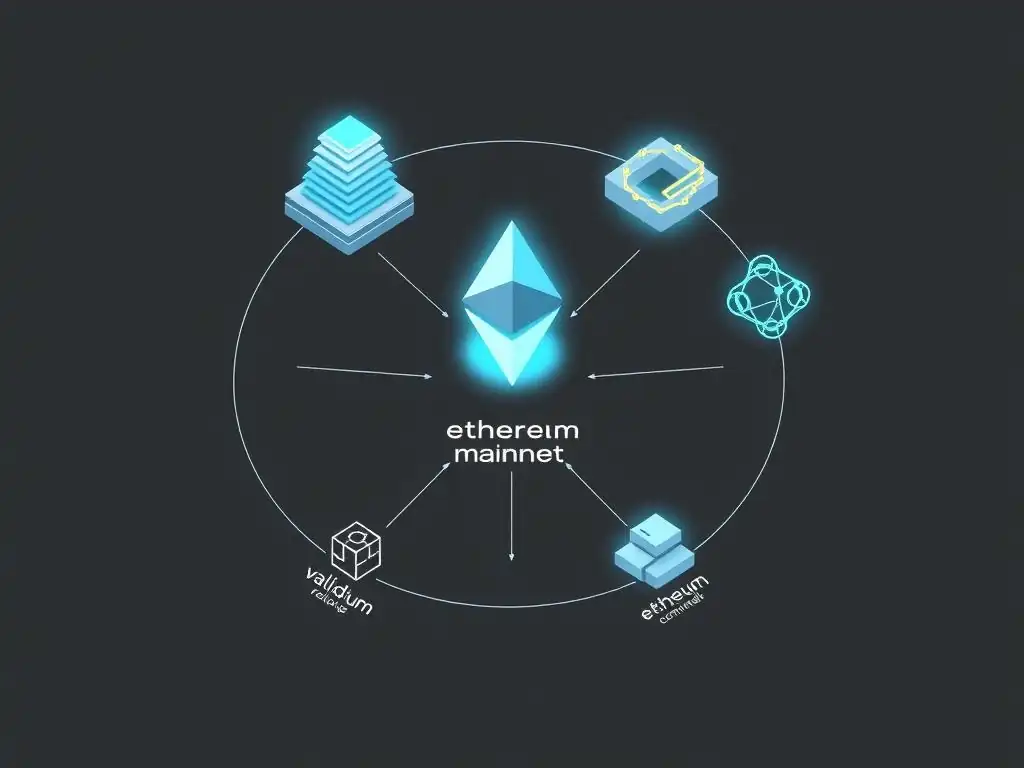
Optimistic Rollups are one of several Layer-2 scaling solutions, each with its own strengths and weaknesses. Comparing them with other prominent Layer-2 approaches, such as zk-Rollups, sidechains, and Plasma, helps to understand their relative positioning.
Optimistic vs. Zero-Knowledge Rollups (zk-Rollups)
Optimistic Rollups and Zero-Knowledge Rollups (zk-Rollups) are the two dominant types of rollups, but they differ significantly in their approach to security and validation. Optimistic Rollups, as discussed, rely on fraud proofs and a challenge period, assuming transactions are valid unless proven otherwise. zk-Rollups, on the other hand, use cryptographic proofs, specifically zero-knowledge proofs, to mathematically prove the validity of off-chain transactions. For each batch of transactions, a zk-Rollup generates a zk-SNARK or zk-STARK proof, which is then submitted to the main chain along with the state root.
This proof cryptographically guarantees that the state transition is valid, eliminating the need for a challenge period. zk-Rollups offer faster finality than Optimistic Rollups, as transactions are considered final once the validity proof is verified on-chain, without waiting for a challenge period to elapse. However, zk-Rollups are generally more complex to implement and have historically had limitations in terms of EVM compatibility, although this is rapidly improving with advancements in zk-EVM technology.
Optimistic Rollups are typically easier to deploy and are generally more EVM-compatible, making them a quicker and more straightforward scaling solution for existing Ethereum applications. In terms of security, both approaches are considered secure, but zk-Rollups offer stronger cryptographic guarantees of validity, while Optimistic Rollups rely on economic incentives and the active participation of fraud provers. The choice between Optimistic and zk-Rollups often depends on the specific application requirements, with zk-Rollups potentially favored for applications demanding faster finality and stronger cryptographic guarantees, and Optimistic Rollups preferred for easier deployment and broader EVM compatibility in the near term.
Optimistic Rollups vs. Sidechains
Optimistic Rollups and sidechains are both Layer-2 scaling solutions, but they differ fundamentally in their security models and relationship to the main chain. Sidechains are independent blockchains that run parallel to the main chain, with their own consensus mechanisms and validators. They are typically connected to the main chain through a two-way bridge, allowing assets to be transferred between the main chain and the sidechain. Sidechains offer greater flexibility in terms of design and functionality, as they can implement different consensus mechanisms, virtual machines, and features than the main chain.
However, sidechains have their own security assumptions and do not inherit the security of the main chain. The security of a sidechain depends on the strength of its own consensus mechanism and the security of its validator set, which may be smaller and less decentralized than the main chain's validator set. This means that sidechains can be more vulnerable to attacks than Optimistic Rollups, which are directly secured by the main chain's security through the fraud-proof mechanism.
Optimistic Rollups, while less flexible in terms of design, offer a stronger security guarantee by leveraging the main chain's security and decentralization. Sidechains often provide higher scalability and faster finality than Optimistic Rollups, but at the cost of potentially weaker security. The choice between Optimistic Rollups and sidechains depends on the trade-off between security and scalability, with Optimistic Rollups generally favored when security is paramount and sidechains considered when greater flexibility and higher scalability are needed, even at the expense of potentially reduced security guarantees.
Optimistic Rollups vs. Plasma
Plasma is an earlier Layer-2 scaling solution that aims to create "child chains" anchored to the main chain. Similar to Optimistic Rollups, Plasma aims to process transactions off-chain and rely on the main chain for security and dispute resolution. However, Plasma employs a different approach based on Merkle trees and fraud proofs. In Plasma, child chains periodically commit their state to the main chain using Merkle roots.
If a user detects an invalid state transition, they can initiate a "mass exit" or submit a fraud proof to challenge the child chain's state. Plasma's security model relies on data availability and the ability for users to exit the child chain with their funds if fraud is detected. However, Plasma has faced significant challenges related to data availability and complexity in implementation. Ensuring data availability for all transactions in Plasma child chains has proven difficult, and the exit mechanism can be complex and time-consuming, particularly in scenarios involving complex smart contracts or nested Plasma chains.
Optimistic Rollups, in comparison, offer a simpler and more practical approach to data availability and fraud proofs. Optimistic Rollups typically post transaction data on-chain or through more readily available off-chain data availability solutions, making data retrieval for fraud proofs more straightforward. Optimistic Rollups also generally offer better support for general-purpose smart contracts and EVM compatibility compared to Plasma. Due to the complexities and limitations of Plasma, Optimistic Rollups have emerged as a more viable and widely adopted Layer-2 scaling solution, offering a more robust and practical approach to scaling blockchains while maintaining strong security guarantees.
Challenges and Limitations
Despite the significant benefits of Optimistic Rollups, they also face certain challenges and limitations that are important to consider. Understanding these limitations is crucial for a balanced view of optimistic rollup blockchain technology benefits.
Challenge Period Delays
One of the primary limitations of Optimistic Rollups is the challenge period delay. As transactions are assumed valid initially, there is a waiting period, typically around one to two weeks, before withdrawals from the rollup to the main chain are finalized. This challenge period is necessary to allow fraud provers sufficient time to examine transactions and submit fraud proofs if needed.
While this delay ensures security, it can be inconvenient for users who require faster finality for their withdrawals. For example, if a user wants to move funds from an Optimistic Rollup back to the main chain to participate in a time-sensitive opportunity, they may have to wait for the challenge period to elapse before their withdrawal is processed. This delay can impact the user experience, particularly for applications that require frequent or rapid withdrawals.
While some Optimistic Rollups are exploring solutions to mitigate this delay, such as fast withdrawal mechanisms that rely on liquidity providers to bridge the gap, the inherent challenge period remains a trade-off for the security model of Optimistic Rollups. Users need to be aware of this delay and factor it into their expectations when using Optimistic Rollup-based applications.
Sequencer Centralization Risks
Another challenge associated with Optimistic Rollups is the potential for sequencer centralization. In most current Optimistic Rollup implementations, a single sequencer or a small consortium of sequencers is responsible for ordering transactions, executing them off-chain, and submitting state roots to the main chain. This centralized sequencer role introduces potential risks.
A centralized sequencer could potentially censor transactions, although they cannot invalidate them due to the fraud-proof mechanism. They could also become a single point of failure, and their downtime could disrupt the rollup's operation. While the fraud-proof mechanism ensures the validity of transactions, the operational aspects of the sequencer, such as transaction ordering and availability, can be influenced by centralization.
Addressing sequencer centralization is an active area of research and development in the Optimistic Rollup space. Decentralized sequencer solutions, such as distributed sequencer networks or sequencer auctions, are being explored to reduce reliance on a single entity and enhance the decentralization and robustness of Optimistic Rollups. Moving towards decentralized sequencers is crucial for mitigating these risks and further realizing the full potential of Optimistic Rollups as a truly decentralized scaling solution.
Data Availability Considerations
Data availability is a critical aspect of Optimistic Rollup security and a potential challenge. Fraud proofs rely on the availability of transaction data to demonstrate invalid state transitions. If transaction data is not readily available, fraud provers cannot construct fraud proofs, and the security of the Optimistic Rollup is compromised.
Optimistic Rollups typically address data availability by posting transaction data on-chain as calldata or through off-chain data availability solutions. Posting data on-chain as calldata is more expensive but provides direct on-chain data availability, ensuring the highest level of security. Off-chain data availability solutions, such as decentralized storage networks or data availability sampling, offer more cost-effective alternatives but introduce different trade-offs and security considerations.
Choosing the appropriate data availability solution is crucial for balancing cost-effectiveness and security in Optimistic Rollups. Ensuring robust and reliable data availability is an ongoing challenge, and research is focused on developing more efficient and secure data availability solutions for Layer-2 rollups, including techniques like data availability sampling and validity proofs for data availability. Addressing data availability concerns is essential for maintaining the security and trustlessness of Optimistic Rollups as they scale to handle larger transaction volumes.
Future Trends
The future of Optimistic Rollups is dynamic, with ongoing research, development, and integration efforts poised to further enhance their capabilities and role in the blockchain ecosystem. The future trends highlight the continued evolution of optimistic rollup blockchain technology benefits.
Research and Development
Active research and development are continuously pushing the boundaries of Optimistic Rollup technology. Key areas of focus include improving fraud-proof mechanisms, reducing challenge period delays, and decentralizing sequencers. Researchers are exploring more efficient fraud-proof techniques to minimize on-chain computation during dispute resolution and potentially shorten the challenge period without compromising security.
Innovations in decentralized sequencer designs are aimed at creating more robust and censorship-resistant sequencer networks, reducing reliance on centralized entities. Furthermore, research into data availability solutions is crucial for improving the efficiency and security of data availability in Optimistic Rollups, exploring techniques like data availability sampling and validity proofs for data availability. Advancements in zero-knowledge proof technology are also influencing Optimistic Rollup development.
Hybrid approaches that combine aspects of Optimistic and zk-Rollups are being explored to leverage the strengths of both technologies, potentially leading to "zk-Optimistic Rollups" that offer faster finality and enhanced security. Ongoing research and development are essential for addressing the current limitations of Optimistic Rollups and further optimizing their performance, security, and decentralization characteristics.
Integration with Other Technologies
Optimistic Rollups are increasingly being integrated with other blockchain technologies and infrastructure components to create more comprehensive and interconnected ecosystems. Interoperability between different Layer-2 solutions and between Layer-2 and Layer-1 blockchains is a growing focus. Efforts are underway to develop standardized bridging protocols and cross-rollup communication mechanisms to enable seamless asset transfers and data exchange between different rollups and the main chain. Integration with decentralized identity solutions can enhance user experience and security within Optimistic Rollup environments.
Furthermore, integration with decentralized storage networks and oracles is crucial for supporting complex dApps and DeFi protocols on Optimistic Rollups. As the blockchain ecosystem matures, the seamless integration of Optimistic Rollups with other technologies will be essential for creating a more interconnected, interoperable, and user-friendly Web3 landscape. This integration will unlock new possibilities for cross-chain applications and enhance the overall utility and adoption of Optimistic Rollups.
Role in the Blockchain Ecosystem
Optimistic Rollups are poised to play an increasingly significant role in the future blockchain ecosystem, particularly as Layer-2 scaling solutions become essential for mainstream adoption. As Ethereum and other blockchains continue to face scalability challenges, Optimistic Rollups offer a practical and effective way to scale transaction throughput and reduce fees without compromising security or decentralization.
They are becoming a foundational infrastructure layer for a wide range of dApps, particularly in DeFi and NFTs, enabling these applications to scale to meet growing user demand. Optimistic Rollups are also expected to play a key role in onboarding more users to the blockchain ecosystem by providing a more affordable and user-friendly experience.
Lower transaction fees and faster transaction times make blockchain technology more accessible to a broader audience, facilitating wider adoption and participation. As research and development continue to address the current limitations of Optimistic Rollups, and as integration with other technologies deepens, their role in the blockchain ecosystem is expected to expand further, solidifying their position as a critical scaling solution for the future of decentralized systems.
Security and Auditability
Security and auditability are paramount considerations for Optimistic Rollups, ensuring the trust and reliability of these Layer-2 scaling solutions. Robust security measures and thorough auditing are essential for realizing the full optimistic rollup blockchain technology benefits.
Security Measures
Optimistic Rollups employ a multi-layered approach to security, incorporating various measures to protect against potential vulnerabilities and attacks. The foundation of their security is inherited from the underlying Layer-1 blockchain, as the mainchain smart contract acts as the anchor and security guarantor. The fraud-proof mechanism is a crucial security measure, allowing anyone to challenge and revert invalid state transitions, incentivizing honest behavior from sequencers and operators.
Data availability ensures that transaction data is accessible for fraud proofs, preventing data withholding attacks. Furthermore, code audits of the mainchain smart contracts and rollup infrastructure are essential to identify and mitigate potential vulnerabilities in the codebase. Security best practices in smart contract development and secure coding are also crucial for minimizing the risk of exploits.
Some Optimistic Rollups also implement rate limiting and other mechanisms to protect against denial-of-service attacks and other forms of malicious activity. A comprehensive and proactive approach to security is essential for maintaining the integrity and trustworthiness of Optimistic Rollups and ensuring the safety of user funds and data.
Vulnerability Auditing
Vulnerability auditing is a critical aspect of Optimistic Rollup security. Regular and thorough audits by independent security experts are essential to identify and address potential vulnerabilities in the codebase, smart contracts, and overall system architecture. Audits typically involve code reviews, penetration testing, and security analysis to assess the robustness of the system against various attack vectors.
Smart contract audits are particularly important, as vulnerabilities in the mainchain smart contracts could have severe consequences for the entire rollup. Audits should cover all critical components of the Optimistic Rollup, including the sequencer, fraud-proof mechanism, bridging contracts, and data availability solutions. Findings from security audits should be promptly addressed and remediated to strengthen the security posture of the rollup.
Publicly disclosing audit reports can also enhance transparency and build trust in the security of the Optimistic Rollup. Continuous vulnerability auditing and proactive security assessments are crucial for maintaining a high level of security and mitigating evolving threats in the dynamic blockchain landscape.
Addressing Security Risks
Addressing security risks in Optimistic Rollups requires a proactive and ongoing approach. This includes not only implementing robust security measures and conducting regular audits but also staying informed about emerging threats and best practices in blockchain security. Security incident response plans should be in place to effectively handle any security breaches or vulnerabilities that may be discovered.
Bug bounty programs can incentivize white-hat hackers to identify and report vulnerabilities, contributing to the ongoing security improvement of the rollup. Community involvement and transparency are also important aspects of addressing security risks. Open communication about security measures, audit findings, and incident responses can build trust and foster a security-conscious community.
Furthermore, ongoing research and development in blockchain security are crucial for anticipating and mitigating future threats. By continuously investing in security measures, vulnerability auditing, and proactive risk management, Optimistic Rollups can strive to maintain a high level of security and build confidence in their reliability as a scaling solution for the blockchain ecosystem.
Implementation Considerations for Developers
For developers looking to build applications on Optimistic Rollups, there are specific implementation considerations to keep in mind to leverage the optimistic rollup blockchain technology benefits effectively.
Development Tools and Frameworks
Developers building on Optimistic Rollups benefit from a growing ecosystem of development tools and frameworks. Many Optimistic Rollups are designed to be EVM-compatible, allowing developers to leverage existing Ethereum development tools and languages like Solidity. Frameworks like Hardhat and Truffle can be used for smart contract development, testing, and deployment on Optimistic Rollups. Specific SDKs and libraries are often provided by Optimistic Rollup providers to facilitate communication with the rollup network, interact with sequencer APIs, and manage user interactions.
These SDKs typically abstract away some of the complexities of Layer-2 development and provide convenient interfaces for building dApps. Furthermore, various infrastructure providers are emerging to offer developer tooling, node services, and other support for building and deploying applications on Optimistic Rollups. The availability of robust development tools and frameworks simplifies the development process and lowers the barrier to entry for developers wanting to build on Optimistic Rollups.
Smart Contract Design
Smart contract design for Optimistic Rollups shares many similarities with smart contract design for Ethereum Layer-1, particularly for EVM-compatible rollups. Developers can generally reuse existing Solidity code and smart contract patterns. However, there are also specific considerations to keep in mind for Optimistic Rollup environments.
Gas optimization remains important, although transaction fees are significantly lower on rollups. Efficient smart contract code can further reduce costs and improve performance. Developers should be aware of the challenge period delay and design their dApps accordingly, particularly for withdrawal functionalities.
Considerations for data availability and potential fraud proofs should also be taken into account when designing smart contracts for Optimistic Rollups. Furthermore, developers should leverage the scalability benefits of Optimistic Rollups to build more complex and feature-rich dApps that might be constrained by the limitations of Layer-1 blockchains. Understanding the nuances of the specific Optimistic Rollup platform being used and adapting smart contract design accordingly is crucial for successful application development.
Performance and Scalability Optimization
While Optimistic Rollups inherently offer performance and scalability improvements, developers can further optimize their applications to maximize these benefits. Efficient smart contract design, as mentioned earlier, plays a crucial role in performance optimization. Minimizing on-chain data storage and computation within smart contracts can reduce gas costs and improve transaction processing speed.
Off-chain computation and data storage should be leveraged where appropriate to further offload the main chain and enhance scalability. Developers should also consider optimizing their dApp architecture to take advantage of the high throughput and low latency offered by Optimistic Rollups. This might involve designing applications that can handle a larger volume of user interactions and transactions compared to Layer-1 applications.
Load testing and performance monitoring are essential for identifying bottlenecks and optimizing application performance in the Optimistic Rollup environment. By carefully considering performance and scalability optimization throughout the development process, developers can build highly efficient and responsive dApps that fully leverage the capabilities of Optimistic Rollups.
Frequently Asked Questions
What is an Optimistic Rollup and how does it work?
An Optimistic Rollup is a Layer 2 scaling solution for blockchain that bundles transactions off-chain, posts the results to the main chain, and "optimistically" assumes they are valid. Fraud proofs are used during a challenge period to dispute invalid transactions.
What are the main benefits of using Optimistic Rollup blockchain technology?
The primary benefits include increased transaction throughput on the main chain, reduced transaction fees for users, and maintaining EVM (Ethereum Virtual Machine) compatibility.
How does the challenge period in Optimistic Rollups work and why is it necessary?
The challenge period allows participants to submit fraud proofs if they believe a transaction in the rollup is invalid. This period is necessary to ensure the integrity of the rollup since the initial state transition is assumed to be correct.
What are some of the challenges associated with implementing Optimistic Rollup blockchain technology?
Challenges include the length of the challenge period, which can delay withdrawals, and the capital requirements for potential validators who need to be able to stake funds to dispute fraudulent transactions.
How do Optimistic Rollups compare to other Layer 2 scaling solutions like ZK-Rollups?
Optimistic Rollups offer EVM compatibility and ease of development, while ZK-Rollups offer stronger security guarantees with cryptographic proofs. Optimistic Rollups typically have longer withdrawal times compared to ZK-Rollups.
Final Reflection: Embracing the Optimistic Future of Blockchain
The intricate architecture of Optimistic Rollups, as explored in this article, is not merely a technical exercise; it is a crucial step towards realizing the full potential of blockchain technology. The scalability solutions offered by Optimistic Rollups are no longer a futuristic dream, but a tangible reality reshaping the landscape of decentralized applications and paving the way for mass adoption. The benefits, from reduced transaction fees to increased throughput, are poised to unlock new possibilities for developers and users alike, fostering a more inclusive and efficient blockchain ecosystem.
The ongoing development and refinement of Optimistic Rollups deeply influences the trajectory of decentralized finance and beyond. Witnessing the evolution of these technologies firsthand underscores the importance of continuous learning and adaptation in this rapidly evolving field. The potential for Optimistic Rollups to democratize access to financial services and empower individuals is immense, echoing the core principles of decentralization. The future of finance is decentralized, and Optimistic Rollups are a key piece of that puzzle.
As we conclude this deep dive into Optimistic Rollup architecture, I invite you to reflect on the transformative power of innovation. Consider how these advancements can be leveraged to build a more equitable and accessible future. Let us all strive to understand, contribute to, and ultimately shape the evolution of blockchain technology, ensuring that its benefits are shared by all. The future is optimistic, and it's being built today.
Dive Deeper: Architect Your Own Rollup Strategy!
Thank you for exploring the intricacies of Optimistic Rollup architecture with us. We hope you found this deep dive valuable in understanding the power and potential of this scaling solution. Now, let's put that knowledge to work!
Here are some steps you can take to further your understanding and contribute to the ecosystem:
- Start designing a simplified Optimistic Rollup architecture tailored to a specific use case. Consider a decentralized application you're familiar with or an inefficiency you've observed in the current blockchain landscape.
- Explore open-source projects related to Optimistic Rollups, such as Arbitrum or Optimism, and contribute to their development or documentation.
- Share this article with your network and spark a discussion about the potential impact of Optimistic Rollups on the future of decentralized applications.
What unique scaling challenge do you think Optimistic Rollups are best suited to solve, and how would you architect a solution?
Leave a Reply