
Unlocking Blockchain Speed: Demystifying State Channels for Scalability
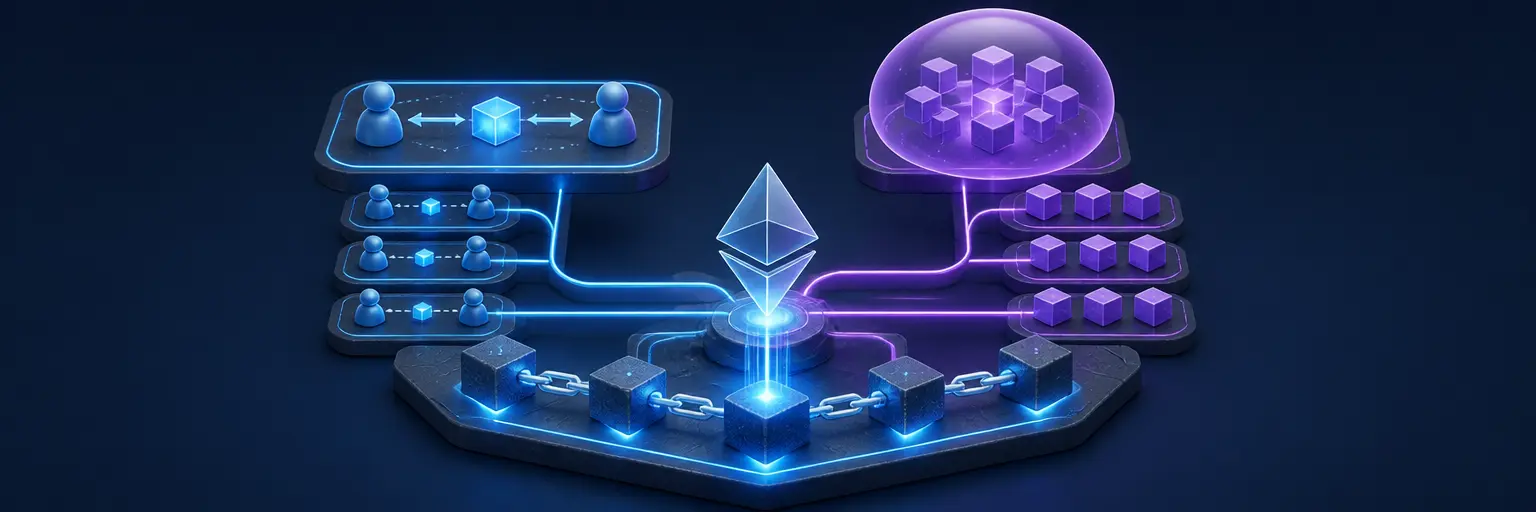
Explore how state channels and Plasma enhance blockchain scalability by moving transactions off-chain while preserving security and verifiability. ⚡ Discover faster, lower-cost solutions for decentralized applications, micropayments, gaming, and enterprise use, plus insights into interoperability, Layer 2 innovation, and the future of efficient decentralized systems. 🚀
61 articles
State Channels and Smart Contracts: A Powerful Combination for Scalable dApps
Comparing State Channels to Sidechains: Which Scaling Solution is Right for You?
The Scalability Solution You Need to Know: Exploring State Channels
Plasma and Smart Contracts: Building Scalable Decentralized Applications on Child Chains
State Channels: A Scalable Foundation for the Next Generation of Blockchain Applications
Revolutionizing Blockchain Throughput: The Power of Plasma Chains
State Channels: A Technical Deep Dive into OffChain Transaction Processing
State Channels: A Key Technology in the Blockchain Scalability Landscape
State Channels and Network Effects: Building Scalable Blockchain Communities
The Evolution of Blockchain Scalability: The Role of State Channels
State Channels Explained: A Beginner's Guide to OffChain Scaling
Unlocking Scalability for NFTs: Can State Channels Enhance NFT Platforms?
State Channels: A Deep Dive into OffChain Computation and State Updates
Faster, Cheaper, Scalable: The Triple Threat of State Channels in Blockchain
Plasma for Enterprise: Scalable Blockchain Solutions for Business Applications
Exploring the Future of State Channels: Innovations and Emerging Trends
Exploring Plasma Frameworks: From Minimal Plasma to Plasma Cash and Plasma MVP
State Channels: Addressing the Trilemma of Scalability, Security, and Decentralization
Beyond Transaction Fees: How State Channels Reduce Costs on Blockchain Networks
The Practical Implementation of State Channels: RealWorld Examples and Case Studies
Unlocking Blockchain Scalability with Plasma: Benefits and Use Cases Explored
The Intricacies of State Channel Security: Protecting OffChain Transactions
Revolutionizing Transaction Speed: How State Channels are Changing Blockchain
Demystifying Layer2 Scaling: Focusing on State Channel Technology
State Channels for Gaming: Enabling Scalable and Responsive Blockchain Games
State Channels and the Lightning Network: Similarities and Differences in Scaling Solutions
State Channels: Enhancing User Experience in Decentralized Applications
Demystifying Plasma: A Technical Overview of Scalable Child Chains
Instant and Affordable: The Promise of State Channels for Micropayments
🔗 State Channels & Plasma: Scaling Blockchain Transactions Off-Chain
State Channels & Plasma are important blockchain scalability technologies designed to increase transaction throughput, reduce network congestion, and lower fees without sacrificing the security of an underlying blockchain. Within Blockchain Trends, this subcategory explores how off-chain payment channels, smart contract channels, Plasma chains, fraud proofs, and dispute-resolution mechanisms help decentralized applications process activity more efficiently. Readers can discover the differences between state channel networks and Plasma frameworks, their role in Layer 2 scaling, and their relationship with blockchain interoperability, DeFi, gaming, micropayments, enterprise blockchain, and the future of decentralized systems.
⚡ State Channels for Fast, Low-Cost Blockchain Transactions
State channels allow participants to conduct multiple transactions off-chain while recording only essential information on the main blockchain. This approach can deliver near-instant settlement, significantly lower gas costs, and improved scalability for recurring interactions such as payments, gaming actions, trading updates, and machine-to-machine transactions.
This section explains how channel creation, signed state updates, closing transactions, and on-chain dispute mechanisms work. Readers can expect practical insights into payment channels, generalized state channels, channel networks, transaction finality, liquidity requirements, and the security considerations involved in using off-chain blockchain infrastructure.
🧩 Plasma Frameworks and Layer 2 Blockchain Scaling
Plasma is a family of Layer 2 scaling designs that uses child chains to process transactions away from the main blockchain while relying on the parent chain for security and settlement. Plasma architectures can support higher throughput and reduced transaction costs by batching activity and periodically committing cryptographic data to a base-layer network.
Readers will learn about Plasma chains, hierarchical blockchain structures, Merkle proofs, exit transactions, operator responsibilities, and the challenges of maintaining user fund safety. The content also examines how Plasma compares with rollups, sidechains, validiums, and other Ethereum scaling solutions.
🛡️ Security, Fraud Proofs, and Dispute Resolution
Security is central to every state channel and Plasma implementation. These systems must provide reliable methods for identifying invalid state transitions, challenging fraudulent withdrawals, and protecting users when an operator or counterparty becomes unavailable. Fraud proofs and enforced exit mechanisms are therefore essential components of many off-chain scaling models.
This section covers challenge periods, watchtowers, data availability, cryptographic signatures, Merkle inclusion proofs, dishonest operators, and emergency exits. Readers can better understand the trade-offs between user convenience, monitoring requirements, trust minimization, and the security guarantees inherited from the underlying blockchain.
🌐 Interoperability Across Blockchains and Layer 2 Networks
State channels and Plasma can contribute to broader blockchain interoperability by enabling faster interactions between users, applications, and connected networks. Their use in cross-chain payments, decentralized exchanges, blockchain bridges, and interoperable smart contract environments demonstrates how scaling and connectivity increasingly overlap.
Readers can explore the technical and economic challenges of moving assets or messages between Layer 1 blockchains, Layer 2 networks, sidechains, and application-specific chains. Topics include bridge security, cross-chain settlement, liquidity fragmentation, validator assumptions, interoperability protocols, and the importance of transparent trust models.
🏢 Real-World Applications of State Channels & Plasma
Off-chain scaling technologies have potential across numerous industries and decentralized applications. State channels can support high-frequency micropayments, blockchain gaming, digital identity services, IoT coordination, content payments, and enterprise workflows. Plasma-inspired architectures may also help applications manage large transaction volumes while limiting mainnet costs.
This subcategory highlights practical use cases in DeFi, Web3 gaming, payments, supply chains, digital marketplaces, and enterprise blockchain. Readers can evaluate when state channels or Plasma may be appropriate, what infrastructure is required, and how application design affects scalability, user experience, liquidity, and compliance.
📊 State Channels vs. Plasma, Rollups, and Sidechains
Choosing a blockchain scaling solution depends on transaction patterns, data availability requirements, security assumptions, withdrawal speed, and application complexity. State channels are often effective for repeated interactions among known participants, while Plasma uses separate chains and exit mechanisms to support broader transaction activity.
Readers will find clear comparisons between state channels, Plasma, optimistic rollups, zero-knowledge rollups, validiums, and sidechains. These comparisons help explain differences in throughput, fees, finality, composability, decentralization, smart contract support, user experience, and reliance on the underlying blockchain.
🔮 The Future of Off-Chain Blockchain Infrastructure
As blockchain adoption grows, scalable infrastructure will remain essential for decentralized finance, enterprise applications, global payments, and Web3 services. State channels and Plasma have influenced the development of modern Layer 2 networks and continue to provide valuable design concepts for efficient, secure, and interoperable blockchain systems.
Blockchain Trends examines ongoing innovations in channel networks, hybrid scaling models, modular blockchains, cross-chain communication, cryptographic proofs, and decentralized infrastructure. Readers can expect forward-looking analysis of how off-chain execution may complement rollups and other technologies in the evolution of scalable blockchain ecosystems.
❓ Frequently Asked Questions About State Channels & Plasma
What are state channels in blockchain?
State channels are mechanisms that allow users to conduct multiple transactions off-chain while recording the opening and final states on the main blockchain. They reduce fees, improve transaction speed, and limit congestion for applications with repeated interactions.
What is Plasma in blockchain technology?
Plasma is a Layer 2 scaling framework that uses child chains to process transactions away from a parent blockchain. The main chain provides settlement and security functions, while Plasma systems use proofs and exit procedures to help protect user funds.
Are state channels and Plasma the same as rollups?
No. State channels, Plasma, and rollups are different blockchain scaling approaches. State channels focus on direct off-chain interactions, Plasma uses separate child chains, and rollups bundle transactions while publishing transaction data or cryptographic proofs to the underlying blockchain.
What are the main benefits of State Channels & Plasma?
The main benefits include lower transaction fees, faster confirmations, greater throughput, and reduced pressure on Layer 1 networks. These technologies can be especially useful for micropayments, blockchain gaming, high-frequency interactions, and applications requiring efficient transaction processing.
What are the risks of using state channels or Plasma systems?
Potential risks include unavailable counterparties, liquidity constraints, complex withdrawal processes, data availability issues, malicious operators, bridge vulnerabilities, and the need to monitor disputes. Users should understand the security model, challenge periods, custody arrangements, and trust assumptions before using any specific implementation.