
Faster, Cheaper, Scalable: The Triple Threat of State Channels in Blockchain

Welcome to Blockchain Trends, your compass in the rapidly evolving world of decentralized technology. Beyond the buzzwords, we delve into the real-world applications and transformative potential of blockchain. Curious about how to break free from blockchain's inherent scalability limitations? Then you're in the right place! Explore our in-depth analysis of State channels blockchain scalability benefits and discover how this innovative solution is paving the way for faster, cheaper, and more scalable blockchain applications. Ready to unlock the next level of blockchain efficiency? Let's dive in...
Faster, Cheaper, Scalable: The Triple Threat of State Channels in Blockchain
- Understanding Blockchain Scalability Challenges
- Introduction to State Channels: A Layer-2 Scaling Solution
- The "Faster" Advantage: Speeding Up Blockchain Transactions
- The "Cheaper" Advantage: Reducing Blockchain Transaction Costs
- The "Scalable" Advantage: Enhancing Blockchain Throughput
- State Channels vs. Other Layer-2 Scaling Solutions
- Use Cases for State Channels in Blockchain
- Security Considerations for State Channels
- The Future of State Channels in Blockchain Scalability
-
Frequently Asked Questions
- What are state channels and how do they relate to blockchain scalability?
- What are the main benefits of using state channels?
- How do state channels improve transaction speed compared to on-chain transactions?
- How do state channels contribute to lower transaction fees?
- What are some potential use cases for state channels beyond simple payments?
- Final Reflection: Unlocking Blockchain's Potential
- Unleash the Power of State Channels!
Understanding Blockchain Scalability Challenges
The Blockchain Scalability Problem: A Bottleneck for Adoption
Blockchain technology, despite its revolutionary potential, faces a significant hurdle in achieving widespread adoption: scalability. The very architecture that provides blockchain's security and decentralization—namely, the need for every transaction to be verified and recorded across a distributed network—inherently limits the number of transactions a blockchain can process within a given timeframe. This limitation becomes starkly apparent when comparing blockchain's transaction processing capabilities to those of traditional payment processors like Visa, which can handle thousands of transactions per second (TPS).
For instance, Bitcoin, a pioneer in blockchain technology, typically manages around 7 TPS, while Ethereum, another prominent blockchain, hovers around 15-20 TPS. This disparity creates a bottleneck, hindering blockchain's ability to support high-volume applications and broader mainstream usage. The scalability problem is not just a technical detail; it's a critical factor determining whether blockchain can truly become the transformative technology it promises to be.
Transaction Throughput Limitations in Traditional Blockchains
Traditional blockchains, like Bitcoin and early iterations of Ethereum, operate with a sequential transaction processing model. Every transaction must be included in a block, and these blocks are added to the chain at regular intervals – roughly every 10 minutes for Bitcoin and around 12-15 seconds for Ethereum (before the Merge). This block time, coupled with block size limitations, directly dictates the transaction throughput.
Bitcoin's block size is capped at 1MB, and Ethereum's block size is also limited by gas limits. These constraints mean that only a finite number of transactions can fit into each block, resulting in the aforementioned low TPS figures. Consider Bitcoin's 7 TPS: even if each transaction was minimal in size, the block time of 10 minutes restricts the number of transactions processable.
Similarly, while Ethereum's faster block time allows for slightly higher TPS, it still falls drastically short of the demands of a global financial system or applications requiring high transaction frequency, like social media or high-volume gaming platforms. This inherent architectural limitation in processing transactions sequentially and within block time constraints is at the heart of the transaction throughput problem in traditional blockchains.
High Transaction Fees and Congestion Issues on the Blockchain
The limited transaction throughput of traditional blockchains directly leads to high transaction fees and network congestion, especially during periods of peak demand. When the number of transaction requests exceeds the network's capacity to process them, a "transaction fee market" emerges. Users must bid higher transaction fees, often referred to as "gas" on Ethereum, to incentivize miners or validators to prioritize their transactions for inclusion in the next block.
During periods of high activity, such as the surge in popularity of NFTs or DeFi applications, gas fees on Ethereum have skyrocketed. For instance, in May 2021, during a peak in NFT trading, average gas fees on Ethereum reached over $70 per transaction, making simple actions prohibitively expensive for many users. This congestion not only drives up costs but also significantly slows down transaction confirmation times.
Users might experience long delays waiting for their transactions to be processed, sometimes hours or even days, if they are unwilling to pay exorbitant fees. This combination of high fees and slow confirmation times creates a poor user experience and severely restricts the accessibility and usability of blockchain networks for everyday applications.
Introduction to State Channels: A Layer-2 Scaling Solution
What are State Channels and How Do They Work?
State channels are a Layer-2 scaling solution designed to enhance blockchain scalability by enabling participants to conduct multiple transactions off the main blockchain, only interacting with the main chain to open and close the channel. Imagine two individuals, Alice and Bob, who expect to transact with each other frequently. Instead of recording every single transaction on the main blockchain, they can establish a state channel.
This process begins with Alice and Bob locking up a certain amount of cryptocurrency in a multi-signature smart contract on the main chain. This contract acts as the foundation of the state channel. Once the channel is open, Alice and Bob can exchange numerous transactions directly between themselves, off-chain, without involving the main blockchain for each transaction.
These off-chain transactions are essentially signed agreements between the participants, updating the state of their shared funds within the channel. When their off-chain interactions are complete, they can "close" the state channel by submitting the final, agreed-upon state of their funds to the main blockchain. The smart contract then distributes the funds according to the latest agreed state.
Off-Chain Transactions for Increased Scalability
The core benefit of state channels for scalability lies in their ability to move the majority of transaction processing off the main blockchain. By conducting transactions off-chain, state channels significantly reduce the load and congestion on the main chain.
Instead of every transaction being broadcast to the entire network for verification and recording, only the channel opening and closing transactions require on-chain processing. This drastically decreases the number of transactions that need to be processed by the main blockchain, freeing up resources and increasing the overall transaction throughput of the blockchain network.
For example, if Alice and Bob engage in hundreds or even thousands of transactions within their state channel, only two transactions (open and close) will be recorded on the main chain, regardless of the volume of off-chain activity. This off-chain processing capability is the key to unlocking significant scalability improvements, allowing blockchain networks to handle a much larger volume of transactions than they could with purely on-chain approaches.
Reducing On-Chain Footprint with State Channels
State channels effectively minimize the on-chain footprint of transactions by consolidating numerous interactions into just two on-chain transactions: the channel opening and the channel closing. This reduction in on-chain transactions has several positive implications. Firstly, it significantly reduces the amount of data that needs to be stored and processed on the main blockchain, leading to a more efficient use of blockchain resources.
Secondly, it lowers the computational burden on blockchain nodes, as they are required to process and verify far fewer transactions. Consider a scenario where a large number of users are using state channels for frequent microtransactions, such as in a pay-per-second streaming service. If these microtransactions were all conducted directly on-chain, they would quickly overwhelm the blockchain network.
However, by utilizing state channels, these numerous microtransactions can be aggregated off-chain, resulting in a minimal on-chain footprint. This reduced on-chain footprint is crucial for achieving blockchain scalability and enabling the technology to support applications with high transaction frequency and large user bases.
The "Faster" Advantage: Speeding Up Blockchain Transactions
Near Instant Transactions with State Channels
One of the most compelling advantages of state channels is the ability to achieve near-instant transaction speeds. Because transactions within a state channel occur directly between participants off-chain, they bypass the traditional blockchain transaction processing pipeline, which involves block creation, propagation, and confirmation. Once a state channel is established, transactions can be executed and confirmed in milliseconds, limited only by the communication speed between the channel participants.
This speed is a stark contrast to the typical transaction confirmation times on main blockchains like Bitcoin or Ethereum, which can range from minutes to hours, depending on network congestion and transaction fees. The near-instant transaction speed offered by state channels makes them ideal for applications requiring real-time interactions or high-frequency transactions, where users cannot afford to wait for block confirmation times.
Eliminating Block Confirmation Times for Faster Processing
State channels fundamentally accelerate transaction processing by eliminating the need to wait for block confirmation times. In traditional on-chain transactions, a transaction is only considered finalized and secure after it has been included in a block and subsequently confirmed by a certain number of blocks added to the chain. This block confirmation process is essential for ensuring the security and immutability of on-chain transactions, but it introduces latency and slows down the overall transaction speed.
State channels circumvent this delay by processing transactions off-chain. As transactions are directly agreed upon and signed between channel participants, confirmation is immediate upon receipt and verification of the signatures.
This immediate confirmation is a significant departure from the probabilistic finality of on-chain transactions, where finality is achieved over time with subsequent block confirmations. By removing block confirmation times from the transaction flow, state channels unlock significantly faster transaction processing speeds, making blockchain technology viable for time-sensitive applications.
Real-World Examples of Faster Transaction Speeds Using State Channels
The speed advantage of state channels makes them particularly suitable for various real-world applications. Consider micropayment systems: for use cases like pay-per-second video streaming or in-app purchases in mobile games, users expect instant or near-instant processing of their payments. On-chain microtransactions would be impractical due to slow confirmation times and high fees. However, state channels offer a solution by enabling instant micropayments. For example, the Lightning Network, a state channel implementation on Bitcoin, is designed to facilitate fast and cheap Bitcoin transactions, primarily for micropayments.
Another example is in gaming. Real-time strategy games or fast-paced action games require immediate feedback and transaction processing for in-game actions or asset transfers. State channels can enable these real-time interactions on a blockchain by providing the necessary speed and responsiveness that on-chain transactions cannot offer. These examples highlight the practical benefits of faster transaction speeds enabled by state channels in real-world scenarios.
The "Cheaper" Advantage: Reducing Blockchain Transaction Costs
Minimizing Gas Fees with Off-Chain Transactions
State channels offer a significant "cheaper" advantage by drastically minimizing gas fees associated with blockchain transactions. In blockchain networks like Ethereum, users pay gas fees to compensate miners or validators for processing their transactions. These fees can fluctuate significantly, especially during periods of network congestion, making on-chain transactions expensive. State channels circumvent these high gas fees for the majority of transactions.
Since most interactions occur off-chain, participants only incur gas fees for the initial channel opening and the final channel closing transactions. Transactions within the channel itself do not require gas fees, as they are not processed by the main blockchain. This reduction in gas fee expenditure is particularly beneficial for applications involving frequent transactions or microtransactions, where accumulating gas fees for every on-chain transaction would be cost-prohibitive.
Cost-Effective Solution for Microtransactions
State channels are a highly cost-effective solution, particularly for microtransactions, which are impractical on many main blockchains due to high transaction fees. Imagine trying to send a fraction of a cent on Ethereum directly on-chain. The gas fee would likely be several times higher than the value of the microtransaction itself, rendering it economically infeasible. State channels overcome this barrier by enabling virtually fee-less microtransactions within the channel.
The participants only bear the gas costs for opening and closing the channel, which can be amortized over a large number of microtransactions conducted within the channel. This makes state channels ideal for applications like pay-per-use services, content streaming platforms, or micropayment-based gaming economies, where users need to make frequent, small-value transactions without incurring excessive fees. The cost-effectiveness for microtransactions is a key advantage of state channels, opening up new possibilities for blockchain-based business models.
Comparing Transaction Costs: State Channels vs. On-Chain Transactions
The cost difference between state channel transactions and on-chain transactions can be substantial, especially when considering a series of interactions. Let's consider a simplified example. Suppose opening a state channel costs $5 in gas fees, and closing it also costs $5.
If two participants exchange 100 transactions within this channel, the total on-chain cost is $10 (for opening and closing). The average cost per transaction, considering the 100 off-chain transactions, becomes effectively $0.10. In contrast, if these 100 transactions were conducted directly on-chain, and assuming an average gas fee of $2 per on-chain transaction (a conservative estimate during periods of congestion), the total cost would be $200.
This example, although simplified, illustrates the dramatic cost reduction achievable with state channels. The more transactions conducted within a channel, the lower the effective cost per transaction becomes. This cost efficiency makes state channels an attractive scaling solution for applications where transaction costs are a significant concern.
The "Scalable" Advantage: Enhancing Blockchain Throughput
Horizontal Scaling with Multiple State Channels
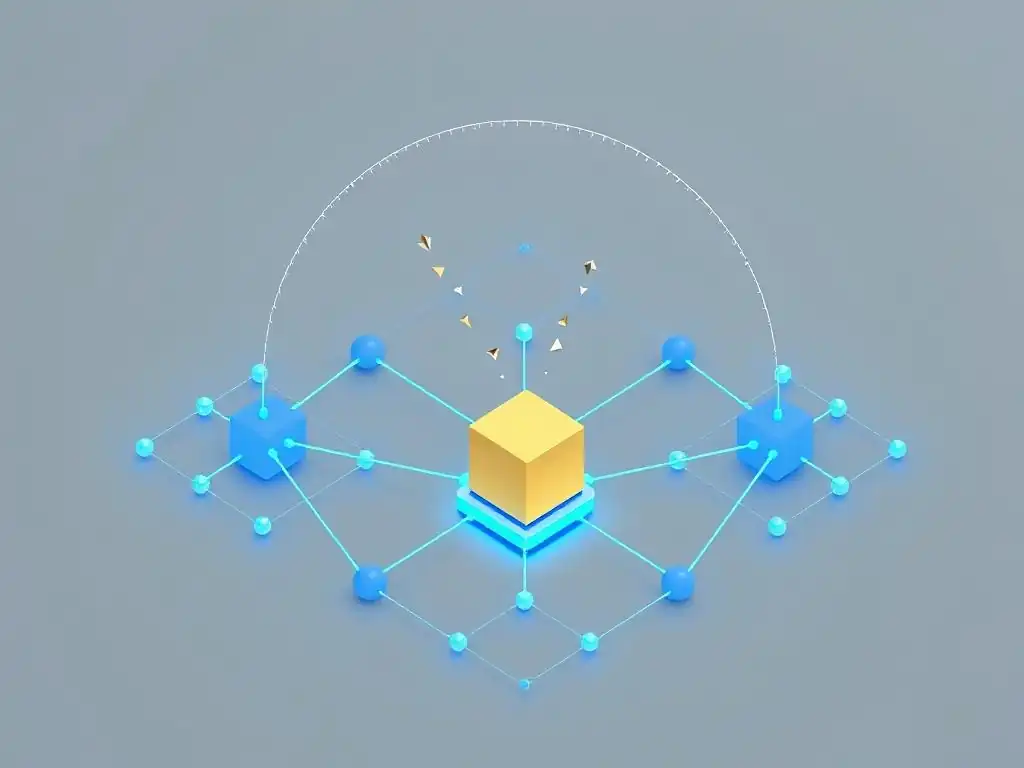
State channels contribute to blockchain scalability not just by processing transactions off-chain but also by enabling horizontal scaling through the deployment of multiple channels. Horizontal scaling refers to the ability to increase the capacity of a system by adding more nodes or instances, rather than increasing the resources of a single node (vertical scaling). In the context of state channels, horizontal scaling is achieved by allowing numerous independent state channels to operate concurrently. Each state channel functions as a separate, parallel transaction processing pathway.
As the demand for transactions increases, more state channels can be opened to accommodate the additional load. This horizontal scalability approach allows the overall blockchain network to handle a significantly larger volume of transactions compared to a system reliant solely on on-chain processing. The ability to deploy multiple state channels in parallel provides a flexible and adaptable mechanism for scaling blockchain transaction throughput.
Handling High Transaction Volumes Efficiently
State channels are designed to handle high transaction volumes efficiently by shifting the burden of processing frequent transactions away from the main blockchain. Traditional blockchains struggle to maintain performance under high transaction load, leading to congestion and delays. State channels alleviate this issue by providing dedicated off-chain pathways for transaction processing. Imagine a decentralized exchange (DEX) using state channels. Instead of every trade being executed and recorded directly on the main chain, traders can open state channels with the DEX. Within these channels, they can conduct numerous trades rapidly and efficiently, without congesting the main blockchain. Only the net changes in balances from these trading sessions need to be settled on-chain when the channel is closed. This off-chain processing capability allows state channels to handle significantly higher transaction volumes compared to on-chain DEX models, making them a crucial component in building scalable decentralized applications capable of handling real-world transaction demands.
State Channels and Increased Network Capacity
The cumulative effect of off-chain processing and horizontal scalability through multiple channels is a substantial increase in the overall network capacity of a blockchain system. By processing a significant portion of transactions off-chain, state channels free up resources on the main blockchain, allowing it to focus on essential functions like security and consensus.
Simultaneously, the ability to deploy multiple state channels in parallel expands the network's ability to handle concurrent transactions. This combination of factors leads to a significant boost in the overall transaction capacity of the blockchain network.
For example, if a blockchain network can process 15 TPS on-chain, and state channels effectively offload 90% of transaction volume, the effective transaction capacity of the network can be theoretically increased by orders of magnitude, depending on the number of state channels deployed and the average transaction frequency within each channel. This enhanced network capacity is crucial for enabling blockchain technology to scale to meet the demands of mass adoption and support a wide range of high-throughput applications.
State Channels vs. Other Layer-2 Scaling Solutions
State Channels vs. Plasma Chains: A Comparison
While both state channels and Plasma chains are Layer-2 scaling solutions, they differ significantly in their approach and trade-offs. State channels focus on direct, two-party or multi-party interactions, providing fast, cheap transactions with strong security guarantees rooted in the main chain. They are well-suited for scenarios with frequent interactions between known participants.
However, state channels typically require participants to be online and cooperative for channel operation. Plasma chains, on the other hand, are more generalized Layer-2 blockchains that operate as "child chains" anchored to the main chain. They offer higher throughput and can handle more complex smart contract logic off-chain.
Plasma chains use fraud proofs to ensure security, allowing for potentially higher scalability but with different security assumptions compared to state channels. A key difference is that Plasma chains are designed for more general-purpose scaling, potentially supporting a wider range of applications, while state channels excel in scenarios requiring fast, frequent interactions between specific parties. Plasma chains can be more complex to implement and may introduce longer withdrawal times compared to the near-instant settlement within state channels.
State Channels vs. Rollups: Key Differences
Rollups, another prominent Layer-2 scaling solution, differ fundamentally from state channels in their approach to off-chain processing. Rollups, unlike state channels, process transactions off-chain but post transaction data (or a compressed version of it – in the case of zk-Rollups) back to the main chain. This on-chain data availability is a key characteristic of rollups and contributes to their security.
There are two main types of rollups: Optimistic Rollups and Zero-Knowledge Rollups (zk-Rollups). Optimistic Rollups assume transactions are valid unless proven otherwise through fraud proofs, while zk-Rollups use cryptographic proofs (zero-knowledge proofs) to guarantee transaction validity. State channels, in contrast, keep transaction data entirely off-chain and only interact with the main chain for channel opening and closing.
Rollups generally offer higher throughput and more general-purpose smart contract capabilities than state channels. However, state channels provide faster finality, as transactions are settled immediately off-chain, while rollups may have withdrawal delays due to challenge periods (in Optimistic Rollups) or proof generation times (in zk-Rollups). Rollups are often considered more suitable for scaling general-purpose smart contract platforms, while state channels are excellent for specific applications requiring fast, frequent peer-to-peer transactions.
Choosing the Right Layer-2 Solution for Your Needs
Selecting the appropriate Layer-2 scaling solution depends heavily on the specific requirements of the application. If the primary need is for fast, frequent, and low-cost transactions between known participants, and immediate finality is crucial, state channels are often an excellent choice. Applications like micropayments, real-time gaming interactions, or frequent trading between specific parties on a DEX are well-suited for state channels.
If the application requires more general-purpose smart contract capabilities, higher throughput for a broader range of users, and is less sensitive to immediate finality but prioritizes strong security and on-chain data availability, rollups might be a more suitable option. For applications demanding very high throughput and scalability, and where some trade-offs in security assumptions are acceptable, Plasma chains could be considered.
Factors such as the complexity of implementation, security requirements, desired transaction speed, and the nature of the application's use cases should all be carefully evaluated when deciding between state channels, rollups, Plasma chains, or other Layer-2 scaling solutions. In many cases, a combination of different Layer-2 solutions might be employed to address diverse scaling needs within a blockchain ecosystem.
Use Cases for State Channels in Blockchain
Payment Channels for Micropayments and Streaming Services
Payment channels, a specific type of state channel, are ideally suited for enabling micropayments and streaming services on blockchain. Traditional on-chain micropayments are often impractical due to high transaction fees and slow confirmation times. Payment channels solve this problem by allowing users to open channels with service providers and conduct numerous micropayments off-chain, virtually fee-free and instantly.
For streaming services, users can establish a payment channel and make tiny, continuous payments per second or per minute of content consumed. This allows for granular payment models and eliminates the need for large upfront payments or subscriptions. The Lightning Network, built on Bitcoin, is a prime example of payment channels enabling Bitcoin micropayments.
Similarly, payment channels can power pay-per-article news platforms, pay-as-you-go WiFi access, or any service where users require frequent, small-value payments. The efficiency and cost-effectiveness of payment channels make them a key enabler for blockchain-based micropayment ecosystems and streaming service models.
Gaming Applications: Enabling Real-Time Interactions
State channels offer significant benefits for blockchain gaming applications, particularly in enabling real-time interactions and fast-paced gameplay. Traditional on-chain gaming actions would suffer from latency and high transaction costs, hindering the user experience in games requiring quick responses and frequent actions. State channels address these limitations by allowing players and game servers to open channels and conduct in-game transactions and interactions off-chain, with near-instant speed and minimal fees. This can facilitate real-time actions like player movements, item trades, or combat interactions to be processed efficiently on the blockchain.
For example, in a blockchain-based real-time strategy game, state channels could enable fast unit movements and resource transfers between players. In a decentralized online role-playing game (MMORPG), state channels could facilitate rapid item trading and in-game economy interactions. By enabling fast and cheap transactions, state channels unlock the potential for more engaging and interactive blockchain gaming experiences.
Decentralized Exchanges (DEXs): Improving Trading Speed and Efficiency
State channels can significantly improve the speed and efficiency of Decentralized Exchanges (DEXs), addressing some of the limitations of on-chain DEX models. Traditional on-chain DEXs often suffer from slow transaction speeds and high gas fees, especially during periods of high trading volume, leading to a less optimal trading experience compared to centralized exchanges. State channels can mitigate these issues by enabling off-chain order matching and trade execution within channels.
Users can open state channels with the DEX or with each other for direct peer-to-peer trading. Orders can be matched and executed off-chain within these channels, with only the final settlement of trades being recorded on the main blockchain when the channel is closed. This off-chain order execution significantly reduces latency and gas costs associated with trading on DEXs.
For example, a DEX utilizing state channels could allow for faster order placement, cancellation, and execution, approaching the speed and efficiency of centralized exchanges while retaining the benefits of decentralization and self-custody of funds. State channels can contribute to making DEXs more competitive and user-friendly for high-frequency traders and general users alike.
Security Considerations for State Channels
Potential Security Risks and Mitigation Strategies
While state channels offer significant scalability benefits, it's crucial to acknowledge and address potential security risks. One primary risk is channel hijacking, where a malicious party could attempt to take control of a channel and steal funds. This could occur if a participant's private keys are compromised. Mitigation strategies include robust key management practices, multi-signature channel setups, and the use of hardware wallets.
Another risk is related to channel inactivity or participant unavailability. If a channel participant becomes unresponsive or goes offline for an extended period, it could potentially lead to disputes or difficulties in closing the channel. Watchtower services can mitigate this risk by monitoring channels on behalf of users and automatically closing channels if inactivity or malicious activity is detected.
Furthermore, the security of the underlying smart contract governing the state channel is paramount. Vulnerabilities in the smart contract could be exploited to drain funds from channels. Therefore, rigorous smart contract audits are essential.
Importance of Smart Contract Audits for State Channels
Given that state channels rely on smart contracts to manage channel opening, closing, and fund distribution, the security of these smart contracts is of utmost importance. Any vulnerabilities in the smart contract code could be exploited, potentially leading to loss of funds for channel participants. Therefore, comprehensive and independent smart contract audits are a critical security measure for state channel implementations.
These audits should be performed by experienced security professionals who can thoroughly review the smart contract code for potential vulnerabilities, such as reentrancy attacks, integer overflows, or logic errors. Audits should not only focus on identifying vulnerabilities but also on ensuring that the smart contract logic correctly implements the intended state channel protocol and adheres to best security practices. Regular audits, especially after any code updates or modifications, are essential to maintain the security and integrity of state channel systems and build trust among users.
Ensuring Data Integrity and Confidentiality in Off-Chain Transactions
Data integrity and confidentiality in off-chain transactions within state channels are important security considerations. While transactions themselves are not broadcast to the public blockchain network, participants need to ensure the integrity of the off-chain transaction data and, in some cases, maintain confidentiality. Data integrity is typically ensured through cryptographic signatures.
Each transaction within a state channel is signed by the sender, providing proof of origin and preventing tampering. Confidentiality can be addressed using encryption techniques. If transaction details need to be kept private from other channel participants or observers, encryption can be applied to the transaction data exchanged off-chain.
However, it's important to note that complete confidentiality in state channels can be challenging, as channel states and balances are ultimately revealed on-chain when the channel is closed. Careful consideration of data integrity and confidentiality requirements is necessary when designing and implementing state channel applications, and appropriate cryptographic techniques should be employed to mitigate potential risks.
The Future of State Channels in Blockchain Scalability
State Channels and the Evolution of Decentralized Applications (dApps)
State channels are poised to play a significant role in the evolution of decentralized applications (dApps) by enabling them to overcome scalability limitations and provide a smoother, more user-friendly experience. As dApps aim for broader adoption, scalability becomes paramount. State channels offer a proven Layer-2 scaling solution that can address the performance bottlenecks of many current dApps.
By enabling faster and cheaper transactions, state channels can unlock new functionalities and use cases for dApps that were previously impractical due to scalability constraints. For example, dApps involving frequent user interactions, microtransactions, or real-time components can greatly benefit from state channel integration. As blockchain technology matures and Layer-2 solutions become more widely adopted, state channels are expected to be a key building block for creating more scalable, responsive, and user-friendly dApps, paving the way for broader mainstream adoption of decentralized applications.
Integration with Other Blockchain Technologies and Protocols
The future of state channels also lies in their integration with other blockchain technologies and protocols. While initially developed for Bitcoin and Ethereum, the principles of state channels are applicable to other blockchain platforms as well. Interoperability between different blockchain networks is becoming increasingly important, and state channels can potentially play a role in cross-chain scaling solutions.
Research and development are ongoing to explore how state channel concepts can be extended to facilitate cross-chain transactions and interactions, enabling users to seamlessly transact across different blockchain ecosystems. Furthermore, integration with other Layer-2 scaling solutions, such as rollups or sidechains, could create hybrid scaling architectures that combine the strengths of different approaches. This integration and interoperability will be crucial for realizing the full potential of state channels and building a more scalable and interconnected blockchain ecosystem.
The Role of State Channels in Achieving Mass Adoption of Blockchain Technology
Ultimately, state channels are a vital technology in the quest to achieve mass adoption of blockchain technology. Scalability has long been a major obstacle hindering blockchain from reaching its full potential and becoming a truly mainstream technology. State channels, along with other Layer-2 scaling solutions, directly address this scalability challenge by providing a practical and effective way to increase transaction throughput and reduce transaction costs.
By making blockchain transactions faster, cheaper, and more scalable, state channels improve the user experience and make blockchain technology more accessible and usable for everyday applications. As state channel technology matures, becomes more widely adopted, and integrates with other scaling solutions, it is expected to play a critical role in overcoming the scalability bottleneck and paving the way for the widespread adoption of blockchain technology across various industries and applications, bringing blockchain closer to becoming a truly transformative technology for the global economy.
Frequently Asked Questions
What are state channels and how do they relate to blockchain scalability?
State channels are a layer-two scaling solution that enables parties to transact off-chain while still benefiting from blockchain security. This reduces the load on the main blockchain, improving scalability significantly.
What are the main benefits of using state channels?
The primary benefits are faster transaction speeds, lower transaction fees, and increased scalability compared to on-chain transactions. They allow for near-instant and cost-effective interactions.
How do state channels improve transaction speed compared to on-chain transactions?
State channels allow parties to transact directly without needing to record every transaction on the blockchain. This eliminates the need for block confirmations, resulting in near-instantaneous transaction speeds.
How do state channels contribute to lower transaction fees?
Because transactions occur off-chain, users avoid paying blockchain transaction fees associated with each interaction. Only the opening and closing transactions require fees.
What are some potential use cases for state channels beyond simple payments?
Beyond payments, state channels can be used for complex interactions, such as gaming, micro-transactions, and multiparty contracts, where frequent and low-cost transactions are essential.
Final Reflection: Unlocking Blockchain's Potential
The exploration of state channels reveals a powerful solution to blockchain's scalability challenges, and its relevance today is undeniable. The promise of faster, cheaper, and more scalable transactions through state channels directly addresses the bottlenecks hindering widespread blockchain adoption. As decentralized applications and digital assets continue to gain traction, the ability to process transactions efficiently and affordably becomes paramount.
The impact of state channels extends beyond mere technical improvements; it shapes the very future of decentralized systems. Witnessing the evolution of blockchain from a theoretical concept to a practical tool, enhanced by solutions like state channels, is truly inspiring. The future of finance is decentralized, and state channels are a key ingredient in making that future a reality.
This sentiment underscores the transformative potential of state channels in unlocking the full power of blockchain technology.
Now, consider how you can contribute to this evolution. Reflect on the possibilities that faster, cheaper, and scalable blockchain transactions unlock for your own projects, businesses, or even personal interactions. Embrace the potential of state channels and other innovative solutions to build a more efficient, accessible, and decentralized future for all.
Unleash the Power of State Channels!
Thank you for exploring the potential of state channels to transform blockchain scalability. Now that you understand the fundamental concepts, it's time to take action and become part of this innovative movement.
Here's how you can get started:
- Begin a hands-on coding project using a state channel library or SDK. Don't just read about it—build something, even if it's small! This practical experience is the best way to deepen your understanding of the technology.
- Investigate existing blockchain projects that utilize state channels, such as gaming platforms or micro-payment systems. Study how they've implemented this technology and consider areas where improvements could be made.
- Share this article with your network and start a conversation! Discuss the potential impact of state channels with fellow blockchain enthusiasts and encourage creative thinking about their applications.
Ready to help shape the future of faster, more affordable, and scalable blockchain solutions? Share your initial ideas for a state channel project in the comments below!
Leave a Reply