
Sharding for HighThroughput Applications: Powering the Next Generation of dApps


Welcome to Blockchain Trends, your guide to the evolving landscape of decentralized innovation. Intrigued by how blockchain is revolutionizing industries beyond cryptocurrency? Dive in to explore the transformative power of blockchain, from DeFi to enterprise solutions.
This month, we're tackling a crucial challenge: Blockchain scalability solutions benefits. Discover how innovations like sharding are unlocking the potential for high-throughput applications and powering the next generation of dApps. Read on to understand how Sharding for HighThroughput Applications is reshaping the future of decentralized systems and why it matters.
Sharding for High-Throughput Applications: Powering the Next Generation of dApps
- Introduction: Addressing Blockchain Scalability Challenges with Sharding
-
Frequently Asked Questions
- What is sharding and how does it improve blockchain performance?
- How does sharding differ from other blockchain scalability solutions like Layer-2 scaling?
- What are some of the key benefits of using sharding for decentralized applications (dApps)?
- What are the potential security challenges associated with implementing sharding on a blockchain?
- How will sharding impact the future of blockchain adoption and the development of dApps?
- Final Reflection: Embracing the Scalable Future of Blockchain
- Unleash the Power of Sharding: Build Your Scalable dApp Today!
Introduction: Addressing Blockchain Scalability Challenges with Sharding
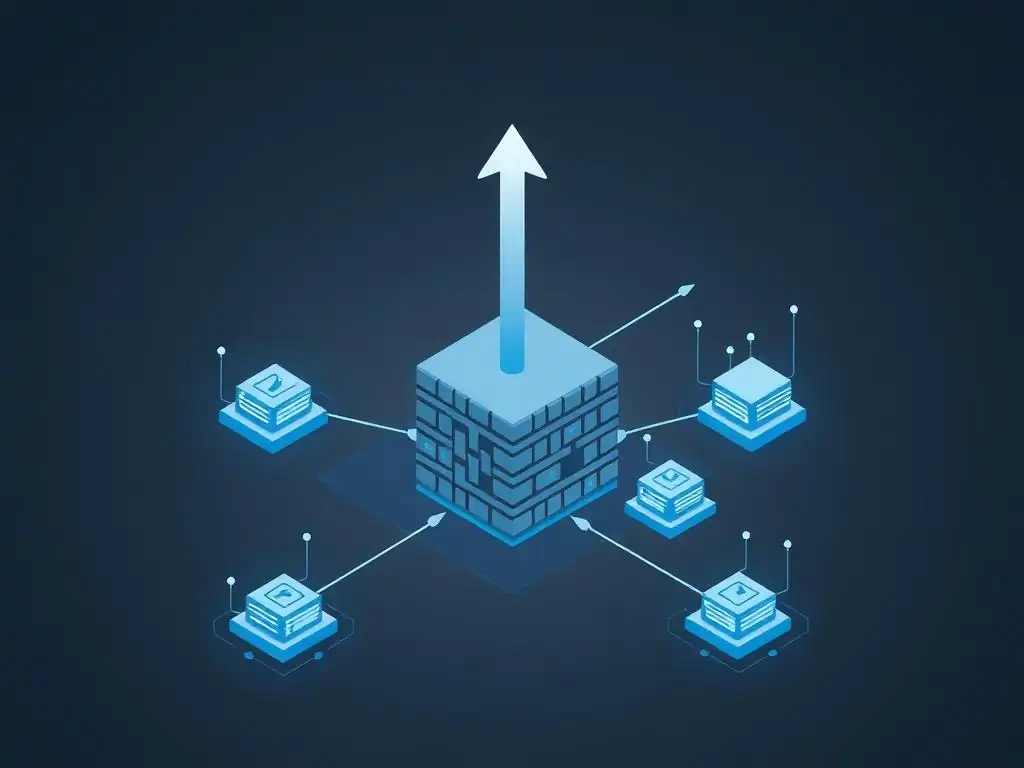
The Bottleneck: Why Blockchain Scalability Matters for dApps
Blockchain technology, while revolutionary in its potential for decentralization and security, faces a significant hurdle: scalability. For decentralized applications (dApps) to achieve mainstream adoption and compete with traditional centralized applications, they must be able to handle a large volume of transactions quickly and efficiently.
Currently, many blockchains struggle to process transactions at speeds comparable to centralized systems like Visa or Mastercard, which can handle thousands of transactions per second. This limitation becomes acutely apparent as dApps gain popularity, leading to network congestion, slow transaction confirmation times, and increased transaction fees, ultimately hindering user experience and limiting the potential use cases for blockchain technology.
The inherent design of many early blockchains, where every node in the network must process and validate every transaction, creates a fundamental bottleneck. This "one-size-fits-all" approach works for smaller networks but quickly degrades as the network grows and transaction volume increases. For dApps aiming to serve a global user base or handle complex operations requiring numerous interactions, this lack of scalability presents a critical barrier.
Imagine a decentralized social media platform or a high-frequency decentralized exchange struggling to keep up with user demand; the resulting delays and costs would render these dApps impractical for widespread use and undermine the promise of decentralized technologies. Therefore, addressing blockchain scalability is not merely an optimization, but a fundamental requirement for the evolution and broader adoption of dApps.
Understanding the Need for High-Throughput in Decentralized Applications
High-throughput is not just a desirable feature for dApps; it is often a necessity for their viability and success, especially when considering applications beyond simple cryptocurrency transactions. Consider decentralized finance (DeFi) platforms, which often involve complex, multi-step transactions like trading, lending, and borrowing. These platforms demand near-instantaneous transaction processing to provide a user experience comparable to traditional financial services. Latency and slow transaction confirmation times can lead to missed trading opportunities, cascading liquidations, and overall user frustration, directly impacting the usability and appeal of DeFi applications.
Beyond finance, numerous other dApp categories require high throughput. Decentralized gaming, for instance, often involves a high volume of in-game transactions related to item ownership, character actions, and in-game economies. Similarly, decentralized social media platforms need to handle a constant stream of posts, likes, shares, and interactions.
Supply chain management dApps tracking goods across global networks, and IoT applications managing data from thousands of devices, also demand the ability to process a massive amount of data and transactions efficiently. Without solutions that significantly increase transaction throughput, the potential of dApps to disrupt and improve various industries will remain constrained by their operational limitations. The demand for efficient and scalable blockchain solutions is directly tied to unlocking the full potential of decentralized applications and enabling them to compete with and surpass their centralized counterparts.
Sharding emerges as a prominent and promising solution to the blockchain scalability challenge. Inspired by database sharding techniques, blockchain sharding aims to divide the blockchain network into smaller, manageable pieces called "shards." Instead of requiring every node to process all transactions, sharding distributes the workload across these shards. Each shard becomes responsible for processing only a subset of the network's transactions, operating in parallel with other shards. This parallel processing capability drastically increases the overall transaction throughput of the blockchain network.
By distributing the computational and storage burden, sharding allows the blockchain network to handle a significantly larger volume of transactions without compromising speed or security. Think of it as expanding a single-lane highway into a multi-lane expressway; more vehicles (transactions) can flow simultaneously, dramatically increasing the overall traffic capacity.
This approach contrasts sharply with simply increasing block size or reducing block time, which often leads to centralization concerns and can strain network resources. Sharding, therefore, offers a more sustainable and decentralized path towards achieving high throughput, positioning it as a crucial component of blockchain scalability solutions benefits for the next generation of dApps that demand both decentralization and performance.
Frequently Asked Questions
What is sharding and how does it improve blockchain performance?
Sharding is a database partitioning technique applied to blockchains. It divides the blockchain into smaller, manageable pieces called shards, allowing for parallel transaction processing and significantly improving overall throughput.
How does sharding differ from other blockchain scalability solutions like Layer-2 scaling?
Unlike Layer-2 solutions which process transactions off-chain, sharding modifies the underlying blockchain architecture. This allows for on-chain scalability, potentially handling a much larger volume of transactions than Layer-2 approaches.
What are some of the key benefits of using sharding for decentralized applications (dApps)?
Sharding enables higher transaction throughput, leading to faster transaction confirmation times and a better user experience for dApps. This allows dApps to handle more users and complex operations without facing congestion issues.
What are the potential security challenges associated with implementing sharding on a blockchain?
One major concern is the risk of single-shard attacks, where a malicious actor controls a single shard and manipulates transactions. Robust security protocols and cross-shard communication are crucial to mitigate this risk.
How will sharding impact the future of blockchain adoption and the development of dApps?
Sharding promises to unlock the full potential of blockchain technology, enabling wider adoption by addressing scalability bottlenecks. This will pave the way for more complex and sophisticated dApps capable of handling real-world demands.
Final Reflection: Embracing the Scalable Future of Blockchain
The exploration of sharding as a blockchain scalability solution reveals not just a technical advancement, but a fundamental shift in how we envision decentralized applications. The potential benefits, from increased throughput to reduced transaction costs, are no longer theoretical possibilities; they are becoming tangible realities shaping the future of dApps and the broader blockchain ecosystem. The promise of a truly scalable blockchain is within reach, poised to unlock unprecedented levels of innovation and adoption.
This journey into sharding highlights the relentless pursuit of efficiency and accessibility within the blockchain space. It underscores the critical need for solutions that can accommodate the growing demands of a global user base, ensuring that decentralized technologies remain viable and competitive. The future of blockchain is not just about building better technology, but about building a more inclusive and accessible financial system for everyone.
This quote encapsulates the driving force behind the development and implementation of blockchain scalability solutions, reminding us that the ultimate goal is to empower individuals and communities.
As we stand on the cusp of this new era, I invite you to consider the implications of blockchain scalability solutions in your own life and work. How can you leverage the benefits of increased throughput and reduced costs to create innovative dApps or improve existing processes? Embrace the challenge, explore the possibilities, and become a part of the movement that is shaping the future of decentralized technology. Let us collectively build a more scalable, accessible, and equitable blockchain ecosystem for all.
Unleash the Power of Sharding: Build Your Scalable dApp Today!
Thanks for exploring the world of sharding and understanding how it can transform decentralized applications. Now, it's time to take action and become a pioneer in creating the next generation of scalable dApps. Here are some key steps to elevate your knowledge and skills:
- Begin implementing sharding in a test environment. Experiment with various sharding techniques and observe their effects on throughput and latency. Focus on a use case that aligns with your project or areas of interest.
- Explore recent advancements in cross-shard communication protocols and consider contributing to the open-source community by sharing your insights and code.
- Move beyond theory by assessing how sharding could enhance your current dApp projects or brainstorming innovative applications that utilize its unique capabilities.
Are you ready to unlock sharding's full potential and build dApps capable of meeting real-world demands? What innovative sharding solution will you pursue next?
Leave a Reply