
Scalable Web3: The Foundation for a Decentralized Internet Revolution

Welcome to Blockchain Trends, your compass in the rapidly evolving world of distributed ledger technology. Dive deep into the potential of blockchain that extends far beyond simple cryptocurrencies. Are you ready to explore the critical breakthroughs that will shape the future of the internet? Our latest article delves into essential decentralized internet scalability solutions, uncovering the innovative technologies paving the way for a truly decentralized and accessible Web3. Discover how these solutions are tackling bottlenecks and enabling mass adoption. Intrigued? Let's unlock the future, together.
- Introduction: The Promise and Challenges of a Decentralized Web
-
Frequently Asked Questions
- How does Web3 scalability relate to a decentralized internet?
- What are some key "Decentralized internet scalability solutions" being explored in Web3?
- Beyond faster transactions, what other benefits does Web3 scalability offer?
- What role does regulation play in the development of "Decentralized internet scalability solutions"?
- What are some of the biggest challenges in achieving widespread adoption of "Decentralized internet scalability solutions"?
- Final Reflection: Embracing the Scalable Decentralized Future
- Ignite the Web3 Revolution!
Introduction: The Promise and Challenges of a Decentralized Web
Web3's Vision: A User-Controlled Internet
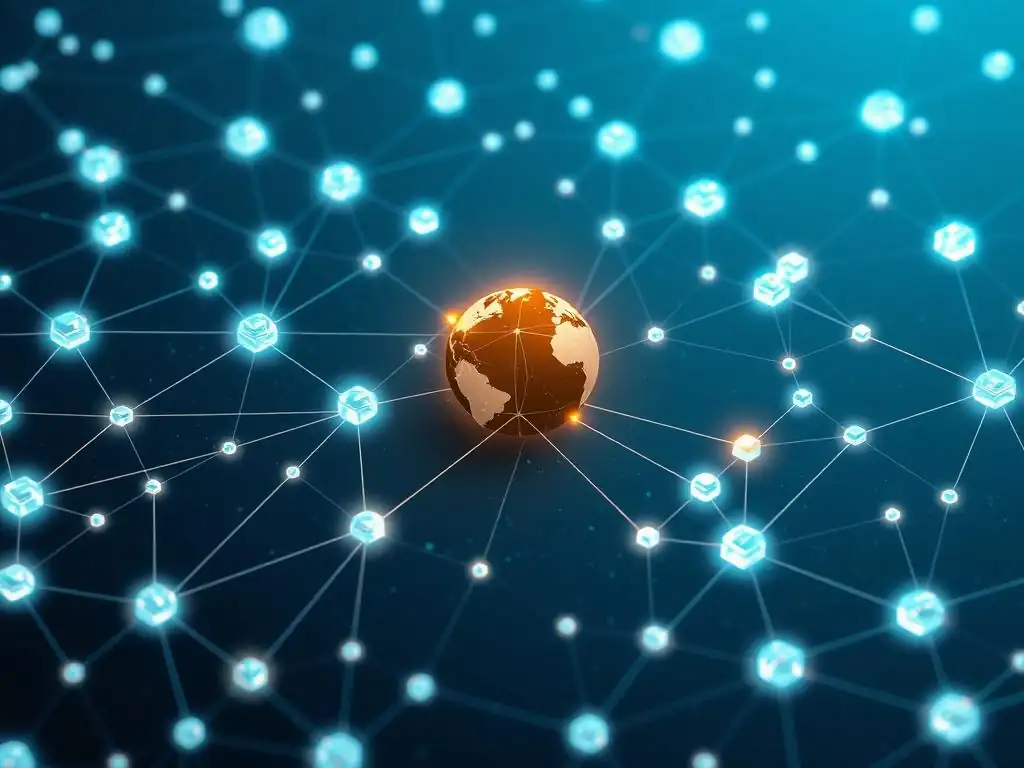
Web3 represents a paradigm shift in how we interact with the internet. At its core, Web3 envisions a decentralized internet, moving away from the centralized control of tech giants that characterize Web2. This new iteration of the web aims to empower users by giving them greater ownership and control over their data, digital assets, and online experiences.
Instead of relying on intermediaries, Web3 leverages blockchain technology to create transparent, secure, and user-centric platforms. This shift is not merely technological; it's a philosophical move towards a more equitable and democratic digital landscape, where individuals, rather than corporations, are at the heart of the internet ecosystem.
The promise of Web3 extends far beyond just data ownership. It encompasses the creation of new economic models through decentralized finance (DeFi), the transformation of content creation and consumption via NFTs and decentralized social media, and the establishment of transparent and verifiable governance systems through Decentralized Autonomous Organizations (DAOs).
Imagine a world where creators directly monetize their content without platform fees, where financial services are accessible to everyone regardless of location, and where online communities are governed by their members, not centralized entities. This user-controlled internet is the driving force behind the Web3 movement, aiming to reshape the digital world into a more open, inclusive, and empowering space.
The Bottleneck: Scalability Issues in Web3 Adoption
Despite its revolutionary potential, Web3 faces a significant hurdle in achieving widespread adoption: scalability. Currently, many blockchain networks struggle to handle the transaction volumes necessary to support a truly global and decentralized internet. For example, Ethereum, a leading blockchain platform for Web3 applications, can process approximately 15-30 transactions per second (TPS).
In comparison, centralized payment processors like Visa can handle thousands of TPS, and Web2 platforms like Twitter process millions of user requests per second. This disparity in transaction throughput leads to network congestion, slow transaction speeds, and high gas fees, making Web3 applications cumbersome and expensive for everyday users.
These scalability limitations directly impact the user experience and hinder the growth of the decentralized web. Imagine trying to use a decentralized social media platform where every post, like, or follow takes minutes to confirm and costs a significant amount in transaction fees. Such scenarios are not hypothetical; they are realities faced by users interacting with many current Web3 applications.
The inability to handle large volumes of transactions effectively creates a significant barrier to entry for mainstream users accustomed to the speed and efficiency of Web2 platforms. Overcoming these scalability challenges is paramount to unlocking the full potential of Web3 and realizing its vision of a decentralized internet revolution.
Why Scalability Solutions are Crucial for Web3's Future
Scalability solutions are not merely technical upgrades; they are the linchpin upon which the future success of Web3 rests. Without effective decentralized internet scalability solutions, the promise of a user-controlled internet risks remaining just that – a promise. The current limitations prevent Web3 from achieving mass adoption and fulfilling its potential to disrupt and improve various industries, from finance and supply chain management to social media and gaming.
For Web3 to truly compete with and eventually surpass Web2, it must offer comparable, if not superior, performance and user experience. This necessitates the development and implementation of robust and efficient scalability solutions.
Moreover, scalability is intrinsically linked to other critical aspects of Web3, such as decentralization and security. The scalability trilemma highlights the inherent trade-offs between these three pillars. Solutions that compromise decentralization or security in the pursuit of scalability ultimately undermine the core principles of Web3.
Therefore, the quest for decentralized internet scalability solutions is not just about increasing transaction speeds; it's about finding innovative ways to enhance throughput without sacrificing the security and decentralization that define Web3. Only by addressing scalability effectively can Web3 transition from a niche technology to a mainstream infrastructure that powers the next generation of the internet.
Frequently Asked Questions
How does Web3 scalability relate to a decentralized internet?
Web3 scalability is crucial because it addresses the performance bottlenecks that hinder the adoption of a truly decentralized internet. Without scalable solutions, transactions are slow and expensive, undermining the user experience and decentralization goals.
What are some key "Decentralized internet scalability solutions" being explored in Web3?
Solutions include Layer-2 scaling (like rollups and sidechains), sharding, and state channels. These technologies aim to increase transaction throughput and reduce gas fees, allowing for a more accessible and efficient decentralized web.
Beyond faster transactions, what other benefits does Web3 scalability offer?
Increased scalability allows for more complex and data-intensive applications to be built on the blockchain. This opens the door for new use cases and more sophisticated decentralized services, fostering innovation.
What role does regulation play in the development of "Decentralized internet scalability solutions"?
Regulation can both hinder and help. Clear regulatory frameworks could provide legal certainty and encourage investment. However, overly restrictive regulations could stifle innovation and limit the growth of decentralized technologies.
What are some of the biggest challenges in achieving widespread adoption of "Decentralized internet scalability solutions"?
Challenges include technical complexity, user adoption barriers, and the need for interoperability between different scaling solutions. Educating users and simplifying the user experience are also critical.
Final Reflection: Embracing the Scalable Decentralized Future
The journey toward a truly decentralized internet is not merely a technological pursuit; it's a fundamental shift in power dynamics, and decentralized internet scalability solutions are the linchpin holding that shift together. The challenges we've explored – from consensus mechanisms to sharding and layer-2 solutions – are not abstract hurdles, but rather the concrete steps needed to build a more equitable and resilient digital world. The urgency of this endeavor is amplified by the increasing centralization of power in the hands of a few tech giants, making the need for scalable, decentralized alternatives more critical than ever.
The promise of a decentralized internet resonates deeply because it speaks to our innate desire for autonomy and control over our digital lives. This vision, once relegated to the realm of science fiction, is now within our grasp, thanks to the relentless innovation in Web3. It’s a vision where data privacy is paramount, where creators are fairly compensated, and where censorship is rendered obsolete. As Tim Berners-Lee, the inventor of the World Wide Web, aptly stated: The original intention of the web was that we should be able to develop our ideas in there, and anyone should be able to put in their ideas and we should be able to connect to each other in a way that was very free.
This freedom is what we risk losing if we fail to prioritize decentralized scalability.
Now, as you reflect on the potential of a scalable Web3, consider your own role in shaping this future. What steps can you take, however small, to support the development and adoption of decentralized technologies? Whether it's learning about blockchain, contributing to open-source projects, or simply advocating for a more equitable digital landscape, your participation is vital. The decentralized internet is not a passive destination; it's a journey we must embark on together, building a future where technology empowers us all.
Ignite the Web3 Revolution!
Thank you for exploring the potential of scalable Web3 with us! We hope this article has illuminated the path toward a truly decentralized internet. Now, it's time to put your knowledge into action and become part of the future.
Here are a few ways you can contribute to the Web3 revolution:
- Dive deep into a specific Layer-2 scaling solution like Polygon or Optimism. Experiment with their testnets and join their developer communities. This is your primary action!
- Explore decentralized applications across different Web3 platforms. Discover innovative use cases and support the developers building the future.
- Share this article with your network and spark a conversation about the importance of scalability for the widespread adoption of Web3.
What innovative dApp or Web3 platform excites you the most, and why? Share your thoughts in the comments below!
Leave a Reply