
State Channels: A Scalable Solution for HighFrequency Blockchain Transactions


Welcome to Blockchain Trends, your go-to source for unraveling the transformative potential of blockchain technology. Ever wondered how to break free from transaction bottlenecks and unlock truly scalable blockchain applications? Dive into our featured article and discover the blockchain state channels scalability benefits, a game-changing solution poised to revolutionize high-frequency transactions. Explore how this innovative approach is shaping the future of decentralized systems and what it means for DeFi, enterprise applications, and beyond…
State Channels: A Scalable Solution for High-Frequency Blockchain Transactions
- Introduction to Blockchain Scalability Challenges and State Channels
- How Blockchain State Channels Work: A Detailed Explanation
- Blockchain State Channels Scalability Benefits: Key Advantages
- Use Cases for State Channels: Real-World Applications
- State Channels vs. Other Layer-2 Scaling Solutions
- Implementing State Channels: Technical Considerations
- Limitations and Challenges of State Channels
- The Future of State Channels: Evolution and Integration
- Conclusion: State Channels as a Vital Component of Blockchain Scalability
-
Frequently Asked Questions
- What are blockchain state channels, and how do they relate to blockchain scalability?
- What are the primary scalability benefits of using state channels compared to on-chain transactions?
- How do state channels handle high-frequency transactions and what are their limitations?
- Can state channels be used for applications beyond simple payment transactions?
- What are the key considerations for developers when implementing state channels to achieve blockchain state channels scalability benefits?
- Final Reflection: Unlocking Blockchain's Potential Through State Channels
- Unlock Blockchain's Potential: Start Scaling Today!
Introduction to Blockchain Scalability Challenges and State Channels
Understanding the Blockchain Scalability Problem: Transaction Throughput Limits
Blockchain technology, while revolutionary in its potential for decentralization and security, faces significant scalability challenges. Traditional blockchains like Bitcoin and Ethereum, in their base layers, are limited in the number of transactions they can process per second. Bitcoin, for instance, can handle approximately 7 transactions per second (TPS), while Ethereum, before its transition to Proof-of-Stake, hovered around 15-25 TPS. This inherent limitation stems from the need for each transaction to be validated and recorded by every node in the network, a process that ensures security and consensus but inherently restricts throughput.
This transaction throughput bottleneck becomes acutely apparent when considering the potential for mass adoption of blockchain technology. Imagine a world where everyday transactions, from buying coffee to paying bills, are conducted on a blockchain. The current transaction processing capacity of base-layer blockchains is simply insufficient to support such high volumes. For comparison, centralized payment processors like Visa can handle thousands of transactions per second. This disparity highlights the urgent need for scaling solutions that can bridge the gap between blockchain's potential and its current limitations in handling high-frequency transaction demands.
The Promise of State Channels: Enhancing Blockchain Scalability
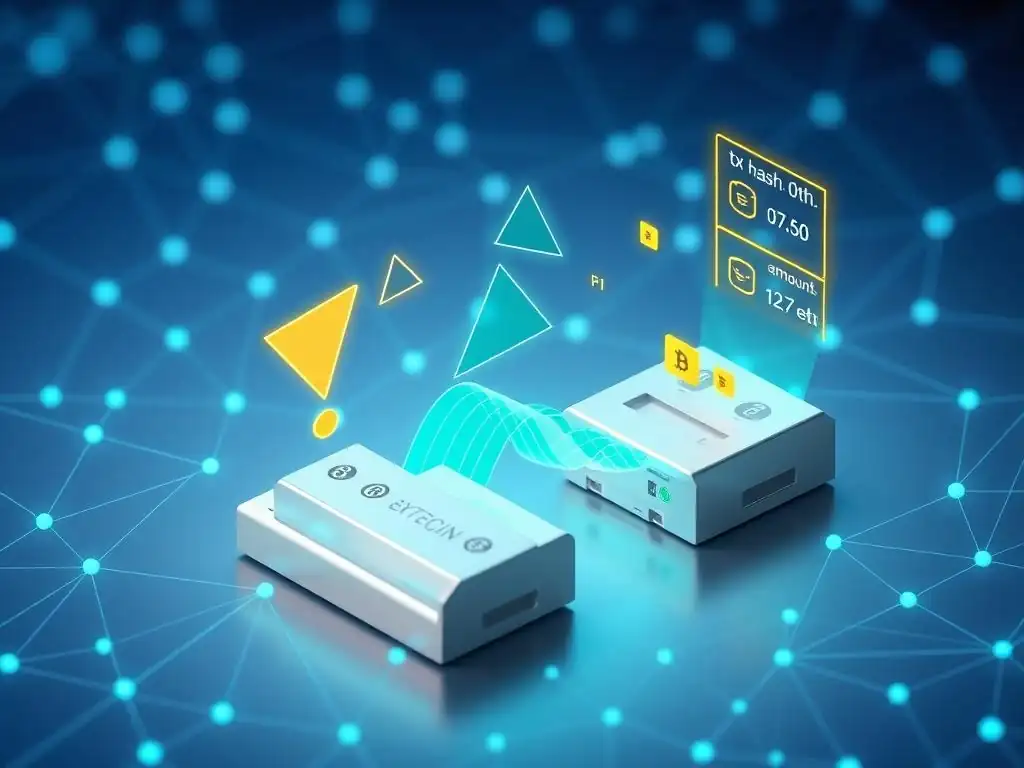
State channels emerge as a promising Layer-2 scaling solution designed to address the transaction throughput limitations of base-layer blockchains. The core concept behind state channels is to move a significant portion of transaction processing off the main blockchain, conducting them in a private, two-party (or multi-party) channel. This off-chain transaction processing drastically reduces the load on the main blockchain, as only the channel opening and closing transactions are recorded on-chain.
By enabling participants to transact directly with each other off-chain, state channels offer the potential for significantly increased transaction throughput, reduced transaction fees, and faster transaction confirmation times. This approach is particularly well-suited for applications that require frequent interactions between a defined set of participants, such as micropayments, gaming, and certain types of financial transactions. State channels, therefore, represent a crucial pathway towards making blockchain technology more scalable and practical for real-world, high-frequency use cases, unlocking the true potential of decentralized applications.
State Channels & Lightning Network: A Comparison within Layer-2 Scaling Solutions
Within the landscape of Layer-2 scaling solutions, state channels are often discussed alongside the Lightning Network, particularly in the context of Bitcoin. While both are categorized as state channel technologies, the Lightning Network is a specific implementation designed for Bitcoin, focusing on enabling fast and cheap Bitcoin transactions. It is important to understand that "state channels" is a broader term encompassing various implementations and protocols, with Lightning Network being a prominent example tailored to a specific blockchain.
The Lightning Network, for instance, leverages Hash Time-Locked Contracts (HTLCs) to facilitate secure and trustless off-chain transactions within a network of payment channels. It allows users to open channels with each other and route payments through the network, minimizing on-chain footprint. Therefore, when discussing state channels in the context of Bitcoin scalability, the Lightning Network often serves as a practical and widely recognized example. However, the fundamental principles of state channels extend beyond Bitcoin and can be applied to other blockchains, adapting to their specific smart contract capabilities and consensus mechanisms.
How Blockchain State Channels Work: A Detailed Explanation
Core Principles of State Channel Functionality
The fundamental principle of state channel functionality hinges on moving transaction execution and state updates off the main blockchain while retaining the security and trust guarantees of the underlying blockchain. This is achieved by leveraging smart contracts on the main chain to establish the initial conditions of the channel and to enforce the final agreed-upon state. Participants within a state channel interact directly, updating the channel's state through digitally signed messages without broadcasting every transaction to the entire blockchain network.
The security of state channels relies on cryptographic commitments and the ability to revert to the on-chain state in case of disputes. Each participant holds a copy of the current channel state, and updates are mutually agreed upon and signed. This mechanism ensures that transactions within the channel are secure and auditable among the participants, while only the opening and closing transactions interact with the more resource-intensive main blockchain. This clever separation of concerns allows for a dramatic increase in efficiency for high-frequency interactions.
Establishing a State Channel: Opening a Direct Communication Line
Establishing a state channel begins with an on-chain transaction. Participants, typically two or more, agree to enter into a channel and lock up a certain amount of cryptocurrency in a multi-signature smart contract on the blockchain. This smart contract acts as the anchor for the state channel, securing the funds and defining the initial conditions. This "opening transaction" is recorded on the main blockchain, publicly visible and immutable, signifying the creation of the channel and the commitment of funds.
This initial on-chain transaction is crucial because it establishes the foundation of trust and security for the off-chain interactions that will follow. The smart contract ensures that the funds are held securely and can only be accessed according to the rules defined within the channel. Once the channel is opened, participants can begin transacting directly with each other without further on-chain transactions for each individual interaction, effectively creating a direct and private communication line for value transfer.
Conducting Transactions Off-Chain: High-Frequency & Low-Cost Transfers
After a state channel is opened, participants can engage in numerous transactions directly with each other, off the main blockchain. These off-chain transactions are essentially exchanges of digitally signed messages that update the state of the channel. For example, in a payment channel, these messages would represent the transfer of value from one participant to another. Each transaction is agreed upon and signed by all involved parties, creating a record of the updated channel state.
Because these transactions occur off-chain, they are significantly faster and cheaper than on-chain transactions. Transaction confirmation is near-instantaneous as it only requires agreement and signature among the channel participants, bypassing the slower and more costly blockchain consensus process. Furthermore, transaction fees are drastically reduced, as participants avoid the gas costs associated with each on-chain transaction. This off-chain interaction is what enables state channels to achieve high-frequency and low-cost transactions, the core benefits of this scaling solution.
Closing the State Channel: Updating the Blockchain with Final State
Eventually, when participants have completed their interactions within the state channel, or when they decide to conclude the channel for any reason, the channel needs to be closed. Closing a state channel involves another on-chain transaction that settles the final state of the channel back onto the main blockchain. This "closing transaction" uses the latest mutually agreed-upon state of the channel, which reflects all the off-chain transactions that have occurred.
The closing transaction interacts with the smart contract that was used to open the channel. It distributes the funds held within the smart contract according to the final state, effectively reflecting the net transfers that occurred off-chain. This final on-chain transaction is the only other transaction that needs to be recorded on the main blockchain besides the opening transaction. By settling only the net result of numerous off-chain interactions on-chain, state channels minimize blockchain congestion and maximize transaction efficiency.
Blockchain State Channels Scalability Benefits: Key Advantages
Increased Transaction Throughput: Handling High Volumes Efficiently
One of the primary blockchain state channels scalability benefits is the substantial increase in transaction throughput. By processing the majority of transactions off-chain, state channels bypass the inherent throughput limitations of the base blockchain. Instead of being constrained by the block time and block size of the main chain, transaction speed is limited only by the communication speed between the channel participants. This allows state channels to handle significantly higher volumes of transactions compared to conducting every transaction directly on-chain.
For example, consider a scenario where two parties are frequently transacting, such as in a subscription service or a gaming environment. Using a state channel, they can exchange hundreds or even thousands of transactions per second, far exceeding the capabilities of the base blockchain. This scalability benefit is crucial for applications requiring high-frequency interactions, enabling blockchain technology to support use cases that would be impractical or impossible on the base layer alone.
Reduced Transaction Fees: Minimizing Costs for Frequent Interactions
Another significant blockchain state channels scalability benefit is the dramatic reduction in transaction fees. On most blockchains, each on-chain transaction incurs a transaction fee, often referred to as gas fees on Ethereum. These fees can fluctuate based on network congestion and can become substantial, especially during periods of high demand. State channels minimize these fees by reducing the number of on-chain transactions to just the channel opening and closing transactions.
Since the vast majority of transactions occur off-chain within the state channel, participants avoid paying on-chain transaction fees for each individual interaction. This makes state channels particularly advantageous for applications involving frequent, small-value transactions, such as micropayments. The reduced fees make such applications economically viable on the blockchain, which would otherwise be prohibitively expensive due to the cumulative effect of on-chain transaction costs. This cost efficiency is a key driver of adoption for blockchain state channels scalability benefits.
Lower Latency: Near-Instant Transaction Confirmation
Latency, or the delay between initiating a transaction and its confirmation, is a critical factor for user experience, especially in applications requiring real-time interactions. On-chain transactions typically require block confirmation, which can take several minutes to hours depending on the blockchain and network congestion. State channels offer a significant improvement in latency due to their off-chain transaction processing mechanism, providing near-instant transaction confirmation.
Within a state channel, transaction confirmation is essentially immediate, limited only by the speed of communication between participants. As soon as parties agree on a transaction and digitally sign the updated state, the transaction is considered confirmed between them. This near-instant confirmation is a crucial scalability benefit for applications like gaming, high-frequency trading, and real-time payment systems, where low latency is paramount for a smooth and responsive user experience. The reduction in latency directly enhances the usability and practicality of blockchain for time-sensitive applications.
Enhanced Privacy: Keeping Transactions Off the Public Blockchain
Privacy is an increasingly important consideration in blockchain applications. All on-chain transactions are by nature public and transparent, recorded on the immutable ledger for anyone to view. While this transparency is a core tenet of blockchain, it may not be desirable for all types of transactions, especially those involving sensitive or confidential information. State channels offer enhanced privacy by keeping the details of individual transactions off the public blockchain.
Only the channel opening and closing transactions are recorded on-chain, revealing the initial and final balances but not the details of the numerous transactions that occurred within the channel. The actual transactions are exchanged privately between the channel participants, providing a degree of confidentiality.
This blockchain state channels scalability benefit is attractive for use cases where transaction privacy is desired, such as certain financial transactions, business-to-business interactions, or applications where users prefer not to publicly disclose every transaction detail. While not providing complete anonymity, state channels offer a significant improvement in transaction privacy compared to solely relying on on-chain transactions.
Use Cases for State Channels: Real-World Applications
Micropayments: Enabling Small, Frequent Transactions
Micropayments, small value transactions often less than a dollar, have long been touted as a potential use case for blockchain. However, the high transaction fees and slow confirmation times of base-layer blockchains make micropayments impractical for many applications. State channels provide a viable solution by significantly reducing transaction fees and latency, making micropayments economically feasible and user-friendly.
Consider scenarios like pay-per-article content, streaming services with per-minute billing, or in-app purchases in mobile games. State channels enable these types of micro-transactions to be processed efficiently and cost-effectively, opening up new business models and revenue streams that were previously unachievable on the blockchain. For example, a content platform could use state channels to allow users to pay a fraction of a cent to read each article, creating a granular and flexible payment system.
Gaming: Supporting Real-Time Interactions in Blockchain Games
Blockchain gaming is an emerging sector, aiming to leverage blockchain for true digital ownership of in-game assets and decentralized game economies. However, traditional on-chain transactions are too slow and expensive for the real-time interactions required in many games. State channels address this challenge by enabling fast and low-cost transactions necessary for seamless gameplay.
In online games, players frequently interact, trade items, and engage in in-game economies. State channels can facilitate these interactions off-chain, ensuring near-instantaneous transactions for actions like buying items, trading resources, or participating in in-game marketplaces. This allows for a smoother and more responsive gaming experience while still benefiting from the security and transparency of blockchain for asset ownership and game logic. For instance, a massively multiplayer online role-playing game (MMORPG) could utilize state channels to manage the high volume of player-to-player transactions within the game world.
IoT (Internet of Things): Facilitating High-Frequency Data Exchange
The Internet of Things (IoT) involves a vast network of interconnected devices generating massive amounts of data. Managing and securing this data flow is a significant challenge, and blockchain offers potential solutions for secure data exchange and device management. However, the sheer volume and frequency of data generated by IoT devices necessitate scalable solutions like state channels.
State channels can enable high-frequency, low-cost data exchange between IoT devices. For example, in a smart city environment with numerous sensors collecting data on traffic flow, environmental conditions, or energy consumption, state channels can facilitate the continuous stream of data transactions between sensors and data aggregation points. This allows for efficient and scalable data management within IoT networks, leveraging blockchain for security and data integrity without being bottlenecked by on-chain transaction limitations.
Payment Channels and Applications in Decentralized Finance (DeFi)
Payment channels, a specific type of state channel, are particularly relevant to Decentralized Finance (DeFi). DeFi aims to recreate traditional financial services in a decentralized and transparent manner using blockchain technology. State channels can enhance the scalability and efficiency of various DeFi applications, particularly those involving frequent transactions or micro-interactions.
For instance, in decentralized exchanges (DEXs), state channels could be used to facilitate faster and cheaper trading between users. Similarly, in DeFi lending platforms, state channels could streamline the process of interest accrual and micro-loan repayments. Furthermore, payment channels can enhance the scalability of DeFi payment solutions, enabling faster and more cost-effective transactions for decentralized payment applications. As DeFi continues to evolve, state channels can play a crucial role in addressing scalability challenges and enabling wider adoption of decentralized financial services.
State Channels vs. Other Layer-2 Scaling Solutions
State Channels vs. Sidechains: A Comparative Analysis
Sidechains are another prominent Layer-2 scaling solution for blockchains. While both state channels and sidechains aim to improve scalability, they operate on fundamentally different principles. Sidechains are essentially separate blockchains that run in parallel to the main chain. They have their own consensus mechanisms and block structures, and they are connected to the main chain via a two-way peg, allowing assets to be transferred between the main chain and the sidechain.
In contrast to state channels, which focus on off-chain transaction processing between specific parties, sidechains offer a more general-purpose scaling solution. They can handle a wider range of applications and can support more complex functionalities than state channels. However, sidechains also introduce their own set of complexities, including the need for a separate consensus mechanism and the potential for security vulnerabilities in the sidechain itself. State channels, being simpler and more focused, are often considered more secure and easier to implement for specific use cases involving frequent interactions between known parties.
State Channels vs. Plasma: Understanding the Trade-offs
Plasma is another Layer-2 scaling solution that aims to improve blockchain scalability by creating "child chains" that are anchored to the main chain. Plasma chains are designed to handle a large volume of transactions off the main chain, similar to state channels and sidechains. However, Plasma's approach to security and data availability differs significantly. Plasma relies on fraud proofs to ensure the security of transactions on the child chain, meaning that users can challenge invalid transactions by submitting proofs to the main chain.
Compared to state channels, Plasma is more complex to implement and requires a more sophisticated understanding of cryptographic techniques. State channels are generally considered simpler and more suitable for applications with a defined set of participants and relatively straightforward transaction logic. Plasma, on the other hand, is designed for more general-purpose scaling and can potentially handle more complex applications and a larger number of users. However, Plasma's reliance on fraud proofs introduces potential latency in dispute resolution, whereas state channels typically rely on direct on-chain dispute mechanisms.
State Channels vs. Rollups: Exploring Different Approaches to Scalability
Rollups are a more recent and increasingly popular Layer-2 scaling solution, particularly for Ethereum. Rollups, unlike state channels and Plasma, process transactions off-chain but post transaction data back to the main chain. This data availability on the main chain is a key differentiator and contributes to Rollups' strong security guarantees. There are two main types of rollups: Optimistic Rollups and Zero-Knowledge (ZK) Rollups.
Optimistic Rollups assume transactions are valid by default and allow a challenge period for fraud proofs to be submitted. ZK-Rollups, on the other hand, use cryptographic proofs to verify transaction validity off-chain before posting the state root to the main chain. Rollups offer a higher level of security and generalizability compared to state channels, as they leverage the security of the main chain for data availability and fraud prevention.
State channels, while simpler and offering lower latency for direct interactions, are generally less robust for broader scaling needs and rely more on the honesty and responsiveness of channel participants for security. The choice between state channels and rollups depends on the specific application requirements, with rollups generally favored for more general-purpose scaling and state channels for specific high-frequency interaction scenarios.
Implementing State Channels: Technical Considerations
Smart Contract Development for State Channels
Implementing state channels requires careful smart contract development on the underlying blockchain. The smart contract serves as the foundation for the channel, handling channel opening, fund locking, dispute resolution, and channel closing. Smart contracts for state channels typically need to implement functionalities for multi-signature authorization, state update verification, and timeout mechanisms to handle inactive or unresponsive participants.
Developing robust and secure smart contracts for state channels is crucial for the overall security and functionality of the scaling solution. Developers need to consider potential vulnerabilities, such as re-entrancy attacks, integer overflows, and improper access control. Thorough testing and auditing of the smart contracts are essential to ensure the integrity and reliability of the state channel implementation. The complexity of smart contract development can vary depending on the specific features and functionalities required for the state channel application.
Security Considerations in State Channel Design
Security is paramount in state channel design, as participants are trusting the system to handle their funds and transactions securely. Several security considerations need to be addressed during the design and implementation phases. One key aspect is ensuring the integrity of state updates. Cryptographic signatures are used to verify the authenticity and integrity of state updates exchanged between participants. Secure key management and protection against key compromise are crucial.
Another important security consideration is dispute resolution. State channels must have robust mechanisms to handle disputes that may arise between participants. This typically involves reverting to the on-chain smart contract to resolve disagreements based on the latest signed state. Timeout mechanisms are also essential to prevent participants from being locked in channels indefinitely if another participant becomes unresponsive. Careful consideration of these security aspects is vital for building trustworthy and reliable state channel systems.
Ethereum and Solidity for State Channel Implementation
Ethereum, with its robust smart contract capabilities and widely adopted Solidity programming language, is a popular platform for state channel implementation. Solidity provides the necessary tools and features to develop complex smart contracts required for state channel functionalities, including multi-signature schemes, cryptographic functions, and event handling. Ethereum's extensive developer community and mature tooling ecosystem further facilitate the development and deployment of state channel solutions.
Numerous state channel projects and frameworks have been built on Ethereum, leveraging Solidity for smart contract development. Examples include payment channel networks and state channel implementations for specific applications like gaming and micropayments. Ethereum's Virtual Machine (EVM) provides a secure and reliable environment for executing smart contracts, making it a suitable platform for building and deploying state channel solutions. However, it's important to note that state channels are not exclusive to Ethereum and can be implemented on other blockchains that support smart contracts, adapting the implementation to the specific blockchain's capabilities and programming languages.
Limitations and Challenges of State Channels
Channel Capacity Limits: Addressing Maximum Transaction Value
State channels, while offering significant scalability benefits, do have limitations. One notable limitation is channel capacity. The total value that can be transacted within a state channel is limited by the initial amount of funds locked into the channel's smart contract. Once the channel capacity is reached, participants need to either close the channel and open a new one with a larger capacity or find alternative solutions.
This channel capacity limit can be a constraint for use cases that require transferring large values or for channels with a high volume of transactions that cumulatively exceed the initial capacity. Addressing this limitation may involve strategies like channel rebalancing, where participants can add or remove funds from the channel while it is still open, or techniques for aggregating multiple channels to handle larger transaction volumes. Understanding and managing channel capacity is an important consideration in designing and deploying state channel applications.
Channel State Management: Ensuring Data Consistency
Maintaining consistent channel state across all participants is crucial for the proper functioning of state channels. Participants need to agree on the current state of the channel after each transaction, and this state must be reliably stored and synchronized. Challenges in channel state management can arise from network latency, participant unresponsiveness, or data synchronization issues.
Ensuring data consistency requires robust communication protocols and state update mechanisms. Participants typically exchange signed state updates and maintain local copies of the channel state. Mechanisms for handling network interruptions and participant failures are necessary to prevent state inconsistencies and ensure that all participants have a consistent view of the channel's state. Effective channel state management is essential for the reliability and security of state channel systems.
On-Chain Dispute Resolution
While state channels aim to minimize on-chain transactions, they rely on the main blockchain for dispute resolution. If participants disagree about the final state of the channel or if one participant becomes unresponsive or malicious, the dispute needs to be resolved on-chain using the smart contract. On-chain dispute resolution processes can introduce latency and costs, potentially diminishing some of the scalability benefits of state channels in dispute scenarios.
Designing efficient and fair on-chain dispute resolution mechanisms is crucial. Smart contracts need to implement logic for verifying signed state updates and resolving disputes based on the evidence provided by participants. Optimizing dispute resolution processes to minimize on-chain gas costs and resolution time is an ongoing area of research and development in state channel technology. While disputes should be rare in well-designed state channel systems, having a robust and efficient on-chain dispute resolution mechanism is essential for ensuring trust and security.
The Future of State Channels: Evolution and Integration
Potential Improvements and Innovations in State Channel Technology
The field of state channel technology is continuously evolving, with ongoing research and development aimed at addressing limitations and enhancing functionality. Potential improvements include advancements in channel capacity management, such as dynamic channel resizing and automated channel rebalancing techniques. Innovations in state management protocols are also being explored to improve data consistency and resilience to network issues.
Furthermore, research is focused on enhancing the privacy features of state channels, exploring techniques like zero-knowledge proofs and confidential transactions to further protect transaction details within channels. Improvements in dispute resolution mechanisms are also being investigated to reduce on-chain latency and costs associated with resolving channel disputes. These ongoing advancements promise to further enhance the scalability, efficiency, and usability of state channel technology.
Interoperability with Other Blockchain Scaling Solutions
The future of blockchain scaling likely involves a combination of different Layer-2 solutions working in concert. Interoperability between state channels and other scaling solutions like rollups and sidechains is becoming increasingly important. For instance, state channels could be used within rollups to further enhance transaction throughput for specific application scenarios. Similarly, state channels could be integrated with sidechains to provide fast and low-cost transaction channels within a broader sidechain ecosystem.
Developing standards and protocols for interoperability between different Layer-2 scaling solutions is crucial for building a scalable and interconnected blockchain ecosystem. This interoperability would allow developers to leverage the strengths of different scaling solutions and combine them to create more robust and versatile applications. The ability for state channels to seamlessly interact with other Layer-2 technologies will be a key factor in their broader adoption and impact on blockchain scalability.
Adoption Trends and Future Prospects for State Channels
Despite some limitations, state channels have shown promising adoption trends, particularly in specific use cases where their strengths are well-suited. The Lightning Network, a prominent example of state channel technology, has seen significant growth in its network capacity and adoption for Bitcoin payments. State channels are also gaining traction in gaming, micropayments, and certain DeFi applications where high-frequency and low-cost transactions are critical.
The future prospects for state channels are tied to their continued evolution and integration with other scaling solutions. As research and development efforts address current limitations and enhance functionality, the adoption of state channels is expected to expand. They are likely to play a vital role in enabling blockchain technology to support a wider range of high-frequency applications and contribute to the overall scalability and usability of decentralized systems. The increasing demand for scalable blockchain solutions positions state channels as a key technology in the future of decentralized applications.
Conclusion: State Channels as a Vital Component of Blockchain Scalability
Recap of Blockchain State Channels Scalability Benefits
In conclusion, blockchain state channels scalability benefits are undeniable, offering a powerful approach to address the transaction throughput limitations of base-layer blockchains. By moving transaction processing off-chain, state channels deliver increased transaction throughput, reduced transaction fees, lower latency, and enhanced privacy. These scalability benefits are particularly valuable for applications requiring high-frequency interactions, such as micropayments, gaming, IoT data exchange, and specific DeFi applications.
State channels, while not a universal scaling solution, provide a specialized and highly effective mechanism for enhancing scalability in specific use cases. Their simplicity, efficiency, and security make them a vital component of the broader blockchain scaling landscape, complementing other Layer-2 solutions and contributing to the overall evolution of scalable decentralized systems.
The Role of State Channels in the Future of Decentralized Applications
State channels are poised to play a significant role in the future of decentralized applications (dApps). As the demand for scalable and user-friendly dApps grows, state channel technology offers a crucial pathway to overcome the limitations of base-layer blockchains. By enabling high-frequency, low-cost, and low-latency transactions, state channels unlock new possibilities for dApp development and adoption.
From enabling seamless micropayments to supporting real-time interactions in blockchain games and facilitating efficient data exchange in IoT networks, state channels empower developers to build more scalable and responsive dApps. As the blockchain ecosystem matures and interoperability between scaling solutions increases, state channels will likely become an integral part of the architecture for many decentralized applications, contributing to a more scalable, efficient, and user-centric decentralized future.
Frequently Asked Questions
What are blockchain state channels, and how do they relate to blockchain scalability?
State channels are a layer-two scaling solution for blockchains. They enable off-chain transactions between participants, reducing the load on the main blockchain and improving transaction throughput.
What are the primary scalability benefits of using state channels compared to on-chain transactions?
State channels offer significant scalability benefits by processing transactions off-chain. This results in faster transaction speeds, reduced fees, and increased overall network capacity compared to directly using the main blockchain.
How do state channels handle high-frequency transactions and what are their limitations?
State channels excel at handling high-frequency transactions by enabling participants to transact repeatedly off-chain. The limitation is that all participants must initially agree to the channel and the channel must be closed to reflect the final state on the main chain.
Can state channels be used for applications beyond simple payment transactions?
Yes, state channels can be used for more than just payments. They can facilitate various applications involving frequent interactions, such as gaming, micro-loans, and data streaming between pre-defined parties.
What are the key considerations for developers when implementing state channels to achieve blockchain state channels scalability benefits?
Developers need to carefully design the channel logic and dispute resolution mechanisms. It's vital to ensure security and prevent fraud or malicious behavior during off-chain transactions to fully realize blockchain state channels scalability benefits.
Final Reflection: Unlocking Blockchain's Potential Through State Channels
The exploration of state channels reveals a powerful pathway towards achieving blockchain state channels scalability benefits that are no longer a distant promise, but a tangible reality. The ability to conduct high-frequency transactions off-chain, while maintaining the security and trust inherent in blockchain technology, addresses a critical bottleneck hindering wider adoption. This innovation isn't just about faster transactions; it's about unlocking the true potential of decentralized applications and empowering a future where blockchain seamlessly integrates into our daily lives.
The impact of state channels extends far beyond mere technical improvements. It represents a fundamental shift in how we interact with blockchain, moving from a world of slow, expensive transactions to one of near-instantaneous and cost-effective interactions. This transformation has the potential to revolutionize industries ranging from gaming and micro-payments to supply chain management and decentralized finance. The key to scalability is not necessarily doing everything on-chain, but rather leveraging the blockchain as a settlement layer and moving the bulk of activity off-chain.
This quote encapsulates the core philosophy behind state channels and their profound implications for the future of blockchain.
As we conclude this exploration, I invite you to consider the implications of state channels for your own endeavors. How can this technology empower you to build more efficient, scalable, and user-friendly applications? How can you contribute to the ongoing development and adoption of state channels, helping to unlock the full potential of blockchain technology for the benefit of all? The future of blockchain is not predetermined; it is shaped by the choices we make today. Embrace the power of innovation, explore the possibilities of state channels, and become a part of building a more decentralized and equitable future.
Unlock Blockchain's Potential: Start Scaling Today!
Thank you for exploring the concept of state channels and their potential to revolutionize high-frequency blockchain transactions. You now have a clear understanding of how they can address scalability challenges. Are you ready to take the next step?
Here’s how you can get started:
- Learn by doing: Try deploying a simple state channel on a test network. Gaining practical experience will deepen your understanding.
- Explore the ecosystem: Investigate existing state channel projects like Raiden Network or Celer Network. Studying their implementations can offer valuable insights.
- Share your insights: Engage in blockchain forums or social media groups to discuss the advantages and challenges of state channels. Your perspective can help shape the future of blockchain scalability!
What innovative use case for state channels excites you the most, and how could it transform existing industries? Share your thoughts in the comments below!
Leave a Reply