
Plasma vs. State Channels: Comparing Layer2 Scaling Solutions in Detail


Welcome to Blockchain Trends, your compass navigating the ever-evolving landscape of decentralized technology! Are you ready to delve into the crucial topic of Blockchain Layer 2 scaling? Discover how innovative solutions like Plasma and State Channels are battling bottlenecks to unlock the true potential of blockchain. Get ready to compare these approaches in detail and uncover which one might pave the way for a faster, more efficient decentralized future. Intrigued? Let's explore!
- Plasma vs. State Channels: A Deep Dive into Blockchain Layer 2 Scaling Solutions
-
Plasma: Scalable Transactions with Data Availability on the Mainchain
- Plasma's Architecture: Child Chains and Root Chain Interaction
- How Plasma Works: Simplified Transaction Processing
- Plasma's Security Model: Fraud Proofs and Data Availability Guarantees
- Use Cases for Plasma: Micropayments and Decentralized Exchanges
- Advantages of Plasma for Blockchain Layer 2 Scaling
- Disadvantages of Plasma: Complexity and Data Availability Concerns
-
State Channels: Direct, Off-Chain Communication for Instant Transactions
- State Channel Basics: Establishing a Secure Communication Path
- How State Channels Work: Off-Chain Updates and On-Chain Settlement
- State Channel Security: Multi-Signature Schemes and Time Locks
- Use Cases for State Channels: Real-Time Gaming and Instant Payments
- Advantages of State Channels for Blockchain Layer 2 Scaling
- Disadvantages of State Channels: Limited Scope and On-Chain Dependency
-
Plasma vs. State Channels: A Detailed Comparison of Layer 2 Approaches
- Transaction Throughput: Which Layer 2 Solution Offers Faster Speeds?
- Security Considerations: Comparing the Security Models of Plasma and State Channels
- Complexity and Development Effort: Evaluating the Implementation Challenges
- Cost Efficiency: Assessing the Transaction Costs of Each Solution
- Flexibility and Adaptability: Which Layer 2 Solution Suits Different Use Cases Better?
- Choosing the Right Blockchain Layer 2 Scaling Solution: Plasma or State Channels?
- The Future of Blockchain Layer 2 Scaling: Trends and Developments
-
Frequently Asked Questions
- What are Layer 2 scaling solutions in the context of blockchain?
- What are the main differences between Plasma and State Channels as Layer 2 scaling solutions?
- How does Plasma handle transaction security and data availability?
- What are the advantages and disadvantages of using State Channels for scaling a blockchain?
- How do regulatory considerations impact the adoption of different Layer 2 scaling solutions like Plasma and State Channels?
- Final Reflection: Navigating the Future of Blockchain Scalability
- Unlock the Power of Layer 2: Dive Deeper Now!
Plasma vs. State Channels: A Deep Dive into Blockchain Layer 2 Scaling Solutions
The Bottleneck: Blockchain Scalability Limitations Explained
Blockchain technology, while revolutionary in its promise of decentralization and security, faces a significant hurdle: scalability. Traditional blockchains like Bitcoin and Ethereum, in their base layer (Layer 1), are designed to process a limited number of transactions per second (TPS). Bitcoin, for instance, handles around 7 TPS, while Ethereum, before its transition to Proof-of-Stake, hovered around 15-25 TPS.
This limited throughput becomes a major bottleneck as user adoption grows and network demand increases. Imagine a global payment system processing only 7 transactions per second – it would be severely congested, leading to slow transaction times and high fees, hindering widespread adoption.
This scalability limitation stems from the fundamental architecture of most blockchains. Each transaction needs to be validated by every node in the network and recorded on the immutable ledger. This consensus mechanism, while ensuring security and decentralization, inherently restricts the number of transactions that can be processed within a given timeframe.
As more users and applications join the network, the demand for transaction processing outpaces the network's capacity, leading to network congestion, much like traffic jams on a highway during rush hour. This constraint directly impacts user experience and the feasibility of using blockchain for applications requiring high transaction volumes, such as mainstream payments, high-frequency trading, or decentralized social media platforms.
Introducing Layer 2 Scaling: Off-Chain Solutions for Enhanced Throughput
To overcome the inherent scalability limitations of Layer 1 blockchains, innovative solutions have emerged, broadly categorized as Layer 2 scaling solutions. These solutions aim to increase transaction throughput without modifying the core Layer 1 blockchain protocol itself. Instead of processing every transaction directly on the main chain, Layer 2 solutions offload a significant portion of transaction processing to separate, but interconnected, systems. This "off-chain" approach allows for faster and cheaper transactions while still leveraging the security and decentralization of the underlying Layer 1 blockchain for settlement and dispute resolution.
Layer 2 solutions essentially create a secondary layer on top of the main blockchain, handling a large volume of transactions independently. Think of it as building express lanes on top of a congested highway. These express lanes (Layer 2) can handle a much higher volume of traffic (transactions) more efficiently, while the main highway (Layer 1) remains available for ultimate settlement and security. By reducing the load on the main chain, Layer 2 solutions significantly enhance the overall transaction processing capacity of the blockchain ecosystem.
This is crucial for enabling blockchain technology to scale and support mass adoption across various industries and applications that require high transaction throughput and low latency. Different Layer 2 approaches exist, each with its own mechanisms, trade-offs, and suitability for specific use cases. Among the prominent Layer 2 categories are Plasma and State Channels, which we will explore in detail.
Key Considerations for Layer 2 Scaling Solutions: Security, Cost, and Complexity
When evaluating and comparing different Blockchain Layer 2 scaling solutions, several key considerations come to the forefront. Security is paramount; any Layer 2 solution must maintain a strong security model that doesn't compromise the integrity and trust inherent in the underlying blockchain. Users need assurance that their funds and transactions are secure even when processed off-chain. This often involves mechanisms to ensure data availability and prevent malicious actors from manipulating the system.
Cost efficiency is another crucial factor. One of the primary goals of Layer 2 scaling is to reduce transaction costs, making blockchain technology more accessible and affordable for everyday use. Lower transaction fees are essential for enabling micropayments, high-frequency trading, and other applications where high on-chain fees would be prohibitive. The complexity of implementation and development is also a significant consideration.
Layer 2 solutions can vary in their technical complexity, impacting the ease of integration for developers and the overall adoption rate. Solutions that are easier to implement and integrate are more likely to gain traction and contribute to the growth of the blockchain ecosystem. Furthermore, factors like transaction speed, finality, and the specific use cases a solution is best suited for play a critical role in determining the optimal Layer 2 approach for different applications.
Plasma: Scalable Transactions with Data Availability on the Mainchain
Plasma is a Layer 2 scaling solution that aims to achieve high transaction throughput by creating "child chains" that are essentially smaller blockchains anchored to the main blockchain (the "root chain"). This approach allows for a significant reduction in the data and computation that needs to be processed on the main chain, thereby increasing overall scalability. Plasma is often described as a framework for building scalable decentralized applications that inherit the security of the main chain.
Plasma's Architecture: Child Chains and Root Chain Interaction
The core of Plasma's architecture lies in the concept of child chains. These are independent blockchains that operate according to their own rules and consensus mechanisms, but periodically commit their state to the root chain. Think of the root chain as the ultimate source of truth and security, while child chains handle the bulk of transaction processing.
Each Plasma chain is designed to be more efficient than the main chain, processing transactions faster and at a lower cost. Users can deposit funds into a Plasma chain and then transact freely within that chain, benefiting from increased speed and reduced fees.
The interaction between child chains and the root chain is crucial for Plasma's security model. Periodically, the state of a child chain, represented by a Merkle root, is anchored to the root chain. This Merkle root serves as a cryptographic summary of all transactions processed on the child chain during a specific period.
By anchoring this root to the main chain, Plasma leverages the security and immutability of the root chain to protect the integrity of the child chain's transactions. In case of disputes or fraudulent activity on a child chain, users can rely on the root chain to resolve issues and ensure the safety of their funds. This hierarchical structure is a defining feature of Plasma, enabling scalability while maintaining a strong security link to the main blockchain.
How Plasma Works: Simplified Transaction Processing
Plasma simplifies transaction processing by moving the majority of transaction verification and computation off the main chain and onto the child chains. When a user initiates a transaction within a Plasma chain, it is processed and validated by the validators of that specific child chain, not by the entire main chain network. This localized processing significantly reduces the burden on the main chain, allowing for faster transaction times and lower fees. Only a minimal amount of data, primarily the Merkle root representing the state of the child chain, is periodically submitted to the root chain.
Transaction processing in Plasma can be visualized as follows: users interact with a child chain to send and receive tokens or interact with decentralized applications. These transactions are bundled and processed by the child chain operators or validators. Periodically, a summary of these transactions, in the form of a Merkle root, is submitted to the root chain.
This submission acts as a checkpoint and ensures that the state of the child chain is anchored to the secure main chain. Users retain the ability to exit the Plasma chain and withdraw their funds back to the root chain if needed. This exit mechanism is a critical component of Plasma's security model, allowing users to safeguard their assets even in scenarios of child chain malfunction or malicious behavior.
Plasma's Security Model: Fraud Proofs and Data Availability Guarantees
Plasma's security model relies heavily on fraud proofs and data availability guarantees to ensure the integrity of transactions processed on child chains. Fraud proofs are mechanisms that allow users to challenge invalid or fraudulent transactions that might be included in a child chain block. If a user detects an invalid transaction, they can submit a fraud proof to the root chain, demonstrating the invalidity. Upon successful verification of the fraud proof, the invalid transaction is rolled back, and the malicious actor may be penalized.
Data availability is another crucial aspect of Plasma's security. It ensures that all transaction data on the child chain is publicly available for anyone to verify. This transparency is essential for users to be able to construct fraud proofs and challenge invalid transactions.
Plasma implementations often employ techniques like data sampling and erasure coding to guarantee data availability even if some nodes become unavailable. By combining fraud proofs and data availability guarantees, Plasma aims to provide a security level comparable to the main chain, even though transactions are primarily processed off-chain. However, the complexity of implementing these security mechanisms correctly is a significant challenge in Plasma development.
Use Cases for Plasma: Micropayments and Decentralized Exchanges
Plasma's architecture is particularly well-suited for applications requiring high transaction throughput and low fees, making it ideal for use cases like micropayments and decentralized exchanges (DEXs). Micropayments, small value transactions, often become impractical on main chains due to high transaction fees. Plasma's ability to process transactions cheaply and quickly makes it a viable solution for enabling micropayment-based applications, such as pay-per-use services, content monetization platforms, and micro-tipping systems.
Decentralized exchanges can also greatly benefit from Plasma. DEXs often suffer from scalability bottlenecks, leading to slow order execution and high gas costs, especially during periods of high trading volume. Plasma can significantly increase the transaction capacity of DEXs, enabling faster trading and a smoother user experience.
By processing trades off-chain on a Plasma chain, DEXs can offer performance comparable to centralized exchanges while retaining the security and transparency of decentralized systems. Furthermore, Plasma can be used for other applications like decentralized gaming, social media platforms, and supply chain management systems where high throughput and low transaction costs are essential.
Advantages of Plasma for Blockchain Layer 2 Scaling
Plasma offers several advantages as a Blockchain Layer 2 scaling solution. Its primary advantage is its potential for extremely high transaction throughput. By offloading transaction processing to child chains, Plasma can achieve significantly higher TPS compared to the main chain. This scalability makes it suitable for applications requiring massive transaction volumes. Secondly, Plasma offers reduced transaction fees. Processing transactions on child chains is generally much cheaper than on the main chain, making it economically viable for microtransactions and high-frequency applications.
Furthermore, Plasma inherits the security of the main chain. By anchoring child chain states to the root chain and employing fraud proofs and data availability mechanisms, Plasma aims to provide a security level close to that of the underlying Layer 1 blockchain. This security inheritance is a crucial advantage over some other Layer 2 solutions that might compromise security for scalability. Finally, Plasma's framework is designed to be relatively general-purpose, capable of supporting a wide range of decentralized applications beyond just simple token transfers, making it a versatile scaling solution.
Disadvantages of Plasma: Complexity and Data Availability Concerns
Despite its advantages, Plasma also faces certain disadvantages. One of the main challenges is its complexity. Implementing Plasma correctly, particularly the fraud proof and data availability mechanisms, is technically demanding. This complexity can lead to longer development times and a higher risk of implementation errors. Furthermore, Plasma's exit mechanisms, while crucial for security, can be complex and potentially time-consuming, especially in scenarios of child chain malfunction or disputes.
Data availability is another area of concern. While Plasma aims to guarantee data availability, ensuring it in practice can be challenging. If transaction data on a child chain becomes unavailable, users might not be able to construct fraud proofs, potentially compromising security. Furthermore, Plasma’s design can be less flexible than some other Layer 2 solutions. Certain types of smart contracts and complex state transitions can be more difficult to implement on Plasma chains compared to more general-purpose Layer 2 platforms. These complexities and potential challenges need to be carefully considered when evaluating Plasma as a scaling solution.
State Channels: Direct, Off-Chain Communication for Instant Transactions
State channels represent another prominent Blockchain Layer 2 scaling solution, focusing on enabling direct, off-chain communication and transaction processing between a limited number of participants. They are particularly well-suited for applications where frequent interactions occur between a known set of users, allowing for near-instant transactions and reduced on-chain fees. State channels work by establishing a secure communication path between participants, allowing them to transact off-chain and only interact with the main chain for opening and closing the channel.
State Channel Basics: Establishing a Secure Communication Path
The foundation of state channels lies in establishing a secure, off-chain communication path between participants who wish to transact. This path is typically secured using multi-signature schemes, where multiple parties are required to authorize transactions within the channel. Before off-chain transactions can begin, participants must first "open" a channel by depositing funds into a smart contract on the main chain. This on-chain transaction essentially locks up the funds that will be used within the channel.
Once the channel is opened, participants can exchange messages and update the state of the channel off-chain, without requiring further on-chain transactions for each interaction. These off-chain updates represent agreements between the participants about the distribution of funds within the channel. The security of these off-chain updates relies on cryptographic signatures and predefined rules governing channel operation. This direct communication and off-chain processing are what enable state channels to achieve near-instant transaction speeds and drastically reduce on-chain fees for participating users.
How State Channels Work: Off-Chain Updates and On-Chain Settlement
State channels operate on a principle of off-chain updates and on-chain settlement. After a channel is opened with an initial on-chain transaction, participants engage in a series of off-chain transactions, updating the state of the channel through signed messages. These messages represent agreements on how funds are being transferred and redistributed within the channel. Crucially, these off-chain transactions are not recorded on the main blockchain in real-time, leading to significant scalability gains.
Once the participants have completed their interactions within the channel, or if they decide to close the channel, they submit the final state of the channel to the main chain. This "closing" transaction triggers the smart contract on the main chain to distribute the funds according to the agreed-upon final state.
In case of disputes or disagreements, mechanisms like time locks and dispute resolution protocols are employed to ensure fair settlement based on the latest agreed-upon state. The on-chain settlement only occurs when the channel is closed, minimizing the number of on-chain transactions and maximizing transaction throughput for the users within the channel.
State Channel Security: Multi-Signature Schemes and Time Locks
State channel security is primarily ensured through multi-signature schemes and time locks. Multi-signature schemes require multiple participants to sign off on any changes to the channel state, preventing any single participant from unilaterally altering the channel's balance or state. This collaborative authorization mechanism is fundamental to the security of off-chain transactions within state channels.
Time locks add an additional layer of security by setting time constraints on channel operations. For example, closing a channel might require a certain time period to elapse, allowing participants to challenge any fraudulent or outdated channel states before final settlement on the main chain.
These time locks provide a window for dispute resolution and prevent malicious actors from quickly closing a channel with an unfair state. By combining multi-signature schemes and time locks, state channels create a secure environment for off-chain transactions, relying on cryptographic principles and smart contract logic to protect participants' funds and ensure fair channel operation.
Use Cases for State Channels: Real-Time Gaming and Instant Payments
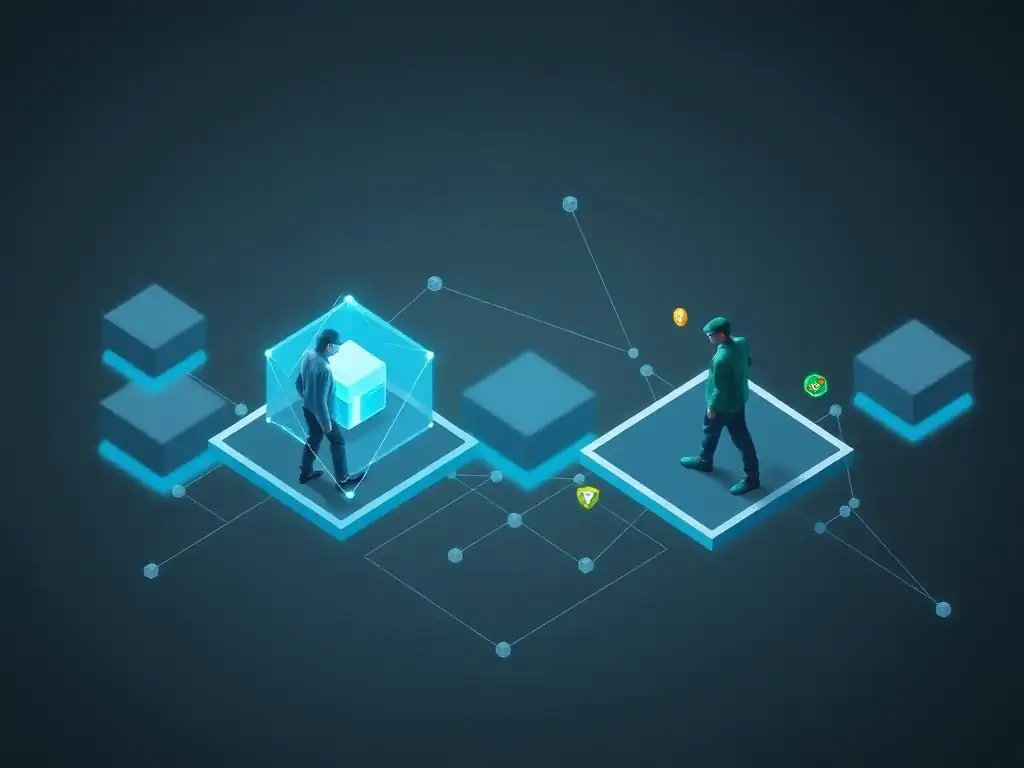
State channels are particularly well-suited for applications requiring real-time interactions and instant payments between a limited number of participants. Real-time gaming is a prime example, where players need to perform frequent, low-value transactions in rapid succession. State channels can enable seamless in-game transactions, such as buying items, betting on outcomes, or rewarding players, without incurring high on-chain fees or experiencing latency. The near-instant transaction speeds offered by state channels greatly enhance the user experience in real-time gaming scenarios.
Instant payment systems also benefit significantly from state channels. For scenarios like point-of-sale payments, micro-tipping, or recurring subscriptions, state channels can provide a fast and cost-effective payment infrastructure. Users can open channels with payment providers or merchants and then conduct numerous transactions off-chain, settling only periodically on the main chain. This approach dramatically reduces transaction fees and speeds up payment processing, making state channels a compelling solution for instant payment applications. Other potential use cases include micropayment streaming services, peer-to-peer energy trading, and applications involving frequent interactions between known parties.
Advantages of State Channels for Blockchain Layer 2 Scaling
State channels offer distinct advantages as a Blockchain Layer 2 scaling solution. Their most prominent advantage is the potential for near-instant transaction speeds. Because transactions are processed off-chain and directly between participants, they can be executed almost instantaneously, limited only by network latency between the participants. Secondly, state channels drastically reduce transaction fees. By minimizing on-chain transactions to channel opening and closing, users avoid paying main chain transaction fees for each individual interaction within the channel.
Furthermore, state channels offer enhanced privacy for participants within the channel. Since off-chain transactions are not broadcast to the entire main chain network, they can provide a higher degree of privacy compared to on-chain transactions. Finally, state channels are relatively simple to understand and implement compared to more complex Layer 2 solutions like Plasma, making them a more accessible scaling option for certain applications and development teams.
Disadvantages of State Channels: Limited Scope and On-Chain Dependency
Despite their advantages, state channels also have limitations. Their primary disadvantage is their limited scope. State channels are best suited for scenarios involving frequent interactions between a fixed and relatively small set of participants. They are not as well-suited for applications requiring open participation or interactions with a large, dynamic user base. Establishing and managing channels with a large number of participants can become complex and inefficient.
Another limitation is their on-chain dependency. While state channels minimize on-chain transactions, they still rely on the main chain for channel opening and closing, as well as for dispute resolution. If the main chain becomes congested or experiences high fees, it can impact the setup and settlement processes of state channels. Furthermore, state channels typically require participants to be online and responsive to participate in channel operations. Offline participants might face challenges in receiving updates or resolving disputes. These limitations restrict the applicability of state channels to specific use cases and scenarios.
Plasma vs. State Channels: A Detailed Comparison of Layer 2 Approaches
Plasma and State Channels, while both aiming to solve Blockchain Layer 2 scaling, employ fundamentally different approaches with distinct strengths and weaknesses. Understanding these differences is crucial for choosing the appropriate solution for a given application.
Transaction Throughput: Which Layer 2 Solution Offers Faster Speeds?
State channels generally offer faster transaction speeds than Plasma, particularly for interactions within an established channel. Transactions in state channels are near-instant, limited only by network latency between participants, as they are processed directly off-chain. Plasma, while achieving high throughput through child chains, still involves block creation and validation within the child chain, which, while faster than the main chain, isn't as instantaneous as state channel transactions.
However, Plasma is designed to handle a higher overall volume of transactions across its network of child chains. Plasma can support a larger number of concurrent transactions and users compared to a single state channel. Therefore, while state channels offer faster individual transaction speeds within a channel, Plasma is designed for higher aggregate throughput across the entire system, making it potentially more scalable in terms of total transactions processed over time. The "faster" solution depends on the specific metric being considered: individual transaction latency (state channels) or overall system throughput (Plasma).
Security Considerations: Comparing the Security Models of Plasma and State Channels
Both Plasma and State Channels leverage the security of the underlying main chain, but their security models differ. Plasma relies on fraud proofs and data availability guarantees to ensure the security of child chain transactions. This model is robust but complex to implement correctly, and data availability remains a critical dependency. State channels, on the other hand, depend on multi-signature schemes and time locks for security within the channel. Their security model is simpler and more directly tied to cryptographic principles and smart contract enforcement.
Plasma's security model is arguably more complex due to the reliance on fraud proofs and data availability, which require careful implementation and monitoring. State channels, while simpler in their core security mechanisms, rely on the assumption that participants are honest and responsive, or that dispute resolution mechanisms are effectively implemented and utilized. Both solutions inherit security from the main chain, but Plasma aims for a more general-purpose security model applicable to a wider range of applications, while state channels are more focused on secure interactions between known parties.
Complexity and Development Effort: Evaluating the Implementation Challenges
State channels are generally considered less complex to implement and develop compared to Plasma. The core concepts of state channels, such as multi-signature schemes and on-chain settlement, are relatively straightforward. Developing state channel applications often involves building smart contracts for channel management and off-chain communication protocols, which are less technically demanding than implementing Plasma's fraud proof and data availability mechanisms.
Plasma, with its child chains, fraud proofs, and data availability requirements, presents a significantly higher level of complexity in both design and implementation. Developing a secure and efficient Plasma chain requires expertise in cryptography, consensus mechanisms, and data management. This complexity translates to longer development times, higher development costs, and a greater risk of implementation errors for Plasma projects. For projects with simpler scaling needs and limited development resources, state channels might be a more practical and faster path to Layer 2 scaling.
Cost Efficiency: Assessing the Transaction Costs of Each Solution
Both Plasma and State Channels aim to reduce transaction costs compared to direct on-chain transactions. State channels excel in minimizing transaction costs for users within a channel. Once a channel is opened, transactions within the channel are essentially free, incurring only minimal communication costs between participants. Plasma also reduces transaction costs by processing transactions on cheaper child chains, but transactions within a Plasma chain still incur some level of fees, albeit significantly lower than main chain fees.
In terms of cost efficiency, state channels are generally more cost-effective for frequent transactions between channel participants, as they eliminate on-chain fees for each interaction. Plasma offers cost reduction across a broader range of transactions and applications, but might not achieve the same level of near-zero transaction costs as state channels for individual interactions. The most cost-efficient solution depends on the transaction patterns and frequency within the specific application.
Flexibility and Adaptability: Which Layer 2 Solution Suits Different Use Cases Better?
Plasma is generally considered more flexible and adaptable to a wider range of use cases compared to state channels. Plasma's architecture, with its child chains and general-purpose design, can support a broader spectrum of decentralized applications, including complex smart contracts and diverse transaction types. State channels, while highly efficient for specific use cases, are more limited in their scope and applicability. They are best suited for applications with frequent interactions between a known set of participants and may not be as adaptable to applications requiring open participation or complex state transitions.
Plasma's flexibility stems from its ability to create customizable child chains tailored to specific application needs, making it adaptable to various use cases, from simple token transfers to complex decentralized exchanges. State channels are more specialized, optimized for scenarios like instant payments and real-time gaming, where direct, off-chain communication and rapid transactions are paramount. For applications requiring broader functionality and adaptability, Plasma typically offers a more versatile Layer 2 scaling solution.
Choosing the Right Blockchain Layer 2 Scaling Solution: Plasma or State Channels?
Selecting the appropriate Blockchain Layer 2 scaling solution – Plasma or State Channels – hinges on the specific requirements of the application, considering factors like transaction volume, frequency, user base, security needs, and development resources.
Factors to Consider When Selecting a Layer 2 Approach
When deciding between Plasma and State Channels, several factors must be carefully considered. Transaction volume and frequency are critical. For applications with extremely high transaction volumes, Plasma's potential for massive throughput might be more suitable. For applications with frequent, low-value transactions between specific users, state channels could be a more efficient option. The nature of the user base is also important. State channels are best suited for applications with a defined and relatively small set of interacting participants, while Plasma can accommodate a larger and more dynamic user base.
Security requirements should also be considered. Both solutions offer security, but their models differ in complexity and assumptions. The complexity of implementation and development resources available also play a crucial role. State channels are generally easier to implement, making them a faster option for projects with limited resources. Finally, the specific use case and application requirements will dictate the most suitable solution. Applications requiring real-time interactions and instant payments might lean towards state channels, while those needing high throughput for a broader range of transactions and applications might favor Plasma.
High-Volume Transactions: Plasma as a Superior Choice
For applications characterized by high-volume transactions, such as decentralized exchanges, high-frequency trading platforms, or social media platforms with micro-interactions, Plasma often emerges as a superior choice. Plasma's architecture, designed for massive scalability through child chains, is well-suited to handle a large number of transactions. Its ability to process transactions off the main chain while maintaining a strong security link to the root chain makes it a robust solution for high-throughput scenarios.
While state channels can offer fast transaction speeds, their scope is more limited to interactions between specific participants. For applications requiring scalability across a large and potentially dynamic user base and handling a massive volume of transactions, Plasma's inherent design for high throughput provides a more scalable and adaptable solution. Plasma's focus on general-purpose scalability makes it well-positioned to support applications demanding high transaction capacity and a broad range of functionalities.
Frequent, Low-Value Transactions: State Channels as a More Efficient Option
In scenarios involving frequent, low-value transactions between a defined group of participants, state channels often present a more efficient and cost-effective solution. Applications like real-time gaming, micropayment streaming services, or point-of-sale payment systems can greatly benefit from the near-instant transaction speeds and minimal transaction fees offered by state channels. The ability to conduct numerous transactions off-chain and settle only periodically on the main chain drastically reduces costs and latency for these types of applications.
State channels excel in optimizing for scenarios where frequent interactions occur between specific parties, making them ideal for use cases where speed and cost efficiency for individual transactions are paramount. While Plasma also reduces transaction costs, state channels offer a higher degree of cost optimization and speed for frequent, low-value transactions within a defined group. For applications prioritizing these characteristics, state channels provide a highly efficient and targeted Layer 2 scaling solution.
The Future of Blockchain Layer 2 Scaling: Trends and Developments
The landscape of Blockchain Layer 2 scaling is continuously evolving, with ongoing research and development focused on addressing the limitations of existing solutions and creating more versatile and efficient scaling approaches.
Hybrid Layer 2 Solutions: Combining the Strengths of Plasma and State Channels
One prominent trend in Blockchain Layer 2 scaling is the emergence of hybrid solutions that aim to combine the strengths of different Layer 2 approaches, such as Plasma and State Channels. Hybrid solutions seek to leverage the high throughput and general-purpose nature of Plasma with the speed and efficiency of state channels. For example, a hybrid approach might utilize state channels for frequent interactions between specific users within a larger Plasma-based ecosystem, optimizing for both high aggregate throughput and fast individual transaction speeds.
Combining different Layer 2 techniques allows for a more nuanced and adaptable scaling strategy, tailoring the solution to the specific needs of different applications and user interactions. Hybrid approaches are being explored to overcome the limitations of individual Layer 2 solutions and create more comprehensive and efficient scaling frameworks for the blockchain ecosystem. This trend towards hybrid solutions reflects the recognition that no single Layer 2 approach is universally optimal and that combining different techniques can lead to more robust and versatile scaling solutions.
The Role of Layer 2 in Mainstream Blockchain Adoption
Layer 2 scaling solutions are increasingly recognized as crucial for enabling mainstream blockchain adoption. The scalability limitations of Layer 1 blockchains have been a major barrier to wider adoption, hindering the feasibility of using blockchain for applications requiring high transaction volumes and low fees. Layer 2 solutions address these limitations by providing the necessary scalability to support mass-market applications and use cases.
As Layer 2 technologies mature and become more widely adopted, they are expected to play a pivotal role in driving mainstream blockchain adoption across various industries. By enabling faster and cheaper transactions, Layer 2 solutions make blockchain technology more accessible and practical for everyday use, paving the way for wider integration into existing systems and the emergence of new blockchain-based applications that were previously infeasible due to scalability constraints. The success of Layer 2 scaling is therefore directly linked to the broader success and adoption of blockchain technology in the mainstream.
Exploring Emerging Blockchain Scalability Solutions
Beyond Plasma and State Channels, the blockchain space is witnessing the development of other emerging scalability solutions, including rollups, validium, and sidechains. Rollups, particularly optimistic rollups and zero-knowledge rollups, are gaining significant traction as promising Layer 2 scaling solutions. Rollups bundle multiple transactions into a single on-chain transaction, significantly increasing throughput while maintaining strong security guarantees. Validium is another Layer 2 approach that utilizes validity proofs for scalability, offering potentially high throughput and data availability options.
Sidechains are independent blockchains that run parallel to the main chain and can communicate with it, providing another avenue for scaling and customization. These emerging solutions, along with ongoing advancements in Plasma and State Channel technologies, represent a vibrant and dynamic landscape of Blockchain Layer 2 scaling. The continuous innovation and development in this area are crucial for unlocking the full potential of blockchain technology and enabling its widespread adoption across diverse applications and industries.
Frequently Asked Questions
What are Layer 2 scaling solutions in the context of blockchain?
Layer 2 solutions are techniques built on top of a blockchain (Layer 1) to improve transaction throughput and reduce costs. They achieve this by handling transactions off-chain, and only settling the final result on the main chain.
What are the main differences between Plasma and State Channels as Layer 2 scaling solutions?
Plasma uses child chains to process transactions off-chain, relying on fraud proofs for security. State Channels, on the other hand, involve direct communication between participants who lock funds and transact privately before settling on the main chain.
How does Plasma handle transaction security and data availability?
Plasma relies on fraud proofs submitted to the main chain to challenge invalid transactions within the child chains. Ensuring data availability is crucial, as users need access to the transaction history to detect fraud.
What are the advantages and disadvantages of using State Channels for scaling a blockchain?
Advantages include high transaction speed and privacy between participants. A major disadvantage is that they typically require pre-existing relationships between users and are not suitable for general-purpose applications.
How do regulatory considerations impact the adoption of different Layer 2 scaling solutions like Plasma and State Channels?
Regulatory frameworks may need to adapt to the complexities of off-chain transactions and security mechanisms. The perceived risk and compliance requirements associated with each solution can significantly influence their adoption rate and application.
The exploration of Plasma and State Channels reveals not just technical differences, but a fundamental tension in the pursuit of Blockchain Layer 2 scaling. Understanding their distinct approaches – Plasma's focus on off-chain computation and State Channels' emphasis on direct peer-to-peer interaction – is crucial for navigating the evolving landscape of decentralized applications and their ability to handle real-world demand.
The ongoing debate surrounding the optimal Layer 2 solution has profoundly shaped the development of the blockchain ecosystem. This comparison highlights the importance of understanding the trade-offs between security, complexity, and user experience when choosing a scaling solution. The key to successful scaling lies not in finding a single 'silver bullet,' but in understanding the nuances of each solution and applying them appropriately to specific use cases.
This understanding is paramount as we strive to build a truly scalable and accessible decentralized future.
As we stand at the cusp of widespread blockchain adoption, the choices we make regarding scaling solutions will define the future of the technology. Consider how these different approaches to Layer 2 scaling might impact your own projects and interactions within the blockchain space. Embrace the complexity, explore the possibilities, and contribute to building a more scalable and inclusive decentralized world.
Unlock the Power of Layer 2: Dive Deeper Now!
Thank you for exploring the intricacies of Layer 2 solutions with us! Now that you understand the core differences and potential of these technologies, it's time to take your understanding to the next level.
Ready to contribute to the scaling revolution?
Here's how you can get started:
- Begin experimenting with building a basic application using a Layer 2 solution. Hands-on experience is the best way to truly grasp the nuances!
- Delve into the whitepapers of leading projects utilizing these technologies. Understand their specific implementations and the challenges they're addressing.
- Share this article with fellow blockchain enthusiasts! Discuss which solution you find more promising and why. Let's ignite the conversation!
Which specific use case are you most excited to see solved using Layer 2 scaling solutions? Share your thoughts in the comments below!
Leave a Reply