
Understanding Rollups: The Layer2 Scaling Solution Taking Center Stage


Welcome to Blockchain Trends, your compass in the ever-evolving landscape of decentralized technology!
Delve into the transformative power of blockchain, moving beyond the hype to uncover its real-world applications. Are you ready to understand how blockchain is reshaping finance, enterprise solutions, and the very fabric of the internet?
This week, we're diving deep into the crucial world of blockchain scalability. Specifically, we explore Rollup scaling solutions benefits and why they're rapidly becoming a game-changer. Discover how these innovative Layer2 solutions are addressing the limitations of Layer1 blockchains and paving the way for a more efficient and accessible decentralized future. Curious to learn more? Let's get started!
Understanding Rollups: The Layer2 Scaling Solution Taking Center Stage
- Introduction to Rollup Technology and Blockchain Scalability
- How Rollups Work: A Deep Dive into the Mechanics
- Types of Rollups: Optimistic Rollups vs. ZK-Rollups
- The Advantages of Rollup Scaling Solutions
- Rollups in the DeFi Ecosystem: Use Cases and Applications
- The Future of Rollups: Challenges and Opportunities
- Rollups vs Other Layer-2 Scaling Solutions
- Implementing Rollup Technology: Considerations for Developers
- Conclusion: Rollups as a Key Enabler for Blockchain Mass Adoption
-
Frequently Asked Questions
- What are Rollups and why are they considered Layer-2 scaling solutions?
- How do Rollups improve transaction throughput compared to the main chain?
- What are the main types of Rollups, and what are their key differences?
- What are the potential benefits of using Rollup scaling solutions for businesses?
- What are the current challenges and limitations associated with Rollup technology?
- Final Reflection: Embracing the Rollup Revolution
- Unlock the Power of Layer2: Dive Deeper into Rollups!
Introduction to Rollup Technology and Blockchain Scalability
The Growing Need for Layer-2 Scaling Solutions on Blockchain
The foundational promise of blockchain technology lies in decentralization, security, and transparency. However, as blockchain networks, particularly Ethereum, have experienced exponential growth in users and applications, a critical challenge has emerged: scalability. The original architecture of many blockchains, designed for security and decentralization, often struggles to handle a high volume of transactions without leading to network congestion, slow transaction speeds, and exorbitant gas fees. This scalability bottleneck threatens the widespread adoption of blockchain technology, especially for applications requiring high throughput and low latency, such as decentralized finance (DeFi) and mainstream consumer applications.
To overcome these limitations, the blockchain community has actively explored Layer-2 scaling solutions. These solutions are built on top of the main blockchain (Layer-1), inheriting its security while offloading transaction processing and computation. Layer-2 solutions aim to drastically increase transaction throughput, reduce gas costs, and improve overall network efficiency, paving the way for blockchain to handle real-world demands. Without effective scaling solutions, the potential of blockchain to revolutionize various industries would remain constrained by its inherent scalability limitations.
Defining Rollups: An Overview of the Core Concepts
Rollups are a type of Layer-2 scaling solution that executes transactions outside the main Layer-1 blockchain (like Ethereum) but posts transaction data back to Layer-1. This crucial characteristic of posting transaction data on-chain is what distinguishes rollups and provides them with the security benefits of the underlying Layer-1. In essence, rollups "roll up" or bundle multiple transactions into a single transaction on the main chain. This aggregation significantly reduces the data and computation burden on the Layer-1, leading to increased throughput and lower costs for users.
The core concept behind rollups revolves around performing transaction execution and state updates off-chain, typically on a separate, more efficient network. However, unlike sidechains or Plasma, rollups commit transaction data or cryptographic proofs representing the validity of these transactions back to the main chain. This commitment to on-chain data availability ensures that rollups inherit the security and data availability guarantees of the Layer-1 blockchain. By leveraging the security of the main chain while performing computations off-chain, rollups offer a compelling approach to scaling blockchain networks without compromising decentralization or security.
Rollup Scaling Solutions Benefits: Addressing Transaction Throughput
One of the primary rollup scaling solutions benefits is a dramatic improvement in transaction throughput. Traditional Layer-1 blockchains like Ethereum can process a limited number of transactions per second (TPS). For Ethereum, before major upgrades, this was around 15-30 TPS. Rollups, by processing transactions off-chain and batching them into a single Layer-1 transaction, can significantly increase this number. Depending on the specific rollup implementation, TPS can be boosted to thousands, potentially even tens of thousands, of transactions per second.
This enhanced throughput is critical for supporting applications that require high transaction volumes, such as decentralized exchanges (DEXs), high-frequency trading platforms, and blockchain-based games. For instance, imagine a decentralized social media platform built on a Layer-1 blockchain struggling with scalability. Implementing a rollup solution could enable the platform to handle a surge in user activity and interactions without experiencing network congestion or exorbitant transaction fees. The ability to process more transactions quickly and efficiently is a cornerstone of rollup scaling solutions benefits, enabling blockchain to cater to a broader range of use cases and users.
How Rollups Work: A Deep Dive into the Mechanics
On-Chain Data Availability vs. Off-Chain Computation
The operational efficiency of rollups hinges on the separation of computation and data availability. Rollups execute computations off-chain, meaning the actual processing of transactions, execution of smart contracts, and state updates occur on a separate network, not directly on the main Layer-1 blockchain. This off-chain computation is significantly faster and cheaper than performing the same operations directly on Layer-1. However, a crucial aspect of rollups is that transaction data is made available on-chain.
Data availability ensures that all the necessary information to reconstruct the rollup's state and verify transactions is publicly accessible on the Layer-1 blockchain. This on-chain data commitment is fundamental to the security model of rollups. Even though computations are performed off-chain, the availability of transaction data on-chain allows anyone to independently verify the correctness of the rollup's state and detect fraud or errors. This combination of off-chain computation and on-chain data availability is a defining characteristic of rollups and a key factor in their security and scalability properties.
Transaction Batching and Aggregation for Enhanced Efficiency
Transaction batching and aggregation are core mechanisms through which rollups achieve enhanced efficiency. Instead of submitting each transaction individually to the Layer-1 blockchain, rollups bundle or "batch" multiple transactions together into a single transaction on Layer-1. This batching process drastically reduces the overhead associated with Layer-1 transaction processing. Each transaction on Layer-1 incurs a fixed cost, primarily due to gas fees for computation and storage. By submitting a single transaction that represents a batch of many rollup transactions, the cost per individual rollup transaction is significantly reduced.
Aggregation further enhances efficiency by optimizing the data submitted to Layer-1. Rollups often employ compression techniques and efficient data structures to minimize the amount of data posted on-chain. For example, instead of posting the full details of every transaction in a batch, a rollup might post a concise summary or a cryptographic proof representing the validity of the entire batch.
This combination of batching and aggregation is crucial for minimizing gas costs and maximizing the throughput of rollup scaling solutions. By processing transactions in batches and efficiently representing them on-chain, rollups achieve significant scalability gains compared to processing each transaction individually on Layer-1.
Understanding Rollup Smart Contracts and Their Role
Rollup smart contracts play a pivotal role in the functionality and security of rollup scaling solutions. These smart contracts reside on the Layer-1 blockchain and act as the bridge between the Layer-1 and the Layer-2 rollup chain. They are responsible for verifying the validity of rollup state transitions, managing deposits and withdrawals between Layer-1 and Layer-2, and enforcing the rollup's rules and protocols. Essentially, the Layer-1 rollup smart contract acts as a verifier and enforcer of the rollup's operations.
For optimistic rollups, the smart contract is responsible for holding funds deposited into the rollup and for verifying fraud proofs submitted during dispute resolution. In ZK-rollups, the smart contract verifies the cryptographic validity proofs generated by the rollup operator, ensuring that state transitions are valid without needing a dispute resolution period. Regardless of the rollup type, the smart contract on Layer-1 is the anchor of trust and security.
It ensures that even though computations are performed off-chain, the rollup remains accountable to the Layer-1 blockchain and its security guarantees. The design and implementation of these rollup smart contracts are critical for the overall security and functionality of any rollup scaling solution.
Types of Rollups: Optimistic Rollups vs. ZK-Rollups
Optimistic Rollups: Fraud Proofs and Dispute Resolution
Optimistic rollups operate on the principle of "optimism," assuming that transactions are valid by default. When a rollup operator proposes a batch of transactions and a new state root to the Layer-1 smart contract, they are initially considered valid. However, optimistic rollups incorporate a challenge period, typically lasting several days or weeks. During this period, anyone can challenge the validity of the proposed state transition by submitting a "fraud proof."
A fraud proof demonstrates that the rollup operator has included an invalid transaction in the batch or has incorrectly computed the state transition. If a valid fraud proof is submitted, the rollup smart contract on Layer-1 can revert the invalid state transition, penalize the malicious operator, and ensure the correct state is maintained. This dispute resolution mechanism, relying on fraud proofs and a challenge period, is the cornerstone of optimistic rollup security. The "optimistic" nature lies in the assumption of validity until proven otherwise, which allows for faster and cheaper transaction processing in the absence of disputes.
Arbitrum: An Optimistic Rollup Solution
Arbitrum is a prominent example of an optimistic rollup solution designed to enhance the scalability of Ethereum. Developed by Offchain Labs, Arbitrum aims to provide a highly compatible and efficient environment for running Ethereum smart contracts at Layer-2. Arbitrum achieves scalability by moving computation and contract execution off the main Ethereum chain while still benefiting from Ethereum's security. It utilizes fraud proofs to ensure the correctness of off-chain computations and maintains data availability on the Ethereum blockchain.
A key feature of Arbitrum is its EVM compatibility, meaning that developers can easily migrate existing Ethereum smart contracts to Arbitrum with minimal code changes. This compatibility significantly lowers the barrier to entry for developers looking to leverage Layer-2 scaling. Arbitrum has seen significant adoption in the DeFi space, with numerous projects deploying on its network to take advantage of its lower gas fees and faster transaction speeds compared to mainnet Ethereum. As an optimistic rollup, Arbitrum embodies the trade-off between speed and a potential dispute resolution period, offering a practical solution for scaling many Ethereum applications.
ZK-Rollups: Validity Proofs and Zero-Knowledge Technology
ZK-Rollups, or Zero-Knowledge Rollups, take a different approach to transaction validation compared to optimistic rollups. Instead of relying on fraud proofs and a challenge period, ZK-Rollups utilize validity proofs. For every batch of transactions processed off-chain, the rollup operator generates a cryptographic proof, known as a validity proof, which mathematically proves the correctness of the state transition. This validity proof is then submitted to the Layer-1 smart contract along with the transaction batch.
The Layer-1 smart contract verifies the validity proof. If the proof is valid, the state transition is accepted as correct, and the rollup state is updated. The crucial advantage of ZK-Rollups is that validity proofs provide cryptographic certainty about the correctness of state transitions, eliminating the need for a challenge period.
This leads to faster finality compared to optimistic rollups, as transactions are considered finalized as soon as the validity proof is verified on Layer-1. ZK-Rollups leverage zero-knowledge technology, specifically succinct non-interactive arguments of knowledge (SNARKs) or succinct transparent arguments of knowledge (STARKs), to create these efficient and verifiable validity proofs.
StarkNet: A ZK-Rollup Solution
StarkNet, developed by StarkWare, is a prominent example of a ZK-Rollup solution focused on bringing scalability and privacy to Ethereum. StarkNet leverages STARKs, a type of zero-knowledge proof system known for its scalability and transparency. StarkNet aims to provide a permissionless and decentralized ZK-Rollup, allowing for general-purpose computation and smart contract deployment at Layer-2.
Similar to Arbitrum's EVM compatibility, StarkNet offers Cairo, a programming language designed for STARK-based ZK-Rollups. While Cairo is a new language, StarkWare is actively developing tools and infrastructure to facilitate development on StarkNet. StarkNet emphasizes both scalability and privacy, as ZK-Rollups inherently offer privacy benefits due to the zero-knowledge nature of validity proofs. As a ZK-Rollup, StarkNet represents the forefront of scaling solutions that prioritize cryptographic validity and fast finality, positioning itself as a powerful platform for demanding blockchain applications.
Comparing Optimistic Rollups and ZK-Rollups: Trade-offs and Use Cases
Optimistic rollups and ZK-Rollups represent two distinct approaches to Layer-2 scaling, each with its own set of trade-offs and suitability for different use cases. Optimistic rollups, like Arbitrum, are generally simpler to implement and are more EVM-compatible, making them easier for existing Ethereum developers to adopt. They offer lower computational overhead for transaction processing, but they introduce a withdrawal delay due to the challenge period. This delay, typically around 7 days, is necessary to allow time for fraud proofs to be submitted.
ZK-Rollups, like StarkNet, offer faster finality and stronger security guarantees due to their reliance on validity proofs. Transactions in ZK-Rollups are considered finalized once the validity proof is verified on Layer-1, without a waiting period. However, ZK-Rollups are generally more complex to implement and have historically had less EVM compatibility, although advancements are being made in this area. Generating validity proofs is also computationally more intensive than fraud proofs, which can impact transaction costs.
In terms of use cases, optimistic rollups are well-suited for applications where EVM compatibility and lower initial computational costs are paramount, and a withdrawal delay is acceptable, such as general DeFi applications. ZK-Rollups are often preferred for applications that demand faster finality, stronger security, and potentially privacy, such as exchanges, payment systems, and applications where immediate transaction confirmation is critical. The choice between optimistic and ZK-Rollups depends on the specific requirements of the application and the priorities of the developers.
The Advantages of Rollup Scaling Solutions
Increased Transaction Speeds and Reduced Gas Fees
The most prominent advantages of rollup scaling solutions are the significant increase in transaction speeds and the dramatic reduction in gas fees compared to transacting directly on Layer-1 blockchains. By processing transactions off-chain and batching them, rollups can achieve transaction throughput orders of magnitude higher than the base layer. For example, Ethereum mainnet, prior to major upgrades, could handle around 15-30 transactions per second. Rollups can boost this to thousands of transactions per second, depending on the implementation and network conditions.
This increased throughput directly translates to faster transaction confirmation times. Users experience quicker transaction processing, making blockchain applications more responsive and user-friendly. Concurrently, gas fees are significantly reduced.
Since rollups amortize the cost of Layer-1 transaction submission across a batch of rollup transactions, the gas cost per individual rollup transaction becomes a fraction of the cost of a Layer-1 transaction. Gas fee reductions can be as high as 90% or more, making blockchain applications accessible to a wider range of users and use cases, especially those involving frequent or low-value transactions. These improvements in speed and cost are fundamental rollup scaling solutions benefits.
Enhanced Scalability for Decentralized Applications (dApps)
Rollup scaling solutions benefits extend directly to the enhanced scalability of decentralized applications (dApps). Scalability bottlenecks on Layer-1 blockchains have historically limited the complexity and user base of dApps. High gas fees and slow transaction times can deter users and make certain dApp functionalities impractical. Rollups alleviate these constraints, enabling dApps to handle a significantly larger number of users and transactions without compromising performance or user experience.
With rollups, dApps can support more complex features and functionalities that were previously infeasible on Layer-1 due to scalability limitations. For instance, a decentralized social media platform or a blockchain-based game requiring a high volume of user interactions becomes viable with rollup technology. The enhanced scalability offered by rollups opens up new possibilities for dApp development and allows blockchain technology to address a wider range of real-world applications that demand high throughput and low latency. This scalability boost is a critical rollup scaling solutions benefit for the growth and adoption of the decentralized web.
Improved User Experience on Blockchain Networks
The improvements in transaction speed and gas fees afforded by rollup scaling solutions benefits directly translate into a significantly improved user experience on blockchain networks. Users interacting with dApps on rollups experience faster transaction confirmations, reduced waiting times, and substantially lower transaction costs. This enhanced user experience is crucial for attracting and retaining users, particularly in applications aimed at a mainstream audience.
Imagine using a decentralized exchange (DEX) on mainnet Ethereum during peak hours. Transaction confirmations can be slow, and gas fees can be prohibitively expensive. Switching to a DEX built on a rollup solution dramatically improves this experience. Transactions are processed quickly, and fees are significantly lower, making trading more efficient and affordable. This improvement in user experience is not just about technical metrics; it's about making blockchain technology more accessible, user-friendly, and ultimately, more appealing to a broader user base. This is a key rollup scaling solutions benefit in driving wider blockchain adoption.
Security Considerations for Rollup Implementations
While rollup scaling solutions benefits are substantial in terms of scalability and user experience, security considerations are paramount. Rollups inherit security from the underlying Layer-1 blockchain, but their security is also dependent on the correct implementation and operation of the rollup itself. A crucial security aspect is data availability. Rollups must ensure that transaction data is reliably and permanently available on Layer-1 to enable fraud proofs (in optimistic rollups) or validity proof verification (in ZK-Rollups) and to allow users to reconstruct the rollup state.
Another security consideration is the security of the rollup operator. Rollup operators play a critical role in processing transactions and generating state updates. It is essential to mitigate the risks associated with operator centralization or malicious behavior. Decentralizing the operator role or implementing robust security measures to prevent operator manipulation is crucial.
Furthermore, the security of the smart contracts that govern the rollup on Layer-1 is paramount. These contracts must be rigorously audited and tested to prevent vulnerabilities that could be exploited to compromise the rollup's security. While rollups offer significant scalability advantages, careful attention to these security considerations is essential for ensuring the robustness and trustworthiness of rollup implementations.
Rollups in the DeFi Ecosystem: Use Cases and Applications
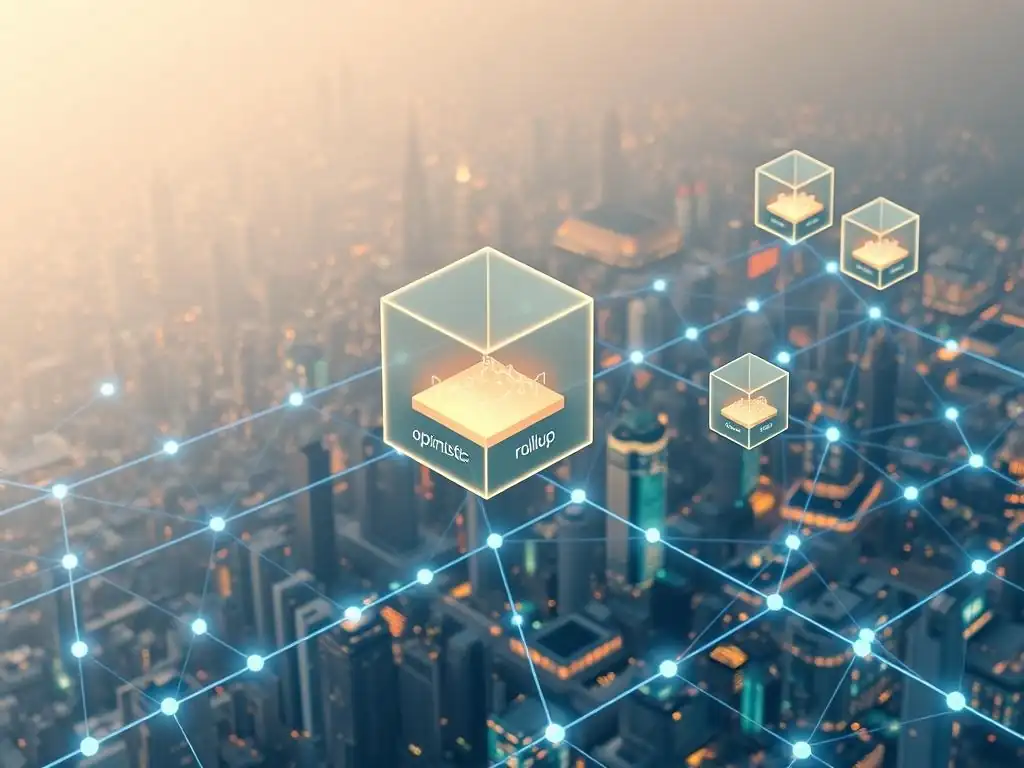
Scaling Decentralized Exchanges (DEXs) with Rollups
Decentralized Exchanges (DEXs) are a prime example of applications that significantly benefit from rollup scaling solutions benefits. DEXs often require high transaction throughput and low latency to provide a trading experience comparable to centralized exchanges. On congested Layer-1 blockchains, DEXs can suffer from slow order execution, high slippage, and exorbitant gas fees, hindering their usability and competitiveness. Rollups offer a solution by enabling DEXs to process a much higher volume of trades at significantly lower costs.
By migrating DEX operations to a rollup, order matching, trade execution, and settlement can occur off-chain with increased speed and reduced fees. The final settlement and asset custody remain anchored to the Layer-1 blockchain through the rollup smart contracts, maintaining security and decentralization. Several DEXs have already adopted or are exploring rollup solutions to enhance their scalability and user experience. This adoption demonstrates the practical impact of rollup scaling solutions benefits in improving the performance and accessibility of DeFi infrastructure.
Rollups for Lending and Borrowing Platforms
Lending and borrowing platforms in the DeFi ecosystem can also greatly benefit from rollup scaling solutions benefits. These platforms often involve frequent interactions, such as loan requests, repayments, liquidations, and interest accruals. On Layer-1 blockchains, these operations can become expensive and slow down during periods of high network activity. Rollups can provide a more efficient and cost-effective environment for these platforms to operate.
By deploying lending and borrowing protocols on rollups, users can experience faster loan processing, lower transaction fees for borrowing and lending activities, and improved overall platform responsiveness. This enhanced efficiency can attract more users to these platforms and facilitate more complex and frequent interactions within the lending and borrowing ecosystem. The reduced gas fees and increased speed offered by rollups make these platforms more accessible and user-friendly, driving further growth and adoption in the DeFi lending and borrowing sector.
Optimizing Yield Farming Strategies with Layer-2 Solutions
Yield farming, a popular DeFi strategy involving moving assets between different protocols to maximize returns, can be significantly optimized using Layer-2 solutions like rollups. Yield farming often involves frequent transactions, such as depositing and withdrawing assets, swapping tokens, and claiming rewards. On Layer-1 blockchains, the high gas fees associated with these frequent transactions can erode profitability and make certain yield farming strategies less attractive, especially for smaller investors.
Rollup scaling solutions benefits directly address this issue by drastically reducing transaction costs. With lower gas fees on rollups, yield farmers can execute more frequent and complex strategies without incurring excessive expenses. This enables more efficient capital deployment, faster reaction to market opportunities, and potentially higher overall yields. Rollups make yield farming more accessible to a wider range of users, including those with smaller capital amounts, and contribute to the overall efficiency and dynamism of the DeFi yield farming ecosystem.
The Future of Rollups: Challenges and Opportunities
Addressing Data Availability Concerns in Rollups
While rollups offer significant scalability advantages, data availability remains a critical challenge and an area of ongoing research and development. Ensuring that transaction data is reliably and permanently available on Layer-1 is crucial for the security of rollups. Current rollup implementations typically post transaction data as calldata on Ethereum, which is relatively expensive and has limitations on data capacity.
Future advancements in data availability solutions are crucial for further enhancing the scalability and cost-effectiveness of rollups. Emerging technologies like data availability sampling (DAS) and dedicated data availability layers aim to provide more efficient and scalable solutions for ensuring data availability. These advancements could significantly reduce the on-chain data footprint of rollups, further lowering gas costs and increasing throughput. Addressing data availability concerns is a key focus area for the future evolution of rollup technology and its widespread adoption.
Interoperability Between Different Rollup Chains
As the rollup ecosystem grows, interoperability between different rollup chains becomes increasingly important. Currently, rollups are often siloed, meaning transferring assets or data between different rollups can be complex and inefficient. Lack of interoperability can hinder the composability of dApps and limit the overall user experience across the Layer-2 landscape.
Developing robust and efficient interoperability solutions for rollups is crucial for creating a more seamless and connected Layer-2 ecosystem. Cross-rollup bridges and communication protocols are being explored to enable users and dApps to interact seamlessly across different rollup chains. Achieving interoperability will unlock new possibilities for cross-rollup applications and enhance the overall utility and user experience of the Layer-2 ecosystem. This is a key area of development for the future of rollup technology and its contribution to a more interconnected blockchain landscape.
The Evolution of Rollup Technology and its Impact on Blockchain Adoption
The evolution of rollup technology is expected to have a profound impact on blockchain adoption. As rollups mature and address current challenges like data availability and interoperability, they are poised to become a dominant scaling solution for blockchain networks, particularly for Ethereum. The rollup scaling solutions benefits in terms of increased throughput, reduced gas fees, and improved user experience are essential for enabling blockchain to handle mass adoption and real-world applications.
Further advancements in rollup technology, such as improved validity proof systems, enhanced fraud proof mechanisms, and more efficient data availability solutions, will continue to push the boundaries of blockchain scalability. The development of more user-friendly tools and frameworks for building and deploying rollups will also contribute to their wider adoption by developers. Rollups are not just a scaling solution; they represent a fundamental shift towards a more scalable and user-centric blockchain ecosystem, paving the way for broader blockchain adoption across various industries and applications.
Rollups vs Other Layer-2 Scaling Solutions
Comparing Rollups to Sidechains: Key Differences
Rollups and sidechains are both Layer-2 scaling solutions, but they differ fundamentally in their security models and relationship to the main Layer-1 blockchain. Sidechains are independent blockchains that run parallel to the main chain. They have their own consensus mechanisms and validators, and while they can communicate with the main chain through bridges, they do not inherit the security of the main chain directly. If a sidechain is compromised, the main chain's security is not directly affected, but users' assets on the sidechain could be at risk.
Rollups, in contrast, derive their security directly from the main Layer-1 blockchain. They post transaction data or validity proofs on-chain, allowing Layer-1 to verify the rollup's state and transactions. This on-chain commitment of data is the key differentiator. While sidechains offer more independence and flexibility, rollups provide a stronger security model by leveraging the security of the main chain. The choice between rollups and sidechains depends on the specific application requirements and the trade-off between security and flexibility. For applications prioritizing security and alignment with the main chain's security model, rollups are often preferred.
Rollups vs Plasma: A Comparative Analysis
Plasma is another Layer-2 scaling solution that aims to increase transaction throughput by processing transactions off-chain. However, Plasma's approach to data availability and security differs significantly from rollups. Plasma relies on "fraud proofs" for security, similar to optimistic rollups, but it requires users to actively monitor the Plasma chain and challenge invalid state transitions using data that may not always be readily available on-chain. This data availability challenge and the complexity of fraud proofs in Plasma have limited its practical adoption.
Rollups, particularly optimistic rollups, can be seen as an evolution of Plasma, addressing some of its key limitations. Rollups mandate on-chain data availability, simplifying fraud proofs and enhancing security. ZK-Rollups, with their validity proofs, offer even stronger security guarantees and faster finality compared to Plasma. While Plasma pioneered the concept of off-chain computation and on-chain anchoring, rollups have emerged as a more practical and secure Layer-2 scaling solution, overcoming some of the complexities and security concerns associated with Plasma.
State Channels and Rollups: Choosing the Right Solution
State channels are Layer-2 scaling solutions designed for specific types of applications that involve frequent interactions between a small set of participants. State channels allow participants to conduct multiple transactions off-chain and only interact with the main chain to open and close the channel. This approach is highly efficient for specific use cases like payment channels or gaming applications where interactions are primarily between known parties.
However, state channels are not suitable for general-purpose scaling or applications where interactions are between many different users or involve complex smart contract logic. Rollups, on the other hand, are designed for general-purpose scaling and can support a wider range of applications, including DeFi protocols and dApps with complex functionalities. Rollups offer broader scalability benefits and are applicable to a wider range of use cases compared to the more specialized state channels. The choice between state channels and rollups depends on the specific application requirements and the nature of interactions within the application.
Implementing Rollup Technology: Considerations for Developers
Tools and Frameworks for Building Rollups
Developing and deploying rollup solutions requires specialized tools and frameworks. For optimistic rollups, frameworks like Arbitrum Nitro and Optimism's OP Stack provide developers with infrastructure and tools to build and deploy optimistic rollups on Ethereum. These frameworks simplify the process of setting up a rollup chain, managing state transitions, and implementing fraud proof mechanisms.
For ZK-Rollups, StarkWare's StarkNet framework and Matter Labs' zkSync framework offer tools and infrastructure for building and deploying ZK-Rollups. These frameworks provide tools for generating validity proofs, managing rollup state, and interacting with Layer-1 smart contracts. Choosing the right framework depends on the type of rollup being implemented (optimistic or ZK-Rollup) and the specific requirements of the application. These frameworks significantly lower the barrier to entry for developers looking to leverage rollup technology for scaling their applications.
Best Practices for Rollup Security
Ensuring the security of rollup implementations is paramount. Best practices for rollup security include rigorous smart contract auditing, comprehensive testing of rollup logic, and robust monitoring of rollup operations. Smart contracts governing the rollup on Layer-1 should undergo thorough security audits by reputable auditors to identify and mitigate potential vulnerabilities. The off-chain components of the rollup, including the operator software and state transition logic, should be rigorously tested to ensure correctness and prevent errors that could compromise security.
Robust monitoring systems should be implemented to track rollup operations, detect anomalies, and respond quickly to potential security incidents. Regular security updates and maintenance are also crucial to address newly discovered vulnerabilities and maintain the overall security posture of the rollup. Adhering to these best practices is essential for building secure and trustworthy rollup solutions.
Auditing and Testing Rollup Implementations
Auditing and testing are critical phases in the development lifecycle of rollup implementations. Audits should be conducted by independent security experts to review the rollup's smart contracts, off-chain code, and overall architecture. Audits should focus on identifying potential vulnerabilities, security flaws, and areas for improvement. Testing should be comprehensive and cover various aspects of the rollup, including functionality, performance, security, and resilience.
Unit tests, integration tests, and end-to-end tests should be conducted to verify the correctness of rollup logic and ensure that all components work as expected. Penetration testing and fuzzing should be performed to identify potential security vulnerabilities and stress test the rollup under various conditions. Thorough auditing and testing are essential for ensuring the reliability, security, and robustness of rollup implementations before deployment and widespread use.
Conclusion: Rollups as a Key Enabler for Blockchain Mass Adoption
The Role of Rollups in Scaling the Future of Decentralized Systems
Rollups are emerging as a pivotal technology in scaling the future of decentralized systems. By addressing the scalability limitations of Layer-1 blockchains, rollups unlock the potential for blockchain to handle mass adoption and support a wide range of real-world applications. The rollup scaling solutions benefits in terms of increased throughput, reduced gas fees, and improved user experience are crucial for making blockchain technology more accessible, user-friendly, and practical for mainstream use.
Rollups are not just a temporary solution; they represent a fundamental architectural improvement in blockchain scalability. As rollup technology continues to evolve and mature, it is expected to play an increasingly important role in shaping the future of decentralized systems and driving the widespread adoption of blockchain technology across various industries and applications.
Key Takeaways on Rollup Scaling Solutions Benefits
The key takeaways regarding rollup scaling solutions benefits are:
- Increased Transaction Throughput: Rollups significantly increase the number of transactions a blockchain network can process, enabling higher scalability.
- Reduced Gas Fees: Rollups drastically reduce transaction costs, making blockchain applications more affordable for users.
- Enhanced Scalability for dApps: Rollups enable dApps to handle a larger user base and more complex functionalities without performance degradation.
- Improved User Experience: Faster transaction speeds and lower fees lead to a significantly improved user experience on blockchain networks.
- Security Inherited from Layer-1: Rollups inherit the security of the underlying Layer-1 blockchain, providing a robust security model.
These rollup scaling solutions benefits position rollups as a crucial technology for overcoming blockchain scalability challenges and driving wider adoption.
Future Predictions for Rollup Technology
The future of rollup technology is bright, with several key trends and predictions emerging:
- Increased Adoption: Rollup adoption will continue to grow rapidly as more projects and developers recognize their scalability benefits.
- Advancements in ZK-Rollups: ZK-Rollup technology will mature, becoming more practical and developer-friendly, potentially surpassing optimistic rollups in certain use cases.
- Interoperability Solutions: Cross-rollup interoperability solutions will become more prevalent, creating a more connected and user-friendly Layer-2 ecosystem.
- Data Availability Innovations: Advancements in data availability solutions will further enhance the scalability and cost-effectiveness of rollups.
- Rollups as the Dominant Scaling Paradigm: Rollups are likely to become the dominant scaling paradigm for Ethereum and potentially other blockchain networks, playing a central role in the evolution of decentralized systems.
These predictions highlight the transformative potential of rollup technology and its crucial role in shaping the future of blockchain and decentralized applications.
Frequently Asked Questions
What are Rollups and why are they considered Layer-2 scaling solutions?
Rollups are a type of Layer-2 scaling solution that processes transactions off the main blockchain (Layer-1) and then posts the transaction data back onto it. This significantly reduces congestion and lowers transaction fees on the main chain.
How do Rollups improve transaction throughput compared to the main chain?
Rollups achieve higher throughput by batching multiple transactions into a single transaction on the main chain. This reduces the computational load on the main chain, allowing it to handle more transactions overall.
What are the main types of Rollups, and what are their key differences?
The two main types are Optimistic Rollups and Zero-Knowledge Rollups (ZK-Rollups). Optimistic Rollups assume transactions are valid unless challenged, while ZK-Rollups use cryptography to prove transaction validity before posting to the main chain.
What are the potential benefits of using Rollup scaling solutions for businesses?
Businesses can benefit from lower transaction fees, faster transaction processing times, and increased scalability when using Rollups. This makes blockchain technology more accessible and cost-effective for various enterprise applications.
What are the current challenges and limitations associated with Rollup technology?
While promising, Rollups still face challenges such as withdrawal delays in Optimistic Rollups and the complexity of implementing and auditing ZK-Rollups. These are active areas of ongoing research and development.
Final Reflection: Embracing the Rollup Revolution
The journey through the intricacies of rollups reveals not just a technical solution, but a paradigm shift in how we approach blockchain scalability. The promise of faster, cheaper transactions without compromising security is no longer a distant dream, but a tangible reality being actively deployed and refined. Understanding the benefits of rollup scaling solutions is crucial for anyone seeking to navigate the evolving landscape of decentralized applications and the broader Web3 ecosystem.
The impact of rollups extends far beyond mere technical improvements; it touches upon the very core of blockchain's accessibility and usability. The potential for widespread adoption hinges on making blockchain technology seamless and affordable for everyday users, and rollups are a key enabler of this vision. The future of blockchain is multi-chain, and rollups are the bridge that connects them.
This quote encapsulates the transformative power of rollups in fostering interoperability and unlocking the full potential of decentralized networks.
As we stand on the cusp of a new era in blockchain technology, let us not simply be passive observers. Let us embrace the rollup revolution, explore its possibilities, and contribute to its ongoing development. Consider how these scaling solutions can empower your own projects, improve your understanding of decentralized finance, and ultimately, help shape a more inclusive and accessible future for all. The time to understand and engage with rollups is now.
Unlock the Power of Layer2: Dive Deeper into Rollups!
Thank you for exploring the world of rollups with us! We hope you now have a solid understanding of how these Layer2 solutions are transforming blockchain scalability. Now it's time to turn that knowledge into action.
Here's how you can continue your journey with rollups:
- Explore the code: Start reviewing the documentation of leading rollup projects. This will give you firsthand insight into how they are designed and implemented.
- Share your insights: Discuss this article and your favorite rollup solutions on your social media channels using relevant hashtags.
- Experiment with DApps: Try interacting with a decentralized application built on a rollup platform. This hands-on experience will deepen your understanding of the user experience and capabilities.
Are you ready to experiment with rollups and help shape the future of decentralized applications?
Leave a Reply