
The Potential of ZeroKnowledge Proofs to Enhance Blockchain Interoperability


Welcome to Blockchain Trends, your go-to source for understanding the revolutionary power of blockchain beyond the hype.
Delve into the fascinating world of decentralized innovation, from DeFi to enterprise solutions, as we unravel the complexities and explore the future of this transformative technology. Ever wondered how to achieve seamless and secure communication between different blockchains? Our featured article explores the cutting-edge potential of zero knowledge proof blockchain interoperability and how it could redefine the entire landscape. Discover the secrets behind this revolutionary approach and unlock a future of trustless and efficient data exchange. Intrigued? Read on to explore the potential!
- Introduction: Addressing Interoperability Challenges with Zero-Knowledge Proofs
- Zero-Knowledge Proofs for Secure Cross-Chain Asset Transfers
- Enabling Interoperable Smart Contracts with Zero-Knowledge
- Overcoming Scalability Limitations in Blockchain Interoperability
- Privacy-Preserving Data Sharing Across Blockchains
- Addressing Security Concerns in Blockchain Interoperability
- The Future of Zero-Knowledge Proofs and Blockchain Interoperability
- Conclusion: Zero-Knowledge Proofs as a Key Enabler for Blockchain Interconnection
-
Frequently Asked Questions
- What is a Zero-Knowledge Proof (ZKP) and how does it relate to blockchain interoperability?
- How can Zero-Knowledge Proofs enhance blockchain interoperability?
- What are some challenges in implementing Zero-Knowledge Proofs for blockchain interoperability?
- What are the key benefits of using Zero-Knowledge Proofs for blockchain interoperability, compared to other solutions?
- How might regulation impact the use of Zero-Knowledge Proofs in blockchain interoperability?
- Final Reflection: Unlocking Trust in a Connected Future
- Unlock the Future: Dive Deeper into Blockchain's Interoperable World!
Introduction: Addressing Interoperability Challenges with Zero-Knowledge Proofs
The Critical Need for Blockchain Communication
In the burgeoning landscape of blockchain technology, the proliferation of independent networks has inadvertently led to a fragmented ecosystem. Each blockchain, often designed for specific purposes or industries, operates in isolation, creating silos of data and value. This lack of communication between blockchains, known as interoperability, presents a significant hurdle to realizing the full potential of distributed ledger technology. For blockchain to move beyond niche applications and become a truly transformative force across various sectors, seamless communication and interaction between different networks are not just desirable but absolutely essential.
Imagine a world where financial transactions, supply chain data, and digital identities are distributed across numerous blockchains. Without interoperability, accessing and leveraging these disparate pieces of information becomes cumbersome and inefficient. For instance, consider a decentralized finance (DeFi) ecosystem where assets are locked on different chains.
A user might have collateral on one blockchain and desire to borrow against it on another. Without effective cross-chain communication, this process becomes complex, often requiring centralized intermediaries or risky wrapped assets. The ability for blockchains to communicate and share information securely and efficiently is paramount for creating a cohesive and user-friendly blockchain ecosystem.
Understanding Blockchain Silos and Their Impact
Blockchain silos arise from the inherent design of many blockchain networks as self-contained and independent entities. While this isolation offers benefits in terms of security and autonomy, it simultaneously limits the flow of information and value across different ecosystems. These silos manifest in several ways, creating significant challenges for users and developers alike.
Liquidity fragmentation is a primary consequence, where assets are dispersed across various chains, hindering efficient capital utilization and price discovery. For example, a substantial amount of Bitcoin might be locked on the Bitcoin blockchain, while a growing DeFi ecosystem exists primarily on Ethereum, limiting the potential synergy between these massive networks.
Furthermore, data isolation within blockchain silos prevents the creation of truly interconnected and comprehensive decentralized applications (dApps). A dApp designed to manage supply chain logistics, for instance, might need to access data from a blockchain tracking raw materials, another managing manufacturing processes, and yet another handling shipping and delivery.
If these blockchains cannot communicate, the dApp's functionality is severely restricted, forcing developers to either build within a single, potentially less suitable blockchain or resort to complex and often insecure workarounds. The impact of these silos extends beyond technical limitations, hindering innovation and slowing down the widespread adoption of blockchain technology by limiting its potential to address complex, multi-faceted problems.
Zero-Knowledge Proofs: Principles of Privacy and Verification
Zero-Knowledge Proofs (ZKPs) represent a revolutionary cryptographic technique that allows one party (the prover) to convince another party (the verifier) that a statement is true without revealing any information beyond the validity of the statement itself. At its core, a ZKP relies on mathematical constructions that enable the prover to demonstrate knowledge of certain information or the correct execution of a computation without divulging the underlying details. This is achieved through a series of interactive or non-interactive steps that convince the verifier with a high degree of certainty, without transmitting the secret information itself.
The power of ZKPs lies in their ability to reconcile the seemingly contradictory goals of privacy and verification. In traditional systems, proving something often necessitates revealing the underlying data. ZKPs break this paradigm by enabling verification without disclosure.
For example, imagine proving you are over 18 years old without revealing your actual birth date. A ZKP could allow you to cryptographically demonstrate this fact to a verifier without ever sharing your sensitive date of birth. This principle of selective disclosure and verifiable computation is fundamental to understanding how ZKPs can be applied to enhance blockchain interoperability, enabling secure and private cross-chain interactions while maintaining trust and transparency.
Bridging Blockchain Gaps with Zero-Knowledge Proofs
Zero-Knowledge Proofs offer a powerful solution to bridge the gaps between disparate blockchain networks by enabling secure and private communication and data exchange. Unlike traditional bridging mechanisms that often rely on trusted intermediaries or complex multi-signature schemes, ZKPs provide a cryptographic approach to verify the state and transactions of one blockchain on another, without the need to reveal sensitive details or rely on centralized entities. This capability is crucial for establishing trustless and efficient interoperability solutions.
By leveraging ZKPs, a blockchain can prove to another blockchain that a specific event has occurred or a certain condition has been met, without disclosing the specifics of the underlying data or transactions. For example, a ZKP can be used to prove that a user has deposited a certain amount of tokens on one blockchain, allowing them to access corresponding assets or services on another blockchain, all without revealing the user's account balance or transaction history in detail.
This privacy-preserving aspect of ZKPs is particularly valuable in cross-chain scenarios, where different blockchains may have varying levels of transparency and data sensitivity requirements. By enabling verifiable and private cross-chain communication, ZKPs pave the way for a more interconnected and robust blockchain ecosystem.
Zero-Knowledge Proofs for Secure Cross-Chain Asset Transfers
Secure and Private Cross-Chain Swaps using ZKPs
Cross-chain swaps, the ability to exchange assets directly between different blockchains, are fundamental to a truly interoperable blockchain ecosystem. Traditional methods for cross-chain swaps often involve centralized exchanges or complex atomic swaps, which can introduce security vulnerabilities and limitations in terms of privacy. Zero-Knowledge Proofs offer a more secure and private alternative by enabling verifiable and confidential cross-chain asset exchanges. By leveraging ZKPs, users can execute swaps without revealing the details of their transactions to intermediaries or the public blockchain, enhancing both security and user privacy.
Consider a scenario where a user wants to swap Bitcoin for Ether. Using ZKP-based cross-chain swaps, the user can prove to the Ethereum blockchain that they have locked a corresponding amount of Bitcoin on the Bitcoin blockchain, without revealing the specific Bitcoin transaction details or their Bitcoin wallet address. This proof can then be verified on the Ethereum blockchain, triggering the release of Ether to the user's Ethereum address.
The entire process occurs in a trust-minimized and privacy-preserving manner, eliminating the need for centralized custodians or exposing sensitive transaction information. This approach significantly reduces the risk of theft, censorship, and surveillance associated with traditional cross-chain swap methods, fostering a more secure and user-centric DeFi environment.
Minimizing Trust in Bridging Protocols with Zero-Knowledge
Bridging protocols are essential infrastructure for enabling cross-chain asset transfers and data communication. However, many existing bridging solutions rely on a "trust-but-verify" model, where users must trust a set of validators or intermediaries to correctly relay information and manage assets across chains. This reliance on trust introduces potential vulnerabilities, as bridges can become targets for exploits and attacks, as evidenced by several high-profile bridge hacks in recent years, resulting in losses of hundreds of millions of dollars. Zero-Knowledge Proofs offer a pathway to significantly minimize trust in bridging protocols by enabling verifiable computation and state transitions across blockchains.
By integrating ZKPs into bridging protocols, the verification process for cross-chain transactions can be made cryptographically secure and independent of trusted intermediaries. Instead of relying on validators to attest to the validity of cross-chain events, ZKPs allow for the generation of succinct and verifiable proofs that can be efficiently checked on the destination blockchain.
For instance, a ZKP can prove that a specific transaction occurred on the source chain and that the corresponding assets should be released on the destination chain, without requiring the destination chain to trust the bridge operators or validators. This shift from trust-based to cryptography-based security significantly strengthens the robustness of bridging protocols, reducing the attack surface and enhancing the overall security of cross-chain asset transfers and communication.
Optimizing Cross-Chain Transfer Speed and Cost
Traditional cross-chain transfer mechanisms can often be slow and expensive, particularly when involving blockchains with different consensus mechanisms and transaction processing speeds. The delays are often attributed to the need for multiple confirmations on the source chain, waiting for bridge validators to process and relay transactions, and incurring gas fees on both the source and destination chains. Zero-Knowledge Proofs have the potential to optimize both the speed and cost of cross-chain transfers by streamlining the verification process and reducing on-chain data requirements.
ZKPs enable faster verification of cross-chain transactions because the proofs themselves are typically very small and can be verified quickly, regardless of the complexity of the underlying computation. This contrasts with methods that require re-executing transactions or relying on lengthy confirmation periods. Furthermore, ZKPs can reduce the cost of cross-chain transfers by minimizing the amount of data that needs to be transmitted and processed on-chain.
For example, instead of sending entire transaction logs or state updates across chains, only a compact ZKP needs to be transmitted and verified. This reduction in data transmission and on-chain computation translates to lower gas fees and faster processing times, making cross-chain transfers more efficient and accessible.
Example: Using ZK-SNARKs for Confidential Token Transfers Between Ethereum and Zcash
ZK-SNARKs (Zero-Knowledge Succinct Non-Interactive Argument of Knowledge) are a specific type of ZKP known for their efficiency and succinctness, making them well-suited for blockchain applications. They have been successfully implemented in privacy-focused cryptocurrencies like Zcash and are now being explored for enhancing cross-chain interoperability. Consider the example of using ZK-SNARKs to facilitate confidential token transfers between Ethereum and Zcash. Ethereum, while widely used, lacks native privacy features for transactions, while Zcash is designed specifically for privacy using ZK-SNARKs.
By employing ZK-SNARKs, a user on Ethereum could transfer ERC-20 tokens to a user on Zcash in a confidential manner. The process would involve generating a ZK-SNARK on the Ethereum side that proves the validity of the token transfer and the user's authorization, without revealing the sender's or receiver's addresses or the amount being transferred on the public Ethereum blockchain.
This proof would then be relayed to the Zcash blockchain, where it could be efficiently verified, triggering the minting of equivalent Zcash tokens for the recipient. This example showcases the potential of ZK-SNARKs to bridge blockchains with different privacy models, enabling confidential cross-chain asset transfers and expanding the possibilities for privacy-preserving DeFi applications.
Enabling Interoperable Smart Contracts with Zero-Knowledge
Verifying Smart Contract Execution Across Blockchains
Smart contracts, self-executing agreements written in code, are a cornerstone of blockchain technology. However, their functionality is typically limited to the blockchain on which they are deployed. Enabling interoperable smart contracts, capable of interacting and executing logic across multiple blockchains, is crucial for unlocking the full potential of decentralized applications. Zero-Knowledge Proofs provide a mechanism to verify the correct execution of smart contracts on one blockchain to another, enabling secure and trustless cross-chain smart contract interactions.
ZKPs can be used to create "proof-of-computation" for smart contract executions. Imagine a smart contract on Blockchain A that needs to trigger an action on Blockchain B based on a complex computation. Instead of re-executing the entire smart contract logic on Blockchain B, which might be inefficient or even impossible due to different virtual machine environments, Blockchain A can generate a ZKP that proves the correct execution of the smart contract and the resulting state transition.
This ZKP can then be submitted to Blockchain B, which can efficiently verify the proof and confidently execute the corresponding action based on the verified computation result from Blockchain A. This approach allows for the creation of sophisticated cross-chain workflows and dApps that leverage the unique capabilities of different blockchains while maintaining trust and security.
Enhancing Privacy in Cross-Chain Smart Contract Interactions
While enabling cross-chain smart contract execution is important, preserving privacy in these interactions is equally critical, especially when dealing with sensitive data or business logic. Traditional approaches to cross-chain smart contracts often expose all transaction data and smart contract code to public blockchains, potentially compromising privacy. Zero-Knowledge Proofs offer a solution to enhance privacy in cross-chain smart contract interactions by allowing for selective disclosure and verifiable computation on private data across different blockchains.
Using ZKPs, smart contracts on different blockchains can interact and exchange information without revealing the underlying sensitive data or the details of the smart contract logic to the public. For example, a smart contract on a permissioned blockchain holding confidential business data can generate a ZKP that proves a certain condition is met based on this private data, without revealing the data itself to a public blockchain.
A smart contract on the public blockchain can then verify this ZKP and trigger actions based on the proven condition, effectively leveraging private data from the permissioned blockchain without compromising its confidentiality. This capability is crucial for enabling cross-chain applications in regulated industries or scenarios where data privacy is paramount, such as supply chain management, healthcare, and finance.
Building Decentralized Applications (dApps) with Cross-Chain Functionality
The ability to build dApps with cross-chain functionality is a key driver for the widespread adoption of blockchain technology. Currently, dApps are often confined to a single blockchain, limiting their reach and functionality. Zero-Knowledge Proofs empower developers to create truly decentralized and interoperable applications that can leverage the strengths of multiple blockchains, creating richer user experiences and expanding the potential use cases for blockchain technology.
With ZKPs, dApps can be designed to seamlessly interact with smart contracts and data across different blockchains. For instance, a DeFi dApp could leverage liquidity pools on multiple chains, optimize yield strategies across different protocols, or offer cross-chain lending and borrowing services.
Similarly, a supply chain dApp could track goods across different blockchains used by various stakeholders in the supply chain, ensuring data integrity and transparency across the entire network. By abstracting away the complexities of cross-chain communication and providing a secure and privacy-preserving interoperability layer, ZKPs enable developers to focus on building innovative dApp functionalities that span across multiple blockchain ecosystems, fostering a more connected and versatile decentralized web.
Case Study: A Cross-Chain Lending Protocol Leveraging ZKPs
Consider a hypothetical cross-chain lending protocol designed to allow users to borrow and lend assets across different blockchains, such as Ethereum, Polkadot, and Cosmos. Without interoperability, users would be limited to borrowing and lending assets within a single blockchain ecosystem. However, by leveraging Zero-Knowledge Proofs, this protocol can enable seamless and secure cross-chain lending.
In this ZKP-powered cross-chain lending protocol, a user wanting to borrow assets on Ethereum using collateral on Polkadot would initiate a loan request. The protocol would use ZKPs to verify that the user has sufficient collateral locked on the Polkadot blockchain, without needing to move the collateral to Ethereum or reveal the user's Polkadot wallet balance to the Ethereum network. Once the ZKP is verified on Ethereum, the lending protocol would release the requested loan amount to the user on Ethereum.
Similarly, when the user repays the loan on Ethereum, another ZKP could be generated to signal the repayment to the Polkadot side, unlocking the collateral. This case study illustrates how ZKPs can facilitate complex cross-chain financial applications, enabling efficient capital utilization and expanding the scope of DeFi beyond single-chain limitations, all while maintaining security and user privacy.
Overcoming Scalability Limitations in Blockchain Interoperability
Reducing On-Chain Data Requirements with ZK-Rollups for Interoperability
Scalability remains a significant challenge for blockchain technology, and interoperability solutions must also address scalability concerns to ensure efficient and cost-effective cross-chain communication. One promising approach to enhance scalability in interoperability is the use of ZK-Rollups, a Layer-2 scaling solution that leverages Zero-Knowledge Proofs to bundle multiple transactions off-chain and then submit a single, succinct proof of their validity to the main chain. ZK-Rollups can significantly reduce on-chain data requirements for interoperability by summarizing cross-chain transactions and interactions into compact proofs.
When applied to interoperability, ZK-Rollups can be used to aggregate multiple cross-chain transactions or state updates into a single ZKP. Instead of recording every individual cross-chain transaction on the destination blockchain, a ZK-Rollup can generate a proof that summarizes the collective effect of a batch of cross-chain operations.
This proof, being significantly smaller than the raw transaction data, can be efficiently verified on-chain, reducing the burden on the destination blockchain and improving overall scalability. For instance, in a cross-chain bridge, ZK-Rollups could be used to batch multiple cross-chain asset transfers into a single proof, reducing the gas costs and increasing the throughput of the bridge.
Optimizing Bandwidth Usage in Cross-Chain Communication
Bandwidth limitations can also pose a bottleneck for cross-chain communication, especially when dealing with large volumes of data or complex state transitions. Transmitting full transaction data or entire blockchain states across networks can be inefficient and costly, particularly for blockchains with limited bandwidth capacity. Zero-Knowledge Proofs offer a solution to optimize bandwidth usage in cross-chain communication due to their succinct nature. ZKPs are designed to be significantly smaller in size compared to the data they represent, allowing for more efficient transmission of verifiable information across blockchains.
By using ZKPs, interoperability solutions can transmit only the necessary cryptographic proofs across chains, rather than the entire raw data. For example, when verifying a cross-chain transaction, instead of sending the full transaction details from the source chain to the destination chain, only a compact ZKP needs to be transmitted. This reduction in data transmission significantly optimizes bandwidth usage, making cross-chain communication faster and more efficient, especially in bandwidth-constrained environments. This efficiency is particularly valuable for enabling interoperability between resource-constrained blockchains or for handling high volumes of cross-chain transactions.
Improving Transaction Throughput for Interoperable Applications
Transaction throughput, the number of transactions a system can process per second, is a critical performance metric for blockchain applications, including interoperable systems. Slow transaction throughput can lead to congestion, delays, and a poor user experience. Zero-Knowledge Proofs can contribute to improving transaction throughput for interoperable applications by enabling faster verification and reducing on-chain processing overhead.
ZKPs allow for rapid verification of complex computations and state transitions. The verification process for ZKPs is typically much faster than re-executing the original computation or verifying traditional cryptographic signatures. This fast verification capability is particularly beneficial in cross-chain scenarios where transactions need to be verified on multiple blockchains.
By using ZKPs, the verification overhead on each blockchain involved in a cross-chain interaction can be significantly reduced, leading to faster transaction processing times and higher overall throughput for interoperable applications. This improved throughput is crucial for supporting real-world applications that require high transaction volumes and low latency, such as cross-chain payments, decentralized exchanges, and high-frequency DeFi operations.
Example: Utilizing ZK-STARKs for Scalable Cross-Chain Data Verification on Polkadot
ZK-STARKs (Zero-Knowledge Scalable Transparent Argument of Knowledge) are another type of ZKP known for their scalability and transparency, making them suitable for applications requiring high throughput and verifiability without trusted setups. Polkadot, a heterogeneous multi-chain platform designed for interoperability, can benefit from ZK-STARKs for scalable cross-chain data verification. Consider the example of using ZK-STARKs to verify data relayed from a Polkadot parachain (a connected blockchain) to the Polkadot Relay Chain (the main chain coordinating parachains).
In this scenario, a parachain could generate a ZK-STARK to prove the validity of data being relayed to the Relay Chain, such as transaction summaries or state updates. The ZK-STARK, due to its scalability, can efficiently handle large volumes of data and complex computations associated with parachain state transitions.
The Relay Chain, with its validators, can then quickly and transparently verify the ZK-STARK, ensuring the integrity and correctness of the data relayed from the parachain without needing to process the entire dataset or re-execute the parachain's logic. This approach leveraging ZK-STARKs enables Polkadot to achieve scalable cross-chain data verification, supporting a high number of parachains and facilitating efficient communication within its multi-chain ecosystem.
Privacy-Preserving Data Sharing Across Blockchains
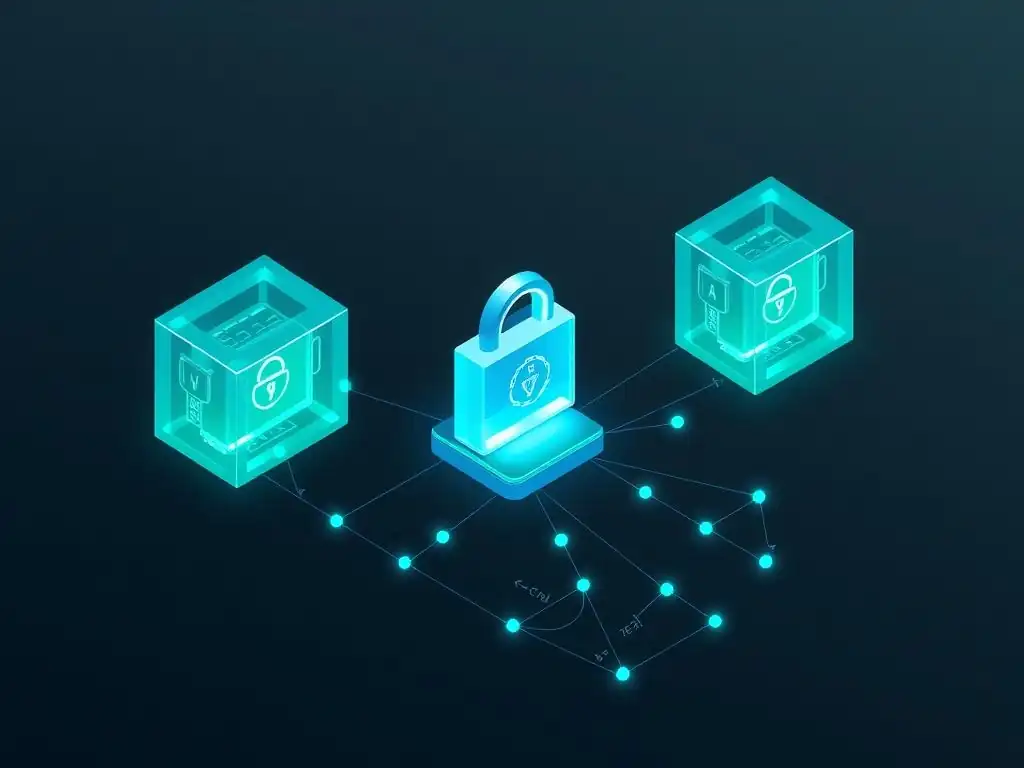
Securely Sharing Data Between Permissioned and Permissionless Blockchains
The blockchain landscape encompasses both permissionless (public) blockchains, like Bitcoin and Ethereum, and permissioned (private or consortium) blockchains, often used by enterprises for sensitive data management. Interoperability between these different types of blockchains presents unique challenges, particularly concerning data privacy and access control. Zero-Knowledge Proofs offer a powerful mechanism to securely share data between permissioned and permissionless blockchains while maintaining data confidentiality and adhering to access control policies.
ZKPs enable selective data disclosure, allowing permissioned blockchains to share verifiable information with permissionless blockchains without revealing the underlying sensitive data itself. For example, a permissioned blockchain holding confidential supply chain data can generate a ZKP that proves the origin and authenticity of a product to a permissionless blockchain, without disclosing proprietary manufacturing processes or supplier details.
This ZKP can then be verified on the permissionless blockchain, providing transparency and traceability of the product's provenance without compromising the confidentiality of the permissioned blockchain's data. This capability is crucial for bridging the gap between private enterprise blockchains and public blockchain ecosystems, enabling secure and privacy-preserving data sharing for various cross-industry applications.
Complying with Data Privacy Regulations in Cross-Chain Environments
Data privacy regulations, such as GDPR and CCPA, impose strict requirements on the collection, processing, and sharing of personal data. In cross-chain environments, where data might flow across multiple jurisdictions and blockchain networks, complying with these regulations becomes even more complex. Zero-Knowledge Proofs can play a vital role in facilitating compliance with data privacy regulations in cross-chain scenarios by enabling selective disclosure and minimizing data exposure.
ZKPs allow for the creation of privacy-preserving interoperability solutions that minimize the amount of personal data that needs to be shared or processed across blockchains. For instance, when transferring user identity information across chains, ZKPs can be used to prove specific attributes of a user's identity (e.g., age verification) without revealing their full identity details.
This selective disclosure capability reduces the risk of data breaches and unauthorized access, helping organizations comply with data minimization principles and user consent requirements mandated by privacy regulations. Furthermore, ZKPs can enable auditable and transparent data sharing practices, allowing organizations to demonstrate compliance with regulatory requirements while still benefiting from cross-chain interoperability.
Building Trustless Data Marketplaces with Zero-Knowledge Proofs
Data marketplaces are emerging as a significant application of blockchain technology, enabling the secure and transparent trading of data assets. However, traditional data marketplaces often require users to trust centralized platforms with their sensitive data. Zero-Knowledge Proofs can facilitate the creation of trustless data marketplaces where data providers can sell access to their data without revealing the data itself to the marketplace platform or potential buyers until a purchase is made.
In a ZKP-powered data marketplace, data providers can generate ZKPs that prove the quality, relevance, or accuracy of their data without disclosing the actual data content. Buyers can then verify these proofs to assess the value of the data before making a purchase. Once a purchase is made, the data provider can selectively reveal the data to the buyer, potentially using further ZKPs to control access and usage rights.
This approach eliminates the need for a trusted intermediary to handle and protect the data, fostering a more secure, transparent, and user-centric data trading environment. ZKPs empower data providers to maintain control over their data while participating in data marketplaces, unlocking new opportunities for data monetization and innovation.
Use Case: Secure Data Sharing using ZKPs in Pharmaceutical Supply Chains
The pharmaceutical supply chain is a complex and highly regulated industry that involves numerous stakeholders and sensitive data, including drug formulations, manufacturing processes, and patient information. Secure data sharing and traceability are crucial for ensuring drug quality, preventing counterfeiting, and complying with regulatory requirements. Zero-Knowledge Proofs can be applied to enhance data security and privacy in pharmaceutical supply chains by enabling selective and verifiable data sharing between different stakeholders across various blockchain networks.
Imagine a pharmaceutical supply chain utilizing multiple blockchains to track drugs from manufacturing to distribution. Manufacturers, distributors, and pharmacies can use permissioned blockchains to manage their internal data securely. When sharing data with regulatory agencies or downstream partners on different blockchains, ZKPs can be used to prove the authenticity and provenance of drugs without revealing proprietary manufacturing details or sensitive patient data. For instance, a manufacturer could generate a ZKP to prove that a batch of drugs meets quality standards without disclosing the exact formulation or manufacturing process. This ZKP can be verified by regulatory agencies on a separate blockchain, enabling efficient and privacy-preserving regulatory compliance. Similarly, pharmacies could verify the authenticity of drugs using ZKPs without needing access to the manufacturer's confidential data. This use case highlights the potential of ZKPs to enhance data security, privacy, and transparency in complex and sensitive supply chain ecosystems like the pharmaceutical industry.
Addressing Security Concerns in Blockchain Interoperability
Mitigating Cross-Chain Attacks with Zero-Knowledge Proofs
Blockchain interoperability, while offering numerous benefits, also introduces new security challenges. Cross-chain bridges, in particular, have become attractive targets for attackers due to the large amounts of assets they often hold and the complexity of their security models. Zero-Knowledge Proofs can play a crucial role in mitigating cross-chain attacks by enhancing the security of bridging mechanisms and reducing trust assumptions.
ZKPs can strengthen bridge security by enabling verifiable computation and state transitions across chains. Instead of relying on trusted validators or multi-signature schemes that can be compromised, ZKPs allow for cryptographic verification of cross-chain events. For example, a ZKP can prove that a specific transaction occurred on the source chain and that the corresponding assets should be released on the destination chain, without requiring the destination chain to trust the bridge operators.
This shift towards cryptography-based security reduces the attack surface of bridges and makes them more resilient to exploits. Furthermore, ZKPs can be used to implement fraud proofs and dispute resolution mechanisms in bridges, allowing for the detection and reversal of malicious cross-chain transactions, further enhancing security.
Enhancing the Security of Bridge Infrastructure
The security of bridge infrastructure is paramount for the overall security of cross-chain ecosystems. Compromised bridge infrastructure can lead to massive asset losses and disruption of cross-chain services. Zero-Knowledge Proofs can contribute to enhancing the security of bridge infrastructure by enabling more robust and verifiable security mechanisms.
ZKPs can be used to build more secure and verifiable bridge designs. For instance, bridges can leverage ZKPs to implement secure multi-party computation (MPC) protocols for key management and transaction signing, reducing the risk of key compromise.
ZKPs can also be used to create verifiable light clients for cross-chain communication, allowing bridges to efficiently verify the state of remote blockchains without relying on full nodes, minimizing trust assumptions and improving security. Additionally, ZKPs can facilitate the implementation of formal verification techniques to rigorously analyze and prove the security properties of bridge protocols, further enhancing the trustworthiness and robustness of bridge infrastructure.
Auditing and Verification of Cross-Chain Transactions
Auditing and verification of cross-chain transactions can be complex and challenging due to the involvement of multiple blockchains and potentially opaque bridging mechanisms. Traditional auditing methods may struggle to provide comprehensive and transparent verification of cross-chain activities. Zero-Knowledge Proofs can simplify and enhance the auditing and verification of cross-chain transactions due to their succinct and verifiable nature.
ZKPs provide concise and easily verifiable proofs of cross-chain events and state transitions. These proofs can be used by auditors and verifiers to quickly and efficiently assess the integrity and correctness of cross-chain transactions without needing to analyze large volumes of raw transaction data or understand the intricacies of underlying bridging protocols.
ZKPs can also be used to generate audit trails and compliance reports for cross-chain activities, providing transparent and auditable records of cross-chain data flows and asset movements. This enhanced auditability and verifiability are crucial for building trust and accountability in cross-chain ecosystems, particularly in regulated industries and applications requiring high levels of transparency.
Security Best Practices for Implementing ZKPs in Blockchain Interoperability
While Zero-Knowledge Proofs offer significant security benefits for blockchain interoperability, their effective implementation requires careful consideration and adherence to security best practices. Improperly implemented ZKPs can introduce new vulnerabilities or fail to provide the intended security guarantees. Therefore, it is crucial to follow security best practices when integrating ZKPs into interoperability solutions.
These best practices include: selecting appropriate ZKP schemes based on the specific security and performance requirements of the application; rigorously auditing and formally verifying ZKP implementations to ensure correctness and security; implementing robust key management and access control mechanisms for ZKP generation and verification processes; regularly updating ZKP libraries and protocols to address potential vulnerabilities and incorporate advancements in ZKP research; and conducting thorough security testing and penetration testing of interoperability solutions that utilize ZKPs. By adhering to these security best practices, developers can effectively leverage the security benefits of ZKPs to build robust and trustworthy blockchain interoperability solutions.
The Future of Zero-Knowledge Proofs and Blockchain Interoperability
Emerging ZKP Technologies for Enhanced Interoperability
The field of Zero-Knowledge Proofs is rapidly evolving, with ongoing research and development leading to new ZKP technologies that promise to further enhance blockchain interoperability. Advancements in ZKP schemes, such as improved proof generation and verification speeds, reduced proof sizes, and increased cryptographic security, are continuously expanding the applicability and efficiency of ZKPs in cross-chain scenarios.
Emerging ZKP technologies include advancements in recursive ZKPs, which allow for the composition of proofs, enabling more complex and scalable interoperability solutions. Developments in hardware acceleration for ZKP computations are also making ZKP implementations faster and more practical for real-world cross-chain applications. Furthermore, research into new ZKP constructions, such as post-quantum ZKPs resistant to quantum computer attacks, is ensuring the long-term security and resilience of ZKP-based interoperability solutions. These ongoing advancements in ZKP technologies will continue to drive innovation and improve the capabilities of blockchain interoperability, paving the way for more seamless and secure cross-chain interactions in the future.
Standardization Efforts for Cross-Chain Communication
Standardization is crucial for fostering widespread adoption and seamless integration of blockchain interoperability solutions. Currently, the lack of standardized protocols and interfaces for cross-chain communication hinders interoperability and creates fragmentation in the blockchain ecosystem. Standardization efforts are underway to address this challenge, and Zero-Knowledge Proofs are expected to play a key role in shaping these standards.
Standardized ZKP-based protocols for cross-chain messaging, asset transfers, and smart contract interactions are essential for enabling different blockchains to communicate and interoperate effectively. Industry consortia and standardization bodies are working on defining common ZKP-based interfaces and protocols that can be adopted across various blockchain platforms. These standardization efforts will facilitate the development of interoperable dApps and services that can seamlessly operate across multiple blockchains, promoting a more connected and collaborative blockchain ecosystem. Standardization will also contribute to reducing development costs and complexity for interoperability solutions, accelerating their adoption and deployment.
The Role of ZKPs in a Multi-Chain Future
The blockchain industry is increasingly moving towards a multi-chain future, where numerous specialized blockchains coexist and interoperate to serve diverse use cases and industries. In this multi-chain landscape, seamless and secure interoperability is paramount for unlocking the full potential of blockchain technology. Zero-Knowledge Proofs are poised to play a central role in enabling this multi-chain future by providing the necessary cryptographic tools for secure, private, and scalable cross-chain communication and interaction.
ZKPs will be instrumental in bridging the gaps between different blockchains, enabling cross-chain asset transfers, smart contract interactions, and data sharing in a trustless and privacy-preserving manner. As the number of blockchains continues to grow and the demand for interoperability increases, ZKP-based solutions will become increasingly critical for connecting these disparate networks and creating a cohesive and interconnected blockchain ecosystem. The ability of ZKPs to enhance security, privacy, and scalability in cross-chain scenarios makes them a fundamental technology for realizing the vision of a truly interoperable and multi-chain blockchain future.
Predictions for the Adoption of ZKPs in Blockchain Interoperability
The adoption of Zero-Knowledge Proofs in blockchain interoperability is expected to accelerate in the coming years as the technology matures, standardization efforts progress, and the demand for cross-chain solutions grows. Several key trends and predictions point towards increased adoption of ZKPs in this domain.
Firstly, the increasing focus on privacy and data security in blockchain applications will drive the adoption of ZKP-based interoperability solutions that offer enhanced privacy features. Secondly, the growing need for scalable and efficient cross-chain communication will favor ZKP-based solutions that can optimize transaction throughput and reduce on-chain data requirements. Thirdly, the standardization of ZKP protocols and interfaces will lower barriers to entry and facilitate wider adoption across different blockchain platforms.
Finally, the continued advancements in ZKP technologies and the development of user-friendly ZKP tools and libraries will make ZKPs more accessible to developers and accelerate their integration into interoperability solutions. These factors suggest a strong and sustained growth trajectory for the adoption of ZKPs in blockchain interoperability, making them a key enabler for the future of interconnected blockchain ecosystems.
Conclusion: Zero-Knowledge Proofs as a Key Enabler for Blockchain Interconnection
The Transformative Potential of Zero-Knowledge Proofs
Zero-Knowledge Proofs represent a transformative technology with the potential to revolutionize blockchain interoperability. By enabling secure, private, and scalable cross-chain communication and interaction, ZKPs address some of the most critical challenges hindering the widespread adoption and full potential of blockchain technology. Their ability to reconcile privacy and verification, minimize trust assumptions, and optimize performance makes them uniquely suited for building robust and user-friendly interoperability solutions.
The transformative potential of ZKPs extends across various aspects of blockchain interoperability, from secure asset transfers and cross-chain smart contracts to privacy-preserving data sharing and scalable cross-chain infrastructure. By empowering developers to create interconnected dApps, facilitating seamless cross-chain workflows, and enhancing the security and privacy of cross-chain interactions, ZKPs are paving the way for a more collaborative, efficient, and user-centric blockchain ecosystem. Their impact is expected to be profound, driving innovation and unlocking new possibilities for blockchain technology across diverse industries and use cases.
Overcoming Challenges and Realizing a Connected Blockchain Ecosystem
While Zero-Knowledge Proofs offer immense promise for blockchain interoperability, realizing their full potential requires overcoming certain challenges. These challenges include the complexity of ZKP implementations, the computational overhead associated with ZKP generation and verification, and the need for further standardization and developer tooling. Addressing these challenges requires ongoing research, development, and collaboration across the blockchain community.
Continued advancements in ZKP technologies, optimization of ZKP algorithms and implementations, and the development of user-friendly ZKP libraries and tools are crucial for making ZKPs more accessible and practical for widespread adoption. Standardization efforts focused on ZKP-based interoperability protocols and interfaces will also play a vital role in fostering seamless integration and reducing fragmentation. By collaboratively addressing these challenges and fostering innovation in the ZKP space, the blockchain community can pave the way for realizing a truly connected and interoperable blockchain ecosystem, where ZKPs serve as a key enabler for seamless cross-chain interactions.
Call to Action: Exploring and Implementing ZKP Solutions for Interoperability
The time for exploring and implementing Zero-Knowledge Proof solutions for blockchain interoperability is now. As the blockchain landscape continues to evolve towards a multi-chain future, the need for robust and scalable interoperability solutions becomes increasingly critical. Developers, researchers, and businesses are encouraged to actively explore the potential of ZKPs and contribute to the development and adoption of ZKP-based interoperability technologies.
This call to action extends to: investigating and experimenting with different ZKP schemes and their applicability to specific interoperability challenges; developing and contributing to open-source ZKP libraries and tools for blockchain interoperability; participating in standardization efforts to define ZKP-based cross-chain protocols and interfaces; and exploring real-world use cases and applications of ZKP-enhanced interoperability in various industries. By embracing ZKPs and actively contributing to their development and adoption, the blockchain community can collectively build a more interconnected, secure, and user-friendly blockchain ecosystem, unlocking the transformative potential of distributed ledger technology for the benefit of all.
Frequently Asked Questions
What is a Zero-Knowledge Proof (ZKP) and how does it relate to blockchain interoperability?
A Zero-Knowledge Proof (ZKP) allows one party to prove to another that a statement is true without revealing any information beyond the validity of the statement itself. In blockchain interoperability, ZKPs enable secure and private cross-chain communication by verifying data without exposing the underlying details.
How can Zero-Knowledge Proofs enhance blockchain interoperability?
ZKPs enhance interoperability by allowing chains to verify the validity of transactions or data from other chains without needing to trust the other chain or reveal sensitive information. This fosters trust and enables seamless asset transfer and data sharing between different blockchains.
What are some challenges in implementing Zero-Knowledge Proofs for blockchain interoperability?
Implementing ZKPs for interoperability faces challenges such as computational complexity, the need for standardized ZKP protocols, and ensuring compatibility across different blockchain architectures. Furthermore, the initial setup and verification process can be resource-intensive.
What are the key benefits of using Zero-Knowledge Proofs for blockchain interoperability, compared to other solutions?
Compared to other solutions, ZKPs offer enhanced privacy and security by not requiring the revelation of underlying data during cross-chain interactions. They also reduce the reliance on trusted intermediaries, promoting a more decentralized and trustless interoperability solution.
How might regulation impact the use of Zero-Knowledge Proofs in blockchain interoperability?
Regulation could significantly impact ZKP adoption. While ZKPs offer privacy benefits, regulators might scrutinize their use in sectors requiring transparency. Clear regulatory guidelines are needed to balance privacy with compliance, fostering responsible innovation in blockchain interoperability using ZKPs.
Final Reflection: Unlocking Trust in a Connected Future
The exploration of Zero-Knowledge Proofs (ZKPs) within the context of blockchain interoperability reveals a powerful paradigm shift, and its relevance is undeniable. The ability to verify information without revealing the underlying data is no longer a futuristic concept, but a present-day necessity for secure and efficient cross-chain communication. This technology promises to dismantle the silos that currently hinder the full potential of decentralized ecosystems, paving the way for a truly interconnected blockchain landscape.
The impact of ZKPs extends far beyond technical specifications; it touches upon the very core of trust and privacy in the digital age. The potential to interact with different blockchains without compromising sensitive information is revolutionary, fostering a more collaborative and secure environment for innovation. This resonates deeply with the growing demand for data sovereignty and control. Privacy is not an option, and it shouldn't come at the expense of interoperability. Zero-Knowledge Proofs offer a path to achieving both.
As we stand on the cusp of a more interconnected blockchain future, the lessons learned from exploring ZKPs are invaluable. Consider how you can champion the adoption of privacy-preserving technologies in your own endeavors. How can you advocate for solutions that prioritize both security and interoperability? The future of blockchain is not just about technology; it's about building a more trustworthy and accessible digital world for everyone. Embrace the potential of Zero-Knowledge Proofs and contribute to a future where trust is verifiable, and privacy is paramount.
Unlock the Future: Dive Deeper into Blockchain's Interoperable World!
Thank you for exploring the transformative potential of Zero-Knowledge Proofs with us. Now that you understand how they can revolutionize blockchain interoperability, it's time to put that knowledge into action and become part of the solution.
Here’s how you can contribute:
- Implement a Proof-of-Concept: Start experimenting with Zero-Knowledge Proofs on a test network to understand their practical applications in connecting different blockchains. This hands-on experience is invaluable.
- Explore real-world implementations: Research existing projects that use Zero-Knowledge Proofs to enhance interoperability, such as Polyhedra Network and Hyperlane.
- Share this article with fellow blockchain enthusiasts and spark a discussion about the future of interoperability!
Ready to become a driving force in shaping a more interconnected and efficient blockchain ecosystem? Let us know in the comments: What is one blockchain integration challenge you believe Zero-Knowledge Proofs could solve today?
Leave a Reply