
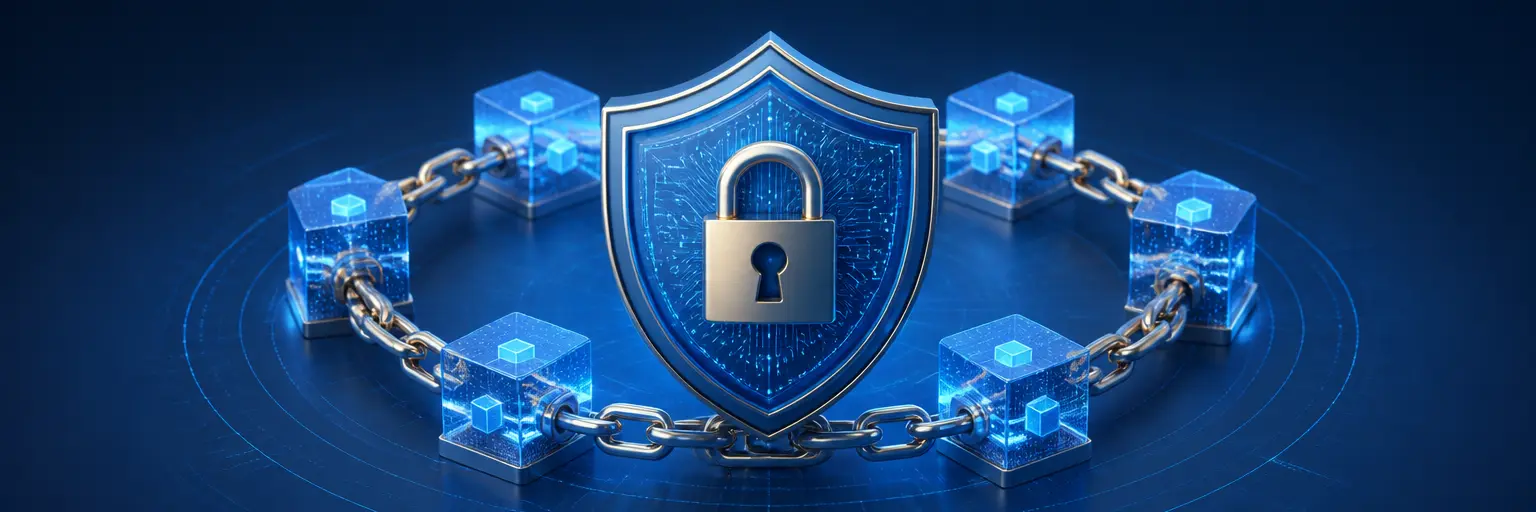
QuantumSafe Smart Contracts: Ensuring Secure and Reliable Decentralized Applications
Discover how blockchain and cybersecurity are shaping the future of secure digital systems. Explore innovative approaches to protecting decentralized networks, safeguarding digital identities, strengthening smart contracts, and addressing emerging threats in an evolving Web3 landscape. Stay informed on privacy-preserving technologies, advanced security strategies, regulatory developments, and resilient blockchain solutions designed to build trust across industries.
614 articles
Security Audits for Blockchain Wallets: Protecting User Assets and Private Keys
Implementing ZeroKnowledge Proofs: Challenges and Solutions for Blockchain Developers
The Power of Decentralization: Enhancing Identity Security with Blockchain
The Evolution of Blockchain Encryption: From Classical to QuantumResistant
Blockchain Security Audit Case Studies: RealWorld Examples of Vulnerabilities and Remediation
Blockchain Security Audit Standards: Ensuring Consistency and Quality in Assessments
Decentralized Identity and the Future of Online Authentication
The Intriguing World of Smart Contract Audits: Ensuring Code Integrity and Trust
Smart Contract Security Auditing Checklist: A Comprehensive Guide for Ensuring Code Safety
Decentralized Identity, Centralized Risks? Navigating Future Blockchain ID Security
DeFi's Next Security Frontier: Protecting Against Flash Loan Attacks and Oracle Manipulation
QuantumSecure Blockchain Infrastructure: Building the Foundations for the Future
The Power of ZeroKnowledge Proofs to Transform Industries: From Finance to Healthcare
Demystifying the Complexity: Making ZeroKnowledge Proofs Accessible to Everyone
Standardizing QuantumResistant Blockchain: Industry Initiatives and Progress
Blockchain Security Auditing for Supply Chain Management: Enhancing Transparency and Trust
Investing in QuantumSafe Blockchain: A Strategic Imperative for Businesses
Insider Threats in a Trustless World: Rethinking Security in Decentralized Organizations
Exploring QuantumInspired Algorithms for Blockchain Security: A Novel Research Frontier
Building a QuantumResilient Blockchain Ecosystem: Collaboration and Community
Quantum Computing and 51% Attacks: A New Dimension of Blockchain Vulnerability
Advanced Blockchain Security Testing Techniques: Exploring Fuzzing and Symbolic Execution
Blockchain Security in Developing Nations: Addressing Unique Challenges and Opportunities
The Scalability Breakthrough: How ZeroKnowledge Proofs Enhance Blockchain Performance
Demystifying Decentralized Identity: An EasytoUnderstand Security Explanation
Choosing the Right Decentralized Identity Platform: Key Considerations
The Economic Benefits of Implementing Decentralized Identity Security
Beyond PostQuantum Algorithms: Exploring Novel Approaches to Blockchain Security
Choosing the Right Blockchain Security Audit Firm: Key Considerations for Selection
Blockchain & Cybersecurity explores how decentralized technologies can be designed, tested, and protected against evolving digital threats. As blockchain adoption expands across DeFi, enterprise applications, healthcare, finance, supply chains, and digital identity, strong security practices are essential for protecting smart contracts, cryptographic keys, user data, and blockchain infrastructure.
At Blockchain Trends, this category provides practical insights into blockchain security, Web3 risk management, cryptography, privacy protection, identity security, and emerging cyber threats. Discover expert perspectives on blockchain audits, zero-knowledge technology, quantum-resistant security, decentralized identity, and the future of cybersecurity in decentralized systems.
🛡️ Blockchain Security Auditing & Testing
This subcategory covers the methods used to identify vulnerabilities in smart contracts, decentralized applications, blockchain protocols, wallets, bridges, and enterprise distributed ledger systems. Readers can expect guidance on smart contract audits, penetration testing, code reviews, vulnerability assessments, bug bounty programs, and blockchain security best practices.
Articles also examine common risks such as reentrancy attacks, oracle manipulation, private key exposure, access-control errors, flash-loan exploits, and cross-chain bridge vulnerabilities. Learn how security teams evaluate blockchain code and infrastructure to improve resilience, reduce financial losses, and support safer Web3 adoption.
🔐 Zero-Knowledge Proofs in Blockchain
Explore how zero-knowledge proofs enable users to verify information without revealing the underlying data. This section explains important technologies such as zk-SNARKs, zk-STARKs, zero-knowledge rollups, privacy-preserving identity, and confidential blockchain transactions.
Readers will discover how zero-knowledge cryptography supports blockchain scalability, regulatory privacy, secure authentication, and data minimization. Content is designed to clarify complex concepts while showing how ZK proofs can improve privacy and security across DeFi, enterprise blockchain, gaming, and decentralized applications.
⚛️ Quantum Computing & Blockchain Security
This subcategory examines the potential impact of quantum computing on blockchain cryptography. Learn why quantum algorithms such as Shor’s algorithm could challenge widely used public-key encryption and digital signature schemes, including those based on elliptic-curve cryptography.
Topics include post-quantum cryptography, quantum-resistant blockchain networks, migration planning, cryptographic agility, and long-term digital asset protection. Readers can follow developments in quantum-safe signatures and understand how blockchain projects may prepare for future advances in computing power.
🆔 Decentralized Identity Security Solutions
Decentralized identity security focuses on giving individuals greater control over credentials, authentication, and personal information. This section explores decentralized identifiers, verifiable credentials, self-sovereign identity, wallet security, biometric protection, and privacy-preserving identity verification.
Expect practical discussions about how organizations can reduce identity theft, limit unnecessary data collection, and secure access to blockchain applications. Articles also consider interoperability, credential revocation, user consent, recovery mechanisms, and compliance requirements for decentralized identity systems.
🚨 Future of Blockchain Cybersecurity Threats
Blockchain cybersecurity threats continue to evolve as attackers target smart contracts, consensus mechanisms, wallets, bridges, exchanges, decentralized governance, and connected infrastructure. This subcategory tracks emerging risks, including AI-assisted attacks, social engineering, cryptographic failures, validator manipulation, protocol exploits, and supply-chain vulnerabilities.
Readers can also explore future-focused strategies for blockchain threat intelligence, incident response, zero-trust security, automated monitoring, decentralized governance protection, and cyber resilience. These insights help developers, enterprises, investors, and security professionals prepare for the next generation of Web3 threats.
❓ Frequently Asked Questions About Blockchain & Cybersecurity
What is blockchain cybersecurity?
Blockchain cybersecurity is the practice of protecting blockchain networks, smart contracts, wallets, decentralized applications, cryptographic keys, and user data from attacks. It combines secure coding, cryptography, auditing, monitoring, access control, and incident response.
Why are smart contract security audits important?
Smart contract audits help identify coding errors and vulnerabilities before contracts are deployed or widely used. A thorough audit can reduce the risk of exploits involving reentrancy, faulty permissions, oracle manipulation, and other security weaknesses.
How do zero-knowledge proofs improve blockchain privacy?
Zero-knowledge proofs allow one party to prove that a statement is true without revealing sensitive information. In blockchain systems, they can support private transactions, secure identity verification, and scalable Layer 2 networks while minimizing data exposure.
Can quantum computing break blockchain security?
Future quantum computers may threaten some public-key cryptography used by blockchain networks. However, developers are researching post-quantum algorithms and migration strategies to create quantum-resistant blockchain signatures and protect digital assets.
How can users improve blockchain security?
Users should protect private keys, use hardware wallets where appropriate, enable strong authentication, verify transaction details, avoid suspicious links, review smart contract permissions, and keep wallet and device software updated. Organizations should also perform regular audits and maintain formal incident response plans.