
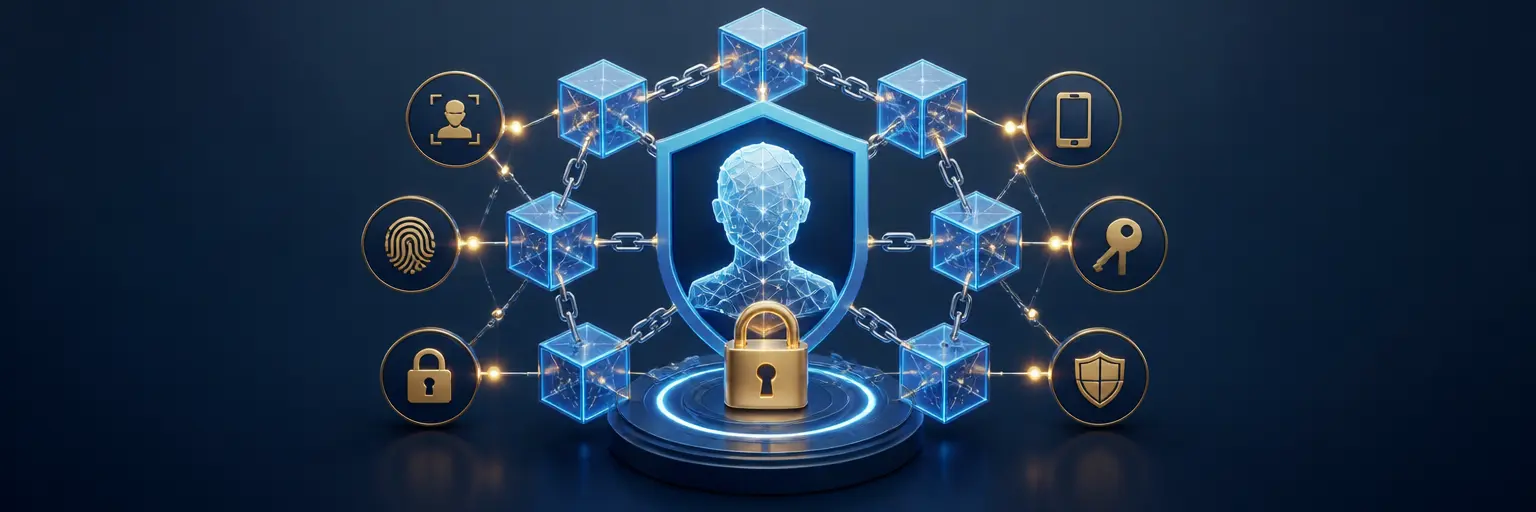
The Power of Decentralization: Enhancing Identity Security with Blockchain
Explore Decentralized Identity Security Solutions that help protect digital identities through blockchain-based verification, privacy-preserving credentials, and user-controlled access 🔐. Discover how decentralized identity strengthens cybersecurity, reduces identity theft, and enables trusted authentication across Web3, enterprises, and digital services.
59 articles
Decentralized Identity and the Future of Online Authentication
Demystifying Decentralized Identity: An EasytoUnderstand Security Explanation
Choosing the Right Decentralized Identity Platform: Key Considerations
The Economic Benefits of Implementing Decentralized Identity Security
The Technical Deep Dive: How Decentralized Identity Security Works
Exploring Sovrin Network: A Leading Decentralized Identity Solution
Decentralized Identity for Enterprises: Strengthening Corporate Security
Fighting Identity Theft with Decentralized Technology: A New Approach
The Power of UserCentric Security: Decentralized Identity's Core Principle
ZeroKnowledge Proofs and Decentralized Identity: PrivacyFirst Security
Implementing Decentralized Identity: A Practical Guide for Businesses
Is Decentralized Identity More Secure Than Traditional Systems? A Comparison
The End of Centralized Identity Silos: Embracing Decentralization for Security
Debunking Myths About Decentralized Identity Security: Separating Fact from Fiction
Decentralized Identity for Digital Wallets: Protecting Your Crypto Assets
Unlocking Trust: How Decentralized Identity Revolutionizes Security
Hyperledger Indy: Building Blocks for Decentralized Identity Security
Identity Revolution: Is Decentralized Identity the Answer to Cyber Threats?
Decentralized Identity for Mobile Security: Protecting Your Devices
The Metaverse and Decentralized Identity: Ensuring Secure Virtual Worlds
Unlocking the Potential of DIDs: Decentralized Identifiers and Security
Beyond Usernames and Passwords: The Promise of Decentralized Identity
Decentralized Identity: The Future of Digital Security is Here
The Impact of Decentralized Identity on the Future of Cybersecurity Careers
How Decentralized Identity Prevents Account Takeovers: A Technical Overview
Financial Security Revolution: Decentralized Identity in Banking and Finance
Decentralized Identity Use Cases: RealWorld Security Applications
Verifiable Credentials: The Cornerstone of Decentralized Identity Security
Investing in Decentralized Identity Security: Market Trends and Growth
🔐 Decentralized Identity Security Solutions
Decentralized Identity Security Solutions are transforming how individuals, businesses, and institutions manage digital identity, authentication, privacy, and access control. Within Blockchain & Cybersecurity at Blockchain Trends, this subcategory explores blockchain-based identity verification, self-sovereign identity, verifiable credentials, decentralized identifiers, and privacy-preserving authentication systems designed to reduce fraud and limit dependence on centralized databases.
🆔 What Is Decentralized Identity?
Decentralized identity, often called self-sovereign identity, enables users to control their digital credentials instead of relying entirely on governments, social platforms, banks, or technology providers. Using blockchain networks, decentralized identifiers, and cryptographic proofs, individuals can securely prove specific facts about themselves without unnecessarily exposing sensitive personal information.
Readers can expect clear explanations of how decentralized identity works, including the roles of identity holders, issuers, and verifiers. Content will examine user-controlled credentials, blockchain identity wallets, digital passports, portable identities, and secure access systems that support greater privacy, transparency, and data ownership.
🛡️ Blockchain Identity Security and Privacy
Blockchain identity security solutions use cryptography, distributed ledgers, and tamper-resistant verification methods to improve the protection of digital identities. Instead of storing all personal data in a single vulnerable repository, decentralized models can use selective disclosure, encrypted storage, and verifiable proofs to reduce the impact of identity theft and large-scale data breaches.
This section explores how decentralized identity supports privacy by design, data minimization, fraud prevention, and secure authentication. Readers will discover the benefits and limitations of zero-knowledge proofs, biometric integrations, multi-factor authentication, key management, wallet security, and recovery mechanisms for digital identity platforms.
🌐 Decentralized Identifiers and Verifiable Credentials
Decentralized identifiers, or DIDs, provide a flexible way to establish digital identity without depending on a single centralized authority. Verifiable credentials allow trusted organizations to issue digitally signed claims, such as professional certifications, academic records, age confirmations, or business credentials, that users can present across compatible services.
Readers will learn how DID methods, credential schemas, cryptographic signatures, and interoperability standards contribute to secure identity verification. Topics may include verifiable credentials for enterprise onboarding, decentralized KYC, digital certificates, supply chain authorization, healthcare records, and cross-platform authentication.
🏢 Enterprise Decentralized Identity Solutions
Businesses are investigating decentralized identity to improve customer onboarding, employee access management, supplier verification, and regulatory compliance. Blockchain-based identity systems can help organizations validate users and partners while reducing repetitive verification procedures, administrative costs, and reliance on inconsistent identity databases.
This subcategory examines enterprise identity architecture, decentralized access control, corporate identity wallets, workforce authentication, business-to-business credentials, and blockchain-enabled compliance workflows. Readers can also explore how these solutions may support financial services, healthcare, education, logistics, government services, and Web3 applications.
⚖️ Digital Identity Compliance and Regulation
Decentralized identity must balance innovation with legal requirements involving privacy, consumer protection, cybersecurity, and identity verification. Regulations concerning data protection, digital signatures, anti-money laundering procedures, know-your-customer checks, and cross-border data transfers can significantly influence how blockchain identity systems are designed and deployed.
Readers can expect practical discussions about identity compliance, consent management, data ownership, auditability, and regulatory interoperability. Coverage may include privacy regulations, decentralized KYC, digital trust frameworks, identity standards, governance models, and the challenges of handling immutable blockchain records alongside data deletion rights.
🚨 Preventing Identity Theft and Digital Fraud
Decentralized identity security can help address phishing, credential theft, account takeover, synthetic identity fraud, and unauthorized access. Cryptographic authentication and verifiable credentials make it more difficult for attackers to alter or impersonate trusted identity information, particularly when systems use hardware protection, multi-factor verification, and secure private-key management.
However, blockchain does not eliminate every cybersecurity threat. This section explains risks such as lost private keys, malicious wallet software, social engineering, insecure credential issuers, smart contract vulnerabilities, and fraudulent decentralized applications. Readers will find guidance for evaluating identity protection strategies and building safer digital identity ecosystems.
🔗 Interoperability, Standards, and Web3 Identity
For decentralized identity to achieve widespread adoption, identity wallets and credentials must work across different blockchains, applications, institutions, and jurisdictions. Interoperability standards help users carry trusted credentials between platforms without repeatedly creating accounts or surrendering unnecessary personal data.
Content in this area explores Web3 identity, blockchain wallet authentication, cross-chain identity, decentralized access management, open standards, and trust registries. Readers can learn how interoperable identity supports decentralized finance, decentralized organizations, metaverse platforms, digital commerce, and other emerging blockchain applications.
✅ Choosing a Decentralized Identity Security Solution
Selecting the right solution requires careful evaluation of security architecture, privacy controls, usability, governance, interoperability, compliance support, and long-term reliability. Organizations should assess whether a provider supports secure key custody, credential revocation, identity recovery, role-based permissions, audit trails, and integration with existing cybersecurity systems.
Readers will find useful considerations for comparing decentralized identity platforms, identity wallets, DID providers, credential management tools, blockchain authentication systems, and enterprise access solutions. The goal is to help decision-makers identify technologies that deliver strong security without creating unnecessary friction for users.
❓ Frequently Asked Questions About Decentralized Identity Security
What is decentralized identity security?
Decentralized identity security is an approach to protecting digital identities through blockchain, cryptography, decentralized identifiers, and verifiable credentials. It gives users greater control over identity information while helping organizations verify claims without storing excessive personal data in centralized databases.
How does decentralized identity protect personal information?
Decentralized identity can protect personal information through selective disclosure, encryption, private credentials, and zero-knowledge proofs. These methods allow a user to prove a specific fact, such as being over a required age, without revealing unrelated details such as a full date of birth or home address.
Are decentralized identity solutions secure?
Decentralized identity solutions can provide strong security through cryptographic verification and distributed architecture, but their effectiveness depends on implementation. Secure wallets, reliable credential issuers, private-key protection, recovery options, smart contract audits, and user education are essential for reducing cybersecurity risks.
What are decentralized identifiers and verifiable credentials?
Decentralized identifiers, or DIDs, are identifiers that can be created and controlled without depending on a single centralized authority. Verifiable credentials are digitally signed statements issued by trusted entities, enabling users to prove qualifications, identity attributes, or permissions in a tamper-resistant and privacy-conscious way.
Can decentralized identity replace passwords and traditional identity systems?
Decentralized identity may reduce dependence on passwords and centralized login providers, but it is more likely to complement or gradually replace certain parts of traditional identity infrastructure. Adoption depends on interoperability, regulatory acceptance, user experience, recovery solutions, and the ability of organizations to integrate blockchain identity with existing systems.