
Scalability of Blockchain for Supply Chain: Handling LargeScale and Complex Networks


Welcome to Blockchain Trends, your guide to understanding the revolutionary impact of blockchain technology beyond just digital currencies. Ever wondered how blockchain can truly transform industries? Dive in as we explore the intricacies and exciting possibilities of decentralized systems.
This week, we're tackling a crucial question: Can blockchain really handle the complexities of modern supply chains? Our in-depth analysis of blockchain supply chain scalability challenges uncovers the hurdles and innovative solutions driving the future of transparent and efficient logistics. Read on to discover the potential – and the pitfalls – of integrating this groundbreaking technology into global supply networks.
Scalability of Blockchain for Supply Chain: Handling Large-Scale and Complex Networks
- Introduction: Blockchain's Potential in Supply Chain and the Scalability Hurdle
- Defining Blockchain Supply Chain Scalability Challenges
- Examining the Impact of Poor Scalability on Blockchain Supply Chains
-
Scalability Solutions for Blockchain in Supply Chain Management
- Layer-2 Scaling Solutions for Enhanced Blockchain Supply Chain Performance
- Sharding Techniques for Distributed Data Management in Blockchain Supply Chains
- Consensus Mechanism Optimization for Improved Transaction Speed and Efficiency
- Data Compression and Optimization Strategies for Blockchain Supply Chain
- Case Studies: Scalable Blockchain Implementations in Supply Chain
- Overcoming Technical Barriers to Blockchain Supply Chain Scalability
- The Future of Scalable Blockchain in Supply Chain: Trends and Predictions
- Conclusion: Achieving Scalable and Efficient Blockchain-Based Supply Chains
-
Frequently Asked Questions
- What are the main scalability challenges that blockchain technology faces when applied to supply chains?
- How can blockchain's decentralized nature impact its scalability in a supply chain context?
- What are some potential solutions to address blockchain scalability issues within supply chain networks?
- How do regulatory uncertainties surrounding blockchain affect its adoption and scalability in supply chain management?
- What role does interoperability play in achieving blockchain scalability across diverse supply chain ecosystems?
- Final Reflection: Navigating the Future of Blockchain Supply Chains
- Unlock Your Supply Chain's Potential: Build on Blockchain Now!
Introduction: Blockchain's Potential in Supply Chain and the Scalability Hurdle
The Promise of Blockchain for Supply Chain Transparency and Efficiency
Blockchain technology holds immense promise for revolutionizing supply chain management by offering unprecedented levels of transparency, security, and efficiency. By creating an immutable, shared ledger across participants—from raw material suppliers to manufacturers, distributors, and retailers—blockchain enables real-time tracking of goods, verification of product authenticity, and automated execution of contracts via smart contracts. This distributed ledger system can drastically reduce paperwork, minimize disputes, and build trust among parties who may not otherwise fully trust each other, addressing long-standing inefficiencies and vulnerabilities like fraud and counterfeiting.
Consider a typical global supply chain involving hundreds of entities across multiple continents. Tracking a single product's journey often relies on disparate, incompatible systems, leading to delays and information silos. Blockchain offers a unified, tamper-evident record of every step, from origin to destination.
For instance, tracing the source of contaminated food could take weeks using traditional methods, involving manual checks across numerous databases. With a blockchain-based system, this trace could potentially be completed in minutes, pinpointing the exact batch and location, thereby improving consumer safety and reducing financial losses associated with recalls. The potential cost savings from reduced fraud and increased efficiency are estimated to be substantial, potentially saving the logistics industry billions annually.
Understanding the Critical Need for Blockchain Supply Chain Scalability
Despite its transformative potential, the widespread adoption of blockchain in large-scale, complex supply chains faces significant hurdles, foremost among them being scalability. Global supply chains generate a massive volume of transactions and data points daily, encompassing everything from individual product movements and quality checks to payment settlements and compliance documentation. A blockchain network intended to manage this flow must be capable of handling millions, if not billions, of transactions efficiently and cost-effectively without compromising the core principles of decentralization and security.
The current limitations of many blockchain platforms in terms of transaction speed and data capacity present significant Blockchain supply chain scalability challenges. Public blockchains like Bitcoin or Ethereum, while robust and decentralized, process transactions at rates far too slow for high-volume commercial use cases (e.g., Bitcoin handles about 7 transactions per second, Ethereum around 15-30).
Even permissioned blockchains, designed for higher throughput, can struggle under the load of complex, multi-party supply networks. Without adequate scalability solutions, the benefits of blockchain—real-time visibility, automated processes—remain theoretical for large enterprises operating vast, interconnected supply chains, limiting blockchain's transition from pilot projects to full-scale deployment.
Defining Blockchain Supply Chain Scalability Challenges
Transaction Throughput Limitations in Blockchain Supply Chains
One of the most prominent Blockchain supply chain scalability challenges is the limited transaction throughput of many blockchain protocols. The number of transactions a network can process per second (TPS) is a critical metric for supply chain applications, which often require handling thousands or even millions of events daily, such as goods scanning, location updates, or sensor data recording. Traditional blockchain architectures, particularly those relying on Proof-of-Work consensus, are inherently limited by block size and block creation time, resulting in low TPS figures that are incompatible with the demands of modern, high-velocity supply chains.
For example, a large retailer might process tens of millions of individual product movements and related data points across its supply chain network every day. Attempting to record all these events directly onto a blockchain with a throughput of only 50-100 TPS would quickly overwhelm the network, leading to significant delays, bottlenecks, and potentially prohibitive transaction fees. This inability to handle the sheer volume of data flow renders many existing blockchain solutions impractical for extensive supply chain use cases, highlighting a fundamental technical barrier that must be overcome for widespread adoption.
Storage Capacity Constraints for Supply Chain Data on Blockchain
Beyond transaction speed, the ever-growing size of the blockchain ledger presents another significant Blockchain supply chain scalability challenge: storage capacity. Every transaction and piece of data added to the blockchain becomes part of the distributed ledger, which is replicated across multiple nodes in the network. In a supply chain context, this could include detailed information about product origin, manufacturing batches, shipping routes, quality control results, and much more, potentially generating vast amounts of data over time.
As the volume of transactions increases, the size of the blockchain ledger expands continuously. This requires nodes to possess increasing storage capabilities, which can become expensive and resource-intensive, particularly for participants with limited infrastructure. Moreover, synchronizing and validating an ever-larger ledger can become time-consuming, impacting network performance and potentially limiting participation to only those entities capable of maintaining substantial storage resources. For a supply chain involving hundreds or thousands of participants, from large corporations to small suppliers, requiring significant local storage for the entire ledger can be a major impediment to scalability and decentralization.
Network Latency and Slow Confirmation Times in Blockchain-Based Supply Chains
Network latency and the time it takes for transactions to be confirmed are critical factors affecting the performance and usability of blockchain in supply chain applications. In a fast-paced supply chain environment, decisions and actions often need to be made in near real-time, based on the latest available data. Delays in transaction processing and confirmation can lead to outdated information, disruptions in workflows, and missed opportunities, undermining the supposed efficiency gains offered by blockchain technology.
Depending on the consensus mechanism and network design, transaction confirmation times on a blockchain can range from seconds to minutes or even longer, especially during periods of high network congestion. For instance, waiting several minutes for confirmation that a batch of goods has been officially received and recorded on the ledger might be acceptable for some steps, but it becomes a major bottleneck for high-frequency events like sorting items in a warehouse or tracking individual parcels in transit, where confirmation needs to be almost instantaneous.
Reducing latency and accelerating confirmation times are therefore crucial for achieving the responsiveness required by modern supply chain operations.
Decentralization vs. Scalability: A Balancing Act in Supply Chain Implementations
One of the fundamental tensions in blockchain design, particularly relevant to overcoming Blockchain supply chain scalability challenges, is the inherent trade-off between decentralization, security, and scalability—often referred to as the "blockchain trilemma." While decentralization enhances security and trust by distributing control and data across many nodes, it typically complicates consensus and limits transaction speed and capacity. Conversely, increasing scalability often involves some degree of centralization or compromise on the consensus mechanism, potentially impacting the network's security or resistance to collusion.
In supply chain applications, the optimal balance between these factors depends on the specific use case. A highly sensitive application like tracking pharmaceuticals might prioritize security and a degree of decentralization, even if it means slightly lower throughput. In contrast, a high-volume application like tracking fast-moving consumer goods might require higher transaction speeds, potentially necessitating a more permissioned or partially centralized approach. Navigating this balance is a key challenge for architects designing blockchain solutions for complex supply networks, as sacrificing too much decentralization could erode the trust benefits that make blockchain attractive in the first place.
Examining the Impact of Poor Scalability on Blockchain Supply Chains
Reduced Efficiency and Increased Costs Due to Scalability Issues
Poor scalability directly translates into reduced efficiency and increased operational costs for blockchain-based supply chains. When a network cannot handle the required transaction volume, bottlenecks occur, leading to delays in recording events, slower information flow, and potential disruptions to logistics and operational planning. This can result in increased lead times, higher inventory costs due to uncertainty, and missed delivery windows, all of which negatively impact the bottom line.
Furthermore, on some blockchain platforms, low throughput can lead to fluctuating and potentially high transaction fees as users compete for limited block space, a phenomenon observed during peak usage on public networks. While permissioned networks often have fixed or no transaction fees, their throughput limits still pose a cost in terms of infrastructure required to manage delayed processing or the inability to capture granular data points. Enterprises investing in blockchain solutions expect efficiency gains and cost reductions; if scalability issues prevent the platform from handling real-world volumes, these expected benefits fail to materialize, making the investment less attractive.
Impaired Data Integrity and Trust in Unscalable Blockchain Supply Chains
Ironically, poor scalability can even undermine the very data integrity and trust that blockchain is meant to provide. If a blockchain network is overwhelmed by transaction volume, it may struggle to keep up with real-time events in the physical supply chain. This can lead to delays in data recording, potentially creating discrepancies between the physical flow of goods and the digital record on the blockchain. For instance, a shipment might arrive at a warehouse before its departure is even confirmed on a slow network.
Such delays and inconsistencies can erode confidence in the blockchain data, causing participants to revert to traditional, less reliable methods or maintain parallel systems, negating the single source of truth benefit. If data cannot be reliably recorded in a timely manner, the immutability of the ledger becomes less meaningful, as the data itself may be incomplete or inaccurate relative to the current state of the supply chain. Addressing Blockchain supply chain scalability challenges is thus essential not just for performance but for maintaining the integrity and trustworthiness of the distributed ledger.
Limitations on Network Participation and Growth in Blockchain Supply Chains
Unscalable blockchain solutions can also limit the potential for network participation and overall growth of the supply chain ecosystem built upon them. If joining the network requires significant computational resources, high storage capacity, or involves prohibitive transaction costs due to scalability issues, smaller participants like independent truckers, small farms, or local retailers may be excluded. This limits the network's reach and prevents the creation of truly end-to-end, inclusive supply chain visibility.
Consider a food traceability network. To be truly effective, it needs participation from every entity, from the smallest farm to the largest supermarket chain. If the underlying blockchain cannot scale to accommodate thousands or millions of participants and their associated data, the network will remain fragmented, covering only segments of the supply chain. Overcoming Blockchain supply chain scalability challenges is therefore crucial for fostering broad adoption and building comprehensive, interconnected supply chain networks that include all relevant stakeholders, regardless of their size or technical capabilities.
Scalability Solutions for Blockchain in Supply Chain Management
Layer-2 Scaling Solutions for Enhanced Blockchain Supply Chain Performance
Layer-2 scaling solutions operate on top of the main blockchain layer (Layer 1) and are designed to handle a high volume of transactions off-chain, periodically settling them on the main chain. This approach significantly increases transaction throughput and reduces latency without requiring fundamental changes to the underlying Layer 1 protocol's consensus mechanism or block structure. For supply chain applications, Layer-2 solutions offer a promising path to achieving the required transaction speeds and volumes while leveraging the security and finality of the base layer.
Examples include payment channels and sidechains. Payment channels, like those used in the Lightning Network for Bitcoin, allow multiple transactions between parties to occur off-chain, with only the final state being recorded on the main chain. Sidechains are separate blockchains that are interoperable with the main chain, allowing assets or data to be moved between them. These solutions can offload the majority of transactional load from the main chain, drastically improving efficiency for high-frequency or low-value interactions common in supply chain operations, such as tracking individual item movements or processing micro-payments for logistics services.
Payment Channels for Faster Transactions in Supply Chain Finance
Payment channels are particularly relevant for optimizing financial transactions within a supply chain, such as payments between suppliers and manufacturers, distributors and retailers, or for logistics services. Instead of recording every single payment on the main blockchain ledger, parties can open a payment channel between them. Within this channel, they can conduct an unlimited number of transactions instantly and with minimal fees.
Only when the channel is closed or a dispute arises is the final state of the channel recorded on the main blockchain. This model is ideal for long-term business relationships involving frequent payments, allowing for rapid settlement of invoices or micro-payments based on real-time supply chain events (e.g., paying a carrier upon confirmed delivery). By moving these high-frequency payment flows off-chain, payment channels significantly reduce the load on the main blockchain, thereby enhancing the overall Blockchain supply chain scalability for financial settlements.
Sidechains for Off-Chain Processing of Supply Chain Data
Sidechains offer another powerful Layer-2 solution for handling specific supply chain processes or data streams off the main chain. A sidechain is a separate blockchain with its own consensus mechanism and structure, connected to the main chain via a two-way peg. This allows assets or data representing supply chain events to be transferred to the sidechain for processing and then moved back to the main chain if necessary for finality or integration.
For instance, a company could use a sidechain to track the granular details of internal manufacturing processes or warehouse movements, where high transaction volume and speed are crucial but full main-chain decentralization might not be strictly necessary for every step. The sidechain could be optimized for high throughput using a different consensus mechanism (e.g., PoA or DPoS).
Only key milestones or final records, such as a product leaving the factory or changing ownership, would be settled on the main, more secure, and potentially more decentralized blockchain. This partitioning of data significantly contributes to addressing Blockchain supply chain scalability challenges by distributing the processing load.
Sharding is a database partitioning technique adapted for blockchain networks to enhance scalability. Instead of every node in the network processing and storing every transaction (as in traditional blockchains), sharding divides the blockchain into smaller, more manageable segments called "shards." Each shard processes and stores only a subset of the network's transactions and data.
This allows the network to process multiple transactions in parallel across different shards, dramatically increasing overall transaction throughput. For supply chain applications dealing with diverse product lines, geographical regions, or business units, sharding could potentially allow different segments of the supply chain to operate on different shards, increasing efficiency. For example, one shard could handle food products, another electronics, and another automotive parts, with cross-shard communication facilitating interactions where necessary. This distributed data management approach directly addresses Blockchain supply chain scalability challenges related to both transaction volume and storage growth.
Consensus Mechanism Optimization for Improved Transaction Speed and Efficiency
The choice and optimization of the consensus mechanism play a vital role in determining a blockchain network's scalability. While Proof-of-Work (PoW) is secure and decentralized, its energy consumption and slow block times limit throughput. Alternative consensus mechanisms can offer significantly higher transaction speeds and efficiency, making them more suitable for the demanding environment of supply chain management, particularly in permissioned or consortium blockchain settings.
Mechanisms like Proof-of-Stake (PoS) and its variations (e.g., DPoS), or Practical Byzantine Fault Tolerance (PBFT) and its derivatives, can achieve much faster block confirmation times and higher TPS rates. For instance, networks using PoS or DPoS can often process hundreds or thousands of transactions per second. Permissioned networks leveraging PBFT can reach even higher throughputs, sometimes exceeding several thousand TPS in controlled environments. Selecting or customizing a consensus mechanism based on the specific needs of the supply chain application is a critical strategy for overcoming Blockchain supply chain scalability challenges.
Delegated Proof-of-Stake (DPoS) for Faster Block Creation in Supply Chain Blockchains
Delegated Proof-of-Stake (DPoS) is a consensus mechanism that can offer significant speed advantages, making it attractive for certain supply chain blockchain implementations. In DPoS, token holders elect a limited number of delegates (or validators) who are responsible for validating transactions and creating new blocks. This differs from traditional PoS where any staker can potentially validate.
By reducing the number of participants involved in the consensus process at any given time, DPoS can achieve much faster block creation times and higher transaction throughput compared to PoW or even standard PoS. For a supply chain consortium where participating companies can elect trusted delegates, DPoS provides a relatively decentralized yet highly efficient consensus model capable of handling the high transaction volumes required for tracking goods in real-time. This mechanism helps mitigate the transaction throughput limitations that are key Blockchain supply chain scalability challenges.
Practical Byzantine Fault Tolerance (PBFT) for Enhanced Consensus in Permissioned Supply Chains
Practical Byzantine Fault Tolerance (PBFT) and its modern variants are often employed in permissioned blockchain networks, which are common in enterprise supply chain consortia. In PBFT-based systems, a known set of participants validate transactions and agree on the state of the ledger through a multi-round voting process. As long as a supermajority (typically more than two-thirds) of the validators are honest, the network can reach consensus and remain secure, even in the presence of malicious or faulty nodes.
PBFT is known for its high transaction throughput and low latency, as consensus can be reached within seconds. This makes it highly suitable for supply chain applications where speed and finality are critical. While permissioned networks sacrifice some degree of open decentralization compared to public blockchains, they are often preferred by enterprises for their governance features, predictable performance, and enhanced scalability, directly addressing some of the most pressing Blockchain supply chain scalability challenges within a controlled environment.
Data Compression and Optimization Strategies for Blockchain Supply Chain
Managing the growth of the blockchain ledger size is another facet of addressing Blockchain supply chain scalability challenges. Implementing data compression and optimization strategies can help reduce the amount of storage required and improve the efficiency of data processing and synchronization across the network.
This can involve techniques such as storing only essential data on-chain and linking to off-chain storage solutions (like decentralized file systems such as IPFS) for larger files or less critical information. Data within transactions can also be optimized for size. Furthermore, techniques like state channels or zero-knowledge proofs can allow for verification of information without revealing the underlying data on the chain, reducing the data footprint. While the core principle of immutability is maintained, smart data management ensures that the ledger doesn't grow excessively large, keeping storage requirements manageable for network participants.
Case Studies: Scalable Blockchain Implementations in Supply Chain
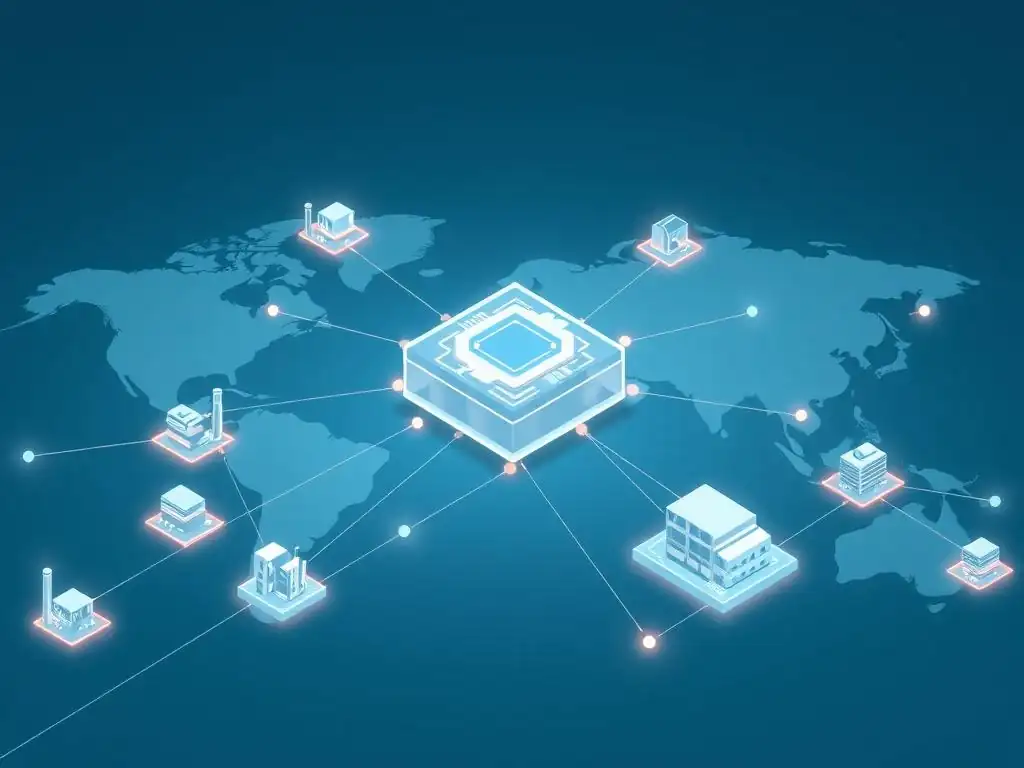
VeChain's Implementation for Supply Chain Tracking
VeChain is a prominent blockchain platform specifically designed for enterprise applications, with a strong focus on supply chain management and anti-counterfeiting. Leveraging a modified Proof-of-Authority (PoA) consensus mechanism, VeChain aims to provide high transaction throughput and reliability suitable for business use cases. Their platform, VeChainThor, utilizes a dual-token model (VET for value transfer and VTHO for transaction costs) to separate the cost of using the network from the speculative value of the token, providing more predictable transaction fees for enterprises.
VeChain has demonstrated its scalability through various partnerships. For instance, it has collaborated with companies like DNV GL for digital assurance solutions and with retailers for tracking luxury goods.
While specific real-time TPS figures for peak supply chain load can be difficult to ascertain publicly, VeChain's architecture is designed to handle significantly higher transaction volumes than traditional public blockchains, reportedly capable of thousands of TPS in test environments. Their focus on enterprise needs and a tailored consensus mechanism directly addresses critical Blockchain supply chain scalability challenges, enabling the tracking of millions of individual products across diverse industries, including food and beverage, luxury goods, and logistics.
IBM Food Trust: A Scalable Blockchain for Food Traceability
IBM Food Trust is a well-known example of a permissioned blockchain network designed specifically for enhancing traceability within the food supply chain. Built on Hyperledger Fabric, a permissioned blockchain framework, IBM Food Trust connects growers, processors, wholesalers, distributors, manufacturers, retailers, and others through a shared, immutable record of food system data. This network was designed from the ground up with enterprise scalability and performance in mind.
By using Hyperledger Fabric's modular architecture and pluggable consensus mechanisms (often employing variations of PBFT or Raft in permissioned settings), IBM Food Trust can achieve high transaction throughput and low latency required for tracking perishable goods. Walmart's participation in the network, for example, demonstrated that tracing the origin of produce, which previously took days or weeks, could be reduced to mere seconds (as little as 2.2 seconds in one pilot).
The network has grown to include dozens of major food retailers and suppliers globally, exchanging millions of data points related to food products. This case clearly illustrates how a permissioned, purpose-built blockchain can overcome significant Blockchain supply chain scalability challenges to handle the volume and speed demands of a complex, multi-party industry network.
Overcoming Technical Barriers to Blockchain Supply Chain Scalability
Addressing Data Privacy Concerns While Scaling Blockchain Networks
Scaling blockchain networks for supply chain use cases often involves handling sensitive business data, raising significant data privacy concerns. While the immutability and transparency of blockchain are beneficial, enterprises are often reluctant to place confidential information, such as pricing details, customer lists, or proprietary manufacturing processes, onto a shared ledger accessible to competitors or unauthorized parties. Balancing the need for transparency with the requirement for data privacy is a critical technical barrier to scalable adoption.
Solutions involve a combination of technical approaches. Permissioned blockchains offer inherent privacy by restricting network participation and data access to authorized entities. Cryptographic techniques like zero-knowledge proofs (ZKPs) allow parties to prove the validity of a transaction or data point without revealing the underlying sensitive information on the chain. Off-chain data storage linked to on-chain hashes provides a way to keep large or private datasets off the public ledger while still using the blockchain for verification and integrity checks. Implementing these privacy-preserving techniques is essential for building scalable supply chain blockchain solutions that meet enterprise requirements.
Ensuring Interoperability Between Different Blockchain Platforms in the Supply Chain
The reality of complex supply chains is that different participants may adopt different blockchain platforms based on their specific needs, industry consortia memberships, or existing technology stacks. A manufacturer might use one platform for raw material sourcing, while a distributor uses another for logistics tracking, and a retailer uses a third for product authentication. The inability of these disparate blockchain networks to communicate and exchange data seamlessly creates silos, undermining the goal of end-to-end visibility and posing a significant Blockchain supply chain scalability challenge at the ecosystem level.
Achieving interoperability between different blockchain platforms is crucial for creating truly scalable and connected supply chain networks. This involves developing standards, protocols, and technologies that allow for the secure and reliable exchange of data or assets across different chains. Projects focusing on cross-chain communication (e.g., atomic swaps, relay networks, inter-blockchain communication protocols) are vital for enabling a fragmented landscape of blockchain solutions to function as a cohesive network, allowing supply chain data to flow freely and securely across different platforms as goods move through the chain.
Standardizing Blockchain Protocols for Scalable Supply Chain Solutions
A lack of standardized protocols and data models is another technical barrier hindering the scalable deployment of blockchain in supply chains. Without common standards for how supply chain data is structured, how transactions are formatted, and how different network participants interact, integrating various systems and onboarding new partners becomes a complex and costly process. This fragmentation limits the network effect that is crucial for the widespread adoption and scalability of blockchain solutions.
Developing industry-wide standards for blockchain in supply chain management is essential. Initiatives are underway to create common data models for specific goods (e.g., food, pharmaceuticals), standard APIs for interacting with blockchain ledgers, and common frameworks for identity management and access control. Standardization reduces the friction of integration, allows for easier interoperability between different solutions, and lowers the barrier to entry for new participants. Adopting and promoting these standards is a key step in overcoming the technical complexities and enabling the broad-based, scalable deployment of blockchain across global supply chains.
The Future of Scalable Blockchain in Supply Chain: Trends and Predictions
The Role of AI and IoT in Enhancing Blockchain Supply Chain Scalability
The convergence of blockchain with other cutting-edge technologies like Artificial Intelligence (AI) and the Internet of Things (IoT) is expected to play a significant role in enhancing Blockchain supply chain scalability. IoT devices, such as sensors, GPS trackers, and RFID tags, are already generating vast amounts of real-time data about the location, condition, and status of goods throughout the supply chain. Integrating this data seamlessly and securely onto a blockchain requires a highly scalable infrastructure.
AI can be used to process and analyze this massive stream of IoT data before potentially committing relevant, summarized, or verified information to the blockchain. AI algorithms can filter out noise, identify anomalies, predict potential issues, and trigger automated actions or smart contracts based on defined parameters. This intelligent filtering reduces the volume of data that needs to be permanently stored on the blockchain, improving efficiency and scalability. Furthermore, AI can optimize network performance, predict network load, and help manage resources, contributing to better overall scalability of the blockchain solution itself.
The Convergence of Blockchain and Other Technologies for Scalable Supply Chain Solutions
Beyond AI and IoT, the future of scalable blockchain in supply chain will likely involve convergence with other technologies such as 5G networks, edge computing, and digital twins. 5G provides the high-speed, low-latency connectivity necessary for real-time data transmission from a multitude of IoT devices spread across a supply chain, enabling faster updates to the blockchain ledger. Edge computing can process data closer to the source (e.g., on a shipping container or in a warehouse), aggregating and filtering information before sending it to the blockchain, further reducing the data volume and latency challenges.
Digital twins, virtual replicas of physical assets or processes, can be linked to blockchain records to provide a dynamic, real-time view of the supply chain state. The blockchain ensures the integrity and history of the data feeding the digital twin, while the twin provides the context and visualization. This convergence allows for more efficient and scalable data management, where blockchain serves as the secure, immutable backbone for critical trust anchors, while other technologies handle the high-velocity data generation, processing, and analysis required for large-scale supply chain operations.
Predictions for the Adoption of Scalable Blockchain Solutions in the Supply Chain Industry
Predictions for the adoption of scalable blockchain solutions in the supply chain industry are increasingly optimistic as technology matures and successful case studies emerge. While initial adoption faced significant Blockchain supply chain scalability challenges, ongoing developments in Layer-2 solutions, sharding, consensus mechanisms, and interoperability are paving the way for broader implementation. Analysts predict significant growth in the market size for blockchain in supply chain management over the next few years.
For instance, the global blockchain in supply chain market size, valued at several hundred million USD in recent years, is projected to reach multi-billion USD figures by the mid-2020s, indicating a strong expected compound annual growth rate (CAGR). This growth will be driven by increasing enterprise focus on transparency, efficiency, and resilience, coupled with the availability of more robust and scalable blockchain platforms.
While widespread adoption across all industries will take time, the trend points towards scalable, purpose-built blockchain solutions becoming an integral part of modern supply chain infrastructure, moving beyond pilots to handle the complexities of global trade volumes.
Conclusion: Achieving Scalable and Efficient Blockchain-Based Supply Chains
Key Takeaways: Addressing Blockchain Supply Chain Scalability Challenges
Addressing the inherent Blockchain supply chain scalability challenges is paramount for unlocking the full potential of this transformative technology in global commerce. The limitations in transaction throughput, data storage, network latency, and the fundamental trade-off between decentralization and performance have historically constrained blockchain adoption to niche applications or pilot projects.
- Transaction Throughput: Low TPS rates remain a major bottleneck for high-volume supply chain operations.
- Storage: The ever-growing ledger size poses storage and synchronization challenges for network participants.
- Latency: Slow transaction confirmation times impede real-time visibility and responsiveness.
- Decentralization vs. Scalability: Balancing these core principles requires careful design choices based on specific use cases.
Overcoming these barriers requires a multi-faceted approach, leveraging a combination of technological advancements and strategic implementation decisions.
The Path Forward: Building Robust and Scalable Blockchain Networks for Supply Chain Transformation
The path forward for building robust and scalable blockchain networks for supply chain transformation involves continued innovation and strategic deployment. Layer-2 solutions like payment channels and sidechains offer effective ways to handle high transaction volumes off-chain. Sharding provides a framework for distributing data processing and storage. Optimizing consensus mechanisms, particularly in permissioned or consortium settings, can drastically improve speed and efficiency. Furthermore, implementing smart data management strategies, including compression and off-chain storage, helps manage ledger size.
Beyond core blockchain technology, integrating AI and IoT enables intelligent data handling, reducing the load on the chain, while convergence with 5G and edge computing provides the necessary infrastructure for real-time, distributed operations. Finally, focusing on interoperability and standardization is crucial for creating connected ecosystems rather than isolated solutions. By strategically combining these approaches, the industry can build blockchain platforms capable of handling the scale and complexity of global supply chains, moving towards a future of unprecedented transparency, efficiency, and resilience in logistics and trade.
Frequently Asked Questions
What are the main scalability challenges that blockchain technology faces when applied to supply chains?
The primary challenges involve transaction throughput, meaning the system's ability to process a high volume of transactions quickly. Also, data storage capacity becomes an issue as supply chain data grows, and network latency slows down communication between participants.
How can blockchain's decentralized nature impact its scalability in a supply chain context?
Decentralization, while offering security and transparency, can lead to slower consensus mechanisms. Each transaction needs validation across numerous nodes, which impacts processing speed and efficiency in large supply chains.
What are some potential solutions to address blockchain scalability issues within supply chain networks?
Layer-2 scaling solutions like state channels and sidechains can offload transactions from the main chain. Sharding, dividing the blockchain into smaller, manageable pieces, and optimized consensus algorithms also improve efficiency.
How do regulatory uncertainties surrounding blockchain affect its adoption and scalability in supply chain management?
Unclear or conflicting regulations can hinder investment and development, impacting the long-term scalability of blockchain solutions. Businesses require legal clarity and standardization to confidently implement the technology.
What role does interoperability play in achieving blockchain scalability across diverse supply chain ecosystems?
Interoperability, the ability for different blockchains to communicate and share data, is crucial. It allows for seamless integration across various supply chain partners, improving overall scalability and efficiency.
The exploration of blockchain supply chain scalability challenges reveals a critical juncture for the technology's widespread adoption. The ability to handle large-scale and complex networks is no longer a theoretical concern but a practical necessity for businesses seeking to leverage blockchain's transparency and security in their supply chains. Without addressing these scalability limitations, the promise of a truly interconnected and efficient global trade ecosystem remains just out of reach.
The ongoing quest to overcome these challenges has profoundly influenced the way we think about decentralized systems and their potential impact on global commerce. This journey has underscored the importance of innovation and collaboration in pushing the boundaries of what's possible. The future of supply chains is not just about efficiency, it's about resilience, transparency, and trust. Blockchain, when scaled effectively, can deliver all three.
This quote encapsulates the transformative potential that awaits us as we continue to refine and optimize blockchain solutions for the complexities of modern supply chains.
As we stand on the cusp of a new era in supply chain management, I invite you to consider the role you can play in shaping this future. Reflect on the insights shared in this article and ask yourself: How can I contribute to the development and implementation of scalable blockchain solutions that will unlock the full potential of this transformative technology? The future of supply chains is being written now, and your contribution matters.
Unlock Your Supply Chain's Potential: Build on Blockchain Now!
Thank you for exploring the possibilities of blockchain for supply chain scalability. We hope this article has illuminated the path toward creating more efficient and resilient networks. Now, let's put that knowledge into action.
Here are a few ways you can take the next step:
- Pilot a small-scale blockchain solution within your supply chain. This approach offers practical insights into the benefits and challenges of implementation.
- Explore open-source blockchain platforms and communities dedicated to supply chain solutions. You may find valuable tools and collaboration opportunities.
- Share this article with colleagues and industry peers to inspire conversations about the future of supply chain management. Together, we can shape this future!
What is one immediate bottleneck in your current supply chain that blockchain could help resolve, and what is your first step toward exploring that solution?
Leave a Reply