
State Channels and Micropayments: Making Small Transactions Viable on Blockchain


Welcome to Blockchain Trends, your trusted source for navigating the evolving landscape of blockchain technology. Beyond the hype of cryptocurrencies, we delve into the real-world applications that are reshaping industries. Ever wondered how to make tiny blockchain transactions truly viable? In this article, we'll unravel the intricacies of blockchain micropayments state channels, exploring their potential to revolutionize how we think about value transfer and scalability. Prepare to discover how this innovative solution is paving the way for a future where even the smallest interactions can be securely and efficiently recorded on the blockchain.
State Channels and Micropayments: Making Small Transactions Viable on Blockchain
- Introduction: The Challenge of Blockchain Micropayments
- What are State Channels? A Deep Dive
- Micropayments and State Channels: A Perfect Match
- Benefits of Using State Channels for Micropayments
-
State Channel Implementation and Examples
- Popular State Channel Platforms and Frameworks: Lightning Network, Raiden Network, Celer Network
- Real-World Examples of Micropayment Applications Using State Channels: Satoshi's Place, Streamium
- Technical Considerations for Implementing State Channels: Smart Contract Design, Channel Management, Dispute Resolution Mechanisms
- Challenges and Limitations of State Channels
- Future Trends in Blockchain Micropayments and State Channels
- Conclusion: The Potential of State Channels for Revolutionizing Micropayments
-
Frequently Asked Questions
- What are state channels and how do they relate to blockchain micropayments?
- How do state channels improve the viability of blockchain micropayments?
- What are the key benefits of using state channels for micropayments compared to on-chain transactions?
- What are some potential use cases for blockchain micropayments enabled by state channels?
- Are there any limitations or challenges associated with using state channels for micropayments?
- Final Reflection: Empowering the Future of Blockchain Micropayments
- Unlock the Potential: Dive Deeper into Micropayments!
Introduction: The Challenge of Blockchain Micropayments
Understanding the Limitations of On-Chain Transactions for Small Payments
Blockchain technology, while revolutionary, faces inherent limitations when it comes to processing a high volume of small-value transactions, commonly known as micropayments. Traditional blockchains like Bitcoin and Ethereum, which operate on a global scale, process every transaction on-chain. This means each transaction is recorded on the distributed ledger and requires validation by the network's nodes.
This process, while ensuring security and transparency, introduces latency and costs that become disproportionately high for micropayments. Imagine paying a fraction of a cent for each article you read online or every minute of video streaming; processing these on the main blockchain layer would be inefficient and economically unviable due to transaction fees and confirmation times.
The fundamental issue lies in the architecture of most blockchains. Designed for security and immutability, they prioritize consensus and decentralization, which naturally leads to a certain overhead per transaction. For instance, in periods of high network activity on Ethereum, transaction fees can surge significantly. While fees fluctuate, the basic principle remains: every on-chain transaction consumes computational resources and network bandwidth. For micropayments, where the transaction value might be less than the transaction fee itself, this model becomes self-defeating. Therefore, relying solely on on-chain transactions renders blockchain unsuitable for applications requiring frequent, low-value payments.
The Need for Scalable Solutions: Addressing Blockchain Transaction Fees
The challenge of high transaction fees on blockchains isn't just a theoretical concern; it directly impacts the practical applications of decentralized technologies. For blockchain to reach its full potential and become widely adopted for everyday use cases, it must be able to handle a diverse range of transaction sizes, including micropayments. High fees create a barrier to entry, especially for use cases like content monetization, pay-per-use services, and machine-to-machine payments in the Internet of Things (IoT). If users have to pay substantial fees for small interactions, the user experience suffers, and the economic viability of these models collapses.
Recognizing this scalability bottleneck, the blockchain community has actively explored various Layer-2 scaling solutions. These solutions aim to offload transaction processing from the main blockchain, thereby reducing congestion and lowering fees. Layer-2 approaches operate "on top" of the existing blockchain, leveraging its security and finality while handling transactions more efficiently off-chain. The goal is to achieve high throughput and low latency without compromising the core principles of decentralization and security. State channels are one such prominent Layer-2 solution, specifically designed to address the inefficiencies of on-chain transactions for frequent, small-value exchanges, offering a pathway to enable practical blockchain micropayments.
Introducing State Channels: A Layer-2 Scaling Solution for Micropayments
State channels emerge as a promising Layer-2 solution to overcome the limitations of on-chain transactions for micropayments. They provide a mechanism for two or more parties to conduct multiple transactions off-chain while only anchoring the channel's opening and closing states on the main blockchain. This significantly reduces the number of on-chain transactions required, leading to lower fees and faster transaction speeds.
Imagine a scenario where two users want to exchange micropayments repeatedly. Instead of recording each micro-transaction on the blockchain, they can establish a state channel, conduct numerous transactions within it, and only record the final net state on the blockchain when they decide to close the channel.
This approach drastically improves the scalability of blockchain for micropayments. By moving the bulk of the transaction activity off-chain, state channels minimize the burden on the main blockchain, allowing it to focus on security and consensus for the final settlement. This is particularly relevant for applications requiring frequent, low-value transactions, where on-chain processing would be prohibitively expensive and slow. State channels offer a pathway to unlock new possibilities for blockchain technology in areas like content monetization, pay-per-second services, and other micro-transaction-intensive applications, making blockchain micropayments a practical reality.
What are State Channels? A Deep Dive
Defining State Channels: Off-Chain Transactions with On-Chain Anchoring
At its core, a state channel is a secure, off-chain communication pathway between participants that is anchored to the underlying blockchain. It allows participants to conduct a series of transactions without broadcasting each one to the entire blockchain network. Instead, only the initial state of the channel (when it's opened) and the final state (when it's closed) are recorded on the blockchain.
All intermediate transactions occur off-chain, significantly reducing the load on the main blockchain and dramatically increasing transaction throughput. Think of it like opening a tab at a bar; you order multiple drinks throughout the night, but you only settle the total bill (the final state) at the end.
The "state" in state channels refers to the agreed-upon balance or condition between the participants. When a channel is opened, participants lock up funds on-chain, creating a joint account secured by a smart contract. This on-chain funding transaction acts as the anchor for the channel.
Subsequently, participants can exchange signed messages off-chain to update the state of the channel, reflecting the transfer of value or changes in agreed-upon conditions. These off-chain messages are not broadcast to the blockchain network, making them faster and cheaper than on-chain transactions. Upon closing the channel, the final agreed-upon state is broadcast to the blockchain, distributing the locked funds according to the latest state.
How State Channels Work: A Step-by-Step Explanation
The process of using state channels involves a clear sequence of steps that ensures secure and efficient off-chain transactions. Let's break down the typical workflow:
- Channel Initialization (Funding Transaction): Participants who want to transact with each other first agree to open a state channel. This involves each participant contributing funds to a multi-signature smart contract on the blockchain. This initial on-chain transaction is the "funding transaction" and establishes the channel's initial state and security. For example, Alice and Bob might each deposit 1 Bitcoin into a smart contract, forming the channel's initial capacity of 2 Bitcoin.
- Off-Chain Transactions (Commitment Transactions): Once the channel is open, Alice and Bob can engage in multiple transactions off-chain. Each transaction is represented by a "commitment transaction," which is essentially a signed agreement between the participants updating the state of the channel. These commitment transactions are not broadcast to the blockchain; they are exchanged directly between the participants. For instance, Alice might send Bob a signed message indicating she is paying him 0.1 Bitcoin for a service. This updates the channel state, reducing Alice's balance and increasing Bob's within the channel's context.
- Channel Closure (Settlement Transaction): When Alice and Bob are finished transacting, either party can initiate channel closure. The latest agreed-upon commitment transaction is then broadcast to the blockchain as the "settlement transaction." The smart contract verifies the signatures and distributes the funds according to the final state recorded in the settlement transaction. In our example, if Alice sent Bob a total of 0.5 Bitcoin through off-chain transactions, upon closure, the smart contract would release 1.5 Bitcoin to Bob and 0.5 Bitcoin back to Alice, reflecting the net transfers within the channel.
Key Components of a State Channel: Funding Transactions, Commitment Transactions, Settlement Transactions
Understanding the core components of a state channel is crucial to grasping its functionality. These components work in concert to enable secure and efficient off-chain transactions:
- Funding Transaction: This is the initial on-chain transaction that creates the state channel. It involves participants depositing funds into a multi-signature smart contract. The funding transaction serves two primary purposes: it locks up the funds that will be used within the channel, and it anchors the channel's existence to the blockchain, providing security and a point of recourse in case of disputes. The amount locked in the funding transaction determines the channel's capacity – the total value that can be transacted within the channel.
- Commitment Transactions: These are the off-chain transactions that occur within the state channel. They are signed agreements between participants that represent updates to the channel's state. Each commitment transaction supersedes the previous one, with only the latest commitment transaction being relevant for channel closure. Commitment transactions are not broadcast to the blockchain, making them fast and low-cost. They contain information about the updated balances or state of the channel participants. The security of commitment transactions relies on cryptographic signatures and pre-agreed rules within the smart contract.
- Settlement Transaction: This is the final on-chain transaction that closes the state channel. It broadcasts the latest commitment transaction to the blockchain, triggering the smart contract to distribute the funds according to the agreed-upon final state. The settlement transaction ensures that the final outcome of all off-chain transactions is recorded on the blockchain, providing finality and immutability. In case of disputes, the settlement transaction mechanism and the underlying smart contract provide a framework for resolving disagreements based on the latest valid commitment transaction.
State Channel Security: Ensuring Trust and Preventing Fraud
Security is paramount in any financial system, and state channels are designed with robust security mechanisms to ensure trust and prevent fraud, despite operating primarily off-chain. The security of state channels is derived from a combination of cryptographic techniques and smart contract enforcement:
- Cryptographic Signatures: Every commitment transaction within a state channel is cryptographically signed by all participating parties. This ensures authenticity and non-repudiation. Signatures prove that a transaction was indeed authorized by the legitimate participants and prevents any single party from unilaterally altering the state of the channel without the consent of others. Digital signatures provide the same level of security as on-chain transactions for the off-chain updates within the channel.
- Smart Contract Enforcement: The smart contract that anchors the state channel on the blockchain plays a crucial role in security. It enforces the rules of the channel, including how funds are distributed upon closure and how disputes are resolved. The smart contract is immutable and transparent, ensuring that all participants operate under the same set of pre-defined rules. In case of a dispute, participants can rely on the smart contract to fairly adjudicate based on the latest valid commitment transaction submitted to the blockchain. This on-chain anchoring and smart contract enforcement provide a strong security foundation for off-chain state channels.
- Time Locks and Revocation Keys: Advanced state channel implementations often incorporate time locks and revocation keys to further enhance security and prevent malicious behavior. Time locks ensure that a certain period must pass before a channel can be unilaterally closed, giving other participants time to respond to fraudulent attempts. Revocation keys allow participants to invalidate older commitment transactions if a counterparty attempts to broadcast an outdated state to the blockchain. These mechanisms add layers of security and deter fraudulent activities by making it economically and technically infeasible for participants to cheat or manipulate the channel state.
Micropayments and State Channels: A Perfect Match
Enabling Real-Time Micropayments with State Channels
State channels are exceptionally well-suited for enabling real-time micropayments on blockchain networks. The inherent speed and low cost of off-chain transactions within state channels overcome the limitations of on-chain processing for frequent, small-value exchanges. Imagine streaming a high-definition video and paying per second of viewing; state channels can facilitate these near-instantaneous micropayments without incurring prohibitive transaction fees or experiencing delays. This capability opens up a wide range of applications that were previously impractical on traditional blockchains due to scalability constraints related to micropayments.
The ability to process micropayments in real-time stems from the off-chain nature of state channels. Transactions are no longer subject to blockchain confirmation times, which can range from seconds to minutes or even longer during network congestion. Within a state channel, transactions are essentially instant; they are simply updates to the agreed-upon state, communicated directly between participants. This near-instant settlement is crucial for use cases requiring continuous or very frequent micropayments, such as pay-per-use services, real-time content streaming, and high-frequency machine-to-machine communication in IoT networks.
Reducing Transaction Costs: State Channels vs. On-Chain Micropayments
The economic advantage of using state channels for micropayments is significant, primarily due to the drastic reduction in transaction costs compared to on-chain micropayments. On-chain transactions on blockchains like Ethereum and Bitcoin incur fees that can vary based on network congestion but are generally designed to compensate miners or validators for processing and securing transactions. For micropayments, these fees can easily exceed the value of the transaction itself, rendering on-chain micropayments economically unsustainable. For example, a $0.01 micropayment might incur a $0.10 on-chain transaction fee, making it completely impractical.
State channels, in contrast, minimize transaction fees to almost negligible levels for individual micropayments. Since the majority of transactions occur off-chain, participants only incur on-chain fees for opening and closing the channel. The cost of these two on-chain transactions is amortized over potentially thousands or even millions of off-chain micropayments conducted within the channel.
This dramatically reduces the average transaction cost per micropayment, making it economically feasible to process very small-value transactions. For instance, using state channels, the effective transaction fee for a $0.01 micropayment could be reduced to a fraction of a cent, unlocking viable business models for micropayment-based services.
Use Cases for Blockchain Micropayments via State Channels: Content Streaming, API Access, IoT Data Streams
The combination of state channels and blockchain micropayments unlocks a diverse range of compelling use cases across various industries. These use cases leverage the ability to conduct frequent, low-cost, and real-time micropayments, which were previously impractical with traditional blockchain solutions.
- Content Streaming: State channels enable innovative models for content monetization in streaming services. Instead of subscription-based models, users can pay per minute or even per second of content consumed. This allows for more granular and fairer pricing, where users only pay for what they actually use. Content creators can directly monetize their work through micropayments, bypassing intermediaries and potentially increasing their revenue share. Platforms like Streamium have explored this model, demonstrating the feasibility of micropayment-based content streaming.
- API Access: State channels can revolutionize access to APIs (Application Programming Interfaces). Instead of monthly subscription fees or bulk purchase models, developers can pay for API access on a per-call basis. This pay-per-use model is particularly beneficial for developers with fluctuating API usage or those who only require occasional access. It promotes a more efficient and cost-effective way to consume API resources, fostering innovation and accessibility in the software development ecosystem.
- IoT Data Streams: The Internet of Things (IoT) generates massive streams of data from billions of connected devices. State channels can facilitate micropayments for data exchange and access within IoT networks. Devices can autonomously pay for data they consume or earn micropayments for data they provide. This enables decentralized data marketplaces and machine-to-machine economies, where data is traded and valued based on granular usage and contribution. For example, sensors could earn micropayments for every data point they transmit, creating new revenue streams and incentivizing data sharing in IoT ecosystems.
Benefits of Using State Channels for Micropayments
Enhanced Scalability: Handling High Volumes of Micropayments
One of the most significant benefits of state channels for micropayments is their enhanced scalability. Traditional on-chain blockchain transactions are limited by the block size and block time of the underlying blockchain, resulting in a finite transaction throughput. This throughput often becomes a bottleneck when dealing with high volumes of micropayments, as each on-chain transaction consumes network resources. For instance, Bitcoin's network can handle approximately 7 transactions per second on-chain, while Ethereum can handle around 15-20. These figures are insufficient for applications requiring thousands or millions of micropayments per second.
State channels circumvent this scalability limitation by offloading the majority of micropayment transactions from the main blockchain. By conducting transactions off-chain, state channels can achieve significantly higher throughput, potentially processing thousands or even millions of transactions per second within a single channel or across multiple channels. This scalability is crucial for supporting micropayment-intensive applications like high-volume content streaming, real-time gaming, and large-scale IoT networks, where the number of transactions can be orders of magnitude greater than what on-chain blockchains can handle efficiently. State channels effectively decouple transaction volume from blockchain limitations, paving the way for truly scalable blockchain micropayments.
Lower Transaction Fees: Making Small Payments Economically Feasible
The drastically reduced transaction fees associated with state channels are paramount to making micropayments economically feasible on blockchain. As previously discussed, on-chain transaction fees can be prohibitive for small-value transactions, often exceeding the value of the micropayment itself. This fee structure effectively blocks the development of micropayment-based business models on traditional blockchains. For example, paying a $0.05 transaction fee for a $0.02 micropayment is simply not viable.
State channels address this issue by minimizing on-chain transaction overhead. Participants only incur on-chain fees for opening and closing channels, while all intermediate micropayments within the channel are essentially free, incurring only minimal off-chain communication costs. By amortizing the on-chain fees across a large number of off-chain micropayments, the effective transaction fee per micropayment becomes negligible.
This cost reduction is crucial for enabling a wide range of micropayment applications, from pay-per-article content access to machine-to-machine payments in IoT, where small transaction values and high transaction frequency demand extremely low fees. State channels transform the economics of blockchain micropayments, making them practically viable for diverse use cases.
Improved Transaction Speed: Near-Instant Micropayment Settlements
Transaction speed is another significant advantage of state channels, particularly for micropayments that require near-instant settlement. On-chain blockchain transactions require confirmation from the network, which can take anywhere from seconds to minutes, or even longer during network congestion. This latency is unacceptable for many micropayment use cases, such as real-time content streaming or instant pay-per-action applications, where users expect immediate access or service upon payment.
State channels provide near-instant micropayment settlements because transactions occur off-chain, directly between participants. There is no need to wait for blockchain confirmations for each micropayment. Transactions within a state channel are essentially instantaneous updates to the agreed-upon state, communicated directly between parties. This near-instant settlement dramatically improves the user experience for micropayment-based applications, enabling seamless and responsive interactions. For example, in a pay-per-minute video streaming service using state channels, users experience continuous, uninterrupted streaming as micropayments are settled in real-time, without any delays associated with blockchain confirmation times.
Increased Privacy: Off-Chain Transactions Offer Greater Confidentiality
State channels also offer increased privacy compared to purely on-chain blockchain transactions. All on-chain transactions are publicly recorded on the blockchain ledger, making them transparent and auditable. While transparency is a core principle of blockchain, it may not be desirable for all types of transactions, especially micropayments, where users may prefer greater confidentiality regarding their payment patterns and transaction details.
State channels enhance privacy because the micropayment transactions within a channel occur off-chain and are not broadcast to the public blockchain network. Only the channel opening and closing transactions are recorded on-chain, revealing only the initial and final states of the channel, not the detailed history of individual micropayments within it.
This off-chain privacy can be beneficial for users who prefer to keep their micropayment activity confidential. While state channels do not offer complete anonymity, they provide a significant improvement in privacy compared to fully transparent on-chain micropayments, making them suitable for use cases where transaction confidentiality is a concern.
State Channel Implementation and Examples
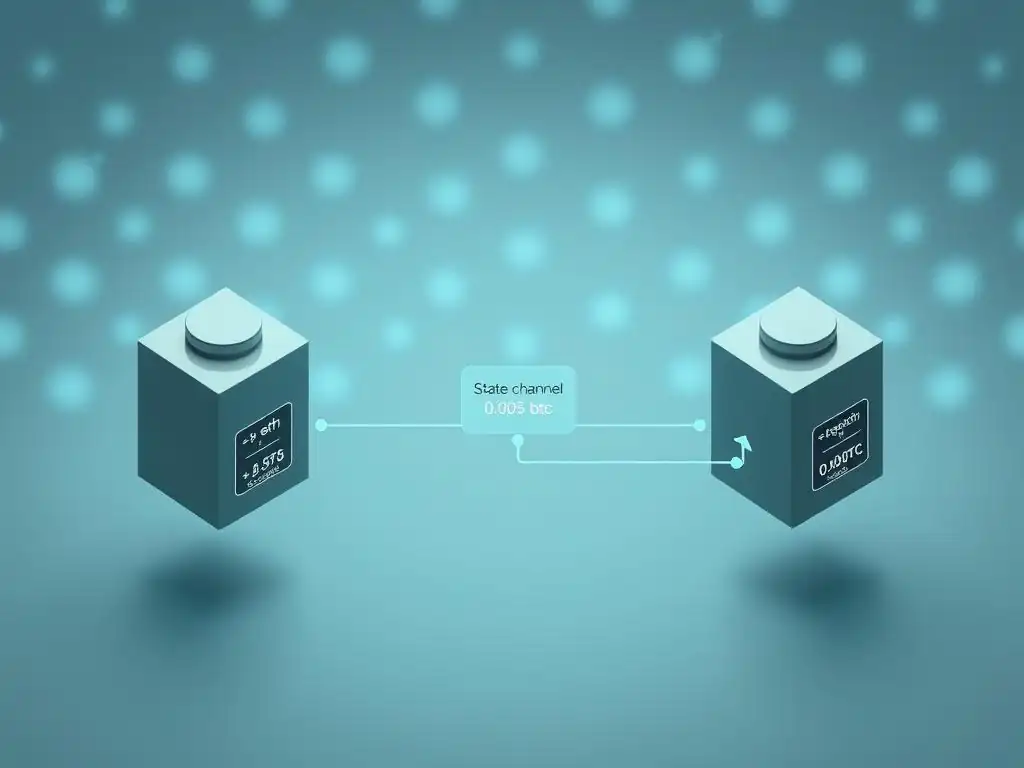
Popular State Channel Platforms and Frameworks: Lightning Network, Raiden Network, Celer Network
Several platforms and frameworks have emerged that implement state channel technology, each with its own nuances and focus. These platforms are driving the adoption and development of state channels for various applications, including blockchain micropayments.
- Lightning Network: Primarily focused on Bitcoin, the Lightning Network is arguably the most well-known and mature state channel implementation. It enables fast and low-cost Bitcoin transactions, particularly micropayments, by creating a network of interconnected state channels. The Lightning Network is designed for scalability and aims to make Bitcoin viable for everyday transactions, including micropayments for content, goods, and services. As of late 2023, the Lightning Network has a network capacity of over 5,000 Bitcoin, demonstrating its growing adoption and infrastructure.
- Raiden Network: Raiden Network is Ethereum's equivalent of the Lightning Network, designed to enable fast and scalable ERC-20 token transfers, including micropayments. Raiden focuses on providing a user-friendly platform for building decentralized applications that require high transaction throughput and low latency. While not as widely adopted as the Lightning Network, Raiden is actively developed and offers a viable state channel solution for the Ethereum ecosystem.
- Celer Network: Celer Network is a more general-purpose Layer-2 scaling platform that supports state channels, along with other scaling technologies like rollups. Celer's state channel implementation, cChannel, is designed to be flexible and interoperable, supporting various blockchain platforms and use cases beyond just micropayments. Celer aims to provide a comprehensive Layer-2 infrastructure for building scalable and user-friendly decentralized applications.
Real-World Examples of Micropayment Applications Using State Channels: Satoshi's Place, Streamium
While state channel technology is still evolving, several real-world examples demonstrate the practical application of state channels for blockchain micropayments:
- Satoshi's Place: Satoshi's Place was a popular online collaborative art project built on the Lightning Network. Users could "buy" pixels on a shared digital canvas using Bitcoin micropayments via the Lightning Network. Each pixel cost a tiny fraction of a cent, making it a true micropayment application. Satoshi's Place showcased the feasibility of using state channels to enable micropayment-based interactions and content creation on the Bitcoin blockchain. The platform attracted thousands of users and demonstrated the potential of micropayments for online engagement.
- Streamium: Streamium was an early project that explored micropayment-based video streaming using state channels. It allowed content creators to stream videos and charge viewers per minute of viewing time, with micropayments processed via state channels. While Streamium is no longer actively maintained, it served as a pioneering example of how state channels could enable new business models for content monetization, moving away from traditional subscription models towards pay-per-use access. Streamium highlighted the potential of state channels to disrupt the content streaming industry with blockchain micropayments.
Technical Considerations for Implementing State Channels: Smart Contract Design, Channel Management, Dispute Resolution Mechanisms
Implementing state channels effectively requires careful consideration of several technical aspects to ensure security, efficiency, and user-friendliness.
- Smart Contract Design: The smart contract that anchors the state channel on-chain is critical. It must be robustly designed to handle funding transactions, commitment transaction verification, and settlement transaction execution securely and reliably. Smart contract vulnerabilities can compromise the security of the entire state channel system. Therefore, rigorous auditing and formal verification are essential for state channel smart contracts. The smart contract logic must correctly implement the channel rules and dispute resolution mechanisms.
- Channel Management: Efficient channel management is crucial for scalability and usability. This includes mechanisms for opening, closing, and updating channels, as well as routing payments across a network of channels (as in the Lightning Network). Channel management systems need to be designed to minimize on-chain interactions and optimize off-chain communication for performance and cost-effectiveness. Effective channel management also involves strategies for channel balancing and capacity management to ensure sufficient liquidity within the channel network.
- Dispute Resolution Mechanisms: Robust dispute resolution mechanisms are essential to handle situations where participants disagree on the channel's state or attempt to cheat. State channels typically rely on pre-signed commitment transactions and time locks to prevent fraud. However, clear dispute resolution protocols are needed to handle cases where participants broadcast conflicting commitment transactions or attempt to close the channel with an outdated state. Dispute resolution often involves on-chain adjudication by the smart contract, potentially requiring participants to submit evidence or the latest valid commitment transaction to resolve the dispute fairly.
Challenges and Limitations of State Channels
Channel Capacity Limits: The Need for Channel Balancing
State channels, while offering significant scalability improvements, are not without limitations. One key challenge is the inherent capacity limit of individual channels. The maximum amount of value that can be transacted within a state channel is capped by the initial funding transaction. If participants need to transact a value exceeding the channel's capacity, they must either open a new channel or increase the capacity of the existing one, both of which require on-chain transactions and associated fees.
This capacity limitation necessitates channel balancing and routing mechanisms, especially in network implementations like the Lightning Network. Channel balancing involves redistributing funds within channels to ensure sufficient liquidity for ongoing transactions. Channel routing allows payments to be routed through multiple interconnected channels to reach a destination even if a direct channel with sufficient capacity does not exist. Effective channel balancing and routing are complex challenges that require sophisticated algorithms and network management strategies to optimize efficiency and minimize the need for on-chain capacity adjustments.
Complexity of Implementation: Developing and Maintaining State Channel Infrastructure
Developing and maintaining state channel infrastructure is technically complex, posing a barrier to wider adoption. Implementing secure and efficient state channels requires expertise in cryptography, smart contract development, network programming, and distributed systems. Building robust state channel platforms and applications demands significant engineering effort and specialized skills.
The complexity extends beyond initial development to ongoing maintenance and updates. State channel protocols and implementations are continuously evolving, requiring developers to stay abreast of the latest advancements and security best practices. Maintaining channel infrastructure also involves monitoring network performance, addressing security vulnerabilities, and providing user support. This complexity can make it challenging for smaller teams or organizations to adopt and deploy state channel solutions without significant technical resources.
Dependency on On-Chain Anchoring: Vulnerability to Blockchain Congestion
Despite operating primarily off-chain, state channels are still anchored to the underlying blockchain for security and final settlement. This dependency means that state channels are not entirely immune to blockchain congestion and high on-chain fees. While state channels significantly reduce the number of on-chain transactions, the initial funding and final settlement transactions still rely on the main blockchain.
During periods of extreme blockchain congestion, the cost of opening and closing channels can increase significantly, potentially diminishing the cost advantages of state channels, especially for very small micropayments. Furthermore, if the underlying blockchain experiences prolonged congestion or network issues, it can impact the ability to open, close, and settle state channels in a timely manner. Therefore, while state channels mitigate blockchain scalability limitations, they are not a complete solution and still retain some degree of dependency on the performance and stability of the underlying blockchain.
Liquidity Requirements: Ensuring Sufficient Funds for Micropayments
State channels require participants to lock up funds in the channel's smart contract to enable off-chain transactions. This liquidity requirement can be a limitation, especially for users who are unwilling or unable to lock up funds for extended periods. The amount of liquidity locked in state channels represents capital that is not readily available for other uses, potentially creating an opportunity cost.
Ensuring sufficient liquidity across a state channel network is also a system-wide challenge. If liquidity is unevenly distributed or insufficient in certain parts of the network, it can hinder payment routing and reduce the overall efficiency of the state channel system. Maintaining adequate liquidity requires mechanisms for incentivizing channel funding and balancing, as well as efficient capital management strategies for state channel participants and operators. Liquidity management is a critical factor in the scalability and usability of state channel networks, particularly for supporting high volumes of blockchain micropayments.
Future Trends in Blockchain Micropayments and State Channels
The Evolution of State Channel Technology: Improvements in Scalability and Security
State channel technology is continuously evolving, with ongoing research and development focused on improving its scalability, security, and usability. Future advancements are expected to address some of the current limitations and further enhance the potential of state channels for blockchain micropayments.
Scalability improvements are likely to focus on more efficient channel routing algorithms, optimized channel balancing techniques, and potentially the development of hierarchical or multi-hop state channel networks to increase overall transaction throughput. Security enhancements may include advancements in cryptographic protocols, formal verification of smart contracts, and the implementation of more robust dispute resolution mechanisms to further mitigate risks and prevent fraud. Usability improvements are crucial for wider adoption, focusing on simplifying channel management, improving user interfaces, and making state channel technology more accessible to non-technical users.
Integration with Other Layer-2 Solutions: Combining State Channels with Plasma or Rollups
The future of blockchain scaling is likely to involve a combination of different Layer-2 solutions working in concert. Integrating state channels with other Layer-2 technologies like Plasma or rollups could lead to hybrid scaling solutions that leverage the strengths of each approach. For example, state channels could be used for high-frequency micropayments, while rollups could be used for batching larger transactions or more complex computations.
Combining state channels with Plasma could offer a synergistic approach, where Plasma chains handle higher-value transactions or more complex state transitions, while state channels handle frequent micropayments within the Plasma chain ecosystem. Integration with rollups could enable state channels to benefit from the increased transaction throughput and data availability offered by rollups, potentially further enhancing the scalability and efficiency of micropayment solutions. Hybrid Layer-2 architectures are likely to play a key role in achieving truly scalable and versatile blockchain platforms.
The Growing Adoption of Micropayments in Various Industries: The Future of Pay-Per-Use Models
The adoption of micropayments is expected to grow across various industries as state channel technology matures and becomes more accessible. The ability to conduct low-cost, real-time micropayments unlocks new business models based on pay-per-use access and granular monetization strategies.
Industries like content streaming, online gaming, IoT, and API services are likely to see increased adoption of micropayment-based models. Content creators can directly monetize their work through micropayments, bypassing intermediaries and potentially increasing their revenue share. Pay-per-use access to software, data, and infrastructure resources can become more prevalent, offering greater flexibility and cost-effectiveness for consumers and businesses. The growth of machine-to-machine economies in IoT and other sectors will further drive the demand for efficient and scalable micropayment solutions, positioning state channels as a key enabling technology for the future of decentralized commerce.
Conclusion: The Potential of State Channels for Revolutionizing Micropayments
Recapping the Benefits of State Channels for Blockchain Micropayments
State channels offer a compelling solution to the challenge of making micropayments viable on blockchain networks. Their key benefits include enhanced scalability, drastically lower transaction fees, improved transaction speed with near-instant settlements, and increased privacy compared to purely on-chain transactions. By moving the bulk of transaction activity off-chain, state channels overcome the limitations of traditional blockchains for frequent, small-value exchanges, unlocking a wide range of new applications and business models. State channels represent a significant step forward in realizing the full potential of blockchain technology for everyday use cases and micro-transactions.
Addressing the Challenges and Looking Ahead
While state channels offer numerous advantages, they also present challenges, including channel capacity limits, implementation complexity, dependency on on-chain anchoring, and liquidity requirements. Ongoing research and development are actively addressing these limitations, with advancements in channel routing, security protocols, and usability improvements. The integration of state channels with other Layer-2 scaling solutions and the development of hybrid architectures hold promise for further enhancing scalability and versatility. Overcoming these challenges and continuing to innovate in state channel technology are crucial for realizing its full potential.
The Role of State Channels in the Future of Decentralized Finance and Applications
State channels are poised to play a pivotal role in the future of decentralized finance (DeFi) and decentralized applications (dApps). By enabling efficient and cost-effective micropayments, state channels can facilitate new DeFi use cases, such as micro-lending, fractional ownership, and granular reward distribution.
In the broader dApp ecosystem, state channels can power micropayment-based content monetization, pay-per-use services, and machine-to-machine economies, fostering a more granular and user-centric approach to decentralized applications. As blockchain technology matures and adoption expands, state channels are likely to become an increasingly important component of the decentralized internet, enabling a future where blockchain micropayments are a seamless and integral part of everyday digital interactions.
Frequently Asked Questions
What are state channels and how do they relate to blockchain micropayments?
State channels are off-chain communication protocols that allow parties to transact multiple times without immediately committing each transaction to the blockchain. This enables micropayments by reducing transaction fees and latency.
How do state channels improve the viability of blockchain micropayments?
State channels make micropayments viable by circumventing the limitations of directly processing each small transaction on the blockchain. This significantly reduces transaction fees and speeds up transaction times.
What are the key benefits of using state channels for micropayments compared to on-chain transactions?
The primary benefits are lower transaction fees and faster transaction speeds. This is crucial for micropayments where the cost of on-chain transactions would often outweigh the value of the transaction itself.
What are some potential use cases for blockchain micropayments enabled by state channels?
Possible use cases include pay-per-use services, streaming content, and instant rewards for online activities. The low-cost nature of state channels makes these scenarios economically feasible.
Are there any limitations or challenges associated with using state channels for micropayments?
One limitation is the need for initial on-chain setup and the requirement for both parties to be online to participate in the channel. Security also depends on the implementation of the channel protocol.
Final Reflection: Empowering the Future of Blockchain Micropayments
The exploration of blockchain micropayments through state channels reveals a powerful solution to the scalability challenges that have long hindered the widespread adoption of decentralized technologies. The ability to conduct numerous, near-instant transactions off-chain, while maintaining the security and transparency of the blockchain, is not just a technical advancement; it's a fundamental shift in how we can interact with digital assets and services. This technology has the potential to revolutionize everything from content monetization to machine-to-machine payments, bringing the promise of a truly decentralized economy closer to reality.
The impact of blockchain micropayments and state channels extends far beyond the realm of cryptocurrency enthusiasts. It represents a move towards a more granular and equitable distribution of value, where creators can be directly compensated for their work, and consumers can access content and services on a pay-per-use basis. This shift is crucial in fostering a more sustainable and innovative digital ecosystem. The future of finance is decentralized, and micropayments are the building blocks of that future.
This quote encapsulates the transformative potential of this technology, reminding us that even the smallest transactions can contribute to a larger, more decentralized financial landscape.
As we look ahead, the challenge lies in fostering wider adoption and understanding of blockchain micropayments and state channels. Consider how you can support this evolution. Explore platforms that utilize these technologies, advocate for their integration in your own projects, and educate others about their potential. The future of decentralized finance is being built today, one micropayment at a time. Embrace the opportunity to be a part of this transformative movement and help shape a more equitable and accessible digital world for all.
Unlock the Potential: Dive Deeper into Micropayments!
Thank you for exploring the world of state channels and micropayments with us! We hope you’ve gained valuable insights into how these technologies are transforming small transactions on the blockchain. Now, let's put that knowledge into action!
Here's how you can further explore the possibilities:
- Experiment with a Micropayment Platform: Try a service that utilizes state channels, such as a pay-per-article platform or streaming service, to experience the benefits firsthand. This will deepen your understanding and provide practical experience.
- Explore existing open-source implementations of state channel protocols. Contribute to their development, or even build your own proof-of-concept!
- Share this article with your network and spark a conversation about the future of micro-transactions. Help others unlock the power of blockchain!
What innovative use case can you envision for state channels and micropayments that could reshape the digital economy? Share your thoughts in the comments below!
Leave a Reply