
The Automation Advantage: BlockchainPowered Smart Contracts for Logistics


Welcome to Blockchain Trends, your compass in the rapidly evolving world of decentralized technology! Are you ready to unlock the true potential of blockchain, far beyond the hype of cryptocurrencies?
Dive into our latest exploration of blockchain smart contracts logistics automation, where we unravel how this powerful combination is revolutionizing supply chain management. Discover how verifiable, tamper-proof agreements are streamlining processes, reducing costs, and boosting efficiency. But how exactly are smart contracts reshaping logistics, and what are the real-world implications? Let's find out!
The Automation Advantage: Blockchain-Powered Smart Contracts for Logistics
- Introduction: Revolutionizing Logistics with Blockchain and Smart Contracts
- Understanding Blockchain Smart Contracts for Logistics
- Benefits of Blockchain Smart Contracts in Logistics Automation
-
Implementing Blockchain Smart Contracts for Logistics: A Step-by-Step Guide
- Identifying Key Logistics Processes for Smart Contract Automation
- Selecting the Right Blockchain Platform for Logistics Applications
- Designing and Developing Smart Contracts for Specific Logistics Use Cases
- Integrating Smart Contracts with Existing Logistics Systems and Data Sources
- Testing and Deployment of Blockchain Smart Contracts in a Logistics Environment
-
Real-World Applications of Blockchain Smart Contracts in Logistics
- Case Study 1: Automated Temperature-Controlled Shipment Tracking and Delivery Verification
- Case Study 2: Smart Contracts for Automated Customs Clearance
- Case Study 3: Optimizing Inventory Management with Blockchain-Based Smart Contracts
- Case Study 4: Using Smart Contracts for Automated Freight Payments
- Overcoming Challenges in Blockchain Smart Contract Adoption for Logistics
- The Future of Blockchain and Smart Contracts in Logistics
- Conclusion: Embracing the Automation Advantage with Blockchain
-
Frequently Asked Questions
- How do blockchain smart contracts improve logistics automation?
- What are the primary benefits of using blockchain for logistics automation?
- What role do smart contracts play in automating payment processes in logistics?
- What are some potential regulatory challenges associated with implementing blockchain in logistics automation?
- How can businesses begin to integrate blockchain smart contracts into their logistics operations?
- Final Reflection: Embracing the Future of Logistics
- Unlock Logistics Efficiency: Embrace Smart Contracts Now!
Introduction: Revolutionizing Logistics with Blockchain and Smart Contracts
The Current Challenges in Global Logistics Networks
Global logistics networks are complex, fragmented systems burdened by inefficiencies, lack of transparency, and reliance on outdated manual processes. Companies face significant hurdles in tracking goods across borders, managing diverse stakeholders, and ensuring timely and accurate information flow. These challenges often lead to delays, increased costs, disputes over shipments, and a lack of end-to-end visibility, making it difficult to optimize routes, manage inventory effectively, and respond quickly to disruptions.
Furthermore, the reliance on paper-based documentation and multiple intermediaries creates friction and opportunities for errors or fraud. Shippers, carriers, customs brokers, and consignees often operate on disparate systems, leading to data silos and a lack of a single, trusted source of truth. This fragmentation complicates processes like freight auditing, claims processing, and compliance, adding layers of administrative burden and slowing down the entire supply chain.
How Blockchain Technology Addresses Logistics Inefficiencies
Blockchain technology offers a decentralized, immutable, and transparent ledger that can fundamentally transform logistics operations by providing a shared, tamper-proof record of transactions and events. By creating a single source of truth accessible to authorized participants, blockchain eliminates data silos and enhances visibility across the entire supply chain journey. Each step of a shipment, from origin to destination, can be recorded on the blockchain, creating an auditable trail that is resistant to manipulation.
This shared ledger approach significantly reduces the need for manual verification and reconciliation between parties. For instance, proof of origin documents, tracking updates, and inspection reports can be recorded on the blockchain, providing all stakeholders with real-time, consistent information. This inherent transparency builds trust among participants and streamlines processes that previously required extensive paperwork and bilateral communication, paving the way for more efficient and reliable logistics networks.
The Role of Smart Contracts in Automating Logistics Processes
Smart contracts are self-executing contracts with the terms of the agreement directly written into code. They run on a blockchain, automatically triggering actions when predefined conditions are met. In logistics, smart contracts enable the automation of various processes that are currently manual, time-consuming, and prone to errors. This capability is central to achieving true blockchain smart contracts logistics automation.
Consider a shipment where payment is conditional on delivery confirmation and temperature maintenance. A smart contract can be programmed to automatically release payment from an escrow account to the carrier once the blockchain receives data confirming the goods have arrived at the destination and temperature logs (recorded by IoT sensors and written to the blockchain) remained within the agreed range. This removes the need for manual invoice processing, verification, and payment initiation, significantly accelerating settlement times and reducing administrative overhead. The integration of blockchain smart contracts logistics automation streamlines operations from end-to-end.
Understanding Blockchain Smart Contracts for Logistics
What are Smart Contracts? A Definition
Smart contracts are digital, self-executing agreements stored on a blockchain. The terms of the agreement between buyer and seller are directly written into lines of code. This code and the agreements contained therein exist across a distributed, decentralized blockchain network. The code controls the execution, and transactions are trackable and irreversible. Once deployed, a smart contract automatically executes the stipulated actions when the pre-programmed conditions are met, without the need for intermediaries.
In essence, a smart contract is like a digital vending machine for agreements. You put in the required input (e.g., payment, data), and if the conditions are satisfied (e.g., correct amount received, data verified), the contract automatically dispenses the output (e.g., releases funds, updates ownership records). This programmed automation is the core principle enabling blockchain smart contracts logistics automation across various supply chain functions.
Key Features of Blockchain Smart Contracts: Immutability, Transparency, and Security
One of the primary features of smart contracts running on a blockchain is immutability. Once a smart contract is deployed, the code cannot be altered, ensuring that the terms agreed upon remain fixed and cannot be tampered with by any single party. This provides a high level of assurance that the contract will execute exactly as intended.
Transparency is another critical characteristic. Because smart contracts reside on a public or permissioned blockchain ledger, the code and the execution history of the contract can be audited and viewed by authorized participants. This shared visibility fosters trust and reduces information asymmetry. Combined with the inherent security of blockchain cryptography, which protects against fraud and unauthorized access, these features make smart contracts a robust tool for automating sensitive logistics processes.
Smart Contracts vs. Traditional Contracts: A Comparison for Logistics
Traditional logistics contracts are typically paper-based or digital documents that require manual execution and enforcement. They often involve multiple signatures, extensive paperwork, and rely on intermediaries like banks, lawyers, or arbitrators to facilitate transactions and resolve disputes. The process can be slow, costly, and prone to human error or misinterpretation.
| Feature | Traditional Contract | Blockchain Smart Contract |
|---|---|---|
| Form | Paper or digital document | Code on a blockchain |
| Execution | Manual, requires human intervention | Automated, self-executing |
| Enforcement | Relies on legal systems/intermediaries | Programmed logic on blockchain |
| Transparency | Limited, often bilateral | High (on shared ledger) |
| Trust | Relies on parties' good faith/legal system | Built into code logic and blockchain |
| Speed | Slow, involves processing time | Fast, near real-time execution |
| Cost | Higher (legal fees, admin) | Lower (reduced intermediaries/admin) |
| Dispute Res. | Legal proceedings, arbitration | Pre-defined logic, potential for less disputes |
Blockchain smart contracts, conversely, automate the execution based on verifiable events recorded on the blockchain. This eliminates the need for manual intervention in routine processes, drastically speeding up transactions, reducing administrative costs, and minimizing the potential for disputes arising from delayed or incorrect actions. They offer a programmatic approach to logistics agreements, enhancing efficiency and reliability through blockchain smart contracts logistics automation.
Benefits of Blockchain Smart Contracts in Logistics Automation
Enhanced Transparency and Traceability in the Supply Chain
Blockchain smart contracts significantly enhance transparency and traceability within complex logistics networks. By linking the execution of contractual terms directly to verifiable events recorded on the blockchain, stakeholders gain unprecedented visibility into the status and condition of goods as they move through the supply chain. Each handoff, quality check, or location update can trigger a smart contract function or be a condition for subsequent actions, all immutably logged.
For example, a smart contract for tracking high-value goods might require confirmation of scanning at specific checkpoints. Once the blockchain receives the scan data, the smart contract can update the shipment status for all authorized parties simultaneously. This shared, real-time view allows manufacturers, distributors, carriers, and end customers to track goods with greater accuracy and trust, reducing information silos and improving overall supply chain visibility. This heightened transparency is a key outcome of successful blockchain smart contracts logistics automation implementations.
Reduced Costs and Increased Efficiency Through Automation
Automation is a primary driver for adopting blockchain smart contracts in logistics. By automating routine, rule-based processes such as payment releases, penalty enforcements, or documentation verification, companies can drastically reduce manual labor and administrative overhead. This leads to significant cost savings associated with processing invoices, managing paperwork, and resolving discrepancies.
Consider the automation of freight payments. Instead of a manual process that can take days or weeks involving invoice submission, verification, and payment initiation, a smart contract can automatically release payment to the carrier once the blockchain confirms successful delivery based on GPS data or a digital proof-of-delivery signed on a device. This efficiency gain not only reduces costs but also frees up staff to focus on more strategic tasks, while accelerating cash flow for carriers. Estimates suggest that automating freight audit and payment could reduce costs by 10-20% in some logistics operations.
Improved Security and Reduced Fraud in Logistics Operations
The inherent security features of blockchain technology, such as cryptography and distributed consensus, provide a robust foundation for smart contracts that significantly improves security and reduces fraud in logistics. Data recorded on the blockchain is tamper-proof, meaning that once an event is logged (e.g., goods loaded, inspection passed), that record cannot be retrospectively altered by malicious actors.
Smart contracts add another layer of security by automating actions based on verified, immutable data. For instance, a smart contract could be designed to only release goods at a warehouse upon verification of a digital token or unique identifier associated with the shipment on the blockchain, linked to the authorized recipient. This prevents unauthorized access or theft. Furthermore, by automating processes like payment conditional on verified delivery, smart contracts reduce opportunities for invoice fraud or disputes over service completion, contributing to a more secure logistics environment through blockchain smart contracts logistics automation.
Streamlined Payments and Faster Settlement Times
One of the most immediate and impactful benefits of blockchain smart contracts in logistics is the streamlining of payment processes and the acceleration of settlement times. Traditional payment cycles in logistics can be notoriously slow, often taking 30, 60, or even 90 days, particularly in international shipping, due to manual invoicing, verification, and reconciliation processes involving multiple banks and intermediaries.
With smart contracts, payments can be triggered automatically and near-instantly upon the successful completion of a defined condition, such as the delivery of goods, verification of quality, or confirmation of customs clearance, all validated by data written to the blockchain. This eliminates delays associated with manual checks and approvals, significantly improving cash flow for carriers and suppliers. Some pilot programs have demonstrated the ability to reduce payment settlement times from weeks to days, or even hours, representing a potential acceleration of 80-90% in payment processing time.
Minimizing Disputes and Enhancing Trust Among Stakeholders
Disputes are common in logistics, often arising from disagreements over delivery times, condition of goods, documentation errors, or service level failures. Resolving these disputes through traditional means can be time-consuming and costly, involving investigations, negotiations, and potentially legal action. The lack of a single, trusted source of truth exacerbates these issues.
Blockchain smart contracts minimize disputes by establishing clear, predefined rules and executing them automatically based on transparent, immutable data recorded on the blockchain. Since all authorized parties can see the same verifiable data (e.g., timestamps, sensor readings, digital signatures) that trigger contract execution, there is less room for disagreement about whether conditions were met. This programmatic enforcement of agreements, based on shared, trusted data, builds confidence among stakeholders and fosters a more collaborative and trustworthy logistics ecosystem, a direct benefit of implementing blockchain smart contracts logistics automation.
Implementing Blockchain Smart Contracts for Logistics: A Step-by-Step Guide
Implementing blockchain smart contracts for logistics requires careful planning and execution. It's not simply deploying code but integrating a new layer of automated logic into existing, complex operational workflows.
Here is a high-level guide:
- [ ] Step 1: Identify Use Cases: Pinpoint specific logistics processes ripe for automation using smart contracts.
- [ ] Step 2: Define Requirements: Clearly outline the conditions, triggers, and actions for each smart contract based on business needs and existing agreements.
- [ ] Step 3: Select Platform: Choose a suitable blockchain platform (e.g., Ethereum, Hyperledger Fabric, Corda) based on requirements like privacy, scalability, and cost.
- [ ] Step 4: Design & Develop: Write the smart contract code, ensuring it is secure, efficient, and accurately reflects the agreed terms.
- [ ] Step 5: Integrate Systems: Connect the smart contract and blockchain platform with existing logistics systems (e.g., TMS, WMS, IoT devices) to feed in necessary data.
- [ ] Step 6: Testing: Conduct rigorous testing in a simulated environment to ensure the smart contract functions correctly under various scenarios.
- [ ] Step 7: Deployment: Deploy the smart contract onto the chosen blockchain network.
- [ ] Step 8: Monitoring & Maintenance: Continuously monitor the smart contract's performance and maintain the underlying infrastructure.
Identifying Key Logistics Processes for Smart Contract Automation
The first critical step in implementing blockchain smart contracts logistics automation is identifying which specific processes within your logistics operations are the best candidates for automation. Not all processes are suitable, and focusing on high-impact areas can yield the greatest return on investment. Look for processes that are currently manual, repetitive, involve multiple parties, are prone to disputes, or where delays in execution cause significant bottlenecks.
Good candidates often include freight payment, customs documentation verification, penalty enforcement for delays or service level breaches, automated insurance claims processing triggered by verified events (like damage reports), and conditional release of goods or information based on verified milestones. Analyzing existing workflows and identifying friction points where trust is low or manual verification is high will help prioritize the most promising use cases for smart contract implementation. Focusing on these areas maximizes the potential benefits of blockchain smart contracts logistics automation.
Selecting the Right Blockchain Platform for Logistics Applications
Choosing the appropriate blockchain platform is a crucial decision that impacts the scalability, security, privacy, and cost-effectiveness of your smart contract implementation. Public blockchains like Ethereum are open and decentralized but may have scalability limitations and expose transaction data publicly, which might not be suitable for sensitive commercial logistics data. Private or permissioned blockchains like Hyperledger Fabric or Corda offer more control over network participants and data visibility, making them often preferred for enterprise logistics applications.
Consider factors such as transaction throughput requirements (e.g., how many shipments or events need to be processed per second), data privacy needs (who should see what information), consensus mechanism (how transactions are validated), development ease, and the cost of running the network. Evaluating these technical and business requirements against the features offered by different blockchain platforms is essential to selecting the foundation for your blockchain smart contracts logistics automation solution.
Designing and Developing Smart Contracts for Specific Logistics Use Cases
Designing and developing the smart contract code is where the logic of your automated logistics processes is defined. This requires translating the terms of traditional logistics agreements into programmatic instructions that execute on the blockchain. The code must be precise, covering all potential conditions, triggers, and outcomes. Errors in smart contract code can be costly, as they are difficult to rectify once deployed.
Development typically involves writing code in specific programming languages associated with the chosen blockchain platform (e.g., Solidity for Ethereum, Chaincode in Go or Java for Hyperledger Fabric). It's vital to work with developers who understand both smart contract programming principles and the nuances of logistics operations. The design phase should involve collaboration between logistics experts and developers to ensure the smart contract accurately reflects the real-world process and contractual terms, enabling effective blockchain smart contracts logistics automation.
Integrating Smart Contracts with Existing Logistics Systems and Data Sources
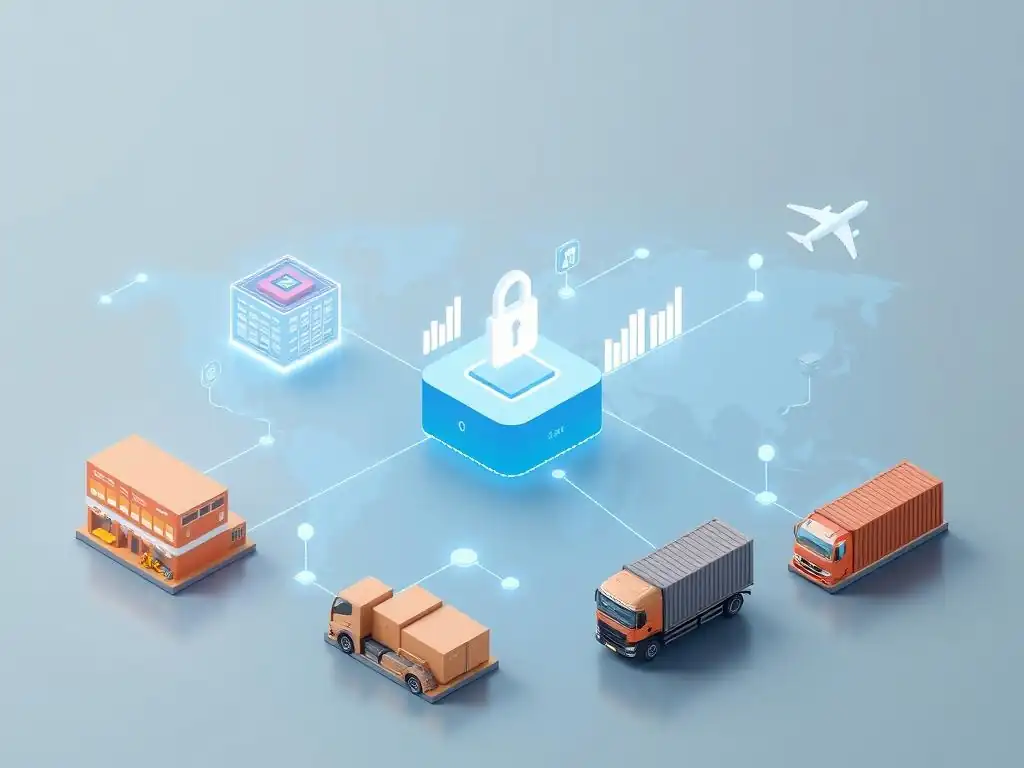
For smart contracts to be truly effective in logistics, they must interact seamlessly with existing operational systems and receive real-world data. Smart contracts on the blockchain need access to information from transportation management systems (TMS), warehouse management systems (WMS), IoT sensors (for location, temperature, condition), customs systems, and other relevant data sources. This integration is often the most technically complex part of the implementation.
This integration is facilitated through "oracles," which are third-party services that provide smart contracts with external information. For example, an oracle could feed GPS data from a carrier's system or temperature readings from a sensor into the blockchain, allowing the smart contract to verify delivery location or temperature compliance. Establishing secure and reliable data feeds is paramount, as the accuracy and trustworthiness of the data directly impact the correct execution of the smart contract and the success of blockchain smart contracts logistics automation.
Testing and Deployment of Blockchain Smart Contracts in a Logistics Environment
Before deploying smart contracts into a live logistics environment, rigorous testing is absolutely essential. Smart contracts are deterministic; they execute exactly as coded. Any bug or logical error can lead to unintended consequences, including incorrect payments, failed deliveries, or security vulnerabilities, which are difficult or impossible to reverse once on the blockchain. Testing should cover a wide range of scenarios, including edge cases, error conditions, and interactions with integrated systems.
Testing environments should simulate real-world logistics workflows, using representative data to ensure the smart contract behaves as expected under various operational pressures. Once testing is complete and confidence is high, the smart contract can be deployed onto the production blockchain network. Deployment needs to be carefully managed, often involving multiple parties in a permissioned network. Ongoing monitoring after deployment is also critical to catch any unforeseen issues and ensure the continued, reliable operation of the blockchain smart contracts logistics automation solution.
Real-World Applications of Blockchain Smart Contracts in Logistics
Case Study 1: Automated Temperature-Controlled Shipment Tracking and Delivery Verification
Consider the cold chain logistics industry, where maintaining specific temperature ranges for goods like pharmaceuticals or perishable foods is critical. A smart contract can be designed to monitor temperature data streamed from IoT sensors within a shipping container, writing this data to the blockchain at regular intervals. The smart contract includes conditions specifying the acceptable temperature range and the required delivery location and time.
Upon arrival at the destination, verified by GPS data also recorded on the blockchain, the smart contract checks the temperature logs. If the temperature remained within the required range throughout the journey and delivery is confirmed, the smart contract automatically triggers the release of payment to the carrier from an escrow account.
If the temperature deviates significantly, triggering a pre-defined penalty condition, the smart contract could automatically deduct a penalty amount or trigger an alert for investigation. This automates compliance checks and payment, replacing manual verification processes and reducing disputes over spoilage, showcasing effective blockchain smart contracts logistics automation in action.
Case Study 2: Smart Contracts for Automated Customs Clearance
Customs clearance is a notoriously complex and time-consuming part of international logistics, involving numerous documents and checks across multiple government agencies and parties. Smart contracts can significantly streamline this process by automating the verification and conditional release of goods based on the submission and validation of required digital documents on the blockchain.
A smart contract for customs could be programmed to require digital versions of the bill of lading, commercial invoice, packing list, and any necessary permits or certificates, all recorded on the blockchain by authorized parties (e.g., shipper, carrier, customs broker). Once all required documents are present and verified (potentially through integration with external validation services or government APIs), the smart contract could automatically trigger a notification to customs authorities, initiate the payment of duties and taxes from a designated account, and conditionally authorize the release of the shipment for inspection or onward movement.
This reduces manual document handling, speeds up processing times, and increases transparency for all parties involved in the customs process through blockchain smart contracts logistics automation.
Case Study 3: Optimizing Inventory Management with Blockchain-Based Smart Contracts
Smart contracts can also play a role in optimizing inventory management by automating actions based on inventory levels and sales data recorded on a blockchain shared among supply chain partners. For example, a smart contract could be set up between a manufacturer and a supplier of raw materials.
The smart contract could monitor the manufacturer's inventory levels of a specific component, with inventory updates written to the blockchain. When the inventory level for that component drops below a predefined threshold (e.g., a 14-day supply), the smart contract automatically triggers a purchase order to the supplier. It could also include conditions for payment based on the supplier confirming shipment and the manufacturer confirming receipt of the goods, all recorded on the blockchain. This automates reordering processes, reduces stockouts, and improves just-in-time inventory strategies, demonstrating the application of blockchain smart contracts logistics automation beyond just transportation.
Case Study 4: Using Smart Contracts for Automated Freight Payments
Automated freight payment is one of the most frequently cited applications for blockchain smart contracts logistics automation. This involves setting up a smart contract between a shipper and a carrier where payment for transportation services is automatically released upon successful delivery.
The smart contract uses verifiable data written to the blockchain, such as GPS coordinates confirming the truck's arrival at the destination geofence, a digital signature from the consignee confirming receipt, or a timestamp from a confirmed delivery scan. Once these conditions are met, the smart contract executes, transferring the agreed-upon freight cost directly from the shipper's digital wallet or escrow account to the carrier's.
This bypasses traditional invoicing and payment processing steps, dramatically reducing administrative costs and accelerating payment from typical net-30 or net-60 terms to near-instantaneous settlement, benefiting carriers' cash flow. This direct application highlights the efficiency gains possible with blockchain smart contracts logistics automation.
Overcoming Challenges in Blockchain Smart Contract Adoption for Logistics
Scalability Issues and Potential Solutions
One significant challenge for widespread blockchain smart contracts logistics automation, particularly with public blockchains, is scalability. Current blockchain networks can process a limited number of transactions per second compared to the massive volume of transactions occurring daily in global logistics. As more shipments and events are recorded and trigger smart contract executions, network congestion can lead to delays and increased costs (transaction fees).
Solutions are being developed and implemented to address this. Layer 2 scaling solutions, sidechains, and state channels can process transactions off the main blockchain, periodically settling them on the main chain, significantly increasing throughput. Permissioned blockchains, often preferred in enterprise settings, can also be designed for higher transaction volumes by having a smaller, known set of participants and different consensus mechanisms. Ongoing research and development in blockchain technology continue to focus on improving scalability to support the demands of large-scale logistics operations and facilitate broader blockchain smart contracts logistics automation.
Regulatory Uncertainty and Compliance Considerations
The regulatory landscape surrounding blockchain and smart contracts is still evolving, posing challenges for adoption in a highly regulated industry like logistics, particularly concerning cross-border movements. Questions around the legal status of smart contracts, data privacy regulations (like GDPR), and compliance with customs and trade laws in different jurisdictions need careful consideration.
Companies implementing blockchain smart contracts logistics automation must navigate this uncertain environment. This involves ensuring that smart contracts comply with existing legal frameworks wherever possible, potentially incorporating mechanisms for off-chain legal recourse if disputes cannot be resolved solely through code. Collaboration with legal experts and regulatory bodies is essential to developing solutions that are both technologically innovative and legally compliant across diverse operational territories.
Data Privacy and Security Concerns
While blockchain offers enhanced security through immutability and cryptography, implementing blockchain smart contracts logistics automation still requires addressing data privacy concerns, especially when dealing with sensitive commercial information or personal data. Putting all logistics data on a public, transparent ledger is often not feasible or desirable.
Permissioned blockchains offer greater control over data visibility, allowing companies to restrict access to sensitive information to authorized participants only. Techniques like zero-knowledge proofs can allow parties to verify that a condition is met (e.g., shipment value is below a certain threshold) without revealing the underlying sensitive data (the exact shipment value). Implementing robust access controls and data encryption, both on-chain and off-chain, is critical to balancing the transparency benefits of blockchain with the necessity of protecting proprietary and private information.
Interoperability Challenges and the Need for Standardization
The logistics industry relies on a vast ecosystem of disparate systems and platforms used by different companies (shippers, carriers, ports, customs, etc.). Integrating blockchain smart contracts with these legacy systems and ensuring interoperability between different blockchain networks is a significant technical hurdle. Different blockchain platforms may use different protocols and standards, making it difficult for them to communicate seamlessly.
Addressing this requires developing middleware solutions that can translate data between legacy systems and blockchain networks. Furthermore, industry-wide standardization efforts are needed for data formats, communication protocols, and potentially even smart contract templates for common logistics processes. Initiatives are underway to create these standards, which are crucial for enabling true end-to-end blockchain smart contracts logistics automation across a fragmented global supply chain landscape.
Addressing the Skills Gap and Promoting Blockchain Adoption in Logistics
A fundamental challenge to widespread blockchain smart contracts logistics automation adoption is the significant skills gap within the logistics industry. Implementing and managing blockchain-based solutions requires expertise in distributed ledger technology, smart contract development, cryptography, and integrating these technologies with existing enterprise systems. Such skills are currently in high demand and short supply.
Overcoming this requires investment in training and education programs to upskill the existing workforce. Collaboration between technology providers and logistics companies is also essential to develop user-friendly platforms and solutions that abstract away some of the technical complexity. Promoting successful pilot programs and demonstrating tangible benefits can help build confidence and encourage broader adoption across the industry, fostering the necessary ecosystem for blockchain smart contracts logistics automation to thrive.
The Future of Blockchain and Smart Contracts in Logistics
Emerging Trends in Blockchain-Enabled Logistics Automation
The field of blockchain smart contracts logistics automation is rapidly evolving. Several emerging trends point towards a future where decentralized technologies play an even more central role. One trend is the increasing integration of IoT devices with blockchain, providing real-time, verifiable data feeds that can trigger smart contract execution for dynamic events like real-time tracking, condition monitoring, and automated quality control checks.
Another trend is the development of more sophisticated oracle networks that can provide reliable external data to smart contracts, enabling automation based on a wider range of real-world events. We are also seeing advancements in interoperability solutions, aiming to connect different blockchain networks and legacy systems more seamlessly. Furthermore, the exploration of combining blockchain with other technologies like Artificial Intelligence (AI) for predictive logistics, where AI analyzes blockchain data to forecast demand or optimize routes, and smart contracts automate the execution of these AI-driven decisions, represents a significant future direction for blockchain smart contracts logistics automation.
The Impact of Blockchain on Logistics Business Models
Blockchain technology and smart contracts have the potential to fundamentally alter existing logistics business models. By reducing the reliance on intermediaries and enabling peer-to-peer interactions between parties in the supply chain, blockchain can disintermediate certain traditional roles, potentially leading to new platform-based models where logistics services are traded and managed on decentralized networks.
For carriers, faster payment settlements enabled by smart contracts improve cash flow and financial stability. For shippers, increased transparency and efficiency can lead to lower costs and more predictable supply chains. New business models could emerge around providing blockchain-as-a-service for logistics, developing specialized smart contracts for niche logistics processes, or offering oracle services to feed reliable data to smart contracts. The ability to automate complex agreements through blockchain smart contracts logistics automation opens up possibilities for more dynamic, responsive, and potentially disruptive business models.
The Role of Blockchain in Building More Resilient and Sustainable Supply Chains
Recent global events have highlighted the fragility of complex supply chains. Blockchain technology can contribute to building more resilient supply chains by providing greater visibility and traceability, making it easier to identify and respond to disruptions. Immutable records of transactions and locations allow companies to quickly pinpoint where goods are and assess the impact of delays or unforeseen events.
Smart contracts can play a role in enhancing resilience by automating responses to disruptions. For example, a smart contract could automatically reroute a shipment or trigger alternative sourcing options based on pre-defined conditions related to port closures or carrier failures, all verified on the blockchain. Furthermore, blockchain's transparency can support sustainability initiatives by providing verifiable proof of origin, ethical sourcing, and carbon footprint data throughout the supply chain, with smart contracts potentially automating compliance checks or triggering incentives for sustainable practices. This integration is key to achieving resilient and sustainable blockchain smart contracts logistics automation.
Predictions for the Future of Blockchain-Powered Logistics
Looking ahead, it is likely that blockchain smart contracts logistics automation will move from pilot projects and niche applications to more widespread adoption across various segments of the industry. We can expect to see increased collaboration among logistics companies, technology providers, and regulatory bodies to establish necessary standards and interoperability frameworks.
The integration of IoT and AI with blockchain will deepen, creating increasingly intelligent and automated supply chain execution. Smart contracts will become more sophisticated, handling complex conditional logic and interacting with a wider array of external data sources. While challenges around scalability and regulation will persist, ongoing innovation and the clear value proposition of increased efficiency, transparency, and trust suggest a future where blockchain and smart contracts are integral components of automated, resilient, and efficient global logistics networks. The push towards comprehensive blockchain smart contracts logistics automation will continue to gain momentum.
Conclusion: Embracing the Automation Advantage with Blockchain
Key Takeaways: The Power of Blockchain Smart Contracts for Logistics
Blockchain smart contracts offer a powerful means to achieve significant automation and efficiency gains in the complex world of logistics. By leveraging the inherent properties of blockchain – immutability, transparency, and security – smart contracts can automate processes that are currently manual, slow, and prone to error and disputes. Key benefits include enhanced supply chain transparency and traceability, substantial reductions in operational costs, improved security against fraud, accelerated payment settlements, and a significant reduction in the frequency and severity of disputes among stakeholders.
The ability to programmatically enforce contractual agreements based on verifiable, real-world data recorded on a shared ledger transforms how logistics operations are managed. From automating freight payments and customs clearance to optimizing inventory and ensuring cold chain integrity, the potential applications of blockchain smart contracts logistics automation are vast and impactful. While challenges related to scalability, regulation, and integration exist, ongoing technological advancements and increasing industry collaboration are paving the way for broader adoption.
Call to Action: Exploring Blockchain Solutions for Your Logistics Needs
The logistics industry stands to gain immensely from embracing the automation advantages offered by blockchain smart contracts. As global supply chains become increasingly complex and the demand for speed, transparency, and efficiency grows, traditional methods are proving insufficient. Exploring and implementing blockchain-based solutions, starting with targeted use cases for smart contract automation, is no longer just an option but a strategic imperative for companies seeking to remain competitive.
Assess your current logistics processes to identify areas where manual steps, lack of trust, or delayed payments create bottlenecks and costs. Investigate how blockchain smart contracts logistics automation can address these specific challenges. Engage with technology providers and industry consortia to learn about available platforms and successful implementations. By taking proactive steps to understand and adopt this transformative technology, logistics companies can unlock new levels of efficiency, build more resilient operations, and foster greater trust across their supply chain networks.
Frequently Asked Questions
How do blockchain smart contracts improve logistics automation?
Blockchain smart contracts automate key processes in logistics, such as tracking shipments, verifying delivery conditions, and processing payments, reducing manual intervention and errors. This leads to increased efficiency and transparency across the supply chain.
What are the primary benefits of using blockchain for logistics automation?
The main benefits include enhanced transparency, improved traceability, and increased efficiency in logistics operations. Blockchain also offers greater security against fraud and tampering, streamlining the entire process.
What role do smart contracts play in automating payment processes in logistics?
Smart contracts can automatically execute payments upon the fulfillment of pre-defined conditions, such as confirmation of delivery or verification of product quality. This eliminates delays and disputes, ensuring timely and secure transactions.
What are some potential regulatory challenges associated with implementing blockchain in logistics automation?
Regulatory challenges might arise from data privacy concerns, cross-border regulations, and lack of standardized frameworks for blockchain adoption. Clear legal and compliance guidelines are necessary for widespread implementation.
How can businesses begin to integrate blockchain smart contracts into their logistics operations?
Businesses can start by identifying key pain points in their supply chain that can be addressed by blockchain. Then, they can pilot small-scale projects to test and validate the technology before scaling up their implementation.
Final Reflection: Embracing the Future of Logistics
The journey through blockchain-powered smart contracts for logistics automation reveals a powerful truth: the future of supply chains is inextricably linked to trust and transparency. The potential to streamline operations, reduce costs, and enhance security through decentralized, immutable records is no longer a futuristic fantasy, but a tangible reality reshaping the global landscape of goods movement.
This shift towards automation and decentralization has profoundly influenced, and continues to influence, how we perceive efficiency and accountability in logistics. The ability to track goods in real-time, automate payments upon delivery, and eliminate intermediaries fosters a level of trust previously unattainable. As technology continues to evolve, the integration of blockchain smart contracts will become even more crucial for navigating the complexities of modern supply chains. The key to successful leadership today is influence, not authority.
- Ken Blanchard. This quote highlights the shift in power dynamics that blockchain enables, empowering stakeholders with information and control.
Now, as you consider the implications of blockchain smart contracts in logistics, I invite you to reflect on your own role in shaping this future. How can you leverage this technology to create more efficient, transparent, and sustainable supply chains? Embrace the potential for innovation, and become a driving force in the automation revolution that is transforming the world of logistics.
Unlock Logistics Efficiency: Embrace Smart Contracts Now!
Thank you for exploring how blockchain-powered smart contracts can revolutionize logistics. With their potential to enhance automation and transparency, it's time to take the next step and incorporate this technology into your supply chain.
Here's how you can start your smart contract journey:
- Begin a pilot project: Identify a specific, manageable area within your logistics operations where a smart contract solution can be tested. Start small, learn, and expand gradually.
- Share this insight: Help spread awareness about the transformative power of blockchain in logistics by sharing this article with colleagues and your professional network. Encourage discussions about the future of supply chain technology.
- Explore the blockchain trends community: Read more articles on blockchain developments to discover new ideas and innovations for your business.
Which logistics process are you most eager to automate with smart contracts, and what challenges do you foresee in implementing this technology? Share your thoughts in the comments below!
Leave a Reply